Blockchain Podcast #93--Roel Wolfert

Roel Wolfert, founder of CryptoDelta and co-founder of Liquid, argues that security token offerings need clear regulation and secondary market liquidity to scale. The Netherlands allows retail investors to raise up to €5 million per year, and Wolfert envisions blockchain eventually tokenizing a person's future economic value at birth to replace debt-based finance.
Chapters
When security tokens first appeared on the cryptocurrency industry scene circa 2017, a number of analysts were quick to identify them as the long-awaited bridge between crypto and mainstream finance, a perfect marriage between DLT and traditional fundraising methods, the key to widespread adoption. But 2 years later, the STO space is still in the development phase. A growing number of companies and projects have been formed to tokenize everything from startups to fine art to real estate, but none of them has yet been picked up as the de facto system in any industry outside of the cryptocurrency ecosystem. After all, there are still a number of regulatory nuts and bolts that need to be put into place and technology that needs to be finalized. Entrepreneurs, end users, and investors alike still need to be educated about what security tokens are and how the security token ecosystem works. One of the individuals working to educate new markets about STOs and how to grow the STO ecosystem as a whole is Raoul Wolfert. Walford is the founder of CryptoDelta, a foundation that works to connect traditional finance with the digital asset industry, and the co-founder of Liquith, a firm that tokenizes shares in companies. Walford is also chief marketing and sales officer at Quoin, that's Q-O-I-N, co-founder of Whirl, and was the senior vice president of consulting and analytic services at Visa Europe from 2011 to 2014. Finance Magnates spoke with Walford about the future of the security token space. Space, entrepreneurs' ethical responsibilities to the cryptocurrency ecosystem, and the opportunities that STOs provide to companies of all sizes. Roel, can you start by just telling our listeners a little bit about yourself and the work that you do?
Yeah. So my name is Roel Wolfrad. I'm a Dutch national. I've been working for 25 years in the financial services technology industry. Industry with great pleasure. And I worked on a lot of, let's say, traditional financial services projects. And about 5 years ago, I entered into blockchain and alternative currencies as a technology and as concepts. And I did some studies there and worked as a token economist, writing or designing a number of currencies in the industry. I got fascinated by the technology capability, and after a number of ICOs, I actually started the ID early 2017 to do something different than an ICO, and that turned into a security token offering. You know, worked a lot with lawyers there, and we did the first STO in December 2017 on a company called Bilex. Which, you know, was the experiment of my business partner. And he also— it's his company on which we experimented our own great thoughts. So why not experiment on yourself? So that I think also explains a lot about me. So besides having held a number of senior executive positions in companies like Visa, former Logica, which is now CGI, I'm an entrepreneur and nowadays what I do with my business, DGRIP, we actually buy companies or take stakes and then we transform them and scale them up. So that's my daily habitat, so to say.
Right. So what attracted you, you know, you said that you were involved in a number of different cryptocurrency projects that were holding ICOs. What attracted you, you know, away from ICOs and toward the STO space?
Well, I think we all got a little bit caught up by the, you know, the fever. Let's call it the crypto fever. But obviously very soon, early ICO, you saw people do pump and dump. And the small investors, you know, got hurt. Because a lot of these tokens lost more value than they ever gained. Hence, people were left empty-handed except for a number of professionals who knew or who still know how to play the system. Um, also I heard about, you know, these projects. There were like sort of half-projects or IDs, and people raised $50 million on an ID which in principle I'm not against, as long as you can control and check and, you know, keep the people to their commitment. And there were no such things in place. Now obviously, when we look at the stock market, these things are in place, but that's only for well-established companies. Um, so being an entrepreneur myself and having a lot of friends that are entrepreneurs, we start say, well, you know, wouldn't it be better if we would be able to give guarantees to people buying the tokens that would still be tradable and exchangeable with all the benefits that you have with crypto and blockchain technology, and at the same time offer sort of the guarantees from the existing financial services world? How would you combine that? And that's how the whole idea came to back a token with a security being a share of a company, an SME. And, uh, do a fundraise based on that and put it in blockchain technology. So there's a primary market for trading, and that was the whole idea at that point in time. So let's say the benefits for the company owner were like, you know, no more debt, no more bank lending. You would just like a multinational get the opportunity to have the balance sheet looking a little bit better by adding equity by your sort of IPO, mini IPO. Now at the same time, the people investing in your token, your crypto token, would have a real information, real valuation of your company. They would be able to rely on, you know, reporting, shares, legal structure. And a legal framework that would give them guarantees. So the combination sounded like a pretty good deal for all sides of the equation. And that's how we got started. And we got a lot of lawyers, notaries in there saying, how on earth are we going to pull this one off?
Right, exactly. So, so in practice, you know, we, this, The idea of a security token is a lot more, well, I guess for lack of a better word, secure than an ICO token is because of the things that you've mentioned. I'm curious, in your experience so far in the STO token space, have the STO tokens sort of lived up to this expectation of offering more certainty? Maybe certainty isn't the best word, but but more knowledge and more information as well as, you know, more secure stake of ownership in companies. Have these tokens lived up to what you've described?
Well, I think they haven't reached their full potential yet. Definitely.
Yeah.
There is very limited secondary market trading. So from a tradability or exchangeability aspect, I think there's a lot to be gained. International regulation, you know, for the EU, this is pretty clear how to deal with it. But then you still have people from the US, you know, buying security tokens from European companies in Europe. You know, how, how that will, you know, be sorted out with SEC and all that sort of thing. So there's a lot of problems to be resolved or opportunities to be taken, so to say. Yeah, so, uh, we're not there yet, definitely. We need to get more clarity about how much you can raise, what the conditions are under which you can raise, yeah, the legal framework, uh, the amount of money for, you know, retail investors versus business investors, commercial or professional investors. Um, yeah, but I think, you know, there's room for improvement, but the basis infrastructure, at least in a number of countries, is there. And one of these countries, thank God, is the Netherlands. As the, you know, founding father of the stock market, you know, there is good regulation and security and protection for all parties involved in any issuance of a security or equity token.
So in terms of regulation, you mentioned that the stock market was founded in the Netherlands, but in terms of regulation, what are the specific things that the Netherlands provides the STO space that other jurisdictions are lacking?
Well, I'm not a lawyer, so I don't know all legal or jurisdiction and the differences. But what, what appealed to us for doing it in the Netherlands, yeah, and actually I'm a big fan of if you're an entrepreneur in Belgium, do it in Belgium under Belgian law and force your own country in the right direction. If you're French, do it in France, yeah, because you know, why do companies need to shift? If I live in the Netherlands, first of all, I should do this in the Netherlands where my business is established, right? Right. So that's a prime principle. And I understand that people move to the Netherlands to do this business for a variety of reasons. Yeah, uh, generally money-driven reasons. Um, okay, fine. Anyway, going back to your question, uh, I think you have a number of good legal constructs in the Netherlands. One is called SPAC, and And the other one is called cooperative, which are good established legal structures where there's sufficient protection for shareholders, yeah, or token holders, as well as for the ones running the business. So the governance around that is well established. And for example, the limited entity, which the rules were set up in 1972 If I'm correct. Yeah. And that hasn't changed. So that, that works out pretty well compared to more complicated things or illegal structures I have seen in other countries. So that's one thing.
Okay.
Also, we have a pretty okay capital raise for retail. Yeah. So the retail capital raise is $5 million every 12 months. So that builds in some significant money, uh, and that's just for the retail investors. So if you get professional investors in there, you can go up, you know, uh, 50, 100 million on top of that. So that still doesn't need you a permit to do this, right? Which I think is a good thing, it's protection. But then again, if you want to go beyond that 5 million every 12 months, then you need to have a permit in the Netherlands. And it's all very clear, it's easy accessible, you know, with information on the website of AFM, how to do that, how to fill in the forms, how to request it. So, you know, my experience so far have been, you know, really understanding, and the regulator seems to be educated in what they're doing, what they're talking about. Um, I just wish the Netherlands promoted it a little bit more to, you know, foreign companies, other European companies, uh, and countries, and would take a little bit more of a lead in the EU on how to shape this. Because, you know, we're not the founding fathers for this from the stock market and venture capital for nothing, right? We've been dealing with this for, for many centuries. And have shown some proper direction and innovation in this space before.
I really like that, that you're saying like if you're based in the EU, if you're based in a certain country that you should, you know, stay in that country and establish your business there and push the, the, the regulations in that country like towards the right direction. But at the same time, we're seeing this massive trend, as you know, where companies you know, all the, the team is in, you know, maybe somewhere even like Finland. The team is in Finland, but the company is legally based in somewhere like St. Martin or Seychelles or these really—
Yeah. Okay.
Yeah.
So yeah, well, you know, as an entrepreneur, yeah, um, I develop and I have customers in certain markets, so I'd like to be client-facing there. So why would I do my investments in a different market and not just develop, you know, take the responsibility to develop, you know, the, you know, the ecosystem including regulation in the country where I am based or which are my home markets, right? Um, I know that there's a moral dilemma, yeah, because yeah, you can get a tax discount there and it's it's easier there because somebody else has done the work for you. Yeah. And, and you can grow your business maybe faster or get the money in faster or easier. I've learned one thing in my life: the easier way is generally not the right way. So the harder it gets, the more rewarding it is, right? So that's why I also founded the foundation called CryptoDelta, you know, to build the ecosystem for equity and security tokens in the Netherlands where we can work together as an industry, and everybody's welcome there to join, to work on technology standards, to work on regulation, lobbying, creating the market, building the ecosystem, delivering it, servicing it, marketing it to the wider public. Public, because crypto still has a relatively poor reputation with politicians as well as with the general public. If they already know about it, right, they just think Bitcoin. So I'm a big believer of those things, that if our market will evolve— and it's easy for me to say because the Netherlands is ready, right? Um, uh, but I do think that there's a real value And you know, when you're working in the US, to work in your own market, or whether you're working in Russia to work on your own market, when you're in China, work on your own market, no matter how difficult that is, to at least, you know, help create that system out there. Because when the whole world starts to move, then we have to, and we can create a new level playing field in some sort, way, shape, or form. And, you know, this is the dreamer in me. I understand being the economist, the principles of low-cost labor, lower taxation, and the competition between countries to get the business in, right?
Right.
But at the same time, you know, why should we compete as countries? Ask yourself that question, right? That is because we want to be better equipped than anybody else. Now, I think personally that I would see that everything is equal. Of course, that's not easy because of geographical position, all that sort of thing. But as an entrepreneur, I have a choice. Yeah, for example, we use a lot of programmers in my business, so I can have Dutch programmers that might cost a little bit more than the ones from the Ukraine, but then again, I don't have the cost of communications and, you know, uh, travel. So, you know, I found myself a way around it to establish an IT company in the Netherlands and keep that productive. So you don't necessarily have to, but you can't focus on commodity, for example, because then you enter a pricing market that doesn't make sense and we will lose. So we have to focus on certain things. So given what we— what, what your question was, like, you know, yeah, I do a moral appeal to entrepreneurs and people in this business to develop their own countries. At the same time, I'm, you know, not saying, you know, you shouldn't move into another legal or jurisdiction Right. But, you know, please, even if you do, keep developing your own market and your own ecosystem in your country because it's valuable for the whole of Europe, for the whole of the world, that all countries get moving.
I think that's really wise. Um, but I want to, I want to pivot back a little bit to, you know, talking more specifically about security tokens. I know you have a lot of really interesting things to say about that. But so I just want to clarify, most of your experience so far in the security token space has been in like startup capital. Is that correct?
Well, we, so with the company that I co-founded and invested in called Liquid. And that's L-I-Q-W-I-T-H. Yeah, so not to be misunderstood with some fluids, it's Liquidity Together. Liquid, right?
Yeah.
Um, we, we founded that and we are focusing on two target groups. So that's entrepreneurs that want to tokenize their business to increase shareholding raise capital rather than taking out a bank loan to grow their business. Now, in that zone, we tend to look at least at established companies with revenue streams, etc., and those can be relatively small versus sort of mature companies with millions of revenue, right? Um, and they want to, for example, expand into a new market or into a new a new geography or things like that. And these are real entrepreneurs with an existing business that said, you know, I just don't want to go to the bank, or I don't want to have angel VCs controlling my, my business. I prefer to work with a lot of smaller shareholders because, for example, I make a social impact and I want to have thousands of investors, like a little bit the crowdfunding idea. right? Um, then the other target with liquid that we have is to look at, uh, let's say capital markets and stock sort of that are capital markets that are relatively illiquid. So they can't really, you know, stuff is difficult to sell, the goods are difficult to participate, high barriers of entry like typical commercial real estate, um, you know, large funds or green energy funds that are out there and that could benefit from an increased liquidity to, you know, give benefits both to the token holders, shareholders, as well as to the ones holding the property or the energy, or yeah, so that there's a good exchange. So those are the two target groups we generally look at. Now, so far, the majority of our customers in Liquid have been SME entrepreneurs.
Okay.
And that's been quite a journey because we have to educate entrepreneurs about what it means to be— basically, you're doing an IPO but then on a smaller scale. So you're not a multinational, yeah, with all the PR agencies and, you know, all the companies and lawyers and bankers around it, you know, that you're going to pay $20 million to to do your IPO. Oh, you're going to do a small-scale sort of IPO that's going to raise half a million, 2 million, 5 million sort of euro, yeah, to scale up your business. And you still have the same responsibility: inform your shareholders, make sure you do your, you know, quarterly or, you know, annually or semi-annually accounts. You might give your shareholders voting rights on certain strategic topics. You're going to have to pay dividends. You have to stick to your policy. You can't just ignore it. Yeah, so also you're going to get a lot of questions from those hundreds or thousands of shareholders that as a CEO owner you need to respond to, and you can do that yourself or you do that, you know, using some of your PR people, communications people, but you do have to. So there's a lot of obligations. So there's no easy money. You can't just disappear anymore. And that's an important part of the educational process we go through with the entrepreneurs. And honestly, we also do some selection. We just say, look, you know, amongst ourselves, and there is no criteria scenario. But if we don't feel good about an entrepreneur, then we don't want to expose them. Yeah. What we also do, and this is obviously getting some discussion, you know, when you produce a white paper, we ask them, please give a third-party valuation of the business, right? Because if your own accountant evaluates it, yeah, then, you know, you have bookkeepers and accountants So accountants obviously are a little bit more trustworthy because they are certified. Bookkeepers are not. Yeah, so you want to have— give some real opinion to the people investing in your business to make sure that the value reflection is proper and that these people have the choice and that there's good information out there on which they base their decision. Now those are things that obviously entrepreneurs think, well, my business is worth $10 million and this guy is saying $5 million. So it's not always easy, you know, because the entrepreneurs are successful businessmen because they are a little bit stubborn. That's generally a good quality of these people. So it's an interesting process and, uh, you know, uh The technology is not where the problem is. The problem is making clear that people understand what their responsibilities are, what they should be doing, and also make them aware of the huge opportunity to get rid of debt from your balance sheet and put equity on there, increase your credit rating through that. Yeah, you become liquid as a company. That immediately raises the value of your company again by just being tradable. Then at the same time, because you do the marketing to promote your business, that is a huge opportunity. So the marketing funds that you use and all sorts of things you can use to raise the crowdfunding. And it's also loyalty to your customers if you are in a certain, let's say, retail industry, for example. So there's a huge potential in the STO. That, you know, rather than getting some quick money in to grow your business, it's a marketing opportunity, it's a communication, loyalty opportunity, as well as a great financial construct to sort of clean up the balance sheet in your company and, you know, take control of your growth. So in that educational process with entrepreneurs, as a nurse, you know, we generally have to do a lot of free work still, and we hope that with market education, this becomes much easier and much more understandable for everybody.
Right. So you mentioned part of this market education is making clear that people understand what their responsibilities are, making the entrepreneurs understand. Do you— I mean, your company has been doing a a great job with that, but do you think that that ultimately, you know, should that be the responsibility of your company or in order for this STO space to grow, say to something like the stock market, does that need to become the responsibility of the regulators?
Well, as an entrepreneur, I'm not in favor that regulators do psychological tests on people doing mini IPOs, right? Right. Because you can imagine that this is the long tail of the stock market. You could have in the Netherlands maybe 50,000 companies doing an STO, right? If the regulator would need to control that, that would be like a massive effort, right? Um, so I don't think it's the regulator's role I, I do think, like with everything else, they are part of the ecosystem and do share part of that responsibility, not only to investors but also to the ones that issue tokens. Yeah, the entrepreneurs, to make them aware what their responsibilities are, and not just their legal responsibilities.
Right.
Communication nowadays in, in this world of social media It's extremely important that you maintain your brand, your brand value. You don't get stuck by some, you know, internet troll that's gonna kill your reputation for wrong reasons, right? Because he disagrees with what you do. You need to be aware on how to handle these things. And when you go public, like with an STO, People need to understand what the upside and the downside is, and they need to get practical guidance. And whether that's through my company or through the Foundation CryptoDelta or any other individual who cares, the regulator, I'm fine.
Yeah, right.
As an entrepreneur, I feel responsible for two reasons, right? If we educate the entrepreneurs issues tokens well, then they are successful. That means that the STOs done by Liquid are successful STOs. That means that my company will be the better company in this industry, right? Yeah, at least we have a way of standing out, and I think that's important.
Definitely. So, so what else needs to happen in order for the SEO space to continue to grow? You know, if we want to see this become something like the stock market in the future, what do we need to happen, you know, both on a technical level as well as, you know, perhaps a regulatory level or maybe not regulatory, but some sort of, you know, best practices standards that need to be established?
Yeah, so I think, you know, at this moment everybody's waiting for good exchanges to come up where equity security tokens can be exchanged in a proper way. I think, uh, we're waiting for that to happen. Uh, in the meantime, uh, I think it's mass market education. Yeah, so people need to get— the mass market needs to get get rid of the Bitcoin thing. And not because of Bitcoin, but they need to start understanding that there is a stock market for smaller companies that's handled through blockchain, and we call them cryptos or tokens or whatever the industry name is going to be. As an industry, we need to invest in mass market education. Yeah, 12% of the Dutch people invest in the stock market.
Right. So I just want to stop you just for a sec.
Not even 0.01% in crypto.
Right. So is that what you mean when you say that— oh, sorry to interrupt you. Is that what you mean when you say we got to get rid of the Bitcoin thing? Like, is it sort of like a branding thing that—
oh yeah, you know, whenever there's news, it's always about Bitcoin. It's never about blockchain.
Right. I see.
Yeah. In the mass media market, I'm not talking about the magazines that are like industry-focused or expertise magazines. Yeah, so we need to find a way to break into the mass media. Yeah, with solid topics saying company XYZ has just issued their own token through blockchain and crypto, you can now buy. Yeah, so, you know, and it would be great if some innovative um, you know, fast-growing companies that— like, for example, yeah, I'm just mentioning this as an example, so I'm not even sure whether they would consider this, but if Booking.com, yeah, yeah, a Dutch company, would tokenize their shares— everybody knows them in the Netherlands, right? No, a lot of people in the world knows them. Yeah. And if they would tokenize their shares and not take it the traditional way, yeah, going IPO, but just tokenize it, do it this way. I think we would be able to get a good international understanding and mass media attention to why, uh, you know, what, what's going on. And hopefully, because it's never one event, you know, more will follow and understand why this is a good thing to do.
Yeah.
And if this then becomes successful, right, the media will write about it and we're going to see more and more traction. And hopefully, you know, I'm going into, you know, small investor clubs. I talked about this stuff. Yeah. So there's mass media education, there's the personal, you know, involvement of individuals. Individuals talking to other people, spreading the word. Um, yeah, you know, it just needs to happen because if we ever want to get to the same level, 12%, that invest in the current stock market, I think those people have the potential to invest in crypto tokens, security tokens as well. Then I think we finally become a real serious market, and that would be essential for the whole industry to grow and to mature. Because obviously when it's 12% of the consumers involved, then regulator takes a completely different view, puts more resource in there. Also, other businesses will see the opportunity and large-scale parties. Now we already work with large-scale parties in CryptoDelta, like Kasbank, which is a custodian, PwC, Alan Overy, established, let's say, let's call them old financial services world companies that are very much investing in this new world to make it happen.
Right. So do you, I mean, Eventually, you know, hopefully, you know, the STO space will continue to grow into something comparable to the stock market. But do you think that at that point, will STOs be, you know, will they overtake ICOs and IEOs, or will those kinds of token sales also have a place in the cryptocurrency space?
Well, Look, as a token economist, I think that the majority of the tokens that have been designed for ICOs are not really good tokens that will maintain or design, you know, maintain their value because they are not creating enough ecosystem, right? Okay, so given that that's the fact from my perspective I would think that STOs will definitely overtake ICOs, but there is going to remain a market for ICOs. Okay, right. So it's not going to disappear. And the IEO is just a different go-to-market model for me. So I'm looking at it from a— the value of the token and the backing of the token perspective. You either back it with assets Yeah, or you back it with an ecosystem or behavioral stream, so supply-demand basically. And in that category, I think there's room for both because we see that in today's world economy, there's a market for asset-backed and there is a market for, uh, supply-demand, right?
Right. Well, thank you so much for your time. There's one more thing I want to touch on before we close this interview, and that is this statement that you made at the Barcelona Trading Conference regarding the concept of value. And I'm curious if this is something that you see as being possible with something like the security token space. But you had this really radical idea that I loved. And if I'm not mistaken, you said that you'd eventually like to see a world where when, you know, a child is born, they're sort of endowed with some kind of wealth or another guarantee in accordance with the value that that person will generate later in their life. So is that something that you, you know, in this vision that you have, if I've gotten it correct. Is that something that you see as being supported by blockchain or security tokens?
Well, definitely. So let's really— I think the way I phrased it as follows, because the question was, can you share some of your vision and dreams about crypto and blockchain?
Right.
And, you know, I said I would love the day that when my first grandchild gets born, that on the day they can get born, they can capitalize and access on the value that they will create during a lifetime as a human being.
Right, right.
Now we have all these statistics in the world that an average person will earn, let's say, in, in the Western Europe, like €6 million worth of value throughout the lifetime, right? So let's assume that €6 million, and my grandson or daughter gets that on the day they get born. Maybe not all at once. That means that they never have to get into debt, and debt goes with fear, and that means that they probably would have a happier life. Now, money is a human reinvention, so we can change the invention into something we'd like to see. Now, I'm not a big fan of the debt economy. I'm, you know, although I worked at Visa, you know, even in Visa, most of the cards are debit cards, not credit cards, right? So because that's where we should be going. And I'm not saying it's wrong that people lend something to move ahead, but I think financing education through people themselves and a lot of other things in life I think, you know, why not capitalize on that? Like a company can capitalize on future value by going to the stock market, why shouldn't a person, being the economic machine behind each company, capitalize on its potential at birth? And I'm not saying it's full potential, I think potential— maybe we should use average. So it's just a dream and a philosophy on how I envision life, because that's quite open and everybody is entitled to their own opinion, right? And my opinion is that I see a lot of pain and suffering in this world because we're a debt-enslaved economy where people end up in debt, yeah, that they can't come out and then go to bankruptcy and the whole circus starts again. We need to consume more, more, more. To keep our economy alive. So we create more money, we have inflation, all these mechanisms, and, and I understand how they work. But at the same time, I'm just always thinking, can't we do create a better world for our kids and grandchildren and, you know, generations coming after that, so that they will lead the happy life? And I've learned to a variety of lessons in life, that the happy life, you know, money can be convenient, but that's not the center of happy life. Happy life is, you know, family, friends, experience, you know, things that matter. It's generally about giving, yeah, so that you get back the energy that gives you fulfillment. And, you know, what would happen if you capitalize on the life at day one. What prevents us from doing that? You know, we issue a few hundred thousand euros when somebody builds a house. It just comes out of nowhere. Why can't we just issue a few hundred thousand euros when a child gets born?
Right. Right. I think that's an amazing idea. Well, thank you again so much for your time. Time. It's been such a pleasure to speak with you.
Yeah, it's been my absolute pleasure.
More from Roel
Dé Potentie van Asset-Backed Tokens!? Traditionele Finance vs. Crypto | In Gesprek met Roel Wolfert
Interview – Roel Wolfert: Ecosystem of tokenized securities in the Netherland. DeFi boom.
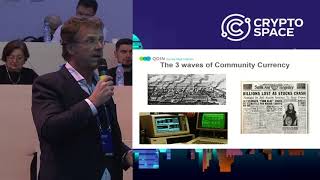
Cryptospace Moscow. Roel Wolfert. Local currencies as the ancestors of cryptocurrencies