Interview – Roel Wolfert: Ecosystem of tokenized securities in the Netherland. DeFi boom.
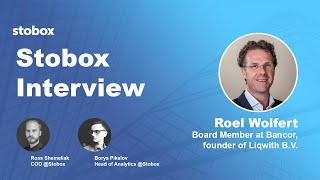
Roel Wolfert, executive board member at Bancor, explains how the Netherlands' tech-neutral legal framework has enabled security token offerings without major regulatory changes. Early projects include Bilex, a green bond, and the Classic Car Coin. Marketing, not technology, is the real barrier for SMEs looking to tokenize assets.
Chapters
The regulator wants to control their agents, but in DeFi there are no agents, and it is a problem.
For us it's not a problem, it's a feature. Hello everyone! Welcome you at the next Stobox interview, where we gather best stars from the tokenization, crowdfunding, and the future of finance. To tell you the most practical insights about the industry. Today we are welcoming our guest Roel Wolfert. He is an executive board member at Bancor and founder at Liquid BV, one of the earliest companies in the field of security tokenization. Also today we have my partner Ross, chief operating officer and co-founder at Stobox. Roel, Ross, thank you for joining us today.
Yes, hi Boris.
Hi Boris, it's my absolute pleasure to join you.
Roel, thank you for joining us today. Please, you mentioned previously that you've been working at Netherlands and there is diverse ecosystem of tokenized securities. Despite this, it is not very active outside the countries and not many cases of tokenization are known from there. Could you tell us more about the ecosystem of tokenized securities in Netherlands, about industry participants, about cases, about their relative success? What's going on there?
Yes, so maybe, you know, it's always good to, to look back, um, uh, you know, coming from the ICO space, so to say, I think we've seen a lot of sort of questionable, or at least debatable, activities where companies or projects were launched. And I think we've seen a fair part of them never delivering, leaving behind investors with, you know, low values of tokens or coins, to that matter. Of course, there have been success stories as well, and gradually we're getting there. But in this sort of unregulated marketplace, there more of a need for people raising money to be clear, you know, to feel protected, to be clear that they don't get sued after by the SEC or other regulatory bodies on their activities, as well as for investors, retail or larger investors, to be clear about, you know, what their rights are, what they can expect, what also what their obligations are to that matter, and create a little bit of clarity, because ultimately everything that happens in financial services industry, you know, can only become big when trust is part of that ecosystem. Now, obviously we're all exploring the huge potential of blockchain technology as such, and decentralized finance particularly, and that will be an evolutionary journey. Now, there is something very specific and interesting about the Netherlands. A few hundred years ago, the Netherlands was the country where the principle of stock market was implemented. We had a lot of boats, we wanted to build more. So the government in the Netherlands gave out notes to shipyards. If you say, if you help build this boat, then later when we go across the world, you get a part of the revenue coming from all the trading we do. And that's how shares were born. And that's how ultimately stock markets were set up because people started to trade it, future values or future promises or future revenues with each other and they would pay each other a price for that. That means that the law in the Netherlands has been, you know, very old and very well tested when it comes to, you know, experimenting with financial products as such and stock market related, hence digital assets. Also in the Dutch law, we don't have any specific specific sort of regulatory aspects that say you need to implement this technology or use this or use that sort of. We've been working towards a legal framework, which is basically, I'm not gonna say fully technology independent, but sort of technology independent. We also have specific legal setups like limited entities that is, well, public entities, limited entities, that has been creating a framework legally that makes it possible already for years to actually digitalize assets or do an STO, security token offering, as such. We had technology parties developing, you know, in all sorts of technology using existing blockchain or building proprietary technology to facilitate it. There were licensed parties that had an MTF license to do the multi-level trading facility, etc. Regulator was proactive in that sense that when we acknowledged we were doing this for the first company we tokenized, which was Bilex, they looked at it and, you know, it was in line with the regulations existing. And, you know, they never give an approval or something like that, but they let it happen. Of course, they had some comments along the way, but they didn't stop it, and it proceeded. And since then, we've seen a variety of sort of, let's call it, proof concepts or businesses interested in this way of raising capital. The products that have been used, the financial products, have been very diverse. So tokenizing shares of a company, business bonds, convertible loans. We've also seen limited entities that have a set of real estate or solar cells or green energy in a more broader perspective, or to that respect, incubator platforms or funds that have been set up in the proper legal structure and they've been tokenized. So I would say that, you know, the Netherlands probably the first country where this was possible without having to change anything in the regulatory framework, and that's you know, that's way different in many other countries where regulation needs to be adjusted to facilitate this. And that's why you hear very little about the Netherlands, because we don't need to announce new regulations because it's done. Yeah. The second thing is, I think we've seen in general that the whole digital asset market has gone through the crypto winter, and it's been arising since, let's say, you know, pre-corona. It really picked up And especially the last few months, it's been very, very active in the Netherlands. So a green bond has been introduced, €2 million. We have seen the classic car coin where people can get into tokens owning parts of classic cars. Rubens will be tokenized via our company Liquid pretty soon. That's a $15 million piece of art. And of course, there is still companies, startups, scale-ups that are finding their way through sort of the tokenization platform to actually start raising money. Now, there's a lot to say, I think, about the market itself. Yes, we should be more actively promoting, but as Dutch, we take it in our own way. So we first stick to our own, How do you say? We paint our own houses, right? So we just make sure we do our domestic work. We are launching or tokenizing our own companies and businesses. And slowly I think we're getting a lot of international interest from companies from Germany, from Spain, from the UK saying, look, can we set up in the Netherlands and legally and technically raise funding through security token offering or crowdfunding with a blended mix of finance, including digital assets. So I would say that this market is moving fast right now. Yeah, so there are licensed exchanges in the Netherlands that can do that, and Xchange is one. We have multiple technology providers that you could work with. So if we look at Liquid ourselves, we provide software to crowdfunding or financial institutions for issuing digital assets, as well as that we run administrations or if companies want, they can even use our platform directly to run a crowdfunding campaign raising money. So, you know, the market is moving. There is, you know, this is, you generally see that a lot of consultants are active in this space. So PwC, yeah, is very active promoting the space. You see big law firms like Allen Overy very active, but also smaller law firms that are domestic like Lachhove Hilkerke, which is a Dutch law firm. But also even individual lawyers, they're very well educated by now. And that's mainly due to we have a number of projects in the Dutch market. One is CryptoDelta, which is a foundation that just promotes knowledge to people in the Netherlands and outside. And another project called Two Tokens, which is in a similar space but more on the actual courses, training, for people to get acquainted with the materials and do it themselves or start new initiatives in this space. So yeah, we're, I would say, very active and vivid ecosystem. And slowly we get on the international radar of organizations and people interested in this market.
So Roel, thank you for your insightful answer. Previously in our communication, you mentioned that based on your experience STOs are not very efficient for small and medium enterprises. Could you tell us more about that? So from your perspective, what companies does tokenization work for?
Well, let me, let me rephrase a little bit on your comment or elaborate on that, to that perspective. When we were speaking, you know, I see that a lot of SMEs want to get similar benefits as multinationals. Right? They want to use the financial leverage, they want to involve their customers, you know, in the co-ownership, you know. So in that sense, I think there's a lot of market for SMEs to do this. But what generally a multinational have a huge reach in media, they have huge budgets, and SMEs that's less. And it's not that the tokenization itself is that expensive because actually it's not, and it's still the prices are decreasing there. So that even a company that wants to raise like, you know, €200,000, you know, could make that effort cost-effectively. And even lower amounts, yeah, depending on the provider they choose. But the challenge is really is the marketing campaign to raise the money. And what we've noticed, so let's say we tokenized about 20 companies. I'm not talking about all the tokenization of other assets, but just companies. Quite often in the conversations, we figure out that the entrepreneur or the company itself is not in a position to do very effective marketing to raise funding with angel investors, larger investors, institutional investors, let alone with the massive retail crowd. There are certain companies that are very in a good position to do this. For example, those that have consumer offerings, right? So there's a company in the Netherlands called Revvenue and they are a trading platform and they basically get people into their wallets, right? Easily. They have, you know, tens of thousands of consumer users. And of course, because they have the data, you know, these customers love them, they have a great starting point to start the crowdfunding with. And that is really companies that are in a good position. When you are in a more like a B2B model, you know, you're not gonna ask your B2B customers to invest in you. That is I'm not saying it's impossible, but it's not very common. Yeah, unless your customers are private equity businesses or venture capital or family offices, it's pretty unusual. And then we notice that the owner or managers are not in a position or they don't have the marketing power to reach out because no matter what you do in an STO, or in fundraising, you need to have marketing. Yeah. And that is actually essential. The technology is great. The legal framework, those are all ticks in the boxes you need to make. But the marketing, which will determine how much money you're gonna raise and at which value or valuation and how many shares or assets you have to give away to raise that capital. The point is really, are SME entrepreneurs suitable to doing this? Are they really marketable as a person? Are they up for the responsibility of being a publicly listed company? Only you might have not 100,000 shareholders, but maybe 1,000. You're still publicly, you're responsible. Yeah, you're accountable in that matter. The second is not each business model is most suitable at this stage. I think over time this will evolve. When people get used to it, when the people investing in the SME space are, you know, the numbers are getting larger, I think it will pick up. Now, why is the SME specifically here in the Netherlands very interesting? Because it's one of those areas that's very profitable. You know, there's high returns with relatively low investments. So actually investing in a Dutch SME is a very good investment. And let's assume that you're not investing just in a single company, but there are also initiatives to set up funds for SMEs related to fintech or SMEs related to, I don't know, a specific incubator or a specific region, right? So you can invest in that so that it doesn't become too difficult for individual investors. So I hope, Ross, that that puts some nuance to the question but also answers the question because the marketing is what people are really underestimating in general.
That's a very powerful reply and we mentioned as well that marketing is a big challenge for companies which may be solved in different ways. In our communication with Dotan Romani from London Stock Exchange, we had this thought that perhaps tokenized funds are a necessary intermediary for more comfortable tokenization of SME market. On the other hand, and we had interviews and our own videos about marketing of STOs, I encourage our viewers to check them out. And I'm interested in your opinion, what are the success factors of a successful security token offering and successful marketing of such a campaign?
Well, first of all, what is success? When you issue, basically, if you wanna raise $500,000 or $5 million and you meet that goal, then I would argue you're successful, right? Or you exceed that. So let's just say that the fundraising must be met. I think there's a number of key lessons that are no different from the old way of fundraising compared to the new way of fundraising. First of all, you know, if you want to raise €5 million, make sure that you have a number of serious investors, let's say wholesale investors that are willing to put in €1-2 million. So basically somewhere between 25 to 40% of the desired capital. So as soon as you actually announced the deal that people can subscribe, that immediately you can say, This party did $1 million, that party did $500,000. They did. So you get the numbers rolling. You show, you build confidence. And once confidence and the first larger investors are on board, you get the feeling with other investors that trust goes up and that you don't wanna miss out. Especially if you have reputable names joining. So for example, if your SME is launching, you wanna raise $5 million and the first million is placed with ABN AMRO, ABN AMRO, which is a very solid Dutch bank, then others might think, well, if the bank goes in there, then, you know, we should definitely consider this and have a close look. Right. So that is sort of, you know, get some big investors first and the smaller investors will follow. Now, what I find extremely important is that in the marketing, the management team representing the company is committed. That they understand what they're doing here, both offline as well as online. Now there's some hints and tricks here for online. For example, if you're utilizing your own marketing power, your own marketing staff, that's great. You can reallocate your marketing budget that you were planning to invest in events or other things to the, let's say, the fundraising, because that will also bring you customers, because generally investors can also be customers. So it's a two-way train. So be smart about, you know, not thinking that this is new budget, but reallocate budget that you have already or you're willing to spend in your company on marketing and redirect it to this fundraise. So that's number 2. And I would say that one of the key aspects there is is the whole world of social media. Play that very carefully because with a good digital strategy, you can come a long way. But there's also some loopholes here because why would you do this yourself? You might have the best marketers, but have they ever raised funds for you? Most marketers working in a company have just been busy with selling your product. Now that's great, but raising funds is slightly different. So when you want to use external parties to actually help you with fundraising, you gotta make sure that these people are actually licensed to sell financial services products, hence a security. So there are licensed outbound inbound call centers that have a certificate for WTF, that they're actually able to sell financial products, right? So you have to be careful. You can't just outsource to any marketeer unless you hire them as a contractor under your team. So you might use that second option as well to enrich your existing marketing team with people who are experienced in selling financial services products, because that's basically what's been happening in fundraising. So yeah, I hope that's, that's I think that's the top of the iceberg, at least for people who want to start exploring this path.
Thank you for such great advice. And I do really hope that the price of marketing for SMEs doing security token offering will go down as tokenization and investing in tokenized securities goes more mainstream. On your opinion, What are the requirements for that? What should be done and what is lacking for more companies to adopt making their securities tokenized?
Well, first of all, I think it's a logical order. We have to see a few successful cases getting bigger and bigger. And once that is happening, people will start wondering, why would I go to a bank for a bank loan? Why don't I do this? Yeah, so I think that is the typical thing. But underlying again is this strange word trust. Yeah, if I'm, you know, I have my own business, right? If I would tokenize it, I want to be clear about what my legal position is and not that somebody can just steal my company. Yeah, or put me under pressure to pay back certain amounts because he's unhappy Yeah, so the regulatory framework is extremely important. The way large parties support this, so like big law firms, big auditors like PwC, large financial institutions, the traditional world. And if then the media and the attention picks up and we can really show, for example, some major deals like big real estate being tokenized or major concerns being tokenized. So there's this very specific item going on in the Netherlands right now. It's called Buy Heyma. Heyma is a very traditional Dutch retail chain that's been taken over by VCs, and there is a crowdfunding supported by NXchange, and a number of participation groups say, look, start buying the shares. Yeah, buy via NXchange, just big public, it's not a publicly listed company, start buying the shares, put the money together, and they set up a special purpose vehicle that people can invest in to buy this back from the venture capital because the Dutch people love Heima. So if this initiative kicks off, then first of all, you know, it won't be enough to raise $20 million, right? They need to raise hundreds of millions there in order to make a significant buyback opportunity. Possible. But, you know, it was launched on Monday, this Monday, it's happening. That will hit the news. The same thing with LIQUID, we're tokenizing this Rubens. Now Rubens is a classical Dutch painter, right? And, you know, I think pretty famous around the world. And a €50 million painting being tokenized and being able to say we have 50 million people in the world, slightly more, 18 million people in the Netherlands, but almost everybody in the Netherlands could own a piece of that Rubens. So that's collective ownership. That would be— if people pick up on these initiatives, you know, we'll hit the news, and when you hit the news, more people know about it. And not just via, I mean, the social media and these channels where you and I talk to all people in this industry who are already interested, but the 8 o'clock news. On Monday or Wednesday evening when half of the Dutch people are just watching the 20 minutes general news in the market. And when that is happening, we're gonna see an acceleration of what's going on. So in summary, large parties need to participate, big money needs to come in, which is happening in the Netherlands, regulatory framework, trust framework, and knowledgeable parties around that, advisors, consultants, Of course, tech platforms play a role in that. And last but not least, you need to get a few sort of big reference cases in the market that get things to roll, and then it will roll very fast.
I especially like the idea about tokenizing things that have symbolic value and create great news stories. That could probably definitely kick off the market. Of the market.
Oh yeah, absolutely. Look, we did this project, the Classic Car Coin, right? Now, you know, personally it's a little bit of my thing because I used to drive a classic car and I did some races there, which are very interesting. But, you know, now I have two small kids, so it's a very expensive hobby time-wise and maintenance-wise. But that doesn't mean I'm not interested in this sort of elite area where you can only enter with a significant amount of money because you can't get a mortgage to finance a classic car, right? But there are still classic cars. You can make a lot of money by, you know, buying an old thing and it becomes more valuable and valuable the rarer, more rare it becomes. Yeah, the older it becomes, the better it's maintained. And I would still, you know, in this classic car coin thing, invest some money because the rest I have to spend on school for my kids and education, but still be part of that capital gain. And also, it's an emotional thing, as you said, Boris, it plays, like hanging out with my friends and say, look, I bought some classic car coins and this is part of an old 1967 Ferrari. And this is holding, I don't know, one of my favorite cars, Maserati. So that sort of thing is very emotional, but again, at the same time, it's financially an interesting investment that in the past you need to own a car and let's say it starts at €50,000 and that's not for everybody.
Thank you, thank you for your answer. And nowadays we see a big boom of a new type of financial instrument, DeFi. So what are your thoughts on the present and the future of DeFi?
Well, let's say I think the present is that you see very little DeFi. Yeah, people use the word, but they are actually not really there in that extent. So especially if you look at regulated exchanges, and by the way, there's nothing wrong with that. So it's— they, they can't use DeFi, right? Because regulators will say, you know, you can tokenize this, but, you know, you cannot give— you need to be in control of what you're doing. And with DeFi, that becomes, if you're an MTF-licensed exchange, how do you prove to the regulator that in a decentralized blockchain you're in control, right? So there are things that need to happen, and basically it starts with education and learning and understanding blockchain projects. So As a person very inspired by blockchain technology, I love the concept of we all decide whether we want it, decentralized finance. We vote together, we confirm transactions together. That's basically what it's all about. We don't need a central party to organize that. However, there is a transition. And in order to keep trust in our— bring trust in our industry on the DeFi side, we slowly need to move with the traditional world. And larger players like financial institutions, or maybe more innovative players like NXCHANGE, will make that move. Yeah, they are licensed and they are innovative as well, playing up the border of what is possible but staying nicely within the lines. And they will help us stretch it together with experiments that we're doing ourselves with Liquid. Now Liquid can run on any blockchain, but if it's up to us, we use the Ethereum network to do all these things. And in that matter, it's decentralized finance, right? That settles the transaction. And all the transactions of our STO customers are available in the blockchain, of course anonymous. But we have a central database where we control all the naming and addresses to make sure that we are GDPR compliant and all that sort of stuff. In that sense, I see this world happening. I think if you look at the cost advantages, the business case of decentralized finance in the number of cases we've done it, it's so significantly better than in a, let's say, more centralized approach that it will happen because also big players see those cost advantages. Especially in economic more difficult, more challenging time like today, we, you know, we can see that people will take more, be more innovative to service customers better, to make more revenue, but also to slice down in cost. And I think in that sense DeFi is coming, but you need a lot of volume. And as we said, you know, there's a lot of initiatives. Let's assume if Netherlands is one of the leading countries in this industry, we're a small country, I think if this year there were 50 STOs in the Netherlands that I'm aware of, so maybe it's slightly more. That is not a huge market when we look at, we have alone in Netherlands, you have 500,000, 600,000 SMEs. I don't know how many buildings or funds there are that you can tokenize, but it's huge. So there's a lot to happen. But I think we're in the right path on making this happen. But DeFi is something for in 5 to 10 years from now, generally, in my experience. I would love it to come earlier, yeah, but also I want it to be real. And in order for it to be real, it needs to be mass adopted.
Regarding the DeFi, the regulator regulators want to control their agents, but in DeFi there are no agents and it is a problem. So the regulator now need to redefine their main common concepts of legislation.
Well, it's not a problem, it's a feature.
Well, it's— so this is interesting, and we're talking here about regulation, but what first needs to change is that we, you know, the perception of the value when changing this. What will the benefits be? So why are we doing this? And, you know, I come across the industry, there's many talks and there's good conversations and less good conversations. There's knowledgeable people that know something about this, and there's knowledgeable people knowing something about this. But the three of us in this call, and probably all people listening in, Nobody should have the idea that they know everything here, right? And I had one wise lesson before, and that was like, you can stand in front of the crowd and I can now make a public announcement saying, who wants to change? Who wants the change to happen? Right? And everybody will raise their arm. Yeah. Because regulators, lawyers, government, we all want it to happen. But then if you say, who's going to change? Then you don't see that many arms. All of a sudden because, oh, if I have to change, that means that maybe I have to give up some revenue. I need to start thinking about how I'm going to make some new revenue, or I need to change the framework. We don't have the people that could actually do this. We don't have the knowledge. We first need to educate ourselves, which might take months, years to a certain extent because it's a complicated industry. So the point here is that and I think we start to see some movement, especially in the Netherlands, Ministry of Finance, Ministry of Economic Affairs. We see initiatives at an EU level. Now, not all positive because some are just limiting the ability of what the Netherlands can do, and we've been very active saying, look, don't go along with this European regulation because it's nonsense and it would actually set back the Netherlands, you know, 50 years in time. And we don't want that. So we have to be very careful when we change, we also change the right things. Now change is coming step by step and the platform CryptoDelta or TwoTokens are great platforms in the Netherlands where people can have an opinion, co-create with others, and with others I mean lawyers, regulators, technicians, bankers, fund managers, everybody is there, right? And you can co-create and learn from each other and shape it and actively communicate through those channels what's going on and what we want. And that goes up to the lobby level with the politicians in Brussels. So in that respect, we're putting some power behind this as Dutch representation because we feel that the whole of Europe is going to benefit from this because ultimately digital assets will make it— hopefully, in my view, one of the goals is that we will see less, you know, let's say the rich will be less rich but still rich, but the poor will be less poor and be a little bit richer. So, you know, what we see polarization from an income perspective will be diminished hopefully over time. At least it won't grow anymore to the minimum, and that is quite essential to have a vibrant society as a whole. And if we look at it now, the south of Europe is, let's say, less economically progressive or less rich than, let's say, the north. And we need to find a way to give back to normal people to be able to have a happy, wealthy life. And I think tokenization and digital assets or security token offerings in itself will play a role in that process to let common people own classic cars, houses, and not just live on a salary but also have capital gains as part of their wealth.
Definitely so. I also have an article published in Finnovate about other ways tokenization can help empowers the poor. And basically, when money flows from rich— money when is being used more efficient, when it raises poor to somewhat richer, then makes rich even more richer. And thus tokenization can enable such investment opportunity to happen. Roel Wolfert, in this change that is happening in everything being transitioned to tokenized securities, especially in Netherlands. Tell us about your role. What does your company do? What interesting projects and clients do you have?
Well, so we have a number of, I would say, interesting projects. As I said, we're working on a project to tokenize Rubens. We are with LIQUID, and LIQUID is not L-I-Q-U-I-D but L-I-Q-W-I-T-H, so it stands for Liquidity together with each other. And in that respect, the Classic Car Coin, I think, is an interesting project. We're also working with an organization called WorldBit Sports to basically— their objective is to give sports clubs, football clubs, back to the fans. So of course there's publicly listed football companies, but there are also smaller football clubs And these football clubs, or the larger football clubs, could tokenize a part of their organization. Let's say the youth educational system. Or maybe the whole football club if they're smaller. And still give it back to the fans through WorldBit Sports. And I think those initiatives we start to see, and they're backed by high-profile people from that industry. That are worthwhile, you know, at least they have the funding, they understand this industry inside out, they've been working in there for decades and they see what the problem is. A big football club gets bought by a large Russian, Chinese, Middle Eastern, North American company and they, you know, Manchester United is no longer really from the crowd, right? Merchandising goes through the roof, prices go through the roof and consumers are just paying rather than benefiting or really feeling becoming a feeling associate. Now you start to see that Barcelona, for example, has the Socio coin, right? For the socios to actually be a little bit more part of Barcelona. And you can only imagine that these sort of sports clubs and the smaller sport clubs could be owned again by the supporters, by the fans. Now that would be amazing. And that they are not just paying for enjoyment, but that they can also get some capital gain from when their club does really well, that they don't get drunk, but they get a small amount in form of dividend into their bank accounts as well, which they might spend again on beer. That's a different thing. But anyway, you know, there's a lot of initiatives you can imagine that are happening and that we with Liquid are working on. So cars, classic cars, obviously we're tokenizing businesses. But I think for us, the real route up is— because we're doing all these, let's call it pilots or experiments or STOs with classic cars and paintings and football clubs and all sorts of SMEs to learn what is required in the technology set to make this work. But the real big things are coming We're talking to a number of crowdfunders and large financial institutions to utilize our software to digitalize assets that they already have. Investments in portfolios, in funds, in, you know, their own shareholder, whatever it may be. And there we see that there's ultimately a real benefit. And that's where the big things are happening when large financial institutions. And as I said, we're close to closing a few deals in that area. Are dealing with us as LIQUID as their technology provider because they have the reach, they have the trust in the market, and they could really sort of, you know, make a major contribution to the growth of this marketplace.
That's powerful. Roel, thank you for your replies. Thank you for lots of insights from this interview. I wish you all the best with your projects such as tokenization of Rubens or football clubs or financial institutions. I think this, they can really make this industry going.
Well, thank you, Boris, and thank you for inviting me because I hope that it's useful for the people outside that are listening maybe to this at a later stage. And, you know, I would just say we have to co-create. Yeah, so Ross, Boris, let's do more together. But I also invite all the people that have seen this video, just reach out to me, Ross, Boris, and, you know, maybe there's things we can do together to make this industry work. Because ultimately it's all about co-creation at this stage. And anybody who is seriously interested in doing an STO, piloting a piece of technology, or, you know, maybe a big bank that hears this and says, look, who just want to understand a little bit more, you know, contact us and happy to have a conversation and help people along in this way.
Yes, sure. Thank you a lot. Thank you for sharing your expertise with the market.
Thanks, Roel. Thanks, Boris. And, you know, look forward to speaking soon.
More from Roel
Dé Potentie van Asset-Backed Tokens!? Traditionele Finance vs. Crypto | In Gesprek met Roel Wolfert

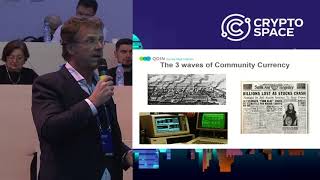
Cryptospace Moscow. Roel Wolfert. Local currencies as the ancestors of cryptocurrencies