Freedom Isn't Neutral
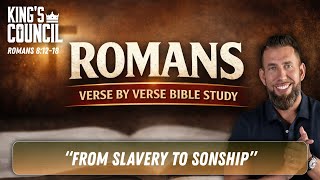
Christian teaches Romans 6, concluding a six-year series, arguing that freedom means choosing slavery to righteousness over sin. He outlines the 7 Rs framework for internalizing baptism and new life in Christ, emphasizing that obedience expresses love and neutrality is spiritual danger.
Chapters
Sing it out. You are, you are, you are, you are, you are, you are, you are. I've never seen him fail. No. I have a testimony, I have a story to sing. This is my story, this is my song. I have a testimony, I sing my testimony. Rain came, wind blew, my house was built on you. I'm safe with you. I come in faith. I feel somebody's faith rising. Rain came, wind blew, I feel somebody's faith rising. This is the reason you made it, 'cause I'm safe. One more time. I have a story to sing. This is my story, this is my song. I have a testimony.
Let's sing my testimony.
Rain came, wind blew, my house was built for you. I'm safe with you. I feel somebody's faith rising. This is the reason you made it. One more time.
Good morning, good morning. Happy Wednesday, beautiful brothers and sisters in the Lord. How are you guys doing? Most of you guys are on the prayer call. I love that prayer call in the morning, good way to start the morning. I see a couple, couple names I don't recognize thus far. Castle Andrews, this is your first time, welcome aboard. Jacob Gomez, welcome aboard. And as folks are hopping on here, uh, just want to say Oh, there's Castle Andrews. Oh, you were on. How you doing? Good to see you. I'm doing good. I was at the conference on Saturday at, uh, Open Door. Okay. Yeah, I recognize you. Uh, familiar face. Thank you. Well, welcome aboard here on Wednesday morning. We've been gathering every Wednesday morning for gosh, going on 6 years now. Going on 6 years. And on these Wednesday mornings, um, we make our way through books of the Bible, usually, uh, sometimes some topical studies. But we are walking our way through the book of Romans now. I just love, uh, expository, uh, teaching and learning of the word. So we, we move sometimes times at a snail's pace, and I'd be lying if I said we ever move at, at anything faster than that, because we, uh, we take our time and go through the word. We really do. Jacob Gomez, good morning, brother. Good morning, brother. Glad to be on. Yeah, are you from the— I meet you on Saturday as well? Absolutely. Yeah, um, I'm from Open Door, and I was the one who asked the question about about business and, you know, not jeopardizing your time with family. Oh, right, right, right. Okay. Yeah, good stuff, good stuff. Yes, sir. Glad to be on. Thank you. Yeah, glad to have you on here, brother. Glad to have you on here. Yeah, uh, this, this family here on Wednesday mornings, it's great. Uh, actually, at 6:30 Eastern, we hop on that to— for some prayer time and as much as we've all been on this every Wednesday, we just kind of reiterated where we're all from. So we're all from different parts of the country. Um, I live in Texas, currently in North Carolina for a couple days for work. But these Wednesday mornings are, are great. So welcome to the family. Welcome to the family. So as I said, we are walking our way through the book of Romans, and last week we started chapter 6. We're going to conclude chapter 6 today, and I have no notes for you guys today, um, so I'm not winging it. It's just I haven't prepped the notes for you guys. Usually I get them together, and I had a guilty or a dirty confession or whatever it's called this morning. Uh, I woke up this morning, and I usually wake up before my alarm, and I woke up this morning just opened my eyes, just kind of sat there a moment, prayed. Then I rolled over, look at my phone, and, um, my alarm had been on for like an hour and a half already, and it just wasn't making a noise. And I'm not sure how that happened, but thank God the Lord woke me up still in time to hop on here. Um, so no notes for you guys, but you'll, you'll be able to follow along just fine. It's only Um, it's only 12 verses we're going to be covering— 8 verses we're going to be covering today, actually. But the Book of Romans, as I've been saying since we started from the beginning of the year, um, every major, uh, Christian theological doctrine is covered in the Book of Romans. And Paul walks out the first couple chapters first saying that, you know, we are sinners, right? We are unrighteous, and none of us have an excuse as to why we don't believe in God. Even if we haven't heard the name of Jesus Christ, God reveals himself through his creation, through our consciences, and then also through his commandments, right? Which kind of covers everybody. His commandments for those who, especially at the time when Paul's writing this, um, Jews who know the commandments of God through creation It's impossible to look at God's glory, His beautiful creation, and not believe that this beautiful artwork that we see, the sunsets, the sunrises, that there's not a Creator who, when we look at this beautiful creation, it's like looking at a house. You know there's a builder. If you see a house, it didn't just get there. If you read a book, you know there had to be an author. When we look at life, when we look at humans, when we look at the world, we know there has to be a Creator. And we know that in our conscience. Even if we never grew up in church, never read a Bible, nobody ever told us the name Jesus, nobody has an excuse to not believe that there is a mighty Creator out there. Chapter 5 ended with, where sin abounded, grace abounded much more. So no matter how much we sin, And again, we're going to get into it a little more, chapter 6. God's grace doesn't give us license to sin, but no matter how much we do sin, that we can max out our sin and we can never out-sin God's grace in our lives. And that's just a, a remarkable, unfathomable thought because God is so gracious, he's so faithful to us, he's so loving to us. And no matter what we've done in our past, uh, he offers forgiveness, his grace. And, and we serve a God where— and it's really the only faith, the only religion. I don't like calling Christianity a religion because Jesus, Jesus came and, um, he fulfilled the law. He didn't abolish the law, but This isn't about religion at all. And Jesus made it clear that those who were legalists, those Pharisees, that they're all hypocrites. It's about a relationship with our Savior. It's about a relationship with the creator of the cosmos. And it's the only faith where you don't have to work to get to God, right? It's not a works-based faith at all. Works aren't involved because if we have a true saving faith relationship with our master then the, the fruit is going to come. The works are going to come. We're going to know our calling. We're going to know our purpose. We're going to know our identity. And we're going to put our hands to the plow for whatever it is God's called us to do on this earth. And, and the works are going to show up. If those works don't show up, then what does James say? We have dead faith. It's not real faith at all. So we don't work, we don't earn grace. We don't earn our salvation. It's unmerited favor. We don't deserve it at all, but God bestows it upon us. And that just shows you his love, how much God loves us. And when we concluded the Book of Revelation at the end of last year, when there's a new heaven and new earth and Jesus is dwelling amongst his people, that's all he wants. That's all he wants. But he doesn't want to wait until then for it to happen. He wants it to happen now. And we could have that relationship with Christ now. Of course, no matter what we see on this earth and how much of heaven is revealed to us, we know that heaven— no matter how great we know and think heaven's going to be, it's going to be even better than that, right? We, we know it's going to be even better. But ultimately, the conclusion of, of The Bible is really the, the door of everlasting, right? It's the beginning of everlasting. And all God wanted from the beginning is, is relationship with his creation. And that oneness, that fellowship is available. And it's really crazy to think about how much is going on in the world, how many people are on planet Earth how many people were praying this morning when we were praying before this call started. And God is so omniscient, He's so grand, He's so majestic that He hears every prayer as if it's the only words being spoken. He knows every thought in our mind right now. He knows every feeling in our hearts. And He cares for us. His heart breaks when we're in pain, when we're in need. But oftentimes, some of the pain that we feel in this life, some of of the, the trials that we face, it's, it's not because God doesn't love us. It's not because the enemy is just always after us, which he is. The enemy hates us. He hates God, um, and he wants nothing more than us to, to not have that relationship. But oftentimes we fall into various trials just simply because of ourselves. It's simply because of ourselves, right? We, we play the one foot in, one foot out game of sin in our lives. And whenever we do that, we're giving consent, we're giving legal consent to the enemy to, to, uh, to really bust through that door that we've left cracked open for him. So last week we, we talked about the, the 4 Rs, right? And I'll recap that a bit, but what one of the, the biggest things that, that Paul gets through to us in that passage last week in chapter 6 is he needs us to know the truth. Our minds need to be convinced that we need to realize what truth is. And in verse 3 of chapter 6, he says, or do you not know that as many of us were baptized into Christ Jesus were baptized into his death? Right? It's about knowing. It's not about feeling. There's times we feel like not doing things, and the, the most effective Christian walk any of us could have is going to be a disciplined Christian walk, right? But when we don't give way to our feelings— I mean, think about the— I guess it could be even when you were a believer, when you just gave way to your feelings rather than what you knew. I, I mean, going back to your BC days, I know for me I could think of times everything I did was based upon feeling. Absolutely everything I did was based upon feeling. What would make me feel happy? What would make me feel joyous? Um, I, I remember even, um, like my sister and her husband who aren't walking with the Lord, um, they were determining where they would move to that would make them happiest. Where, where's the best place to, to raise kids, you know? And Everybody always thinks the grass is greener on the other side. And when we simply move in our feelings, we often find that, oh, the grass may be a little greener, but it's still the same me, right? We move somewhere else, we get a new job, we move to a new state, we move to a new church, something like that. And then we realize something came with us, and it's us. Right? The grass is always greener on the other side, but all the, the, the junk that I bring into every situation, I'm bringing into that new situation. And now where the grass seemed greener, it doesn't seem so green anymore now because I'm there. But oftentimes, uh, even as believers, we still move by our feelings rather than the disciplines of what God is calling us to and what we know. So the second time Paul used the, the word know, it's in verse 6, and he says, knowing this, that our old man was crucified with him, being Jesus, that the body of sin might be done away with, that we should no longer be slaves of sin. So we know this, like Galatians 2:20, we've been crucified with Christ. It's no longer us who lives, it's Jesus who lives. In us and through us. We live our life in Christ. Any man who's in Christ, he's a new creation. We need to know that when we said yes to the Lord, when we got, got, got, got plucked from the dominion of darkness and brought into God's glorious light, that there was a shift. There is a shift. And even when Paul in Philippians 3:20, when he talks about our citizenship being in heaven And even in Colossians 1:13, um, when it— when he says that we've been, we've been, uh, delivered, right, or rescued from the power of darkness, the, the verbiage in the Greek that Paul is using there, it's, it's really about like governmental authority, that we've been, we've been pulled, we've been brought, we've been rescued, we've been delivered from from the power. The, the word power is not the same power that, that's used in, um, like the Book of Acts to describe the, the Holy Spirit. That, that would be dunamis, that dynamite power, that supernatural power, that, that boom-goes-the-dynamite type power. Is in Colossians 1:13, it's the word exousia, and it has more to do— we've been rescued from the, the world system, right? And then transferred, and we've been brought into the, the kingdom of the Son he loves. So, but it's really transferred. So literally, we, we were transferred from this, this Babylon world system into the kingdom and citizenship of heaven when we say yes to him. And, you know, we spent the whole weekend at Open Door Church talking about the kingdom and being a king. And Jesus said, repent, for the kingdom of God is here, is at hand. So the kingdom isn't something that we, we go to when we die. It's not in heaven. It is in heaven, but it's also here on Earth. And when our citizenship shifts, we're transferred from, from this worldly system, right, where, where sin just had its claws in us and it's it, it was reaching into us, and we're in bondage, we're in chains. Those chains break, and now we have new influence and new, new power, like an ambassador does. You could be, uh, you could go to a U.S. embassy in any country, and as soon as you, you walk onto that, that ground of that U.S. embassy, but the, the U.S. laws and really government applies in that area. And when God created Earth and he created his people, Earth was meant to be a colony of heaven, and the church is the embassy, right? So anytime anybody, an outsider, unbeliever, sees us, we are pilgrims here on this Earth. We should, we should be identified as simply being different. Simply being different. When I moved to Texas from New Jersey, I, I, I'm being told I'm losing some of my New Jersey, uh, twang or slang, right? I guess it's slang up north, it's twang when you get down south. But, uh, people knew I wasn't from Texas, right? I come from New Jersey. People know I wasn't from Texas. Good. People should know we're not from here, right? No matter what state any of us are in right now, people should look at us, be like, he's different, she's different, where are they from? Oh, actually, my passport says heaven. That's where I'm from. I'm just a pilgrim. I'm going to act different, I'm going to look different, and I'm going to stand out because God has transferred us from, from, from that, that worldly system into the citizenship of heaven. And just the spiritual aspect of that, um, it's so dynamic, and it kind of sets up what we're going to be, um, going through these last few verses here in chapter 6. Um, so the 4 Rs from last week— Paul says, um, we, we need to know these things. So the first R is realize. The third time it says knowing is in verse 9 of chapter 6: knowing that Christ, having been raised from the dead, dies no more. Death no longer has dominion over him. So if we were buried and crucified with Christ— and this is what the water baptism represents— we go down in the water identifying with his death and his burial, and then when we're raised out of water, we're raised to walk in newness of life. And we need to know that because Christ was raised from the dead, we were actually raised from the dead. We went from, from zombies, from dead man walking, to, to resurrection life, resurrection power. And Paul says, likewise, you also reckon yourselves to be dead indeed to sin, but alive to God in Christ Jesus our Lord. To reckon means it's one step further than knowing. We, we know intellectually. Okay, I know the facts, I know what the Bible says, and I actually believe what the Bible says. But the, the reckon is now believing in our heart. It, it's, it's not just a mind thing where I know, but it's in my heart. Sometimes, um, I've heard somebody say it's like when you just know it in your knower, right? It's not just here, but when you know it in your knower, it's like you know it here and here. You just know that you know that you know. And that's what Paul is saying to do, to simply, um, to realize, to reckon. It's one thing to have the check, right? It's one thing to have a check, but it really means nothing until you endorse that check and cash it. And now, now you realize that check. It's not just having that check, but It's not until that money hits your account that you actually fulfill that check. So, um, moving on with the, the R's, we have resist. So realize, reckon, resist. And what are we resisting? We're resisting sin because he says do not let sin reign in your mortal body, that you should obey it in its lust. And do not present your members as instruments of unrighteousness to sin, right? So there's two commands here: do not present your members as instruments of unrighteousness, but then present yourselves to God as being alive from the dead, and your members as instruments of righteousness to God. So the third R is resist. We resist. And what are our instruments? We, we talked about that last last week, our instruments are our— they're our weapons. That's really the word, it's our weapons. But what are our weapons? Our weapons are our bodies, our eyes, our ears, our hands, our feet. Those are our weapons. And what are we going to do if we're in battle? We know that when we say yes to the Lord, we are signing up for battle, right? A lot of times people want Christianity to be a cruise ship, but it's really a battleship. We sign up for battle because now the enemy that we were serving, the devil himself, the father of all lies— we actually, uh, were walking in the role of sonship, um, before we came to Christ. That we, we only have, have one daddy. It's either God himself or the enemy. And when we're slaves to our sin the enemy is. We assume that role of sonship to him. So when we're broken from that, when we break free from that, when Christ breaks us free from that, best believe there's going to be battle. And what do we do if our members are our instruments for warfare? Our eyes, our ears, our bodies, our hands. Well, what are we touching? What are we putting our hands to? What are we watching? What are we hearing? What are we listening to? And I mentioned oftentimes when crap hits the fan in our lives, it's because we let our guard down. Sometimes we just not just like put our guard down where we're just dropping our weapon. We're literally handing our weapons over to the enemy by the things that we watch, the things that we listen to. How do we conduct our lives? Brian Schwartz, had a phenomenal session on Saturday, and he talked a bit, and he had no idea that we have been covering this on Wednesday mornings, but he talked about when he got drafted into the NFL, and he got a call from Tom Coughlin the day he got drafted, and he picked up the call. Tom Coughlin said, are you ready to be a Jacksonville Jaguar? Right. And, you know, just the, like, yeah, I'm ready. I've been waiting for this moment. And then, you know, he talked about how he realized, I don't know if I am ready for this. He didn't get great coaching in college. He didn't know how to drop back in pass coverage, things like that. But the day he signed his contract, he signed a contract for more money he ever thought he'd make in his life. And then he signed another contract that held him to a standard of his personal conduct, right? And he wasn't walking with the Lord, but he's like, oh, guess what? If, if I get fined, if my, my conduct, if I don't walk with integrity, if I have any conduct that's detrimental to the team, they're going to find me a game check. Best believe I'm going to be disciplined. That's enough reason for me to walk a disciplined life. And then when he got saved, right, I don't know if it was his rookie— I think it was his rookie year, he got saved at a Bible study at Mark Brunell's house. Like 4 or 5 teammates and their spouses or girlfriends all got saved, and he realized, wait a second, I'm so willing to, to walk a disciplined walk because I know the consequence is I will get fined. I get fined one game check if I don't walk a disciplined life. And he said, if Jesus is calling me to live a disciplined life, why on earth would I ever disobey him or not walk a godly life? Because that contract that we signed for him when he calls us and drafts us, and, and now we're called to his team, why in the world would we ever, um, not intentionally walk out a disciplined life? And part of walking that disciplined life is making sure that our instruments, that we do not present them to the enemy. We don't just present them to our— the opposing team. But what do we do with them? We present them as, as instruments of righteousness to God. For sin shall not have dominion over you, for you are not under the law but under grace. So sin should not have dominion over us anymore. We've been called out of that, that dominion of darkness. Again, Colossians 1:13, he rescued us, he delivered us from that dominion of darkness. If we're walking in darkness, it's because of us now at this point. And you can blame the enemy all you want, of course, the, the attack, the, the fire gets intense at times, but God has called us from that. Death lost its grip in our lives. So when Paul goes on here in verse 15, he says, what then, shall we sin because we are not under the law but under grace? Certainly not. And the way it's written in the Greek, when he asks— when he poses this question in verse 1 of chapter 6, what he's talking about is habitual sin. The way it's written in the Greek here, it sounds the same in English, but he's talking about a different type of sin. Now it's not that habitual sin where we're just walking in sin. Now this is the occasional sin. So now if you're saying, okay, God's grace, it always outweighs, overpowers, overflows my sin, so should I walk in constant sin? Of course not, right? Heaven forbid. Perish the thought. But now, can I get away with those itty-bitty sins? Is it okay to have a green light to kind of toe the line of that sin? And what does Paul say? He has the exact same answer. He says, certainly not. Which again, that idea is perish the thought. Heaven forbid. Absolutely not. Grace is not a license to sin in any sort of way. And I mean, my oldest son, he just growing up with a relationship with the Lord, got into his teenage years, high school years, and, and said I, I want to do me right now. I want to have some fun in life, and I'm going to come back. I know God is a gracious God. Hey, we all fall short of glory, right? If I sin here, sin there, we all fall short, right? Using Paul's own words in Romans, but not understanding the concept of the entire book of Romans. Like, yes, we all fall short. Yes, we are unrighteous, but it's not so we could think we're just some ugly, dirty sinner. Is to know that in God's goodness and his grace and his loving kindness for us, that he imputes his righteousness upon us when we place our faith in him. Where even though we were that, that ugly, marred, uh, dirty rock, we're, we're a lump of clay that he spun on his potter's wheel to, to make beautiful, to, to create this beautiful masterpiece with. And it's just the same person, the same person. But, but God, he's the one that molds us, he shapes us. And just the, the simple act of repenting, repenting, being forgiven for our sins. And we literally could sin 5 minutes ago, and we, we, we repent, we ask God for that forgiveness, and he forgives us, and he wipes the slate clean. He wipes the slate clean every time. And not only that, he, he casts our sin as far as the east is from the west. He doesn't choose to hold us, hold it against us again. That, that's, that's another thing that blows my mind about God, because I don't care how forgiving you are, right? I know for all of you who are married, right, you've probably, you know, you've gotten into a little argument with your wife at some point. And something that you guys reconciled, came to a resolution, y'all are good. And then later on there's some little argument and you want to bring that thing up again. It's like, whoa, wait a second, no, that was hashed out, that was clear. It was like debt paid, forgiveness, reconciliation, we're good to go on that. And you bring that up again, it's like, why are we going back to that? But God doesn't do that. He doesn't look at us and say, oh man, I know he or she's gonna jack it up one more time. Look at the track record. No, when he forgives and he, he restores us, he renews us, we're, we're new again. He doesn't hold that against us. And I don't know about you, but I can't play the role of God. It's like I don't have it in me. I don't have it in me to have that much grace for folks. I just don't have it in me. Right? But to have that much grace, to never bring it up again, to never hold it against somebody again— I, I do my best. And the more Holy Spirit that's in me, the more Christ-like I am, or being conformed more and more to his image. But it's just remarkable how it doesn't matter what we've done, doesn't matter what we've done, he forgives us. And then verse 16, he says, do you not know that to whom you present yourselves slaves to obey You are that one's slaves whom you obey, whether of sin leading to death or of obedience leading to righteousness. So we're, we're all slaves. And who are we slaves to? Who do we obey? What do we obey? Do we obey our feelings, or do we obey truth? Do, do we realize and, and recognize the truth Or, or do we live a life of sin and become a slave to that sin? I mean, before I came to Christ, I, I was a slave. There wasn't anything I wouldn't do to get my hands on the drugs that I was addicted to. I was a slave to it. My day revolved around it. My, my sleep schedule revolved around it. Everything that I did, that, that was the number one thing in my life. And no matter what your, your vice was, um, you could probably say the same thing. But we're no longer slaves to sin, but we're slaves to righteousness. Who, who's our master, right? If our passport really says heaven right now, who's our master? Who are we serving? Verse 17: But God be thanked that though you were slaves to sin, yet you obeyed from the heart that form of doctrine to which you were delivered. What's that keyword there? Obeyed. Obedience. God wants our obedience.
He—
the way, the way we show our love for Jesus, right? We could all talk about how much we love Jesus. Love Jesus. Praise the Lord. Love Jesus. How do we actually show our, our love to him? It's for our obedience. We obey his commands. Jesus makes that clear in the Gospel of John. The only way we truly show our love is through obedience, through our actions. Agape is the word— love in action, right? We talk about agape love, right? That, that love that's unconditional, that love that's sacrificial, that love that rocked our world when we first felt that love of God. But what God wants is that agape, that love in action. Any, any of you who's a husband, you know, you could tell your wife you love her, you love her, you love her, but when you show her you love her, when you know those things, you know her love language, you know the things that are going to make her feel seen, heard, and loved, when you actually do those things, it's those little things where it's like, I know my wife loves me But when she does those little things, like, oh, okay, yeah, she loves me. And that's what God is saying about our walk with him. If we truly love him, we're going to walk these things out. We're not just going to wake up every morning, thank God, tell him you love him, and go about your day. You're going to live a life where your, your love is exemplified. And that's really how we make our mark on this earth. We really want to be citizens of heaven, ambassadors. If we're really pilgrims and sojourners here on this earth, if people are really going to identify us as being different, oftentimes it's going to be they, they just notice that love that we have. Because I'll tell you what, the love we have from Jesus and now the love that flows in us, through us, unto others— when somebody feels that That's different. That's not a man-made love. That agape love, that, that's not something you could just muster up on your own. Oh man, Zach, I see that. Is that steam coming out of your coffee? I thought that was smoke. I was like, my boy Zach smoking something over there. What in the world's going on? I didn't know. My heart dropped for a second, Zach. I was like, good Lord, what's going on out there?
Man, uh, if I'm lighting up on Bible study, I don't know.
I don't know what's up, man. Ah, so Paul goes on. He said, he says in verse 19, I speak in human terms because of the weakness of your flesh. For just as you presented your members, your bodies, your body, your eyes, your ears, your hands, the weapons of our warfare as, or the, the tools of our warfare. As you presented your members as slaves of uncleanness and of lawlessness leading to more lawlessness, so now present your members as slaves of righteousness for holiness. And notice how he says, so when we presented ourselves as slaves of uncleanness and of lawlessness leading to more lawlessness. Darkness begets darkness, right? And that's why I talked about it a little bit last week for the— and we use the example of pastors who all of a sudden wind up in an extramarital affair. They don't wake up one morning, they're not like sold out for the Lord, spending time with the Lord, they're in the word, and they just wake up one morning and they cheat on their spouse. What happens? They, they make a decision to open up the door and they start to entertain sin. They start to walk in darkness. And as soon as you go down that path of darkness, darkness begets darkness real fast, right? And you start to gain momentum in that darkness. What happens when we live a life of holiness, or just a life of discipline in general? I mean, if you try to to clean up your diet, if you try to start going to the gym, something like that, when you start, it could be tough. It's like, okay, this is new, I'm pressing myself, I'm being stretched. But you get into a rhythm with it, and now all of a sudden you gain momentum, and now all of a sudden it's like, oh, it— I can't not go, I can't not stick to my diet. Whatever we're disciplined with is when we start getting those reps in, they become habits in our lives, and now it's like I can't live apart from that thing. So same thing, as soon as we start walking that, that walk of darkness, the darkness begets darkness. We start to live in darkness. And what does the enemy want to do to each and every one of us? He wants to isolate us. He wants to isolate us. When there's people who don't show up on these Wednesday mornings who are regulars on Wednesday mornings, then it's like, okay, what's going on in their life? Because oftentimes when we start to fall in sin, what do we do? We separate ourselves, we isolate ourselves. And it's not just like, oh, that person decided not to show up on Wednesdays anymore, or that person's not showing up to church anymore. We should say, okay, what's going on in that person's life that they're isolating themselves from the body of Christ? Because once the enemy sees that we're entertaining darkness, man, he's going to lead us down that path of darkness real fast. Then Paul goes on to say, for when you were slaves of sin, you were free in regard to righteousness. Meaning when we were slaves of sin, we had no obligation to righteousness, right? We were slaves. We were slaves to sin. What fruit did you have then in the things of which you are now ashamed? For the end of those things is death. But now, having been set free from sin and having become slaves to God, you have your fruit to holiness and the end everlasting life. For the wages of sin is death, but the gift of God is eternal life in Christ Jesus our Lord. So what fruit did you have then in the things of which you are now ashamed, right? What fruit did you have when you were slaves of sin? What fruit did you have in your life? For me, it was constant turmoil, chaos, no peace at all. If I could look back at my life when I was a slave to sin, nobody in my life Although some people let me down in certain areas, nobody let me down more than I let myself down, right? What fruit was in my life when I was a slave to sin? No good fruit. There was no good fruit at all. And, and John 15, what, what's going to happen when we abide in Jesus? But well, there's a few things. Jesus says, I'm the vine, you are the branches. He who abides in me and I in him bears much fruit. It's not just like you're bearing different fruit now, you're bearing good fruit. It's not just good fruit, but there's much fruit. What does it require? Abiding in Jesus. If anyone does not abide in me, he is cast out as a branch and withered, and they gather them and throw them into the fire, and they are burned. If you abide in me and my words abide in you, you will ask what you desire, and it shall be done for you. But this My Father is— by this my Father is glorified, that you may bear much fruit, so you will be my disciples. So if we're no longer slaves of sin, we're slaves to God, we're slaves of righteousness, and we're abiding in Jesus— I mean, this is a phenomenal promise that Jesus makes us here. We're not just going to bear fruit, we're going to bear much fruit. And then I don't know if you caught this, but he says you will ask what you desire and it shall be done for you. It's like, huh, we all seem to have a lot of prayer requests every day, but if I simply abide in Jesus, I'll bear much fruit. It's going to be good fruit and much fruit, and then what I ask, it will be done. And a lot of times we, we seem to lack that breakthrough in prayer, and when we lack that breakthrough in prayer, a lot of times is because we're not abiding in the, the true vine. And, and maybe it's just that the things that we're praying aren't in alignment with, with the vine, right? It's funny how our, our prayers tend to shift when we are spending time with the Lord and we are attached to the true vine, where we're praying different things. And obviously we are all to pray not our will but his be done. But we actually don't just say those words and know that that's the thing to pray, but our heart comes into alignment with that, where now we're praying for, for his will to be done, and our desires change, right? Delight yourself in the Lord and he'll give you the desires of your heart. Well, when you delight yourself in the Lord and you're attached to the true vine, now all of a sudden your desires change. Your desires transform into his desires. And that's all part of the— that shift from that Colossians 1:13, that we were delivered from the dominion of darkness and transferred into the kingdom of the Son he loves. That part of that transfer is now it's not my desires, it's his desires. And his desires— it turns out that we serve a God that's so faithful to us, turns out that his desires for us are greater and better for us than our own desires. Wouldn't you know, that he knows better for us than we know for ourselves. So, um, Paul, along these lines, again, it's so important that, that we realize those, those four R's, that we realize we know what truth is, and we don't just know them, but we reckon them in our hearts, and we, we resist just, just turning our weapons over to the enemy The things that, that we watch, the things that we, we hear, the things that we, we entertain. And obviously living in the year 2026, we have access to so much more than we did, right? If you wanted to watch something you shouldn't have watched, shouldn't be watching as a kid, you had to put some effort into it. You had to put some real effort into it, right? Nowadays, I mean, it— everything's at our fingertips. Everything's at our fingertips. And we have to replace them and then present these things as our tools of warfare to God. Present these things. Abide in him. Abide just simply means to dwell. Dwell with the Lord. And again, it comes down to just everyday decisions. Everyday decisions. Because if I choose— I mean, I'm on the road Every, every week I'm in a hotel room by myself. Can I, you know, when nobody's watching, can I present my members to, to the enemy? Absolutely. But it comes down to a conscious decision. Do I want to, um, dabble and play the game where it's like I could I could, I could cheat in this area here. I could, I could toe the line in this area here. Nobody will know. Well, who's going to know is God, right? Even if you could get away, uh, with something from everybody else on planet Earth, who's going to know? God's going to know. And who's going to know as much as God in that moment? The enemy's going to know, man. When the enemy gets you to kind of cross that line and give in to temptation, he knows it. And what does he do? His hooks are pretty effective. The hooks of the enemy are pretty effective. But when we open that door, we give him consent. It's like, imagine one of those big, um, I guess it's called a meat hook. You guys remember that, um, that movie I Know What You Did Last Summer? That old movie. It's so— remember that guy, he had that big meat hook. That's how he would kill people. So that's what the enemy has. And when we feel like we could even get close to that line, to now presenting our members to him, what's he going to do? He's going to try to snatch us up with that thing and pull us to the dark side. And oftentimes it's us that gets close enough to him to, to, to, to get hooked by the enemy. And once he's got his hook in us, we feel it, we know it. He'll drag us into that darkness. But first of all, we don't have to even get close because every temptation that, that comes our way, we, we have the power of the Holy Spirit within us to resist and withstand any temptation, to not even come close to that line. But it just comes down to, to disciplining ourselves. You could, you could train yourself in discipline, right? Paul talks about training himself. We don't just try to walk this out and say, ah, let's see what I do today. You train yourself. If you want to be disciplined in, in any area of your life, start with one discipline. Make your bed every morning, right? Make your bed. There, there's, there's two things that I, I hate, right? I hate making my bed and I hate ironing. Two things I can't stand doing. Can't stand doing either one of those things. But do I make my bed? Yeah, yeah, I don't do— and honestly, when my wife had her, um, her surgery a couple weeks ago, now my wife, she's like, she's like intense about it. Like, she doesn't want me to make the bed. Like, if, if she gets up first and then I get up, she doesn't even want me to make the bed because it's not going to look like when she makes the bed. It's like she, she's— it's almost like she went training, uh, by like housekeepers of the Marriott or something to make the bed. But when she had her surgery, right, and one thing we, you know, we have a king-size bed. So it's like, when you have a king-size bed, you got to be on this side, then you got to go on that side, then this side, then that side. I'm like, oh, good Lord, let's just pull up the covers. But when she had that surgery, I was like, I know what this means to my wife. And I'm disciplined. I'm gonna at least make my bed every day. So I took that extra effort. It took me a good 5 minutes to make the bed, to fluff the pillows, right? You got to fluff the pillows. You can't just make the bed without fluffing the pillows. And you know how many pillows we have on your bed? I don't know how many husbands contend with this, but we have a lot of pillows on our bed. But she likes everyone to be fluffed, and there's a certain way you fluff the pillow and then smooth it out. Fluff and smooth. But I say, you know what, I'm disciplined to make my bed, but I'm going to be a good husband and try to make this bed look like the way my wife will make it because she's incapable right now of making the bed. And I did it. But what was it? It was a conscious decision. It was just this. I see a lot of laughs. Let me check this chat. What are you guys saying? Okay.
Lauren was just sharing about— she shared a picture of their, of their trip, of their their bed and that a king size is way too big and you just get a smaller one. Yeah, that, that's, that's, that's what happens when you live in a camper, and that's just not—
no, when we had a house, we still had a full-size bed. Sometimes actually we sleep in a twin in the RV. We just stole our daughter's bed.
That's how you end up with children, Lauren.
No, it's been 9 years. God is good.
Yeah.
Hey, well, I'm unmuted, uh, Christian. We are 10 minutes up against the, uh, up against the hour. I know you got a busy day, and, uh, Jonathan's had his hand up for a little bit.
Jonathan, let it rip. Thank you, Raj. I love Raj. If you don't have a Roger in your life, get yourself a Roger in your life. He's my accountability guy. I love it. Thank you, Raj. Jonathan.
Raj is the best. Yeah, I know. This is good, Christian. I was just thinking here, I loved your, the 5 Rs that you had there in the beginning. That's right, was it 5 or 4?
It was 4.
4 Rs, yeah. But that, when I was reading this the other week, I circled the words in verse 6, knowing this, and in verse 11, reckoning yourselves, and then in verse 13, presenting your members. And just that idea of Paul, like, you know something, then mentally embrace it, and then act on it. And then he seems to kind of almost— it's like this chapter. I know Paul didn't write the chapters, but you know, verse 1 and verse 15 are so identical. So he's kind of like makes the statement, kind of explains it, and then he kind of makes the statement again in verse 15, and he kind of like doubles down. But then it's all about action and heart in verse 17. You know, the first 14 verses were more like from a mental knowing, reckon yourself, and then act on that. And in verse 17, obeying from your heart, which is okay, now it's at a deeper level. And he takes the second part of the chapter and doubles down. Now it's from your heart, and this is the fruit. What kind of fruit are you presenting from that? And I thought that was, uh, like, just— I was— because of trying to wrap my head around what Paul was saying, I thought that's what hit me there. So, but I do like the 4 Rs too. It's really good stuff.
Yeah, amen. And if I had, uh, put the notes together for this session, I'll make sure I have them for next week. Um, but really, Paul mentions these 4 Rs, and of course, that again, every time he says to know, to know, I, I say realize, right? Because it's not just knowing, but it's really realizing it, then when you reckon it, you really count it true personally. But it's really— if we could remember these 7 Rs, and I will, um, I, I'll start next week going through these 7 Rs, and I'll have the notes for them. But, um, recognize, right? We discern the moment. Is this a temptation or a lie? And, and realize— we need to know. We need to know the truth. Right? And when we know the truth, we recognize a lie. And then when we reckon, we count it true personally. It's not just we know it here, but we know it here. And then we repent, we change our mind, we, we turn direction, and then we renounce, we, we break agreement with that sin. If sin is in our life, if the enemy has his hooks in us, we've probably given him legal consent for that because of our, our actions. And then we resist, right? We, we stand our ground, and then we replace, you know, instead of presenting our members as instruments to the enemy, we present to God, right? We present ourselves, our, our lives, our bodies, um, where, where our entire lives should be a sacrifice to God. Roger.
Hey, so I've got a little bit of an advantage on everybody even without the notes because you send me like the, the title slide, right? And, and you name this thing. And so the, the title of today was, um, Freedom Isn't Neutral. And then I spent some time and I'm like, all right, what does he mean by that? What's he— what's, what's, what's he mean? And as I was going through this, the, these verses again, you know, what I discovered is that we're We're a slave to something, right? And it's— we either— we're either a slave to sin or we're free of that and we allow ourselves to be bound to righteousness, which is much better. You know, the slavery, the freedom that we enjoy always has a master. And is the master yourselves and sin, or is it righteousness and God? And the whole thing going through it, like, there's, you know, there's, uh, there— what did I— I had this thought and I put it in the chat, but it was, um, was it two— oh, good grief. There's two freedoms, two fruits, and two endings, right? So when you have two freedoms, you have a choice of two freedoms, and they provide different fruits, but they also have very different, different, um, endings. And I think that's what Paul's trying to communicate in this, is like yeah, you have the freedom to do, but like, this is where it ends. And, um, so, um, it was, it was just cool. It was just like kind of my take, just trying to figure out like, where's he going with this? Freedom is a neutral thing. So without notes, hopefully I came kind of close to what you were thinking.
Yeah, yeah, yeah, absolutely. Because it— I mean, what are we sowing into? We sow into the flesh, the flesh is going to reap corruption. That like the, the fruit of sowing into the flesh is not good, but if we sow into the Spirit, the Spirit will reap everlasting life. So, and we do have a choice. That it's a, it's a beautiful thing, this volition we have, the power to choose. God gives us that power to choose. And which, which one are we choosing? But we can't be neutral. We can't just, um, sit on the fence. There's no fence in, in this walk. We— and we can't sit on the fence. And if you try to sit on the fence, you realize that the fence is actually the enemy's territory. Zach?
I couldn't find the unmute button. I'm just kidding.
Um, he's a smoky guy over there. He couldn't see the mute button, right?
Can you—
he was probably hidden on that giant bed. He couldn't find— couldn't find the mute button, right?
Um, No, it makes sense, Roger. While you're spitting all this fire in the chat today, I'm over there like, you're like, you got backup today, Christian. He's like ad-libbing the whole thing. And no, it was great though. I've really enjoyed what you've shared today, Roger. And it made me think about how slavery is somewhat the same, but also in some ways different culturally from what it was back in this biblical time when when you're talking about like slave to sin, slave to Christ, like what does that look like? And this is back in a time where, yeah, people were bought and sold, but also sometimes people would decide to stay committed to their master. There were good masters, right? So, I mean, you read Solomon's words saying like sin's good for a season, but then like I mean, eventually sin is a bad master, right? Whereas we can choose to be a slave to Christ forever, and that would be a reasonable thing back then. So sometimes when I read those words, oh yeah, like being a slave to Christ, like it just doesn't sound right because of the connotation of slavery in our day, but really, I mean, Christ is a good master, and it's just that commitment, and as you were talking earlier, Christian, um, you know, like thinking like, oh well, well, the Lord can see what we're doing. I remember when I was a kid, I used to think— this bad theology, I mean, I'm talking, I was, you know, really young, uh, I heard somebody say, oh yeah, well, you know, you know, so-and-so's watching down from heaven. So I thought about my great-grandmother. She's like the most proper woman. She, she was crazy, but she traveled all over the world and was just really high class. And I'm just thinking, man, she's watching from heaven. She can see what, uh, you know, she can see everything I'm doing. It kept me straight for a little while as a kid. Um, and then I realized later on in life, I'm like, well, no, maybe not, but the Lord can see it. And then at some point it changed from the Lord can see it to no, my heart just changed and I just don't want to do that stuff anymore. Like, um, I know we brought this up in the past where You know, like maybe you're at the gym and some girl thinking she's cute walks by. Well, I don't want to look at her. You know, I just— my heart is different. You know, my heart is postured in a way where I'm committed. And so the same thing with like, you know, being with the Lord, like, yeah, we're either a slave to sin or we can be a slave to righteousness. But slavery sounds so bad, but it's so good in some ways, right? And it can be something that we choose and something that we love and something that changes our heart.
Amen. Yeah, no greater master than Jesus Christ himself, right? As the slave owner. I mean, it's just phenomenal. Gita?
Yeah, wow. I mean, wow, this was incredible. I'm just so blessed by everything everyone said. And again, right on the money, right on time. And the Lord has been really leading me to train my thoughts, not trust my thoughts. And we're called to do that as believers, that every thought that now comes in my mind, I verify it against the word of God. And if it doesn't agree with the word of God, it has to go. You know, because you talked about being enslaved to sin or righteousness, and like right now I'm just tearing down some Jericho walls of strongholds that I didn't even know I had. And we have to really be mindful of this as Christians because we can normalize sin And the Lord has shown me how we just normalize certain sins. We might not be going out there and like robbing banks or doing something that's so obvious, but in our mind, you know, we've aligned to sinful thinking or things that are just normal, but it's not. Not trusting God fully or standing on his promises. So I really love this, um, and I love the whole thing about grace as well. It's really his grace and goodness that leads us to repentance, and we need to understand the delicate balance between grace and works. It's not to be taken advantage of, you're right, But when we actually harness the true power of it, it's life-changing, and you can never go back.
Amen.
Amen.
Good word. Way to close this out, Gita. Way to close this out. Well, I, I do have a hard stop today. But I should show you, I did make my bed. And I was gonna ask you, I'm like, all right, Christian, you said it.
Now let's see it.
And You know, you're held accountable when you could— when you're on a Zoom teaching about discipline and your bed's in the background. So that it's a good accountability tool. But I promise you, even if you weren't— the bed wasn't on camera, I would have made my bed. Funny enough, one of the first arguments Lucy and I ever had as a married couple was over space in our queen-size bed. Right? Like, it was like we had our little snuggle time and it's like, all right, all right, I need a little space. And I'm a big guy, queen-size bed seemed pretty small for two of us now. And we literally— our first argument was, I remember I was like, so bad, I was like, this is the middle of the bed, this right here, this is the middle of the bed, you stay on your side. Oh no, you might not just get just give me a little space right here. And I was like, you're 5 foot nothing, babe. You're 5 foot nothing. I'm 6 foot 4. Give me a little space. Like, I don't even want like 3/4 of the bed or 2/3. Just give me half the bed. That's it. And that was our first ever argument.
Lauren's expression says everything.
And then lo and behold, gosh, 14 years later, You know, and after having a son who's 5 now, who like barely slept as a young child, he sleeps well now, but was in our bed quite often because he just wouldn't sleep. I could sleep on a 2x4 at this point in my life. 14 years ago, I was like, I needed a whole bed to myself. It was like, okay, I need all this to— now it's like I could sleep like in this much space now and be comfortable. With it. It's like, I'm good to go. So it's just kind of funny how things work out. But yeah, I, uh, yeah, I, I get transparent with you guys. That was our first ever argument, and which is funny, and I'm so grateful because it's like, man, if that was our first argument, we're doing all right. And of course, I— you guys probably think a lot less of me because that's a horrible thing to argue about. It's like, that, that was it. But We're blessed. Those are the issues we had early on in marriage. Praise the Lord, praise the Lord. So with that said, Javi, good seeing you, man. Are you on the road right now? No, bro, I couldn't make it to my events. I got stuck in Dallas, remember? Yeah, but I, I thought you were gonna still try to get there. And yeah, I had to cancel. Okay, Ryan did some, but yeah, I had to cancel unfortunately. Yeah, Javi's one of the guys I got snowed into, uh, Texas.
So, but all right guys, next week, 8 o'clock in the morning, Hobby's bed's made and his hair is looking amazing.
Just—
that's just Hobby all the time.
Well, thanks, Rylee, I appreciate it. Yeah, Hobby's got great hair. He goes to sleep with gray hair, he wakes up with gray hair. Some people got it, you know, some people just got it. So I love you guys. Again, uh, Jacob, Thank you for joining us this morning. I think Castle— I think her name was Castle. Yeah, she hopped off. But yeah, still there. No, I'm still here. Oh, there you are. There you are. Yeah, great seeing you guys this morning. Absolutely. Yeah, hop on Wednesdays. This, this family that we have on Wednesday mornings. There's, you know, folks like Roger, the Grosses, Kathleen, a handful are like consistent every Wednesday. Then we have, uh, a bunch that are in and out on Wednesdays. But this is a great group here and a lot of insight. Everybody on here is a Bible scholar in their own right, so it fills my cup. So I hope it could fill yours as well. Amen.
Love you. Thank you, guys.
Y'all have a blessed day. Know your identity, know your calling. Know your master, Jesus. Serve him well today. See you guys. Love you. Love you too. Bye, Christian.
See y'all next week.
Bye.