The Church & Politics: When Leaders Lead and Pastors Lag
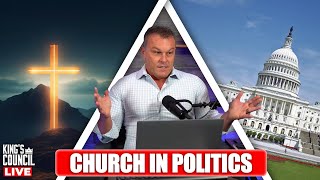
This is a recorded livestream talk by Rylee Meek arguing that Christians and church leaders should be actively involved in politics. The speaker rebuts common objections (stay gospel-only, avoid division, legal/tax fears, Christian nationalism label, eternal-only focus) and marshals biblical (Jeremiah 29:7; Romans 13; Mark 12:17; Micah 6:8; Isaiah 1:17; First Timothy 2:1-2) and historical (Jefferson, First Amendment, Everson v. Board of Education) grounds to claim the church must influence public policy and vote to preserve moral culture. The talk concludes with practical exhortations: pray, speak, act, engage locally (school boards, mayors), and hold leaders accountable.
Chapters
Heart like heaven. All right. All right, everybody. Welcome back to the King's Council. Happy kind of impromptu day today, guys. I'm. I mean, I'm just feeling urged in my spirit here in a good way. In a very, very good way. Man. It was just got to see the, the memorial for Charlie Kirk and it was just absolutely. I think it was phenomenal. Pastor Rob McCoy started this thing out with just an. I love Rob so much. I text him this morning with just a man, just with what I feel is just like a call for Christians, right, for us, for believers here to actually take charge, right, to actually have to not just let this, the memorial for Charlie Kirk and what's happened to him actually be a spark, but for it to be. To ignite a flame of forest fire here across not just the nation of, of the US here, but really across the world. I know God's using this for some incredible advancement of the kingdom here. And this is what I want to dive into to guys with you today because, man, I've just been, I've seen so many on, on both sides of the, the spectrum of Christians, you know, man, just the, the. The amount of people that were actually given the gospel this past Sunday was absolutely. I, I don't know. I mean, I'm guessing it probably has to be the world's largest gospel invitation, right? This is far bigger than anything Billy Graham ever did. I mean, this thing was broadcast. Not only were there 80 some thousand people inside, but thousands, thousands of other people outside watching. And then I went to like Rumble and I saw just on Turning Points channel, like almost 300,000 people live on there. And then I went on YouTube and I saw another like 297,000 people live on there. And you know, not to mention all the other different platforms. Fox News had it and now just all of the, obviously the recordings and the clips and things that are, that are just being continually pushed out here, the gospel of Jesus Christ. The good news is is, is getting out there, right? And, and I mean, that is so incredible in my opinion, man. I think this is such an incredible blessing that God has made out of heartache and turmoil for the Kirk family. But it is for the ultimate good, the advancement of the kingdom, the kingdom of God. And this is what I want to dive into today with you guys, specifically for those that are maybe even questioning, you know, should the church be involved with politics. And I really designed this kind of my notes that I'm going to run through with you here today. Just to those pastors or to those Christians that think that the church should be completely separate, that they don't get involved with politics, they don't want to attach themselves to politics. And I could understand that to. To an extent. I actually went into ChatGPT earlier this morning, and I just typed in there like, you know, why shouldn't the church be involved in politics? Or why would a pastor not want to be involved with politics? And it spit out a few things for me, and I'm gonna hit those things head on, on why I believe it's completely false and inaccurate. And then I'm gonna give us kind of a charge here at the end, guys, so stick with me. I'm extremely excited to dive through this year, but the main question that I want to open up here is should the church be involved in politics? That's the question. Right? We're going to cover also what I know is a complete misunderstanding of what the separation of church and state actually is. And really what I believe that the Bible tells us to do, right? It tells us to seek the welfare of our nation, right? I think as followers of Jesus Christ, we are to influence culture, not be influenced, upon which we see that happening the majority of the time here, right? And we are to hold our leaders accountable. That's what we're called to do. And I'm going to show you scripturally why, why we are called to do that. This isn't just a. An idea, but this is a. A command from God that He. He's given us here to actually walk out, right? The point of Christianity, in my opinion, is not salvation, right? Because Christianity means you've already been saved, right? If the point of Christianity was salvation, then what else is there to do? That's it, right? Like God, bring me home. I got my. My ticket on the J train, baby. Like, take me out of here. But salvation, guys, salvation. This is just the beginning, right? If you're a follower of Jesus Christ, you are called to make disciples. You guys all know the Great Commission. If not, I'm going to give it to you right here, right? It's in. In Matthew 28. I just want to read this thing word for word. It says, therefore, go and make disciples of all nations, baptizing them in the name of the Father, the Son, and the Holy Spirit and teaching them to obey everything I have commanded to you, right? So are we obeying? If we are solely focused on evangelizing, are we making disciples? I would argue absolutely not. We're making consumer Christians, right? We're making just what I believe is a False doctrine, right? It's. If they think that, if, if people think that they can just actually quickly say a prayer and think like they're getting to heaven, if there's not a change of heart, if there's not a, A, A repentance, right? And, and a change of heart and transformation that takes place in that human. That. That is a sanctification process, right? It's not like, boom, everything is hunky dory. It is, okay, I've, I've. I receive you, Jesus. I acknowledge you as Lord of my life, Savior and Lord of my life, right? And at that point, then I'm going to start this process of becoming a disciple. So here's the, The Great commission is to go make disciples, not to go make fans of Jesus, not to go make converts to Jesus. We are to make disciples. And that requires discipline, especially from our leaders. And I believe they're missing the boat on this. Wholeheartedly, Wholeheartedly missing the boat. Because the point of Christianity, in my opinion, comes back to the Great. Or excuse me, not the Great Commission. The point of Christianity, in my opinion, comes back to the original commission, right? We, we're about kingdom culture, right? You guys remember the, the original commission? I hope you do. In Genesis 1:28, right? We, God told us to be fruitful, right? To. To multiply, to have dominion. That was his original intent with mankind. Now we fell and we jacked it all up. The, the reality is, though his original design has not changed, the. It has not changed. This is why when we pray what we all know as the Lord's Prayer, he's given us a template to pray from, right? And how do. First, what do we do in that prayer? We first off acknowledge our Father who art in heaven. We know Lord, Creator, our God, hallowed be your name. Holy are you, Lord. Right? And this. Then what's next, guys? We go into. Lord, we pray your kingdom come, your will be done. Where on earth? Here as it is in heaven. This is about kingdom culture. This is about us being his ambassadors here on this earth to usher in the kingdom. That's what the point. That's what. And I'm going to say this with my opinion, but as I view this through scripture, this is what we are called to do as believers, as followers of, in. Of Jesus Christ, right? And this is why we, we should be involved in politics. This is why we should talk about it from the pulpit, right? You don't have to hit yourself to a candidate if you don't want to. Right? But I think it's It's. It's now more than ever, or it has been at least in the last eight years. It is so clear on the policies that each candidate would. Would. Would put into place that. Who you should vote for. Right? So you might not want to say that person's name out loud, but I think you are weak for that. Right? Because this is not about partisanship. This is not about Republican. This is not about Democrat. This is about Kingdom. Kingdom culture. And if you're not willing to tell your congregation and just leave an area open for interpretation because they don't like the individual, shame on you. Shame on you. Right? And. And here's the reason for that. Politics. Right? Politics. Okay? Think about this. Politics affect policies. Policies affect people. And we are called to love people. And so if you don't care about politics, if you don't care about the policies that are. That are going to affect the people of your congregation, do you. What are you doing? Right? If your point is just to spread the gospel, but you're not implementing any Kingdom culture into what you're doing, you're not doing it correctly. I'm gonna be bold with that. Some of you may disagree with me, but I cannot stand this. I absolutely cannot stand this. Here's the reason why. I have a daughter, I have a son, and they are gonna live longer than me, God willing, right? God willing. And I want to leave this earth. I want to leave this earth a better place for them if I. If we're going to dive into the foundation of America, what it was the intent of the original founders here, guys. But the original intent was, was they were. We were going to create a moral culture, a place for our kids to have freedom, to have liberty, which is from God, by the way. That. That is from God, right? In governments and monarchies and oligarchies and all of those have. Have jacked it up over the. The thousands of years, the last couple thousand years, right? Of like, just like more than that even, but just of. Of what's happening here. And, and the reality is, if you live in America, you are. You are so stinking blessed. You are so stinking blessed. We're spoiled brats here because we have no clue. We have no clue what these people in these other countries, in these other worlds are actually dealing with. With the persecution. And if you're just taking that lightly and you're. You're not involved with politics to maintain that, then you're not doing your job. I got so many more examples that I want to run through with you. Guys, but this is my heart behind today's episode is. First off, I want to take you guys through the arguments of, of what some pastors, what some church leaders of, of why they want to avoid politics. I've met with some because I'm so interested in this. I want to hear what, what they think. This is why I threw it in a chat GPT to get like, what is it, what is it that they're possibly thinking and how they could think that to, to not be involved is, is can be good for their flock. As a shepherd, you are to leave your lead your flock and if there are wolves amongst your flock, then you're not leading them appropriately. You got to warn them. You got to say, heads up, hey, over this next bend here, there's some, some wolves. Right? Let's stay together here. Let's, let's get back to truth. Let's get back to the Bible. Never, never, never ever sway on teaching the Bible. That's what church is, right? But they people need direction. People are idiots, right? God refers to us as sheep for a reason, right? People are sheeple and we don't know. So we're looking to the shepherd and you pastor, you minister, whoever it is, if you're leading a group of people, they are looking to you. They should be looking to Christ first, but they are looking to you as their shepherd to direct them and guide them on how to live this life here and now. And the reality is you have to give them direction. If you're leaving things in the gray area and you're leaving things up for interpretation, what are you doing? It's like, well, there might be something behind there, but here, here's what I would, what I stand for. But you still have to make your decision, man. You're weak. You are weak, right? So, so here, here is. I know I'm not going to get a lot of love for this from, from people that I love, but I do hope they listen to this. Oh man. Here's one of the first things that I'll hear or I've heard is that we only are going to focus on the spiritual things, right? Not the temporal, which is we want to be gospel only gospel centered, which I can wholeheartedly respect and appreciate that, right? But if you do know the two greatest commandments that God had given us, right? Hopefully know all 10. But then he summed it up with this, right? We're to love God, we're to love people, right? And the gospel is, is translated, it's the good news, right? And And God actually saved us. If you, if you are saved, you are now saved not by works, but Ephesians tell us, tells us that we are saved to do good works that, that he prepared in advance for us to do. So what are those works? What are, what were we saved for? What were we created to do? Right? And. And that is to. To have dominion. Right? To bring Kingdom culture into. Into the world. Right? This is. As Christians, this is why I believe, if you are a Christian, I believe Christian business owners should be the most influential out there. I believe Christian schools should be the most influential out there. Christian homeschool mom should be the most influential out there. Right? It's because this is, this is what we're called to do, right? Jeremiah 29:7, actually, even. Even tells us this directly, is that we are to seek the welfare. Hold on, let me. I want to. I want to get this correctly here. We are to seek the welfare of the city where I have sent you into exile. Okay? God sent them into exile, but he says, but seek the welfare of the city where I've sent you into exile and pray to the Lord on its behalf, for in it it's wet. For in its welfare you will find your welfare. Right? You. You want to seek the welfare of your city. How are you supposed to do that? Right? Pray to the Lord, number one. But there are actions that we are called to do. These are these good works. These good works that we are called to do. Again, as ambassadors for Christ. We have to stand up for truth and for righteousness. What is righteousness? It's what's right with God. What is right in alignment with God. Morally, most importantly, morally and ethically. What does he tell us to do? Are we living out in, in having an influence on government and culture and society? This is what Christians are called to do. All right, here's another one that I've heard is that, you know, I want to. I mean, or actually, this is one that I think Chat GPT gave out is that they want to avoid division within the congregation. Oh, man, I want to go off on this thing. I'm not, I'm not going to spend a ton of time on these because I've, I've got so much that I'm going to unpack for you guys. But if you're, if you don't want to avoid division within the congregation, what kind of congregation are you. Are you leading? I mean, again, 30 years ago, this may be. I, I could understand this, but now it has never been more black and white. It has Never been more black and white. Right. Are you for the sanctity of life? Right. Are you for marriage between a man and a woman? Right. Are you for just male and female? Right. You can't, you don't get to choose your gender. Right. Those are just three of, of many of the topics. And so I'm gonna just quickly. You have the fear of man. You do not have the fear of God. And if you do not have the fear of God, you're not. I have a tough time believing that you are. That Jesus is Lord, right? I, I, I know Jesus is not Lord of your life if you do not have the fear of God. So if you're concerned about division amongst your congregation, you're fearing man. Right? If you have legal concerns. Right? I don't want to, like even back during the election, you know, people wouldn't do it for, we're for being concerned about their tax status. Fear of man. Right? Fear of man. And I'm going to back all this up with scripture for you guys. Also, ChatGPT gave me this one and I've seen this a ton online about Christian nationalism. I don't want to be labeled a Christian nationalist. So I was like, I had to look this up. Of what was, what is the actual definition of Christian nationalism? Here it is, guys. Christian nationalism is a political ideology that fuses Christian and national identity, advocating for the government to promote and enforce Christian values. Okay, so I'm a Christian. What, what if you're a Christian and you're not advocating for your government to promote and enforce Christian values, you ain't a Christian. We got to get this right, guys. We. This is, this is, this is mind boggling to me now. Your identity is not in, in the nation that you live in. Your identity is in, in heaven, right? Or excuse me, your identity is in Christ and Christ alone. And your citizenship is in heaven. Okay, Paul tells us this. We know that, that we are citizens no longer. Once we've been adopted as sons and daughters into Christ, our citizenship has changed. Right now we may reside in certain nations, we in America. This is where this Christian nationalism has, has really come about. But as, as a, if you're, if you live, whatever country you live in, if you are not advocating for the government to promote and enforce your values, you, Jesus is not Lord. I'm telling you, this is what it means to be a Christian is, is you have to stand up if you're, if you are a, a private Christian, right? If you don't want to, to put your faith onto others Jesus is not Lord. And I'm. I'm calling. I'm calling you out on this because if. If Jesus is lord of your life, he's Lord of all of your life, right? And your values should be something that you fight for, something that, that you choose. I'm. I'm not going to participate in this. I'm not going to put pronouns in my bio. I'm not going to do those things because. Because I have values based upon what the Bible says, right? Here's another one chat GPT gave us. It was just a distraction from the eternal focus, right? I can. I can kind of understand this, but we're still missing the boat on this, right? We are to love God, number one. And I think the way that we continue to do that is number two. I know Charlie Kirk used to say this a lot. Our second goal is that we should fight to continue to be allowed to do that. Right? Freedom of religion is what we have. It's a gift that we have here in America. A lot of countries do not allow this to happen. This is why there's underground churches, right? But we're so stinking blessed and again, spoiled brats here that we take advantage of this. So if you're not. If you're not playing offense, right, you're never going to score. You're never going to actually continue to take territory and continue to advance the kingdom if you are not again, focusing on the eternal. But this is why. This is why I believe Christians do this. We have an eternal mindset, right? And the only thing that I can take to eternity with me, from what I've boiled it down to, is the character of who I am, right? This is my sanctification process and the relationships that I build here on earth, right? Assuming they are accepting Christ as well, right. Those are the only two things that I can actually take into eternity, right? When. When we. When we're told that, you know, you can build things on. On hay, wood and straw that are all going to burn up, or are you building the eternal, like things of gold, right. Things of precious stone, right? Like, that's what those things are, right? So if you are eternally focused, you should be in the now of allowing us to continue to be able to do that. And most importantly, I think allowing our kids to be able to continue to do that in their kids, right? Jesus is returning at some point. I don't know when, right? I'm praying that he's My prayer life is like, yeah, Lord, their kingdom come, right? Not only your rule and Reign here right now, but your, your rule and your reign when you do come, I want you to come back soon. I want you to come back quick, right? That's going to be incredible for all of us. But until then, we got work to do. We are to advance the kingdom here on earth. We don't do that just by, by inviting people to something, the walls of church and providing an evangelistic message. And every Sunday. No, the point of church is to equip the saints to go out and evangelize, right? So if that's your only concept of evangelism, I'm arguing you're going to, you're doing it wrong, right? Which brings me to one of the last points of, of why people don't want to talk about politics, right? Or want to alienate. The two between church and politics should never be, be combined. I'm going to prove to you guys that they are. They are. They, they have to be. They should be if you want to continue to live in, in a republic that, that we live in, right? This is, you know, kind of along the lines of what I even just said. If your message on every Sunday is just to, to evangelize, right? So you don't want to alienate people, maybe potential seekers, because they might disagree politically. That's the problem with the church in America today. Church isn't to evangelize. The church that we go to on Sundays is to equip the saints, right? So we need to be sensitive to people that are coming in here. But you're, it's not gonna, if you're watering down your message, you are gonna have an anemic church, right? You have to give them truth. Every letter that Paul wrote, the epistle was to the church to correct them, to get them back on track. Like, hey, there's a little bit of, we're off here. We got to get back on track, right? We are to equip the saints to go evangelize. That should be your job as the shepherd and as the leader of your flock. All right, so I'm fired up on this, guys, because I, I just feel, I don't want to be. I, I, I really don't. I felt a few years ago that God was, was, you know, directing me or leading me to. One morning I was just in prayer and, and politics came into my mind and heart, and I was like, I don't want to do with, I don't want anything to do with that crap, right? I made it, I avoided most of it most of my Life, right? Obviously, 2020 happened and just, even the recent election, and I can just see now more clear than ever. And this is why I had such a love for Charlie and his heart being God number one, but also his heart for people, right? And the need for organizations like Turning Point USA and Turning Point Faith to, to equip, right? To equip the equippers, right? Like, there's a lot of leaders and pastors that don't even know what to do. I'm telling you, Turning Point Faith is an incredible organization that will give you the resources and the tools on how to do it appropriately from a biblical perspective. From a biblical perspective, right? And, and we need to rely on those that have gone before us, right? And, and so this is my, my heart and, and, and desire is to awaken those. I'm in Minnesota right now doing this, and it is, it is tough. It is tough to find a church here that is, is willing to speak truth, right? Like not, not gray areas, not, not, like, you know, talk around specific topics, but to just tell people the facts, right? And, and this is, this is what's happening. And if we continue to allow this to happen, America isn't going to be any different than any other socialist country. Right? And this is why I believe it was God's mercy this past year. Some of you might not like Trump. I like him. I think he is an incredible leader. Some of you might think, oh, well, he's just. I can't. I just. I heard this from a pastor as he was telling me about how he was going to lead, you know, how he approached the elections this past year, and he, you know, he had many people in the congregation that just said, I just couldn't. I just can't vote for a man like that. What? You're not voting for the man. You are voting for the policies that affect the people. Right? Get over yourself. It ain't about you. Right? Again, if you are a Christian, life is no longer about you. This is where we are to die to ourself each and every day, to pick up our cross every day. This is what we are called to do. All right? So here, here are my, my again, this is, this is all my opinion on this stuff, but I have a lot of scripture to back it up. All right? So as believers. As believers, we are called. I mentioned this earlier. We are called to seek the welfare of. Of our nation. Jeremiah 29:7 says this. Seek the welfare of Scott. Excuse me, of the city, but seek the welfare of the city where I have sent you into Exile and pray to the Lord on its behalf, for in its welfare you will find your welfare, right? So even when Israel was, this is obviously Israel was exiled into Babylon here, right? A completely pagan empire, we're going to call it that, right? And God commanded them to still pray for and work toward the good of the city here, right? This, this is what he. He. He told them to do, right? Seek the welfare of it and, and pray for it. Because it's, I think this is, is such a clear mandate for believers here on why we should care about the condition of our nation, our, our large cities in the little maybe local suburb that we live in, right? Because our ability is based upon, is a lot of it is based upon the ability for us to flourish, right? Like if it is in turmoil, like Minneapolis is completely freaking turned upside down, right? No wonder it's an awful city, right? It's because there is no morality, right? And so if we want to flourish individually, we got to seek the welfare of our city. We got to seek the welfare of, of any environment, any community that we're actually in. This is again a command from God. Even though they're exiled into a pagan territory, a pagan location, he still tells them to do this, to work for the welfare of the nation, seek it, right? And then pray for it. And as Christians, we need to do this if we're just checked out thinking, I'm just going to read my Bible, but never apply these things. What are you doing? This is a call to arms here. What are you doing? Right? This is, this is what we are called to do. I remember back during the, again the 2020 debacle that we all lived in, there was a lot of talk about Romans 13, you know, that we are to submit to the our authority. Paul teaches us this in, in Romans 13, he says, Let every person be subject to the governing authorities, for there is no authority except from God. Okay, number one there. And those that exist have been instituted by God. This is interesting if you think about any authority that exists has been instituted by God. Was it, is it, was it based upon his judgment or his mercy? That's interesting to really think about, right? For rulers are not a tear to good conduct, but to bad. Well, here's what I'm going to say on this. Every seat is it may be instituted by God, but it might not be occupied by a godly person. I'm going to say that again. Government seats and authorities may be instituted by God, but they might not be occupied by a godly person. All right, so this tells us that government is not neutral. Right? Government has a purpose, Right. Like even a divine purpose, I would say to uphold justice. Right? That's. That's the government's purpose. But Christians, we are to engage. I mean, I would even say this is why Christians should engage in this. Right? Because we are to ensure that there's a godly individual governing us. Right. Or a godly policy. I'm going to. I'm going to just say that for those that think Trump is a bad person, right? This is. As Christians, as followers of Jesus, right? This is what. We should be able to hold people to a moral standard. That's the job of the church. And, and. And we should be able to hold them accountable to it. Right? First Peter, chapter two, verses 13 and 14, says this. Be subject for the Lord's sake to every human institution, okay? Whether it be the emperor as supreme or to governors as sent by him to punish those who do evil and to praise those who do good. All right? Now, again, this is assuming that the government's role is moral, right? Punishing evil and praising the good. But the reality is government's role here in America is not for moral issues. It shouldn't be. They've stepped the line. I'm going to say the government has came into the church's job, and this is why I think the church has stepped back so passively. Right? Again, passively meaning suffering to suffer. Right. And this is the church's job. The church's job is to be the moral standard. Right? And this is why Christians must hold them accountable and why we have to be involved with politics. Right. The standard should be Christianity. Right? This is why we have to vote biblical leaders in. Right. Or if there's gnarly people that are voted in, their policies are terrible. We need to be the ones that are going to fight for that and say, no, that's not good. We're not going to. We're not. We're. I mean, the. I forget what it's called, the preamble, whatever it's called. I mean, the first three words are we the people, we are the governing. This is for the people. Right? Which brings me really into the separation of church and state, this whole. Whole topic, right? The, the phrase. First off, this phrase does not appear anywhere in the United States Constitution. Okay? The separation of church and state was not a part of the Constitution. What it actually came from originally was a letter from Thomas Jefferson. He wrote it in 1802 to the Danbury Baptist association in Connecticut. All right? And the letter, essentially the Point of it was to, from Jefferson to again the, the Danbury Baptist was to assure them that the First Amendment had, had built like a wall of separation between the church and state. Right. The, the Danbury Baptist, again they were worried about government interfering into the church and, and this Jefferson was reassuring them of that. Right. It's like the government's not going to control their, their worship. What did we see in 2020? Right. So when all of the, whether you, whether it was Christians stating that, which I heard plenty of them stating that, or usually it is ungodly, people will say that that would make this claim. The separation of church and state. The separation of church and state. The intent of the separation of church and state was to keep government out of the church. That was the original intent behind this. Again, not in the Constitution, but that's, that's something that Jefferson wrote to them to assure them that hey, we, the government will, will, will stick in within their roles. Right. Which, which would be to, to ensure justice in situations. Right. But the morality that, that's, that standard of morality is, is the church's job still. Right? That was still the original intent. That was the original intent of the Constitution. Right. But the problem is the Constitution was, was written under the assumption that we were, we were going to be ruled by godly people. And we know that is not the case. Right? Right. There may be a lot of Christians now in, in this, this new administration and cabinet. I, I don't know them. I mean I really don't know them, but I do really like what they're doing. Right. They are, they are putting us back on track. And again, why I was so behind the King's Council was so behind in so for turning point. And what they were doing is because they were more concerned about the policies and the people that, that it was going to actually affect. Right. And now it just is so clear that it is the Republican Party that is, is very black and white on, on what the Bible says on this. Right. And if you're a Democrat Christian listening to this, I'm going to argue that. I don't, I don't think you, I don't think that's possible. You may have heard me say that in the past, but if you are, if Jesus is Lord, I don't think it's possible. And again, it has not always been this way, but I'm arguing it that it is this way right now. Okay, so back to this separation of church and state on this, guys. Right? We understand what the original intent was. It was what it was for. But the First Amendment, this is what the Constitution actually says. The First Amendment right, says Congress shall make no law respecting any establishment of religion or prohibiting the free exercise thereof. Freedom of religion, right? This is, this is very, very important, right? It has two parts here. The establishment clause, which it says the government cannot establish an official religion or show favoritism to one denomination. Right. In free exercise clause, the government cannot prohibit citizens from practicing their faith freely. Okay? This was the, the intention was to protect the church from the state, not to remove Christian influence from, from, from life, right? It was to protect the church from the state. Right? So historically, just a couple things on this. If, if we understand, like, why America was even founded, it was, it was really because they lived in a time in which the state controlled the churches, right? The Church of England. They, they controlled politics. They, they taxed the people and they controlled the state, okay? In America, our system was designed to prevent that. If you understand this, like, what was. Why did they come over here? It was to prevent that from happening, to stop government, to stop government from controlling religion. Right? And the problem is the founders of America, they expected that Christian values would continue to influence public life. That was the expectation. The problem is that hasn't actually happened. Right? I got a couple, couple specific quotes from George Washington on this. This is George Washington. He says of all the dispositions and habits which led to political prosperity, religion and morality are indispensable supports. John Adams said this. Our Constitution was made only for a moral and religious people. The US Constitution was, was designed for a moral and religious people. It is wholly inadequate to the government of any other. Oh, man, this is good. I, I skipped a lot of history growing up. I regret it so much. I just didn't apply myself. And now I'm like reading this stuff. It's like, oh, my gosh, this is so good. When we understand the history of America, why it was even founded, if, especially if you are a believer. Right? And so this has all been over the, you know, in the last century here. It's, it's been, it's been changed dramatically, right? Specifically in 1947, the Supreme Court case of, of Everson versus the Board of Education, okay? Jefferson's, his phrase was invoked to mean the church must be kept out of politics. Right? We, we know that, right? The, the original intent of, of the separation of church and state. But over time, it's been used to silence Christians. It's been used to silence our influence in schools and government and ultimately culture. Right? But historically, if we understand the original intent of it, it was to keep the government out of the church because we should be the moral standard, not the government. Right? And when the government started to step into morality, this is where things went wrong and the church just allowed it to happen. When they decided that, you know what abortion or the abortion that could be legal, right. When they decided when a person became a human right, when they decided that husband and wife was no longer between man and women, where were we, church? Where were we? The government has stepped into the morality standard of, of what the US Constitution intended. The church would always maintain. Right. But it's completely upside down. And this is why I believe the American church today. We have to be involved in politics. We have to be. If we're not, we will lose this nation because the US Constitution according to John Adams says that it is inadequate. It won't work unless we have a moral and religious people. And we've, I mean we've seen evidence of that over the last couple decades. Morality has just been going, getting further, further and further. And, and it, when we just keep moving the line and we're not stepping up, we're not teaching our congregants right and wrong. Right? I mean they should take it on themselves to learn these things. But they're still looking to you, Pastor. They're still looking to you, Minister. Like, give them direction. Don't give them black and white, don't give them gray. Say this is what the Bible says. This is, this is what's up. This is what's on the ballot today. You have no option. That I think it, I think it's, it should be that clear. If you want to live in a moral society, if you want to live in America as we know it today, right? If not, I hope you, I hope you go get another job. Right? My prayer is that pastors again, even just this, I think you see it now, Pastor. Even if your goal is to not want to lose people, which I think is completely garbage, right? If you're more worried about having enough tithe to pay the mortgage, you have fear of man and you are not reliant upon God. He is not your Lord. If that's your reasoning, if you're worried about offending people, get a different job, go sell insurance, do something else. Your job is to offend people, to correct them and get them back on track. I mean, if you're not offending people every Sunday, you're probably, you're not doing your job. If your message is just for a seeker friendly church, it's like, oh, man. Oh, and your numbers are only by salvations. You're doing it wrong. Right. Again. Salvation is the first step. Go be an evangelist then, if that's. If that's what you want to do, go travel and speak. Where should you speak, though? In the public square? Do what Charlie did do. I mean, that guy evangelized to more people than any pastor I know, any evangelist I know. Right. He shared the gospel to more people than anybody in today's age that I'm aware of. Charlie did it. Did it well, and he did. Oh, I'm gonna miss that guy. Throw it in the chat if you're gonna miss Charlie. I know I haven't been communicating with you guys a whole lot. If you're. If you're with us live here. Oh, he did it. Awesome. But he set the example. Right. And now he's passing the baton on to many others, many other Charlie Kirks to continue to take this baton and continue to do it, continue to run with it. Right. I want to talk about even just a. A biblical connection to the church and state. Let's. Let's just talk about that, because I. I've had people, you know, tell me, well, what about, you know, render to Caesar. Well, let me look it up, actually. Specifically the verse Mark 12:17. Render to Caesar the things that are Caesar's and to God the things that are God's. Right. Jesus said this. Right. And so I think what's cool here is this recognizes that there's very distinct roles for the church and the government, but not separation. Right. The government in people, Obviously, we are both to operate under God's authority. Okay. So the church's role is to be the moral compass and even the prophetic voice, while the government's role is to uphold justice. Right. Romans 13 tells us that. But if the church isn't stepping up to be the moral compass in the prophetic. Prophetic voice into those people, what are we doing? We're not doing our job. So this is where it needs to be both. It needs to be both guys. Right. And even the prophetic voice thing, I want to dive into that because we see so many examples of this in scripture. I'm gonna. I don't want to go long, too long with you guys today. I thought I'd just hop on here for, like, 30 minutes, but I pulled up some examples of. Of, you know, prophets speaking to kings in politics. Call it politicians. Right. How about Nathan confronting David in Second Samuel? Right. This is again, I think this is so good. Elijah and Ahab In First Kings, right? Elijah, he boldly challenged King Ahab's wickedness. He boldly. How many, how many pastors and church leaders are willing to do that? Right? John the Baptist, he rebuked Herod, right? Even at. He did it at the cost of his life. This is, even if you think of man, I'm not even gonna go there. But this is what we're called to do. We need to influence kings, right? And this is, again, it's hard for Americans to understand this, but those kings were those leading people in that time. That's politics. What we know of it today, who are we, who are we electing in, into leadership here? This is why we have to be involved with this. If you're just passively saying, well, you know, it says that God, God puts people in place. Yeah, because we. He does. And he will do it for the judgment or for the mercy, right? Or he's going to do it. Because, man, these people are, are praying to me and they are seeking the welfare of their nation. Are we doing that, Christians? Are we doing that? If we're not showing up, if we're going to be silent on these issues, we're just allowing leaders to commit injustice. This is why we have to be involved in politics again. I, I hated politics. I don't even want to be involved with it. Right? But I do understand the, the, the call that God has given us right to, to bring kingdom culture here and now on earth. And one of the main ways that' if we impact the decisions that are being made. If you're a Christian and you didn't vote, shame on you. Right? Repent and get like, let's, let's, let's, let's get to work here. Let's understand even, not even just like presidentially, but locally on the local level. Let's know who our mayors are. Let's know who's running for, for our community offices, right? Let's show up to school board meetings. Let's show up to these, these events and actually speak truth. Right? And, and, and, and on behalf of the welfare of our city, this is what we're called to do, right? We, we are called to be salt and light in the world. We know this, right? So what does that actually mean? Right? What does it mean if, if we're to be salt and light in the world, Matthew 5. I think it gives us this right, right? And then it goes on and says like a city on a hill cannot be hidden, right? So if we understand what salt does, salt preserves and light exposes Right. So Jesus calls us to influence culture, to preserve it if it's good, or expose it if it's bad. Political engagement is our way of being salt and light on the earth. This is what Jesus has called us to do. If you've separated the two, my goal here is to bring them back and really see and understand. Okay? There is a connection here. The connection is that Christians need to be the moral standard, especially here in America, if we want to continue to live in a society in which the US Constitution can actually work. Right? That's the assumption that John Adams even told us. Right. And for leaders of the church, if you're leading, we know we're commanded to pray for our leaders, not even of the church, but our leaders in of the government. Right. Even if you don't like them, you don't agree with all the things, we're commanded to pray for them. First Timothy, chapter two, verses one and two says this. First of all, then I urge, remember, this is again Paul writing to Timothy here. I urge that supplications, prayers, intercessions and thanksgivings be made for all people, for kings and all who are in high positions, that we may lead a peaceful and quiet life, godly and dignified in every way. As a Christian, you are commanded to pray for your leader, right? We're called to do this so that society may function in godliness, in righteousness. This is what we are called to do, okay? And when it comes to justice, I think of. Let me pull it up here. Micah 6:8. Micah 6:8. In Isaiah, Micah 6:8 says this. He has told you, oh, man, what is good? And what does the Lord require of you? Okay, what does the Lord require of you, but to do justice and to love, kindness, not niceness, but kindness, and to walk humbly with your God. Okay? Isaiah 1:17 says this. Learn to do good, seek justice, correct oppression, bring justice to the fatherless, and plead the widow's cause, as these Call them, what I want to call them, directives, okay? We're going to show it. These directives really shows that God cares about social order, Right? He cares about justice, which directly overlaps with the church's desire or the church's need, we're going to call it, to be involved with politics, right? So if you're a pastor at a church, if you're a leader at a church and you say that you don't want to get involved in politics, then that means you don't want to do what God has required you to do. Get a different job. And it didn't always have to be this way. If the government would have stayed in their lane, right? If politics would have stayed in their lane, then I would understand that. But when the government decided to go away from just taxation or just which roads to build, when the government stepped over the line and to tell us what we are to do morally, then that's when the church has to rise up and fight. That's when the church has to rise up, right? A boy cannot become a girl, right? A girl cannot become a boy. Marriage is between a man and a woman designed by God. Abortion is murder. This is why you have to be involved. And if you're not, you are not doing what God has commanded you to do. He's required us to do this, right? We understand guys, that again, in eternal mindset, citizenship that we have is in heaven. We know that, right? Philippians 3:20 tells us that our citizenship is in heaven. So as Christians, we live as dual citizens, right? This is why we're called as ambassadors for Christ. And if you understand what an ambassador, if you even think about that, it's like an ambassador's U. S. Ambassadors that, that live in other territories, they do have protected favor, right? They have rights. They have, there's, there's, there's protection for them, right? But they're there to, to protect the citizenship of their homeland, right? And so when we pray your kingdom come on earth as it is in heaven, that's what we're, we're called to do, right? To, to walk this thing out, Heaven first, right? But of all the earthly nations, we are called to exercise this. We're to have like stewardship. We're to have responsibility to steward this. Well, God's given us this earth, the original mandate that he gave us, right? The original commission to be fruitful, to multiply, hab dominion. This is what we are called to do as the people of God. If we're not standing up and fighting for truth, being willing to speak hard things, we're going to get a lot of flack. The world is going to hate us. They will hate you and man, I think that's a good thing. It's a good thing, baby, because Jesus said that's going to happen. They said they hated him. They're going to hate you. I mean, if the world doesn't hate you, then are you a follower of Jesus Christ? I got a lot of hate. I know I'm going to get probably more from even, even speaking like this on this episode, but I don't give a rip. I do not care. I. I serve an audience of one, as should you. Right? So just to quickly recap what I covered here. We are as Christians, we are to seek the welfare of our nation. Jeremiah 29. 7. Right? We are to. To advocate for. For righteousness, right? For. For justice in the leadership roles of people that are appointed in leadership. We are to advocate we should vote them incorrectly as Christians. Okay, where. And partly we're to hold them accountable for that too, right? Just like the prophets did. That's what we're called to do. We are called to be salt. We are called to be light. Right? We are called meaning, to preserve and to expose. Light exposes darkness. We are called the influence culture. So if you're retreating or you're being more influenced on, you are doing it wrong. You have to be the salt in the light, right? Yes. We are to submit to government as God's servant, but not a tyrannical government, right? Because ultimately our obedience has to go to God. Obedience to God comes first and foremost. And assuming you're serving godly leaders, then we can submit to them. But when they start to step out of those things and they're trying to implement immorality, no way, baby, no. This is where we get to step up, right? We can engage without partisanship. Okay. I'm gonna say that. Right? Focus on. On biblical issues, meaning, like, not party lines. But it's. You can't do that today. It's. It's impossible. It really is. I hope it's not always that way. Right? I'd love to. To not have to have these type of. Of discussions, but that's the reality, right? As a church, we gotta maintain unity within the church is what we need to do. But we do this by love and grace, all right? Not acceptance. Right? Love is not acceptance. Okay? We gotta be able to speak hard truths, even to pastors, even to leaders. If you're going to a church and your pastor is one of these, that is not talking about these, what are called political issues, but they're not. They're morality issues. And calling them for what they are, then your job isn't just to leave. I would highly recommend don't just leave, right? But challenge them on this. Challenge them on this and ask why. Be willing to listen to them, right? But then re. Listen to this podcast, right? Re. Listen to this and understand what the Bible actually says and challenge them on those. Go in prepared and ready. And if they still don't agree, then I would recommend at that point in time, you find a different body of Believers, which sucks, if I can be blunt with that. But it's a whole lot better than being under the headship of a weak leader. Okay. Because if you're listening to this, I'm assuming you are a sold out follower for Jesus. If you're, if you're still listening to me, I'm going to say that. And we are called to run this race with endurance, right? And if you're not amongst a body of believers that is running, that is not taking care of widows, not taking care of orphans, that they're just there to put on a cool light show and a concert every Sunday and you get this real feel good, a motivational message, a TED Talk on a Sunday, man, you might as well go to a movie. You might as well go to the club, right? You're there to be corrected. You're there to be put back into a line to understand what does the word of God say and how do I apply this to my life so I can go walk this thing out? Your pastor should be equipping you to dictate culture, Right? Your pastor should be equipping you to be influential in the culture. I'm gonna end it with that. Guys a little fired up today. I'm sweating, but I love you guys. I love you. Thank you for tuning into this. And I want to, I'm going to continue to talk about this and I would love to know, let us know if you live in a, in where you live and, and even if you have, have a church that, that is willing to, to speak up, we want to know, like, I would love to plug more people into those, those locations. So, so I know that they're getting fed well, right? That they're being stewarded well, that they can mature and grow up in their faith. Right? To make disciples, to continue to make disciples. That's what we're called to do. And the only reason that we can do that is because, you know, we, we live in America for those that live in America. And we're allowed to do that right now. And this is why we have to be involved with politics moving forward. Right? The Bible tells us, it calls us to pray, to speak and to act out on these things for the welfare of our nation. Right? As a Christian, we can't retreat from this. Our hope is in Christ. But our witness has to extend into culture to affect law and the politics governing the culture. I love you guys. We'll see you next week.