Beyond Compliance: Building a Culture Where Speaking Up Saves Lives | Conformity Episode 1
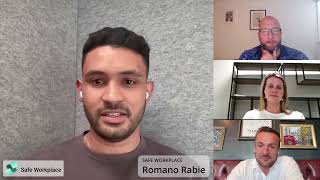
Multi-speaker conversation (participants: Manu, T.K., Ingrid and others) from a YouTube episode about conformity and organizational culture. They debate the meaning of conformity (negative vs positive), cite psychology (brain 'pain centers' activate when dissenting), and share personal stories — panic attacks from toxic workplaces, near-amputation hospitalization, and clinical examples where speaking up caught life-threatening errors. The discussion links conformity to leadership, shared values, psychological safety, and business outcomes (retention, innovation). The hosts argue for designing 'good' conformity: shared goals and values plus safety for dissent.
Yeah, like a great leader, I ignored all suggestions and went with my studies.
Show that when you disagree with a group, the brain's pain centers actually light up. Our tendency to conform isn't just social, it's biological.
When you said you're the. When you disagree with a group, the pain centers in your brain light up. I get sometimes immense joy out of it. Absolutely. You know, when you need to disagree, obviously within, within certain realms.
I was hospitalized when I was 16, right. And I was literally scheduled for my right leg to get amputated or foot to get amputated. It was scheduled and then I don't know, I don't know what happened, but one of the doctors came through and then did test again. Like, no, what the hell, dude, you need to be. It was iron.
The risk is you might have silence. Like you're saying like people like, see something that we agree or we know is against our values. You say nothing and you kind of, you're conforming a different way.
Conformity, you know? You know, it's funny, man. When you first threw the name Conformity into our Slack chat and asked us to pick a name for this discussion, I remember the look Ingrid gave and her response, right. And I think you actually put that in our general chat and off the entire company to choose to pick. And I think conformity was for. Not mistaken. The second second at the second most.
Votes, I think normally got the least amount of votes across the three options. And the only, the only reason we chose it is because of Ingrid's response was like, this is why we have to do it.
Yeah, I had like. So I had a visceral reaction and I think even gave some additional suggestions because, you know, you couldn't be supportive. I was like, maybe like these though. And. But then to be fair, after I got over my visceral reaction, when Mano explained the reasoning behind it, I was like, okay, all right.
Yeah, like a great leader, I ignored all suggestions and went with my.
But you gave it a decent reasoning. And, and as a, as a reasonable subordinate, I conformed. And yeah, here we, here we are.
That's a good one. We conformed. That's a good one. It's actually crazy because I was literally looking at the definition for conformed today. Right. And obviously each, each platform or whatever has its own definition according to Google, simply put, it's compliance with standards, rules or laws. But a more in depth definition by, I think Psychology Today said conformity is the tendency for an individual to align their attitudes between beliefs and behaviors with those of the people around him. And when Ink said she conformed to the idea of conformity, it actually. It actually, it made me think about the definition by psychology today. Because you have to align all according to that definition. You have to align your beliefs and your behaviors to those around you. Right. I mean, our brains literally mirror the behavior of those around us. I don't know if you're under pressure, angst, and felt like, oh, crap, I have to conform because everyone wants to conform.
The first thing that I thought about when I thought of the word was like, communism. Like, that's the first that popped into my head. And that's why I was like, oh, that's interesting. It's like, it's not really that. That. Right. And it was almost like, is our. You know, you can have like a. Like the connotation of the word is almost powerful than the actual meaning of the word, if you know what I mean. Like, and then your brain just goes, no, that's bad. That, like, don't conform. No, no, no, no. But it's, like, brave. We all thought that way. Yeah.
So you and I were aligned because I think I said. I said this sounds like some sort of, like, camp or something where. Yeah. I can't remember my exact words. But. So, I mean, we weren't far off. We were on the same wavelength.
Yeah. Yeah. It's. I think that your. Your definition or your. The definition is interesting in terms of what you're saying. Tika of like, pops into your head when you think conformity. And most of the connotations in your brain are negative. Right. Rather than the idea that it is shared values, shared beliefs, shared things, systems that kind of people you subconsciously or, you know, almost like as second nature opt into or just abide by us with.
100. You know, that literally. Studies show that when you disagree with a group, the brain's pain centers actually light up. So when you disagree with people, when you want to go a different direction than other people do, literally, your brain is wired to. I mean, I mean, you won't feel pain, but the brain center. The. The pain centers in your brain actually light up. They physically light up. It's crazy. I was doing the research, and I think it's important to understand just how deeply why your conformity is into human psychology. I mean, I know we talk about it now and we're laughing about it, but genuinely, there are numbers on this. There's a number of these research. There's papers on this that show that our tendency to conform isn't just social it's biological. It's crazy. I get excited whenever I speak about psychology. I wanted to be a psychologist back in the day and then ended up in marketing.
But I'm going to throw something back at you because I think obviously, you know, not, not every, not the same can be said for the same for every person. But when you said you're the, when you disagree with a group, you, the pain centers in your brain light up. I get sometimes immense joy out of it. Absolutely. You know, when you need to disagree, obviously within, within certain realms, but sometimes I like to push against the grain that, you know, just kind of stir things up a bit and say, well, no, so obviously that has, I feel like that has come with age from my side, but age and dare I say sometimes I will look for it to disagree so that I can sort of throw in a bit of a spanner in the works.
But yeah, I think that, I think that's a good point. If it's like you aren't saying, we aren't saying that it isn't about like diverse opinions or being like unnecessarily agreeable or even disagreeable. You're simply saying that it is my belief that every good society, group of people, business, whatever, wherever they are, like two or more people together, right. There has to be some sort of opt in to say this is how we're going to act. What is our goal? Great. How are we going to behave and act in order to get to that goal? We're gonna, we're gonna, we grace some sort of like we're gonna do, we're gonna do these things and we're not gonna do these things.
And then.
You, when someone violates that kind of code, that shared code of conduct or principles, you kind of put your hand up and go like, you know, that's not what, that's not what we do. Like that's not what we agreed on. We agreed on this. But that, that unity I suppose or that like coming together and doing something for the greater good of the shared benefit of everyone is kind of in, you know, in essence. It's like you're kind of conforming, right? You're saying like I'm gonna forego, you know, some of my things for, for everyone else. And then it's about, in that cohesion and that, like that, that working together. I think you get, that's when you, that's where you get it. But then of course the other side of the line is very much like herd mentality. Like do as you're told. Like whether you like it or not. You know what I mean? So I suppose it's, there's a very, it's a very fine line between the two definitions, but we kind of want to amplify the, I suppose in our minds at least like the more positive version of that of say, system.
100. Man. I feel like the word conformity itself has such a negative connotation around it that once people, when people hear it, they automatically cringe. Take angst, for example. Literally, conformity was thrown at you and you just, you flipped. You didn't flip, but you know, the word conformity set you off, right? But I feel like, just to clarify, when we say conformity, obviously we aren't talking about politics or ideologies, right? And I've seen it firsthand. When values aren't clear or shared, people tend to just conform to the standard that is set.
Right.
And I don't know, I just feel like, I feel like, I feel like it's hardwired into us as a human being, like you said, Marlon, to just do as we're told. But like ings, you said you, you get excited by the prospect of disagreeing with someone, not for the wrong reasons, get excited by the prospect of disagreeing with someone, of challenging that norm and not just simply conforming to the standard. I guess my point is, my point is because obviously, I mean, people conform for all sorts of reasons, whether it's fear, whether it's the choice, I guess the choice. I've done it just for the sake of avoiding conflict. Like, you know, I just, just do it and I've done it at times when I need, but more often than not, it's for the sake of avoiding conflict, for the sake of avoiding what the perceived outcome might be. If that makes sense.
Yeah, yeah, yeah, for sure. And I think like from a business perspective, right, It's a lot, it's a lot more clearer of like if something violates a business's ethics, code of ethics or code of conduct, that immediately becomes, or the business's objective is to like stamp out that behavior. And so, you know, it's like there, there's value based, I suppose, conformity, like this is how we're going to act. And then the, the risk is you might have silence. Like you're saying, like people like, see something that we agree or we know is against our values. You say nothing and you kind of, you conforming a different way. And yeah, that non conformity, if you will, in those kind of situations, you know, it's expensive for A business almost like Netflix created that culture deck. I think it is. That is like, what's it? Freedom of responsibility. Freedom and responsibility, I think it is. And it's very broad, but it's wrapped around the thing of, like, this is how we behave at Netflix, right? Yeah. And if you're gonna work here, you're gonna have to do this way, and if you don't, then you're gonna have to find someone else. Somewhere else to work, kind of. Um, because, you know, you might find somewhere that's more aligned to your. The way you work or your values or whatever, maybe. So I think, I think the point, the point really just to drive across is just any group of people have to conform to a shared set of values if they're going to succeed. Because you can't have five. You can't have people just moving completely different directions and then, like, no one's, no one's actually moving towards a goal.
I suppose I agree with that. And I think the key word you used there was shared. Right? Shared, at least in my mind, means sharing. We're agreeing. Right. It's common. Right. And I can personally attest to this. Obviously, I won't mention the company, but I've literally conformed to a company's standards, cultures, ways of working. Although I didn't agree purely because I was afraid of getting fired. So literally. Plus, I was the youngest one there. I was the youngest one there. And the company has been around for a very long time. So excuse me. There's a bunch of stuff that I had to do. Nothing illegal, by the way. I think legal. So, yeah, just stuff that I didn't agree with. Right. Within that company. I literally, I kid you not, because of that conformity, because of me just doing things for the sake of getting it done, because of fear. I had my first ever panic attack. And at the time, I had no idea what happened. I had no idea what I was doing. Right. So I'm, I remember the day of December. I was literally chilling with my wife, and then I just started shaking. Like, what the hell is going on? I started shaking. I started, I started. I just, I, I, I, I couldn't breathe properly. So my wife knows a lot about panic attacks, about anxiety attacks. She's like, dude, I think you're panicking right now. At the time, I just gotten a message from my, at the time, my managing director. It was literally just, hey, T.K. like, that's it. Nothing else. We just hate T.K. and it just set me off. And then I guess to cut A long story short, right, that conformity, right, because a bunch of people within that company as well, who I'd spoken to personally shared the exact same sentiment. They just did things because they were afraid, you know. But my point is that conformity to a toxic workplace that ended up breeding that toxic work culture. So I guess what I'm trying to get to right now, right, is. Is obviously it's personal for me. But then would you say that. That, that. That when teams or people within an organization conform to certain standards, they are. They are. They are. What's the word? They are. They're allowing leadership and the company itself to continue doing what they might know is wrong. I don't know if I'm making sense.
Yeah, yeah, yeah.
I don't think so. Because when you enter a company, right, there's obviously, I think whether it's a company or any sort of space, there will always be certain areas where you don't align 100%. You're not going to agree with every single person in the room. You're not going to agree with every single guideline. So even within conformity itself, I think it also does from an organizational perspective and a company perspective, when you're looking at the values and the standards and the policies and that sort of thing, that is that in a sense should essentially, we would hope, become. Become part of the company's culture. And there's reasoning behind why we do it this way. So it's not just we do it this way story done. It's important, I think, to incorporate it as part of the culture. Like, this is why we do it. This is why, you know, here's the explanation. I think it creates awareness and it really makes sure that people aren't kind of going in blindly and for those. And allows you to take a step back in order to see the bigger picture. So, yeah, your question was on your leadership. Just to allow what's.
Basically.
And then even within that culture of conformity, from a leadership perspective, I think there should always be some form of breathing room. So just as an individual walking into a new company, you need to kind of remind yourself, hey, I'm not going to agree with every single person in this room, but it's important, I think, for leadership to remember that. Sure, we've instilled this culture and we want our people to do X, Y and Z. We also need to be realistic in understanding that people are going to push back, people are going to question. And that shouldn't come with sort of under some, you know, people being undermined or, you know, kind of looking at your people with complete disdain, like, why are you disagreeing? You, in a sense, want to disagree with you. Because in certain instances, it can really create interesting conversations.
But how do you upload that, though? I'm sorry to interject, Manu, like, does it fall? Obviously, let's say, personally, I can safely say I don't just do things anymore. I got to a point I was still starting off early on in my career, and obviously that fear of, hey, I'm just starting. I need to prove myself and to do whatever. I'm at a point now where I can confidently say I don't agree, but, et cetera, et cetera. But question is, how does one outgrow that? Is that on the company itself, on the organization itself, or is it on the individual themselves? Do they have to unlearn that. That. That negative conformity or is on the organization to somehow weave in that. That, that. That safe place within the workplace to make it. To make it easier for people to.
To.
To not just conform for the sake of conforming?
I think it is a bit of both. It is. You will. I mean, looking at your example, I've also worked in a horrible workspace, and I'd started out in that awful workspace kind of where you disagree, you know, in the closed office doors, is this person doing like, what the hell? And, you know, you kind of really skinnering, as we would say, behind closed doors. But from, I think from an individual perspective, you. There will be certain moments in your life, like where you learn it. You know, I think with looking at now this space and being at safe workplace, I've learned how to disagree and I've been provided with a platform to. To do it in a. Yeah. In a constructive way. You know, I think. Yeah, that was something. Just kind of seeing how motto like structures, points and say, okay, yes, like, this is why. And this is what I'm. You know, I think that that's also important. So that is definitely a learned thing on the individual side. And from now. I've gone on a tangent and forgot the second part of my answer, but it is definitely the organization also plays a part. I'm hoping somebody else fill in the blanks there. Thanks.
I think that it's interesting because tk, like in your example. Right. It is. There's going to be. There's going to be a company culture. Right. Going to be. And so you either go, this is the culture for me, or, you know, or realize that it might not be the culture for you now. Right. And then you, you're kind of like doing a bit of mental math. You're going like, you know, a majority of the people here, do they agree with my opinion, view, whatever on, you know, does everyone get as stressed as I do when the managing director messages them? I mean everyone's kind of got that little like, you know, your boss messages you, you get like a, like am I in trouble kind of thing. Like I think it's kind of natural.
But it's sort of like sorry Mona, when you message yo and I'm like I'm joking.
Yeah.
Like nothing else. But I do.
What did I do in the last 15 minutes? Like I'm not sure.
Yeah, it's true. I get that, I get that something with league. But it's like you're either going to have that almost like that performance anxiety thing of like. Yeah. And it makes you anxious but it's almost like, I don't know, I want to say without trying to sound like weirdly toxic, like it's almost like a, it's a good kind of like anxious like I need like you're alert or whatever it may be.
Yeah.
But then there's the other side of the fence where like it's actually massively impacting how you behave or how you feel like your well being and that if you hit that verge of I'm not having a panic attack, then that's not the space for you. And then either it's like people are conforming to a really whatever their standard is along the how we measure standards. I suppose like there are the, you know, leadership is either gone, this is how we're going to behave and no one's reaching or achieving that standard. We or they're falling down to a different standard and everyone's kind of just like, well this is how things are done around here. And so if you want to work or get along then this is how we behave. And then at one point you go, yeah, this is not for me. And I suppose that is kind of like the thing, part of what we're suggesting of there'll be conformity of different kinds and at different levels and the outcomes of those things are going to be very, very different. And whether they're good or bad is for society to judge and for the people within those spaces, if the outcomes of those people's lives are bad, then surely the values are bad. You know what I mean? So like for me, my most relatable experience isn't suppose I do kind of have one personally. But most, the most Powerful one for me is with my partner and she went through. At work where small companies, you know, working with very, very small companies and going through really, really bad treatment at those companies to the point where it was extremely damaging to her mental and physical health. And being in situations where you almost have like your CEO texting someone that is texting someone that you oversee, right. That you're the line manager of and bad mouthing you to them on the company phone, like, that is intentional, like, oh, this person's gonna see it. You know what I mean? Like, and then. But everyone, like, in any situation, you, you're either trying to kiss someone's ass and go, like, I'm just gonna agree with them, even though I know this is wrong. But. Yeah, well, sorry, my. My point is bad there. What I was trying to say is you're gonna conform and say, I'm gonna kiss this person's ass. Because even though I know what they're saying is kind of, you know, they're being kind of mean here, I'm gonna do it anyway. But I think no matter how, whether or not where there's a group of people, no matter how big or small that group is, it could be five people, it could be 5,000 people if the behaviors don't align with the goal. Whereas in my partner's case, it was like, we're trying to build this great recruitment business. We're going to be doing all these things. This is how we treat each other, blah, blah, blah. And then the actions were completely like, left of that behavior and she was.
The one.
The receiving end of the negativity, then it's like you are falling far past where you've set the standard to be and now conform me to a different set of standards, I suppose. And so everyone should be able to. If this is the values that are set and we try to practice as much as we can of, like, if this is how we say we're going to behave and treat each other and suddenly we don't treat each other this way, then anyone should be able to put their hand up and go like, yeah, no, this is not what you agreed to. So why, like, how are we going to correct that? I suppose. And so, yeah, yeah, it sounds kind of like convoluted there, but, you know, I hope what I say makes sense of, like, I think in true, positive, healthy conformity, that needs to be the norm. Like, this isn't what we agreed to. And so I think we should have a chat about this. Or, yeah, I am going to go and Find somewhere, somewhere else where they actually enforce or act out their principles more consistently. Because not everyone will do it all the time. I think.
No, 100%, not everyone will do it all the time. And I love how you mentioned your partner's story because actually makes me wonder when people do certain things, especially toxic behavior, more often than not will I assume that they're aware what they're doing, they know what they're doing. Right. I'm personally, I'm someone who, who, who sometimes I don't know if it's a toxic trait or if I just believe in people a lot. But I'm someone who always tries to make excuses for people. For example, if Mano just snaps at me one day, a part of me be like, maybe he had a bad day, maybe he's going through something, you know, I'll try and make excuses on his behalf. Right? But that behavior is consistent if it's constant, Right. Do you think that that toxicity and that, that, that, that, that, that. What's the word? Drilling in that conformity into the employees, into their teams, etc. Do you think that that is conscious or subconscious? Like, is this person actively doing this to try and bring people down, to try and get them to try and be a dictator basically? Or is it, is it subconscious behavior?
I think it depends on the individual on who's kind of really enforcing that or sort of has negative behavior. I admire you for making excuses for people. I absolutely don't. There's no. Yeah, and that's, I think that's also part of like my own system of being willing to handle what. Or what I'm willing to kind of handle, you know, but then I say that and then it will depend on. I can either, it can either be one of two ways. I'm can be very reactive and, and snap, which is definitely not the best approach or kind or mullet over a little too long and then not address it. So it's also trying to strike that balance. But yeah, generally like behavior does depend. I guess it does depend on, on the behavior that's kind of being inflicted. And, but if it is, if it's happening for the first time, but obviously, like repeated instances are good. But then I think sometimes if, if you're, if you're in a position and feel comfortable to kind of call it out, then.
I think that's interesting because what I thought of when you said that was, is the first thing I thought was it's about how we achieve our goals, right? So like, yeah, we're not going to act Consistently. Well, we might not be ourselves 100% of the time, and we're gonna. Maybe we might say things the wrong way and upset someone unintentionally. And some people might be more forgiving than others with that kind of behavior. And then it's like, but as long as we're achieving or drive striving towards our goals, I suppose it's okay. But then I also don't. At the same time, or in contrast is like, you know, it matters also how we go about achieving our goals and that the goal isn't just the ultimate and that how we get there matters too. And then like, in my mind, I operate with like, no one is perfect ever. And so the response that my brain has, does the way someone is, is. Is my ideal of this person should be this way all the time. And then I go, you're being an idiot. That's irrational because not even you yourself all the time perfect. You know what I mean? And then if you comply, sort of like look through the lens of in a business or let's bring closer to home, like in a compliance setting, maybe it is. It is the compliance is more outcome focused, though, you know what I mean? Like, it's like we have to do these things because the law says we have to do these things. In a clinical situation is we have to report the incident. The incident has to be investigated, has to be acted upon. It has to be. And so the conformity is more cultural, you know, I mean, it's like, well, kind of have to treat each other. We have to agree how we're going to go about these things in order to achieve the outcome, because the outcome is important. But if you hate me every single time I do, like we do this thing, then, you know, maybe this isn't the right place for either of us or one of us or whatever it may be. And then so it's kind of like striking that balance in my mind, Tico. Like, we're gonna have to forgive each other when we're not perfect, but we're gonna have to measure how we're going about consistently achieving our outcomes so that it isn't looked upon as like outcomes at all cost. And you know, how we get there? Even worry for a mentally shattered or emotionally shattered in the process. It doesn't matter really matter, I suppose. But yeah, no, no, no. I suppose the point is like, there has to be shared values and there has to be shared values and shared agreement on what the outcomes are and how those outcomes are going to be achieved. And then you can proceed, especially in environments where, especially now, I suppose, with, like, people not really tolerating other people, treating them like shit for no reason. And in a world where, you know, compliance is becoming, again, bringing closer to home, so much more complex and so much successful for everyone else. The people you have around you, the impact that they have on how you feel, how you behave, how you act, how you feel about work in the morning, how you feel about work on Friday, looking forward to Monday, kind of like, you know, am I conforming to the right thing or the wrong thing here?
That's crazy. I love how you brought it back home because literally last night I was working, and then my wife randomly asked me, why is your company called Safe Workplace? I was like, actually, good question. And then. And then she's like, is it a safe workplace? No, I kid you not, actually asked that. She actually asked, is it a safe workplace? All right. And then automatically I was like, it actually is. Right? And then.
But just every time I say something or do or say or something, what do you think about this? What is it? She'll like. I like. I feel like we knee. Kept ourselves with the company name because she'd be like, do that. Because that's Safe Workplace. It's not Safe Workplace, is it? Sorry, I interrupted you, but I just. I thought about that. She almost just like slaps me with it.
Now. It's a very strong statement, and it's actually what attracted me to it when I applied.
Right.
But to type back what you're saying, man, about goals, right? And again, bring it. Every business, every organization has goals. We've seen it firsthand with the. The businesses we serve. Right? Everyone has goals. We as a company have goals. Right. And I don't know if I'm going to say it's controversial or not. I don't think it is. But conformity can actually be a strategic advantage for businesses. Right? And fact is, number one, you need people, happy people within your organization for your organization to run properly. Obviously, I wouldn't know. You're the CEO, so. So you would know. But I see, we need people to be happ.
Order for.
For your business to achieve certain goals, right?
To.
To.
To.
To get where it's supposed to be. And culture plays a huge part. Right. And as a matter of fact, it turns out that culture is a stronger predictor of people quitting than their actual salaries and their paychecks. People literally leave despite how much they're being paid just because of how they're being treated.
Right.
Again, personally, I've been there. That story I mentioned at the beginning, I left, I resigned with no plan whatsoever. Luckily I got it job literally a few weeks later. But. But I was like, you know what? Screw this, I'm done. I literally left, Right. But if your values aren't real, people leave, right. Or if they stay trust, are they going to disengage? And you can, you can, you can physically see someone who isn't mentally there, right. When you speak to them, you can see in their eyes whether it's virtual or not. You can physically see that this person is, does not want to be here or they just, they just living life for the sake of living life. Right. They don't want to be here. Right. And companies with high, with high psychological safety outperform peers and retention, innovation and revenue. Right. So my point is conformity isn't just about doing the right thing morally, but it's also a serious business advantage when done properly. And when gun culture is properly implemented from top, bottom.
Yeah, I suppose that ties in then to what we're saying previously. Right. It's like it matters. It does matter how you get there. Yeah. And how people are treated. And like everyone talks about, oh, you know, culture. And then in our space it's compliance culture, which is like, what does that mean? Like, in my view, it's just that every action decision that we make or action we take is all aligned around compliance. We're all aiming for the same goal. But part of that compliance culture is trust, transparency, psychological safety. And it's like, because those impact how we get there. Like, how do we treat each other? How do we provide critical, constructive feedback? How do we but difficult conversation. How do we like acknowledge one another or whatever it may be. And then it becomes like, that is then a strategic driver. Because it's like whether you have. No matter what kind of team you have.
Yes.
If you can optimize for the culture of the people or the set of people that you have around you. And everyone's like, yes, I agree with this. Like, you will outperform another team what is aiming for the same goal but has completely split like values, I suppose, or way of working that. You know, some people are kind of like doing things resent, like you said, like someone like completely disengaged in the meetings. They're not like they're completely removed from the team or checked out from the team mentally. You're not going to get the best out of that person. Like, that's, that's just the, that's just the fact. So it's like seeing the fact of, like, as is everyone on board. Yes, great. We have a far, like, higher chance of succeeding versus 50% of us are freaking checked out and looking for other jobs and actually don't really care about anything. Because in between all of that stuff is the anomalies of everyday life anyway and everyday business, and people don't make perfect decisions, and we're all going to be slow and make mistakes and, you know, be crap in certain spaces. You've got to take all that into account and then take into. And then try and enforce your goals. And it's like, yeah, good luck trying to do that with 50 of your staff disengaged who don't care about the culture.
I suppose it's quite a coincidence that the culture thing came up with your first point, TK Because I literally had a phone call with a very good friend yesterday who works for one of these relatively prominent social media platforms. She's been there for a while. I mean, gets paid an insane salary, a bonus that's triple her monthly salary. And she phoned me. She said, I. She's like, I can't do it anymore. She's like, I physically. She's like, I cannot do it anymore. They. It. She's like, they. She said no. She said, I don't have a life. I. They've offered me a bigger position, like, sort of on exec. She said no. She's like, I can't. She's like, I want another job.
Literally.
That's. Yeah, that's. That's where she's. She's at. So it is quite a coincidence that. That this has come up. Um, yeah, but. And I also. I'd. I completely agree. I mean, don't get me wrong, I'm the first person to tell you I like nice things and like to see the world and. And, yeah, but if the culture isn't right, it's. It's a hard. No.
I have a friend or a couple of friends who are, like, in the yacht industry, and they. Their number one thing. Like, obviously there's a lot of incentives and. And perks to that lifestyle and that. That way of work. And the number one thing all of them, like, hate about it is being on a boat or with people or with people, you know, entertaining other people who are completely out of touch with reality and no idea how to treat human beings properly. And, yeah, it's like. Like, I have a house. I have this. I have all these things. But I hate my job and I hate what I'm doing. And I want to leave. And then some of them do, and then some of them don't because they're trapped by the circumstances almost. And so what they do is they just go and find another place to work on. And then it's like, repeat. Like, look, there's going to be like, good, better places to work than others. But I think it's a. It's an interesting thing of like. Like, if you don't agree with, like, how people are behaving or you don't agree with, like, the majority of the values and the way people are acting them out, you're gonna be like, I'm out of here. Like, no matter what the upside is, it's like, I want to leave because.
Yeah, segueing a little bit, because it pops into my head now when you think about, like the yachtie groups, like the Stews and that sort of thing. But my cousin also shared her experience and she said, I cannot stand to clean a toilet with a toothbrush. But you'll see with a lot of those, because they kind of. There's their common ground is that they're all suffering in the same sense. So they're all dealing with that awful passenger. They all scrubbing the same toilets on a rotation with toothbrushes. And that kind of how that unifies that group. And if I take it back to my university days, the. And when they would do. I mean, I'm not. We're not allowed to call it hazing anymore, but like initiation. But how my first year. Oh, that was. I mean, that was a sense of conformity. You had to refer to your seniors with a certain title. You had to, you know, all of that sort of thing. And it would be so funny to see how a group of first year students would unite so much because they're. I mean, there was definitely aspects of fun, but most of the time we're just miserable because we're like, oh, we got to greet this senior. And this senior shouted at me because I didn't call her by her title. But how that unites the group. And that at my university, that was something that a lot of the rich would try to break. They were like, you're not going to unite a group of students by making them miserable and forcing them to do things that they don't want to do.
Interesting exercise. That's a great point. Interesting exercise. Actually, TK to bring to next week would be. If we're trying to bring a positive spin to conformity, what is an accurate term for what Ingrid was describing of like, you know, you had to, you have to call certain people of certain privilege or leadership, like why their surname? And you have to do this, you have to do that. And it's more that like dictatorship style, like someone's ready to like whip you the moment you're. You step out of line rather than, you know, where you feel like it's almost like the rules. Yeah, the rules are a burden rather than the rules are here to help me. You know what I mean? I think maybe it's like, what is the word for that?
So that's a good one actually. But I'm taking it back to what I mentioned in the beginning, right. Obviously one thing you mentioned, Mano, was the importance of actually speaking up when values or whatever is violated. Sorry, excuse me. Right, but essentially just speaking up. Right, but obviously not easy. Again, I've been there. It's not easy, but putting your hand up, up. Putting your hand up is crucial, but it's extremely difficult. And not everyone is, is. Is willing and able to be like Angus and be like, hey, screw you, you know, so. Yeah, but then my point is, right, I feel like it obviously boils down to the consequences of the outcome. And yes, don't get me wrong, that individual needs to take accountability and be able to, to, to. To again to speak up and mention whenever they feel a certain way. But I think it also, it also boils down to leadership, right? To create an environment where speaking up as rewarded and not punished. Again, taking closer, taking it back to. Bringing it closer to home in an environment of compliance. I brought this example up a while ago about how I spoke to someone who works one of these pretty big telco companies and they wouldn't switch systems to assist them with the compliance because it's. Because leadership says it's too much work and we know what we know. Right. But this person that I spoke to mentioned that he. So he's mid level, so he manages people. He mentioned that he himself and those below him are afraid to bring any suggestions toward leadership because they know automatically it will be shut down. Right? So they aren't willing and speak up against processes, not working against flawed processes. Right, because they know that if I speak to Romano, for example, I know he either won't listen or he will just shut it down automatically, you know, So I feel like leadership plays a big part, don't get me wrong. Again, yes, it falls on you as individual to take that pattern and run with it and speak up. But leadership plays a very big role and has responsibility, especially in, in organizations where Processes literally could and could make or break your business.
I think that it reminds me of. There's a book called Rebel Ideas.
I can't remember.
But there is positive and negative levels of conformity, right?
Yeah.
And. And so psychologically, for example, I think that there's a study in this book that I read that I can't think of the name of where they. To your point, they surveyed like industries and people in certain industries where.
Just.
Going by the rules and the process and the procedures, even if they're aware there's going to be a negative outcome, is. Yeah, more likely. So like in your example, the process or the system is broken. I don't feel I can speak up against it. There's two. Yes in the book and I think the sorry words, the I think is the second in this industry with the second highest rating in terms of that like negative conformity was pilots. And the example it brings out is this plane, I think, flying over the Americas where there was something wrong with the landing gear and the co pilot was monitoring the fuel level and didn't feel, didn't have the courage or didn't feel like he could undermine the captain to say we are getting lower and lower, lower on our fuel supply because they were just trying to troubleshoot this landing gear problem. It happened for hours and the plane crashed. Like they had to do an emergency landing. I think people were injured or died or whatever it may be. But that was because there's a process of like, I'm the captain, don't say anything. Like, don't go against my word. Right? Yeah, that is definitely like negative conformity. Like we can, like if it can cost someone's life, like someone has to say something. Right. And I think the other example in the book is of that famous or a famous Everest disaster where especially in those environments, like the lead rail guy that's taking you up the mountain, like he's in charge and in a emergency situation, you just follow his lead. And there was a situation in the 90s, I want to say I could get these things accurate, where like seven people famously died. But when they did kind of like the research and like study into like the event, they found that like one or two people were aware of the disaster that was about to happen and all the issues, but just didn't say anything. And then seven people died. You know, I mean, like. And so it just proves that, like it's either gonna work for you or it's gonna work against you. But the underlying thing is you have to be in a Situation. Think about it in, in a medical setting or a healthcare setting. Imagine on an operating table or in an operating table, or you're administrating a dosage of drug and you're aware that there's going to be a mistake or that you're aware of some information that the other person doesn't know, but you feel scared to say something. And so, yeah, I just need. The rules say I can't say anything, but it's like that, that's not helpful. And so it has to be that, like that culture thing has to be top down and it has to be, hey, guys, look, we agree that I'm the leader, but also if you see me being an idiot, please put your hand up. You know, otherwise like we, we all drown. Yeah, I think actually talk about the clinical thing. Inks, didn't you have some.
I was literally just. Yeah, I was, I was just about to say that. Thinking whether it's. Yeah, even back to when I was a nursing student for five minutes and when you're speaking to also one of our clients. I know the nhs, recently they implemented like those freedom to speak up guardians across the nhs, because as you said with your examples, speaking up saves lives. And it is. Even in the medical context, errors are going to happen all the time. An interesting fact. I mean, in. I was in nursing for first. I was in nursing just for my first year and one, within the first few months, they kind of, they really advise you to sign up to sort of like a, a union association, that kind of thing that will support you in the case where an error happens. Because errors do happen. But the important thing is, is that, you know, if you have a say and can save somebody's life by speaking up, then, yeah, that's, that's the focus. There was. I'd.
Yeah, yeah.
There was a scenario where I ended up flagging something with a doctor in my five minute stint and it turned out that the patient had a pulmonary embolism. And those can be. You've got to catch those quickly. So that's an example. And even as the dramatic as that sound, I think the concept of speaking up saves lives can be applied to really any sort of organizational context. You know, even if it's. If it isn't, if it isn't. If it's not coming from a leader saying, you know, because maybe some leaders aren't going to say, if I'm being an idiot, you know, tell me. But if there is that culture where I'm that person, that's sort of saying, Hey, I disagree or something's not right and I'm not getting shut down. That opens up the doors for somebody else to also feel comfortable enough to say something. So, yeah, speaking up saves lives, will save your workforce, will save your company from drowning.
So, yeah, it's true. Yeah. And I think what that proves is, like, obviously in some environments, the risk is heavier than others. So it's like. And it might look different, but I suppose you could never. You never know where that moment is or exist in your business, even if you're not at a hospital or not flying a plane where someone didn't have that moral courage, like, didn't have that courage to say something that, yeah, the business has enforced of, like, their idea of conformity or this is how we behave, and then suddenly that cost you badly.
Yeah, I mean, I know we could also present the argument and said, even in our safe workplace context, you know, we're not saving lives. But, yeah, our risks, Our risks are still that they matter to us. And how we define our risks are important. So that's, you know, your stuff is your stuff, and if it forms, if it's kind of goes against your. Your values as an organization, and then it's a risk and it can have sort of serious damage. So even if you aren't trying to resuscitate somebody, it doesn't make it any less important.
It would be interesting. Sorry, TK I was just add a thought now. Be interesting to do a poll after this and actually, like, do a survey. And just like, I wonder what, like, what does good conformity and bad conformity look like in different people's businesses? And maybe we can like, link it once upon a time, link it to this video so people can like, see, like, this is in my business. This is a good idea of conformity, and this is the bad idea of conformity. You know, I mean, that might be interesting little study.
No, it would be, you know, when you maintain speaking up saves lives. Obviously this is not related to conformity, but again, it's a personal experience. And I actually share this on LinkedIn. A few days ago, I was. I was. I was hospitalized when I was 16, right. And I was literally scheduled for my right leg to get amputated or foot to get amputated. It was scheduled. And then I don't know. I don't know what happened, but one of the doctors came through and then did test again. It's like, no, what the hell, dude? You need to be. It was. I don't know what it was. It was Some growth like my, my cough literally doubled in size. It's crazy. It was so painful. I was in pain for like an entire month. Doctors had no idea what was wrong. Each doctor had a different diagnosis. And then it's crazy. We had to drive from work there at the time, which was in a city called Poloquan, to Pretoria just to go see someone who was a specialist. And then that specialist is the one who said I should get amputated. And then, and then it's crazy. The day before test run again and I was told, oh no, sorry, you just need surgery. I'm gonna drain this. Don't need to close your leg, dude. Like what the heck?
You know, so often like you have no idea how often that happens. It's actually crazy. Like it's insane.
It's crazy.
It's exactly serious. It's different between giving somebody like incorrect medication. But that has happened.
It's concerning.
Comprehend that then that's insane that you have to experience that.
I almost lost my leg. I was 16. Like what the heck. I was, I was, I was so terrified.
I mean human, human error is like the number one cause of medical or medical errors and like, like deaths and stuff right?
Like. But yeah, yeah, yeah, yeah.
Imagine it a situation where.
Like thank.
Goodness someone checked that.
Like.
I mean they could have amputated your, your leg. Touchwood, touch wood. And then they would have never. I don't, I mean do, do we, do you think they would have like circled back and maybe, you know, it's been like hey guys, did we really maybe need to do this after all? I can imagine.
Yeah.
I mean so my wife's doing, she's leading a project called Oliver McGowan. Oliver McGowan Training. Oliver McGowan Training. And it's based on 15 odd years ago in the UK. Oliver McGowan was a kid or heavily autistic was given the wrong medication in hospital I think was anti psychotic meds. And in his clinical record it clearly showed that he shouldn't be given the medication but he was having, I think it was like a tantrum. I, I don't know. I, I don't know what exactly the term was. And the one of the nurses gave him the antipsychotic anti psych mates anyway because like this will go and he and killed him. And so she, his mum really advocated for the training of autistic patients in healthcare and medical and now the training is rolled out nationally and the scary thing is one, someone definitely 100% knew at that moment that giving him the meds was the wrong thing to do. And two, the feedback that my wife gets when they're doing the training sometimes is unbelievable. It's like, doctors or nurses, this is. This is rude. Like, we don't need to have this training. Like, this stuff, this barely happens. Like. Like you're undermining us or like. Like the way that this training is brought across, completely rude. And it's like, somebody, like, no, somebody died. Like.
And.
And it was definitely preventable. And definitely someone in that moment knew that wasn't the right decision, but didn't say anything anyway. And now suddenly, the rem, or a preventative measure of making sure it doesn't happen again is treated like a. Like doctors are basically going, like, no, I don't want to do that. I don't want to conform to your idea of your thing that you think is going to solve this issue, even though someone did die. Yeah. Sad.
I think in that example, like, conforming to that type of process is absolutely a requirement. And that's. Yeah, that's going to save lives and is really a necessity. So.
Yeah. Yeah, that's crazy. I think we've driven the point home. Basically. Let's make conformity a good thing. We're gonna have to agree that to do anything, we're gonna have to work together. So.
More from Romano


Whistleblowing or speaking up? The cost of staying silent | Conformity episode 3



Compliance isn’t optional in healthcare. But the way we manage it has to evolve.