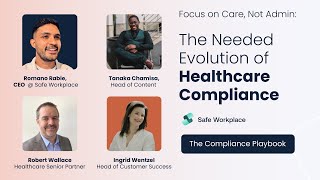
A 2025 YouTube interview discussing how regulatory and operational compliance transforms healthcare organisations. The speaker argues compliance improves efficiency, quality, standards and — importantly — organisational culture, while also reducing costs, litigation risk, incidents, and reputational harm. The interviewer prompts a distinction between cultural and operational/process aspects and asks how compliance has evolved over the past 10–20 years.
So from a technical point of view, being compliant, it will improve efficiency of an organization, it will improve quality, it will improve standards, but above all, it improves culture. So from the top down and from the bottom up, if your organization is compliant and if you're permanently striving to be compliant, well, then that's beneficial for everybody. Now, in a practical point of view, undoubtedly being compliant has cost benefits, it has efficiency benefits, and it certainly has risk benefits. So if you can mitigate risk through compliance, well then your risk of litigation, your risk of incident, your risk of reputational damage, well, that's diminished significantly. So these systems are often seen to have been put in place to be a burden I consider to be a significant benefit. I think now more than ever, we are accountable as clinic owners, as healthcare operators, we are accountable. And this is why we need to have consistent compliance across the board.
That makes great. I sort of want to, I want to break what you said up into to two points, really, around the cultural aspect and then perhaps more around the process or operational aspects of. How do you, have you seen compliance evolve over the last, let's just say 10 years, 10 to 20 years or so, and perhaps take us back to when you first started out looking that through, you know, more of an operational and process driven lens and then perhaps, you know, touching on that, the cultural aspect of compliance culture, how, you know, what have you seen? What has worked well for you?