Building & Scaling Brilliant Companies - Kevin Systrom (Instagram) & Samir Kaul (Khosla Ventures)
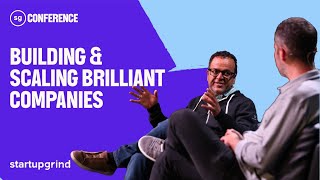
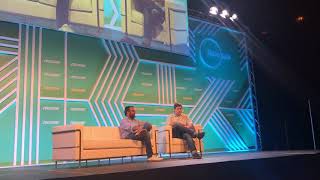
In this on‑stage interview, Instagram co‑founder Kevin Systrom and Khosla Ventures partner Samir Kaul discuss the ingredients behind hyper‑growth startups, drawing on the Instagram launch experience. They emphasize the primacy of a product‑centric team with strong design instincts, rapid skill acquisition, and obsessive focus on user experience (e.g., background photo pre‑upload). The conversation shifts to venture investing, where Kaul explains Khosla’s early, non‑traditional bet on OpenAI, highlighting the importance of visionary founders (Sam Altman) and the belief that AI would become a transformative wave larger than mobile. Both discuss contrarian perspectives on AI—skepticism about imminent AGI, the need to look beyond large language models toward super‑intelligence, and the prediction that higher education may become a “scam” while trades and manufacturing present new investment opportunities. They explore challenges in human‑AI interaction, noting that most users lack effective prompting skills, and stress that AI companies must prioritize quality answers over engagement metrics. Kaul shares how Khosla coaches AI startups, focusing on talent type, product‑market fit, and avoiding the costly pursuit of building foundational models. Finally, they address macro‑economic uncertainty in the United States, offering advice on capital management, supply‑chain diversification, talent acquisition amid immigration constraints, and which policy‑driven changes (tariffs, H‑1B flows) may be temporary versus lasting. The dialogue blends personal anecdotes, strategic insights, and forward‑looking predictions for founders and investors.
Chapters
Be here to talk to you today about something I've experienced personally and you have seen tons of companies go through, which is effectively the hypergrowth that happens when you catch a tiger by the tail. With me, it was Instagram. 2010, October 6th, 2010, we press launch and immediately the thing just started to take off. You get to see companies have that experience, but you also see companies that haven't had that experience. What is the biggest difference, would you say, between the two before they press the launch button in terms of team, idea, space? What are the ingredients that make something work?
I think it always starts with the team, because I think when people and we'll get to what you did at Instagram, but I think when people press launch, it's not really the first time they press launch. They've done a lot of internal testing. They've done a lot of friends and family testing. And if you look at the roadmap from where they started to where they are when they press launch that first time, it's quite different. So it's that team, and most specifically, it's the team that has an incredible feel for user experience. You look at so many products out there and you figure out why is one being used more than the other? And it's just something that's easier to use. And that seems to always win. It's simplicity tends to be the winner. And when I started in the business in 2000, no one knew what a designer was. It was the idea of a designer, it was like, what is it, some liberal arts major coming into my tech company? That doesn't make any sense. You fast forward 10 years when companies like yours started, all of a sudden the most difficult person to hire on a team was a designer. And so I think when you take founders who recognize what complementary skill sets they need for a successful product, those are the ones that always seem to win.
I get— I have two personal anecdotes on this. One is a little-known fact is that neither Mike nor I were professional iOS developers at the time of Instagram's launch.
We—
so I was a marketing guy at Google who had left and kind of moonlighted and taught myself to code enough just to make a prototype. Mike was effectively an analytics engineer but had taught himself to do some cool iOS apps on the side. And we pressed launch, again, October 6, 2010, so many years ago, without— with little or no expertise in the area that we were set into. However, I, I maintain that Mike and I were the quickest to learn of anyone at that time. It was the forcing function of pressing the button, launching very quickly, getting it in users' hands, and realizing that we wanted this thing to exist that made us learn very quickly all the skills we needed to learn to keep the thing running and make it very successful. Um, I think the second thing is, you know, even though we weren't professional developers in that way, we focused so much on the user experience. So I remember, and I've told this story before, but one of the pain points of the original iPhone and, you know, networks of that time was just how slow it was. Photo apps at the time would take, gosh, 30, 40 seconds to upload a photo. And I remember having the idea that we should just pre-upload the photo in the background as you're editing your caption.. And I remember that small little touch made all the difference because then when you clicked done, you were done editing your caption. In your mind you were like, "Okay, it's going to upload my photo now." We have this progress bar and we actually had to, if it was done, we had to make it animate slowly enough that you thought it was uploading. And it would say done and people were like, "That was the fastest upload I've ever had." Right. Even though in fact we had just been doing it really slowly in the background while you were deciding on what hashtags you wanted.
But this is important, right? You know, for a lot of people in the audience who are younger than certainly me, Instagram wasn't the first photo sharing app. I mean, how many were there when you launched?
Well, it depends where you wanna draw the line. So desktop apps, there was, you know, Picasa, there was Facebook, there was Twitter, there was Flickr, there were a bunch. But we started right when the iPhone 4 came out, and there were a bunch of apps like Treehouse, PicPlease, and others that decided to launch right around the same time. And yes, we were faster, but I think the main difference was that we focused on creative filters and making your really crappy photo look reasonable. And now, you know, if I ask most of the people here in the room, like, do you filter your photos or videos? And people are like, eh, it's fine, right? Your photos are fine, your videos are fine. But at the time, that was the killer feature because no one wanted to share their photos without some kind of like lacquer on the top that made it look like it was from the 1970s. But I'm curious, you know, in your experience watching all these AI companies, you guys were the first venture investor in OpenAI, I believe. Is that correct?
That is correct.
So did you see something in either the team or I'd say the product, but the product, you know, ChatGPT didn't exist at the time. So you talk about usability, but like it must have been something in the team.
Right.
What was it?
So one, we had been talking about AI and what AI could do for a long time. I think there— Vinod wrote a paper years before we even invested in OpenAI about what it could do for medicine and think and the like. So we were always on the lookout for what AI could do. But, you know, transformers weren't a thing then. So and, you know, that was really what unlocked everything when Sadly, it must be killing the people at Google if they allowed that to happen, because all 7 authors of the Transformer paper were employed at Google when that paper was published. With OpenAI, it was a nonprofit. Sam came to us, to Reid Hoffman, to some guy with an electric car company and launches Rajic Rockets, whose name I can't say, but you know, that guy, and for capital. We looked at each other and we're like, "Well, it's Sam Altman." We knew him when he was 19 doing Looped, and we're like, "This is like a once in a generation one." He's an outstanding human being, but just instinct, technologist, entrepreneur. We're like, "Whatever Sam does, we want to be involved in." It was so bizarre because it was a nonprofit, we actually had to write a letter to our LPs. Saying, hey, we're investing in this nonprofit. If you don't want us to do it from the fund, we'll do it personally, but we just want to let you know. I remember getting on the call with the LPs and LPs saying, hey, why are you doing— what is it? I said, well, I talked about how Sam was this generational entrepreneur and they liked that. I said, I think AI is going to be the next wave, bigger than mobile and the internet. And so I suspect a lot of people who work at OpenAI will spin off and start companies, and we'll be able to get a first look at them. And third, you know, we're going to see a lot of things in AI, and who better to do diligence for us than the folks from OpenAI? So I think the relationship will be profitable, but just may not be directly profitable. Now, how the hell did I know it was going to be worth $300 billion? You know, But that's venture, right? That's, that's our business. It's the power law. And, and so, yeah, we had not used ChatGPT at the time. We just believed in the space, thought it was transformational, and thought Sam was a once-in-a-generation entrepreneur.
Can you talk a little bit more about Sam specifically? So up until that point, and it's easy for everyone to say in hindsight, oh my God, generational entrepreneur, he's done so well. But at the time, you know, Loopt was not a huge success. His work at Y Combinator was pretty good, you know, as an investor, but that would be as an investor, not as an entrepreneur. What made you guys sit down and say, this is the guy to take on the AI world?
Well, Loopt was early, and as a 19-year-old dropout, was pretty impressive what he did as a 19-year-old. And then I think he was in his early 20s when they handed him Y Combinator, and this was in Y Combinator's heyday. Were you guys Y Combinator? No. You were not.
We were one of the few that weren't.
You were one of the few. Airbnb, Dropbox, Stripe, all these companies. By the way, remember, Joe, Brian, and Nate were all from RISD, Rhode Island School of Design. They were designers doing Airbnb. All of these companies were YC companies. Sam had that, really took it from Paul. Elevators. We knew that he was going to be an outstanding surveyor and finder of talent. That's what it takes in a company. The company you build is the team you build, and he was going to do that. But when you talk to Sam, he was already talking about investing in nuclear because he knew that the limitation for AI was going to be power. This is 10 years ago. It's obvious now. But so when you saw the way that he was thinking, you know, it was very similar to when we met Patrick and John Collison at Stripe. It was like, you know, they're scraping pennies from a website processing payments. How could this possibly be a big, big business? But you knew with people like that that they were going to do that. You know, if you had bothered to knock on Kozlo's door, we would have done the same thing with Instagram. But you went to everyone else except us. So we, we didn't get that chance.
I knew there was a reason you asked me on stage. First off, I want to set the record straight, which was we were underwater trying to make the thing work. And when we went out to raise, we were bombarded with inbounds. We actually— I won't name the investor, but there was an investor who used to come to our office, I want to say like every Wednesday, and we didn't— there's no security code or anything. You just walked right in. And there were 6 of us, and he used to interrupt us every Wednesday because he wanted to invest. And we kept saying, no, no, no. But the people that ended up investing, you know, maybe if we can flip it around, what you looked for in entrepreneurs, what were we looking for in investors? One, we wanted people with scaling experience of large networks. I mean, Matt Kohler was early at Facebook. Adam D'Angelo was early at Facebook. These people were willing to share what they had learned over the years at these institutions to help us grow. We had Chris Sacca, who participated early on at Twitter. We had Jack Dorsey, who was there at Twitter very early on. It was the who's who of people who knew about social networks, and that can really help. So in a way, as much as expertise when you're an entrepreneur isn't necessarily a huge signal to say you're gonna be successful in that area, As an investor, we really looked for those people who had seen the playbook before. And in retrospect, you know, I'm sure some of the things they said really helped, and then some of them were probably dated because things changed so quickly. So, you know, now that you guys have invested in AI companies and you've been very, very successful doing that and you get to sit alongside their growth, are you finding that you're able to coach younger AI companies more effectively than, say, the partner down the road?
Well, part of coaching is avoiding the same mistake more than once. And I think, you know, we've seen the evolution of OpenAI. We've seen what products they've decided that they're going to go after and what products they're not. And so, you know, it's really interesting. You've got all these code generation companies out there and people are raising money at big, big valuations. And you wonder, you know, What will happen? You know, are they going to be able to be strong independent companies or will they get acquired? You know, is a startup today going to be able to raise the kind of money to build their own foundational models or is that just, is that game over? Are there already the 5 or 6 players that have done that? And I think that's a mistake for most startups to try to go ahead and do that. And the other thing is, is what type of talent you need. It's a very different type of talent. So, you know, it's interesting, we talk about Instagram, Jack Dorsey, Matt Kohler, they were both really into design and into product. Matt, like, played saxophone. Jack, you know, used to design clothing. You know, they had this design sense. And I think in this next generation, the super duper coder is not necessarily going to be what what is needed because, you know, companies are going to be generating 90% of their code using AI. And so trying to find the right type of people, figure out the right applications is where I think we can add some differentiated value.
So seeing all these AI companies, what's a contrarian view you have that most people would think was either ridiculous or wrong?
Well, a couple, I hope. One is people are freaking out about AGI. And that, oh my gosh, AGI is around the corner, and what's that going to do? Well, the average human is an idiot. So why are people so worried about AGI?
What I think— that's precisely why. Yeah.
Yeah. But where you're going to see real, real change is when you, you know, people throw around this word superintelligence and The way I describe superintelligence is imagine if you took the 100 top cancer researchers in the world and they could collaborate in real time, 24/7, with all of the information that's happening, all the papers, all the clinical trials, all the new discoveries immediately being engulfed into their brains, and they're collaborating 24/7. That's super exciting, right? And I think that I think people are not focusing as much on what the impact of that is, and that's probably 5 years away as opposed to 6 months away. The second is I don't know if LLMs will get you all the way to that point. I think there might, you might, I don't know, I think you might need a more efficient way of building models to get there. And I think those would be 2 of the more contrarian views. And we are investing, you know, in a bunch of stealth companies that are trying to figure out what beyond LLMs are needed to get to the super intelligence, forget AGI, let's go beyond that to the next level. That's where I think we'll start to see a lot more. One more thing, one more thing, which I think is, I actually think that there's going to be, I think one, going to, for most people, going to university is the biggest scam. Going $200,000 in debt to get a degree that isn't going to get you a job, just feels like a scam. I think there's going to be much, much more people going into the trades. Also, because AI is great, but in the trades, the intersection of software or hardware is going to take a lot longer. I think you're going to see a lot of people actually going back into trades, pipe fitting, HVAC. I think those are going to be pretty interesting industries as well to invest in for venture and private equity.
I think the biggest limiter currently with these AI companies is that most humans don't know how to use them. And I don't just mean like don't know the web address of some cool new startup that you've invested in. I literally mean you give them a blank box like ChatGPT and you say, you know, do something. And the average instruction is like, write me a poem. Or like make a funny song about X, Y, or Z. When in fact—
What would you ask Kevin Systrom on stage?
Yeah, so it turns out I think you did that.
I got lousy questions.
You gotta coach it. It's, again, but I had this thing to prepare for last week, I don't know, in Washington, D.C., and I had all these documents and I was like, you know what, I'm just gonna upload like all the unformatted formatted documents into a bucket. I'm going to hand it to ChatGPT and I'm going to say, you know, what are the themes in these documents? What questions would you ask about these documents, etc.? And I was blown away by the ability for this thing to take all these unformatted, all this unformatted, unstructured data and come back with very thoughtful responses and then being able to coach it through.. But my first thought was like, there's no way I can do this. Right. And I think most of that limiting happens on the human side, not actually on the technology side. So I think it's gonna be interesting over the next 10 years or so to see, will humans catch up to the point where they believe the technology can actually do these things and do it well and be trustworthy? Now, I wanna say on the opposite side, a force that I think is hurting us, I think a force that's hurting us is you can see some of these companies going down the rabbit hole that all the consumer companies have gone down to in trying to juice engagement. Every time I ask a question at the end, it's like, asks another little question to see if it can get yet another question out of me to keep the thing going so we can optimize for, I don't know, time spent or engagement or daily actives. And you can tell that instead of just trying to be the best that it can be, it's starting to lean in the direction of trying to ask you questions to get more behavior out of you, Which is exactly what social media does today. And I think if these companies are going to be successful, they need to be laser-focused on quality answers. They need to be laser-focused on making sure that people know they can use them as superpowers, and less about, can we move metrics in a certain direction the easiest way possible?
But the models need that information to learn, right? I mean, I think one of the advantages of ChatGPT over the other models is how much human preference data is in them, because they've got the most users. They've got hundreds of millions of users. So I wonder if this is just a temporal thing, kind of like with photo sharing, at some point took 30 seconds to upload a photo, and then when you caught up, it was faster.
It might be. My sense is that I think the breakthroughs in these companies will be when they are useful for booking a flight next week to Dulles because you have to go to this thing, or when you are trying to figure, you're trying to plan a kid's birthday, and it doesn't just say, here are some fun ideas with balloon emoji. But instead it shows you exactly how it's going to do it for you. Those types of agentic relationships are, I think, the thing that get us to a place where AI truly pushes us as a society versus just being like a cool toy to play with. But again, I'm on the outside as a consumer and a designer looking in.
I think the deep research tools are pretty close to that. Yeah. You know, we have our CEO summit every year, and every year we give, We get a bunch of speakers, we read their books, we give away their books. You've been a speaker, generous enough with your time a few times. Last year, I'd always spend 20 to 25 hours prepping, read the book, think about the questions to ask, go back and forth. This past year, I was one of Margaret Heffernan's books. I asked ChatGPT to summarize it, summarized it. Then I said, what would you ask ChatGPT? What would you ask her at a CEO summit? Ask me 10 questions. Sent it to her. She said, "Please ask me these 5," and I was done.
Exactly. Right?
I mean, that was 7 minutes of work versus 20 hours. I think another example is one of our large LPs came in, and we have a company, Cognition Labs, that's one of these— helps coders do code better. He started the meeting with this big LP saying, "Design a new website for this firm." Then 11 minutes into the presentation, I said, "Hey, Scott." Why don't you show him where you've come with the website? And he pops up this gorgeous website. I asked the CEO of this nearly trillion AUM money manager, I said, how much money did you spend on your website? Because this is pretty good. He said, fuck you, Samir, because I'm not telling him. He was just shook. So I think we're actually getting a lot closer to what you're talking about.
So shifting subjects for a second. One of the things I wanted to talk about is just the uncertainty in the world right now, especially in the US and the US economy, and how you feel you need to guide your companies, potential portfolio companies through this. I feel like I've now lived, I don't know, 4 or 5 of these memo writing moments, you know, and I'm starting to see patterns. Whereas I think the first one was really scary, But now you've got a bunch of entrepreneurs in the audience, some of whom have been around, you know, the sun a bunch of times and some of whom haven't. How would you deal with this particular version of uncertainty in the US? And then I think separate to that, or at least related, where do you think we're headed in terms of, you know, innovation in the United States if we aren't able to get the chips we need in the future, if we're not able to collaborate overseas if we're not able to have the students from international, you know, locales come to the best universities, like, where does innovation go in the US? So first, how do you coach people through the case at hand? And then looking forward, what's your prediction for where we're going to be, call it 5 years from now because of all these changes?
So on the first, we've been through a lot of these times, and we have a playbook that we do our best to make work. The key is, If you're a good company and you're solving a large problem in a unique way in a large market, you should be successful. And it's really up to you as the management team to make sure the company survives long enough to be successful. So you got to really look at yourself and say, hey, do we have that breakthrough product for this large market? And can we achieve a couple of value creation milestones with the existing capital we have?. And if you can't, go raise the money no matter what the terms are, just raise it. Don't be— and then don't necessarily spend it. But you want to get to that value creation milestone plus 6 to 12 months and do that immediately. And if you can't get there, look to sell the business. Because, you know, you just never know, you know, when the market will recover. It could be 2 years, it could be 2 months, you just don't know.. But what do— I've never seen a company managed well with a good value proposition, you know, fail. Uh, and that's really on the management team and your boards to kind of go do that. Um, and, and you have to be honest about it. On your second question, if you just look at the innovators and technology, so many of them were foreign born. Um, and you're seeing it at universities I'm closely involved in. You're cutting federal funding and you're dissuading international students from coming, all we're doing is shifting us as being the center of innovation and moving it and unnecessarily distributing it all over, all over the world. And so if you're that type of company, you have to think about, do we set up offices in Berlin and Paris and, you know, India and other places because people won't come and you need to still access that talent. And if you're in the business of— a lot of the companies I work on are in sustainability or healthcare. You're building things. Uh, you need to diversify your supply chain and diversify it as soon as you can. Some things you can diversify pretty quickly, like in 2 or 3 quarters. Some things like chips takes 5 years to build a fab. It's just very, very different. On how you do that. Then there's a third category of companies that will actually succeed. We import 70% of our advanced pharmaceutical ingredients, half of that from India and half from China. If we put on tariffs and Biosecure Act, businesses you would never do in the United States, making commodity pharmaceutical ingredients, might actually be really, really valuable. I've been looking at that. I've done 2 investments in the last 6 months making boring commodity pharmaceutical ingredients in the United States because the government is giving money for that. It's going to be something that you're going to need. All of a sudden, the United States, with tariffs and automation and robots, you all of a sudden can be cost competitive or better with China and India. You wouldn't have done that. Making steel and concrete. A lot of the ways we do it are more environmentally friendly, but I tell my CEOs, don't say environment right now, just say made in America. All of a sudden, people are buying it. You have to— Crisis is a terrible thing to waste, cliché, but there are some areas that will actually thrive under the current system. The other thing that's important to remember, these things all go in waves. And we're right now in one kind of max, and we'll see where we are in 18 months.
So maybe my last question then would be, how many of these changes do you think are going to stick? And how many are temporary? And based on that, what are you coaching your startups to do right now?
Well, that's the trillion-dollar question, is when you try to push in a certain direction, at what point have you pushed too far where you don't recover? So, you know, do I think tariffs are going to be around forever? Probably not. But do I think the kind of US as a destination for everyone to want to— as like the only destination? Like when, you know, I'm from India, when all of my cousins would beg my dad to sponsor them to come here on, you know, H-1Bs and things like that, I think a lot of that is probably lost in some way, where people will still obviously want to come here. Universities are great, the companies are great, but they're also going to, they're going to weigh the, well, maybe we can stay in India, maybe we can stay in Europe.
And, and so, uh, I do think in that sense it'll have changed a bit. My, my sense is that, um, as a startup, you need to be careful to both balance your near-term needs with where the market is headed. And in this world, I can only imagine being in the seat of most of the people in this room and trying to plot a course over the next 6 months, given how much volatility there is in the direction that we've been given. It's, are the tariffs going to exist? Which markets do they apply to? Are we going to walk them back next week? Then on top of that, what happens with talent? I mean, I think of the best people I worked with through my career, almost none of them were born in the United States. I was thinking through my head very quickly. Almost none of them. So if you think about the, the, the kids coming out of these universities, are they actually the best talent in the world in these industries? Do they want to stay here? And do we have a, a solid course forward where all of us can plan that, that it's going to head a direction and we're not going to be given a curveball along the way, um, to be able to build a great business.? I think those are the questions that people are asking themselves now. It remains to be seen, but every single one of these cycles has had a moment like this, and every single cycle has ended up okay. We've ended up in a fundamentally different world post every cycle. You're probably doing this professionally, but I know I'm going through my head, which parts of history does this rhyme to? And what types of things are actually going to happen over the next year that will stick versus which will be the short-lived ones that you won't remember a few years from now?
I'm still very optimistic that the United States will stay the center of innovation, but I think it won't have as much of an advantage as it's always had. I still think if you look back in 1925, 8 of the top universities in the world were in Europe. And then after the war, really all that time, you know, it became much more— probably 8 of the top 10 were in the United States. So I think, you know, these things do change over time, though I still think the United States— just take AI, for example. There's—
it's almost all here, and hopefully it'll stay that way. Excellent. Well, thanks for your time, Samir. This is awesome. Appreciate it.