Culture: Willful Blindness | Dr. Margaret Heffernan and Samir Kaul
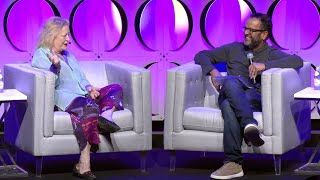
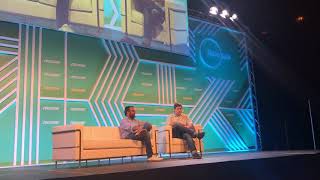
In this fireside chat, moderator Samir Kaul interviews author and former BBC producer Margaret Heffernan about her book Willful Blindness and its relevance for entrepreneurs and CEOs. Heffernan explains the legal and psychological concept of willful blindness—knowing something you should know but deliberately ignoring it—using the Enron trial as a catalyst. She illustrates how the phenomenon harms individuals (e.g., family abuse) and organizations (e.g., Enron, Theranos, WeWork, FTX) and why it persists through comfort, over‑optimism, and by‑stander dynamics. Heffernan shares stories of companies and individuals who broke the cycle, emphasizing the need for a culture of candor. Practical levers include diverse teams, modeling openness, assigning devil‑advocate roles, rotating decision‑making perspectives, cooling‑off periods, and thought‑experiments that ask “What if I’m wrong?”. The conversation also touches on AI/ChatGPT, warning against attributing agency to technology and urging responsibility for its misuse. Finally, Heffernan offers advice on spotting competitors’ blind spots as a strategic advantage. The talk provides a framework and concrete habits for leaders to detect and counter willful blindness in themselves and their organizations.
Chapters
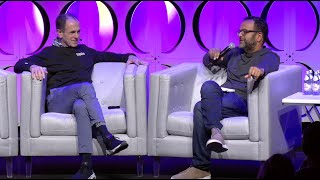
All right, our next speaker is great. We'll do a fireside chat, but let me introduce her real quick. Margaret Heffernan, who's the author of Cultural Willful Blindness. And so in your backpacks that should have been delivered or you picked up at reception, a copy of her book's there if you haven't read it already. Margaret was born in Texas, raised in the Netherlands, went to graduate school in Cambridge, then worked as a startup executive in Boston before running to Bath in the— before returning to Bath in the UK. So I have no idea what her accent's gonna sound like, but we'll find out soon enough. Before her career as an executive, she worked as a producer at BBC for 13 years. She's a playwright, has produced 6 plays, trained as a classical singer, and is the owner and developer of a woodland. She's a true Renaissance woman. So with that, let me introduce Margaret Heffernan for our chat. Thanks. So in the green room, Margaret said that you advise startups to dinosaurs. Yes. So great. You were a producer at BBC and later a media executive. Tell us a little bit about how you got started in writing.
Well, especially when I was running startups from '94 to 2002, I read piles and piles of business books, and I thought, honestly, I thought they were all pretty crap. I thought they were written by people who'd never run so much as a lemonade stand, and they were full of abstract nouns which didn't really seem to me at all what running a business was like. And I also felt desperately in need of help. And so when I stopped running startups and I spent a year thinking about what do I want to do next, I thought, well, let's see if I could write a business book that is better than all that stuff. So that's how I got started.
You're a playwright. And also wrote 6 plays. How does that tangle in with all this?
So it's kind of interesting. I mean, the first book I wrote, which was really about women's careers, when I finished it, I thought there's an emotional quality to this subject that I haven't really captured. So let's see if I could take all the same material and turn it into a play. So it was really recycling, and it's very much driven also by a sense that I want to reach different audiences. The consequence of that is I put a lot— I think I put a lot more effort into my books to make them a compelling read. I remember when I published "Willful Blindness," my mother-in-law, who doesn't know anything about business at all, at all, dutifully read it and said with a great tone of surprise in her voice, "This is really good.
It reads like a thriller." Well, compliments from mother-in-laws are usually few and far between.
So, golden. So I do try to— I try to write about business as if it's something that's alive. And I think a lot of business books write about it as something that they'd prefer to think of it in the abstract. And if worse comes to worst, they want to take the butterfly and absolutely nail it to the wall. And I think— I don't think that's what That's what it is.
Let's talk about your new book, but before we get into the details, can you describe for the audience— this is an audience of all entrepreneurs, many are first-time CEOs, so your talk on culture is gonna be very helpful to them. Tell us a little bit about what does willful blindness mean.
So willful blindness is something that I discovered when I was commissioned by the BBC to write two plays about the collapse of Enron. And this was in 2006, so it was after the trial of Ken Lay and Jeff Skilling. And I got the transcript of their trial, and at the end of the trial, the judge, Simeon Lake, talks about the legal concept of willful blindness, which is if there's something that you could have known and should have known and somehow just managed not to know, then the law deems that you've been willfully blind. And I remember reading that and a kind of chill going down my spine thinking, "Ugh." I know for a fact there were things in my companies that I should have known and could have known and didn't know. And so I thought, this is a really high standard, but it's also a very useful framework. At the same time, the banks were collapsing, and the narrative was, oh, we couldn't possibly have known. And I remember thinking, hang on a second, I remember reading stuff in 2004, 2005 about CDOs and the mortgage market and so on, and fantastic people like Frank Partnoy writing about it. And it's not like they had any inside knowledge. And then I found all sorts of kind of strange, interesting individuals who'd been thinking about it, not from a professional perspective at all, but just the good grasp of numbers, and thought, oh, yikes, this is really scary. And, and then this concept of willful blindness really It was like putting a magnet in amongst a lot of iron filings. It just kind of organized everything in my head, you know, the sexual abuse in the Catholic Church, Nazis, stupid wars that we've gone into, all kinds of things. And I thought, yes, there's a lot of this. It's everywhere. How does it work? Why does this happen? If we understood it better, Could we do better? And I think all of my books have started with a question that I didn't know the answer to, and I set off in search of it.
You know, in your experience, what are some of the greatest potential consequences at both the individual level or at a corporation level?
Well, at an individual level, huge sadness and loss. You can talk to people, for example, a simple example, almost all child abuse happens in families. Right? It's not stranger danger, which is a marginal concern. It's families. And so I talked to people, you know, whose husbands had turned out to be abusing their children. Letting that go on, being willfully blind to it, not picking up the signals, not exposing not explaining strange things created years of incredible damage and, of course, subsequent family breakdown. One of the difficult aspects of willful blindness is that by choosing to be blind to something uncomfortable that's going on, it kind of feels better. I mean, this, you know, something like child abuse in your family, this is not something you really want to think about. But just as it's giving you comfort, it's actually making the problem worse. So it's a real trap.
Put that in a corporation context.
Yeah, so in a corporation context, you know, you can feel that there's something not quite right, and you may— well, you may do one of two things. You may think, well, it's just not my problem, I'm not going to think about it. Or you can talk to a few people and feel like you have done something, but actually really haven't done anything. And so you're giving time for the problem to grow. So you could see this magnificently in Enron. There were lots of people at various points saying, oh, not quite sure about this, and not quite sure about that. I was running a tech company when Enron was going gangbusters. And my lead investor and chairman said, Margaret, you have to go do a deal with these people. And I said, David, I'm not going to go do a deal with these people. I understand the business they think they're getting into, which is when they were trying to do broadband. And I can tell you for sure they can't do this. Yeah, but they're big and they're, you know, blah, blah, blah, blah, blah, right? Well, you know, I found one other person who was a fantastic ad guy in Texas who refused to work for them for all sorts of other reasons. But, you know, you have a sort of moment where you have to decide, am I going to do the comfortable thing or am I going to do the uncomfortable thing? An uncomfortable thing. Definitely having a fight with my lead investor was an uncomfortable thing. Definitely for the ad guy in Texas, turning down millions of dollars of business was an uncomfortable thing. We're both fantastically proud that we did it.
Well, that's true. And we've seen recent examples as well with WeWork and Uber and FTX and Theranos.
I mean, I remember reading the New Yorker profile of Elizabeth Holmes. I wasn't halfway through it before I thought, "This is a massive fraud." Look at the board. It's all white guys who know nothing about science.
Hear, hear.
You know? I mean, it's just insane. And you just thought, "What are these people doing there? They're just hanging around this cool young girl." It was disgusting. And it was transparently a fraud.
Now I'm really nervous for you to meet my CEOs. Can you share any inspiring stories of companies that have actually overcome willful blindness and come out positive on the other side?
Well, so this is a, this is a really great question because ChatGPT came up with this one. We can come back to that if you want to. Um, no, I work with the CEOs of, of startups and of whatever. I mean, I don't know, They're trying really hard not to become dinosaurs. And one of the things I discovered is there's an asymmetry of drama. Right? So, in the story of the whistleblower, where something's going wrong and somebody speaks up, they're generally destroyed. Right? That's the— those are the stories that make it into Hollywood. We've all seen those. Right? There's another story, which is, there's something going wrong, I think I better check it out. And I've had this with a couple of my mentoring clients. You know, these are ex-co-members who think there's something wrong, and generally what they say to me is, I think this is so ugly, I should leave. At which point I say to them, well, you're a very big important person here, Have you tried everything? They look really a bit abashed now. And they say, well, what do you think everything would be? I said, I don't know, but I think you should go away and think about it and make a long list of everything that might have been done and make sure you can cross all of those off before you leave. And usually what happens is they find a couple of things, sometimes a lot of things, that they could have done and should have done, and they do them. And then astoundingly, things change. So it isn't that they're destroyed, they actually get fixed. This film never makes it to Hollywood. There's no drama. It's like, "Oh shit, you're right, you've rumbled us, we better do something." I've seen this a lot with sexual harassment, for example. You know, Me Too is a classic willful blindness scenario. But I've seen it a lot with, say, slightly imperfect medical devices. I've seen it with, yeah, well, it is a little buggy, but we could probably get away with it. You don't want to get away with it. So I, you know, I mean, I'm— I think like all entrepreneurs, I'm fundamentally optimistic. So I think we can do better, but I think this dramatic narrative of the whistleblower getting crucified is really, really unhelpful. And my book is full of incredible stories. I mean, there's a fantastic woman named Maria Garzino who was part of the Army Corps of Engineers and was working in New Orleans after Katrina and realized, for reasons that are legally complicated, that the new pumps that were being put into the levees were really rubbish, and they weren't going to work under pressure. And this woman spent 3 years battling the federal government to make sure that proper levees were installed, which eventually they were. I mean, this was corporate corruption. It was bad decision-making. It was, "Okay, it's not your problem, just do the job." Very isolated, really difficult campaign. Can you imagine how proud of herself this woman is? Absolutely stunning. Because what she did, which I think is characteristic of all of these people, is she stopped for a second and she thought about who's going to get hurt and how could I explain my decision to those people. So it's a radical reframe of don't look at this through the eyes of powerful people. Look at it through the eyes of the powerless. And if it's still okay, then maybe it's okay. But you've got to do that.
That's a great example. So how can the leaders in the room foster that type of culture in their organization?
Well, so I spent a lot of my time working with companies, boards, you know, senior leadership teams, all this sort of stuff, the National Health Service. The CIA, that was interesting, to try to create what I think of as a culture of candor. And it's a lot of things. Some of it's very, very basic, you know. If you work people really, really long days, if you overwork them, you can be pretty sure that they're not going to speak up or do anything. They're too busy. They may not notice. I mean, cognitive limits come into this, you know. Thinking is a physical physical activity. And if you manage people in certain ways, you can guarantee they're going to miss things. They're going to be too tired to notice. And they're definitely going to be too tired to have an argument with you. Diversity comes into it. You really badly, badly need to be surrounded by people who are not like you, whose background is different, whose way of thinking is different. This has nothing to do with political correctness. You— in my case, in my companies, what I did, and I wasn't conscious this is what I was doing, just looking back, so that I did— I tended to take one or two people from each, from a former company with me, because they knew I was very, very comfortable being disagreed with. I didn't— I wasn't going to shoot the messenger. And so new people could see Wow, you can argue with Margaret at a meeting and it's fine. Because you can say, "I'm not going to shoot the messenger." I promise you nobody's going to believe you. If you come from a family that didn't argue over the dinner table, bearing in mind lots of families these days don't even have dinner tables, then you can say, "I don't shoot the messenger." Nobody's going to believe you. If they see you doing it, and if they see that that quality of critical thinking earnest kudos, not punishment, then they'll start to think, maybe I can speak up. I think with really crucial decisions, it can be very helpful to assign roles. So, I want you to tell me all the reasons we shouldn't do this. I want you to tell me what single piece of information would change your mind. I want you to tell me what happens if we just do part of the decision. So, I want everybody to take a role. And I want to swap these around so that people don't get stuck in those roles, but it gives them permission to be super critical and to think from a different perspective. I want you to be the customer. What happens when it doesn't work properly? So that's a good way of getting people out of who they are. I think the other thing, and I was thinking a lot about this this morning, I think one of the fundamental kind of tent poles holes of willful blindness is we all have a tendency, understandably, to think of ourselves as good people. And we want to be good people. We think we could not possibly be the kind of person who makes some of the terrible mistakes that I've written about. It's very helpful occasionally to think, well, what if I were wrong? I think this is a really crucial thought exercise. Everybody's wrong about something all the time, and we kind of brush it— mostly brush it under the carpet. But what if in my adamant conviction that I should be doing such and such, I were wrong? Let's just do that experiment. It's a fantastic story that Herb Meyer told me. Herb is the first person credited with accurately predicting the collapse of the Soviet Union. And all the intelligence The intelligence chiefs were saying, "It's all fine, you know, May Day parades are all the same. Cold War is going great." And he got so fed up with this, he said, "Okay, but look, let's just play the different movie. Let's imagine I'm right and you, all the intelligence chiefs, are wrong. What would we see?" Now, you've got a list of the things you'd see suggesting economic collapse. For that information. Because what we mostly do when we're adamant about something, we pick up all the confirming information. We surround ourselves with confirming people. We read confirming newspapers, and we watch confirming TV channels and podcasts. So you have to break out of that bubble and reframe the argument and say, okay, in my total conviction of this, If I were wrong, what would I see? Because then you have a chance of spotting it.
That's the single biggest reason people don't make it in the field of venture capital, is they get excited about a company and then they just keep looking for confirmatory evidence as opposed to reasons that maybe makes the investment a bad idea.
Overoptimism.
Yeah. Yeah. Well, you mentioned you wanted to talk a little bit about ChatGPT, which is all the rage. So we'll go a little off script. Script and what are your thoughts there?
Well, I was just amused because when you said you got your questions from ChatGPT, of course I was fascinated to see what these questions were. And what— Pretty good, right? Sorry?
Pretty good, right?
Well, apart from the facts being wrong.
Okay.
Hey, facts, you know, what the heck? No, I think— What do I think? I think that— So I think the facts were wrong. I think that's unfortunate.
I think you can disagree with me.
I'm very comfortable disagreeing. You should come to our dinner table sometime. I think that there are— I mean, there are huge issues everywhere. I think overconfidence is definitely one of them. I think also that, you know, one of the features of willful blindness is bystander behavior, which is I can see something going wrong But so many people can see it that nobody intervenes, right? So it's very well understood in social science that if I'm walking down a street, you know, there's only one other person on the street and I trip and fall, that person will help me. If I'm walking down the street and it's quite a crowded street, there's a high probability nobody will help me. Why? Because somebody's going to help me, it's just not you or you or anybody else. And what I observe in the whole argument about AI at the moment is that we're in a bystander moment. So you have all sorts of, you know, very fine people saying, "Oh, AI is really scary." "Oh, AI could really destroy the world." "Oh dear, oh dear, oh dear, something must be done, but not me. I'm not going to do it." You know, "Let's make the government do it." Amazing, isn't it? You have all these entrepreneurs, free spirits, suddenly wanting the government to stop them from themselves. And I have a sneaking suspicion that if we go— that there's— the elocution is wrong. What's happening is that agency is being attributed to the AI, but the AI was created by us. So the responsibility lies with us. We know there are bad actors out there for whom AI is just going to be a field day. We can't pretend that we don't know. That really would be willful blindness. We know that AI is capable of extreme discrimination in a way that could really hurt people. We know that, and we can't ignore it, right? The other thing I'm really struck by is people in the tech sector— and I've been one, so, you know, I include myself in this— I have a very selective use of history. So every, you know, ever since we started talking about big data, AI, robotics, and so on, and talking about massive job losses, everybody's been talking about the Industrial Revolution. And well, hey, everybody got through it in the Industrial Revolution, so obviously it'll be fine. There are two problems with this. First of all, there is no serious historian in the world who believes that history repeats itself. So arguing by historical analogy is pretty flaky. The second thing is what we do know also, different fact about the Industrial Revolution. Look at the carbon curve, right? That's where it kicks off. That's where we put ourselves onto a course to destroy human life. Let's think about that and let's take responsibility for it instead of saying, Oh, it's the AI that's doing it. We made it. If we break it, we pay. That's my concern. And I don't think any of this comes as a surprise to anybody here. But I'm very tired of this chorus that says, oh, something must be done. Not by me. Somebody, somebody like all those people who could see the global financial crisis coming. Now, some people, to be fair, spoke up and warned about it. A lot of people just thought, well, I hope I get out in time.
Very fair. Well, I think that's a— we have about a couple of minutes left, so we have time for one or two questions from the audience. I knew we'd have another raise his hand.
OK. One of the critical questions everybody faces— Thanks. One of the critical questions all entrepreneurs face is how to encourage a culture of speaking up, especially when people are not sure or if they're junior or if they're less important in the hierarchy in their organizations. Everybody has a staff meeting every week and people fail to speak up when things are obvious. Could you give a few pointers on what— Yeah, sure. First of all, as I say, I think it's really important to model it in your own behavior. So when people do speak up, embrace them and reward them for doing it. These are the people you really want to have around you. I would say that it's really important that you, in a way, take a lesson from open innovation platforms where people often find great answers way outside their domain expertise. So really think about cross-referencing problems with people. Don't let them get stuck, you know, that only the QA person can answer questions about QA. Don't put people in boxes and make them address issues that they might not feel are their natural domain. I mean, the first company I ran, we had a gigantic technical issue in the sense that the bigger the company The more it costs to run, right? This is exactly what you don't want. And the problem having not been solved by any of the engineers, the pathway to solving the question came from a marketing person. So keep people out of their boxes and don't let hierarchy work. And ask really hard questions specifically of people, you know, along the lines of, if this is wrong, what would we be doing? If we were wrong, what might we see? How much of this do we need to do now? But really, don't just expect that people will come and see and talk about it. Expect that they won't. Expect that however nice a person you think you are, if you're in a position of power, mostly people are going to be intimidated, and those that aren't intimidated are going to suck up. And it's your job to make sure that they feel comfortable with you coming and saying, you know, I'm a bit worried about something. You can create moments for this. For example, you know, what I used to do is when we had a big decision to make, I'd have a cooling-off period and say, okay, we've made this decision. I think we all feel comfortable. For the next 24 hours, my door is open. I'll be on email, you can phone me, whatever. If something occurs to you that's not good about this, come and tell me. I think everybody in this room has probably had the experience of driving away after a meeting and suddenly thinking, oh shit, what about dot dot dot. Create the space for that. And create the space for people to think. In peace and quiet, because that's when these little ideas will occur to them. And if they don't have the time to think, they definitely won't have the opportunity to speak up.
I think there was another question over here. Willful blindness as a competitive advantage. So when— I mean, most of the people in this room are disrupting large industries. We have large competitors, how can we look at a large competitor and try to work out what they're being more blind at that we can then use that for our advantage?
That's a great question. I mean, my operating assumption since I work with a lot of these very large companies is you can, you can take it for granted that they will imagine that bigger, faster, cheaper is better. So you should ask yourself the question, what if it weren't? So ask very contrarian questions to see your own opportunity. I would scrutinize their marketing materials and their accounts as if they were documents that spies brought you in the middle of the Cold War. I think all the clues will be there. I think this ability really to get into somebody else's head is really about immersing yourself in their work and anything you can find that's available to them, to you legally. And then think, ask yourself the question, so what are they missing about us? And that's your opportunity. So I think you can do it both ways. And I also think that's a fantastic critical thinking exercise. Also, think about what are the conventional advantages that they appear to have, which typically will be scale, existing customers, perhaps access to capital, proprietary IP. And ask yourself, are they really competitive advantages? What's their downside? Because every advantage has a downside. What's their downside? The downside could be your opportunity too.
That's great. I think with that, we'll thank you. That was a great talk. And I think I'll go with the UK accent given, you know.
Well, I can do Texas, but it's not great.
Okay, great. Well, we'll save that for the break. Thank you. Let's, let's thank Margaret.
Thanks so much.
More from Samir
Building & Scaling Brilliant Companies - Kevin Systrom (Instagram) & Samir Kaul (Khosla Ventures)