Instigators of Change | How one VC navigates today's volatility
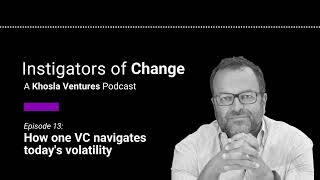
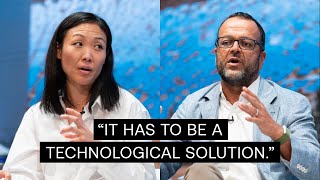
Samir Kaul, a Khosla Ventures founding partner, has lived through four major economic crises and feels calmer now because this downturn is tech-led, not a housing or credit crash. He backs early-stage companies in frontier tech like nuclear fusion and distributed power, betting that cheaper, reliable solutions will replace incumbent technologies without relying on consumer restraint.
Chapters
Welcome to Instigators of Change, a Khosla Ventures podcast where we take a look at innovative ideas, the people who come up with them, and those who invest in them. I'm Kara Miller, and this week, whether you run a Fortune 500 company, your own startup, or your own household, the economy right now is a little bit scary. So today, the wisdom of a guy who's been scared before, but tells us why this this time he's a bit calmer.
Like in 2001, I thought the world was going to end. In 2008, I thought the whole financial system was going to collapse. You know, when, when cleantech imploded, I thought my career in venture capital was over. And when COVID started, I thought we were all going to die.
Samir Kaul, a founding partner and managing director at Khosla Ventures, explains why it's probably going to be okay, where he sees real opportunity to invest now, and why his life changed when he met the biology pioneer Craig Venter. Join us on Instigators of Change for a look at the economy, venture capital, and a little lab work. We sit at a strange moment financially. Gas prices feel stratospheric. House prices are right up there with them. Half the stuff you want is backordered. And yet, if you look at the numbers, Americans feel pretty good about their own financial situation. Close to 80% of people say in polls they feel at least okay. But if you ask them about the national economy, three-quarters of Americans think it's doing terribly. Many folks worry we're headed into the jaws of a recession. What's going on? Well, we went looking for somebody who's seen a downturn or two.
Look, it's a question we all grapple with on a daily basis.
Samir Kaul was part of Khosla Ventures founding team 17 years ago, along with Vinod Khosla and David Weiden. He had worked in venture before, and he tries to put what he's seeing in context.
You know, the specifics to the macro— look, we have inflation. Do I believe inflation's the 8% or so that's reported? No, I'm sure it's higher. We don't have kind of the natural tried and true tools of the Fed, you know, print money or drop interest rates to fight it. And so, you know, you have to think that a recession is the most likely, and we most likely are probably already in a recession, but a recession is the most likely antidote for inflation to constrain demand.
Which I know may not sound or feel good. A recession never does. But Kaul says this is really substantively different from the 2008 downturn.
This is tech-led. So this isn't a housing crisis or a real estate crisis or people being overleveraged. This is, you know, lots of free money, no interest rates, and causing people to look for high yields.
He says in seeking those yields, the value of tech companies has skyrocketed, sometimes by an order of magnitude. Still, if you're thinking, so then this is like the 2000 crash, Kaul says not really.
It's different than that in that these are real businesses. I mean, these enterprise software companies that have had, you know, 80% or so haircuts on their valuation, they're real businesses. They have real customers. They have recurring revenue. They have products that if you just removed them from people's everyday work life would be really problematic. And they're still growing. You know, Salesforce has just talked about ambitious growth. And, you know, nobody's coming— GitLab or Okta. I mean, these are essential software platforms. Same thing on the consumer or fintech side, you know, DoorDash, Instacart, Stripe, Square. These are essential companies to everyday life that are robust, which doesn't mean there won't be some revaluing.
But under the hood, he believes there's a lot of there there, which wasn't always true before the 2000 crash.
Now these companies will pivot to get to free cash flow, and that's fine. They've got the balance sheet, they've got the demand. They can raise money. Now, the valuation may be less, but I think that these companies, we're long-term shareholders. So these companies aren't, like in 2001, there were a lot of companies that just didn't deserve to be companies. They just were never gonna be profitable. They never were gonna have sustainable growth. This isn't the case. These companies move to high growth 'cause that's how they were meant to be valued and can just as easily move to more sustainable growth and still grow, by the way, 30, 40, 50% a year.
Kaul says, to be honest, he came to his feeling of relative calm after navigating through a lot of choppy waters.
Like in 2001, I thought the world was going to end. In 2008, I thought the whole financial system was going to collapse. You know, when, when cleantech imploded, I thought my career in venture capital was over. And when COVID started, I thought we were all going to die. So in that backdrop, I'm okay.
Yeah, you've gone from the extreme reaction to something a little less extreme, but it's important because a lot of these young entrepreneurs— and yes, I was going to ask you, do people come to you and say like, oh my God, what is happening?
Oh, I'm like the coolest kid in school right now, Kara. Like, this is like, this is like, this is actually pretty fun for me is because, you know, before I was like, believe at 48, which isn't even that old, I was kind of the old guy. They'd laugh at me 'cause I, you know, whatever. I didn't have, I didn't understand all the hip emojis in my texts and all these things like that, or these, or all the acronyms and someone had to explain it to me. Now all of a sudden, you know, they want people, I'm talking to my CEOs more in the last 3 months than I have in the last years because they're coming to me. It's not because I don't want to talk to them. I love talking to them. That's why I do this job. But they want help and they're calling me like, oh my God, what do we do now? What do we do now? What do you think? Because they haven't experienced this. So they're probably at the extremes I was, as I just kind of, you know, laid out for you. And I think so are a lot of the first or second time funds, you know, that haven't had to, you know, retrench or do layoffs or pivot to more profitable growth. They don't understand that. They don't know how to do that. And they're asking for— to their credit, though, they're asking for help, which is all you can do. And all you can ask for.
From the perspective of people funding companies, um, do you think that there's been a big mental shift in the last several months or no, you're, you're pretty much are where you were a year ago?
No, I think on the, we don't do a lot of the growth late stage investing unless it's an existing portfolio company. So, you know, that obviously has shifted dramatically. And, you know, there was an announcement or an article recently that Tiger Global was down 50-odd percent. So I think a lot of the growth funds, you know, if they're taking that kind of hit, there might be some decrease in that funding activity. For us, you know, we tend to be primarily early seed, Series A or incubation stage. We haven't seen a lot of reduction at those stages. And those companies that we're competing with are still highly competitive. We haven't seen a lot of compression in valuation. So, that's been good. I think the other thing that I would note is that fortunately, because we've had this level of experience in the past, we look at our companies every 1 or 2 quarters and we look at which are the companies that could potentially be fund returners or major returners. And we felt pretty fortunate when we did the review recently that the vast majority of our quote-unquote fund returners have large balance sheets, you know, raise money strategically and have the ability to, you know, not have to think about fundraising unless something's opportunistic for the next, you know, 6 to 8 quarters, which I think puts them in a very strong position.
When you think— this is less of a question about sort of the turmoil in the economy, but when you think about a sector of the economy in which you feel— I mean, I know you're always thinking about where do you, where do you invest money? What do you stick with? What's working? What's not working? And when you think about a sector of the economy in which individual companies and venture investment can make a whole bunch of difference right now, can really move the needle, is there like a sector or two that stands out to you?
So the short answer is we pride ourselves on almost not on almost being vertical agnostic. And we look at where are there large markets yet to be disrupted where technology can do that. And so that's why we've invested in probably the broadest set of verticals of any other venture fund. You know, we were first investors in food and space and 3D printing, all these different markets we've been very, very early in. And it wasn't like we went, you know, we just found technologies and then said, okay, these are these large markets that can get addressed. I think where I'm really really enthusiastic is in the deep frontier sustainability tech-type markets because that's less discretionary consumer spending. And we're seeing a real tidal wave of talent leaving the big tech-type companies or graduating from university who want to work in those sectors. Main Spring Energy, a company we incubated about a decade or so ago, recently announced a large financing, well over $150 million at a great valuation that that is doing distributed power using all kinds of inputs, can use ammonia, can use hydrogen, natural gas, diesel, biogas, et cetera, et cetera. Just by changing software, you can put a different input in and you can generate reliable, clean, sustainable, cheap energy. So I actually think, and these highly differentiated large technology bets that often do take a decade or so to come to fruition, are gonna really thrive in this market. And so I'm super excited about that.
Let me follow up on the kind of sustainability. You mentioned sustainability and climate change. And we talked recently on this show to Patrick Brown, who left his lab at Stanford basically to make burgers, right? Started Impossible Foods. Obviously, the way that he thinks about taking on sustainability and climate change is different in a lot of ways from the idea of like, turn your lights off. I mean, he thinks about like, I'm going to invent a technology that's better, that can supplant the existing technology. How do you think about the kind of technologies, the advances that it's going to take to deal with climate change?
So I don't think betting on consumers to consume less or pay more is a good strategy. That strategy was tried and failed. And I'd say the first wave of clean tech where people thought solar panels that were more expensive than natural gas or, you know, biofuels that were more expensive than oil were going to lead the way. That just isn't going to happen, in my opinion, and certainly not at scale. You might find pockets of adherence to that, but you're not going to find it at scale. So you have to replace the incumbent technology on cost and reliability when it comes to things that are just always going to be a commodity, which power and fuel for your car will be. And so, that's why we're big, big supporters of nuclear. We have two nuclear investments, most notably Commonwealth Fusion, which we helped spin out of MIT a while ago. And I think the company raised well north of $1 billion, demonstrated a 20-tesla magnet and their ability to keep that magnet and then cool. And the fusion plasma that was inside that reactor, I think got to 100 million degrees or something, pretty hot, and the magnet was able to contain it. So that to me is great. The engine company, Mainstream, I talked about is great. It's an engine. It takes all kinds of fuels and it provides reliable 24/7 dispatchable cheap power. Those kinds of things make sense. Impossible Burgers tastes as good, convenient to get, same cost or better. Yes. You need that type of product in order to really have an impact on climate change. Having people pay more, you don't get enough penetration where you scale, and then you don't have impact if you don't scale.
And it's interesting because it's a paradigm shift too, because I feel like since I was a kid, and it's probably true of you too, you, you know, you would hear reduce, reuse, recycle, like turn the lights off. Do not— obviously should do all those things, but this is a paradigm shift in terms of how are you going to, you know, really make the very, very big leaps. That we probably need to to really mitigate a lot of the change that's already baked in.
Yeah, and you see it, right? If someone says, here's a Patagonia jacket and here's another branded jacket, and they're the same cost, the same quality, the same level of warmth, same design, and you know that Patagonia gives X% to, you know, preserve ocean reefs and this other jacket doesn't, you'll take the Patagonia one. You know, you'll buy TOMS shoes 'cause you know if you buy one pair of shoes, a free pair of shoes is sent to Argentina or somewhere in South America for a poor child to wear, you'll do that. But not if the shoe isn't comfortable and not if the shoe is more expensive or not if the shoe looks terrible. But if they look the same, cost the same, and are as comfortable, of course people will do that.
Well, and I mean, it probably, I'm sure there are people who would pay a premium, but a lot of people wouldn't or feel like they couldn't, right? You've got, you've got different parts of the market, obviously.
Well, you can also go to the market initially premium to kind of recoup the— because sometimes a lot of times you can't price where you want to price until you get to a certain amount of scale. And so certain things like, you know, like early on with Impossible, we only served at high-end restaurants because we never wanted to sell a product at negative gross margin, you know. And then as we got to scale, we could go to White Castle and Burger King and Costco. Where obviously price is a predominant feature, you know, because we're very committed to that. So, you know, even pre this current setback in the markets, we were very committed at Impossible that we were going to make a great product available to the masses, but we were not going to sacrifice the overall viability of the business by selling at negative gross margins.
Let me ask you a little bit about your own career. I know you did research with Craig Venter early on who became famous to a lot of people for helping sequence the human genome. How did working with him change how you think, uh, how you approach problems? Tell me a little bit about that experience and how it kind of shaped who you are.
So Craig was, um, you know, many people are confrontation averse.
Craig was confrontation seeking, um, which is a nice change. I mean, you know, yeah.
You know, which was like an interesting, you know, growing up as like a family of immigrants and kind of putting my head down and working as hard as I could. It was an interesting change to see someone who was just so bold and brazen. And I was very, you know, we were— he sat at my parents' table at my wedding, so we were very close. Uh, and I learned a lot from him on, you know, he would just keep asking the question like, why not? Like, why can't we beat the public genome project? I ran the largest project at the center, Arabidopsis, which is the first plant genome. And I won't bore you with the details there, but so I was like, okay, well, we're more efficient than the other genome sequencing centers. Why can't I take some of their allocation? And so we started with just sequencing one chromosome and we ended up getting a piece of almost every chromosome in that plant because we were running a more efficient ship. And I would go to go to DC and to the National Science Foundation. I'd be like, look, we're funding it. And I said, well, we should take some from Stanford or take some from Washington University in St. Louis or take some from Cold Spring Harbor. They didn't like it, but we ended up in 4 out of the 5 chromosomes because— and I would never have done that before. I would've stayed in my lane and been like, well, this is what we've been allocated. Let's do a great job at that. And so I learned that be bold, be audacious, And, you know, if you can deliver, don't be shy about asking for more. But the reason why I kind of elaborate on that is that it's shaped my entire career. Then I went to work for Noubar at Flagship, right? And similar, like he said, well, why can't we as a venture firm take a science paper from Caltech or MIT or Harvard and build a great company around it? Why can't we build our own incubation factory? Why can't we build a company like Moderna, right? Which I'm the recipient of, you know, multiple shots in my arm. And then Vinod, you know, is also incredibly bold and audacious in his goals. And so like, you know, I think that early experience and positive experience with Craig, you know, shaped the next, you know, 25 years of my career. Because if you look at the 3 people I've worked for and with, Craig Venter, Noubar Afeyan, and Vinod Khosla have a lot of similarities. And I'm different than all of them, but I've, you know, I've been able to extract a lot of what makes them great and hopefully put that as part of my, you know, mosaic as I built my career.
Do— I mean, I know Craig Venture wasn't a venture capitalist, but as you've gone through venture capital, does that— and meet— and you've met different people who've done things in different ways. Have you seen the whole landscape change in terms of what people look for now in terms of their involvement in companies? You've been in, in the, the VC world for a while, and I wonder how you've seen what kind of evolution that looks like to you.
You know, I think you've seen firms more the other way. They've gotten bigger. So when we raised our first outside fund in '08-'09, we were the first billion-dollar fund. Then came Andreessen, and now, you know, a billion dollars is barely enough to get it ticket to the party, right? Now the funds are getting bigger and bigger, and you're seeing them also become like organizations, like large, you know, large marketing groups, large finance groups, large recruiting groups. Uh, but that's pretty much the biggest difference I've seen in the last decade is funds getting larger, both in terms of size of fund and in terms of number of people in the fund.
Um, I want to ask you about a specific sector. I know that Over time, you've thought about healthcare in different ways. Obviously, like the amount that the US spends on healthcare has just gotten huge in the last several decades. Give me a sense of when you think about healthcare, is that an area that's ripe for disruption? What's going wrong? How do you think through that sort of problem?
Well, healthcare is a mess.
I agree with that.
I mean, I think that's, that's obvious. Now, how to address it is another set of things. I think you have to look at it pretty tactically. So one is I think consumers are going to want more control of their healthcare. So where does that lead to opportunities to invest? We've got a number of companies in what we'd call digital health. So SWORD Health for musculoskeletal issues, Headspace for mental health, and Hello Heart for cardiovascular. We've got a number of companies in that space that allow consumers primarily, frankly, through their employers, purchase these or use these products to take more control of their own healthcare, where they're not just like, you know, calling their doctor, waiting 3 weeks for an appointment, getting 6 minutes with the doctor who's just read their file because the way they get paid nowadays, they're incented to take on way too many patients than they can actually help manage well. And then you're getting, and then just kind of like with education, the wealthy are going to concierge just like they go to private school and those that can't afford it are, you know, stuck waiting weeks and weeks for appointments. And God forbid you try to have to do an emergency surgery. Good luck getting an appointment, right? And so I think that's a real thing. So preventative health where consumers can take more control of it, we're seeing a lot of traction. So that's like on the digital health side. It's also in things like most people are wearing some kind of wearable, whether it's a Fitbit or a Whoop or an Apple Watch. To be able to track, or, you know, we have a company called Eight Sleep, the mattress where you get better sleep and it measures your resting heart rate, your HRV, and a bunch of different things at night. And it's fantastic. I use both. I use a Whoop and an Eight Sleep. And you do your own like hacking. Boy, did I drink enough water? Did I get enough rest? Did I, you know, have a glass of wine that maybe I shouldn't have? And you can kind of sort that out as opposed to the traditional way of once a year getting your blood work done. Right. So I think you'll also see devices, diagnostic devices, fitness wearable devices, things like Ultima where you can sequence your genome for $100. Like I get my blood checked every quarter. I'd get my genome checked every quarter. Why not? It's $100. Um, so I think you'll see a lot of things like that, that, and those preventative things should reduce the number of times you're running to the hospital or running to your primary care physician. Um, so that's one area. And then I think You'll see more kind of companies using AI for primary healthcare, or you'll see more companies like the One Medicals and Forward Health, which are, you know, kind of pseudo concierge type approaches for ailments. And we're excited about that. You know, we've got other things are, you know, why does it take 10 years and $1 billion to get a drug through clinical trials? Like, why does it take that long? So we've got a company called Lightship, which is doing direct-to-consumer clinical trials, and hopefully we'll get clinical and trial enrollment much faster. That's usually the long pole in the tent is enrolling these patients. And again, that's an industry that hasn't been disrupted, right? If you're a pharma company and you want to do a clinical trial, you pay companies like Inovia or Par Excel or PPG you pay them anywhere from $10,000 to $100,000 a patient they enroll. That should be able to be disruptive with technology and social media and things like that. And we're trying to do that.
Your answer here may have something to do with healthcare or it may not, but, you know, you talked before about investing for the long term. Very often the things that affect our lives, I think about like cell phones, Zoom meetings, very often, you know, 10 years before they existed, they would've been essentially unfathomable to people. Like, I, you know, I can't imagine I'd walk around with a touchscreen and, you know, people didn't even know what a touchscreen was probably in 1997. So these are kinds of new categories of things. Do you think of categories in which you think this is where the real revolution is likely to surface, let's say over the next decade or two?
So I love that you asked that question 'cause we do that a lot. So, you know, because I invest in a lot of these what look like space-age kind of technologies, right? 12 years ago with Impossible Foods, people thought it was crazy. I also, once we get to a certain point, which let's say is like year 5 of the journey, when I feel like I have inside information on these private companies that it's going to work, I then start to ask other questions. So like, I've been pretty confident for some time that Ultima would get to $100 genome, right? So then I asked my healthcare team, I said, You know, if in 5 years Ultima is pounding out $100 genomes, what kind of technologies or companies would we have wished we started now? And let's talk, let's, let's say it's a given. It's not an if that Ultima is going to get to $100 genome. It's, and it's not even kind of a when, but let's say we're in a world where $100 genome in, you know, in a couple hours is, is feasible. What kind of things will emerge that are unobvious unobvious today, but obvious then. And let's start looking for those now because we invest. So, or it could be a science paper, it could be one entrepreneur, he or she, and, and working on, and that. And so I'll give you an example of, of, of this thought exercise and how it led to a really exciting company. So when I saw Google Glass came out, I was like, wow, that's super cool. Uh, I think after the iPhone, augmented reality will be the next big platform. And I was convinced of it, but I didn't think anyone would want to look like a cyborg. So the Google Glass form factor, that didn't work for me. And then you saw Magic Leap with like their swim goggles. I was like, that's even worse. That's definitely not going to work for me. And so we invested in a company that's now come out of stealth called Mojo Vision, which is doing all of that but in contact lenses. So you won't, you can't know. Oh, super cool, right? And we've invested in the entrepreneur Drew Perkins multiple times before. He's really just kind of best-in-class optics physicist kind of engineer and has launched multiple companies, multiple products. So I knew that he knew what he was doing. And so once it got to the point where I was like, okay, like he's got dynamic motion, he's got multicolor, like this is gonna work, I asked myself, I said, hey, if augmented reality is really going to get widespread use because it's going to be contact lens where I'd wear them, what's going to happen? And so the consensus was like, well, things like gaming and esports will be even bigger because so, you know, a couple of years ago I realized that after the Super Bowl, the most watched live event was like one of these Valorant or, you know, Fortnite-type battles. And that there were gamers who were massive influencers, like a guy called the Ninja was like this amazing influencer, made million dollars a year kind of being a gamer. And people would just sit on Steam and stream people watching other people play video games. So besides some, more than the NCAA Final Four, more than like the NBA Finals, more than Wimbledon's finals. It was unfathomable that people would sit around and watch other people play video games, but it's happening, right? So then I was like, okay, well, I don't want to invest in an esports team because people move around too much. But how about we find approaches that will make people better gamers? Because if it's through AR, you could do that. And that's where we found a company called Statespace and a really terrific entrepreneur. Named Wayne Mackey, who basically almost dropped out of high school, became a professional MMA fighter, and then realized he wasn't really good at it. And he ended up doing a PhD at NYU in neurobiology.
Wow, that's a shift from MMA to neurobiology.
Yeah. And so he started this company, Statespace, that's become kind of the leading trainer for gamers to make them better. And you can look them up, and they've done deals with Riot and Epic and all these large gaming platforms. Firms, and they're awesome, and they've raised a bunch of money, they're doing great. But I would never— because I'm not a gamer. I haven't played video games since Sega hockey when I was a freshman in college, right? With— which was— looks like the Stone Ages. And my kids really aren't gamers. That's more my wife and my influence. I'd probably love to play more video games, but we kind of keep them up from that. But that instinct came because we take these huge leaps in technology that we do those thought experiments all the time because, you know, this business is so hard. You have to take every advantage you can. And so if we believe that technology is gonna work, then we have to kind of capitalize on that and not just get one win out of it, hopefully get multiple wins. So I'll bend your ear on one more example. So we were the seed investors in a company called Rocket Lab that's now public that, you know, just did a really cool launch where they, caught their vessel with a hook on a helicopter as it was reentering orbit. It's super cool. It was out of New Zealand. So there were a lot of strange things about it. There's a company out of New Zealand launching rockets. But again, as that started to work, we realized that, boy, if launching stuff into space is effectively going to be free or not a cost prohibitive thing, what are some other things you can do in space? And then we realized that there are a lot that even though we're— you don't feel gravity on Earth and you don't feel the Earth rotating, though there was a small earthquake recently in the Bay Area that woke me and my wife up. You don't feel these things. That little gravitational pull actually can affect how you make products, their yield, what you can make, the distribution of what you make. And so we found a company based in LA called Varda Space. And what they're doing is they're leveraging cheap transport, like basically an Uber to space, like a Rocket Lab, who they're partnering with. And they're putting manufacturing capsules into space to make stuff that you would use on Earth because making them in space makes them better.
Crazy. Making them in space makes them better because you're at zero G.
You have, you have no gravitational pull. Right. And it's amazing when you're making things like like fiber optics for underwater cable, or you're doing certain pharmaceuticals, just that little perturbation can change both the yield and also change the distribution of what you manufacture such that you can't make the most highly optimized products. And even launching these suckers into space, making them there, bringing them back into orbit and recovering them The benefit in manufacturing product and, uh, quality absorbs that cost. Wow.
And, and so this must be some sort of— it's like on autopilot, like it manufactures it by without a person, obviously.
Yeah, you'll have robotics and then you may, maybe you have someone up there, maybe you don't, but it's gonna be primarily, yes, primarily robotic and, uh, unmanned.
Um, I know you've incubated a bunch of companies at KV. Why do that? It's like not the general venture capital approach.
So I think one is because we're constantly looking for— we're finding, and, you know, we gave a couple examples where you find areas where innovation is needed. You know, we'll— we look in parallel, so we'll look for interesting people doing work there. And if there's not an existing company, we'll create it. We've all been entrepreneurs, we've all done it before. And it's, again, it's a competitive advantage. You get a lot of ownership, you get a lot of direction of hiring the right people into the company from ground zero. And, you know, frankly, it's something we all really enjoy doing. You know, Pat came to my office and it was just me and Pat with Impossible on day one. And like, it's, you know, it's, it's awesome to see it served everywhere, right? And so you get that job fulfillment. You can build the company on the right principles from day one. You can hire the right people from day one. You get terrific ownership. Which, you know, again, in these, you know, we have to have these fund returners, which, you know, you need at least 1 or 2 per fund to keep the lights on. And the incubations often are the ones that do that just because of the disproportionate ownership we get.
Hmm. Samir Kaul is a founding partner and managing director at Coastal Ventures. Samir, thanks for being here.
Well, thank you for having me. It was a pleasure.
And thanks so much, as always, to you for being here. That's it for this week's show. We welcome your comments, your ratings. Leave us a review on Apple Podcasts if you're so inclined. We would love to hear what you think. And if you want to know more about venture capital, check out our episode, Why Big Money Makes Big Bets. I chatted with the journalist Sebastian Mallaby about what VCs across the spectrum are worried about right now, how California won out over the Boston area when venture capital was young, and why the rise of China could change the landscape. I'm Kara Miller. This show is produced by Matt Purdy. Talk to you next week.
More from Samir
Building & Scaling Brilliant Companies - Kevin Systrom (Instagram) & Samir Kaul (Khosla Ventures)