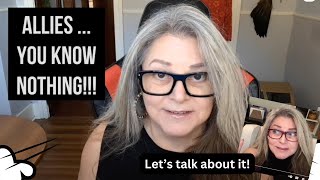
Sandi L. Boucher argues that non-Indigenous allies must approach reconciliation with radical humility, assuming they know nothing about First Nations communities. She warns Indigenous people to expect missteps from allies and to speak up when harmed, rejecting generic reconciliation formulas that ignore the diversity of Indigenous nations.
Chapters
Truth be told, I've been doing this Indigenous Canadian reconciliation thing pretty much for my entire life, even before I realized that's what I was doing. And if there's one thing non Indigenous mainstream would love, it's as if I could give them 10 steps that they could take to get us to reconciliation, to bring us to and through reconciliation. And that just doesn't exist because the Indigenous Canadian relationship in modern day, thanks to Canadian history, is so nuanced and so challenging that you have to be self aware. You can't be arrogant because you did the 10 steps. And you know, if you watch my videos for any length of time, I tried to stay away from rules. Well, today I'm going to give you one rule that if you could just follow this and remember it constantly, it could really help that rule. Allies, you know nothing. Let's talk about it. Hi everybody. My name is Sandy Boucher. I'm Red Thunderbolt, woman of the Loon clan, a proud member of Seine River first nation in Treaty 3 territory in Northern Ontario. And yes, I said it. Allies. You know nothing. Now before you jump all over me on that one, let's think of the two sides of the feather. Remember, there's two sides to this reconciliation conversation. First off, let's talk about the non Indigenous, the allies and want to be allies that I spend so much time working with. I spend a lot of time working with non Indigenous Canadians to try to save themselves from themselves. I try to teach them humility. I try to teach them that the ways and means of doing things in modern day really are not going to serve them in a First Nation community. And the assuming that you know is a perfect example of that. So let me explain. If you go into a First Nation community and you remember the rule, I'm an ally, I know nothing, then you're going to make zero assumptions. You're not going to assume it's okay to ask the question until you ask if it's okay to ask a question. You're not going to assume you can just go walking into that place or that you can just touch that interesting item you see, because often these the answer is you can't. It's humility. Teaching it is adopting a lifelong learning mindset that every time you're in a community, you're going to learn something more. Because as soon as you cross over to knowing, that's ego. And you risk upsetting someone by running with the idea that you know nothing. You never make the mistake of assuming that two First Nation communities, communities are the same. And you're never going to be seen as overstepping by a community member that doesn't know you. Because it's easy to behave in a certain way and believe you know how to behave around one person that you may know. And even then you may assume you're really close friends, but they understand the power imbalance. And maybe they're being friendly, but they would never confide in you what they really think of your company or the work that you're doing. So don't make assumptions. And if you go walking into a First Nation community just because you've been there a few times and you know a few people and you're acting like you're at home, I guarantee you a community member that comes into the room or into the area you're in who doesn't know you, you're going to be seen as overstepping and arrogant. And they're definitely not going to support the work you want to do in the community. So for the sake of the non indigenous allies and want to be allies, the rule is you know nothing. Now if you thought that was interesting, let's look at the Indigenous side of the feather. Indigenous allies don't know anything they haven't been taught why, how they do things doesn't work for us. They weren't taught their own history. They don't understand that we have different values, we're taught humility. They weren't. They were taught be assertive, be confident, share what you want. It's a totally different mindset, which means stop expecting them to know what they don't know. Truth be told, and I've seen it a million times, even the most well intentioned ally is going to say something they shouldn't, is going to do something they shouldn't. They're going to offend someone, they may even hurt someone with how they phrase a question. So if you're Indigenous, it is in your best interest to always remember allies know nothing. Do not assume they know how to behave in this gathering. Do not assume they know what they should and shouldn't say to a youth, an elder, a chief in a community. And even more importantly, if you're Indigenous and you're going to go work in a non Indigenous entity, a Canadian entity, you need to remember allies know nothing because they are going to say something offensive. They are going to say something that catches you off guard and you're thinking how could they possibly believe that's true? And if you're not ready for that, if you're not healed enough for that Then please find another job because it's going to happen. And non Indigenous education cannot be at the price of Indigenous pain. Do not put yourself through that just because of the size of the paycheck. Do your healing first. So by the way, if you are Indigenous and you choose to take the risk and you work in a non Indigenous entity and someone says something or does something that is offensive or hurts you or whatever the case may be, guess whose responsibility it is to say something that would be you. Because you can't stay silent. You can't just assume they should have known because they don't. So again, if you're not ready for that, either get ready, do the work while you're working there, or preferably beforehand. If we could just agree on this one rule, we have such a greater chance of actually being able to have conversations with each other. For the non Indigenous, it's like going to a new country. Just because we're within the same Canadian borders does not believe, does not mean our cultures are the same. Because they absolutely are not. And if you think a Haudenosaunee community is the same as Anishinaabe community or a Cree or a Dene community, let me be the first to tell you that would be wrong. So what's the rule? Allies, you know nothing. And that's going to keep everyone safer. The non Indigenous ally and the Indigenous. And that's why I do what I do. I hope that made sense. Can't wait to see your comments until tomorrow. I love you. Take care. Bye bye.