An Exercise in Reconciliation - Part One
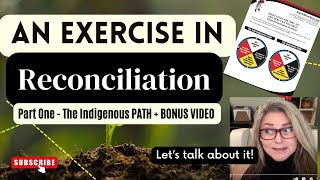
Sandi L. Boucher (Red Thunderbolt, Loon clan; Seine River First Nation, Treaty 3) presents the first video in a short series accompanying her book The Path. She introduces two medicine-wheel "paths" used as action plans for reconciliation—one for Indigenous people and one for non-Indigenous Canadians—and in this installment explains the Indigenous path in four stages: (1) Healing (primary focus; reclaiming worth and capacity to forgive), (2) Advanced learning/youth (unpacking internalized oppression), (3) Adult/empowerment (using voice respectfully and advocating), and (4) Elder/reconciliation (context-specific, negotiated community solutions). She illustrates Indigenous lived experience with the personal concept of the "Hum"—an internalized, discouraging voice rooted in colonial absence of Indigenous representation—and recounts a 2016 Business Person of the Year anecdote showing how common the Hum is among Indigenous attendees.
Chapters
I'm going to need you to totally ignore the state of my desk around me. Also, I'm not naked. Even though it looks like I'm naked, I'm not naked. You know, when it's funny. I was looking back in an old video because I'm going to use it in an event I have coming up. And in that video, the state of my desk was ridiculous. And over the years, I've made a point of cleaning it before I do a video. I guess we've come full circle. I have something special for you today. I know my followers love practical advice. That's what we're going to talk about. So let's talk about it. Hi, everybody. My name is Andy Boucher. I'm Red Thunderbolt, woman of the Loon clan, a proud member of Seine River First Nation in Treaty 3 Territory in Northern Ontario. And I'm about to go on a road trip. I'm gonna be gone for like 11 days. I have two events in Southern Ontario. I'm taking my baby with me. Insert picture of baby here. Yes, my Mustang, my dream car. And I'm totally excited about it. But when I'm on the road, shooting videos becomes incredibly complicated and editing videos becomes even more complicated. So instead, what I'm going to do is shoot a series of videos before I leave, all interrelated, all focused on practical advice for you. And hopefully you're going to enjoy them. And of course, I will do my best to watch for comments and stay on top of my emails and all that fun stuff. So I'm not going to do that while I'm driving, of course, but you.
Know what I mean.
So I want to po focus on the Path, my third book, which is the action plan to get us to and through reconciliation. And that book morphed into a full day seminar, one of my most popular seminars and one of the most popular aspects of the seminar is the final exercise, so the reconciliation exercise, where participants actually get to practice reconciliation or the skills that they need to reconcile. So that's what I wanted to do with you. Now, this seminar costs thousands of dollars for people to bring me in. Obviously, that's not what the participants pay, but that's what the organizers pay. And because you or my dedicated following on YouTube, well, I thought it was would be awesome to share with you.
And of course, if you're new to.
My channel, please make sure to subscribe so you don't miss any of the steps because there's going to be a few of these videos. First off, we need to Talk about the medicine wheels that are featured in the book and in this exercise, they represent the path to reconciliation. And the title of the book is a little misleading because there's actually two paths. There's a path for Indigenous people and all the work we need to do to be ready for and open to reconciliation. And then there's the path for non Indigenous Canadians. And heads up, there's a whole bunch of work then Canadians have to do to get ready for reconciliation and to be able to engage in it. Reason reconciliation hasn't happened yet. Neither side is ready for it. But we're going to talk about that in this series of videos. So today I'm going to explain the two paths to you because that's what we're going to use to do the work in the following videos, in the subsequent videos. So. And you know what? Maybe I will throw these images into my community on my YouTube channel so that way you can see it, easy reference, you can go back and check on it. I mean you could always print a copy, but that way it's handy dandy. So you don't need to worry about where did that paper go that I just printed? Or maybe that's just in my world, I can own that. The medicine wheel starts in the east where the new day starts. So the one thing for a non Indigenous Canadians, they tend to look at the circle and want to start at the top. You got to start on the right hand side. Okay, so for Indigenous, let's look at the Indigenous path first. First stage, first step. And by the way, you stay in each stage till you achieve what the objectives of that stage is. And what I'm doing is mimicking the stages of life. The baby stage, which is a learning stage. The youth stage, which is a higher learning stage. The adult stage, which is an action st. And then the elder stage where you reflect and grow and, and do all the awesome stuff. Because in Anishinaabe and many Indigenous cultures, elder is the goal, elder is all the apples, elder is all the wisdom. We definitely have a different look of our. We look at our elders differently than mainstream does for sure. So the baby stage, the first stage of the Indigenous path is to heal above all else. And there's so many Indigenous out there now that are focused on achieving academically and, and racking up all of these certificates and degrees and that's awesome. But guess what? They are running. Running from the pain, running from the healing, running from the scars that have never healed over. And that is going to trigger them, that is going to Come back and bite them in the butt. That could even lead to lateral violence in the workplace. So take the time to heal. Guess what? Oppression and internalized oppression tells us we have no value. Taking the time to heal means we do that, we recognize we do that, we are worth taking the time to heal. It is the first step to you reclaiming their confidence and self esteem. Despite what the world, or in this case Canada says about you. Remember, indigenous people are trying to grow in soil, dows and gasoline. Taking the time to heal is a first step that you are never going to regret. So stage one is healing and deciding that once you've done the healing that you actually do want to reconcile with Canada. You were, you were past all that anger that that really doesn't have a place to go. I'm not saying you're not still upset about things that are happening. Of course you are. They're unfair. It's more of the oppression. But you're doing it from a healing place, not from a place that causes you harm. Okay, so healing first and foremost. Another thing that's super important and how you know you've progressed on your healing journey is you have the ability to forgive. Knowing that forgiveness has nothing to do what they said or did or whether they've made amends. Forgiveness is you're not carrying that crap anymore that you're letting them carry the burden because not forgiving only hurts you. That's how you know your healing is taking root. Okay, stage one. And I know I get so much backlash from indigenous people on that stage. That's because they're still on their healing journey. The ones that have done it get the point. Stage two, the advanced learning stage, the youth stage. Now this continues that healing. This is where indigenous have to unpack their suitcase looking at all of the things they were taught about indigenous people, about non indigenous people, but what they can and can't do and they take out the things out of the suitcase that no longer benefit them, they are at the stage where they can accept that the Speedo doesn't look good on anyone. And we finally take it out of our suitcase. And that involves looking at our own internalized oppression. And you know what? I think what I'm going to do with this video, I'm going to do the regular video, but attach to the end, I'm going to attach a video that talks about my own internalized oppression, the unpacking of it. Something happened in my life that was actually incredibly positive that really just shone a spotlight on my own internalized oppression. And that will be in the bonus video. I'll attach it to the end of this one. So that's the higher learning stage. Unpacking the suitcase and really identifying your internalized oppression so you can move past it. Then we get into the adult stage, which is the empowerment stage. This is where indigenous people learn to use their voices in a respectful way. This is not attacking, this is not passive aggressive. That's not a sign of healing. This is not lateral violence. These are our most powerful, amazing activists who know their value and are no longer looking for external validation and now can speak up for the people who, who haven't found their voices yet, can speak up for our communities and for what we need. The adult stage is a beautiful stage. And then of course, on this path that I created for the reconciliation journey, the elder stage is actually the recon reconciliation process. And it is not defined because I believe there is not a Pan Canadian solution. There is not one size fits all. Can we really stop doing that? One says, ask any woman out there. One size never fits anyone. Well, it anyways, why I left that stage blank is it's depends who you're working with. Every community is going to have different solutions with every municipality, every business working with a community is going to have different things that they negotiate. That's the beautiful part, that it's authentic and it's unique to the relationship and it honors the relationship. So that's the path to reconciliation for indigenous people. Just to quickly summarize again or repeat, stage one, the first learning stage is healing, healing, healing, healing. Coming up with a desire to reconcile and actually having the ability to forgive. The youth stage is the higher learning stage. And that's where you're unpacking that suitcase and really coming to terms with your eternalized oppression so you can leave it behind you. The third stage is the adult stage, the action stage. That's where you're using of your voice in a strong, respectful way for your people. And the fourth stage depends on who you're reconciling with. That's where you take all of the stuff you learned and you meet them in the middle of the bridge. Because that's where reconciliation takes place. Now that is today's video. Tomorrow we're going to look at the non indigenous path and the four stages for them. Don't forget I'm attaching a bonus video. I really hope you enjoy it. I think you will it. Authenticity and vulnerability come to mind. It's authentic. It's. It says real as it gets. And I kind of think that's my reputation and I'm, I'm happy for that. I hope you enjoyed this series. It's definitely going to be worth your time until tomorrow's video. I love you. Take care. Bye. Bye. Foreign.
Hi everybody, it's Andy Boucher here once again. I'm Red Thunderbolt, woman of the Loon clan, a proud member of Seine River First Nation in Northern Ontario Treaty 3 territory. And I'm thrilled to be bringing you this next set of videos that will offer you some insight into life on our side of the feather. If you've had the chance to attend any one of my seminars or listen to one of my speeches, there's a good chance that you've heard me explain to people that reconciliation is a topic of discussion for non indigenous people, but it's lived experience for us who walk that path. So as you watch these next couple of videos, if I trip over a word or you hear my voice crack, know that I'm still very committed to this journey. But what I'm talking about is real. And it's important to me that you understand that in this video I want to talk about something that is incredible, incredibly real for many Indigenous people, if not all. And what I'm talking about is the hum. Now, for me to explain this to you, I have to travel back in time to 2016, when I won Business Person of the Year for the city of Thunder Bay, a city known for its anti indigenous races. At that point in time, I had already been in business for near 10 years. I was thrilled to be nominated, but there is no way I thought I was going to win, especially when you looked at the non indigenous business professionals that I was running against. But anyone who knows me and my personality, I was determined to enjoy this moment. So I bought the shoes, I bought the dress, I went and got my hair done. Cinderella was going to go to the ball because I didn't think I was ever going to have an experience like this again. I got ready for the event, but the one thing I didn't do was write a speech. And when they announced that I had won, not only did the room erupt in applause, which was absolutely so affirming for me, but I suddenly realized I had to give a speech that I hadn't prepared, which is really embarrassing when you make a living as a public speaker, but somehow I managed to get up to the stage and get up there in front of those 600 people and I gave a spirit speech. I was so overwhelmed in the moment that I didn't even know what I had to say. I had to watch the replay of my own speech to hear what I had said. And that's the important part. Because when I watched the replay, the first words that came out of my mouth were, they said it could never happen. Now, over the course of the next three, four, five months, I had many, many people raise up to me in grocery stores and events to congratulate me on my win. And most of them wanted to know who was this person that had the nerve to tell me that I wouldn't succeed. And you see, that's the problem. Because after being asked 5, 10, 20 times, I decided to sit down and ask myself, where did that come from? Because, you see, I couldn't name one person who had said those words to me. But I knew in that moment that was a heartfelt utterance. I needed to know where it came from. So I did what I always do. I thought about it. And then I sat down and I wrote a bloodboard post. And I called it the Hum. Now, if any of you have ever worked in an office with fluorescent lighting, you know exactly what I mean by the hum. That constant buzzing sound in the background as you go about your day. But for indigenous people, or for me at least, the hum was a voice. And it was saying things like, you're never gonna succeed. Why are you even trying? They're not gonna hire you. No one that looks like you works there. Why are you trying to go to college? You're not gonna be accepted there. That person is never going to want to be your friend. Why do you keep trying? Because, you see, as an indigenous person in this country, when we walk into a store with our parents as a youngster and we don't see any indigenous people working there, our little brains register that indigenous people don't do that. When we go to schools and none of our teachers look like us, we assume indigenous people can't be teachers. And on and on it goes. I shared that blog post, and it instantly became my most popular blog post, because suddenly I was flooded with responses from indigenous person after another after another. And often all the email said was, I hear the Hum, too. The first time I shared it in seminar, as I shared the story I just shared with you, different people in the audience started crying. And there was this one young woman near the front of the room, and I asked her if she was comfortable sharing why she was so upset. She shared that she had three university degrees but that she couldn't count how many times the Hum had almost convinced her to quit. Had almost convinced her that she'd never.
Be able to graduate.
After she shared, I looked around the room and I asked the audience of about a hundred indigenous people if anyone else had heard the hum. And every single one of them put up their hand. I gave them the opportunity to share. I went around the room and asked people to share their story if they felt comfortable. And it became obvious really quickly that not only had every single one of them heard the hum, but every single one of them thought it was only them, that they were the only ones.
That could hear it.
So when you wonder why indigenous people don't apply for that job, don't come out of the communities, don't go for the higher education, it's not lack of interest, it's not because we enjoy poverty. It might just be because we don't know how to silence the home. Now, I'm living proof you can do it. I've gone on to succeed and now I spend a lot of time teaching other indigenous people how to do same. So if you're indigenous watching this, reach out. I have some advice for you that might just help. And if you're non indigenous watching this, please don't go to judgment. Next time you see someone struggling, remind yourself it might just be the hum. Until next week. Take care of you. Bye bye.
More from Sandi

How I Handle "The Four Uglies!" (Alcohol, Diabetes, Healing & Cheap Seat Comments)


All the Stuff We Don't Talk About with NO SHAME! (WMT Podcast w Antoinette Godin)


When Authors Chat ... (Radio Interview for the Launch of "Copper Stone - Glimpse of Blood Memory)



MORE PROOF of Indigenous/Non-Indigenous Relationships that Work! (Walking My Talk w Millie Gormely)
