First Nations, Metis, Descendians & Where the Line Is!
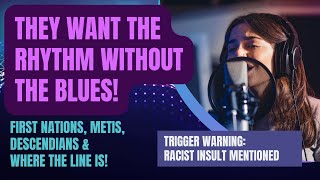
YouTube video by Sandi L Boucher (Sandi Boucher) discussing distinctions between First Nations and Metis identity, critiquing people who claim Indigenous status based on distant ancestry (whom she terms 'descendians' or 'pretendians'), and urging genuine cultural learning and recognition. The creator shares personal anecdotes about upbringing, experiences of discrimination, and why Indigenous representation should come from lived experience.
Chapters
I am so off script this week and I don't mind that. I am not one of those creators who has a year long list of what my videos are going to be to me. And while that would be too colonized, I react to my environment, I react to the hints from creator and I react to what's going on in my world which is the reason for today's video. Truth be told, I did something I shouldn't have done. I didn't think I should do it, let myself be convinced to do it and I did it and I own that. But by doing that it definitely reinforced what I have said in the past. So here we are again. We need to talk about descendants. Let's talk about it. Foreign. Hi everybody, my name is Sandy Boucher. I'm Red Thunderbolt, woman of the Loon clan, a proud member of Seine River First Nation in Treaty 3 Territory in Northern Ontario, Canada. And that introduction really matters in this field video because as a member of Seine River First Nation that means I am First Nations, I am Indigenous. What I am not is Metis. And probably one of the biggest pieces of misinformation out there, one that I believed for a long long time and is this idea that if an indigenous person has a child with a non indigenous person that that baby is a Metis. That could not be further from the truth. According to the federal government definition of a Metis person, which Metis is one of the three distinct indigenous groups to be Indigenous in Canada, you're either First Nations, Metis or Inui. Metis has three distinct characteristics. One, you have a bloodline connection to someone in one of the original Metis settlements. Two, you practice your Metis culture and have maintained those teachings. And three, you're recognized as a member of the Metis community by the people in the community. So what did I do that I shouldn't have done? I got asked to speak to a group of Metis people. I am not Metis. They to ask me to speak. I could only do it from a First nations perspective. To pretend that I understood the Metis perspective would be insulting. Which is kind of why we have to talk about descendants. Because Holy Moly's did they jump all over that definition Definition. Now keep in mind at descending and we are talking about people. I'm not just talking about Joe Blow who lives next door. I am talking about people that go after Indigenous funding, take up positions set aside for indigenous people. Hang on a sec. And I am back. Sorry, brand new staff person messaging me had to respond to that. So as I was saying, I am not talking about the people. Maybe I am. I'm talking about the people that are claiming they're indigenous, but they have one person in their family tree, like four generations ago that was indigenous and they want to claim themselves as indigenous. And I don't believe they are. I believe there is a difference between being indigenous and having some indigenous ancestry, which is the way I used to describe them until I tripped over the word descendian and I was like, oh my God, that's absolutely perfect. And holy Moly's. Did the audience not like that? And what I kept hearing, and again, I am not matey, but what I kept hearing is a large part of Metis culture was the fact that for many years they hid their identity. They did not want to admit they were Metis, which is what has led so many people to be disconnected from their culture. I get that. Trust me, I get that. What I don't think they understand is the reason for the hiding was the shame or guilt over being indigenous. First nations people may not have been able to hide their culture because they were too dark to hide it. They couldn't pass. A lot of people that could did hide their culture, or in my case, was instructed to. When I asked my mom to teach me how to say something in quote unquote Indian, her response in a very uncomfortable way. A panicked look would come over her face and she would finally say, I'm not allowed to teach you this. And imagine my second book, can you see it? The white one down here. My second book is called Her Mother's Daughter for that reason. Because when I was growing up and my mom realized I was a lot more fair than she was, she would tell people, tell them, or tell me to tell people that you, I'm my father's daughter, meaning do not tell them that you're Indigenous. My book is called Her Mother's Daughter. I'm not playing that flipping game. I've never played that game. I was proud of my mom. Her dark skin was absolutely flipping beautiful and so was her spirit, her mind, her wisdom, her outlook on life, the whole nine yards. So again, what. Why this is such a problem is the fact that we are getting people or we are seeing people set themselves up as leaders, as voices for Indigenous people who have no Indigenous lived experience. And that's the problem with the one ancestor four generations ago. If you were raised with privilege because you were fair and no one was talking about your Indigenous culture, then you don't have an Indigenous life experience that is totally different from the darker skinned Indigenous people who were separated from their communities and homes. Whether it was sixties scoop, whether it was foster care, and were surrounded by colonial teachings as they grew up, but still felt the sting because it was obvious in every picture and every conversation that they were different. That is an indigenous lived experience. There's something they endured simply because it was obvious to everyone they were indigenous. Now, I was raised indigenous. Like I said, my blonde or gray hair definitely makes me look more fair. But everyone knew I was indigenous growing up. I was raised by my mom. My dad was of the generation. The dads didn't get involved with the child rearing. So it was 110% the First Nation influence. And what I ran into the other night, it seemed to be a whole bunch of people who wanted to be able to say they're indigenous. One of the characteristics of a descendian or a Pretendian is that resource extraction. They want something out of it. And you know what I. There may be a day in time where you can be an indigenous voice, but it's after you learn about your culture. It's after you learn about your teachings. It's after you unpack all the things you were taught and the advantages you had and start to see the difference. A little bit of knowledge is dangerous, and that's why descendants are dangerous. If you want to break like. Nothing blows me away more than the idea that people are bragging about being indigenous nowadays. As my girlfriend Kimberly said, they want the rhythm without the blues. And I. I just kind of sit back in shock like, you want to be indigenous? Do you understand the price we pay for being indigenous? There's one statement that always comes to my mind that I'm 99 positive. I can't share on YouTube interacting with an individual, texting with a new potential love interest who discovered. I'm going to be very careful how I describe this. He discovered I was indigenous. I told him I was indigenous. And his reaction. And on top of that, it should be fair, he found out I was indigenous. And I also mentioned that I didn't think we would be a good fit, not because he wasn't indigenous, but because of what I had going on. What he had going on. It just wasn't a fit. He didn't take that well. But his insult that he came back with, and anyone out there in the dating world knows how often that happens, was he felt the need to share with me that he didn't have any desire to put any of his body parts inside a dirty Indian. So you want to be indigenous. The rhythm without the blues. The indigenous voices need to be those who have paid the price to be indigenous and are standing up despite those challenges. The other people. Do your work. Learn your culture. There's nothing wrong with being proud of that ancestor four generations ago. Be proud of all your ancestors. Indigenous isn't better than the others. And if you want to highlight it, I really need you to ask yourself, why. Why? If it's because you will now qualify for a job or funding, well, that's a little too close to a pretendian, isn't it? Always going after the resources. Food for thought. I'm not Metis, and that will be was the first and will be the last time I speak to a Metis group. Metis and first nations are at odds nowadays, and I can see why, so. And by the way, if you speak to other indigenous people from whatever group, I've had elders question if I was Indigenous, obviously. Duh. Look at me. I'm fair, especially in this lighting. But when I start talking and sharing my truth and my world view and what I learned from my mom, I always get a hug. Because we recognize our own. No matter what group you belong to. And if all I hear is a colonial world view, you got some learning to do before you do the talking. I hope that makes sense. That's my rant for today. This has been bugging me for days. I realized. I used to write to deal with my world. Now I write and shoot videos. I hope you appreciate it. So now you know about how you qualify as a Metis. And seriously, it's not based on who you sleep with. That applies to First Nation, too. Until tomorrow, I have no idea what I'm doing. I might go back to the schedule. I might not. I'm gonna leave that one up to creator. I love you. Take care. Bye. Bye.
More from Sandi

How I Handle "The Four Uglies!" (Alcohol, Diabetes, Healing & Cheap Seat Comments)


All the Stuff We Don't Talk About with NO SHAME! (WMT Podcast w Antoinette Godin)


When Authors Chat ... (Radio Interview for the Launch of "Copper Stone - Glimpse of Blood Memory)



MORE PROOF of Indigenous/Non-Indigenous Relationships that Work! (Walking My Talk w Millie Gormely)
