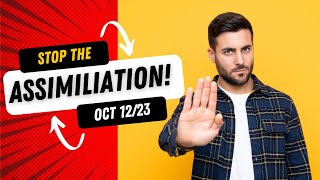
Sandi L Boucher (Anishinaabe, Red Thunderbolt woman of the Loon clan, member of Seine River First Nation) explains Indigenous worldviews to help non-Indigenous audiences improve engagement. She emphasizes that Indigenous nations are diverse (600+ First Nations in Canada, 50+ nations/languages) and warns against expecting Indigenous people or communities to conform to non-Indigenous norms—assimilation remains an ongoing harm. Drawing on personal experience as a white-presenting Indigenous woman, she urges listeners to listen to different cultural lenses and treat those differences as opportunities to build understanding.
Chapters
Once again this week we're talking about an Indigenous worldview. And hopefully I'm sharing some insight on how Indigenous people look at the world, or at least Anishinaabe like me. And by understanding that, hopefully it increases your Indigenous engagement success. So I promised you no more birthdays today. On the weekend was my eldest daughter's birthday. She's in spirit world. On Tuesday was my son's birthday. On Wednesday was my daughter's birthday. No birthday today. Just some more insight. Let's talk about it. Hi everybody. My name is Andy Boucher. I'm Red Thunderbolt, woman of the Loon clan, a pre proud member of Seine River First Nation in Treaty 3 Territory in Northern Ontario. And as I mentioned in the opening, we are focused on an Indigenous worldview. Now I do want to remind you there are so many. There are over 600 First Nation communities in Canada and there are 50, more than 50 different nations and languages. We have different customs, different traditions and Indigenous. The word Indigenous or Aboriginal is very misleading because it gets people thinking we're all the same. There are some commonalities, but when it comes down to the specifics, you are better to assume you don't know what a community is like or what they believe or what their culture is than to assume you do now. And that kind of ties in perfectly with what I wanted to say today. Because today's blog post was. What is it called now? I do not apologize. I thought it was something like that. In this blog post I was creating a seminar for an event. It's now passed. But at the time I was working on this seminar and of course my seminars are delivered like my blog posts, like my videos from an Indigenous worldview that is my cultural lens. I am always going to look at the world like an Indigenous woman. There's nothing wrong with that. And there's also nothing wrong with other cultural lens in world views. The important part is when we listen to each other and hear the differences, then we get a better, complete, more complete picture of whatever problem we're trying to solve. When someone at your meeting says it look like that to me, that's not a challenge, that's not a negative, that's an opportunity to get a clearer picture. You gotta jump all over that. But when I was writing the seminar, like I said, from my worldview, I'm often working with full non Indigenous audiences, no other Indigenous person in sight. So I explain to the audience that it's from an Indigenous worldview and that that may be very different or unique to them. It may not be something that they've previously been exposed to. And almost as soon as I thought of that sentence, I instantly added on, and I'm not going to apologize for that. I went on to explain that one of the things I'm absolutely grateful for is that my Indigenous worldview was not assimilated out of me. And that's the important part of today's video. That if you are non indigenous as an individual or as an entity, and you're working with Indigenous communities and individuals, don't expect them to be like you. That is assimilation and that's the process that the system that has to break. We are who we are and we are trying to remember in the middle of intense colonial pressure to assimilate, it's still going on. People would still love it if we were just more like mainstream. That means they'd like it if we were less like us. And you don't have to be indigenous to know how devastating it is to be forced to be someone you're not. I can think of a whole bunch of issues in the news right now where it's hitting the fan because people are being asked to be something they're not, because others don't believe that an individual knows who they are. I've definitely run into that problem. I am a white presenting Indigenous woman. I swear, the older I get, the fairer I get. I'm fading. But the point is, so many people have assumed not only that I'm non indigenous, assumed that I was white, they assumed in so many cases that I also shared their stereotypical, often racist opinions of indigenous people. You can imagine how well that went. So I am definitely not apologizing for the fact that I still have an indigenous worldview. I'd rather share it so that we can build a bridge together. I hope that makes sense to you. One more video and this week is done. I can't wait to see you tomorrow. I love you. Take care. Bye Bye.