Indigenous Peoples and What You Need to Know (featuring Millie Gormely, host of Money Equals)
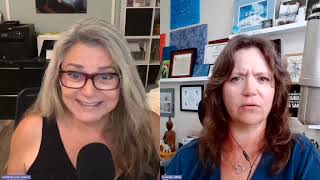
This is a conversational interview between Millie Gormley (host of the Money Equals podcast) and Sandi L Boucher, an Anishinaabe Kwe and member of Seine River First Nation. Boucher explains her work in Indigenous engagement—emphasizing safe spaces, humility, guiding principles (not one-size-fits-all "10 steps"), and the difference between cultural awareness training and engagement—and discusses privilege, healing timelines, and practical steps non-Indigenous people and organizations can take to improve relationships. The clip ends with a recommendation to follow Boucher's short daily YouTube videos for ongoing learning.
Chapters
I am so absolutely excited to share this video with you. The reality is, as an Anishinaabe Kwe, as an indigenous woman, one of the things I really had to learn once I got into business and became self employed was how to handle and even have money. I can do poverty at the drop of a hat. I have a master's in poverty. But how to have money was something new. And the one thing that made all the difference for me was having an amazing financial planner. Now, I don't know about you. I've met with financial planners in the past, and some of them come across a little judgy, and they kind of look down their nose at you if you don't understand what an RRSP is. Millie Gormley has never been like that, and I think you're going to see why. So, so attached to this opening is a podcast episode. Millie invited me on her podcast, and I adore her, and she allowed me to talk about my work. And I think you're going to love her, too. If you're a woman in business or a woman that wants to get a hand on her finances, you should reach out to Millie. I highly, highly recommend her. In the meantime, you enjoy the video.
Welcome to Money Equals A podcast with me, Millie Gormley. I think about money a lot as a certified financial planner professional. Well, I do. But for me and the women I work with, financial planning is not just about the money and the numbers and the charts and the graphs. It's about what those numbers mean for your real life and your real future. So let's talk. I am so excited for my guest today. Sandy Boucher is a dear friend of mine. We've known each other for years and years, and she is an indigenous Canadian reconciliation guy, and she does amazing work. Sandy, just. Just. We'll just dive right in here and tell us a little bit about what you do and who you are and what's everything. Let's go.
I'm going to jump in for a second. Five minutes left in the meeting. Did you know that?
Well, that's on the. On the calendar.
Okay.
Sorry. We can talk as long as we want. Okay.
Did you want me to. Are we redoing this, or you can cut that out or what?
No, I think we're good. But, yeah, no, I. I don't do any. So this is the thing with this podcast. It's very raw. It's very unedited. It's very okay. We're just doing stuff. It's okay if you swear. I don't mind. I'll just put the little explicit thing on there. But yeah, I record it and I upload it because I want it to be real, you know, and that's, that's what we do. So tell us about yourself.
I just thought we're going to get into some amazing discussion like we always do, and it's going to die. We're going to lose it.
That's why we're not doing this on Zoom for a change.
So, Mishko Paganan Kwei Nidishna Kasman. My Canadian name is Sandy Boucher. My Indigenous spirit name is Red Thunderbolt Woman. I'm a proud member of Seine River first nation in Treaty 3 territory in Northern Ontario. And I offer something that I believe so many non Indigenous Canadians have never had an opportunity to consider or enjoy. And that is an Indigenous perspective on working together, on employment and training, on Canadian, whatever's happening in politics. So I am not about shame or guilt at all. I have zero interest in someone feeling bad because then they're not going to do anything and we need some things to change. But whether it's through my blog or my videos or my seminars, workshops, keynotes, or through my books, I help people understand what life is like from our side of the feather. So if we can find commonalities, we can understand the differences. We can actually work together. So when it's going on 14 years in September, can you believe it?
Time flies for sure. Well, now, one phrase that you used to say a lot was that you provided safe space. And I, I like that for, for both, for both sides of the feather, because sometimes and, and it's, it's a horrible shame that we've got this whole white people, they generally want to know, but at the same time, why should it be on, on Indigenous people to be educating us all the time, you know, but then again, how do we learn if we don't ask Indigenous people? So it becomes a bit of a confusing, you know, what, what's the way to go about things? Right?
So the way I explain that and very valid point by the way, I always tell my audiences that I have trained and prepared to do this work, that when someone presents themselves on social media, on LinkedIn, in a seminar, as someone, this is my area of expertise, that is someone you can ask, that is someone who is prepared to be that educational guide, but you don't walk up to your average Indigenous person on the street, ask them a question or what was suggested earlier this week that when you meet a new employee in your organization and they're Indigenous, you bring up a stereotype to see if it's real. And it's like, please don't do that, please. Right, right. I was like, pardon? Well, it's an opportunity to see if it's real. Don't do that. Please don't ever.
Oh, my God. Yeah.
And I gotta admit, now this is like vulnerability, honesty, authenticity, that's a huge part of my. And I came into this like, I'm looking through an indigenous lens here. I always do. That's who I am. That's not something to be ashamed of anymore as looking through a non indigenous lens. It's who you are. You are beautiful. Don't argue with that. So, but when I started working with non indigenous entities and I started hearing that safe space comment didn't come from me, it came from my audiences. And when I started noticing, I always do go around the room at the end and just ask them, did they get anything valuable out of it? What did they think? And I heard over and over again, I so appreciate the safe space you created. I got to ask my question. And even though I didn't use the right word, you didn't attack me. You explained why I shouldn't use it. You gave me a better word to use, but you answered my question. And I cannot even put into words, which is a scary thing for an author to say, but I can't even put into words how mind blowing that moment was for me as an indigenous woman in Canada with all the threat and danger that represents to realize non indigenous Canadians need safe spaces too. We all need safe spaces to be able to say, I don't understand. I'm not sure the right words to ask this question, but I really would like to ask the question so I can understand. Well, because I really. Right, yeah.
That's the first step. Understanding is the first step to reconciliation and in any relationship. So getting clear on what the situation actually is is the first step to figuring out how to fix it.
I'm going to push back a little bit on that. That's what I do in seminars.
All right.
I don't think you're always going to understand.
Okay.
And there are non indigenous entities I work with, even people I'm friends with. That for example, my Muslim friend, again, she does things I don't understand or says things I don't understand. I don't need to understand. I need to accept it's important to her. I need to respect it's important to her. And that's what I explained to my audiences. You will never understand how important smudging is to me. Right. But you don't need to. You just need to hold enough space that allows me to be able to do that, because it is important to me. And if it's super important to you to take Christmas off, I'm not going to Care2Beans because I don't follow Christian holidays. But if you really need to take Christmas off, I don't need to understand why that's important to you. I just need to respect it is.
I like that. I mean, and it takes. It takes so much pressure off in a lot of cases.
Exactly, exactly. And the other thing is it requires, and I personally love this, it requires from the indigenous side of the fence that we have to heal and become empowered enough to be able to say, excuse me, like, this is really super important to me. So can I have five minutes to do this? Kind of like, you know me with my metaphors and analogies. So it's kind of like I was in my 40s before I finally figured out guys aren't mind readers. And if I sit there and make a face because he didn't say the right thing, I got a lot better chance of getting what I want if I actually say what I want. Exact same thing. When it comes to Indigenous engagement or reconciliation, we need to be able to say in an assertive, not aggressive way. And unfortunately, Indigenous people, we were not taught assertiveness. Residential schools did not teach us love or conflict resolution or assertiveness training. So many people healing is not pretty. It's hard to go through and it's hard to watch. And you see people, they're trying on their voice for the first time and often they come across as very aggressive and then they get. Get judged for that. It's like, no, it's like grade two, give them some time. They're trying it out. And after I wasn't able to do this work 20 years ago because I had to develop those skills as well. And now I hear some really interesting things in seminars sometimes. And I'm like, oh, okay. That's just what they were taught. We can discuss this.
Yeah.
And I couldn't have done that before.
So.
So a lot more compassion, a lot more empathy. I have a video on my YouTube channel that talks about how in present modern day, we Canadians and indigenous people are like tied together and we're a prisoner of Canadian history. Because I hear from a lot of non indigenous people, why? Never did that to anyone. No, but you benefit from the systems that were set up by the people that came before. You. And we got oppressed by them. So we're both tied in here. But if we talk about it and bring down those barriers and work together, we can break those ropes.
It all comes back to that whole concept of privilege, too. I mean, my life may have been hard, but my ethnicity is not something that made it harder. Whereas with indigenous people, that's probably one of the main things that makes life hard for them, is just the fact that they're indigenous. That's. Yeah, that's where it starts. Right.
And it's just exhausting stupidity available. Yeah. It's racial battle fatigue, it's called. And anyone who's ever experienced notes, like, perfect description. I just wish, honestly, like, if I could wave my magic wand, that we had used a different word than privilege.
Okay.
Because as soon as people hear privilege, they think, silver spoon in their mouth. They think, the 1 percenters. Right. And I meet so many people that have white privilege. I have a ton of white privilege. I am very fair for an indigenous person, and I own that. But I meet so many people. They have struggled every single day of their life, and that's why it really irritates them when they hear that word and they have privilege. Like, I mean, that's not a lie, like you said. Exactly. They know they're struggling to pay their mortgage, so I always explain to them, but if I got you a really nice haircut and put you in an expensive suit and sent you into the bank, oh, well, everyone's going to welcome you there. If I take a young indigenous man and, you know, dress him up and. Nice haircut, expensive suits, send him in, they think he's going to court. Right. So there's the difference.
It's so ingrained.
Yeah.
And. Yeah, yeah, it's. It. I just. I'm so frustrated for. I'm frustrated. Right. And. And as. As a white person, I don't know what to do with that a lot of the time. And I know that it's not up to me to fix it. I mean, it's not that. That sort of classic white woman. I'm gonna swoop in and save everybody. Like, no, it's not. That's not how it works. Never has been. So I'm personally just trying to learn to listen and. And just. Just hear the stories and read and, you know, see what's out there. So I wanted to talk to you a little bit about. So what you do is not the cultural awareness training that we've seen a lot of. You're not a fan of that term?
I Am not a fan. I am not a fan.
Explain to me the difference between cultural awareness training and what you do, which is indigenous engagement training. Two different animals. What's the deal?
100%. So to be clear, because one thing I've found, when you say cultural awareness training, different people have different definitions of it. So to be crystal clear, when I'm talking about cultural awareness training, I'm talking about that training where, you know, they bring in a man in his traditional regalia and he has drum and he has his bundle with all his sacred items, and he explains to people what all the stuff is. I am so not a fan of that. So you know what? I put that at the same level as the seven hour seminar in Canadian history that nobody wants to take. Right at the end of both seminars, people. Well, especially with the traditional teachings, they're going, wow, that was really super cool. And I didn't realize that. Now what? Exact same thing at the end of the seven hour history lesson. Wow, now I know everything. What Canada did to Indigenous people. Now what? It doesn't change your engagement ability. It doesn't change how God forbid the next Indigenous person walks into your office and you like, start crying and hug them because you're so sorry of what you just learned. That would be horrific. Or, and I had this happen again because of privilege. Many non Indigenous people are now taking part in these kinds of training. And Indigenous people don't have the opportunity to learn those teachings. They've been, you know, removed or cut off from their own elders. So we now have a scary situation where there are some non Indigenous people that know more about our culture and traditions than the Indigenous people that carry that culture. And there is nothing worse than having a non Indigenous person come up and it's like, oh, like I thought we'd smudge at the beginning of the meeting. And what's. How does the Indigenous person admit, I don't know how to smudge?
Oh, my God.
Well, yeah, that's. And that happens. So that's why I tell everyone. And the other thing I just got to say, non Indigenous Canadians put so much pressure on themselves, it's ridiculous. Like, I have to say the perfect thing and I have to know all of this information and I must never make a mistake. It's like, wrong side of the feather. I'm never gonna understand everything about you, especially if I've never met you before. How could you possibly know everything about me? But you can ask a question. What would you need at this meeting or event to make you comfortable? Not do you want a smudge, but what would you need is the way we got it set up. Okay. Or would you like to add in something? Creating the space for us to be able to do who we are.
Yeah. And at the same time, the Indigenous person has to be comfortable with actually saying what it would. What they need to be comfortable, too. So it does go both ways, too. Right.
And I think responsibility transfers. If you ask me what I need and I say nothing, then I can't complain that there's nothing there. Yeah, Right. You created the space, even if I chose not to walk into it. But that's the kind of stuff I teach in Indigenous engagement training. The other thing, like, I used to use a small I on the word Indigenous every time I put it in a blog. And I had so many people email me, like, that's disrespectful. Why are you doing that? I thought it was a capital I. Can I do that to all the non Indigenous people out there? No, it's a capital I always use. Don't get yourself in trouble.
Thank you.
The reason why I used a small I, for one, I wanted people to email me and have that conversation.
Okay.
Two, I use the word Indigenous like the word people, the common noun. I capitalize Anishinaabe. I capitalize Haudenosaunee. I capitalize Dene or Coast Salish. I capitalize the nations because those are the proper nouns. So what my. What I was trying to combat is the fact that so many Canadians think Indigenous, all Indigenous, are the same. Anishinaabe Ojibwe teachings are almost the exact opposite to Haudenosaunee teachings, which is Iroquois in southern Ontario. We're in the same province, and our teachings are almost exact opposite.
Really?
Well, to the West Coast. I didn't know any of those teachings. My teachings make no sense in the West Coast. Nowhere should they. So that's how different it is. So when I do Indigenous engagement training, everyone. Well, not everyone, but I find so many non Indigenous people want the 10 steps. Can you give me the 10 steps to successful Indigenous Engagement? And it's like, you are so cute. That's not. That's not gonna happen. Because every nation is different. The customs and traditions are different, and the individuals are different. So what I give them are guiding principles. If you follow these guiding principles, no matter which nation you're working with, you're going to be standing on safer ground. Does it mean you're never going to make a mistake? Probably not. That's part of the learning curve. You are going to but you're going to be a lot less likely of making those mistakes if you follow the principles I give them. I literally call it missing pieces. It's the missing pieces of your education that you weren't provided because this wasn't part of education until the last couple of years.
Yep. So, no, I learned nothing, nothing in, in school about the indigenous experience. And it just. And you know, when you find things out as an adult, you're horrified. It's like, why did no one tell us?
Yeah, well, that was intentional.
Yeah, well, that's the thing. Yeah. They couldn't have gotten away with it if people had known about it more. Especially, you know, as. As recently as things have gone on. So, yeah, it's. I don't know. It's. The work you're doing is so important. And I'm looking forward to the day that we can say we're just. We're all. I don't know. And tell me if this is unrealistic or ridiculous that we can all coexist in some fashion that everybody feels like they are. They can be themselves, they can live the life they want to live and that they don't have an institution or a government actively trying to hold them back.
Yeah, I believe in that future. It's why I do what I do. It's why I get out of bed excited to do it again every single day. I just don't think we will see it personally. So it's not in the near future. As I mentioned, healing takes time. And it's a different timeline for every person. There are some first nations that are way closer to that reality than others, and there are some individuals that are way closer. And holding space is so vital for indigenous people. We have to get comfy with holding space for non indigenous people to learn all this stuff because no one told you what we were going through, even as the government did that. And for indigenous people, well, and for non indigenous people, you have to hold enough space and give us enough time to heal. I see so many initiatives, you know, employment and training. We've got to get in there and give them the skills. What if they're not ready to go to work yet? What if the pain is still so intense that even walking into a non indigenous entity is too much? And that's not the fault of the individual. That's the healing process. We didn't ask for that stuff to be done to us. So don't crucify us for taking the time it needs to heal. Especially since the supports are so limited, depending on where you live. So it's compassion, empathy, do the education so you can understand more what you're seeing in front of you. And judgment we have to abandon like now, like yesterday. Judgment burns bridges, humility builds them. So. Right. I always say, if someone comes up to me and says, you know what, I just, just don't understand why first nations people, blah blah, blah, blah. That's a humble question. That's beautiful. I have all the time in the world to talk to that person, but if another person comes at me with why don't they just get over it? That's judgment, that's, that's my humility. You are not ready to listen to me and I have no interest in arguing with you. When you, you go off and lose that attitude and come back, then we can talk.
So do you find that you are better able to connect with people from, from backgrounds that have also been through. Well, you're, you're mentioning a Muslim colleague, right. She, she has, I'm sure, received some pretty nasty things at the hands of, you know, standard issue white Canadians.
So bipoc. Right. Black, indigenous or people of color. So the other marginalized. Absolutely. We definitely. And we have to be careful. One of my pet peeves right now is a lot of corporations are hiring dei, so diversity, equity and inclusion. But they hire a black person to do DEI and they're expected to also be able to do indigenous engagement. And it's like, what? And in the same way I could never do a seminar on black engagement. Where's the humility in that? That would be going against my own teaching. So again, trying to now put us all in the bipoc envelope. Right. And it's just the same, everyone's marginalized. The people I have the hardest time with, and we talked about the common term is white, poor. A little bit, you know that they're struggling, but they have privilege. They struggle. The ones that I struggle the most with are people that historically were originally marginalized and now they're not, for example, Italian. At one time there was huge racism and discrimination against Italian people. And now they're seen as established and part of mainstream. So from them I hear, well, if you think you had it bad, like you should have seen what we went through. And it's like, really? Did they take your kids? Did they assume just because of your skin color that you couldn't parent? No. Why? Probably because you were Christian, by the way. That's what saved you.
Yeah.
Right. To this day I still, I will have someone want to introduce me to Someone who's a good Christian woman or good Christian man, my brain instantly goes to. As opposed to what? Because I'm not Christian. So exactly how are you describing me and why is that in this discussion?
Why does it matter?
Yeah, right. Like I'm a good person. I would love to meet a good person. The Christianity part didn't have to play into this. And there's nothing wrong with being Christian. Let me be crystal clear. I. My mom was Roman Catholic, so was my dad. Like non issue at all. If that. If it works for you and it helps you get through the hard times, all the power to you. If it puts you in a place where you're judging people that aren't, that's the problem.
100%.
Absolutely.
All right, I think I'm going to wrap that up now just because we could talk for hours. Absolutely. And I would love to have you come back again. But I think that's, that's enough for, for one chunk for people to digest and think about. I'm going to put your website address in the show notes, if I could, for people to find out more and to learn more about indigenous engagement. Because that's what we need to do is we need to engage with each other to move forward. And that's something that's really important and that's what this country needs and that's something that Sandy's doing a lot of work towards and thank you for doing that.
Thank you. And even more so I would suggest if. Because it can get overwhelming so incredibly quickly. Right. Like there's just so much to try to understand or learn. I always suggest to go subscribe to my YouTube channel because I do that little five minute video every day. So it's one little bite, that's it. It's not overwhelming. You go on with your day, but tomorrow there's another little bite and you'll be surprised how much you understand just a week to two weeks in. So I tried to keep it easy and supported for people and that would be the way to go.
Okay, perfect. I will make sure that that link is there too. All right, so remember, money is not the most important thing in life, but getting your money shit together can certainly improve a lot of other things in your life. So if you want and or need a financial planner and you want to work with someone who gets you, well, perhaps I might just be that perfect fit. So book a chat. Let's get to know each other and perhaps working with me is something that might work for you. Thank you very much. Joining me and my guest at Sandy Boucher. And remember to sign up for my weekly E. News, all that kind of good stuff, and have a great time, and we'll see you next time.
More from Sandi

How I Handle "The Four Uglies!" (Alcohol, Diabetes, Healing & Cheap Seat Comments)


All the Stuff We Don't Talk About with NO SHAME! (WMT Podcast w Antoinette Godin)


When Authors Chat ... (Radio Interview for the Launch of "Copper Stone - Glimpse of Blood Memory)



MORE PROOF of Indigenous/Non-Indigenous Relationships that Work! (Walking My Talk w Millie Gormely)
