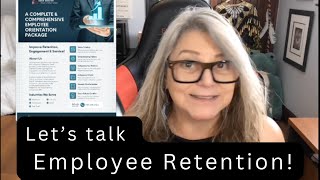
Sandi L. Boucher, Red Thunderbolt of the Loon clan from Seine River First Nation, is developing an Employee Orientation Training package to help Canadian employers hire and keep Indigenous workers. Built on 15 years of experience, the training addresses racism and toxic workplace culture that drive Indigenous employees away. It launches in January and is available for pre-purchase now.
Chapters
Hello you absolutely amazing person you. I am back in my office. The events are done. It was a heavy week. Talking about the issues that two slgbtqiap people face on a regular basis. Listening to the youth and their experiences in school that are often not a positive experience and then talking about gender based violence. It was heavy, but it was such important work and I got to work with such amazing dedicated people that it was absolutely awesome. But that's not what I want to talk about today because yesterday in yesterday's video I shared with you about a crazy idea I had. Well, that's just a crazy idea and it hasn't really taken off yet. I waiting to see what other people think. Although I appreciate the comments so far. Thank you so much. But this, what I wanted to talk about today is in the works. This is something that is definitely going to happen and I wanted to kind of highlight why I thought it was important. So let's talk about it. Hi everyone, my name is Sandy Boucher. I'm Red Thunderbolt, woman of the Loon clan, a proud member of Seine River First Nation in Treaty 3 Territory in Northern Ontario. And I have a question for you. Imagine for a second someone who is desperate for help and attention ends up meeting up with someone who is also desperate for help and attention. If you put those two together, is that going to be a positive or a negative? I hope you realized it depends on the context. Now there is some cases the two different desperate in need people with different needs that wouldn't work very well and they might be vying for attention and help and it just could be really bad. But sometimes, just sometimes it could actually work. So that's what I wanted to talk about today because I've identified that scenario, desperate need, meaning desperate need that could actually be a match made in heaven. And what I'm talking about is Canadian employers and indigenous people. So bear with me for a second. Employers, I think we could all agree you can't watch the 6 o' clock news without knowing this information. Canadian employers are desperate for, I'm going to say good stuff. But in a lot of cases they're just desperate for bodies, they're desperate for staff and indigenous people are desperate for safe space, spaces, desperate for a chance to get ahead in a place that isn't soul crushing. So two very desperate groups of people that might actually work really well together. So think about it. I've identified four things for each group. So let's look at the employers first, Canadian employers and why they're desperate. So the first Right now, I'm certain you've run into this. If you've tried to buy something or hire someone, find a service in any way. There are so many businesses right now that are lacking capacity, meaning they do not have the staff they need to be able to do what they've always done to provide manufacture the products or provide the services that they always had. They are desperate and, and lacking capacity because of that. The staff that they do have on board are incredibly overwhelmed. They don't have enough hours in the day, they don't have enough energy in their bodies to get the workload done. Because three people are doing the work of 10. It's frustrating. It's, it's not a good scenario. But as a business owner, and I speak to many business owners, I can tell you right now that advertising for new staff, recruiting new staff, going through the interview process, and then training new staff is an incredibly expensive process. You want to do that only if you got a really good chance of that person staying on board. And bottom line, because of all of the above, these companies are now losing clients because they're not able to return the calls, they're not able to deliver the services or products when they normally would, and people are looking to other businesses. This is a desperate scenario. That's the Canadian employer side of the feather. Now let's talk about the Indigenous side. Because the indigenous in Canada living within Canadian borders are just as desperate. I can tell you point blank, we are so sick of poverty. 110% for so many Indigenous people, it is the only reality they've ever known, but it is soul crushing. We are sick of poverty. Having said that, we are more sick of the emotional labor that we have to put in to try to earn a paycheck in a totally uninformed, unaware workspace space. When we have to almost be explaining why we breathe or why we think the way we do every second day, it gets so frustrating, it rapidly becomes not worth the paycheck. It's not because we prefer poverty. It just takes too much to work there. And then of course, an uninformed workspace is nothing compared to a toxic racist workspace. When we're trying to get a job done and we overhear the racist comments, the jokes that have never been funny, even though some people laugh at them, that's not worth a paycheck at all. And because of all of those things, Indigenous people are rapidly losing hope. That's dangerous for a whole bunch of reasons. Because of all of that. That is why I have created my Employee orientation training package. So this is for Canadian employers to purchase and add to their orientation packages. You probably already have them going through your personnel policies. You have them maybe watching a video or two on the processes of the different departments in your company. But where is the training for your employees to work with Indigenous people, work with Indigenous communities or sell to Indigenous communities or individuals? How do you engage with an Indigenous community? How do you communicate with an Indigenous individual? And how do you get along with an Indigenous co worker? And then as an added bonus, how do you supervise an Indigenous employee? Because of Canadian history? There are some things that you need to know because you could so easily make mistakes that is going to drive that employee of yours right out the door whether they're indigenous or not. Maybe they get frustrated trying to work with Indigenous customers and clients or maybe it's they don't want to work with the other Indigenous employees. Or they are the Indigenous employees, they quit. Retention reduces expenses. If you're going to go through the trouble of hiring someone and training them, you want them to stick around. Which is why you need this employee orientation package. Now. I am just fine tuning it right now. This is going to be one of my best offers and I am very proud of it. But because I know how much you need it and also how much Canadian employers are struggling. It's on sale right now. It's a pre purchase. It's not going to be released till January. But if you buy it now you're going to actually save some serious dollars. And it's a one time purchase. You can use it over and over for the next decade if you want, or longer. But you should make it part of your orientation package. Weather you're an Indigenous company just starting up or a huge corporation. We need to build that bridge because two desperate groups could actually totally help each other. For more information check out my website link or send me an email, whichever you prefer. I know this is going to help. This is based on my 15 years of experience and sometimes crazy ideas can change everything. I hope that made sense to you. I am exhausted from a very busy week. I'm looking forward to the weekend and you probably are too. So you take care of yourself and I'll see you next week. I love you. Bye bye.