Marginalized Coworker's and Their Unhealthy Behaviours
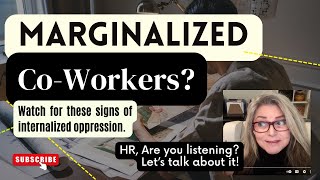
A short educational YouTube talk by Sandi L Boucher (Red Thunderbolt, Seine River First Nation) defining prejudice, discrimination, oppression, and internalized oppression, and explaining how internalized oppression produces three broad reactions—violence, acquiescence, and non-violent resistance. The speaker focuses on Indigenous Canadian examples (e.g., education barriers, boil-water advisories), describes how people seek external validation (partner, academic, professional) instead of healing, and encourages non-violent resistance and community healing.
Chapters
Okay, today is definitely going to be an educational type video. If you are interested in or interact with oppressed people, by the way, women are an oppressed people. Then you have to understand the behaviors. You have to understand what this. Where this is coming from. You have to understand oppression and internalized oppression. Today we're going to talk about it. Hi, everybody. My name is Andy Boucher. I'm Red Thunderbolt, woman of the Loon clan, a proud member of Seine River First Nation in Treaty 3 Territory in Northern Ontario, and I am an Indigenous Canadian reconciliation consultant. I do a lot of speeches and seminars, and I love offering this content to my YouTube audience because lots of my seminars and speeches are closed. They're only available to the people that work in that agency or that business entity. So. But there's a whole bunch of people that should, one, understand this stuff and two, are interested in this stuff. So I decided to do a YouTube channel. And by the way, don't forget Honorary Indian Daily, the new podcast that shares the audio version of my entries from my first book, Empowering, all rooted in Anishinaabe teachings and wisdom. Check it out. Available on YouTube under the podcast tab if you're on a computer and available on Spotify. So first, let's talk about oppression. What is oppression? Because it's a word that's thrown around all the time, but we got to make sure we're all on the same page and we understand it. So first, I want to talk about prejudice. I know you've heard the word. Prejudice are the thoughts in your head that you have about a certain group of people or the people individually that belong to that group. So these are the thoughts you have in your head even if those people aren't around. It's the thoughts certain people have about black people or about newcomers or about women or about younger people or about elderly people, though that's prejudice. The preconceived notions, the thoughts in your head, then so often those thoughts turn into actions. And when it becomes an action based on those preconceived notions, now we're talking discrimination. It's prejudice put into action. This is not hiring someone because they belong to a certain group or not hiring them because they don't belong to a certain, certain group, this is assuming things that they're going to be less than or more than because of the group that they belong to. This is discrimination when you don't treat those people the same as you would others, if you treat them less than discrimination. Huh. Need water? Hang on. I mentioned yesterday it's hot in here. I might end up 10 pounds lighter by the time I do these videos. I am not going to complain about that. That would go with my workouts anyways. I digress. When, okay, prejudice thoughts in your head become action discrimination. When the actions are either accepted by society as a whole or sanctioned by the government or both, it now becomes oppression. The fact that indigenous children still have to leave home and go board in a city with strangers to get a grade nine education is a modern day example of oppression. No other group of children has to do that. The fact that First Nation communities are still struggling to get fresh clean water that is is drinkable is another example. No municipality has to deal with that. But First Nation communities, society will tell you, well, there's a bunch of reason that happen. And the government tell you, well, we're trying accepted by society, sanctioned by the government, it makes it oppression. And the last one, internalized oppression. And this is what I'm battling every single day personally and with my indigenous audiences. If you are a member of an oppressed group, a group that has been oppressed for a long period of time, you're going to internalize that oppression. Meaning you're going to start buying the bs. You're going to start believing the stereotypes about yourself and your own group. This was me not applying for a job because I didn't think they'd ever hire an indigenous person. Me for the longest time not sharing my world view because I didn't think anyone would be interested in a Nishnaabe worldview, in an Indigenous worldview. Even before someone else puts up a wall. And trust me, there are walls being put up against us, but we're erecting them ourselves with the internalized oppression we're stopping. It's what's stopping youth from going to school. It's what's stopping parents from even sending their kids to school with the belief. It didn't help me, it's not going to help them. That's internalized oppression. So, and you've heard me say this in, in videos before, there are three natural human reactions to oppression or internalized oppression. And they're very huge blanket ideas. So the first one is violence. When you belong to a group that is constantly being portrayed as less than, or in the case of Indigenous people living in within Canadian borders, if you're portrayed as that drain on the public coffers, the that we have to deal with, just start believing that and eventually you hear it long enough, you're gonna lash out, you're gonna get angry, you're gonna say words that I can't say on YouTube. The problem. It is really hard to lash out against the federal government, the oppressors. So instead what happens is people in this stage reacting this way. They lash out against the people that are closest to them, which means their partner, their children, other community members or people in the municipality nearby. Violence. Now, it's not just physical violence, lateral violence, which is indigenous turning on indigenous, happens all the time. Bullying, gossiping, ostracizing, excluding someone and not including them in whatever activity or whatever is going on. All of these are signs of violence, a natural human reaction to oppression or internalized oppression. Now, most people think that one's the worst. I can tell you as Anishinaabe Kwei, it's the next one that stresses me out to no end. And that's because it's acquiescence, the complete and total giving up. This is the student that doesn't bother going to school, doesn't bother studying, doesn't bother trying because they don't believe either they're ever going to be able to succeed or that anyone would ever give them the chance to prove they could. This is the parent not sending their youth to school. This is people turning to alcohol or drugs or a combination, because why not, right? It makes life easier and nothing's ever going to change. Acquiescence is symbolized. You recognize when someone's struggling with acquiescence because you hear the words why bother? And then the third one is non violent resistance. And that's what I encourage people to do every single day. It's proving you're not the stereotype. It's the indigenous youth daring to not only graduate from high school, but to get a university degree. It's a youth daring to get a job, driver's license. It's daring to bid for that job. It's daring to share your truth, not in a disrespectful, angry way, but in an honest way. It is daring to have a YouTube channel to share an indigenous worldview. These are all examples of non violent resistance and we have to start celebrating them as such. But, and this is what I wanted to touch on today. If you're struggling in the world of oppression and internalized oppression because they go hand in hand, then what often happens is you start looking for external validation. You don't believe you're worthy, so you start looking outside for things. And I can think of, I think there's like three different examples that I see time and time again. And, and it's heartbreaking because I Know where it comes from. So the first one and been there, done that, not judging. I probably have done all of these at some point. The first one is external validation from a partner. You're looking for that, that man or woman or whoever you want to date. That's not the point here. But you're looking for someone else to tell you you have value. And you're looking for them to show you that they believe you have value. And it can become a bottomless pit because you constantly need that reassurance. Even scarier. And this is the path I took. When you put your value in the hands of another person, when you feeling your. Your feeling of worthiness is dependent on the words or actions of another person, you are setting yourself up to meet and end up with an abuser. They are looking for the people that need external validation because then they can give it and take it away and give it and take it away and it gives them absolute power. Look at the statistics for domestic violence among indigenous women. External validation. And guess what? When that guy tells you you're not worth anything and you should be thankful he's even considering being with you, you don't even dismiss that as being scary or a bunch of baloney because all he's doing is confirming your worst fears. That's internalized oppression and to the extreme, missing and murdered indigenous women and girls. Mm iwg. Now another one that I've actually spoken about quite often recently is academic validation. So these are the people that get the masters and the PhDs. And there is nothing wrong with getting an advanced education. But if you're doing it to prove your worth, now that's scary. And I have met very educated indigenous people that are missing something. And I'm going to touch on that in a second. All of these people are missing something. And the last one is professional validation. So in their careers, they're going to become the top of their field. They're going to become the CEO, they're going to become the executive director of the non profit. They are proving they have value. And they're often very militant in the way they talk because they need to prove this. So you know what's missing in all three of those cases? Whether it's a partner validation, academic validation, or professional validation, healing. These people are so busy focusing on trying to prove their value to someone else that they've taken zero time to heal. And it becomes obvious because of the way they behave, they still have the gossiping and the bullying and the ostracizing. That reaction to internalized Oppression they still have. I see acquiescence in so many people because they're job hopping. They're going from one job to the next to the next to the next. That's not a healthy place. That's not a healthy place. That's not a healthy place. If it's not a healthy place, help make it healthy. The expectation that indigenous are supposed to be healthy is ludicrous because we haven't had the time or the opportunity. We're getting better. Every generation has more healthier people. But don't judge. Work on your healing. So we still see these very negative behaviors. And I always tease my non indigenous audiences because HR tends to not want to touch this. If you're a non indigenous entity and you have two indigenous employees going at each other, HR tends to want to steer you out because they know it's a political powder keg. They're also not doing their job if they're not getting involved. So that would be discrimination, wouldn't it? H treating them differently. We need the chance to heal. I don't care if you have a master's or a PhD. I don't care how long you've been in that horribly unhealthy relationship. And I don't care that you're the. The CEO. If you are still passive aggressive or if you're still aggressive or you're still gossiping or bullying. I know that you need to heal. And until we do, we're not going to be able to build that bridge with other indigenous people or with Canadians. That's on us. We deserve to heal. We deserve to not be on this constant treadmill trying to prove ourselves to someone else. Right? The hamster wheel. Treadmill doesn't go like this. Hamster wheel. That's a horrible way to live. Been, been there, done that. I'm a 10 year domestic abuse survivor. I've done the partner validation, I've done the academic validation to a certain extent and definitely done the professional validation. I am not judging. I'm saying I understand. I also know what it's like on the other side of the fence. That's what I want for the people that are suffering. I hope that made sense. Tomorrow I have a super duper special video in honor of Mother's Day. And I'm actually going to share with you two of the best gifts I've ever received. And yes, one was from my daughter and one was from my son. And I can't wait to share that with you. Until tomorrow. I love you. Take care. Bye bye.
More from Sandi

How I Handle "The Four Uglies!" (Alcohol, Diabetes, Healing & Cheap Seat Comments)


All the Stuff We Don't Talk About with NO SHAME! (WMT Podcast w Antoinette Godin)


When Authors Chat ... (Radio Interview for the Launch of "Copper Stone - Glimpse of Blood Memory)



MORE PROOF of Indigenous/Non-Indigenous Relationships that Work! (Walking My Talk w Millie Gormely)
