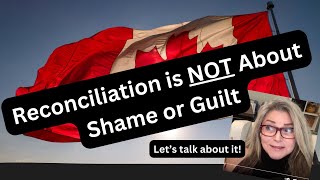
A short YouTube talk by Sandi L Boucher (Red Thunderbolt, Loon clan, Seine River First Nation) arguing that non-Indigenous reconciliation work should be guided by humility rather than shame or guilt. She presents HUMILITY as an acronym with concrete actions: Hear the other side; Abandon the need to understand; Make amends; Include Indigenous people in planning; Lifelong learning; Inquire sparingly/observe; Don't teach Indigenous teachings; and acknowledge that reconciliation is your responsibility. The video includes an opening apology about technical issues and a closing CTA about lunch-and-learn bookings.
Chapters
Hello, you absolutely amazing person, you. Not gonna lie, I'm having a date today. How do you handle tech issues? If there's one thing that's gonna frustrate me, there's something going wrong with the tech. And I've been battling some tech gremlins in a variety of places for a couple of weeks now. I just want to do a quick apology to anyone who's gone on my website and tried to purchase this their tickets to register a spot in my January open to the public virtual event. There was definitely a glitch. They're working on it. I think it's going to be fixed soon. We're hoping. I apologize. That is not what today's video was about. And one of the things I wanted to touch on today, the main point is that when it comes to reconciliation work with non Indigenous people, it's not about shame or guilt. It's not about anger. There's actually another word that I've used that I believe is the key to moving forward in a positive way and actually making genuine strides towards reconciliation. And that's what I want to talk about today. So let's talk about it. Foreign. Hi everyone, my name is Sandy Boucher. I'm Red Thunderbolt, woman of the Loon clan, a proud member of Seine River First Nation in Treaty 3 Territory in Northern Ontario. And as I mentioned in the opening, when it comes to reconciliation work for non Indigenous Canadians, Canadians on the First Nation side, we have healing. On the non Indigenous side, there has to be training and awareness and education and so much of that. But what it can't be is about shame or guilt. Because I believe if you start feeling either of those, it's going to stop you in your tracks and you're not going to do anything. You're just going to get lost in your feel bad emotions. And that's not going to help. That's not going to help. We need you to be doing things. So instead of focusing on the shame or guilt, I want you to focus on another word that might be really new to a lot of people, not new to a lot of Indigenous people because it is part of our teachings. But I want to use this word, this value, as a guiding point principle for non Indigenous reconciliation work. And the word is humility. How many times have you heard me say that? Humility builds bridges and ego and judgment burns them when you approach a situation and you can say, I don't understand. I don't know, I don't understand why Indigenous people don't do this or that or why they keep doing this or that. That's humble. That's humility. When you come at it with why don't they just. That's judgment and that's not going to get us anywhere. But for the sake of today's video, I wanted to use humility as an acronym because I can point out some key things you need to understand in practice that'll make the reconciliation work. Work. So let's start here. I have. Yes, of course. I have a handy dandy index card. You know me, the H of humility stands for you have to be able to hear the other side. That's back to back. Teaching humility requires that you understand, you can see the whole picture, that if you're non indigenous, you will never see the indigenous point of view. But if you listen to us, if you hear us and take it as genuine, this is what we see, you can actually use that to improve your practices and your procedures and your initiatives to become way more successful. Okay, so the H is you have to be able to hear the other side. So you can use this in any reconciliation work. Of course, I'm going to focus on Indigenous Canadian reconciliation. The you. It's a mainstream thing. It's definitely a mainstream thing where I run into so many people that something is not true until they understand it. The U is for abandoning the need to understand. I have absolutely no issue with the problem that there is so much I do not understand and will never understand. I do not understand how someone else prays or how they practice their faith. And I don't need to understand it. I just need to accept that it is important to them and respect that fact. You will never understand Indigenous teachings. You don't have to. And you shouldn't be expecting, expecting us to share that sacred information with you. Are you willing to share your sacred teachings with us? I wouldn't ask you to just accept that. It's important to us that for many indigenous now we have a lot of Christian indigenous people, all well and good. I'm not going to be the person that tells them they're wrong again. But for us who do not practice Christianity, don't come at us for not celebrating Christmas, understand? That's not important to us. But the solstice is June 21, is October 30 is okay, let's keep that in mind. Now the M. Yeah, this one's okay. You have to make amends. Let's get real here. You have to make amends. And maybe not for Canada or Canadian history, but whatever entity you work for whether it's a government department, ministry or a private corporation or business, you have done business excluding indigenous up to this point. Make amends for that, own it. That as of 2024, as of 2025, we are striving to be more inclusive in our practices because we recognize that's we did in the past. That goes a huge way towards making amends. So a great harm was done. Continues. Harm continues against Indigenous people. Denying that or saying, I didn't send anyone to residential school doesn't help anyone. Canadians benefited from the exact same systems that oppressed Indigenous people and they continue to. We need to make amends for that. Okay, next. The I, the first I along the lines of making amends. Include us in the future. Include us in your discussions, in your planning phase. There's one thing we're done with is you presenting an idea after it's been hashed out. Why are you so terrified of having us at the table, a seat at the table in the planning process? Because we would be able to tell you that part's not going to fly and that part's going to be problematic and save you a lot of time and money. But you have to hear us. You have to abandon the need to understand why something's not going to work for us. Just accept it when we say it's not going to. You have to be willing to make amends by including us in your future plans. Ta da. The L. I don't know about you, but I'm a huge fan of lifelong learning. Continue your learning reconciliation work, engaging with Indigenous people, doing a good job of your Indigenous engagement is not one seminar, one workshop or one video. It's an ongoing process. As you unpack, as things come up, it shouldn't have to be the focus, but it should also be potentially a part of every discussion. If something comes up that's problematic, you should be able to point that out and have that discussion. Right. So continue the learning. Ongoing. Ongoing. Why are you not subscribed to my channel? You should be. That's ongoing learning. Next. Okay, so this ties in with that needing to learn part or needing to understand part. Many in mainstream just love to ask their questions. They're going to come out to a healing circle and want to ask someone in the circle what they meant. Hard pass. You don't get to do that. What mainstream seems to have forgotten, I assume they knew at some point. You can learn so much through the power of observation. Just watch. Just watch. And then if you have a guide or a trainee or trainer or A facilitator that you can ask later on after the event or the meeting. Feel free. That's your relationship with that person. But you don't just go around asking 5,000 questions. Watch and learn. Be respectful. Don't go in there like a bull in the China shop. Follow what other people are doing. Ask your guide if it's okay. Watch and learn. It's not all about the inquiring mind. And then for those that take it way too far, the T is for don't teach. Don't teach. I don't care how many indigenous teachings you learn, how many ceremonies you take part in, how many first nations welcome you in. At no time have you been handed teaching certificate. They trusted you enough to share the information with them. You don't get to share it with someone else because you're going to taint it. You're going to use your cultural lens, you're going to use your phrasing, your examples and metaphors, and it's not going to be authentic anymore. Except that that was a gift for you. It's not an ego trip to show off to your friends how much you know. Don't teach. And last, but not line. Not last. Or it is last. I should say the why is for you. Because when it comes to reconciliation, the responsibility does fall on you as a Canadian in the same way that it falls on me as an Indigenous woman living within Canadian borders. Reconciliation is all our responsibility. It doesn't get better until we each do our part. So yes, the responsibility is yours. So again, going to review here the humility acronym. H is for hear the other side. Don't question it. Don't argue it. Hear it. You abandon the need to understand M. Make amends in whatever form that takes for you. I include us in future discussions and planning. L. Continue your learning. It is an ongoing process. I inquire very sparingly. Start practicing the art of observation and learning through observation. The T Don't teach. Don't teach. That's just a rule. Don't teach. Don't. Humility. Not your teaching to share. Don't teach. And last but not least is you. Because it is your responsibility. Figured that was a very important and strong way to finish off the week. This is definitely going to become a lunch and learn session. If you want to know more about those or how to bring me in to talk to your group, just check. Check out my website until next week. I love you. Take care. Bye Bye.
More from Sandi

How I Handle "The Four Uglies!" (Alcohol, Diabetes, Healing & Cheap Seat Comments)


All the Stuff We Don't Talk About with NO SHAME! (WMT Podcast w Antoinette Godin)


When Authors Chat ... (Radio Interview for the Launch of "Copper Stone - Glimpse of Blood Memory)



MORE PROOF of Indigenous/Non-Indigenous Relationships that Work! (Walking My Talk w Millie Gormely)
