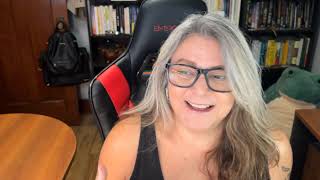
Sandi (Sandi) L Boucher, Red Thunderbolt of the Loon clan and a traditional knowledge keeper from Seine River First Nation (Treaty 3), delivers a short, conversational talk about the Indigenous idea of "good medicine." She defines it through concrete examples (people who make your heart sing, good food, spoken truths, hugs, loud genuine laughter) and personal anecdotes (a memory jar turned into a private memory book). She also emphasizes the need for reciprocal cultural training between Indigenous and non-Indigenous institutions and closes with a call to action: "Be Good Medicine."
Questions this video answers
60 years old.
Seine River First Nation (Treaty 3 territory).
Loon clan (Red Thunderbolt).
"Good medicine"—positive interactions, memories, food, words, hugs, and laughter as forms of healing and connection.
Chapters
Foreign. Hi everybody. My name is Sandy Boucher. I'm Red Thunderbolt, woman of the Loon clan, a proud member of Seine River First Nation in Treaty 3 territory in Northern Ontario. I am 60 years old. I've been doing this work my entire freaking adult life. I'm considered a traditional knowledge keeper. I am not an elder, not taking on that responsibility yet. So there's, there's me and what I wanted to share with you today. So the. I have several handy dandy index cards. The first one, what's my eyebrow doing? I don't know. Yes, a little bit of vanity there. I'll own that every now and then. Now, you may or may not know this, but in my career I balance my feather, which means I'm working just as often with non indigenous entities as I am in First Nation communities. I am done with the colonized attitude that for us to be successful, the onus is on us that the only people that need training are indigenous people. That's not, that's, that's that judgment, that's that mindset, that's that help save the poor little Indian bs. Training is needed on both sides. If you're working with a specific group, you should have training on how to support them so that they're successful. As I've said often, reconciliation benefits both sides. You don't mainstream doesn't need the, the expense, expense of recruitment and then only to lose people because the environment, there's an issue in the environment that no one's pointed out to them. And of course indigenous people need training and understanding on how to operate in mainstream because it's definitely a different animal. But I swear my heart sings when I get to take part in an indigenous event, whether I'm emceeing, whether I'm a guest speaker, speaker, whatever the case may be. Because I always hear things that speak to my spirit, that speak to my soul. That just makes sense to me because I'm indigenous and another indigenous person spoke to it. And one of the first thing that came to me over the since we last chatted was the concept of good medicine. And I'd be willing to bet if you're indigenous and you're watching this, you just side. You know what I mean by good medicine. And I am not talking about a prescription from the doctor. I am talking about people that you're just. Your heart sings when you're around them. They just make you feel so good. They are good medicine. Or when we're sitting listening to an elder or another knowledge keeper and they just share Something just. Just rings in our soul as true. That is good medicine. What else do I have on here? Good food. You know, you just have that great meal and you're sitting with good people and you're laughing, and at the end you're think, yeah. Yep, that was good medicine. Good words spoken by whoever, often by youth or children. Just those that truth that the way win. Good medicine. Absolutely. Good me medicine. I meant to grab it. I don't have it nearby. Years ago. Is it on my shelf behind me? Years ago, my daughter has, I believe it was a Christmas gift. Might have been a Mother's Day gift. Oh, maybe even a birthday gift. I don't know. But it was an amazing gift in that she gave me a vase. And of course, there's a hair in my lip gloss. Huh. I'm doing a video. Of course. In the vase was a whole bunch of pieces of paper. And I was like, what the. What the? I came to understand pretty quickly that each one of those pieces of paper she had written on it a memory of her and I. And the idea was that every single day I pull one of these out and I just get to cherish that memory. Now she knows me. I got the gift home. I dumped the whole thing out and just read it because. Dying of curiosity. And then I put them all back in and went back to reading. One a day. But. And some made me laugh out loud. Someone just nodded. Some made me want to cry in a good way. The entire memory jar was good medicine. And then, because our family is definitely a creative family, a couple years later, I took every piece of the phrase that was on every piece of paper in that memory jar, and I turned it into a book. And at the top of each page was the phrase from the memory jar. And then I filled in in the space underneath. What was going on in my world at that. Excuse me. At that time. So was I struggling? Was I happy? Was I just so incredibly proud of her? You know what? She didn't know because she was a child at the time, and I was the adult. And my daughter is the only one that has a copy of that book and the only one that ever will. But that memory book is good medicine. So hugs. Hugs from someone you haven't seen in a long time or someone you really love or someone you know just cares about you so much. That's good medicine. And you know what else is really good medicine? This is an Anishinaabe thing. A lot of indigenous nations feel the same way. I'm not going to say all that's not my place. Humility teaching. And I'd be willing to bet there's other cultures like this. There's also some that kind of look at as funny for this. That's okay. That's your side of the veddler, not mine. I'm good. The loud, honest, authentic belly laugh. Like the tip your head back and like, I have, excuse me, a very distinctive laugh. But I always tell people, you know it's real because no one would fake my laugh. But just that, that was funny. That was. That made my heart sing. That is good medicine. So why am I sharing? Be Good Medicine this week, please do your best. You can do it, I know you can. For everyone you come across, just do your best. Be Good Medicine.