Proving the Value of Indigenous Teachings
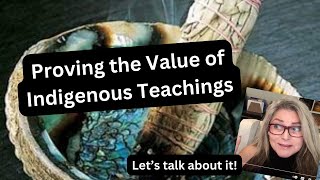
YouTube talk by Sandi L Boucher that rebuts colonial-era myths dismissing Indigenous cultures and highlights the practical value of Anishinaabe teachings. She presents three concrete examples: the Medicine Wheel (four equal quadrants representing life stages and four parts of being), the Eagle staff/feather practice used at gatherings to ensure multiple voices are heard, and the Smudging ceremony (cleansing with sacred medicines to prepare participants to listen and speak with good intent). The speaker discourages appropriation, emphasizes equality of teachings across cultures, and invites Indigenous people within Canadian borders to share safe, non-secret practices in the comments.
Chapters
Hello, you absolutely amazing person, you. I just finished eating a cabbage roll. I hope I don't lose my voice. I can feel rice right there. Anyways, not the topic of today's video. I thought we would start off the week dispelling some myths because remember that this whole colonialism thing was rooted in the belief that indigenous cultures our teach no value, that they were primitive, that we were savages, and that it should just be all of the cultures and teachings should just be dismissed and replaced.
With European values and systems.
And that's pretty much what happened anywhere outside of indigenous communities or groups. And even though nowadays there's a lot of people, they've actually gone to the other end of the spectrum and now they put our teachings on a pedestal. And yeah, I'm really not comfy with that. That's not realistic. That's not us being humans. So, no, I don't like that either. But today, now I got a light going on and off. I wonder what's going on with that. I don't think I'm moving anymore, but I'm definitely lights blinking on and off. That's just weird. That might be the sun moving behind a cloud. We don't know. But hopefully that's not freaking you out. Kind of freaked me out. Back to what I was saying today, I wanted to share some examples of Anishinaabe teachings or indigenous teachings that I've come across in my travels, which to me really highlight the value of our teachings. And they are not any more valuable than the teachings of any other culture or religion. I will never say that. And that actually ties into the first one I'm going to talk about. But they do have value, which is why, as a comment on one of my videos said last week, why we.
Don'T want to just become Canadians and forget who we are. Why is anyone asking us to do that?
That's ludicrous. Anyways, I have some things to share with you, so let's talk about it. Foreign. The blind down behind my computer here. So hopefully that kind of normalizes the lighting and it's not going to keep doing that funky thing. Let's jump into. I actually have three examples of indigenous teachings that I wanted to share with you. And then I'm going to do something kind of special with the fourth. And it's always about the four, at least to me. So the first one, speaking of four, is the medicine wheel teaching. The lighting changed again. I saw that. I saw that happen. Don't know what that is. Definitely going to have to check that Out. The medicine wheel is not a sacred item. It is a teaching tool. It's an image that we use here it is ta da. And there are so many teachings encapsulated in this image. You notice the four quadrants are equal. That is probably the most important aspect. The fact that they're equal implies that none of the things that each quadrant represents is more important than any other quadrant. For example, and by the way, we start in the east, so and where the colors land and what the colors are may be different with different nations and different cultures, different territories, different communities. Just want to put that out there. This is based on my teachings. So it's a great example for those that have never come across this. So we start in the east because that's where the new day begins. One of the things that the medicine wheel quadrants represent is the four stages of man, of life, the life stages. So you start out with the babies, black babies, they both start with B. Easy to remember. That way we dismiss that, the importance of that stage. But we kind of remember as a baby, everything is like exciting and new and we want to try new things and everything's just. We've never seen this before. And it can also be incredibly terrifying. This is really important to remember. When you're trying something new and you're coming down on yourself because your nerves nervous about it, you're at the baby stage. That's totally normal. Next we move into the youth stage. Now the youth stage is where our natural born activists are. This is also where the phrase a little bit of knowledge is dangerous totally applies. The youth stage is a learning stage, just like the baby stage was, but now it's more advanced learning. Now we're talking high school, college, university. It is still a learning stage. So even though the people in this stage are tempted to throw out the baby with the bath water. Yeah, gotta cool your jets just a little bit. These are the brand new allies. They learn something new and now they want to grab a mic and take over the conversation. And they end up hurting people rather than helping because a little bit of knowledge is dangerous. Then we move into the adult stage. And now the adult stage is a stage of action. The learning continues, but your dedication to.
Learning is behind you. Now you got to do something with.
Your learning because wisdom not used and not shared is wasted. Now you put in the effort to make the changes. You, you become a leader.
You run an organization, you have the.
Conversations, you call out the racist.
You do something, yet can't stay in learning forever. After a while that's just denial, right? And then finally the elder stage, which is all about reflection. It's about passing on the wisdom to the next generations. That's the medicine wheel.
Now one of I mentioned, it represents the four life stages. It also reminds us of the four stages or the four parts of our being. Emotional, spiritual, physical and mental. For you to be in balance, you have to pay attention to all of those parts. Your emotional part is your feelings. Often what mainstream refers to is mental health. You have to acknowledge like, why did that upset me? And spend the time unpacking it. Don't just blame or attack. Reflect and heal your physical being. We know that part. Spiritual being, that's totally up to you. Your mental being is growing your mind. That is the continued lifelong learning. That is learning through relationship, through conversations, through formal learning, whether it's mainstream education or traditional education. So if you take care of all those parts, then you're in. You're honoring and enjoying your life journey. The four sacred medicines, sage, sweetgrass, tobacco and cedar are all represented. There are the four colors of man, black, yellow, red and white. And that's the one I want to leave this part of the discussion on today because I have heard anti indigenous people say that they didn't believe we were interested in reconciliation, that what we were looking for is retribution. And that has never made sense to me because look at the Medicine Wheel teachings. Our own teachings say that every color is is equal, that the teachings from all the cultures are equal. We don't want to take over. We just want to be recognized as an essential part. The teaching says that when we come together and share our teachings with each other, that's when we bring the world.
Together, not when one tries to dominate or eliminate another. That's the Medicine Wheel teachings.
To me, that's pretty valuable.
I hope you can see the value in those teachings as well. That was the first one. Another thing I have come across with the anti indigenous type people is the belief that we were uncivilized or savages. And again, that everything, all our practices and teachings and traditions should be thrown out. And I actually have something behind me.
Here which is just a really bad replica of the real thing.
I mean no disrespect, I use this as a teaching tool. I am not a carrier of an eagle staff. I'm not really sure if I was that I would take it into a public forum. I guess I would know that if.
I was a carrier because then I'd have the teachings. But I made this years ago to make a point about the value of indigenous teachings, or in this case, Anishinaabe teachings. So I hope that didn't just eliminate my video, that the camera went off for a second. Do you see the staff behind me? So it is a branch. I have wrapped it in different colors, and if you looked really closely, this is where it's so not traditional. I mean, those should be ribbons. Didn't have ribbons when I made this. And the hooks or metal that wouldn't work. But I have personally seen this happen at large indigenous gatherings where many different agencies or many different communities are coming together. It doesn't always happen.
It depends on the agency or the host agency involved.
But when I've seen it, it is so incredibly powerful. So I want you to imagine that people are sitting like around the edges of a room. Not really a circle, but you understand what I mean. In the center might be the traditional drums, or it could simply be a staff like this. And it looks pretty empty now for. Especially in the Nishnaabe nations. I'm not sure about the other nations, if you're from other nations, but please feel free to share in the comments what your practice is. But we carry eagle feathers. They remind us that the words we share, that we don't speak for ourselves, that we don't work in isolation, that we're speaking for the people that don't have a voice, that have had their voices taken, or the people that can't be in the room, that we represent, who we're there to represent, whether it's our agency, our communities. So I have these, again, fake feathers, because I use these in workshops. I'm not just going to willy nilly pass out eagle feathers. That would be against my teachings. But if you imagine that every single person that comes to the gathering has their feather, what happens at these events is as the people come in and they settle into their seats before the meeting starts, they get up and they take their feather and. And they hang it on the eagle staff. They hang it on the eagle staff.
So one by one, they come up.
And hang their feathers.
Okay, find another one here.
Okay, so now imagine that eagle staff covered in feathers. It's standing right in the middle of.
The room to remind everyone that no one voice is the most important, that.
This meeting represents many, many people that are bringing their wisdom together for the.
Benefit of the people that will benefit from the discussions that happen. And I have even seen when a.
Member feels like they can't get a.
Word in edgewise, or they're not being.
Heard, or they have something really important to say.
They will get up from where they're sitting and go stand next to. To the eagle feather, eagle staff. They may or may not take their feather off to hold it while they speak, but they will stand there until the room goes silence and they're recognized.
And everyone understands that this is a.
Person who feels they haven't been heard and now's the time to hear them. All of the feathers come together to work on the issue. And then at the end of the gathering, everyone goes and takes their feather that now, we believe the feather now contains and has absorbed all of the goodness that happened at this meeting. And you travel back to your community or your agency to take that wisdom with you.
I think that's pretty powerful. Now, do I want people mimicking this? Of course not. That would be cultural appropriation.
The only reason I'm doing this is.
Is to highlight this beautiful ceremony. But I would never say that's an eagle staff or even that those are real feathers. But one of the things I did suggest that if you like that idea so much, you could so easily have like a. A one of those cork boards on a table in the middle of the room. And everyone puts their business card on it at the beginning of the meeting. And the exact same thing. If you don't think you're heard, you go stand by the table and at the end you pick up your cards or the cards of other people and go back home. I think it's a pretty awesome ceremony or teaching, in our case, with the real thing, it would be a ceremony. So what do you think? Doesn't that make sense? Does that sound uncivilized or savage to you? I don't think so. The next one I'm not going to go into a lot of detail for, because it is a sacred teaching and that's not something just to be shared on the Internet. Not according to my teachings anyways. But it's the smudging ceremony. The fact that we put the sacred medicines into a shell or into a bowl, a ceremonial bowl, and we smudge in the smoke. The belief is that by using the sacred medicines, we are clearing our minds so that we're able to hear what is shared at the event. We're smudging our mouth and our ears to make sure that we only hear the good and that we're not gossiping or thinking bad about other people in the room. We. We smudge our heart to make sure that that's what's driving everything we say, that we're thinking and loving the People that we care for. And it just really allows you to cleanse yourself from everything you were carrying. The negativities and the judgments and whatever, before the meeting starts so that you can now focus in on what the discussion is. I know for me personally, smudging is all. As soon as I smell that, it's like the rest of the world disappears.
And we are now focused on what we need to share.
I happen to think that's absolutely beautiful. And that brings us to number four. And I said I wanted to do.
Something different, and I do. There are Indigenous people that follow me now. I'm in this case.
I'm talking Indigenous people living within Canadian borders.
I know there's Indigenous from around the world that follow me, but I really want to invite the Indigenous people who live within Canadian borders to share something they do. A practice, a teaching, not necessarily a ceremony. Be careful how much you share. Don't do anything against your teachings, but if you could share that in the comments so that the people listening could learn from it. Do not ask questions of someone sharing that. You sit with it and you contemplate it. It's not something you ask about. You just appreciate it for what it is. You don't need to understand the nuances to appreciate it. That's such a mainstream mentality that I need the resources, I need the information. No, you need to sit in the experience and appreciate it. And you will understand more when you're ready, when you've come to that stage of your life stage. So what did you think we have? What did I start with the medicine wheel, and then I talked about the Eagle staff, and then I talked about smudging and whatever else is shared in the comments.
Were you aware of these things?
Does it help highlight for you that Indigenous teachings have value? We could go off in a tangent and talk about the environment and why if the world had been left in the hands of the Indigenous, well, we wouldn't have an environmental crisis. We also wouldn't have the societies that look the way they do because way too often damage to Mother Earth is set aside, especially in the short term. Conservatives. Are you listening? Because somebody wants something built. I just about come to tears every time I get stopped on the highway for some construction to put another lane in and there is Mother Earth literally blown apart and everyone's okay with it.
As Anishinaabe Kwei, I am not. I hope you found this entertaining and interesting. Love to hear your comments. Again, if you are Indigenous living within Canadian borders, please share anything you're comfortable with sharing. Otherwise. I hope you enjoyed the information and I will see you again tomorrow. I love you. Take care. Bye bye.
More from Sandi

How I Handle "The Four Uglies!" (Alcohol, Diabetes, Healing & Cheap Seat Comments)


All the Stuff We Don't Talk About with NO SHAME! (WMT Podcast w Antoinette Godin)


When Authors Chat ... (Radio Interview for the Launch of "Copper Stone - Glimpse of Blood Memory)



MORE PROOF of Indigenous/Non-Indigenous Relationships that Work! (Walking My Talk w Millie Gormely)
