Reconciliation Isn't an Action, Its a MOVEMENT!
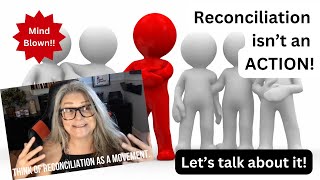
Sandi L Boucher, from Seine River First Nation, argues reconciliation is an ongoing movement, not a one-time action. She outlines five concrete goals: acknowledging harms, stopping further harm, respectful collaboration, ending cultural appropriation, and mutual thriving. For non-Indigenous allies, she emphasizes learning Canadian history, listening more than speaking, and fixing your own side first.
Chapters
Someone commented the other day that they think it's so much fun to watch my videos when I'm super excited. Then you're really going to enjoy this video because I am pumped. I think think maybe you'll have to let me know in the comments. I think I tripped over something that might actually help you get on the reconciliation train. What if reconciliation isn't an action, which I think way too many people think it is. What if reconciliation is actually a movement with goals and habits? Let's talk about it. Hi everybody. My name is Sandy Boucher. I. I'm Red Thunderbolt, woman of the Loon clan, a proud member of Seine River First Nation in Treaty 3 Territory in Northern Ontario. And yes, I just ran out of breath because I'm so excited. I have been working in the realm of Indigenous Canadian reconciliation full time for the last 15 years and I get really pumped when I trip over something that can help non Indigenous understand how to meet us in the middle of the bridge. Because I work every single day with amazing non Indigenous Canadians who do want to meet us in the middle, but they just don't understand. And by the way, I'm going to be doing another short soon. Maybe today. I'm thinking again, correct me if I'm wrong, you can put it in the comments. I'm thinking non Indigenous or desperate for some success stories. Give examples of when reconciliation has really worked between Indigenous and non. And boy, do I have an example for you. That is another excitement. So as I said in the opening, what if you start thinking of reconciliation as a movement, not an action. It's definitely not an act of Parliament. I swear the government's going to be the last group that gets gets this. It's going to be driven by the people like it always is, like the amazing people I get to work with every single day. So it's not an action, it's not an action plan. It's not 10 steps. It's a movement towards a brighter future for everybody living within Canadian borders. Because reconciliation benefits us all. So I mentioned that any good movement out there, and you can think there's a whole bunch of them, has goals and has habits that you can adapt that are going to help you push the movement forward towards your goals. So this is my list and my list alone. If you're Indigenous and on your healing path, I would love to hear what you think of these. So first and foremost, reconciliation, the actual reconciliation has to happen. So amends in a lot of cases have to be made. There was harm. So we got to Take some action to make amends for that harm. I think part of reconciliation the past and everything that Canada does and did to us has to be freely and openly acknowledged. No more denial. No more minimal minimization. No more excusing it. So that's the first big chunk. What. What is the goal of this movement? To get everyone owning Canadian history and making amends for the things that should have never been done. Like taking our kids for generations. Okay. Another thing that this movement is moving towards, because that's not enough. That's not the only thing. We got to stop the harm. No more harm, Right? A hashtag I've been using for years. So going forward, respectful collaboration now and in the future, making that the mode of operation, the state standard operating procedure. Respectful collaboration. No more exclusion of the indigenous peoples. Looking around, are we at the table? That kind of stuff. No more cultural appropriation. No more taking our teachings and saying they're your own. Or twerk. I almost said twerking. Tweaking them to make them. No, no. What is wrong? You know what? I met many non indigenous people that are quite adamant that you better be quot whatever author you took a quote from. Same thing with our teachings. If an elder respects you enough to share a teaching with you, then you share where you got it from. Let the the knowledge transferred, not the ownership. You didn't get a teaching certificate, you got handed a lesson. There is a difference. And last but not least, the feather that I talk about so often that represents indigenous and non indigenous in Canada. Both sides thriving, needing each other, supporting each other without interrupting the other side or using each other. It is literally the two row wampum come to life. So in my mind, that's what I'm working towards. Those are the goals. Reconciliation, making amends, acknowledging the past, Respectful collaboration now and in the future. No more exclusion. No more cultural appropriation. Both sides thriving, needing. Supporting each other without using each other. Yay. So what do you think? Goals. How many of that was there? 1, 2, 3, 4, 5? 5? I guess so. Habits. We need some habits. You get results. What your future is going to be depends on what you do today. And consistent hab is where you get the success. As any entrepreneur, it is not what you do every now and then that matters. All of my non indigenous allies out there, what you do every now and then doesn't matter. It's what you do every single day. So I don't care if you wear an orange T shirt, if you sit silent the rest of the year. Got that? So what are some habits that we can do to move us towards those goals. First, learn about the past. This is your history. Canadian history. This is not Indigenous history. This is Canadian history. So if you live within Canadian borders or you want to learn about Canada, learn about the past. Learn about the residential schools. Learn about the sixties scoop. Learn about the. How oppressive the Indian act is. Learn about the reserve system. There's so much to learn. Don't need to do it all at once. But you know what? I'm learning something every single day. It's just part of my morning routine. You could do the same thing. I'm not asking you to do anything that. By the way, can we just put it out there? Every Indigenous person, every Indigenous youth or child out there is expected to learn about Canadian history, your history. So we can fix this. Get in the habit of not leading or dominating, but actually sitting together. So that's that non Indigenous pulling yourself back. It is not about leading the discussion. It is not about being the most vocal ally. It's not about you if you're talking about reconciliation. So learn how to sit with us. Learn how to hold space for us. That would be huge. Next in line with both of those. Focus on ongoing learning, not teaching. Learning, not teaching. As I mentioned earlier, we've been learning about Canada since the day we were born. You got some catching up to do. Okay, no more assimilation. Can we just get the T shirts? No more assimilation. Which means every single time you expect an Indigenous person or group or community to do it your way, that's assimilation. That's part of the problem. Figure out you wouldn't do that to another country. You'd figure out and negotiate and collaborate and come up with a way that works for both sides. Sides. That's what I'm talking about when I'm talking about respectfully collaborating. So no more assimilation. Inclusivity definitely has to be part of it. Get in the habit of looking around the table at whatever group you're at. Are there any Indigenous there? If they're not, fix that, please. Invitations work. Invitations work. I'm going to put in a little disclaimer here. As long as you don't assume that they're just going to do it your way. They might have some just suggestions on how to tweak the agenda or whatever the case may be. And you got to be open to that if you actually want to collaborate. Okay? So in case you haven't picked up on it, what I'm asking you to do is focus on your side of the feather, not on Ours. It's not about fixing our communities. It's not about saving us. It's about fixing your side of the feather. How do we heal from the attacks if they don't stop? The problems are on your side. So speak up in those conversations. Become the pain in the butt that no one wants to invite to the house party. That would be an idea. I'd be proud of you. I'd invite you. I don't have house parties. But you come over for tea. So focus on your side, we'll focus on ours. No more tunnel vision. And what I mean by this is the fact that Canada has a habit of focusing on what they need without any regard for the price we might end up paying. Burying nuclear waste up in the north where all the indigenous people are, is a prime example. You're not at risk. You wouldn't even consider putting it in your backyard. You have no problem putting in hours. You need a road to get to your mind. So we're going to build a road to your community without any regard for what's going to happen to that community if non indigenous can suddenly just drive in. You may think that your solutions are all wonderful. We may have a different view. That's back to back teaching. And last but not least, we got to get better at traveling together, which means in some cases indigenous got to move a little faster. In a lot of cases, mainstream has to slow down a bit if mainstream is advancing on ridiculous levels. But First Nation communities still don't have the Internet. And no, I'm not talking about supporting Elon. We got to find a way around that. But we're going to find a way to travel together to keep the feather together. It's not ripping it in half and one side flies off and one's laying on the ground. That's kind of Canada. Now let's put this feather together and keep it together. That's the movement I'm part of. That's the movement I want to be leading the charge on. So the question is, do you want to join me? No one's expecting you to know this stuff. No one's expecting you to make huge movements yet. But now you know the habits and what you can do to help take steps so that we're all moving in the right direction. Reconciliation is not one action. It's a movement. And I hope you're gonna join me. That's it for this week. Exciting videos this week. Have a great weekend and I'll talk to you on Monday. I love you. Take care. Bye bye. It.
More from Sandi

How I Handle "The Four Uglies!" (Alcohol, Diabetes, Healing & Cheap Seat Comments)


All the Stuff We Don't Talk About with NO SHAME! (WMT Podcast w Antoinette Godin)


When Authors Chat ... (Radio Interview for the Launch of "Copper Stone - Glimpse of Blood Memory)



MORE PROOF of Indigenous/Non-Indigenous Relationships that Work! (Walking My Talk w Millie Gormely)
