Self-Defence & Money Management for Indigenous Peoples (WMT with Laura Armstrong)
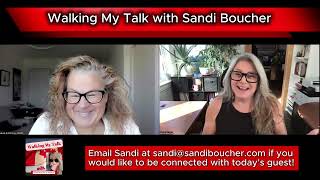
A recorded interview on Sandi L Boucher's 'Walking My Talk' YouTube series featuring guest Laura Armstrong, a wealth-mastery/money-mindset mentor and experienced martial-arts instructor. The conversation centers on empowerment for Indigenous communities through (1) changing money mindsets — raising "level of deserve," using specific affirmations, identifying and reframing limiting beliefs via a five-question process — and (2) trauma-informed self-defence training and facilitator development (denying aggressor privacy/control; five principles: Think, Yell, Run, Fight, Tell). The episode includes practical tools, a call to train local facilitators, and outreach to Indigenous organizations.
Questions this video answers
Three-time world champion martial artist.
58 years old.
42 years old.
She has schools in Toronto, some in the United States, and teaches programs internationally including Africa; works with Indigenous Women's/Native Women's centres in Canada and the U.S.
Chapters
Foreign.
My name is Sandy Boucher Misko Paganon Kwei Nidishnikas Mando Dam. And welcome back to Walking My Talk. As I've shared in past episodes, I wanted to do this podcast because for years I have been preaching that indigenous and non indigenous can work together. And then one day I realized, wait a minute, I can prove that by introducing my followers on YouTube and all the other platforms to the amazing non indigenous people I get to meet and work with. So if my relationships can help you, the indigenous followers, lessen your fear a little bit and open the doors a little bit wider. I honestly believe relationship is what takes us from truth to reconciliation with we have to learn how to talk and walk and work together. So welcome back to my podcast and today I have an absolutely amazing guest to introduce you to once again. As with my other guests, my team was busy on LinkedIn reaching out to people, seeing if they wanted to engage with me, which by the way, many do. So again, let's shatter that stuff stereotype. And I got connected with Laura and we scheduled a time to chat. And as always, in preparation for that chat, I go check out their LinkedIn profile and I happen to have Laura's open beside me here and it's wealth mastery and money mindset mentor. And I was like, this is going to be an interesting conversation because many and there are very successful indigenous people, don't get me wrong, but many aren't. Many are still impoverished or have no idea. We can do poverty super easily. Having money in the bank, totally different ball game. So if nothing else, I thought it was going to be an interesting conversation. That is not at all where our conversation went and it got better by the minute. So, Laura, thank you so much for joining me today. I'm excited to share with my followers what I discovered about you because, like, it happens all the time, I think I might connect with this person. Oh, now I have to work with this person. So give the followers, my followers, just a background on you and your work and how you surprised me on our phone call.
Sure.
Yeah.
Well, thank you so much for having me on today. I'm excited to be here. You know, I think that what is really interesting about what you said is our perceptions always guide our actions and sometimes our perceptions aren't what they seem.
Yeah.
And so it's important to have those conversations you don't think you need to have because you just never know where that's going to lead. Right. So. So for me, I'm a three time world champion martial artist, one of Six women in the world at my ran. Hang on.
Jumping in here for a sec.
Laura.
Followers. Did you see that coming? I didn't see that coming the first time she said it either. It was like, pardon, what? Yeah, Laura.
Yeah, so I have schools in Toronto and I have some crick. I have some schools in the states as well and I still teach at a high level. Teach martial arts at a high level and I worked in corporate for a couple decades. I was the only woman on the trading desk. And that was a, that was a quite a show. I hope it's okay to swear on your show. Both and. Yeah, and so. But it was very toxic environment. You don't realize that till you're out of it. So they packaged me out when I was 42, I'm 58 now. And I just decided that I wanted to only do things that made me happy, that help people and made me boatloads of money because I love money so much. Having said all that, I also, at a very young age, became a holistic practitioner. I believed in other cultures and other alternative methods of healing the body, mind, spirit. And at a, at a very young age, I integrated that into my life. And I, I'm sure that's what gave me the edge on winning my gold medal, like being able to tap into that growth that, that mindset stuff and connecting that up with my body. So once I decided that I, I knew I love money so much. What I realized is that not everybody had that point of view about money. So I created a business that was around money mindset and wealth mastery strategy. And what I loved about that is it never ended up being about money. But the limiting beliefs that we as human beings put on ourselves, and especially I do a lot of teaching in the indigenous community, I noticed that it's not just a ancestral thing. It's not. It's also a cultural thing, but it's also a socioeconomic thing. And it's people's perceived authority over certain people or perceived outlooks on how they feel. Someone looks right and, and we don't have to live that right. We don't have to live or buy into that until we could change that. So that's the first good thing. And then as we had our conversation, I let slip that I also teach and have been since I've been teaching 30 plus years, lot of empowerment, self defense. And as I retired from fighting, I got more involved in that on an international scale. So I set up programs and I teach a lot of it in Canada, the U.S. and Africa. And we. Sandy and I were talking, and I'm like. She goes, well, I want you to bring this to our communities. And I'm like, yeah, we do a lot of work with the Indigenous Women's Native Women's center in Toronto and other organizations throughout the US And Canada. And I just was, like, so thrilled to be a part of that because our goal is. My specialty is creating instructors. I can teach ESD all day long. But I would love to create instructors in your communities so that they can have a better level of trust with the people that they're learning from. I mean, I am just a white woman. I'm not Indigenous. Right. And I get that. And I. There's a lot of humility for me being in other people's cultures. Right. And so I've learned that when you can have someone in your own culture, it's faster to build trust and growth, and people just learn at an easier rate. Not that I'm not a great teacher, but you get what I'm saying, so 100%. Yeah. So we do a lot of training within special communities and things that we do a lot of training with special populations. And so I. I love all of that because I'm always learning as a teacher what different people and different groups need. And so that's kind of like the overview411 of what I do. Yeah.
Okay. So I now know none of my followers are surprised as to why Laura's my guest on the show, because it's like, you do what you could do. What?
What?
Absolutely amazing. So I want to backtrack back to the beginning here. So let's talk about that money piece for a second. So I definitely come from an impoverished background. I mean, my parents were hard working, but there was a lot a month at the end of the money. And I've been in business for 16 years on my own. And I can honestly say, and if anyone had said this in the beginning to me, I would have thought they were insane. But one of the hardest things I had to get around or understand or get comfy with was the idea of having money. I grew up, and it's not like my parents said this to me directly, but it was definitely the mindset in the air. I grew up believing that people who had money got it because they ripped people off. And I so definitely did not want to be that person. Having said that, poverty sucks. Okay, let's get crystal clear on that. I think for a lot of people in First Nation communities, the communities I work with and love, they've Confused humility with poverty. I still have all my humility. I give thanks every single day for all of the people that help me get to where I am. I just no longer waste time worrying about paying the rent or paying my car payment. I have freed up that energy to focus on helping people.
Right.
I don't think I'm better than the people that are where I started out. I mean, get. I've sold furniture to feed my kids. I understand poverty, but I think we really have to unpack those mindsets and our thoughts around money. One of my other guests is Millie Gormalish. Her. Her episode isn't out yet, but she's my financial advisor, she's non indigenous, and she never once looked down on me for not knowing what a. Whatever investment was. Right. Like, she has just walked me through it. So absolutely amazingly and, and think creator for people like you and Millie. So I can imagine. Now I'm interested. I'm going to throw this back to you. I know what I see in the First Nation communities. I know what I've experienced as Anishinaabe Kwei. There's obviously some intersectionality there between indigenous and female. Right. Because I think both come with challenges around money. So that was my question. I'm not sure how much you've worked with indigenous people in the money arena, but I'd be willing to bet you've seen some interesting mindsets with just women and money.
So, yeah, you know, it's, It's. That's a loaded question. So I like it. So, you know, I'll deal with the women thing first because I've lived that. I mean, all of us women have.
Yeah.
So the, the one thing. And I want you to think about these things, your audience, when I talk about them, and really. And I really want you to bring things to your awareness because when. And I'm going to give you some tools today. So first of all, I would ask you, what is your level of deserve? And so when I ask you that and you're like, well, what do you mean level of deserve? Deserve is like, how much money do you think you deserve? Because that's going to tell you everything about your money mindset. You need to know right away.
Yeah.
The other thing about. And so the way to raise that is to know that you can change it. So once you have that. What your level is of what you deserve into your awareness, we could change it. So if it's $1, if it's a million dollars, if it's. If it's a $10,000 it doesn't matter. But what we want to do is raise your level of deserve from wherever it is.
Yeah, I want to jump in for a second on that again. For my followers, answering that question might be very eye opening and very upsetting at the same time. I'm a 10 year domestic abuse survivor. I so easily answer that in a very low number. Right?
Yeah.
And like you said, it's to work to overcome that. This is not about shame or guilt. This is not about beating yourself up. It's acknowledging if that's your mindset. Well, now we know what we're going to work on.
Right. It's having the awareness around it. And that's the most important thing here. Do not beat yourself up. You've already done that. You're good at it. We already know that. So forget it. It's not. And how's that working for you? It's not.
Yeah.
So let's give it up. Right. And we're gonna. You know the other thing too with that. There's three things I noticed with women. First of all, they don't feel they have the support they need. Okay. And so we're supporting you. That's why we're on here today. We want to give you tools to actually step into your power and take it back from others. That's the goal here. Because once you own your own power, you become unstoppable. And maybe for some of you, that's. That's just something you just can't even imagine. So what we do is we take it back little pieces at a time because it was taken away little pieces at a time. Right. So that today we're going to own some more of it. Okay. The other thing I notice with a lot of women, so you should, you're probably all aware of this, is that women are givers. They give, give, give, give, give. But they're receiving is not so great. What if you could receive C, C, C, Right. What if this was balanced? Because until this is balanced, your level of deserve cannot be raised.
And oh, that was so good, Laura. Because what I've been saying for years and definitely not that way. You just put a whole new level to him, which is amazing is because I've seen it a hundred times and I've done it a hundred times. When you're used to or believe you only deserve this little bit, even when you receive abundance, you get rid of it quick to return back to your comfort zone of not having. Right. So other people will call it self sacrificing or whatever it's just, I'm not comfy here. I'm not comfy with the receiving. It's not balanced. So I give it away, I spend it, I do whatever as fast as I can. Talking to the followers for a second, my first nation followers, we all know communities that have received land claim settlements or whatever. Watch how fast they burn through the money.
Right.
Because subconsciously, on some level, investing it, keeping it, having it as that comfort zone does not compute. Right. So that was powerful.
Yeah. And so what it really comes down to, everyone, is choice. So for women, those are the three things I see consistently. Whatever community they're in, whatever their culture, like, I see it over and over.
Again.
When I work with the indigenous community. There's also the cultural. So the colonial cultural history piece. So that is a. So that is something that has been, you know, recognized to a certain degree. Not enough as far as I'm concerned. But that's a whole other conversation. But. So how much of that are you taking on also? And how much are of that are you pulling into your life and your culture? Not that you shouldn't have the awareness around it and take action on it, but how much of it are you bringing into your being that's holding you stuck? Because you're not. You're thinking you're never going to get out of that. And that cycle is just going to keep going, going, going, going.
Yeah.
You can actually do way more. When you break out of that cycle, you can make a bigger impact, believe.
It or not, 100%. And again, I love that you pointed out, that's a colonial history because so many of our nations were matriarchal before the settlers got here. The women were the leaders. The women were in charge. There was no weakness lesser than any of that. That's our colonial impact that we have to unpack. Right. And becoming that strong leader again, like you said, like I said earlier, if you're swamped in some awful financial situation and that's where your stress and worry is going, of course, because that's what you think about when you're there. It is really hard to be an impactful leader and focusing on that when you're wondering where your next meal comes from.
So, yeah, so what I want to do today. So also on the, on the indigenous side of things, as far as poverty goes, I. I just. No one can walk your walk. Right. But you can use tools to take a different path. Right. And so today I'm going to give you a couple. I'm going to give you three affirmations and you can write these out and re listen to the recording and write them down. But the reason I give you these specific affirmations is because you need to clear the stuff that's holding you back. And what happens when you do affirmations, it's actually quite scientific. So when you say affirmations, what happens is, first of all, your words have power. You already know that, speaking a native language, how powerful that is. So you already understand that when you say these affirmations, what happens? And you do it over and over again every day in the morning. And the best way to do it is to look at yourself in the mirror, which can be hard at first. You may get emotional, but what happens is the neural synapses in your brain are creating new synapses. So new things are starting to happen. And what happens is old stuff starts to clear out and then things start to move in and it's almost magical. Right? But you're like, well, that doesn't really, you know, it's kind of like, no, it's not woo woo, it's science. Right. And so for those of you who are very science based on, and those of you who are woo woo, you can look at it however you want, but affirmations are the easiest thing that you can do. These are the three that I'm going to give you. This is the first one. I'm so grateful today that abundance comes to me easily and effortlessly on a consistent and everyday basis.
Love it.
That's it. Okay. The second one, even shorter. What else is possible here? Whoa, powerful. Yeah. Because what happens is we say we want this and it can only come in this way and it never shows up. And then we're disappointed, we have expectations, and then we go deeper into the hole.
Yeah.
You need to ask these questions and not look for answers. You need to allow everything to come in. Okay. And as the third one is, I want you to do this all the time, especially when things are shitty. How does it get better than this? And leave the question out there. If you do those three simple things, if you learn nothing else today, your world will change. Be consistent. You will create a habit, which is a ritual, which becomes a way of living. Right? And so this, this is the way you can start.
I love that. What was the third one again?
How does it get better than this?
See, and you know what I love about that one? I mean, it sounds like an innocent enough question, but it instantly pulls you out of the victim mentality.
Right.
It doesn't allow you to say, yeah, it's not. This is overwhelming. It's like, okay, how could this get better? And. And it automatically pulls you to what you still can do, what you do.
What else is possible. So they all work together. Love it. Love, love.
Yeah.
So that's a. Those are great tools. I mean, I could spend hours telling you all this stuff, but the fact of the matter is a lot of. A lot of. From what Sandy told me in her community of people are living in that feeling of trapped.
Yeah.
And no way out. And, you know, they want support. Right. And so the goal here is we're giving you support. Start with affirmations. It's the easiest way. It doesn't cost you anything, and it can change your life dramatically.
And he can. It can. And for the people who are dismissing this right now, I have worked so hard in that area. I constantly, to this day, I have an affirmation as the desktop picture on my computer. So as soon as it opens up, I see it. I have affirmations as the wallpaper on my phone. So every time I pick up my phone. Because way back when, I understood I had to switch my mindset if I wanted my life to change, and I didn't want to sabotage it once it started getting better. So if there's one area I have consciously worked on, that's it. Absolutely.
So for the people who don't believe that's okay. There is no judgment here. But how are things working for you?
Direct. You are just, like, thinking about.
Think about that. Right. So if you tried something new or different, there might be some possibility there. So you have nothing to lose. You have zero to lose.
Yeah.
The second thing that I think you need to be aware of is are you aligned with your vision of where you want to be in your life? So are you just doing stuff? Are you doing nothing? So what I would write down what brings you joy, because everything that brings you joy is your natural state, and that is what you can monetize as your business.
Nice.
Right. It doesn't matter what it is.
Yep. Right.
And so when you're in alignment like that, you're not just throwing spaghetti at the wall, making money here and there, or a little bit and a little bit there and here. You're actually aligned with what you're doing. People only ever want three things. More money, more time, better health, better family, relationships, whatever that looks like. If you offer any of those things in your business and position it properly, you have a gold mine.
Yeah, exactly.
Willing to have that money and accolades and. And work on your Business and receive it. Because if you can't receive it, then you're not going anywhere.
Yeah. And that's. We've all heard the phrase, you know, you don't work a day if you're doing what you love, or whatever that phrase is. But that's what she's talking about. It's the reason I'm 16 years in business. I absolutely not only love the work I do, but love the people I get to work with, which is absolutely amazing. If years ago, I don't know if Laura, if you've come across this one, but one of the tests they suggested was ask yourself, what would you do if you want a million dollars? Like after the initial. Yeah, buying the yacht thing.
Yeah, for sure.
And my. When I was asked that, my instant reaction was more of the same. Like, I could buy better equipment to do videos with more people. Right. I could help more people. I could sponsor communities. I wasn't stopping working. Right. Like, I was literally going to do more of it. So. And that's a wonder way, wonderful way to test. Like, are you in line? Because if you. I can't even imagine not doing what I'm doing. Millie, I mentioned earlier, my financial advisor, we don't talk about retirement because she knows, like, okay, that's never happening for Sandy because she just does what she does. Right. So.
Right.
Continue on with your next one.
Yeah. So. So the next would be our limiting beliefs. Right. So affirmations, you know, what are our. What's our alignment and our values and what are our limiting beliefs? And this one is most common. I see. Limiting beliefs are really debilitating. And so they cause anxiety, depression, substance abuse, adhd, bipolar, you name it. It's. It's like this surprise party in your head you can't get away from. Right. And so the good news about this is that those can change.
Right.
And so when you are, when you have the awareness about, about limiting beliefs, limiting beliefs can be anything. So in, in your case, like with the community and today, I'm only talking about wealth. I'm not even giving you strategies to empower yourself. Like, that's a whole other conversation, right. Saying no. Setting boundaries, all of those things. Those things are another set of empowerment tools. But you're limiting beliefs. You can get rid of them. You. And not just bring them to your awareness because that's what a lot of therapy does is it brings it to the awareness and you process. But most people don't process because they don't know how to get rid of it.
Yeah.
And not that therapists aren't great. They are. They are a godsend. So I want you to. I'm going to give you the five things you can do to get rid of your limiting beliefs.
So I want to hear this.
Yeah. Five questions you ask yourself. So the first one is, is this true? Is it true? Is it real? For me, it probably is. Because you feel like you've been living it and you've been owning it. Right. And the second question is, is this mine?
Yes.
Right. And so again, the answer is probably yes, because you've owned it for so long, you think it's yours. Okay, the third question is, does this serve me? If it does, keep it. If it doesn't, one and two don't matter. Exactly. Get rid of it. Yeah. Okay. The fourth question is, when did it start? Okay. The automatic question answer that will come in your head is, I don't know. I hear it all the time. I'm like. But when you ask that question, when did it start? What happens is there's this system in your brain. It's called your reticulator activating system. That's that system where if I say to you, sandy, I say, okay, I need to see an elephant this week. And then you start seeing elephants all over the place. Have you ever had that happen? That's your reticulator activating system. So when you ask it, when did it start? Your subconscious is working so hard to bring that to your conscious awareness and it will happen. So it's like you and I were having a conversation. I forgot somebody's name. And then two minutes later, I shout out the name.
Yeah.
Because it's surfaced on my brain. This is what will happen. Okay, so when did it start? Will come to the surface. And then the last question is, what happened? When you know when it started? You know what happened. Yeah. Right. Now you can reframe the limiting belief so you no longer need to own it because 99.9% of our stuff is not ours. Okay, so I'll give you a good example. I got a good money one my mom gave me. So it's like, honey, money doesn't grow on trees. Another good one was like, well, the more money you have, the more trouble you'll have.
Yeah, right.
The rich people are greedy.
Yeah, right.
That's a good one. So my reframe for my treat money tree one is like, well, you know what? Mom and my mom passed this year. I said, you know, I got a few acres of money trees out back if you want to hay ride through my Money trees. I'm happy to give it to you. And isn't paper made from trees and money made from paper?
Oh, I love it.
Okay.
What's that one?
Yep. Yeah. So it just is not a part of who I am anymore. I have a reframe. So think about those limiting beliefs that you have. It could be something as simple as, I'm not good enough. Yeah.
Right.
Or no one wants what I have, or nobody likes me. Or, like, I'm going to be in this. I'm going to be poor for the rest of my life. Right. Like so. So go through this process. Of those five questions, bring it to your awareness and reframe it. And this is gold. I mean, you could change your life.
So I want to jump in here and just remind the audience that limiting beliefs can exist at every level. It's just the most absolute impoverished the deal with these. Yeah. I personally, like, this is a conversation I can so identify with. I have. Well, she's going to challenge me on this. I was just going to say, I have no idea where this came from. Now. She would make me figure it out. But anyway, probably, I think year 10, so I'm 16 years in business now. So not that long ago. For some unknown reason, I know I've never taken the time to unpack it, but we attach certain meanings or certain limitations to certain numbers. And for me, the number was a hundred thousand dollars. I could ever make a hundred thousand dollars. And I got so close so many times. But there was no way until the first time I did almost in spite of myself because I was so busy, I just didn't notice what was happening. And for one, it's kind of like when I turn 40, I don't know what I thought was gonna happen. Like my face was gonna fall off or something.
Yeah.
The next morning, when you turn 40 and you look in the mirror and you look exactly the same and you ask yourself, like, why was I so freaked about it?
Yeah.
Same thing happened when I broke the hundred thousand. I was like, I did it. And. And it wasn't because I won the lottery or something. It was because I did what I do.
Right.
I've never been under since. Right. That's where it really highlights. That was just a belief. It had nothing to do with my capacity, my abilities, my time, anything like that. It was just that belief that was holding me back. So limiting beliefs are powerful. Yeah.
We have. If you can change that narrative.
Yeah, 100%.
Yeah.
So are we done with the money talk?
I think so. Yeah. Like, so Those are three good things that you can work on for yourself. You know, just, you know, give your. You don't have to change it tomorrow. This takes time because you've. You've had these things a long time. But be willing to make a different choice, I think would be the thing where everything starts, is making a different choice. And if you're not ready to, it's okay to be where you are. There's no judgment around any of that. This. Right. So just, just be in the space that you're in. You don't need to rush out of it, but you can change it in a hugely dynamic way. Yeah.
Lou has decided to join the company, but she's been doing a lot of lately. So I wanted to go over and here's why. I'll give you some backstory, Laura, that you wouldn't be aware, I don't think, because Northern Ontario News doesn't often make it to Southern Ontario. One of the communities I work often with is actually under lockdown right now. Like, what is it? Shelter in place because there's a couple individuals in the. In the community, not from the community, strangers to the community that are armed and dangerous. And it's just. That's the kind of thing that takes all your power away, makes you feel absolutely victimized, which is why I am such an advocate of learning how to defend yourself. And what you said earlier about actually training facilitators in the community. Yeah, I absolutely love. So I am curious as to what kind of things you teach people to be able to do. Like, what do you do?
Yeah, for sure. I mean, I do a lot of de. Escalation, a lot of trauma, informed training. But even just talking about what you're talking about, I was just thinking sometimes understanding aggressors can actually give you the keys to what you need. So having just said about that community that's under lockdown, there's a couple things here. When you think about aggressors. There's certain behaviors that they have. There's two things that they need to carry out, whatever they are, their assault, whatever they're going to do. And that's privacy and control. Yeah. Okay. And you want to deny them both of those things because really it's just an interview. They're interviewing you to see what they can get and they're going to keep the interview going if you keep it. If you keep the interview. Easy. Right. And so there's three ways that they do this. So their control is through perceived helplessness, perceived authority and. And control over Your environment. Right. And so all three of those things are things that we can take from them so that we could take back control. So perceived helplessness is like, I can't do anything about this. It's, you know, I just, I don't have, I don't know. Actually that's a lie you're telling yourself. Can you take yourself? Can you find a safe space? Can you reach out to your community? Can you get the support you need? Have you learned your self defense skills? You know, have you taken those trainings that you should be taking? Obviously not doubt because they're in it. But there's always ways to create an out for perceived helplessness. Perceived authority is another big one where they're like, I have a gun, so you have to do what I say, or I'm your boss and you have to do what I say. I see it at, we're in the workplace all the time, right? And I'm like, actually, I don't. So know your rights. Know what's available to you, know that your voice counts. So if you're not used to using your voice, go out and get training. So we do a lot of training with our five principles and what we do. Think, yell, run, fight, tell. So when we do our yell, we teach you how to use your voice, what to do. And just because you use your voice doesn't mean you have to use it at a loud volume to actually be heard. Right? So you could use it with authority and then control of things. We can only control what we can control. Right? So I, I hear a lot of times that understanding. So for me, when we give people the keys to understanding an assailant, they can actually take better, they can react better, they can take better action to deny that privacy and control. Because I mean, an assailant can create privacy in a public place, right? Like it's easy to do. Like if you think at a crowded concert and someone gropes you like that they've just created privacy. Right? Like, so how do we deny those things? We deny them by teaching them the five principles, teaching them all the verbal strategies, and if it leads to a physical altercation, the tools that they need for that as well. So all of it's there and available to them. And that's why we love coming into communities, because we feel that everybody leaves more empowered, not just in what they've learned, but in themselves. And again, it's about taking back that power a little piece at a time. So you start to become amazing.
Yeah, I mean, the reality is not to traumatize anyone. But missing a murder, indigenous women and girls is a.
Correct.
We are times more likely to be assaulted or worse.
And so, so sorry to interrupt you there. But we've found through our research and training like the, the, the stats that once, once especially indigenous women and girls have this training, they're the, those incidents drop significantly.
Yeah.
Because again it's, it's your, that interview is tough for the attacker. They're gonna go find easy prey. You're not easy prey anymore.
Exactly. And the interview is over.
Yeah.
I'd be willing to bet, like I honestly don't want to know the answer because I'd be willing to bet a high percentage of. And not just women, like young men as well, people of all age.
Yeah, I'd be willing.
Yeah, I'd be willing like seniors are so at risk. Right. I'd be willing to bet that most people in our communities have not had self defense training.
Correct.
I know that's thing Laura and I talked about that we would love to rectify and what Laura doesn't realize but through the entire taping of this program, I have my contact information at the bottom. So if you would like to talk to Laura, if you would like to learn more about Laura, if you would like to bring her into your community or we all get together to organize like a Northern Ontario facilitator, do it. And get someone from each of the communities trained. Like that's something Laura and I are both 100% into. So if that interests you at all, I'm definitely going to be sending this out to my email list to like guys, you got to watch this. Whether honestly, like Laura should be in there doing the money mindset training and the defensiveness training, but both of them, we want to break free of the past. No, we're not going to forget it. And yes, there's things that have to change, but empowerment is the key.
Well, that's why we call it the empowerment protocol. You're the ones who can change the future. Don't ever forget the past. But you don't need to live in it anymore.
Yes. And we're not waiting for someone else to save us. I mean that's part of that colonial mindset that passed on to us and it's a bunch of baloney. Lauren, I absolutely agree on that. Yeah.
100 sense.
The reality is no one's coming to save us. Right.
But we and I, you know, as a, as a white woman, an entitled white woman. And I fully admit that, like, because that's what I was born into. I've seen both sides of it, and it disgusts me. Right? Like. Like, it's just not who I am as a human being. And at the core of things, we're all human beings. It doesn't matter. The color of your skin, your culture, it. None of it matters. Yeah. It's how you treat people and how you treat yourself that matters. And that is what we want to empower.
And the reality is, I think my culture is very important to me, but of our culture is how we treat each other with respect, how we treat ourselves with respect, honesty, the bravery, like, all of that. This is our seven grandfather teachings. All of this is important now to my followers. Are any of you surprised?
Why?
I was blown away by talking to Laura?
Of course.
Course you're not, because now you're blown away. So I can't wait to hear from you. Like I said, I'll be happy to make the connection between you and Laura. Let's get that facilitator training happening, because I think this is long overdue.
Yes, I agree 100%.
Things are scary. Laura, you are a powerhouse. You know that? Medals, but.
All right, let's do it.
Thank you so much for joining me today. I just love that our paths crossed and it's not the last time we're going to be talking, that's for sure. So take care.
Thank you for having me.
Awesome. And take care, everyone. Thank you for joining me as I walk my talk. Until next time. Take care. Bye.
Bye.
More from Sandi

How I Handle "The Four Uglies!" (Alcohol, Diabetes, Healing & Cheap Seat Comments)


All the Stuff We Don't Talk About with NO SHAME! (WMT Podcast w Antoinette Godin)


When Authors Chat ... (Radio Interview for the Launch of "Copper Stone - Glimpse of Blood Memory)



MORE PROOF of Indigenous/Non-Indigenous Relationships that Work! (Walking My Talk w Millie Gormely)
