The Difference Between Poverty & Culture
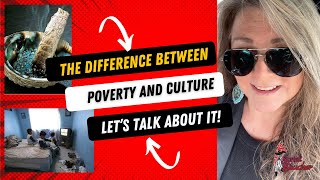
A short YouTube talk by Sandi L Boucher (Red Thunderbolt, Loon clan, Seine River First Nation) distinguishing poverty from culture in Indigenous communities. Boucher uses personal anecdotes (single motherhood, low-income housing, lawn fines, window coverings) to show that many visible conditions attributed to "culture" are instead economic hardship, and she contrasts those with genuine cultural practices (spirit plate, feasting, care of sacred items). The piece ends with a request that observers consider poverty before assuming cultural explanations.
Chapters
This one's going to be different. This one is going to be difficult because I'm talking about the difference between poverty and culture. Because way too often people get them mixed up, including the impoverished. I'm going to take my best shot at explaining the difference to you. So let's talk about it. Sam. Bonjour. Mishko Pogginon. Hi, everybody. My name is Sandy Boucher. I'm Red Thunderbolt, woman of the Loon clan, a proud member of Seine River First Nation in Treaty 3 Territory in Northern Ontario. And today, handy dandy index card. I want to tackle the difference and explain the difference between poverty and culture. Because way too often observers of the non Indigenous variety look at our communities, look at our homes and assume culture instead of poverty. And so often it's poverty. But I'm going to go to the other side of the feather for a second. And we all know what I mean by that image, please. Wonderful, amazing videographer. The eagle feather. So one side representing Indigenous, the other representing non Indigenous. In this context, I only say use it. Half of it's you, half of it's whoever's you're talking to. Don't cross the line. Let them walk their path. You make sure to be doing good things on yours. So many Indigenous people that I have encountered in my travels of many, many, many years confuse poverty and culture. They believe poverty is almost something to be proud of. What they're doing is confusing poverty and humility, right? That there's some, and it's all the stereotypes about people with money. And the only way you have money is if you rip people off and blah, blah, blah. And how absolutely convenient for the Canadian government to keep us impoverished. If we keep up with that mindset and stay impoverished, then we are in their total control. And like, I mean, I wish I was in a room with you, a room of Indigenous people. And I've done this before, I've asked them to put up their hand if they think the federal government is their friend. Nobody puts up their hand. Well, guess what? Too many of us are dependent on social assistance. As if that amount couldn't change at any time. The government could just decide, you know what? I think it needs to be a little lower. And there's a whole bunch of people that said we would never let them do that. It could still happen. We're seeing in the US they're talking about eliminating social assistance or no, the, the elders supports, right? It could happen. I don't know about you, but I'm not depending my livelihood on the Federal government. I know that's not my friend. And I'm giving them, I'm not giving them that much power over what I get to eat today. Now the difference you can have a healthy bank account and be humble. Humble in my mind is acknowledging that I have a lot to be grateful for. I have a lot of amazing things in my life and none of it I got on my own that I would not be doing this work if a million people before me didn't believe in me and hand me a microphone and asked me to help their community, their staff, whatever the case may be. Humility is understanding them. With a gift comes responsibility. And that the work I do comes with a very heavy responsibility to be honest and authentic and always to be focused on the people I'm trying to serve. That's humility. Teaching it has nothing to do with the size of your bank account. Now if you come into a lot of money and you start buying all this stuff and start acting like you're all that in a bag of chips and better than the person next door, there is zero humility in that. And that is a problem. The lack of poverty is not the problem. Your attitude is the problem. Your ego is the problem. So poverty is not our culture. Poverty is not humility. We're going to be crystal clear on that. There are. Do I want to say affluent? I think in the case of a Soyuz, affluent, First Nation community. Right. Six nations community. Do they still have problems? Absolutely. Are there people in that community that are impoverished? Absolutely. Like any other community, there's nothing wrong with having money. And actually yes, you can make money without ripping people off. In fact, that's why I started my own business to prove you can be indigenous and successful. To be Anishinaabe and successful. So poverty, humility, culture, different. Poverty is not our culture. Poverty is not humility. Now I'm going to give you for the other side of the feather now. So the people, the non indigenous people looking at indigenous and judging us and not realizing that. 90. No, I'm not going to give her percentage Again. I like saying a high percentage of what you're seeing is poverty, not our culture. So just to give you some context here, I'm going to use a personal story. When My kids were 3 and 1, my marriage ended. I became a single mom. Eventually, after being incredibly impoverished and trying to pay rent, I was working full time. I continued to do that. I ended up finding housing. Finding housing in a low rent housing project. It meant that and it was rent geared to income. So it Was based on my income, but it also meant that I could buy crazy things like food. So. But there it was tight. Kids are expensive. And I had a two story townhouse. There was the three bedrooms upstairs for me and my kids and the main floor was the living room and the kitchen and a basement with the laundry room. So it was a half of a duplex or a side by side or whatever you call them in your area. I can remember that in the summer there was no air conditioning. That would be a luxury in the summers. The second story would get super hot. And my kids are up there trying to sleep. I'm trying to sleep. We all. They need to go to school and be able to function and learn. I need to be able to get them to school and get to work and function and learn. A good night's sleep was imperative. We were not going to be able to do this without it. So I did the ever popular trick of putting tin foil in my windows to reflect the sun back out to try to make it a little bit cooler. All well and good, but years later, long after my kids were older and I had long moved out of that, I was on the social media one day and I heard, saw a comment. Didn't hear it, Read it. Saw a comment about those indigenous people. Pretty sure they didn't say indigenous and how, you know, we just, we do ugly things. We hang towels in our windows and we hang, we put tin foil. Like we don't realize how ugly that is. Did I comment? Of course I commented. Give me a break. Of course I did. And I pointed out, for the record, realize how ugly it looks. Absolutely. But buying curtains is a luxury we just couldn't afford. Right. If someone's not using that towel, it comes in handy. And if tinfoil means my kids get to sleep tonight so that they're not going to be grumpy and a pain in the butt to their classrooms and teacher tomorrow and I get to go and earn another day's living to try to feed them. Then you could deal with my windows looking ugly because I'm not trying to do it to annoy you. I'm trying to survive. That's poverty, not culture. Another one that bit me in the butt. While I was there, there was a little piece of lawn. When I'm in the width of the house and extended out maybe 12ft. A little backyard that no one cared about because the kids ran back there, they destroyed the grass. So that was fine. But we were expected to keep the lawn in front of our townhouses mowed I don't even know what a lawnmower calls costs nowadays. I don't think I want to know. But back then, to get a lawnmower would probably cost you about 400 bucks. Not any money that I had. But my neighbor, who was a total complete sweetheart, owned a lawnmower, electric lawnmower, so it wasn't going to cost her anything. I would plug it into my outdoor outlet when I used it, and she was nice enough to let me use it anytime I needed to to cut that front piece. Now, here's the funny part. The cord was only so long, so in the farthest away corner, it was actually the corner right by the house, there was this triangle piece of lawn that I couldn't reach, so it just grew. We started joking around that that was secret grass, so you couldn't cut it, right? You gotta joke. You gotta joke about this. Well, as it turns out, I ended up getting a fine from the city in the fight. I. I knew this was going to happen, and it was because I wasn't mowing the entire lawn. And I actually called the city and explained to them, you know what? I. Lawnmower costs 400 bucks and your fine is 80. It's cheaper to pay the fine. I'm doing the best I can. Didn't argue it, paid it. I didn't do what I was supposed to do. I didn't load the entire lawn. But that's poverty, not culture. Yet I've heard so many people point at us that we don't look after our homes. We have broken windows. We don't mow the lawn. Do you know how much a pane of glass costs? My son broke one as a teenager. Trust me, I know. Racism is what blurs the line and what I need you to do. And the people watching my videos, I know you do it, but I need you to encourage your friends and family to do it. The next time they want to assume culture, ask them to consider poverty, because that might be what they're seeing. I mentioned in another Villain. Villain. I can talk today in another video, my teachings of not stepping over someone's shoes. That's culture. Culture is what we call a spirit plate. So when we're having a gathering and a feast, we take a little bit of every single food and put it on a separate plate. And after the event, that food is taken out and put in the bush. That's for creator. That's for our ancestors. All the people whose spirits we hoped joined us at the gathering. We want to. To feed them and feasting is another thing. With our sacred items, it's a ceremony. Some people perform it, minimum once a year. Often, probably most often twice a year. Some people do it every season. It is how we take care of our sacred items. Not something I'm going to share publicly. Because that's the kind of teachings you learn when you're gifted sacred items. So all I'm asking is, in the future, don't just assume because it's different and something you would never do, that it's our culture. Maybe it's got everything to do with economics and not whether we're indigenous. Food for thought. Until tomorrow. I love you. Take care. Bye. Bye.
More from Sandi

How I Handle "The Four Uglies!" (Alcohol, Diabetes, Healing & Cheap Seat Comments)


All the Stuff We Don't Talk About with NO SHAME! (WMT Podcast w Antoinette Godin)


When Authors Chat ... (Radio Interview for the Launch of "Copper Stone - Glimpse of Blood Memory)



MORE PROOF of Indigenous/Non-Indigenous Relationships that Work! (Walking My Talk w Millie Gormely)
