The FIRST Essential Step to Reconciliation!
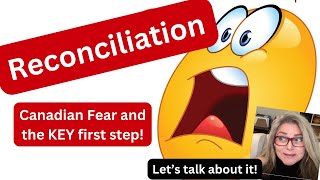
Sandi L Boucher, Anishinaabe from Seine River First Nation, argues reconciliation starts with relationship-building, not just studying history or seeking compensation. Drawing on 16 years of cross-cultural work, she uses an abusive-relationship metaphor to explain why both sides must want to restore the relationship and do the healing work first.
Chapters
I'm going to get myself into trouble today with this video. I just know it. But based on my work, based on 16 years of working with a variety of teams, whether it was Canadian corporations or First Nation communities, based on countless conversations I've had, I think there's a conversation we need to have or something we need to realize. And I am going to get crucified for this one. But let's talk about it. Bonjour. Hi everybody. My name is Sandy Boucher. I'm Red Thunderbolt, woman of the Loon clan, a proud member of Seine River first nation in Treaty 3 territory in Northern Ontario. And I have the honor and the privilege of working with first nations and working with non Indigenous Canadians that are interested in building relationships with each other. Now, I know September 30th just passed and that is a day that must always remain. We must never forget our history. We, we have to hang on to it and learn from it. In the words of the amazing Senator Murray Sinclair, who we recently lost, or it seems like recently, that is so important. But for many people, even the people that know the history it is today and tomorrow, they're worried about. And I absolutely believe with everything in me, the missing link that takes us from truth to reconciliation is relationship. And I know that can be uncomfortable. And I've been doing so much work over the last 8, 10 years with non Indigenous Canadians, helping them to understand truth, helping them to learn about Canadian history as it relates to what happened and what was done to Indigenous peoples, families and communities and what continues to be done. Let's not pretend this is all in the past. And I've worked in First Nation communities helping people to heal. That's the truth part. And there's. That is amazing and important work. But I have also come to understand that studying is safe. For non Indigenous people to take a course to learn about what happened without ever engaging with Indigenous people is safe. Right? You can learn about whatever you're learning about in the comfort of your home. There's a really good chance if you have any kind of emotional reaction, you can either deal with it on your own or just deny it and push past it and ignore it. Not healthy, but you can do it. But I don't think a well educated on history Canadian population is going to bring us together. This is the part that's going to get me crucified. It's the other word, reconciliation. Now, for those who have followed my career, and there's a really good chance you haven't because most of my viewers are new so I'm just going to reiterate this for the newcomers. I am a 10 year domestic abuse survivor and I have long used the metaphor of an abusive relationship to describe the relationship between Indigenous peoples in Canada. It is and to a large extent still is an abusive relationship. Reconciliation causes a lot of stress for a lot of people, non Indigenous Canadians. I, when I use the word, there's two super common results. The what the heck is that panicked face and the how expensive is this going to be concerned financial management face. I get it. I so get it. But let's put Canada and indigenous people aside from and use the metaphor of an abusive relationship. And in this case trigger warning. I'm going to talk about a domestic violence situation. So the violence has happened. We're not going to go into the details of that. The partners in this case, let's go with husband and wife, let's not make this any more complicated than we need to. And yes, there's many, many situations and you know what I mean. But in this case, husband and wife have split apart. Husband was abuser, wife was the abuse victim. What it will take for them to reconcile is as wide and as varied and as different as the people involved. But the first key to reconciliation in my opinion is wanting to, wanting to put the relationship back together, wanting to put the family back together, wanting to continue a relationship, wanting to work together. And I think that's a missing ingredient in many reconciliation conversations. I see a lot of incredibly angry and incredibly demanding Indigenous voices. And do not get me wrong, the justification for being angry and demanding is there, but demanding is not going to reconcile a relationship. Not wanting to reconcile the relationship is not going to reconcile the relationship. So I think we have to be crystal clear here. If you are an indigenous and I don't know if this exists, but it very well could be, could exist if you are an indigenous community that has zero interest in working with Canadians and you just want the, the I can't think of the word right now. You want whatever it's going to take to make up for the past, then own that and say that. And by the way, I hate to tell you this, I don't think anything Canada can do can make up for the past. There is a huge mindset shift that has to happen when you get into the realm of forgiveness. And I know what I'm talking about because I had an abusive partner, several of them actually, and one of them, actually two of them have now passed on and I didn't hate by the time they had passed on I didn't hate either of them because hating them kept them in my present day. Now we had relationships, a different kind of relationship. It wasn't the relationship we used to have. We acknowledged we had both changed. We found a way to respect each other in the new form of our relationship and we pretty much kept our distance. That is not the relationship I want to see for Canada and indigenous people. I had. I just have to share this. I had the most interesting conversation last night with a person that will remain nameless. This person totally had different views than me. Not totally, but a lot of different views. And we didn't get into a ton of details that would have been a seven day conversation. But it was pretty obvious they looked at things differently than I do. But it wasn't an argument and it wasn't a disagreement. And I didn't walk away from the conversation hating them because at no time did they criticize me, condemn me, or look down on me for what I believe. And I hope they can say the same thing. I know they can. And instead, it was a lot of tell me more. We acknowledged we come from two entirely different backgrounds. And he would say something and I'd be like, I'm not sure I agree with that. And I would say something and he's like, interesting. Never thought of it that way. And that's the kind of conversation it was. That was a conversation that I hope we can replicate a million times in Canada to bring us together to reconcile. Because our communities were decimated and the challenges you see in our community. And when the flower doesn't bloom, you fix the environment. The environment needs fixing. But then I'm 61 years old and I definitely own. I'm looking at this from more of an elder's lens, but oh, my cat's singing in the background again. Of course she's not getting her loving, but I'm not. And this. I got to be careful how I say this. I am more concerned about the future than I am the past. Because was that horrific? Yes. Do I want to minimize it? Absolutely. No. We also survived it. We were stronger than that. Blue, what are you doing? She wants to join the COVID I guess this is a conversation too. We definitely come from different backgrounds. You think so? Is that so? What a cutie. What a cutie. Patootie. Yes. We're talking about you. Anyways, back to the conversation. I am more concerned about what's going to happen or what is happening in indigenous communities today and what's going to happen tomorrow than I am about the past. Learn that. Learn from it and change the relationship. But if we get caught up in what you owe me, there is no reconciliation. So. And I know I'm getting kickback on this because some people want to focus on the reconciliation. And in my humble opinion, those people need healing. They need the support to deal with the anger and what happened to their families and the trauma that they endured. And that's not something Canada can give them. Canada, you can definitely stand up and make sure they have the supports and the counseling services and the educational opportunities and the whole bit. But Canada quit screaming that we need jobs because so many Indigenous people I meet are not emotionally or physically able to do a job yet. The trauma is too great. So get them ready for the job market, not by job skills, but by giving them the healing they need. I think if we focus on building a relationship that is respectful of both parts, we will get to reconciliation. Because as part of that relationship building, we will have the conversations about what we need from Canada. And it's a better relationship. It is not the paternalistic relationship. It's not the looking down on Indigenous people. It's not the disregarding of our wisdom and our knowledge. But as long as we're in demand mode, there can't be a relationship. And I think we both lose Indigenous and non when there isn't. I'm getting crucified for this. I know this. But I have no interest in crucifying anyone for something they did 20 years ago. Are you exactly the same as you were 20 years ago? I hope not. I know I'm not. And I have no problem with apologizing if I hurt someone 20 years ago, but I'm not that person anymore. And do I have to make amends in some way? Well, if I do, let me know. Let's talk about it. Because I'd much have a much rather have a relationship with you now than to be locked into the past that didn't serve anyone. And yes, we can argue it definitely served some people. I get it. I get it. The systems were set up to exclude us. I don't want to miss out on the relationships I have met as Anishinaabe Kwei, who knows the full weight of oppression and discrimination and racism, abuse and the nine yards. Right. And not like that's in my past either. Every now and then it comes up in my future. But you know what else comes up? Or in my present, I should say, but you know what else comes up? Amazing people, Indigenous and non, who are so much more than Indigenous or non Indigenous and we start and we share. We share honestly what we're bringing to the table and what our concerns are and what our fears are. And they have fears too. Non Indigenous people need safe spaces too. It's not just a given. My career taught me that. So we can't just stay learning about the truth, the truth of the past, because that won't get us anywhere. But jumping to reconciliation is some people. That's the easy route, right? Okay. Build a monument and write a big check. Are we done now? No, we're not done now. That's not going to work for anyone. Because if we're still excluded, then the harm is still happening. And when decisions are made that what's going to happen in our territory and we're informed about it after the fact, that is an example of the harm continuing. But if we build real relationships, then maybe finally indigenous are in the room when the decisions being made, not after the fact. And I'm not talking about one or two MPs or MPPS. I'm talking about a real relationship where we actually work together and one group doesn't benefit the harm of another. And different values are okay. Difference is not scary, different is exciting. And we have wisdom and knowledge that Canada so needs. So what do you think? Don't, don't yell. Don't call me nasty names. You can disagree, you can tell me your perspective that I'd love to hear, but let's keep it civil because that's how you build relationships. I'm terrified, but I'm going to say it anyways. Until next week. I love you. Take care. Bye. Bye.
More from Sandi

How I Handle "The Four Uglies!" (Alcohol, Diabetes, Healing & Cheap Seat Comments)


All the Stuff We Don't Talk About with NO SHAME! (WMT Podcast w Antoinette Godin)


When Authors Chat ... (Radio Interview for the Launch of "Copper Stone - Glimpse of Blood Memory)



MORE PROOF of Indigenous/Non-Indigenous Relationships that Work! (Walking My Talk w Millie Gormely)
