The NEW PATH Podcast - Introductions & Why
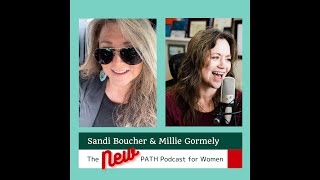
Podcast episode featuring hosts Sandi L Boucher (Anishinaabe/Ojibwe Red Spirit woman, author/speaker/consultant) and Millie Gortmoly (CFP, former weather broadcaster) introducing themselves and the goals of their new show. They discuss personal backgrounds, friendship history, cultural identity and reconciliation, empowerment (especially of Indigenous women), work/time philosophies, financial independence, authenticity, and the podcast’s four-part episode structure (introductions, themed discussion, book recommendation, quote/resource). Tone is conversational, personal, and candid.
Chapters
Do I look okay?
You look phenomenal. Yeah, I've never seen you look that. So whatever. Whatever.
Yes. And this is why I don't face the world before like 9am I just don't.
Because you know what that reminds me of way back when? Now. Now I get up at 5 in the morning. I get up ridiculous. Early, early. But back in the day, back in the day when I was married, I was one of those people that like and think a lot of us do it where I work like ridiculous hours. So during the week you're getting like five, four hours a night. And then on Saturday and Sunday you kind of try anywhere near me before noon. Yeah, you're die Right. So one of my husband's friends showed up this one Saturday at like my ex husband got up early.
Yep.
And his friend showed up at like, I don't know, 7:38am and they're like talking in the living room and our bedroom was right upstairs and I came downstairs and my husband just looked at him. You come here this early, you deal with like there was no way I looked professional or anything. And I was like, I don't care. Why are you in my. Why are you talking? Right.
I don't. Yeah, I had a similar thing happen a couple of months ago. Saturday morning, I'm in bed, I think we were out fairly late the night before too. So I was in no condition to be functional or anything. And the doorbell rings. Nobody ever rings the doorbell anymore. I mean that's just a, just a thing. And so Sean goes to the door and he opens it up and it's a friend of ours that I hadn't seen in ages, but apparently he had seen the night before. I did not know that. And she was like, oh, she's yapping at the door and they're having a little chat and I'm in bed going, why is she here? Am I going to have to be expected to get up and like talk to her and you know, do this kind of thing? And she says, yeah, and I brought an accordion for you. Apparently they had discussed this the night before. I'm like, you came to my house at 8 o' clock in the morning on a Saturday with an accordion.
Who does that? Okay.
No one. Right, right. I mean, without context, it made zero sense to me. And I was a little sleep addled to begin with, like very. It was just weird, weird, weird, weird.
I just lost my post it note. Could you tell that look of panic on my face?
So I'm still shuffling stuff around my desk because I just have, well, this. It's the classic zoom situation or, you know, camera situation. Right. Where everything from here up looks reasonably professional and well angled and all that kind of thing. There. Let's fix that. But when you look down at the desk, it's a whole other animal of like. Yeah.
You know how many times I. This is how I discover what the cats have knocked on the floor behind me. I don't know how many times I turn on the camera and what is that?
Right. Yeah. Oh, yeah, for sure.
And it's made it into videos because I didn't notice fast enough. It's like, yes, that is a random cardboard box. Don't you have cats?
Right, Exactly.
They are all cat toys. I'm sorry. They can't just be. Be recycled right away. They. Oh, no. Put in their play time.
That's right. They have to serve their time. I had an egg carton on the floor in the kitchen for about a week.
Right.
Because. Because it's not mine anymore. It's hers.
That's hers to play with.
And when she's done with it, then I could throw it in.
Exactly, Exactly. This is the rules. We know these rules.
House rules. Cats. House rules with cats. If the cat is in your lap, you do not get up.
Yep. For anything.
For anything. You know, unless it's an absolutely desperate bathroom situation. Then you're allowed. And then you'll still get filthy looks if you do that. But yeah, that's. That's basically rule number one. So if you're living with someone of the human persuasion and you have a cat in your lap, the rule is they must wait. On your hand and foot.
Yes. Yes. How mean are you? Right. Who would do that?
What kind of a monster?
Right? Okay, let's do this.
All right.
I am so freaking excited to do the New Path podcast with you. Really? I don't know about you, and I guess I'm gonna ask this first. Like, I do a lot of videos, I do a lot of events and seminars, and of course I get excited. I love my career. I love the people meet. But for some reason, I don't know what it is yet. I was really excited about doing this to the point. And I think you'll know what I mean. We're excited. Almost scared.
Yes.
Right?
Yeah.
Right.
It's that fine line between anxiety and fear and excitement. And you're not entirely sure where it's.
Landing because excitement and anxiety feel the same. Right. It's. I feel it in my stomach.
It's that butterflies in the stomach kind of thing.
Sleep. Word. And I think. I think this is the guess. Like I said, I don't know the reason yet. If it ever lands on me, I'll be happy to share. But I think it's because I think our conversations are not only going to resonate with so many people. They can help. They're gonna help. Right? With. Oh. Seeing how. Right. Seeing how real we are.
Yeah.
Hearing we're gonna. That we laugh through our challenges. Because I know we both do that. That we have them.
Yeah. That we don't admit to them.
Right. And. Well, that's the other thing. That no matter what we have or what we've achieved, we're real.
Yeah.
Like, this is it. Human muppet. This is where you get in a video in a coffee shop. Miller can attest to this. We've done coffee shops. I'm the one that sends the email, the subject line. I've got a crazy idea, and I'm.
The one who jumps on it. Right. Right away going, I love it.
Right. Right. So, yeah, I just think this is going to be amazing. So I thought we'd start off with something fun. And I didn't tell you about this, and I'm sorry.
All right, lay it on me. What do you got?
Okay, so obviously first we have to introduce ourselves because there might be some people that are watching this because they follow my YouTube channel or they used to watch the old Path, which we also asked that. Now, I'll save that for the book in the seminar. It's not the podcast or it's your amazing social media following, because I saw the reaction to you, your post on Facebook and I was like, this woman is known by many people, which totally doesn't surprise me at all.
Well, it depends on what I'm posting. If I'm posting a food video or a cat post. Boy, do I get likes and recognition from that. But, yes, when I posted the. The little. The little promo of. Of this.
Right.
Of the Path podcast, just. I just put up the logo that you sent to me the other day, and all of a sudden, the likes started rolling in. It's like, okay, this is. I like this. This is good. Right? There's an audience for this. People are interested in what we have to say together.
I looked at the people.
I was totally creeping your Facebook. You're creeping my Facebook.
Totally owning it. Real. And I didn't know the names, which is exciting. So it's not. There was, like, a couple that we have mutual people in common, but the fact that we both have two entirely different audiences. Is exciting. Is exciting. Right. So what I thought would be fun, you agree? Never. Never. So I thought I would introduce you.
Okay.
As I see you.
Oh my.
Then. And then I'm going to totally turn it over to you and you can feel free to adjust, correct. Add to whatever you would like to and then you can do the same for me. How does that sound? Okay. So this should be fun for one. Okay. So I suck at math. I'm not even gonna own that. I can't do mental math even with an adding machine. It's debatable. So I have no. Long, no idea how long we know each other.
Day. It's. It's 20ish.
Yeah, like, it's a lot. Like, I'm just like even sure where I was living or not living, where I was working. But it was long before I left for Toronto. It was long. Which means, like I didn't start this company until I moved back from Toronto.
Okay.
And I've been doing this for 15 years.
Okay.
And I was gone for five.
Okay. So, yeah, I'm not entirely sure either because my. Some of my earliest memories of meeting you and meeting with you were with the old Thunder Bay business women's network.
Wow.
Right. And that's the dearly departed. You know, may it rest in peace.
Yes.
But. But yeah, that's. That's going back a long ways for sure.
That's a long time ago.
Yep.
So like so many people in the Thunder Bay area district, which is where we both live, I first became new of you because you were the weather girl.
Yeah.
And I loved you then. And okay, so total fairness. New people kind of hang on to your desk for a second. People that follow my career know I'm a 10 year domestic abuse survivor. So I wasn't in a good place then. And I really admired empowered women. Right. Like I, I think in my mind it was a lot of how in the world, like, how does she do that? How is she so confident? How is she her? And that's the impression I had of you doing the news. Because even though I'm certain there were rules and boxes you had to live in, you came across as real. You came across as authentic. I actually believed you could live next door, so I loved that. So I loved you long before I even knew you. And then I'm going to guess like Thunder Bay business woman's network. We definitely hung out, definitely talked finances a couple of times. But I swear to God, you know how like when you have an earthquake and the earth is like that was like, my financial stability back then. So in April, I'm talking to you because I think I could come up with a plan by June. It's like, it was not gonna happen. And full disclosure to people watching. Millie is my financial advisor now. All of these dreams I love renting and raving about Millie helps me make those happen and actually helps me believe I can do them. So we've just stayed in touch. Like, I mean, it's not like we see each other often. No. But when we do, like, it's like, hey, how are you?
Exactly. This is one of those. We pick up exactly where we left off, 100%.
So that's how I know Millie. She's an amazing financial advisor. She's a great friend. She's awesome. And that's why I asked her to go on this crazy train with me that is called the New Path Death Podcast. So over to you, Millie.
Oh, my God. Okay, so, Sandy the Wet. So my first memories of her were of you doing a presentation. I'm sure some. Some little legion or hall somewhere in the. In the bowels of Thunder Bay. Entirely possible. And I just remember you being so. So passionate about what you were saying, just. And just having this. This. This. This inner fire that was coming out and that you were. And you were so in your indigeneity, for lack of a better term. Right. I mean, that's. That's. You've made that the. The core of who you are, and you've put that out for the rest of us for so long in a way that's so unapologetic and so powerful that it's just this. This woman is interesting. You know, I really like what she's got to say. I really like how she's. I feel like my mic is getting out, but I think it's my headphones. But I really just feel like she's. She's got it figured out, you know? I know, right? Because. Yeah. And you're. You're saying I look confident on camera. I know, exactly. I did not figure. I did not have my figured out when I was on camera either. I was winging it 99 of the time, so. So, yeah. I mean, and it's interesting how we can be vulnerable with each other now. And I'm sure that when we met, there was probably some part of each of us that recognized the authenticity in the other person.
100%.
Right. That's kind of where that. That core of it is.
Yeah. So. And again, people who follow my work, no surprise here. So I had to do a lot of unpacking because I've come to realize being indigenous and feeling like you're either not accepted or not going to be accepted by people who aren't, in some cases is 110% true, and in some cases is internalized oppression. It's an assumption I'm making because I'm not there yet and I'm not comfy with who I am. And. And. But if you haven't figured out yet, viewers not indigenous. And one of those relationships.
Yes. The old. The old, old, old term was pale face. And I am not.
I just got back from Mexico. I'd be way more pale.
It's. It's winter in Canada. Everybody's bail.
Right. But this is one of those places. And I'm actually going to be doing one of my videos on it. An idea that just came to me. Millie's totally not surprised.
Write it down, write it down.
Right? I did, I did. But how. There are so few places. And really trying to stress this for people who are not there now. There are so few places where an indigenous woman can just be an indigenous woman. As blunt as we are, as free funny as we are, as I. Okay, this is going to sound bad to some people, but I know I was down in southern U.S. so this really got highlighted for me where a lot of women are taught to be ladies. Right? Be ladies. And to me, it was like, okay, for one, that didn't happen. For two, I'm a warrior, not a lady. So, like, get away from me. Right? Don't like the. I was thinking about this this morning, too. So there's Emily Debaker. That's what her name is. She's a legal influencer on YouTube. If you. She, like, makes sense of the legal cases that are going on often in the States. But her intro to her videos, she says, and by the way, I'm a fan of the cursy words, which I think is just the cutest sentence ever. And I know we're both sand sens curse.
Yeah. So I'll have to behave myself if we want to not have the algorithm.
Punish us right out of the YouTube universe. But that's part of that being real. And I don't. Okay, I'm gonna go off. We're gonna go off on many tangents on this show. Just.
Just be patient with us, especially with this first one, because we're just. We're just feeling out this. I'm sure at some point we'll both sound polished and professional, but today is probably not that day. So as long as we can all accept that and just go with it and. And just. Yeah, enjoy the ride. You know, finish holding your laundry while you're listening to this.
And they call me optimistic. I don't even have that as a goal. That's so funny. But what I was going to say is, and I'm really curious if this has ever happened to you because you happen to be female as well. I use. I can't even count how many times I used a cursy word and had some guy get mad at me because women or ladies don't use those words. Does that ever happen to you?
Yeah, Yeah, I would say that. I mean, you know, my poor dad, for one, he would. He gets his look on his face every time he hears enough bomb come out of my mouth. And, you know, I. I get that because, you know, that's. That's his little girl. And that's. So that's slightly different vibe. Right? But, yeah, I. There is this. Certainly there has been this expectation that women are supposed to have it together and to be. To control their emotions. And when you're. When you're letting f bombs fly left, right, and center, that does suggest that you're not entirely in control of your emotions. So I can see where that. That vibe comes from. And at the same time, it's like, well, how come you're allowed to lose your stuff and I'm not? What's that about? You know? How's that.
Did you catch that? People lose your stuff.
Subtle.
That was amazing. I am so proud of you. Did anyone think you meant the word stuff?
Hey, I have got a whole set of. Okay, so you know how when you're. You're typing out swears and you use, like, not. Not emojis, all the asterisks and stuff? I. I have specific spellings of those asterisks that I use for specific words. So it's like code. It's even better.
I want to start texting with you. I can try to figure out the codes. I know which one she meant.
Dollar sign, hashtag at exclamation point.
I think I know what that is. That's the one you just use stuff for. Yep. Yeah. Okay.
That's amazing. But, yeah, I mean, there's this whole thing about, you know, women shouldn't swear there. Yeah, I. I get that. It's. It's. It's not professional to be seen to be losing control of your emotions.
Well, and there's another thing, though, and I now. Now it's really hard for Even me to remember who I was. Because now.
To me, right, you're not that good little corporate soldier that you were long, long ago.
Right, Right. But I want, I'm not intimidated. I'm not like shy and submissive and all makes me nauseous. But how many people assumed. And again, I don't know if this happened to you, but it really used to bug me that I'm out with a group of friends and I use a cursy word and suddenly people assume that I don't know not to do that at church or at work. It's like, do you kiss your mother.
With that mouth kind of thing?
Right? Like, it's like, hello, Hello. And now when someone, the other one I used to get is comments on how I dress and it's like, you know what? 59 years old figured it out. Well, I need your help getting dressed yesterday.
Well, and that's one thing I wonder a little bit too is, is a lot of just confidence and, and being comfortable in your own skin and not caring that other people think how much of that is purely a function of getting older and realizing that other people don't think of us nearly as often as we think they do. Like when you're 14, 15, 16 years old, you're constantly in this, this fear state of everyone's looking at me and everyone is wondering what I'm doing and everyone is judging me. And once you start getting on to 50 and beyond, you realize that no they're not and no they don't. And you know what I freeing this.
Is the, the confidence I have now matches the body I had.
Oh man. If. Right, right.
And the thing is when I have convers now, okay, I'm single, Millie's long time married, so different perspectives here. But when I talk to different guys and they honestly think like we just have so many misconceptions about each other, it's ridiculous. Yeah, they honestly think that at 17, 18, well, there was a good chance we looked effing amazing, that we were confident. I was the most insecure ever. Like, did I laugh too loud? Did I laugh too? So did it sound silly? Like you know this.
I can get like exhausted just thinking about all the energy we put into that. Right. There's nothing, there's nothing more anxiety ridden and fearful and self conscious than the teenage girl. And there's nothing dumber than a teenage boy. No offense guys, but you know, it's true. A 15 year old boy is just, that's at their peak of dumb and they only. There's only upwards to go from there. And then you've got teenage girls trying to figure out how to mold themselves to appeal to teenage boys who are the dumbest creatures on Earth. Yes.
Oh, and it's not even teenagers. I mean, I was married three times. Three different times. I became a totally, completely different version of Sandy, trying to be who they wanted me to be. And I'm not even going to say they demanded it. That was the path I chose.
That's right. And even conscious, too, like you. Well, some of it is, anyway. I mean, it's. It's. Yeah.
Subsuming. Yeah. Well, and here's the story for you. This was like one of those, aha, eye opening, my path just changed direction moments. I had my last husband and I. So horrible, whatever, had just split up literally like within weeks. My daughter was still in high school. She came home with a friend, right? Like coming after school to do homework, whatever, and then walk in the house. And I happen to be in the kitchen, which, okay, rare sighting. But I was in the kitchen, probably making coffee. That's as close as I do to anything in the kitchen. But I had music cranked and I was kind of dancing as I was doing whatever I was doing in the kitchen. And my daughter's friend looked at her and asked like, what the heck's with your mom? Right? And my daughter, now, this still blows me away. My daughter, without batting an eye, without missing a beat, says, oh, that's my real mom. But you only get to see her when she's single. Oh. Oh, wow. Like, holy crap.
Very insightful. And, yeah, devastating that, that she was like, that's.
That's the woman that raised me. Like, that's. That's my mom. But you don't get to see her. And I was like, and that's the example I'm sending for my daughter, right? Realizing it was my daughter saying it.
I'm. I'm just really impressed with your daughter that she was so aware of and able to articulate that in that moment too. It's just like, bang.
Yeah. Another misconception that we can hide anything from our kids. Trust me. Trust me. You better just talk about it because know. They know they.
Here's the thing. I do not have children, right?
I have a cat.
I have nieces and nephews. That'll do me. But I genuinely think that as a society in general, we do not give kids enough credit. Even very little children. They see more than we think they do. They know more than we think they do. They observe a lot. But they internalize it. And when they can't, when they don't have the words or the ways to express it and deal with it, it stays inside and it comes out in some fashion. Some therapist coach or something, with any luck. But, yeah, little kids. Little kids see a lot more than we think they do.
And that reminds me of that quote I read a while ago. It was talking about children who were abused. Right?
Yeah.
And they were saying, like, your kids don't grow up to hate you because you abuse them. They hate themselves because they believe they were so bad. That you did that. Yeah, right. That it led you to do that. Like, totally internalizing it. Yeah. I told you. We're gonna go all over the map with this thing.
Then it got dark.
Before we move on, though. God only knows how long this one's gonna last. Oh, it's gonna last a while. And here I thought this was going to be the short episode.
Oh, okay, we're just on the intros yet.
Exactly. And the thing is, I'm gonna lean on my Anishinaabe culture for my second. My Ojibwe culture. Like time limits? No, we go till the conversation's over. And sometimes it's going to be 10 minutes, and sometimes that might be an hour and 10 minutes, but it's like, rather than fitting in that box, because to me, that's not authentic. Right.
So. So.
But I did want it so different.
From the way that I think of time. Right. Time is. Oh, yeah. Well, okay. I don't know if this is a particular, you know, Dutch Calvinist work ethic, Protestant work ethic kind of thing, or it's just me. Or if it's just. See, the thing is, white people are. We're almost used to saying, well, we have no culture because we don't see it for what it is because it's the dominant culture. It's the mainstream culture. It's like very white. Canada has a culture, but we. If those of us in it don't see it, you know, the fish doesn't see the water that it's in. So when I think of time, it. Time is in blocks, you know, on my calendar. And I've got a calendar on the wall over there, and I've got a calendar on my monitor right here, and I've got a day timer on my desk, and it's all about, you know, this thing fits into this block, and when this block is over, then you move on to the next block. And it's very linear and it's very square, and it's just, that's just how time is. Right. So I have to call it clock worship. Yeah. Yeah.
Everything. When that big hand touches the 12th, which, I mean, the younger viewers won't even know what that means because it's not a digital clock.
I've got like a little timing block that I could set up for God. Right.
So if I want that to the.
Cats, if I want to do a specific thing. So if I want to practice my instrument, you know it's a timer. Yep. So you, you turn it on and it blinks for whatever time amount you want to face up. So if I want it to at 60 minutes, it'll be. The battery's dying on it, but it'll, it'll blink on there for a while and then when it time's up, then it will beep and then I know that that time block is over. So this is literally a time block. And that's, that's kind of how I run my life in a lot of ways. And I have to admit that I've found it frustrating when I've been in conferences or meetings or something where there has been an indigenous cultural component and there's an elder telling a story that. Yeah, there's an elder telling a story and the story seems to go on for a very, very long time. And it's just.
Yeah, see? And I always tell my followers listen to the story because it's directly on point, but when you start thinking of the time, you're not paying attention anymore. Interesting. My. I have a daybook. It's just those little annoying hours. They're cute. I highlight them every now and then. But my day is task oriented, which.
Is a better way of approaching it. Really?
These four things today?
Yeah.
I might finish work at 3:00'. Clock. I start at 5:30, so back up. Right. Or I might finish it six if I didn't get my four things done. But I'm getting my four things done because what I learned in that other realm when I was actually in corporate and a boss and with staff and naturally blew my mind when it happened. But I have to give kudos to the staff person who taught me this. You can look really super busy and get diddly done.
Oh, absolutely. That's. That's the motto of corporate Canada.
She was a master. Every time I went by her office. Holy moly. That woman.
Papers everywhere.
Look how many things she's got going on. Never got the report I needed, never got the answer I needed.
And.
And you almost feel guilty asking because she's so busy. Yeah, I fell for it.
Well, that's, that's what a lot of, of modern work is based on. It's based on the time, you know, bum in seat, bum in seat for X amount of hours. Therefore you went to work. Right. And I think that's also the difference between being an employee and being self employed or being entrepreneurs as we both.
There's one I was just going to touch on because.
Right. Because we can work any 14 hours a day we want.
Yeah. 9 to 5ers do not get me.
No.
By the way, here's a hilarious thing. And yes, I realize this is being released March 1, but only today's family day.
Yeah, we're both working family Day. I mean it's a great, it's a great retail holiday. Fine. But it's not, it is not a long standing tradition that I feel I need to, to bow down.
Well. And neither of us have kids at home. Right. And actually I didn't know until last night. A friend asked me, what are you doing tomorrow? I thought it was awesome. He was interested in my work.
Yeah.
So I listed off like the four things I'm accomplishing today and he comes back with it's family day tomorrow. And I was like, oh, that's cute. I, I, I vaguely remember those stat holidays. What they mean is I get to work without email interruption.
Yeah, exactly.
No one else is working.
Well, and this is the thing too. When you're self employed, you know, worky, you know, ET. So when you have a job and there's a stat holiday, you're getting paid regardless of what you're doing. And you know, I'll admit that that was one of the nicest things I liked about having a corporate job when I did back in the day because they paid me every two weeks whether I deserved it or not. Some weeks I deserved it double and some weeks I deserved it not. Yeah.
And then the flip side of that was, and it didn't happen when I got to the top of the food chain, but when I was like middle management, you could be killing yourself and someone in the same position is doing diddly got paid the same.
Yeah.
And I think that's when I first started really leaning towards entrepreneurship. It's like I'm going to decide the size of my bank account and I'm going to get compensated for how hard I work. Right. Anyone out there who thinks going into business is just easy breezy lemon squeezy, you work two hours a day.
I have a couple of cursy words for that.
She could type those out. Yeah. Okay, so what can I use for.
To represent a B and an S. Yeah, exactly.
I know what we're doing. Oh, God, that's amazing. Okay, before we move on, do your formal introduction, because people should know who you work.
Okay. For me. All right, so my name is Millie Gortmoly. I am a certified financial planner professional, and I have been in financial planning since 2006. I've been in financial services for over 20 years. And in addition to being a financial planner, which I love doing and I like to think I'm pretty good at it, I also play the French horn. I've been an actor in community theater off and on for. For quite a few years. I used to be on the weather and I used to be on local radio for quite a few years as well. And I am self employed. And I love my life. I mean, I love what I do. I love how I'm doing it. And just, even in the last few years, just the way that my life has unfolded for me has been a lot of change and a lot of change in a good way. So. Yeah, husband, cats, nieces, nephews, husband.
Since the beginning of time, we gotta give you kudos.
Okay. I was 16, he was 17 when we met. And yeah, we've basically grown up together in so many ways.
It's.
It's kind of a. It's a miracle on many levels that we're still together and we still like each other. I tell you, when. When Covid hit and we were first got told, you know, we were in lockdown and you got to be home all day every day, that was. For me, it was actually a tiny little bit of a moment going, oh, how's this gonna go? Because we've never been that couple who are attached to the hip. Right. So there's a lot of people locally that. That know us both that were surprised that we were married, much less to each other, because they never saw us in the same room at the same time.
Yeah.
Because we both had very active lives forever.
I had never seen your husband.
Right, exactly.
Wasn't he on like a cruise ship or something?
Yeah, yeah, he was doing cruise ship work for a while. And so. Yeah, so he's a professional musician, among other things. And he was out and about a lot. So we. We were never in the same place at the same time, but it turns out that we still like each other. How about that? I know, right?
I. I'm so wise enough to create your own spaces. I remember.
Yeah.
And I'm Live alone. And my daughter, actually. And then that was like, right in the beginning. Let's remember how paranoid that was.
Scary.
Way before bubbles. Like, I mean, you isolated.
We were watching our groceries.
Oh, my God. My first birth. Like, we locked down in March. My birthday's in April.
Mine too. Yeah.
And I can remember getting video calls from my kids and seeing my grandkids in a car. It was heartbreaking. But my daughter at one point reached out and she said, you know what, Mom? I kind of wish you were in a relationship. And I was like, whoa. Interesting. Why, right? And she said, well, you know, so you wouldn't be alone, that you would have someone there with you. And I started laughing. I said, for his sake. It's probably best for the greater good. Valid point Racing. That would. Honey.
Oh, I know. Yeah.
Kobe kind of.
Kate brought home to me that I'm actually an introvert for someone who spent a fair portion of her life on stage and in front of cameras and microphones to find. To figure out that, you know, I get my. My energy and my joy and my strength from being alone or for being, you know, very quiet a lot of the time now.
An introverted extrovert.
Something like that. Yeah. I can be an extrovert when I need to be. But when to recharge. Recharging is all about being quite quiet and being alone or just with Sean or whatever. But it's just. Yeah, it's. It's not about. I don't go out to a party in order to feel energy, you know.
Oh, 100.
Yeah.
Exact. Extroverts felt that just imagining it. And people who meet me, like on stage when I'm doing a seminar.
Yeah.
Like, and I always laugh that I have my career because I finally realized, like, I need an entire stage to fit my personality because it is that big. And I finally found a place I could be that big. In fact, I need to be to hold an audience.
Yeah.
But if people knew. And now they will. But like, right after the seminar, for one, I can barely walk for whatever reason. The shoes I was wearing for seven hours standing in front of that audience in the last five minutes. As soon as I say we're done, I realize how uncomfortable there are. Are they are. So I can barely walk to my room.
Yep.
I am ordering room service.
Yep.
I am not. I'm not calling anyone. I'm not texting anyone. I might turn on the TV for some mind numbing tv. That's why I don't want to see. Right. I go, okay. Never food there's the one difference. She actually goes into the kitchen. Kitchen on purpose. And uses the appliances. Not for storage. I have a kitchen because it came with my apartment.
Oh, girl.
I walked through it the way to the bathroom. It. Yeah.
So.
But we're still friends. I watch her posts every now and then and it's like, that does look amazing. And I'm so glad she made it. That's as far as that's going.
Oh, man. But, yeah, but that, that, that, that point where the event is over, you close the door behind you and you kind of go, oh, 100%.
It's like 100%.
It's that taking the bra off moment.
Yeah. Right. And I live alone and I'm not complaining.
Yeah.
I think it is the perfect counterbalance to my career. The fact that I'm putting out a video every single day. I'm putting out and living alone is my taking in sitting under the cat like we were talking about where we turned the recording under is taking in watching another training video or motivational video. And I know some people just groaned. I love that because it feels like I'm taking in.
Yeah.
As opposed to giving out. I'm re. You know, filling up again. Filling up the cup.
Yeah.
We're finally going to get off introductions, but I'm going to take two seconds to explain who I am. Only 38 minutes on introduction. Welcome to her podcast.
Oh, man.
So, Mishko Pagan on Quidim. My name is Sandy Boucher. What I just said in Ojibwe is that I am Red Spirit woman of the Loon clan. I am a proud member of Seine River first nation in Treaty 3 territory in Northern Ontario, and I am 110% Indigenous Canadian reconciliation. So I'm an author and a speaker and a trainer and a consultant consulted. Anything that supports both sides of that feather is the analogy I use. So I work with non Indigenous people to help them understand where they might be working at, becoming their own worst enemy with the phrasing they use or the processes they use that are really going to be uncomfortable in a cross cultural relationship with Indigenous peoples. Or I'm in First Nation communities doing empowerment. So which is a perfect lead in to why I wanted to do this podcast. And then I'm going to turn it over to Millie as to. To explain why she agreed with me, why she agreed to go on this journey with me.
All right.
So for me, it was really rooted in my work. So long before I moved into, morphed into the reconciliation work, I was all about empowerment. If you watch my very first videos, they were all about the empowerment of women. And I now know at, like, a deep base level that so many First Nation communities and nations were matriarchal. The women were the ones who ran the nations. And that's not a power thing. That's like, if you look at the Haudenosaunee, which in English is the Iroquois, if you look at their nations, they had grandmother councils. And what they believe, and still believe to this day is that only a mom or a grandmother could decide if an issue was serious enough for her son to die, serious enough to send the warriors out. And that's why the women, they were matriarchal, because the women understood the price, right? They understood the price tag. But I always say, imagine, and I use an Elmer Flight cartoon when I talk about the settlers arriving.
On behalf of white people.
He's out there in the bush doing.
His thing on behalf of people with speech impediments or staffing.
I just thought, you know what? Instead of making him look like some dark bad guy, he's just here doing his thing, right? He's not really aware of what's going on. But.
Well, and that's. That's probably the bigger part of it. Yeah, it's this lack of awareness and.
Self awareness, but that's what I always imagined. And if you thought you were laughing before, wait till you hear this.
Okay, I'm gonna put my.
I always imagine this little settler dude coming into his first, like, matriarchal Indigenous community and seeing the women in charge with strong voices running things. And the only thing that goes through his mind is, my wife must never meet these women, right? Because think of Europe at that time. Wife look pretty, don't say anything, stay in the other room until I need you, right?
Very much.
So what happened is it became part of colonization, is to destroy that matriarchal system. They put the treaties in the name of the men, they refused to negotiate with the women, and they taught our men how to hate us, and that's missing. And murdered Indigenous women and girls, right? So for me, it was at a deep level. I believe the empowerment of women and specifically Indigenous women ties into my reconciliation work that until we're at a point where we're not talking over people, I'm not talking about attacking, I'm not talking about aggression, but I'm talking about confidence and self determination and assertiveness. So. And the other thing, because it's you. I know that I was one of those women or one of those Indigenous people that really didn't believe for a long time that I could ever just be me in an indigenous non indigenous relationship. Obviously I don't believe that anymore or it would make me the biggest hypocrite going and I wouldn't be able to do my work. Yeah, but I thought with us, I know our relationship and the way we laugh and goof off and even when we're talking about serious things. And I thought what a perfect example to show people that I'm not less of who I am because I'm talking to you like it's the same and it is possible. So that's why I wanted to do the podcast.
Well, now I am, I am honored like truly that, that you feel that level of comfort with me because I'm just, I'm just an average white chick, you know, and I was not raised, I was raised in, in Canada. You know, I did not learn about residential schools in the, in the, in my education as a Canadian kid. You know, I came from a very white, very Christian background and my interactions with what at the time we called Native people were very surface and very. Just other, you know, these are other people, these are not our people. These are not people that we need to concern ourselves with so much because we've got our own thing and they put, got their own thing. And so for me, I mean this to some degree, this is an educational opportunity for me. But at the same time I don't want this to be a burden on you to, you know, let's educate the white person because that is so much of, of what indigenous people, you know.
I'm going to, if you're gonna.
Anyway, I'm okay with that. It's good because if, if by doing that then we can, then we can kind of put these things out there in a way that, and I don't want to cater to, to white people in that sense either because we've had enough time to get our shit together.
That's okay, we'll let that one slide.
But to get our stuff together and, and start thinking about. These are human beings that have been treated horribly systemically for a very long time. And it's not about what we feel about things. You know, white people are very good about, especially white middle aged women are very good at making things about how they feel about something. Right. So I don't, I don't want this to be about how I feel about things because I can do that in so many other places. But if we can, if you and I can kind of get things out There in a way that both sides of the feather can be comfortable listening to the conversations and acknowledging where they are. Got things to learn. Maybe we can do a little bit of good in the world. And you know what?
That's.
That's not a bad thing.
Not at all. And I am about to blow you away. So hang on. Okay, for a second.
I'm a little afraid because I'm not sure what you're going to come up with.
Oh, no, it's a good thing. It's 110 a good thing.
All right.
The way you just described your, like, upbringing, and specifically when you said they got their stuff to worry about and we got our stuff to worry about. I don't know. Have you ever seen the two row wampum? The image.
Maybe? I mean, okay, so.
Yeah, so. And the one I always use is actually a beaded representation of a treaty. For one, that's what the wampum belts are.
Okay.
And two, the one I always use is actually between the Haudenosaunee, the Iroquois and the Dutch. And it's a white belt, and it has two navy blue stripes in it.
Okay.
So it represents the Iroquois interpretation of what they thought they were agreeing to. Are you ready for this? One of the strips of the navy blue beads was to represent the Iroquois ships. The other one was to represent the European ships. And they thought they were agreeing that we will share this land. You do you, we'll do us. You run your communities your way, we'll run our ways. You have things you have to focus on. We have things we have to focus on. We won't interrupt or overpower each other. So now we know that's not how it turned out.
No.
The way you just described your upbringing means you were actually living the original intent of the treaty.
Holy cow.
Right?
Go figure.
If I could get the people I work with just to get that one point. Quit worrying about what's happening in our communities. Yes, there's reparations to be paid and support that's needed, but to undo the damage that was done to us. But how we govern ourselves should not be someone else's concern. That's up to us to fix.
Well, it's a savior thing. You know, we're gonna. The government is gonna come in and help 100, you know, God help us all. But that's. Yeah, that. That whole idea of. That indigenous communities need fixing from outside. Yeah, Right.
And even now, the pressure to understand everything. Humility, I'll own, is one of our teachings. Right? It's so humility. Is huge to me. I am so totally comfy with owning that I don't understand a whole bunch of stuff. Stuff gonna go with stuff. And that doesn't diminish me in any way. But I see from my indigenous lens that many in mainstream, like, they now have this pressure on themselves. They must understand all things indigenous in Canadian history. It's like, when do you have time to do that? If you want to understand. Right. If you want to understand how to work with us, here's a novel idea.
Talk to us. Yeah. Right.
Ask us what works. Right.
Yeah.
Right. Which is back to our professional relationship together. And just for the audience. I've worked with other financial planners and it didn't work. Whether it was being talked down to or they just assumed I understood things or I shouldn't bother myself and just let them handle it. None of which made me feel comfortable. Yeah, not when you're working your tush off to try to get ahead financially. I need to understand. I don't need to understand it enough to manage it myself. But please let me in on what you're doing.
Yeah.
Emily is amazing at giving me the details I need without, for one, never talking down to me, which I love. Thank you.
Well, thank you.
And explaining. Like I can say. Okay. I don't know what that means. Oh, that's okay. I'm used to these terms here. Let me explain.
Oh, yeah, yeah. My old podcast, I had a whole two part episode on all the acronyms that are floating around in financial services, and there's a lot of them and it's ridiculous. And I can have an entire conversation with a colleague with only very few English words in there because we're just, we're just talking in, in letters and. But yeah, I mean, what you're saying is, is something I feel really strongly about. And I'm not sure if your experience has been because you're indigenous or because you're a woman. And probably it's a little bit of both.
Yeah. Intersectionality.
Yeah. It's that whole, you know, don't worry your pretty little head over it. The boys will take care of things, or Prince Charming is going to come and save you and you don't have to worry about things like money, you know, you don't have to be comfortable with it. And that, that's. That attitude drives me batty. Like of. Of all industries out there, finance is known for being male, pale and stale, and, you know, it's old white guys.
There's a quote. I've never heard that one before.
But feel free.
Don't talk down to me. If you're managing my money, I was smart enough to earn it.
That's right. It's not as the advisor, as the consultant, it's not my money, you know, to make decisions with. It's my responsibility to give you good advice and to tell you, okay, this is what I think you should do based on X, Y and Z. But ultimately it's your decision in the end. And to be honest, I've had clients that have made financial decisions, decisions that I, I couldn't stand by. And I said, you know, if you're going to do this, okay, it's your money. You can do what you want. But we can't work together anymore if you're not going to take the advice that I give you. Right. So it, it's, it's got to be.
Which makes sense. I mean, you don't want to be a professional wall, right?
No.
But on the other hand, you also understand their goals. So if it's going against their goals, it doesn't even make sense.
That's right.
And I don't want to put Millie on a spot here, but for the audience sake, I think we can both say that we're in a successful, stable, whatever place in our lives. Yeah. Pretty much a few things not achieved at all. But we're getting there. But. And again, yeah, I don't want to speak for Millie, but I know she wasn't born with a silver spoon in her mouth.
Nope.
And neither have I. And a lot of people make that assumption, but I was raised in a house that didn't have indoor plumbing. We didn't have running water. I have sold furniture to feed my kids. I have been homeless. I can't remember. Well, for one, until you've had to melt snow to take a bath, then you have no flipping idea how much snow that takes. And it's like an eight hour endeavor. It's ridiculous. Yeah. And I've heated water on a stove. One time I used the stove so that my kids could bathe because even when I was married, our utilities got cut off. So I'm in a great place now, and I love my life. And I love that you use that phrase earlier. It's like, that's why we're friends.
We love our lives. Yep.
That doesn't mean, like, it's easy or whatever. I'm just very conscious of where I started. And I think my mom has every right to reach down and slap me if I wasn't grateful for what I have now. Right.
So, yeah, I think gratitude is a, Is a big part and should be a big part. And this is going to sound weird, but of your financial plan as well. Right. So, you know, respecting the work that you've put in to, to accumulate whatever it is that you've accumulated and respect for yourself and be grateful for the fact that you have the ability to make more and save more and just. And approaching the way that you manage your money with that in mind. Because it's not all about more, more, more in my mind. Right. Well.
And that's what I was about enough. I think when you're really impoverished and I've definitely been there. Yeah. There are many more mores you need.
Oh, yeah, right.
Like just the comfort. Like, by the way, guys, if you're still struggling there for. When my heart goes out to you, I know what it's like. I, I don't envy where you are and that is not a judgment of where you are.
Yep.
I also know how much energy goes into worrying about paying the rent, worrying about the car payment, where you're going to get money from at the end of the month. That freedom. To me, I was going to ask you, if you had to use another word for success, and for me, success is freedom. Freedom from that stress. And I can now safely say you get to a point where you don't need more. Yeah. Like I don't have all these fancy things because not important to me. I don't need them. Right. Like you can just not shop.
Yes. It's.
It's getting.
Well, there's a concept.
Right.
It's getting to your. It's getting yourself to that place where. Yeah. You know, you've got a roof over your head. You know, you've got hot water and electricity and a warm house and you've got enough clothes to wear even if they're not, you know, the fanciest ever. A lot of it's crap anyway, but.
It's one of my priorities. That's all that is.
But, but, but, yeah, but just, just knowing that the basics are there, you know, you're going to eat tonight. Right. And just having that knowledge, it takes so much pressure off and so much stress off of a person to, to know that. And yeah, when you get to that point, then everything else is kind of. Is kind of gravy. It's like, you know, you get to take a vacation, which is awesome, you know, but at the same time, you could easily do without it and still be happy.
Yeah.
You know?
Yeah. So.
But it's Nice to have, but you don't have to have it.
Well. And for me, and I think so many women are going to identify with this. For the longest time I feared losing things. Like someone could take it away from me. Like I might have my apartment, but if I didn't have enough money, it could be taken away from me. And when you, with the help of people like Millie and, and you've established your career and you have your skills now and you have advisors that help you in the areas you don't understand, you get to a point where like, I just did a video on it. Like I've been knocked down so many times, I no longer doubt my ability to get back up.
Likewise.
It's just right. It's just not a fear. Like this was to all crash and burn. Started from zero before.
We'll figure out.
Right. Lockdown didn't do us in. My business is now stronger than ever because of it. And I realize a lot of people suffer during that. I was not one of those people because I chose. I'm not giving up. I'm not losing my business. I'm going to get innovative and I'm going to figure out a way to do this. Which was still online. Yes. Right. Yeah. Pivot. And I saw in my opinion, and of course, just from my lens, the people that didn't make it didn't pivot. They wanted to do it the way they'd always done. And it's like. But the environments change.
Exactly.
I want to keep wearing my shorts. Yeah. I want to keep wearing my shorts in January. Okay. This year you probably could have, but. Yeah, like. Right. It's. You adapt with the environment, with what's changing and, and if you get stuck in your ways, and I mean that old myth that you get older, you get stuck in your ways. No, we just know what works.
Yeah, exactly. There's some truth to that in this. In the sense of. Yeah. There's. There's certain things that I will no longer Compromise on.
100%. Likewise. But that's because I know what works for me. Yeah. Right. Like, I wasted enough years with that insanity. Right. Not doing that anymore. So hopefully we've highlighted what we hope to accomplish. Just, just sharing our experiences, our outlook on like. Well, you said about powering people, helping people. I definitely. Like, if the one thing I love about our relationship about you is the fact that 110% Millie is real. Real. This is. This is Millie. This. This is the Millie you'd see in a restaurant. This is the Millie performing this is Millie.
And I don't have the energy to be anything else.
Likewise.
I just.
I have the memory. And I know that's cliche, but I don't have the memory to remember who I was pretending to be. Like, I just. Sorry, I just can't. But I think this is just my perspective again. When you're talking about a cross cultural relationship where I know you were raised and you're looking at the world differently, being real and authentic is the comfort that I need. It's like, okay, she is different than me, but she's also exactly this.
Yeah.
Right. And that's why I always tell people conversational English, be who you are. Because we. Anybody on the planet can pick up when someone's not being real.
Yeah.
And that doesn't build bridges. That's like, why? Who are they pretending to be? Why are they pretending to be someone? Like, who are they really? That's not how you build the bridge, right?
No.
So, yeah, I did want to share as we're coming. We did an hour ago. I love you.
All right. Right back at you, babe.
So the four. I just did a video called the Power of Four. Four shows up over and over and over again in Anishinaabe culture. The four seasons, the four directions, our four sacred medicines, the four life stages, baby, youth, youth, adult, and elder. The four parts of being, your spiritual, mental, emotional, and physical health. Four just resonates. So I thought it'd be really cool if all future episodes. This one, we, We. I think we pulled it up, have four key parts to it. So first we're going to introduce ourselves and remind you, you know, what we're doing this for and who we are and what we bring to the table. The second thing, Millie and I have already discussed that every podcast episode. Episode I can do English honestly, has a theme. And some of the themes are it's never too late. Right. Like, if you're not feeling empowered now, don't worry, we got you. We'll. We'll give you some ideas on that. That silence feeds shame.
Yes.
I think we both shared some things today that maybe aren't just spoken openly. But guess what? When you do speak them, their power goes away. Right. So considering the source, and we're going to have a good conversation on that one. Someone's got that advice for you or you felt the need to Google or YouTube something. We're going to talk about that and we're even going to talk about having a vision. And how important is that? If you're doing your future planning. So Our introduction. Then we're going to have a discussion on whatever the theme is for that. That episode. Then I didn't tell Millie about this part, so hopefully she's okay with it.
This weekend. Haven't you? My goodness.
Oh, yes, I have. Yes, I have. So we did talk about one.
All right.
I didn't keep her totally in the dark hair.
Luckily for you, I can roll with.
Things, you know, and she knows me. Like, none of this is a surprise to Millie. So if you guys are worried about her, she's good. She'd be like, what? Again, really? But anyway, for one. And this was your idea, Millie, was that every episode we're gonna have a book recommendation, whether it's something we're reading now or something that we just think, holy moly's, this changed my life. You gotta go read it. So we're definitely going to do that. The one part I didn't ask Millie about, which I hope she agrees. I don't know about you, Millie, but are you into quotes? Like, do you like quotes?
I do like quotes, yes. I mean, I was actually trying to think of. Of, you know, a good one to come up with for today, and I didn't. But yeah, I've got. I'm one of these. I've got post its. Post its.
So if I turn the camera, I have a roll full of post it next notes. So.
I used to have more up, but I still do have a few. And yes, I'm. I'm more than willing to kind of start pulling those out and discussing them. Right.
Yeah.
And the thing is, if a quote that you might have had on your bulletin board for years, as. As you get older and life changes and things change, you find it might resonate a little bit differently than it.
Did or it doesn't resonate at all.
Resonate at all. Yeah, absolutely.
I definitely had that happen. I kind of just decluttered my post it notes this weekend and I was like, why was that here?
Because it made sense at the time. And I think that's one of the things that we have to. We have to realize about ourselves and for ourselves is that things change. And one of the things I really like to tell clients when we're having these conversations about, you know, what they did with their money in the past and they're ashamed of it and they're feeling bad about things. Things. It's like, okay, you know what? That's the person you were then that you did the best you could with the information that you had at the time. And that's all anybody can do. And that's all we can do. So you know, you, you know better. You do better, but don't beat yourself up for what happened in the past.
My mom used to get so mad at me when I did that. I remember once and my mom didn't get mad often, but holy moly's, when she did, you paid attention because scary. And I was like in my 40s and I commented on something I did when I was 17 and something along the lines of was that ever stupid? And holy moly's all of a sudden you see the look on her face and you know, trouble. I just crossed the line I didn't know I was crossing and she just looked at me, said, don't you dare judge 17 year old you with 42 year old wisdom. Don't there. She didn't know that. She did what she thought was smart with what she knew. Now you know different in the same way. I always tell people I'm a absolutely perfect 59 year old, Sandy. I know so much more than I did at 29 and nothing compared to what I'll know at 69 or 79. Yeah. My only job is to keep growing.
Yeah.
Right. So, yeah. So what I would love to do, whether it's a question quote we've had forever or one that caught our attention since the last episode, we're definitely going to have a quote for you. So it's not just us empowering the audience. We're going to bring in the resources that we use that help us. Because I think one of the reasons Millie and I are real and I mean, I don't know, there might be a hundred reasons why you're real, but we, like, we started from very humble beginnings and we may have so much more now, but we're still those humble people. Like, I have what I have because a hundred people believed in me before I did. Right. And I think because of my humility, I was smart enough to realize I know nothing about managing my money. I better find someone who does nothing about cooking. So I better get really good at skip the dishes. Right. You just, you know yourself and like we done earlier, it's not only knowing yourself but accepting who you are like and knowing, yeah, there's nothing wrong with this. Yeah. Like that I will never like cooking. I've had so many people offer to teach me and it's like, no thanks because it's just not an interesting. Right. Right. So that doesn't have to be a requirement. And, and actually back to the fact that I'm single. I use it as a really good. Like a short listening listing for sure. You know, when some guy's interested, he's.
Just looking for aid in a cup.
Will you make me dinner? It's like, what would you like me to order?
Yeah, exactly.
I could totally do that if you're not okay with that. Well.
Oh, my goodness. I love that.
All right, so, yeah, this is the first.
I think we should wrap this up because otherwise we're just. There's.
Yeah. This has been the last thing I want to say. So this is the New Path podcast. And you notice, like, if you were following the old Path, you knew that PATH was an acronym that we used in the Reconciliation journey. It still is. It just stands for different things. And we're not going to tell you what that is yet. You actually have to watch the next couple of episodes because we will explain what we came up with for the Path act for nim. Thank you so much for joining me, Millie. You are a blast as always.
Thank you. Right. Being Love doing this. I'm so much looking forward to seeing where we can take these conversations. It's going to be great.
Have an amazing day, you.
Bye.
Bye, everyone.
More from Sandi

How I Handle "The Four Uglies!" (Alcohol, Diabetes, Healing & Cheap Seat Comments)


All the Stuff We Don't Talk About with NO SHAME! (WMT Podcast w Antoinette Godin)


When Authors Chat ... (Radio Interview for the Launch of "Copper Stone - Glimpse of Blood Memory)



MORE PROOF of Indigenous/Non-Indigenous Relationships that Work! (Walking My Talk w Millie Gormely)
