There is No Such Thing as Indigenous Art!
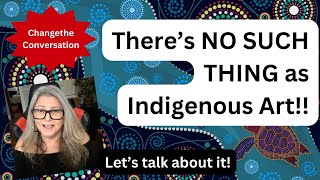
Sandi L Boucher argues that "Indigenous art" erases the distinct traditions of separate nations. Using her own Anishinaabe heritage and Tanya Talaga's Seven Fallen Feathers, she shows why a Coast Salish design would undermine an Anishinaabe artist's work. Name the nation, not the category.
Chapters
Starting to feel a little like Taylor Swift. I don't write songs, but if you have a conversation with me, especially emailing with my fans, friends and followers, that could so easily turn into a video. And that's what's happening today. We have to change the conversation once again. And this time what we're talking about is Indigenous art. And the easiest way to sum it up is there's no such thing. Let's talk about it. Foreign. Hi everybody. My name is Sandy Boucher. I'm Red Thunderbolt, woman of the Loon Clan, a proud member of Seine River first nation in Treaty 3 territory in Northern Ontario. And I have dedicated the last 15 years of my life to Indigenous Canadian reconciliation, working in First Nation communities, helping them to heal and grow and stand up strong and remember our resilience and the strength of our teachings, and helping non Indigenous Canadians understand why the way things have been done doesn't work. They know that part, but I'm explaining why and helping them to truly understand and move forward so that we all benefit from the wisdom of the peoples living within Canadian borders. So I'm actually insanely busy this week. Tomorrow, Wednesday and Thursday, I'm actually emceeing an event. If you are familiar with the book by Tanya Talega, Seven Fallen Feathers. If you're not familiar, get the book and read it. So worth it if you want to understand through Indigenous eyes. Tanya wrote a book about seven youth who lost their lives while they were in the city I live in. They were here to go to school because high school does not exist in their remote communities. For these children to get a grade nine or any kind of high school education, they have to leave home, board with strangers in a city far away from their supports and their families, and do a high school course curriculum. So it's a ludicrous situation. It's not like they're welcomed here. Maybe officially they are, but these are youth. I can remember one conversation years ago with a youth explaining how if he was in his words, best quote ever. If he was acting like an ass, then he would understand why people were upset with him. But all he was doing is walking down the street and people roll down their windows to yell out racial slurs or to throw things at these kids. Welcome to Thunder Bay. So Tanya does an amazing job in this book. Again, I highly recommend it. She's a beautiful soul. Read anything she writes. One of the things that struck me I've read the book, I highly recommend it. But one of the things that really struck me after it came out was Conversations with my non indigenous friends and colleagues here in the city of Thunder Bay. For us Indigenous who live here, there was nothing surprising in the book. It's what we knew. It's, it's our reality. Yet our non indigenous colleagues here in this city were shocked at what they read. So that's how far the divide is. I have long said there's two different Thunder Bays and that's a perfect example of it. The indigenous Thunder Bay and that reality and the non indigenous Thunder Bay. So anyways, because of that, go off on a tangent because I'm going to be out of the office, I'm actually seeing, it could be called a report card event. There was an inquiry into the death of these youth, the seven youth, the seven fallen feathers, and recommendations made for all of the agencies that quote, unquote, drop the ball. And once a year they do an update for the families on have they implemented the recommendations. That is the event, the continuity of care event that I am seeing. So that means I have to shoot my videos ahead of time. What a long way to explain it, Sandy. And so that's what I'm doing right now. I'm going to be shooting like three different videos here. So just pretend they were shot the day before you saw them. Okay, now today's video, like I said in the opening, is actually a response to an email I received. And it wasn't even the subject of the email, but in the body of the email. And that's why relationships are so important. Because if you have genuine relationships with indigenous people in the day to day, every normal conversations, things come out and you can learn things. If you're open to, you can't have the weight, fragility going on. You gotta be able to understand and be open to someone saying, okay, well actually I need to comment on that. And that's what happened in this case in the body of the email she referenced, the writer referenced Indigenous art and how beautiful it is and how much she appreciates it. An amazing comment. But when I responded to her I said, okay, I have to say something. And the easiest way to explain this is there's no such thing as Indigenous art. And I went on to share with her that the beautiful coast Salish style art that so many people are familiar with, the stylized whale or birds or whatever is, is very much B.C. right West Coast. And so incredibly different from Anishinaabe art, which is Northern Ontario and Cree art and Migma art East Coast. Trying not to sneeze on you. And of course I get an itchy nose when I'm shooting a video. So again, changing the conversation. The word indigenous is so misleading for innocent non indigenous people who are just trying to understand. And I have a perfect example of this. And actually in my response to where I shared this story with her, so years ago, I had just started my business, so like 13, 14 years ago, my logo for one, is my tattoo. My tattoo is my life story. So this logo, in my opinion, is not only incredibly personal, but incredibly powerful. A direct tie to my indigenous teachings. And. But at this point in time, person I knew from southern Ontario reached out to me and volunteered to design a logo for me. Now, right off the bat, already had my logo. He did not ask about my logo. He didn't ask where it came from, he didn't ask who designed it, he didn't ask the significance of it. He didn't ask if there was any personal tie. He didn't ask anything. He just volunteered to create a logo for me. So I was already pretty sure I'm not changing my logo. You would have to come up with something pretty flipping incredible to outdo this for the personal time reasons. And he went off, he said he would do it and he went off and he came back with this logo that was a beautiful logo in Coast Salish style. I am Anishinaabe. I live in Ontario, not bc. And what he didn't understand, and I'm pretty sure he didn't understand even after I explained it, was the fact that if I had used his logo, if I had just gone along with his suggestion, I would have lost all authenticity and credibility because the Indigenous peoples who follow me would have looked at that logo and thought, did she move to bc? Is she trying to pretend she's from bc? That's not her teachings. Right? It wouldn't have rung true. And he wouldn't have known that because the word Indigenous or the word aboriginal all implies one. And I've said a hundred times, we have more than 600 First Nation communities in Canada. They are so totally different. So I'm just looking at my notes here. We have to keep in mind the styles, the teachings, the languages, the stories of these different nations are so different. And I share this today, passionately today, because I know if you're watching this, you want to be part of the solution. And if you want to stop marginalization, stop the marginalization of Indigenous people, then you have to start seeing us as individuals, as separate people, and our communities as autonomous and different from one another. In other words, we have to change the conversation now. Just one last comment. What had led to that discussion, that feedback, was the fact that she had mentioned that way back when she had seen a stylized image of the Canadian flag and kind of incorporating Indigenous art into the Canadian flag. There was other things she suggested. I won't get into those today. I don't want to muddy the water anymore, but I don't agree with that idea. Right. I mean, I guess it's honoring the first nations, which is so important. This is. She had. Well, I am going to get into it. I guess she had suggested a flag that was inclusive of all the peoples in Canada. And that is problematic for Indigenous people. We are the original peoples, and either we are put into this puzzle and every single group that is here is in the puzzle, and all we have equal weight and it just eliminates the history of how we got here. Or Indigenous people are marginalized right out of the puzzle. So I have an issue with that all inclusivity kind of model that just muddies the water. And I'm not a big fan of stylizing the Canadian flag and pretending it's anything different unless we actually do the work and get to that point. My final comment to her was, so, in short, Canada is Canada. They have their flag, they have their song, and so do we. This is a country of nations, not just one. Maybe one day we will see this. Maybe one day we will all benefit from that fact. So let's stop referring to Indigenous peoples or Indigenous art or Indigenous teachings. Do the work. What are you talking about? Nishnaabe Cree. Coelish. Dene honos migma. Where is this coming from? Because you should know that to ensure we're not marginalized and we're actually allowed to be individual. Hope that helped. Until tomorrow. I love you. Take care. Bye Bye.
More from Sandi

How I Handle "The Four Uglies!" (Alcohol, Diabetes, Healing & Cheap Seat Comments)


All the Stuff We Don't Talk About with NO SHAME! (WMT Podcast w Antoinette Godin)


When Authors Chat ... (Radio Interview for the Launch of "Copper Stone - Glimpse of Blood Memory)



MORE PROOF of Indigenous/Non-Indigenous Relationships that Work! (Walking My Talk w Millie Gormely)
