TLC Discusses "The White Problem"
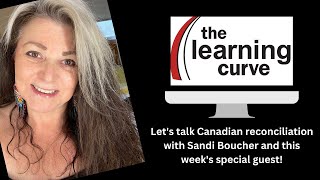
A TV/YouTube interview (Learning Curve with Sandi L Boucher) featuring Dave Cryderman discussing his "The White Problem" workshops in Thunder Bay. Cryderman explains the provocative title (to reframe historic references to an "Indian problem"), outlines the workshop format (two-hour sessions every two weeks), sponsorship/support from Diversity Thunder Bay, goals (build white settler community capacity to interrogate white supremacy and settler colonialism), reactions (strong interest, waiting list, mixed responses), and next steps (additional workshop rounds and an ongoing racial-skills/stamina group). The guest is a Thunder Bay-born settler who credits family, local events, and relationships with Indigenous leaders for motivating his work.
Questions this video answers
January 18, 2018
Two-hour session once every two weeks
Diversity Thunder Bay
Thunder Bay
Email: davecryderman@gmail.com; also on Facebook and Twitter (@davecryderman)
Chapters
Hi, everybody. My name is Sandy Boucher and welcome back to the Learning Curve. Before I start telling you about today's guest and today's topic, I just wanted to say, Holy molys, I can't believe the response we had to the first show. No matter what I'm doing or where I am, people are coming up to me in public. They're sending me private messages on Facebook, they're even emailing me. You're telling me that you not only loved the last show and our amazing guest, but you're loving the idea of this series. And I couldn't be happier when the amazing people here at Shaw and I got together to discuss this idea. We thought we were onto something, but you confirmed it. So please keep giving us that feedback. And I want to remind you, remember, the Learning Curve is for you. This is so we can share information with you to help you to understand those topics that up until now have been confusing you. So if there is something that you just don't understand, it's in the papers, it's on the six o' clock news, and you're not sure what the conversation is about, please send me an email. You can go to the Learning Curve Facebook page page. You can send a message directly to me, Sandy Boucher, easy to find on Facebook, or you can send me a direct email at Sandy Boucher. Ca. So please stick around. And today's topic is going to be just as amazing. Last week or last show, Jenna Rae Yerxa knocked it out of the park. Well, I think you're going to be equally impressed with today's topic. I'm going to introduce you to Dave Seiderman. Now, he developed a series of workshops called the White Problem. Now, you got to be pretty brave to come up with a series with that kind of title. So we're going to talk about why he used that title, what he was hoping to achieve, and how it worked out for him. So get comfy, grab a coffee, get in your favorite chair, and you and I are once again going to find our way through the learning curve. Talk to you soon. Hi, everybody. Welcome back to the Learning Curve. I'm Sandy Boucher again. And now I want to introduce you to our amazing guest for today. I'd like to introduce you to Dave Seiderman, the creator and facilitator of the White Problem. So how you doing today, Dave?
Fantastic.
Awesome. Thanks for coming out in a new green to be my guest.
Let's.
Excellent.
Thanks for having me.
I'm dying to share this topic with them because they have no idea what we're talking about so far. But before we get into that, I want to know a little bit more about you. So are you from Thunder Bay, born and raised, or you moved here, or what's the story?
Born and raised in Thunder Bay. Yeah. I left for school when I was about 19, 20. Did a few years in Vancouver, few years in Toronto. About 10 years in total. Wow. And then came back about six or seven years ago. Yeah.
I'm curious. Why did you come back?
School was over. My wife and I had finished our schooling, and we're looking to sort of settle down and get some family stuff going on.
And Thunder Bay is where you want to.
Where our families are and where our roots are. So.
Awesome. I love that you came home. So did I. Right. So I gotta ask. You came up with a series of workshops. Why did you name them the white problem that had to get attention.
So I think there's a few reasons for the name. One of them is attention to sort of shift a lens and shift the conversation. Historically, in this town, in this country, we talk about the Indian problem. So that's. I mean, Duncan Campbell Scott, who set up the residential school system, did so to eliminate the Indian problem. Right. So to avoid. I mean, I'm. I'm a white settler who. It doesn't make any sense for me to talk about issues in Indigenous communities. It makes me. Makes sense for me to talk about issues in my own community and to look. Look at that community and try to have conversations with people about, you know, how are we creating problems as opposed to trying to propose solutions to problems we create in the first place. Does it.
That makes total sense. Wow. And I didn't realize that. And I. I had the chance to attend your seminars, and I'll admit, when I first saw the advertising, I was like, whoa. Did it seriously say the white problem? Because as an indigenous person. Yeah. I mean, it's not like I haven't had the conversation, but you had the guts to go out there and just blatantly name it, so.
Well, there's actually very little risk for me. And it was very interesting, really, in doing that. There's little to no risk for me to do that in the community because of my relationship to power structures at play. I don't feel in danger for speaking out about that in the community. It doesn't feel unsafe for me. There are some reactions, some negative reactions, for sure, that I hear from people, but there's also tons of positive reactions and tons of praise for, you know, wow, you're you're speaking out about this. You do, you know, and it's, it's, it speaks a little bit to. Part of what the white problem is, is that, you know, when I stand up and say those things or talk about those things largely are just things that I've heard and learned from indigenous people and racialized people. The reception to my saying that in the community is very different than, than what it might be for an indigenous woman to stand up and say those things.
I so wouldn't say that. And I'm known for being pretty gutsy. I saw that title and I thought I would be crucified if I came up with this and I developed seminars for a living. If I came up and used that kind of title, there is no way, no way. Having said that, to be fair, on the other side of the bridge, when I'm in Indigenous communities and I'm talking about the challenges that we face, face, it's received more openly because I'm talking about our problems, not your problems. I'm not pointing fingers. I'm saying we need to fix this for the sake of our people. So. Okay, that makes sense. So tell me, for the people who have never heard of these seminars, what are the white problem seminars?
Well, they're. The last round of them that we did was done, sponsored by and supported by Diversity Thunder Bay. And so they did a lot of the logistical work and support for that. And it worked out to be a two hour session once every two weeks. So you had two hours to sort of have the conversation, digest some of the information, and then a few weeks to sort of go away and think about that and have conversations about it and then bring that back to the group was sort of the idea. The first session really deals with trying to establish a baseline of information. And again, part of the reason for the White problem title is to bring in people who are interested in that topic and learning more about it so that we don't get bogged down in debates about racism versus reversalism. If there is racism or if, if this is all in the past, this is very much in the present. And so part of that was to really get people in who are at a certain place where they want to do more, learn more, and to work together to find out ways that we could do that. So the first session was really to sort of establish a baseline that we're all there on some sort of statement of facts. And again, it's not my ideas or my information, it's stuff that I've learned or read or had feedback on from either writings of indigenous people or racialized people or actually conversations and relationships. So, yeah, to be able to start there and then move to, okay, let's look at some strategies for ways that we can get more people involved in challenging the systems and then moving on to ways that we can get people involved in challenging the structural levels, the organization level. So sort of a focus on individual strategies, organizational strategies, after we sort of establish a baseline.
Okay, so a couple things came to my mind. For one, so you excuse the expression, but you weren't going after the rednecks or this serious. The people that type in those horrible things to the media. So they weren't coming out to the seminar. But that wasn't your target market anyways.
Right. I mean, the amount of energy required to sort of go out and change people's minds isn't. I don't think it's really efficient just to target that. Not that we don't have work to do, but thinking about ways of doing that. But for me, it was about trying to build a community because I know that there's people. Like, if I think of where I was in my thinking five years ago, like, if you would have told me, I would have been here talking to you about this, I would have looked at you funny. Like, there's no way, you know, so how did I. How did I end up here? To me, that's a very interesting thing for me to think about. And how can I sort of reach out to other people who I know, like, I am and like, I was questioning and looking, wanting to do more and wanting to help, but not really knowing how to say, hey, there's more of us out here. Let's get together and sort of try and disrupt our own place in settler colonialism and white supremacy. Interrogate that a little bit and do some of the homework that we need to do to be able to carry our own baggage. Your guest last time on the show, Jana Ray Yerza, who's a hero of mine, gave a speech where she talked about, what do you bring to the relationship? Carrying your baggage. So I think a lot of times as white people, as settlers, we come to relationships with indigenous people or with racialized people with all this baggage that we don't necessarily know we have. We're like fish swimming in water that don't see the water. Do you remember the water of white supremacy? So how can we see that baggage first off and learn to sort of start carrying it on our own so that when we do show up, we're not sitting here. Hold this for me.
And I love the way you explain that, the analogy, because the reality is, if you've always done it, you just keep doing it. So you made the comment that five years ago, you never would have thought of being here in this place talking about this topic. So what did bring you here? What happened?
I had kids. That was a big issue. Made me think a lot more about my values and about what I want to do in the world to make it a little bit better place for them, what I want to teach them. The issues in town around the burning of the bridge, the Fort William First Nation, and all of the really overt racism that came out around that, and after that and the election after that really kind of brought me into the fold. And I was very fortunate to have a lot of contact with Damian Lee, who's from Fort William First Nation, who started blowing my mind with some of these ideas. You know, I spent. I spent my whole life sort of knowing that there's something wrong, you know, Canada. There's something wrong in Canada. And my whole life, it was the Indian problem. It was, you know, how are we gonna help Indigenous people? How are we going to fix this problem? How are, you know.
Yeah.
And at this point, this started occurring to me that, like, oh, wait a minute. Like, you know, through having people pointed out to me over and over again, very patiently, this isn't actually in Indigenous. This is like the white problem. You know, we need to do our own home. We need to, like, flip the lens around and look at ourselves for a while. So that really. Yeah. That's sort of how I ended up.
That's amazing. That's absolutely amazing. And what a fantastic journey. Right? I know. I was driving out here today, and I was thinking, there's always something. It seems like my latest pet peeve or whatever, what we have to adjust. And the latest one is I hear it all the time on the news or in general conversations where they refer to Indigenous people or Indigenous communities as our communities, our Indigenous people. And I thought, that's like someone moving into your backyard and talking about you as our family. Right. It's like, what. We were here first. How did we end up belonging to you? And. And I don't. And. And I know I have strong views when it comes to Canada. When they run those commercials showing the forefathers coming together to play in Canada, I don't see any chiefs in the room. So it's like, don't use our right. When you didn't bother to include us in the Process, right?
Yeah, absolutely. I mean, I think that, you know, those videos, that history, all of that way that you get sort of initiated. I've started to see white supremacy as a gang. And I see myself as trying to do a gang exit, like from one of the most violent gangs in history, you know what I mean? And. And it's something I was born into.
So we're going to hang on to that thought because that's a powerful thought. We're going to be back in a few minutes to continue this discussion about the white problem and how you can learn more and educate yourself. Be back in a few minutes. Hi, everybody, and welcome back to the Learning Curve. Today, we're here with Dave Seiderman and we're discussing the white problem.
Problem.
And that was pretty sensational just before the break, talking about white supremacy and extricating yourself from a gang. So I gotta let you run with that one because they're gonna be. I know the audience is gonna be going, huh, what? What?
Right, sure. So one of the things that I, I have realized in the last bit is that white supremacy is not just about white hoods and swastikas. White supremacy is the structure that is the structure of our whole society. It's the structure that makes me, you know, white middle class, settler, man at the center. And the world is sort of made in my image and for me, in lots of ways, so much so that I never really have to even think about being white if I don't want to. And whiteness, you know, part of the. One of the big things that we do in the workshop is to try and very quickly make sure that we show that whiteness isn't necessarily about skin color. You know, like, how white do you have to be to be white? So we ask questions like, what does it mean to be white? How do you know you're white? You know, and oftentimes people have answers like, I don't know what it means to be white. And I'm not really sure how someone like, I'm just white, I don't know how, you know. And there's a level of discomfort with even using the word white and pointing out whiteness or white people, you know, or white supremacy. People kind of. They bristle at that. But we don't bristle at saying indigenous. Right. We don't bristle at saying, you know, the city has an aboriginal liaison unit. But I bet you if Fort William First Nation had a white liaison unit, we'd be a little. Someone would say, wait a minute, that's Racist, you know. Well, it's important to put ourselves into that context and to get used to seeing that, because we don't our whole life. So back to the gang analogy. I mean, my whole life I grew up looking at white men, prime ministers, and a history of white men who built this country and Canada as a peaceful, inclusive and tolerant nation. And all of these sort of the mythology, our national mythology and our societal mythology that told me that basically I could do whatever I want and the world is made for me. You know, everybody looks like me, everybody talks like me, and I'll be congratulated and seen as kind if I tolerate other people coming into that bubble. That's sort of. So that to me is kind of a explanation of white supremacy. And when you realize from the inside, you don't necessarily see the violent effects that that has on people who don't get included in whiteness. And you know, an interesting thing is that throughout history, who gets to be white has changed. Right? Italian people, Polish people, Jewish people, Irish people. There were times, not in the very, in the very near past, where those people weren't included as white and now they very much are. So what are those processes and how do you know? It tells you that something is wrong, Something is needs more thinking about needs more, you know. So.
In so many ways that resonates. When you were talking, I was thinking, and I didn't even think about the word white until I went to your seminar. And I was like, wow, you're right. Because I would never use that word or refer to someone that way because of the reaction. Right. And you were the one that made me realize, wait a minute. But I use all the other descriptors. Why am I not. Why is there an issue? But I was thinking as a marginalized woman, whether you're an indigenous woman or whatever group, it's like a double whammy because there's times I can walk in. It happens all the time now as a businesswoman where I'm walking into a room and a. I'm the only woman or I'm definitely the only indigenous person there. Right. And yes, they are welcoming because I'm there. Right. So yeah, I can totally get that. That's where the power sits.
And I think interrogating that power is really the purpose of the workshops and the purpose of trying to get people motivated and build a little bit of a community in the white settler community of people who are trying to support each other in doing that and build relationships from an anti colonial place.
Exactly.
You know, with that in mind, which.
Was one of the reasons I wanted to do this show for those people, those good hearted people, non indigenous people that I saw and had the pleasure of meeting who wanted to change things, who wanted to see a difference, but who were so conscious of all the horrific things that had happened that they were really nervous about how to step forward. Right. So that's, that's absolutely amazing. So I have to ask that you did this series of seminars that I attended. So did you get the reaction you hoped for? Did you achieve your intent?
I think it was, it was a step, you know, it was a step. I mean it's. We had a full house. We had a waiting list for the first round of workshops of people to come. And there are several people through that workshop process who are still in contact. Recently. We've sort of some people from that group and other people that I work with prior to putting on the workshops who are also instrumental in sort of thinking about a lot of the concepts through with me, have gotten together to put sort of a white person's racial skills and stamina group together for us to sort of talk about that being very open and welcoming to any indigenous or racialized people who want to come in and give feedback or participate or whatever. But recognizing that that can be, it can be messy. We make a lot of mistakes and a lot of. Because we're not really comfortable dealing with race, because we've never really had to, you know, we need to build the stamina up to overcome that and work with each other and rely on each other and support each other through that. Because it's not, it's not an easy sort of transition. You know, people are shaking off their identities in a lot of ways and trying to build a new one. So I think there's value in building community.
Yeah. And it's definitely a process. I was thinking of that onion one layer at the time because you clue into, you master that one part and then like you said, you trip up over the next one. And it's really examining everything you've taken for granted and just didn't even think about up to now and reexamining it, unpacking that baggage, as Janice said. And, and as an indigenous person, I have to do the same thing. And looking at who am I, what is my culture? Before I was told what my culture is by outside forces. Right. So pretty amazing. So what's the future plans?
Well, we're going to do diversity. Thunder Bay has set up to do another round of workshops.
Excellent.
And I'm hoping That, this, this sort of skills group idea that we've sort of. It's in early stages, but that seems to be coming together, can sort of interact with the workshops in some way so that people who come to that can have a place to continue on. Because just a one workshop session doesn't really do much of anything. Right. So we need to. We need to have a sustained way of doing things and we need to build the capacity to support and stand like in the streets when necessary.
Exactly.
And sort of show up in person. That's a big, big piece of that to build that.
And it's huge. And again, as an indigenous person, I love it when I see our allies, the action oriented people that we talked about last time, showing up and support, not taking up a huge amount of space, not grabbing the microphone, but being there, just to be there in support. That's amazing. So I have to ask, you're from Thunder Bay. You returned here to raise your family. Do you see an improvement? Is it getting better?
I don't know. I mean, I definitely have been consistently, pleasantly surprised by how many more people are out there who want to do more and want to get involved. I was very surprised that the workshops were so many people reached out saying, hey, this is really needed. We really want to talk about this.
Awesome.
So that was really good. Yeah. I hope if this results in a group of like some building of community and relationships in real life going forward, you know, I'm going to live in this community for the rest of my life. As far as I can tell, you know, this is. This is my home. This is where I made my home. So those relationships are things that I look forward to building over many, many years.
Exactly. And I feel the exact same way. I came back here. This is the place I love. And yes, there's challenges and there's definitely areas that scare me and make me nervous, but we're having these conversations now and we're having these seminars now, so. And we're having this TV series now. So I see things. At least we're heading in the right direction. Maybe we're not at the point where we can say a lot has improved, but we're definitely going in the right way.
Yeah. The more that we're having these conversations, the more that we're. As long as these conversations are disruptive, you know, to the status quo and. And people. Causes people to think more and to maybe shift some of their thinking or be less sure. To me, that's a really important piece. A lot of people who hold really Entrenched views, racist views, violent views are sure about those.
Yeah.
So if we can, you know, move as community to a place where we're a little less sure and sit with that discomfort, that sort of tension, I think that will be fertile ground for. For some change.
Excellent. Well, I love the work you do. Keep it up. We need as many people as possible out there working towards, working through the learning curve to get us to where we want to be. So if people, if the audience wants more information, how do they get that? How do they get a hold of you?
They can certainly reach out to me by email. DaveCretterman D A V E C R Y D E R m a n gmail.com Excellent. I'm on Facebook and on Twitteravecriderman on Twitter and you can search me on Facebook.
Excellent.
I'm happy to connect with anybody who has any questions or is any interest in this sort of thing. And like I said, we have a sort of an ongoing skills group people are welcome to get involved with if they're interested.
That's amazing. Thank you so much for coming out.
Thank you so much, Sunny.
And thank you for tuning in today. According to my teachings and my elders, with a gift comes responsibility. I truly believe that the information we're sharing with you is a gift from me and my amazing guests. It's up to you what you do with it. So please, if you can consider the information we share, maybe you can bring down a wall or two or maybe even build a bridge. Until next time, I hope you enjoyed this edition of the learning curve. Take care. Bye.
Bye.
More from Sandi

How I Handle "The Four Uglies!" (Alcohol, Diabetes, Healing & Cheap Seat Comments)


All the Stuff We Don't Talk About with NO SHAME! (WMT Podcast w Antoinette Godin)


When Authors Chat ... (Radio Interview for the Launch of "Copper Stone - Glimpse of Blood Memory)



MORE PROOF of Indigenous/Non-Indigenous Relationships that Work! (Walking My Talk w Millie Gormely)
