Top FOUR Reconciliation Misconceptions!
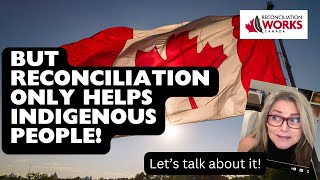
Sandi L. Boucher, from Seine River First Nation, identifies four misconceptions blocking reconciliation in Canada. Indigenous people often expect declarations to fix everything overnight or dismiss genuine progress out of mistrust. Non-Indigenous people wrongly think reconciliation only helps Indigenous communities or that symbolic gestures replace real policy change.
Chapters
Hello, you super duper double delicious person, you. I have a day full of meetings today. I'm gonna be out of the office running all over the place. But I wanted to finish the week off strong. So, in case you didn't know this, I've been working in the Canadian Indigenous reconciliation realm for 15 years. I started in First Nation communities, helping them to heal, to remember the power of our teachings, to remember our value is not in the hands someone else. That that was granted to us by Creator on the day we were born. And then about eight years ago, I realized I needed to balance the feather and that it was part of a sim simulation. I combined assimilation and colonization. I made a new word. It was part of assimilation and colonization to believe that all the fixing needed to be on the Indigenous side. So I started working with non Indigenous entities, colleges, universities, hospitals, municipalities, businesses of all sizes. And it's amazing to balance the feather because change has to happen on both sides. Any reconciliation process, it's not one person that's all bad and one that's all good. There needs to be changes. Because of my work, for 15 years, I've stood on stages in front of audiences, whether they were First Nation communities or first nations peoples, non Indigenous Peoples or mixed audiences. And I hear the questions. I have a lot of knowledge and information based on the feedback from my audiences. And what I have noticed is there's some serious misconceptions when it comes to reconciliation. And that's what I wanted to share with you today from on the Indigenous side and the non Indigenous side. Let's talk about it. Hi, everybody. My name is Sandy Boucher. I'm Red Thunderbolt, woman of the Loon clan, a proud member of Seine River first nation in Treaty 3 territory in Northern Ontario, in. As I mentioned in the opening today, I want to focus on the. The misconceptions that I hear so often from my audiences as it pertains to reconciliation. We're going to start. Yes, handy dandy index card. We're going to start with the Indigenous perspective. So, based on outcry, based on feedback, based on frustration and anger, in my humble opinion, the biggest misconception I see on the Indigenous side of the reconciliation feather is that this is just going to happen, forgetting that it's going to be a process, that change happens over time. And what I see happening is a non Indigenous mainstream Canadian entity, a company, a corporation, a whatever, will make a public declaration to reconciliation that they are committed to this process. And then something will happen. Someone from that organization will say something, something will be done. An indigenous employee leaves because in their opinion it's a toxic work environment. Maybe something really horrific is being said. I'm not saying that the incident didn't happen. What I'm saying is as a result of that incident, that needs to be changed as part of reconciliation. They're throwing the baby out with the bath water. They're saying, well, that obviously the commitment to reconciliation was a lie because if they were committed to reconciliation, this would never happen. That's just not true. Reconciliation is a process. There's going to be a whole bunch of conversations, there's going to be a whole bunch of missteps and there's going to be a whole bunch of resulting apologies and hopefully change. But it's not like that. We can't expect the commitment to mean everything in this entity is now perfect because it absolutely isn't. It's a learning curve. So that would be the biggest misconception. The other thing I'm actually giving you two on each side of this feather. Nice. What the heck? Anyways, what I am seeing a lot and I know where it's coming from. I know where the frustration is coming from. We've been waiting for these changes ever since the settlers arrived. Patience is running out. But there seems to be many First Nations Indigenous peoples that are not, excuse me, that are not holding space for change, meaning allowing the time and the space and the growth. So for if you assume that everything that the non indigenous entity is a negative or for nefarious reasons, that's internalized oppression. That's not reconciliation. Having the stereotypes against non indigenous are just as detrimental to reconciliation as having stereotypes about indigenous people. And I know where it comes from. There is no trust. Why would there be trust? Look at what Canada's been doing to us. But we also have to be able, we have to be healed enough first step on the path for the Indigenous. We have to be healed enough to give the benefit of the doubt and say, well, let's see. They seem to have been been making a positive change. Let's see if it's true. So when this really was highlighted for me was when lockdown hit and the COVID vaccines were first released. We have been identified, we as Indigenous living within Canadian borders have been identified as an a vulnerable and oppressed group for years to no avail. It's not like we got more health supports or, or you know, access to the supports we need. It's just a fact, a label. But when the vaccine came out, one of the first groups it was released to were first nations where the government recognized vulnerable population, no health supports, they get Covid it's going to decimate the communities. So they released the vaccines to the first nations populations. Amazing positive change. Finally doing something to acknowledge the insanity of the lack of health access or access to health services in the communities. But then I heard conspiracy theories and indigenous people who have not healed and hold on to all the stereotypes and prejudice saying the vaccine's not safe, they're using us as guinea pigs. It's not like that hasn't happened in the past. So again, I know where it's coming from. But this was a positive change. And if there is no recognition of positive change, there is no incentive to continue positive negatively changing. So I was pretty vocal, pretty public about how we can't do that, that this was a good thing and that we need to celebrate this. This was a step in the right direction. So from the indigenous side of the feather, the misconceptions are the fact that they forget it's a process and they expect if you make a declaration to reconciliation there's not going to be any more mistakes. And then not believing or recognizing when the positive changes do happen, that's the indigenous side of the feather. Now we're going to talk about the non indigenous and I get hit right square in the face with this one on a regular basis. The belief by many non indigenous the reconciliation only benefits indigenous. And if you know someone like that, either grab the information under this video so you know how to respond to them or share this video with them because this has got to stop. There are so many benefits for non indigenous Canadians for one, indigenous people are one of the hugest untapped markets going. All of you business people out there that like your bottom line to be healthy and want to be making sales, there's a market out there. On top of that, indigenous populations, well documented, documented are some of the most loyal customers ever. They find a supplier or a store that treats them well, they are going there for the rest of their lives and bringing their kids and their friends with them. It is worth making the changes for your bottom line, right? So you're going to benefit. On top of that, let's talk about all the natural resource industries or businesses, industries across the board that are really struggling with hanging on to employees engagement. Going out and doing the marketing and promotion for a position is expensive. Training a person is expensive. It's not like they're, you know, productive and making you tons of money during the training period and then when they leave you have to do it all over again. Why do you think I spend so much time training people on retention? So that you can stop spending all of that insane money. But guess what? If you think you're marketing to indigenous people like you market to everyone else, your efforts are going to fall flat. If you think that your work environment that is often incredibly racist and prejudiced against indigenous people is an environment that we want to work in just because we're poor, then you have no idea how hard it is to listen to racism. Because I would quit before I would take a paycheck and put up with that crap. Sorry. My mental health and well being are way more important than your paycheck, no matter how big it is. Right. So we have to. What else did I write down here? Large untapped market loyalty factor. On top of that, why am I the only one that gets this? And, and I've been saying it for years, say your community, your municipality, your hospital, your industry, whatever it is your university gets. This creates a truly welcoming and healthy environment for indigenous peoples. Figures out your engagement and recruitment strategy. Yes, it's possible you will become the leader in your industry. Everyone would be reaching out to you to teach us how to do it. How did you do this? That's another revenue stream if you haven't figured it out. So why, why would you not want to be the first? Don't. I keep hearing and it drives me nuts. Like, well, has anyone else done this? How are you still in business if you are waiting for someone else to go first? Figure it out. And by the way, if you're trying to figure this out and you're not involving indigenous people, nothing for us or about us, without us, you can't develop an indigenous engagement strategy without talking to the indigenous people you want to engage with. That's literally the blind leading the blind. This is turning into a rant. Did you notice that? Ah. Oh. And the other misconception from the non indigenous side. Every indigenous person out there is going to agree with me on this one. I can hear you now. I hear you. I hear you. Way too many businesses, municipalities, organizations, corporations, name the entity, think that some small and or performative action is going to get you to reconciliation. We are going to honor September 30th and all wear orange T shirts. We're doing nothing about changing our policies or making sure our environment's a safe space. But we bought everyone an orange T shirt. Hard pass. We are going to honor National Indigenous Day and give our indigenous employees the day off. Well, actually we're going to give everyone a day off because otherwise it wouldn't be fair. Come on, come on. If it was that easy to solve, we would have solved it a long time ago. We can do better. And in case you haven't figured it out, Indigenous are neither blind nor stupid. We see the small, tiny effort and you are screaming loud and clear how little you care about indigenous engagement. I don't care how much money you spend on advertising and recruitment because actions are a language and we hear you. We do speak that language. So does that make sense? There are so many misconceptions out there. But conversations, learning, working together, relationships is how we get this reconciliation done. It benefits everyone. Why do you think my second company is called Reconciliation Works Canada? It was a statement. Reconciliation Works Canada. Check it out. Check out my main website. Let's work together because Canada, we can do better. Until next week, my friends. I love you. Take care. Bye bye.
More from Sandi

How I Handle "The Four Uglies!" (Alcohol, Diabetes, Healing & Cheap Seat Comments)


All the Stuff We Don't Talk About with NO SHAME! (WMT Podcast w Antoinette Godin)


When Authors Chat ... (Radio Interview for the Launch of "Copper Stone - Glimpse of Blood Memory)



MORE PROOF of Indigenous/Non-Indigenous Relationships that Work! (Walking My Talk w Millie Gormely)
