"We Should ALL Be Millionaires", Keeping Us Small, Wab Kinew & Orange Shirts, Teachings & MORE!
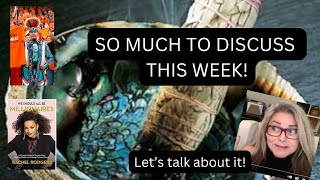
YouTube video by Sandi L Boucher (Anishinaabe Ojibwe, Red Thunderbolt, Seine River First Nation) offering Indigenous perspectives on reconciliation, personal growth, and community issues. Major points: an invitation to a free book club for We Should All Be Millionaires (Rachel Rogers); reflections on healing, self-work, and daily practices that support leadership; an extended discussion of lateral violence in Indigenous communities and how it keeps people "small" (linked to colonial tactics); commentary on Wab Kinew and Manitoba's visible Indigenous leadership/response to Orange Shirt Day; and a distillation of guiding Anishinaabe teachings (back-to-back, feather, balancing the feather, lifelong learning). The video also mixes practical advice (journalling, routines, resources) with calls for non-Indigenous viewers to move beyond performative gestures.
Chapters
Hello, you super duper double delicious person, you. Welcome back to my new setup. Welcome back to my same home. Welcome back to another week, another video, another chance to walk with me as I look at things. This world, this country, my relationships, things I read and watch through Indigenous eyes. So let's talk about it, Sam. Bonjour, Mishko Pogganong Kwei Nadishna Kas Mungdo Dam. Hi everyone. My name is Sandy Boucher. I'm Red Thunderbolt, woman of the Loon clan, a proud member of Seine River First Nation in Treaty 3 territory in northern Ontario. A McQuay, an Indigenous Anishinaabe Ojibwe female living in the city of Thunder Bay. And I work in the realm of Indigenous Canadian reconciliation. So one of the things I do is help non Indigenous Canadian entities, whether it's universities, colleges, hospitals or big business, to understand why their initiatives or engagements with Indigenous people are just not working to the way they hoped they would. I helped give them an Indigenous perspective so we can truly build bridges. Now, as I announced a couple weeks ago, what I do with these videos, if you're watching this on Monday, I release the full video on Monday and then Tuesday through Friday I release clips. So the full video tends to run about 30 minutes. If you don't have that much time, that's okay, you can watch the clips on Tuesday through Thursday. So. So hopefully that makes sense to you. Now we're going to jump into the first topic here, which will be the clip for Tuesday and just. Okay, okay. My background. I'm a 10 year domestic abuse survivor. I have sold furniture to feed my children. I grew up in a house that didn't have running water. I know what it's like to be marginalized as an Indigenous female in Canada. And what I've discovered over my 60 years on this planet is the reality that growing up in that experience or living that experience in that environment requires one healing. Do that for you. Do not leave the wounds open. Get the help of you need to heal. Like I said, please do that for you. If you do nothing else, you deserve that. We have to, after the healing, we have to unpack. We have to look at the stereotypes and messages that we believe to be true, the limitations on what we could do as marginalized people. We have to decide to go over, under, around or through those challenges. And we have to stop seeing the enemy and start seeing the opportunities which requires learning and then practicing what we learn. My mom used to say that wisdom is useless if not shared. Knowledge is useless if not applied. It's not about the ego trip of being able to rent and rave and brag about how many degrees you have. What are you doing with that education? How are you making things better for the people you love? And yes, of course I have a handy dandy index card. I actually have three of them. So along the lines, coming from that background and now running a successful business for 15 years, that is not an accident. That was a lot of ongoing constant reinforcement learning, growing every single day. Every morning I have a to do list that I go through everything from listening to a motivation motivational message from Brendan Burchard. Check out his Growth day app and the Daily Fire if that interests you at all. I watch at least 20 minutes of an ED Mylett video. You can find him on YouTube or if. Well, that's where I watch him, but he has the podcast version as well. I get him my workout. I read and then brings us to what I wanted to talk about today because. And all of those things, by the way, are to help me unpack, relearn so I can grow and apply new things. And I really need to talk to you about the next book I'm reading, the 16 undeniable laws of Communication. You know, I. By John C. Maxwell. You know, when I was reading that, I was ranting and raving about it. Well, if you are marginalized, if you are female, which means you're marginalized, you need to read this book. We Should All Be Millionaires by Rachel Rogers. It's already starting to look like it needs a haircut. And I just started some examples of the quotes from this book. These are just the things I've flagged. I recognize that the fears in my head are just stories that I tell myself. They are a prison that I have created to keep me from experiencing the disappointment of failure. Yesterday I was reading about this. I love the way this woman talks. Amazing. Like this is a friend. This is someone I could so sit down and have coffee with. She talks about broke ass decisions as compared to million dollar decisions. So the difference does she define a broke ass decision? I think she does. A million dollar decision is one that creates time and energy, frees up mental space, reduces penalty and create space for the stuff that matters to you, allows you to feel strong, secure and free and creates options instead of eliminating options. Oh, here it is. A badass decision, steals your time and energy, depletes mental space, increases the piddly crap and prior to prioritizes it above your greatest desires, makes you feel weak, insecure and trapped, and eliminates options rather than creating them. So for one, highly recommend you get this book. But even more, I love finding like minded people. You know how when you run into someone, you run into a friend or someone you don't even know, but you've both seen the same movie and you love the movie so you get to sit down and have this amazing discussion about the movie because you're able to reference things that people who haven't seen the movie wouldn't get or. Well, that's what I would love to do with this book. What I want to do is kind of a temporary book club, I guess. I want you to go get the book. I want you to read the book. I'm going to continue reading the book and then I'm going to schedule a zoom session where we can sit together, talk about what we loved about the book. So what I need you to do is send me an email and just let me know you want to be in the Millionaire Book club. All I need is your email address. I'm not going to harass you with ads or information or anything. If you want to get on my mailing list, that's a different thing. This is just for this book club. So I am guessing that the, the zoom will take place probably maybe closer to Christmas or in the New year, giving us time to read it. I will keep you posted on that. I'll give you updates. But again, email me if you'd like to take part. There's no cost. We're just doing this to celebrate something that is really going to help you unpack and get rid of that marginalized mindset. It's not about denying the barriers. And that's what this book is all about. This is a black successful woman. She most definitely identifies the barriers and agrees they are there. She just like me, doesn't believe they have to stop you. So I would love to have that discussion with you. By the way, this is what really sparked this idea. One of the things I just finished reading, she well, she asked you to journal on it and I'm not sure the exact wording of the question, but it was something along the lines of if you were a bad girl, what would you do? And that's because you know that societal pressure on women to be kind and nice and a good girl and it was so funny. So she wants you to write that question at the top of the page and journal on it. So I didn't do that. Although I've dedicated a lot of space to thinking about this. What I did was I wrote that question on a post it note and put it on my mirror downstairs so it's the first thing I see when I'm getting ready every morning. Love that. But what was hilarious is I was actually wrestling with something when I was reading that story section. Something had happened in my world, something I wasn't incredibly impressed with and I didn't really do a lot. I just didn't allow it to take up space in my brain because I wasn't gonna ruminate on it. And when I got to that question, what would you do if you were a bad girl? The first thing that popped into my head, and I love that because that's those authentic messages, was I'd tell the certain individual to F off. And it made me laugh and it definitely made it way easier for me not to continue thinking about it. So anyways, We Should All Be Millionaires by Rachel Rogers if you want to be part of that book club discussion free of charge, send me an email on to the next topic. Next. Okay, so this is part of the full video or I guess it's going to be Wednesday's part. So if you follow me on social media so specifically, I guess it would be not threads, Facebook, LinkedIn, oh, Instagram I guess is the other place that I post every single morning. And last week I shared that I had two different events. I had two full day events back to back. So Tuesday I did a lateral violence seminar with the some of the amazing men and women that dedicate their time, energy and expertise to Fort William First Nation. And then on Wednesday I worked with the non Module Domestic Violence Committee, Indigenous Domestic Violence Committee here in the city of Thunder Bay with their strategic planning. In other words, I had two days of meeting violence head on and discussing it and dealing with the ramifications and talking about solutions. I love my job, so, but what? When I was preparing for the lateral violence session specifically, you may have seen that post where I'm paraphrasing my own words here now, but it said something along the lines of that ending lateral violence in our communities is the first step to healing and decolonization. Because personally, if I don't care how well you dance at powwow or how well you speak your language, that's all well and good, but if you're still destroying your own through gossip, I'm not impressed. So upgrading designing that seminar really made me realize that lateral violence in all its forms, the gossiping, the bullying, the passive aggressive comments. Lateral meaning coming from someone at your same level, it may be your boss, but same Community, that kind of thing, or another family member, whatever. The lateral violence is designed to keep you small. It is making fun of you when you get the A. And I've heard so many indigenous students talking about that. It is you get the job promotion and someone else says it's no big deal or to quit bragging. And in that instant you pull back your joy and you hide your success. Excuse me, of course I'm going to yawn. This is ridiculous. But I was thinking about that and all the different ways that in our jokes, our passive aggressive joking that we succeed in keeping our own small. And my brain instantly went to, well, who wants to keep us small? And instantaneously the voice in my head said, well, duh, Canada. Because Canada, like, as long as we keep fighting each other, we're not going to have the strength that we could have to take on the issues with Canada. And what I want to invite you to do today, I do not want you arguing that in the comments. I don't even need you agreeing with it. What I want you to do is sit with it. If you're Indigenous, I need you to unpack all of those messages and comments you've heard and believed, never realizing they're just lateral violence. It's just an attempt, our own attacking our own. They're not true. It's part of colonization, right? It's, it's trauma bonding. It's our own identifying with or trying to identify with the power of the oppressor. It's not true. So you can put that BS down. And for the non indigenous watching this, I need you to really sit and look at Canada and look at all the ways they keep indigenous people small to limit limiting our political power. Did you know that we have elections every two years in our community, communities. Thank you Indian Act. And that is to keep us in a state of political unrest that either you're brand new or campaigning. It's ridiculous. And that wasn't our doing. That's Indian Act. The times when we are consulted, when we say we want to be at the table, that means we need to be sitting with you before the decision is made, before a solution is suggested. Don't bring the solution to us and ask our opinion. We should be in on the development of that. And if we don't agree with you, and that's something else that came up this week, I'm now referring to fake bridges. It's the youth stage of the path to reconciliation. Remember baby stages where everything's new and you're just starting to learn About Canadian history and all the oppressive tactics. Youth stage is where the phrase a little bit of knowledge is dangerous really applies because I see this. And intent is not required to cause harm. It doesn't matter that you didn't mean to hurt anyone. You can still hurt someone. And if you did, you got to own that intent is not required to hurt someone. But what I'm seeing is so many people have a little bit of knowledge and then come up with some great idea to support Indigenous Indigenous people. And so often that idea is going to cause harm and it's because they had a little bit of knowledge. Right. So I need you to look at all the ways that Canada is continuing to oppress Indigenous people. And one of the ways is they ask our opinion of something, we give our opinion. We usually get interrogated for that opinion. And I use that word deliberately because it's not just questions. If you ask someone their opinion, that's their opinion. You can ask for clarification, but that's not what we get. We get argument. And then so often what we say is dismissed because we just don't know what we're talking about. It's contrary to the back to back teaching, which I'll talk about later in this video or later in the week, depending on how you're consuming this. But we got to do better because this lateral violence is ridiculous and it's intentional. As Indigenous people, we got to quit siding with Canada to harm U.S. and Canada. If you can work on quitting the oppression of us, that would be amazing. I know that's probably not happening, but a girl can dream. So that's the second topic on lateral violence and keeping us small and why Canada sees the benefit in that. On to the next. Next. Okay, so the next one. One of the things I do as an Indigenous person is constantly not only taking note of what I just saw or heard or experienced or read, but analyzing it and reflecting on it and most definitely looking to see if this new puzzle piece, how it fits in with my old puzzle pieces. So I want to go back a couple weeks ago when we were talking about September 30th, I guess it's almost a month ago now. Time's flying. When I was talking about orange shirts and I put out a video that said, if you're going to wear an orange shirt, excuse me, and you're not doing anything else, don't wear the orange shirt because it reduces it to just being performative. That we need you to do more. If you are actively learning, growing, being an ally, whatever Then go ahead. But it's got to be more than that. And how, you know, seeing everyone wearing an orange shirt made me want to scream, where were you yesterday? And where are you going to be tomorrow? But then I saw an article. It was Wab Canoe commenting on what he described as the sea of orange. The fact that in. So Wab Canoe is the provincial premier of the province of Manitoba. He is Indigenous and has, you know, walked that path and. And has his spirit name and his language and dances Powwow. Just beautiful. And happens to be the premier of the Canadian province, which is just absolutely amazing. Hang on. Did I freeze here? I think I did. So hopefully you heard what I had to say. So Wab Canoe, Indigenous premier of the province of Manitoba, and he was describing Manitoba, saying that it was a sea of orange shirts, and he was thrilled. So I had to sit back with that and I was like, okay. Because seeing a sea of orange here in Ontario or specifically in the city of Thunder Bay didn't strike me as a positive. So I had to unpack that. And then I realized, duh, of course he's happy. He is the Indigenous premier of the province. The province of Manitoba is doing so much more than wearing an orange shirt. They elected an Indigenous, obviously Indigenous, practicing Indigenous person. That sounded weird. How do you practice being Indigenous? Practicing Indigenous culture, Someone who practice, actively practices their culture. They elected him as a prime. Their premier. They are doing the search of the city dump looking for the possibility that some Indigenous women are located there. They are. What else I understand did I write down searching the landfills? Bottom line, after reflecting on all kudos to Manitoba for one, like, holy moly, talk about set an example. And two, based on all that province is doing, Wab as premier, danced in his full regalia to powwow and didn't face a backlash or any backlash that made any kind of news. I assume some rednecks had some things to say about it, but whatever. Enjoy your sea of orange because there's a province where if I saw a sea of orange there, I would more lean to. You are doing something, even if it's just celebrating your Indigenous premiere. So I just wanted to share with you that because, yes, we have to look at. That's the unpacking, that is the learning new things and growing. So I hope you're gonna do that. So now we're gonna go into the final part of this video. So next. So last but not least, I get asked this every now and then, so I thought I would include it kind of summarize. It in this video, the teachings that guide my life. So as Anishinaabe Kwe, as an indigenous female, I walk with many teachings. I receive teachings all the time. Anytime you sit with an elder, you're going to receive teachings. And I am blessed to be able to do that on a regular basis. But what are the base teachings? The teachings that are a constant in my world and help me to walk a good path despite my past, despite the barriers, despite the the Canada's marginalization of us? Like, what are the teachings that keep me strong and keep me using my voice to educate and build bridges and to empower indigenous people? The first one, I don't think anyone that follows my videos are going to be surprised. It's the back to back teaching. The fact that if you stand back to back with another person, your partner, your co worker, your child, your neighbor, whomever, a complete stranger, if you stand back to back with them and you both look around the area that you're in, whether it's a room or outside, and acknowledge, you can acknowledge in that point that you see so much of your surroundings, but there's a part you're completely blind to and that also happens to be the part that is obvious to the person you're standing with because it's directly in front of them. The back to back teaching reminds us that we can never see the complete picture and that it is our wisdom that is showing when we ask someone else what they think. Not to argue with it, but to accept what they see to be true. Because we literally can't see it. Saying it doesn't look like that to me. Me, duh. That's literally the back to back teaching. So that is the power of diversity. That is the physical representation of the phrase I've got your back. It means I'm going to tell you of threats and challenges coming your way that I know you can't see coming. But we can't build the bridge. If you don't believe me and if I say that a store clerk is problematic, I can't have a whole bunch of non indigenous standing up and say, well, they don't seem problematic to me. Again, duh. So back to back teaching really reminds me that I can't see everything. It is the humility teaching playing out. So that would be the first one. The second one, very closely related to the back to back teaching is the feather teaching, one of many feather teachings. But if you think of a beautiful, beautiful eagle feather, half representing you, half representing the other person that you're conversing with or in a relationship with that both sides of the feather are needed, that the bird's gonna have, the eagle's gonna have a hell of a time flying. If one side of the feather's strong and the other isn't and not given the time to heal and don't cross the center line, I have no business telling you how to lead your life. That is your path, your journey, and based in your decisions. And I just appreciate if you remembered the same about me. And the most important part of the feather teaching is to remember your power is on your side of the feather. Do not waste even one breath thinking, if only they did this, if only they didn't do that. There is no power in trying to control someone else's actions. I don't care what someone else is doing. Your healing is not dependent on them playing nice. Your healing is dependent on your coping skills and your healing, the steps you take to heal. Your power is on your side of the feather. And by the way, don't forget, the most powerful story you can ever share with someone is yours. Don't repeat someone else's story. It's not going to have the same power. You don't have the right. You're going to phrase it differently and change the power. Share yours. Share your story. So that's the second one, the feather teaching. The third one, again, closely related, is what I do in my business and trying to do in all aspects of my life is balancing the feather. So because I work on Indigenous Canadian reconciliation and I used to work in employment and training, you probably know that for 20 years I was helping Indigenous people go back to school, find a job or even start their own business. And it was amazing. But after so long, I started realizing, wait a minute, where's the corresponding training for non Indigenous employers? Why is it assumed we're the problem? That would be a nice colonial worldview. So I balance the feather by working as much with Canadian entities as I do in First Nation communities. I would never want to separate myself from my teachings that keep me strong and resilient. But we can't heal if the attacks don't stop. So we have to do both sides of the feather. And in anything I do, it's that balance, right, that I have to get in my exercise as well as make sure I'm eating healthy things to balance it in a relationship, I have to make sure my needs are being met, but I have to honor and support the needs of my partner being met as well. Whether that's someone I'm seeing socially or one of my adult children. Balancing the Feather what are the two sides to the challenge you're facing? And are you trying to solve a problem with a fixing only half the feather? Remember, it's not about controlling someone else, but maybe it's not about working harder. Maybe what you need to do is take the time to sharpen your saw. Maybe you need rest to get ahead, not more hours. Maybe if you're struggling financially, it's not just cutting again, expenses. Maybe you need to look at a side hustle. What are the two sides to the problem? You can fix it over, under, around or through. I am living proof. What are the two sides? Figure that out first and then make sure you're addressing both. Last but not least, and this is something that came up this week in conversation. I was speaking to an older individual and she shared how she is still learning so much and she almost seemed surprised by that. And I kind of smiled and I just said, well, I thoroughly believe if we're still here, it's because we still have things to learn. When our learning journey is done, that's when we get to move on. So you're still here. You still have things to learn. Be open to learning them. I know, and I've shared this before when I've referenced Josephine Mandamin, who was one of my dear elders and friends who has passed on now and how when I went to see her the last time, it was so obvious that she left it all on the table, that she was moving on, having given all she had. And that is most definitely my life goal. I want to be absolutely exhausted of life when I come to the end. I want to have laughed as often as I could, loved as often as I could, change things, helped change, contributed, supported, empowered, encouraged, wrote as much as I could. I want to do all I can in the time here. I want to leave with absolutely nothing left because you don't get to take it with you. So I hope, like me, you're doing your best to use it all up in the best ways possible. So I'm dying to hear what you thought of this video. Either you're going to comment on Monday on the full video or let me know on Friday's video what you thought of the week. I definitely had fun shooting it. I have fun balancing my feather and half of my feather is doing what I need to be done done doing what needs to be done in a given day, and the other half is just sitting back and receiving what Creator sends. Because I know that's what I'm going to share with you in the next video because that's how the world looks to me through indigenous eyes. You know, I was going to say it. Until next week. I love you. Take care. Bye. Bye.
More from Sandi

How I Handle "The Four Uglies!" (Alcohol, Diabetes, Healing & Cheap Seat Comments)


All the Stuff We Don't Talk About with NO SHAME! (WMT Podcast w Antoinette Godin)


When Authors Chat ... (Radio Interview for the Launch of "Copper Stone - Glimpse of Blood Memory)



MORE PROOF of Indigenous/Non-Indigenous Relationships that Work! (Walking My Talk w Millie Gormely)
