What Are Pretendians? NDN POV Reaction Video
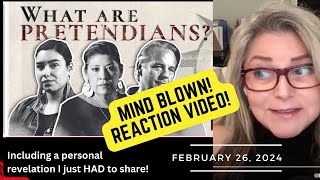
Sandi L Boucher (Red Thunderbolt woman, Loon clan, Seine River First Nation, Treaty 3 territory) posts a reaction vlog to a short TVO video titled "What Are Pretendians? (NDN POV)." She summarizes and responds to perspectives from Chris Beaver, Riley Yesno, Kim TallBear, and Drew Hayden Taylor on people falsely claiming Indigenous identity ("Pretendians"), discussing cultural appropriation, identity appropriation, colonial violence, and the harms of claiming Indigenous status to obtain jobs or benefits. Sandi situates herself on a spectrum of positionality (describing "steps" of proximity to community), shares a corporate consulting anecdote illustrating community accountability, and issues a strong recommendation that the source video be widely viewed in Canada.
Chapters
I've never done a reaction video before, but if you ever come across something that just blew your mind, that had you screaming yes at the TV channel or your computer or whatever you were watching it on, and it even led you to a personal revelation, well, that's what happened to me when I watched a video this weekend. And I am so excited to share this with you. In fact, I have to focus on trying to calm down so I can share this information with you. Let's talk about it. Hi, everybody. Make sure my mic's working. Yes. Hi, everybody. My name is Sandy Boucher. I'm Red Thunderbolt, woman of the Loon clan, a proud member of Seine River first nation in Treaty 3 territory in Northern Ontario. And holy crap, I am. I am pumped. My mind is blown. I just leveled up. However you want to put it. And in true creator showing off, being amazing fashion, it happened when I least expected it. So you got a picture of this? I was sitting on my couch last night, had my remote in my hand, bopping between cable and YouTube. So at this point, I'm cruising YouTube and. And YouTube's amazing at making suggestions. And suddenly I see this video, short, like seven, eight minutes long. And it's called what are pretendiums? And then it has the letters ndnpov. If you don't know what that means. It means Indian Point of view. You got my attention. And by the way, it was TVO today, the TV Ontario Today, that put this out there. So they got my attention, which I guess is what we all want to do on YouTube. I hope I got your attention. And I clicked on the video and the first one to talk was Chris Beaver. He is Anishinaabe, so of course I'm going to relate. He's a multimedia journalist and the first thing he does is describe pretending. And what he says is a person who claims to be indigenous but can't prove it in any meaningful way. So I was like, yep, that pretty much sums it up. And of course, 60 scoop fostered out. They have challenges, but they can prove their 60 scoop right. So we could go off. But hang on, let's focus on this video next. So I had never heard of Chris Beaver watching out for this boy. From now on, this man I shouldn't be. Don't want to be derogatory. Next came Riley. Yes, now. And I should have been mentioning this woman's name way more often when I encourage you to follow people, because this woman knocks it out of the park every single time I hear from her. She's anishinaabe as well. She's a scholar and a writer. And this is her quote. Well, I'm paraphrasing kind of a little bit jotted down notes as I'm watching it. By the way, the link to this video is below my video, so you can watch it yourself. But listen to this. They, as in settler, settler descendants, white people, whatever. They first tried to get rid of us, then they tried to assimilate us. Then when they couldn't do that, they decided to become us. Oh my God. Then you want to talk about a powerhouse, Kim Tall Bear. Now, Kim was one of the first people that you saw in the Fifth Estate documentary on Buffy Saint Marie, right? So she was the one with her family watching, wanting to sit down and watch a documentary on Buffy Saint Marie because like all of us, she loved Buffy, but she has a lot of experience with Pretendions. And when she first started listening to Buffy talking in this documentary, her heart sank because she sounded like the Pretendians and. And then the snowball. So Kim Tallbear is a professional professor of Native studies. I'm gonna give this a shot. My handwriting is horrible. Sissetin Wapitan Oyate. I believe that is her nation. Probably within Mishnah. Baseland to the pronunciation, but I gave it a shot. So this is one of those mic drop, mind blown, so glad I watched this video moments. What Kim says is the word pretending. First off, she acknowledges it's controversial, duh. But she goes on to say, you know what? The word's too kind. Because what these people are doing is so much more harmful and so much more dangerous than just pretending. Mic drop, amazing. Then comes up Drew Hayden Taylor, who I love. He's a playwright, an author. He's Anishinaabe too. I have to look. I don't know if I've read any of his books, but I've definitely seen his plays. The man in is amazing. And he does the quote. And again, you've heard me talk about cultural appropriation before. Where is the line like, if you learn how to do indigenous style beadwork and you start selling it as indigenous beadwork, that's cultural appropriation. You're not Indigenous, Right? Indigenous inspired is not Indigenous crafts. He says that we've now moved from cultural appropriation into identity appropriation. Mind blown, but just love the way they're phrasing this thing. Chris Beaver, back to the first guy, points out this is the first time in Canadian history there are actually advantages to being Indigenous. And it's why we're seeing These pretendions coming out of the woodwork, they want the jobs, they want the funding. Right. People are scrambling to try to find. So if I can check off on an application form like Drew Hayden Taylor points out that I'm indigenous and no one checks into it. Why wouldn't I check the box? Why wouldn't you check the box? Because pretending ism, as is pointed out in the video, is an. Are you ready for this is an act of colonial violence. It's not just pretending. An act of colonial violence. The act of stealing space, opportunity and benefits from the actual indigenous people they were intended to help. Now we're talking reality. They did point out the psychological relief. I've mentioned that in the past how many non indigenous white people feel guilty about being white because of Canadian history so they'd rather identify with the indigenous side, so whatever. And they did point out that often people, some pretendians that this is going out on a limb and giving them a lot of space. But it could be, and I know we've seen it in the comments on my videos, that sometimes it's the result of family lore you have heard as you were growing up that zone and so, you know, married a native person way back when and no one looked into it. And often when you do look into it, you find out that isn't true. Maybe someone was just darker complexion. Of course I'm gonna yawn. I haven't done that in a video in a long time and it's actually Sunday morning and I wasn't planning on shooting a video but holy crap, I had to share this with you. So Kim, Kim, love this woman. Love, love, love. I'm gonna have to Tag her on LinkedIn because this is this the. I'll let her words speak for herself. There is a difference between someone whose parent left the reserve or whose grandparents were removed but they still have their cousins and their aunties and their family. And someone looking back to 1640 mic drop. That is the problem. And. And what's his name? Chris. Chris Beaver. Yes. Comes back in to point out we all have two parents, which means four grandparents, eight great grandparents, 16 great great grandparents. So when people are going back three, four, five generations, it's a tiny little puzzle piece and a whole bunch of other puzzles. And then Kim goes on. Now the phrase I always use is why can't you choose that one puzzle piece? But Kim explained she doesn't use those words. But she explains why you can't do that is because that means in your family tree there are many generations of people that were not impressed, that had. Didn't have to do with the laws that were so oppressive and so racist against indigenous people. And you're choosing like you want to say you're indigenous, but that's the rhythm without the blues, right? So what they're trying to do back to that psychological relief is disown their white privilege. She goes on to explain that. And I know this firsthand. Welcome to my day job, my career, non indigenous corporations, business people, government officials, whatever it is challenging for them to work with indigenous people. It's two entirely different world views. It's maybe 2, 3, 4, depending on how many different indigenous groups you're working with. We're not all the same, remember? And it's, it's challenging. It's a cross cultural relationship. So when you think of a pretendian, they look and move and talk as the settlers want. So the settlers don't have to work hard to work with them. But they get to claim that they're being inclusive and they've made these amazing changes and they haven't. She goes on to say, now again I'm paraphrasing using my words, excuse me again. I've talked about the stick in the past that you become successful as an indigenous person, you become the stick they beat other indigenous people with. Well, if she succeeded, why can't you? And that happens with pretendions that you look at these pretendions and they seem to have all these degrees and they're doing amazing. Why can't other indigenous people doing that? But the fact is I have to breathe if I'm gonna start. I gotta stop being so excited if I want to stop yarn yawning. The fact is, pretend I didn't have to overcome diddly squats is the point. So by the way, I did mention in the opening that I had a personal revelation and this is the point where the nickel dropped for me. I will explain that at the end Riley comes back. Riley, yes, no. And says we don't get to pick up and put down indigenous identity when it benefits us. Now this is me, total transparency. I am white presenting. Look at me. So I literally could put down my indigenous identity if I chose to. If I put on a blazer and I covered up my tattoos and I didn't wear beadwork and I dyed my hair, whatever, all blonde or whatever the case may be. A lot of people think I'm another nationality for my darker skinned friends, family and followers. That's not an option. Which is again where that personal revelation came in. It is not a Negative. I will share that with you in a minute. Chris Beaver then comes back on, and again, the video link is below this. You have got to watch this. Oh, my God. Everyone on the planet. This should be, like, mandatory viewing for everyone in Canada. Okay. Chris comes back to say that proving someone isn't indigenous can be incredibly complicated and convoluted and takes forever. Blah, blah, blah. I'm getting excited again. Sorry, Breeze. Andy, breathe. Okay. But proving someone is. Is pretty straightforward. And I actually just had this happen, so. So O'Reilly comes back on, and she says that when you meet someone like indigenous people or community or whatever, they'll ask you where you're from. They're not talking about where you live. They're talking about your indigenous community. Where are you from? Or as Riley put it, who you're accountable to. And I was like, nailed it. That's it. And this literally just happened because a corporation reached out to me. Indigenous representation from that corporation, which is usually the case. We did a zoom meeting to discuss the possibility of working together. And the woman had a familiar last name, like a last name I've seen in communities I work with. So I asked her where she's from in niche style. And she told me her community. And I was like, interesting. I didn't realize. What I said was, I didn't realize people without that last name were in that community, because I know they're in this community. And she kind of laughed and said, well, that's my. My husband's community is when I named the last name, when she told me her maiden name in the community she's from. I know her uncle. And we. I was like, oh, my God. He went. He had just recently passed and such an amazing person. And she agreed. And we ended up talking for five minutes. And then I realized there was a third person in on this call. And it was like, sorry, this is just what happens when we get together. That's what Riley was. If you're referring to. But then leave it to Kim Tallbear to bring it home. I love. I love you. Notice how my channel is Indigenous centered space. I'm not talking about white people. It's Indigenous centered through Indigenous eyes. And leave it to Kim. And that is hard to do because we are trained white centered. Canada is white centered. So it's a conscious effort to. To reverse that. And Kim says, reminds us. And it's a reminder. I need it. And I'm. You may need as well. I'd be willing to bet she says indigenous identity and what it is or Isn't, isn't the problem. And I was like, okay, I'm with you. The problem is white people wanting to appropriate, whether it's our land, whether it's our crafts and our ceremonies, or whether it's our identity. The problem is white people appropriating, overstepping, taking what is not theirs. Total mic drop. You got to watch it. You got to watch it now. I promise that. Can't bear the lead here. The personal revelation was when Riley was talking about you can't hide your indigeneity and when Kim was talking about how pretend Ians are comfortable to corporations. And what I realized, and like I said, I own this. It is not a negative. It is reality. It is authenticity. I am what I would call a single step two trainer. And what I mean by that is step three are the pretendions. The pretendions that look white, sound white and have white teachings, but every now and then they change how they phrase things and they're able to share a couple of teachings with you and they trying to present as indigenous. That's step three is where way too many people are following fake people online or in real life or God forbid, hiring them. I am step two. I still look white. I own that. I'm not hiding from a mirror here, but I was raised indigenous. I have that worldview. I have those teachings and I have known for a long time. That is the reason I have a successful career, because I'm comfortable looking enough for non indigenous to approach me. Now. Do not get me wrong, often that conversation crashes as burns because they expect the comfort of the pretending relationship as soon as we start talking and our world views clash. Some were able to work through it and they are the ones that I want to work with and others just abandoned and this is not going to work and they weren't ready for substantive changes anyways. Step one, the highest level is when non indigenous Canadians are actually working with indigenous people that are the darker skin that live in the communities that deal with the worst of the worst on a daily basis. I own my privilege. Unlike the Britannians and descendants who are trying to deny their privilege, I own mine. But I believe I'm here on purpose because I'm going to build a bridge that's going to lead to the people that Canada has to work with and that is indigenous in community. And I will do my part for as long as I'm here. And maybe when I'm no longer here, it's because people like me are no longer needed. That kind of makes me smile so I hope you enjoyed this. Look at how many of them. So many comments. It's an amazing seven minute video linked below to Chris and Riley and Drew and and Kim Chimigwich. You guys are flipping amazing. Thank you for taking something that is so confusing and making it pretty damn easy to understand. Love you all. And to my fans, friends and followers, I'm Sandy Pouche. I will see you again tomorrow. I love you. Take care. Bye. Bye.
More from Sandi

How I Handle "The Four Uglies!" (Alcohol, Diabetes, Healing & Cheap Seat Comments)


All the Stuff We Don't Talk About with NO SHAME! (WMT Podcast w Antoinette Godin)


When Authors Chat ... (Radio Interview for the Launch of "Copper Stone - Glimpse of Blood Memory)



MORE PROOF of Indigenous/Non-Indigenous Relationships that Work! (Walking My Talk w Millie Gormely)
