What I Do ... Shout Media Coffee Talk with Sandi Boucher
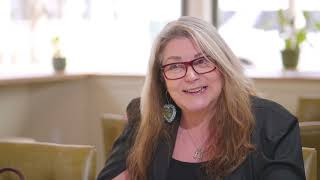
Sandi L Boucher is an Indigenous speaker, author, and consultant who started her business after her mother's death. She offers training on Indigenous cultures and reconciliation through blogs, seminars, a membership program, and a podcast, and has written four books to help organizations understand these topics.
Chapters
Today I'm really excited to have my first female guest on Coffee Talk, Sandy Boucher. And I have yet to have a female, for some reason, on our Coffee Talk Sandy. So I thought, who's the perfect woman to come on and talk about business, talk about her success, and also just educate people more on what she does? Sandy is a very accomplished speaker, Author, I think, four books now and probably more on the way. So excited about that. And also presenter and consultant, basically teaching people in Indigenous cultures. So welcome, welcome. I'm so excited to have the conversation.
Thank you so much.
Yeah. And Sandy and I go way back. I believe that you and I have been working together on different projects in different capacities for, oh, I don't even know, maybe five or six years now, I think. Yeah. With a really great sort of, you know, collaborative relationship. I think we're gonna work on some more things now, maybe some website edits and things. But today I want to talk more about you. So I want to talk about a lot about, you know, why you decided to go into the business that you do, a little bit more information about what you do. But I guess my first question to start off is, tell me why you left sort of working in other capacities and decided to be that entrepreneur who starts her own business. Kind of a little bit of why you decided to do that.
Well, before I started my own business, I was working in nonprofit employment and training, helping Indigenous people either get a job or go back to school or even start their own business. And in 2005, I actually lost my mom. So she was this beautiful Anishinaabe Kwe, an Indigenous woman with all these amazing teachings. And they had really empowered me and any of my friends that I brought to her house. And I just felt her teachings could help so many more people. They weren't going to be able to meet her now. So I wrote my first book, designed my first seminar, and started working exclusively, exclusively with First Nation communities. Getting into the healing, remembering our teachings, just empowering people. And about five years in was the first time a non Indigenous entity reached out to me. They were way ahead of the curve. They wanted to be better at working with Indigenous people and thought to themselves, who better to ask than an Indigenous person? And I was like, there's a path here. So that's what I've been doing for the last 13 years, basically trying to help people reconcile Canada.
Excellent. And what I'd like to know, and I think what people want to know a little bit more of, is maybe go into a little bit more detail of what it looks like if you are brought in for, not necessarily your speaking engagements, because that's a different topic. But let's say even a company like my company, how can you help an organization like mine really educate? And with my dilemma is I have a lot of employees that are not originally from this area. So they know very, very little about Indigenous cultures. They know very little about truth and reconciliation. And I really need to educate them because they're working with a lot of Indigenous groups here locally. So maybe a little bit more detail for me on how you know that that process works and what you can do for these companies.
Well, I think if there's one thing. When Kamloops hit the news, so the first children were found, my phone started ringing off the wall. And I think that was the day Canadians realized there was a huge piece of their education missing. So the people I work with, they always have their heart in the right place, best of intentions, but knowing the pain Indigenous people have suffered, they don't want to add to it. They're terrified of using the wrong word, saying the wrong thing, or working. Worst case scenario, something's already happened, they've offended a customer, and that customer came back and told them. And they're literally calling me, saying, I have no idea what to do. So it's giving them practical information. I'm all about the takeaways. Like, you're going to be able to implement what I teach you the very next day, and it's going to keep you on safer ground. There's no 10 steps. Everyone wants the 10 steps, but there are principles that if you follow those as a guide, you're going to be okay.
Oh, that's great. And I feel like there's so many different organizations and companies that can benefit from that. I know my team is excited. As soon as we said there's a few people that actually already knew of you, and they recommended to me, they said, you know, who you need to bring in to teach the people that are not, and even people that are from Northern Ontario as well. It's not just that, what to teach them. And I'm excited about starting that process with you. So, I mean, that's great, great to know. And is it, is it any industry that you can work with? Is there specifics? Do you find yourself gravitating more to one or. It's pretty much open for anyone who wants to learn.
Every time I think I found my corner, the door opens again. So I think anyone and everyone that wants to engage with, retain their Indigenous staff or Recruit new staff. They can benefit from my seminars. Again, it's very practical. I use conversational English. I'm not going to throw terms at you you don't understand. And I use a lot metaphors, so I relay it to something you already understand to help you understand what things look like from our side. And once you have that information, you can build the bridge.
The other thing that I want help with is we don't employ right now any indigenous staff. And I mean, I'd love to be able to bring indigenous staff and I think they could really help with the work that we're doing. Not just for indigenous organizations, but anyone as a whole. But I'm noticing and I'm just being really honest, they're not applying and I don't know what I'm doing wrong to not attract, you know, other than creating positions that are specific, which I can definitely do with your guidance. But you know what? I could be doing better to bring in more indigenous employees and maybe just give me a little bit of advice on that because I think that could help for so many other companies that are saying the same thing.
Yeah, I don't think that it's that you're doing anything wrong. I think that we look for jobs in a different way than non indigenous people do. So.
So.
And one thing that's hugely important to us is a safe space. Okay. Right. Someplace where we can be who we are. We're not going to be forced to fit into a box. So one of the suggestions I had mentioned previously was use the indigenous people, you know, and that's probably a lousy way to put it, but if you have a job posting, I know how enjoyable it is to work with Shout. It's something I would recommend to anyone. Let me know you're hiring and I can send it out to my network and they're going to go on the fact that, well, if Sandy's saying it's safe, then I should be okay there. So use your indigenous connections, your colleagues, your business associates, and help them use them to help spread the word.
I want to talk a little bit more about getting into more of the speaker part of it because I know, I've seen you speak and I think you are an amazing speaker. So I just. I want to touch on that briefly too, because I also think there's a lot of potential for other organizations as well to bring you in as a speaker and not just necessarily for teaching, but also just because of your breadth of knowledge of all things that business. Female entrepreneur. Indigenous female. So tell me A little bit about some of the speaking and what you're sort of working towards and your goals are. When it comes to speaking engagements.
I would love to do way more keynotes because you reach so many people. So I'm known for my authenticity. And I think nowadays authenticity resonates. You just don't hear it often enough. So when I can stand up and I can show them what life's like from our side of the feather is the phrase I use. And they can see how challenging it is for us to do something like walk into a school, then it builds that bridge and they just run with the information afterwards and go apply it to whatever area of their life they want to use it in. But it's just that missing information. One of my keynotes is called Missing Pieces for that exact reason.
I know you touched on a little bit about the teachings you know, came from your mom, but also a little bit more because I know we've talked about the backgrounds behind each of the books and, you know, just give me a little bit of the background behind each of them because there's stories and I love the stories that go with the books.
So the first one is the one that was the result of my mom passing away. So I now know anyone that's struggling with grieving or whatever it is, the loss of a job, the loss of a partner, the loss of a child, that's the book that resonates with them. It's a daily guide. There's a little story for every single day. Just something, a little tidbit that you can think on as you go through your day. The second book is her mother's Daughter, so that continues the rest of my mom's teachings. But it's the title that was all important. My mom was Anishinaabe, my dad was French, and my mom grew up in a time where she faced a lot of hardships as an indigenous woman. And because I'm fair, fairer than most of my family, she would always say, don't tell people about me. Tell them you're your father's daughter. The title of the book is Her Mother's Daughter. So I'm just not doing that. I'm proud of who she was and how much she empowers people, even to this day. The third book is the Path Totally Different Ball Game. Canada was starting to talk about reconciliation. A bunch of non indigenous politicians were talking about reconciliation. And I honestly felt like I wanted to climb on the roof and scream out to the world, you're asking the wrong people. You don't get to decide what we need. So the path is actually an action planned reconciliation. But if you look at the book, the title is a little misleading. There's actually two paths. There's the work indigenous people have to do to prepare for reconciliation and the work non Indigenous Canadians have to do. If there's one thing, once you finish the book and it's a really easy read, it's like read it in a day, but it quickly becomes a training manual. One thing is obvious, by the end, you understand why we haven't reconciled yet. There's a lot of work to do. And the last one just came out this summer and it's called I am Awake. And it is a collection. What people kept saying to me because I release a daily blog, you know this. And people in this area love going to camp. They're not on the Internet. And I kept hearing, would you please put these in a book? Like, I need to read them when I'm at camp. So I looked at the last three years of blog posts, picked the most popular ones and put them into a book.
Yeah, and that's worth. I mean, I read the blogs and that's something else that I think that anyone watching today will share on. When we start to promote this or put this video out. We'll also share all your contact information as far as, you know, your, your Facebook and your LinkedIn and everything like that. Because I get inspired by the blogs and they're always, I, I can see you when you talk about today I'm in my sunny kitchen, or today I'm sitting on my couch with my cat, or today I'm taking a break and everyone else should have it like you. They're little, little life lessons. And Barb, kind of my office manager hit the nail on the head when you were meeting with her today. She said, they start my day and they do start your day. They're very, very optimistic. They're usually very positive because I think that's your overall outlook is to be really positive. So I encourage everyone that's watching today read the blogs. I know there's emails as well that you can subscribe to, but for me, that seems to work for me. But I think you'll also get little pieces of how you can reconcile as well and how you can learn more through all of those pieces. So I love that about the work that you do.
And it is definitely based in positivity because the way I look at it, my dad was French, my mom was indigenous. I saw them have a beautiful relationship. Neither one wanted the other to change. So I know reconciliation is possible. I'm not into shame, I'm not into guilt. I don't need anyone feeling bad. But we got to have some conversations so we can actually change things.
Yeah. And I know too, that it's a very positive outlook. But I've also seen you correct people when. When they don't have the breadth of knowledge that you do. They don't have any indigenous background, and they seem to try to teach you what you already know. And I've seen you politely, you know, give them some teachings that they may not know. And a lot of times I've seen them say, I didn't know that. I didn't think. Think of that. And we won't get into too much about the white privilege, but there has been some educating. Well, it's very easy when you're privileged. You don't quite understand. So I know that that's some of your teachings, but always in a positive way. And that's one of the reasons that I wanted you here today, because the positivity, we're positive people.
Yes, yes.
So I'm going to move into a little bit more now entrepreneurial. I think that right off the bat, to be a woman and an entrepreneur and to be an indigenous woman is a little bit more difficult in some capac. But you have done such a good job with your business, and we've kind of done the same entrepreneurial business for quite a few years, you know, went into business at the same time. So I wanted to talk a little bit about some of the challenges that you faced being an entrepreneur and how, you know, I've seen this happen so often with women who just, they start a business, but they really don't know what to do. And then after a year or two, they get frustrated, they don't grow their business, they're running into cash flow issues. And we had touched on, you and I, we love the don't work in your business, work on the business. I'd love to hear you talk a little bit about your perspective on that and how you've grown your company, because I know you had to learn that just like, you know, a lot of other business women do and some never learn it. So tell me a little bit about that.
I actually learned that from you.
Okay.
At one of the events where we were both speaking and it was part of your speech and I swear to God, it was like a light bulb moment, like I just figured out what I'm doing wrong. So I've never Been scared of hard work. So when I think that's it, women, like, we roll up our sleeves and do the hard work. But when it comes to thinking of yourself as a successful business owner, presenting yourself as such and pricing your products so you can be.
Yes.
If the biggest challenge was overcoming your own lack of self confidence or your own limitations, you have to believe in yourself and your products before anyone else does. And I know for me, because it was tied to my name, like I was literally selling what I'm going to say. It's like, wow, I really have to get okay with this. But I went into it really firm in that what I have to say is a benefit. Right. I have zero interest in wasting anyone's time and definitely not their money. But what I can share with you will help you to the point that that's the last thing I ask all my audiences, was this worth your time? And I've never had them say, no.
I agree with you. And it's something that's really, really important. But the next thing that I want to just kind of get into a little bit now is like, talk to me a little bit about some of your bigger challenges. Because again, I love that women are going to watch this and I want them to feel like there's going to be challenges when you start your own business. Like, don't you know you can't quit every time there's a huge, and there's sometimes huge days where you're like, I don't. I can't do this. Like, I can't make a living. So give me maybe a little bit of sometimes where you've had big challenges and what you kind of did for advice.
And in the beginning, you know you're thrilled if you get one booking and then you start praying for that second booking. And I had this fear in the back of my mind that I was going to end up living in my car. But I am such an entrepreneur. My mind instantly went to. But I could write a book about living in my car. I could drive across Canada. It would be amazing. So I was definitely meant to do this work. One of the things I was adamant about was I didn't go into business to create a job. I don't like that it had to stay something I'm passionate about. So I am picky about who I work with. If I've had the people call me to want me to come do some training and they're rude and they're pushy and that's just not going to happen. If I can't if we can't meet with respect right in the beginning, then I can tell you what's the problem. And you don't need me to come in to do that.
So if you're an entrepreneur, you need to love what you do. So don't go into some business right, where, you know, you're already going. I'm going to make a lot of money here, but. But I really don't like it because you're not going to be successful.
And it's the balancing act. I find it's always a balancing act. Of course, if what you like to do is, I don't know, cut cookies out, it's going to be challenging to make a really good living. So, yes, it has to be viable. But if it's viable and you hate it, you're going to fail. You're not like, why would you do that to yourself?
No, absolutely. You've got to have that passion. And I know you do, and I do, and I still love it, and you still love it. And I think that's the great thing about it. And I think I'm going to continue to love it, and you're going to continue to love it. So that's the other thing. You've got to have that passion. Right? You're trying to do better for, you know, the world. So you're doing something that's very socially responsible, yet you're making a living at it.
So how do you.
How do you balance that? Because I feel like that could be an issue sometimes.
Yeah, for me, it was definitely all about making a difference. Like, if I wanted to just earn money, I would have stayed with the job I had. I had a great income. It covered everything I wanted and more. But the chance to make a difference is a huge part of Anishinaabe culture. We believe you have to pay forward to pay back. And there were so many people that believed in me. It was like, now I have to educate the ones that come next. I owed my mom that for passing the teachings on to me. I love the fact that 13 years in, my mom still comes to every seminar with me, and at the end, people thank me for introducing them to her. So I absolutely love that. And I see the difference. The fact that we're having these conversations in my mom's life, no one was talking about reconciliation. So I have done a speech in my jingle dress on Parliament Hill. Mom would have never envisioned that. So things are changing. It gets frustrating. There's so much more that has to be done. But you have to Celebrate those successes. And I think when you're making a difference and you can see the difference in the lives of the people you're helping, it is really easy to put in the crazy hours and do all the other stuff that goes into running.
A business, but not to apologize for making a difference and earning a living. And I think that's really important because I think that sometimes people are like, oh, you know what? You should be doing that for free. Yeah. And that's like, no, you know, I can only keep doing this if I.
Earn a living doing the one thing that saves me in that area. I always have free offerings. It might mean a little bit more effort on your part, but you can go to Facebook and read my blog every single day. That's not going to cost you a dime. You can go to YouTube and watch my videos if you want the courses or you want to read the blog post from two years ago. That's my membership. If you want to discuss what's going on in your business, well, that's a training course or my consulting work. But there's always free offerings. And even on my birthday every year I give away all my downloadable products for free for one day. So finances are not a barrier. The rest of the year, I make a living. I'm good with that.
Yeah, no, I think that's great. And that's, you know, I think that maybe that's the balancing act. So if you're trying to make a difference but you still want to earn a living, then maybe there's that balance where you have to be still, you know, giving some free offerings and, you know, having some of that available for people that can't afford it potentially. But then also for the ones that can, having a little bit more detail and having that. So I think that's a really good balance, actually.
I think the only other thing I would add that people need to understand is it's a journey, okay? You're not going to learn everything that you need to know in one seminar or one consulting session. Session. And that's why I do the blog post, that little tidbit every single day, because you're going to get a lot out of a training session. But if you sign up for the follow up, whether it's the membership program or whether it's the free blog post, it adds to your learning and that builds your confidence. And no one likes to be terrified trying to work with someone that's new. So I'm all about building confidence and.
I think too really encouraging people then to follow you, not just if they're coming to work with you. I mean, that's great if they are. So letting people know that, sure, you're more than welcome. And Sandy would love it if you could or would hire her for certain things. However, there's a lot of content out there that's available if you decide that you just want to just get inspired every morning and know what Sandy's doing and what's happening and the progress and, like you said, the journey. Yeah.
And for people that are like, something blows up in the news, I have a podcast now, and that is totally focused on current events. So if something's in the news and you're not understanding what it is, guaranteed my next episode is talking about it.
And I think that's the other thing, too, is next steps. Like, I feel like what I'm going to be doing with you is only just the beginning, but now what, you know, it's great to have a bit of a vision for. As I continue to go down my journey or the journey of my staff, we have continual growth and learning to do. And it's good to know that I can keep learning and keep growing because I think that's so important. And I think it's really important, too, because then I can educate.
You can only interpret things based on what you know, what you've experienced, what you've been taught. But if no one's ever explained to you what it actually is, you're bound to misinterpret.
Absolutely.
That's the basis of my seminars.
Not that long ago, I didn't know anything about residential schools. Okay. I didn't know anything. Probably about four or five years ago, I was sitting on a deck with an indigenous woman, and we talked a bit about it, and I said, what are you talking about? And she said, well, this is a lot of, you know. And she started teaching me about residential schools. And I was like, how come everyone doesn't know about this? And she said, well, people just don't know about it. And it was as recent as this time, and this is what happened. And I was like, well, everyone needs to know about this. So that was education for me.
You don't know what you don't know, and that's okay. My line is, I can work with I don't know. It's. I don't care. That scares me.
Or I don't care to know.
Right. And my audiences care to know.
Yes, for sure. Yeah. That's why we're here. We want to learn and we want to grow. So excellent. It is always so nice talking to you. I feel like we just have a great conversation.
Exactly.
And I'm really encouraging people that don't follow you to follow you, even if they're just following you, just to get those, you know, inspirational motivational tips every day. And I really enjoy chatting, and I'm excited that you are on here. Awesome.
Thank you so much.
You're welcome.
Sam.
More from Sandi

How I Handle "The Four Uglies!" (Alcohol, Diabetes, Healing & Cheap Seat Comments)


All the Stuff We Don't Talk About with NO SHAME! (WMT Podcast w Antoinette Godin)


When Authors Chat ... (Radio Interview for the Launch of "Copper Stone - Glimpse of Blood Memory)



MORE PROOF of Indigenous/Non-Indigenous Relationships that Work! (Walking My Talk w Millie Gormely)
