What YOU Should NOT DO On September 30th!
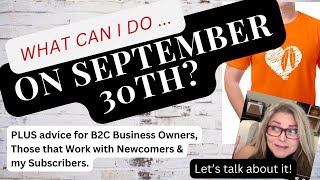
Sandi L Boucher, Anishinaabe/Ojibwe from Seine River First Nation, explains what not to do on September 30th. Wearing an orange shirt means committing to learning and action, not just performing. Businesses should hire Indigenous youth as secret shoppers to check for bias, and newcomers need real conversations with First Nations people, not stereotyped materials.
Questions this video answers
Sandi L Boucher (Anishinaabe Kwe, Red Thunderbolt woman of the Loon clan, member of Seine River First Nation).
September 26, 2024.
Chapters
If there's one question I get asked all the time, it's what can I do? So I have suggestions for you. Today I'm going to talk to several different groups. The first one, what anyone can do on September 30th. The second group is B2C businesses. So anyone who works with customers, the general public, if they're coming into your establishment, we should talk. The third group, if you work with newcomers to Canada, we should definitely talk. And last, if you happen to be a subscriber to my channel, let's talk about it. Hi, everybody. My name is Sandy Boucher. I'm Red Thunderbolt, woman of the Loon clan, a proud member of Seine River first nation in Treaty 3 territory in Northern Ontario. And yes, Mr. Froggy is back supervising my work once again. As I mentioned in the opening, I get asked all the time, but what can I do? What can I do to help? So I thought today I would share some suggestions with you based on input from the many, many First Nation communities I've worked with, not to mention my own opinions as Anishinaabe Kwe, as an Ojibwe female, that I've shared in so many seminars over the years. So first, September 30th is right around the corner. So I have a piece of advice for anyone in Canada on September 30th. What I need you to understand, and this is 100% my personal opinion, Wearing an orange shirt is a commitment. I'm going to repeat that. Wearing an orange shirt is a commitment, which means don't just throw one on. Honestly, myself, and I've heard from quite a few Indigenous people, I can't even leave my house on September 30th because there seems to be a C of orange shirts. And I swear my spirit wants to scream out, where were you yesterday? Where will you be tomorrow? What are you fighting for? Who have you called out? What have you said? If you wear an orange shirt and do nothing else, it is just performative. It's the same as doing a land acknowledgement and doing nothing else to engage with or supporting Indigenous communities. So what I am saying is, if all you can do is wear an orange shirt, don't. Because I see an orange shirt as a commitment that you are willing to do the work. You are going to call out the problematic comments. You are going to engage with Indigenous communities. You are not going to save anyone. You're going to do the work and get the education vacation. If you cannot do that, then put down the orange shirt. Another thing that I just want to Put out there. Unfortunately, with past September 30th, past celebrations, I have seen the focus being on educating Canadians about September 30th and why it's been being honored, as opposed to recognizing that we have survivors in this country. If you are. I can remember the last year. I think it was last year where I turned on the radio and all day our local radio program was sharing trauma stories of survivors, inviting survivors on to tell their story. Is it important that survivors tell their story? Absolutely. But my heart went out to all the survivors who had no idea that was going to happen, who just innocently turned on their radio thinking they were going to listen to their favorite country music or whatever the case might be, and they get hit with a trauma story. Make sure that if you actually take part in an event on September 30, that it is honoring the survivors and not causing future harm. No more harm has to be the hashtag of reconciliation. Right? We can talk about how to make up things, but starting right now, no more harm. Okay, so that's for everyone on September 30th. Please keep those things in mind. Now the next one. Okay. I know you're gonna be surprised, but I was watching an Ed Mylett video. I know you're shocked. And he was actually interviewing John Maxwell again. Just finished reading the 16 undeniable laws of Communication written by John Maxwell. I did a video about it. Recommend the book, John. Well, Ed was commenting on the fact that John has all these notes in his laptop, all these different ideas for speeches and seminars and projects. And often what he does is pass it on to someone who John believes would do a better job bringing it to fruition. That's like total humility. It's not about getting my name on it or being recognized for doing the work. Hey, I think this is important. If you could do a better job because you have more capacity, a better team, whatever the case may be. Here's the idea. Run with it. I thought that was amazing. So I had this idea years ago, and it's been on my back burner. It's not something I thought I should connect with a few people, and it's just not in my wheelhouse right now. But that doesn't mean someone else can't run with it. So I thought, I'm putting it in this video. Let's see what happens. If you are a business owner, whether it's a retail store, whether it's a clinic, where, as long as it's one of those places where the public comes walking in, right? A drugstore or a grocery store or a corner store, or like I said, a clinic or a gym or anything like that. What I want you to do is reach out to the local First Nation community that you want to engage with. Because by the way, if you're in business, there's a customer group that you should probably be servicing. Could help your bottom line. Reconciliation helps everyone. But I want you to reach out to probably the economic development officer, the EDO, on the community, and mention to them that you want to hire 2, 3, 4 indigenous youth to come into your establishment totally unannounced. They can schedule a day and just come in and act like a customer, Walk around the store, walk around the drugstore, check out the gym, ask for a tour, say you're thinking of becoming a member of the gym, and then have them report back to the Edo who will report back to you. What was their experience like in your store? Because indigenous youth can tell you about being followed around the store, about security, assuming they were gonna steal something or the opposite. They were invisible and no one even offered to, to wait on them or to ask them if they needed help. If you want to know. Because remember, back to back teaching, you do not have that perspective. You will never be able to look at your business through indigenous eyes and customer. Do you remember that show like Undercover Boss? It's the same kind of thing. You need a secret shopper in there, but make sure they're an indigenous youth. Don't tell your staff you're doing this. You're not going to know when they're going to show up. Just let them come in and hopefully one comes like in the morning, one in the afternoon, one in the evening, one on the weekend, whatever the case may be, different times, and get them. You could have a standardized questionnaire that you give to the Edo and you know, were you greeted when you walked in the store? Were you followed around? Were you, did you feel comfortable or were you made to feel uncomfortable? Did anyone offer you assistance? Do what Is this a place that you would return to? It is worth paying the. I don't know, give them 50 bucks, whatever for doing this so that they have no problem recruiting people, but on the condition that they pay, answer those questions and provide that information. That would be the best assessment. And when you get it, do not make excuses. Do not say my staff person just was having a bad day. They are telling you how you are being perceived by the indigenous community. Take steps to make sure that it's a positive, you know, that they feel positive about the experience and If I were you, take the steps, do it again in six months. See if you've improved. There is the suggestion for B2C businesses next. Almost. This is another. This is. I didn't have plans to do this. I just wish I would be involved in helping this happen for sure. The third group was. If you work with newcomers new to Canada at different points in time, and I know it's probably different in different provinces or like different municipalities. I'm in Northern Ontario, a smaller city. We gotta look at the resource material that is given to newcomers because I saw some and it reinforced so many stereotypes. What newcomers need to realize. One, Indigenous people are a marginalized group. Two, that there are three natural human reactions to oppression, to being marginalized, violence, acquiescence, non violent resistance. And that they are going to see that in the communities. 3. That many, many indigenous people resent newcomers because it looks to us, to a lot of indigenous people, that there are more supports and more welcome for newcomers than there are for first nations people. There are church groups that work together to sponsor newcomers to come over. There are families that pool resources to sponsor a family. You, you get the Brownie points that you know you're working with newcomers. But there is no comparison, no equal Brownie points for working with indigenous peoples. And no, I don't want Canada to stop supporting newcomers. I think the scarcity mentality is bs. You can do both. You can be amazing and welcome the newcomers. And by the way, if you want to comment something ignorant about keeping newcomers out or they shouldn't be here, don't. You are not welcome to do that. That kind of crap racism against any group is not welcome on my YouTube channel. I want to be crystal clear on that one. So don't. You'll get blocked so fast your head will spin, to quote my mom. So. But we can do both. And I just think it is such a missed opportunity. These people know nothing about indigenous peoples. They can learn about the strength of our culture and all we have survived and how we are now healing and becoming more prosperous. Slowly but surely with each generation there's still so much work to do and so many restrictive policies that have to change. Systemic racism is a thing they will understand because often they are marginalized groups. We need to get those resources fixed. You know what would be the easiest thing? Connect newcomers with first nations people. Have an event, bring them together so that the newcomers could be the audience and hear the indigenous experience. What was it like for indigenous in public school? What was it like in college and university? What is it like walking into a grocery store or a drugstore. What is it like? So they can hear firsthand and maybe even even make some new friends. If not shameless self plug here. They need to go to my website and purchase the PATH video. Course they can watch it in their own time. It will explain just enough of the history to be able to explain modern day and what we can do next to move closer to reconciliation. So there's a huge area of opportunity that we can fix. By the way, federal government. You love lumping the two groups together. The oldest and the newest peoples living within Canadian borders facilitate those discussions. You want to shove us together? Let's make it beneficial for indigenous peoples. And last but not least, if you are a subscriber to my channel, that's the last group. By the way, if you're a subscriber, thank you from the bottom of my heart. You're subscribed. Such a sweetheart and I appreciate you for helping me do my work. Do me a favor, share the videos. Share the videos. Whether it's with your work colleagues, with your friends, if it sparks a conversation, awesome. But please help me to reach people. These are free. This is like free training every single day to help you to understand more, to have the clarity that you were denied in our education system system. So please do me a favor and share the video. So there you have it. Suggestions for everyone on September 30th. Suggestions for B2C businesses, business to customer. Suggestions for everyone that works with newcomers. And last but not least, a suggestion for my subscribers. I love you and I will talk to you again tomorrow. Bye bye. It.
More from Sandi

How I Handle "The Four Uglies!" (Alcohol, Diabetes, Healing & Cheap Seat Comments)


All the Stuff We Don't Talk About with NO SHAME! (WMT Podcast w Antoinette Godin)


When Authors Chat ... (Radio Interview for the Launch of "Copper Stone - Glimpse of Blood Memory)



MORE PROOF of Indigenous/Non-Indigenous Relationships that Work! (Walking My Talk w Millie Gormely)
