Why Indigenous Recruitment/Retention ISN'T Working! - KEYNOTE Address
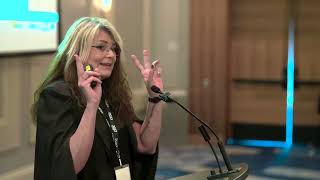
Sandi L. Boucher, Red Thunderbolt of Seine River First Nation, identifies four reasons Indigenous recruitment and retention programs fail: workplace racism, internalized oppression, family and community pressures, and shallow partnerships. She tells employers to listen first and build reciprocal relationships instead of making demands.
Chapters
Than I am. Hello, everyone. Mishko Paganan Kwei Nadishna Kos Mando Dam. My name is Sandy Boucher. I'm Red Thunderbolt, woman of the Loon clan and a proud member of Seine River First Nation in Northern Ontario. And I tell you that for a reason. I am going to be talking about recruitment and retention of Indigenous people this afternoon. But before you storm the gates of Aets or Ashkeep or seven gens, there's some things we need to talk about now. A disclaimer. First, my name, Misko Paganon Kwe. I'm said to represent that split second in time when the thunder sounds exactly as the lightning strikes. People from Thunder Bay know what that means. The storm is directly overhead. Welcome to my world. What I mean by that is I'm not known for being subtle. And I think when it comes to Indigenous recruitment and retention, the days of subtlety have passed. We need to get serious. We need to talk about some hard challenges. So I don't know if any of you are into quotes or reading, but every now and then you know how you come across a quote and it just stops you in your tracks. It just totally resonates with you. Suddenly you understand something like you never have before. I call those lightning bolt moments. I'm explaining this to you because my presentation today has some lightning bolts in it. Some of the things I'm going to say might catch you off guard. It might sound very direct. It might even sound rude. That is not my intention. I'm not trying to be disrespectful. I'm actually trying to be very respectful. I want to value your time. I'm not going to stand here and just talk and not give you information you need to consider. But if you consider what I share with you today, then things actually can change. So to start off, anyone who's ever heard me speak before, I do a lot of stories, metaphors, examples, to help you understand. So I have a little scenario I want you to consider. And I apologize to the women executives in the room. I don't know where Jamie went, but. Sorry. This has definitely got a male slant for a moment because most of the executives I meet are male. I want you to imagine that for a second you're a male executive and you've made a decision. You've come up with an idea, and you actually think this has some merit. What is that decision? You've decided you want to have more sex. So go ahead, giggle. You think about it. You know, you list your pros and cons this is sounding pretty good, but you don't want to rush into anything. So you talk to a couple colleagues and you ask them their opinion. You get the guys in the office together and they're like, wow, this, yeah, totally. You're on to something. This should happen. And then you go home and tell your wife, why am I telling you that? That's because when it comes to Indigenous recruitment and retention and conferences like this, that's what it feels like to a lot of First Nation communities. I hear people saying we gotta hire a ton of Indigenous people. Were you gonna ask us at some point? We're not a product on the shelf that you can just decide. We need 500 of those. There's a conversation that has to happen. Madge mentioned it. Build the relationship. Let's talk about the challenges. Let's actually do this together. Because we're not a product just to fit your solutions. But we could have the most amazing relationship if we do this right. So before you storm the gates of our Indigenous agencies, there's just some things I want you to consider, some things that you want to do with checks and balances on yourself. What I'm going to share with you this afternoon. Okay? Don't groan. I am going to give you a little history lesson. But it's three slides. I think everyone can hang in there for that. No one wants to do the seven hour history lesson. I don't want to do the seven hour history lesson. And then I have four points that I want you to consider moving forward. So first off, let's start with the history lesson. Can we all agree from now on that before contact, before the settlers got here, we all belong to strong, functioning societies, Indigenous communities, we had justice systems, we had education systems, we had government systems that looked nothing like their European counterparts, but they existed. I work across Canada, and you would be amazed how many Indigenous people don't realize that that's the pride that was taken in colonization and assimilation. So why is this important? Because when you start working with First Nation communities, respect has to be there. I have met way too many people that are still that condescending attitude that we're going to be paternalistic and help you out. That doesn't build bridges, that will build walls. Next slide. Then mainstream and First Nation communities started working together. But this era is known as the Save the Indian mentality. Look at the bridge that has been built between mainstream and the First Nations. It's green. It only exists to make money. In this scenario, first nations people are still considered in the way in the exact same way we were moved out of the way when the settlers first arrived. What is even more decimating to our communities is the arrow over the bridge. And what that represents is the flow of information. People that engage in this type of business, contract or relationship still believe they have all the information that the First Nation needs. We'll teach you how to run your community. We'll teach you how to educate your children. We'll teach you how to build your economy. With no interest in hearing from the First Nation perspective the wisdom that we carry. This will not work, but there's a chance. This is what I believe reconciliation looks like. The bridge still exists. We're still going to work together. I hope we're going to work together. But look at the bridge now. It's half red and half white. We're meeting you in the middle of the bridge. Indigenous people are now empowered enough to meet you in the middle when you come in and say, okay, we need the resources. Awesome. We understand that. We need this, this and this. Let's negotiate both from a place of power. Look at the arrow of information now flowing both ways. And by the way, one of the most best examples I've ever seen of this is actually Manitoba Hydro. And it's probably about 10 years ago when I first heard of this, but they wanted to do some development in Northern Manitoba, and they understood they were in Winnipeg. They had no idea what Northern Manitoba was like, but they were smart enough to realize the people that live up there do. They hired massive amounts of Indigenous men and women who were experts on their skidoos to go out and check out what the challenges would be to put in power, increase the power in Northern Manitoba. They looked at the wisdom the first nations people had and built the bridge. It's possible. Please keep this in mind. I promised you four things to consider. These are four challenges. And what I want you to do as an organization, an entity, an employer, is think of your solution to these challenges before you approach the community. Because these are our challenges. This is our reality. And if you can help us solve it. Now we're talking. The first one. Boys will be boys. How many times have we heard that? Excuse me. The reality is that Indigenous men and women are being hired to work in the forestry industry, to work in the mining industry, and they are getting met with the most ridiculous levels of racism possible. And nobody's talking about that. They're getting the same pay as everyone else, except they have to endure this work environment. They have to endure the jokes that aren't Funny, because they're the only indigenous person on the shift. And if you've never experienced racism, it's a gut punch. It feels physical. We have to talk about this. We have to create safe environments. All of us deserve to work in safe work environments, including in a mine. Where or in a mill. Does that make sense? I don't think that's ridiculous. We all deserve that. The next point. Internalized oppression is a reality and it can be devastating. Now for those of you not familiar with the term, any person that belongs to a group that's been oppressed for a long period of time internalizes it. Meaning they start to buy bs. They start to believe the stereotypes about themselves and their own abilities and about members in their community and even in their own families. The people you hire, there is a high, high likelihood that they are suffering under internalized oppression. And it manifests into very different but very devastating ways. The first, the voice in your head. I am a successful business owner. I have been for 13 years and still I battle the voice in my head. That man or woman you hire to go on your shift, the voice in their head is saying, I'm never going to be able to do this. I don't know, I'm confused. I did the training, but I don't know if I remember it all. They're not going to accept me. They really don't want me there. They think that I got a wage subsidy, so they already hate me and I'm never going to be able to do this. So that's the tape that's playing. And then they go on shift and like every other brand new person, they're not going to do that first task perfectly. You know what I mean? Right. As a supervisor, they do it, but we need it done a little bit differently. So the supervisor doing their job comes over and says, by the way, you know, the next time you do that, can you do it this way? Way. Guess what that employee heard? Confirmation of his worst fear. I knew I couldn't do this. Now there's a good chance he's going to finish out the shift the two weeks or whatever. Because sometimes they can't get out of the camp. But don't be surprised if he ghosts you and you don't hear from them again. It's not because you did anything wrong, because the voice was too loud. If we don't educate indigenous people on this is not just low self esteem, this is not a lack of confidence. It is a direct result of oppression and it's real. Now, say for example you make it past this, you decide you're going to do it anyways. You convince yourself you're not going to listen to the voice in your head. Well, it's going to try to get you in another way. The people in your community. You're going to go work for that company. Really? Do you know you have to go away from home to do that? They're not really supportive. You know that, right? I know three people that tried and they came home. Why would you want to do that? You think your wife's going to wait for you till you come back? You think your boyfriend appreciates this? Why would you want to do that? Come on. You're going to miss the hunting party. What if your parents get sick? Why aren't you going to be here? Everyone else is here. Why do you want to do this? Do you think you're better than we are? It's called lateral violence and we experience it to ridiculous lengths in our communities. Again, please do not point the fingers at first nations people. This is a direct result of oppression. This is what happened to us. What you see in our communities are not a natural manifestation of what our communities would have been. This is what happens to a culture when you try to take it away, when the oppression still continues. Now, this one is a direct tie in to point number three, the quay at home. Don't underestimate how strong an indigenous woman is. And if you think an indigenous woman is strong, wait till you meet a kokom, a grandma. Trust me, I'm one. What happens now? You see, so many employers think if we just get them to that first paycheck and they see how much money they can make, well, then they're going to stay. But poverty doesn't scare us. We've existed in it for so long. It's the norm. You know what scares many women back home? Being a single parent. Because we've seen that way too often. And I've lived this. You take my partner out on the road to do long haul truck driving or go to work in a camp for two weeks and I'm stuck at home dealing with the kids and my family and the house and the bills and the groceries, and you dare when you call at night to tell me how great the job is going, how well is that going? The problem is mainstream thinks individual. The person we hire, we think family unit. We value relationships. I want my partner at home, or I want someone to understand that this involves me too. Because missing and murdered indigenous women and girls is a direct result of the SILENCING of Indigenous female voices and we need to be heard to keep our families together. Now, the last point, okay? And by the way, this is not just a shot at the Liberals because every single one of the parties has broken promises with indigenous people. So don't take it that way as an endorsement of any other party. But be really careful the words you use when you say partnership. Make sure you say how long that's going to last because we're going to think we're partners from now on. Don't say things like this is going to be a great relationship because you don't even know the challenges yet. But you can say things like, I really want to work with you and together we'll try to figure this out. Just make sure you listen. If they actually come to you with the problems, and by the way, if you have indigenous counterparts and they're actually coming to you with your problems with their problems, pat yourself on the back because that is a testament to the fact that they trust you enough to tell you the truth. And if they're not telling you, that's a heads up that you need to work on that relationship. So bottom line, at the end of the day, I am not saying, please do not take my words as saying we can never work together. You should stop trying. That is not what I'm saying at all. What I'm saying is, before you think about intention, retention and recruitment, think about the challenges come to our community with what you think you can do to help support us getting past these challenges. Then we know we can work together. Because I honestly believe we can. It is my entire career helping people to work together. Because honestly, if we do, if you take what I've said seriously, if you remember those four things to consider, we can build bridges or maybe even mines, but we'll do it sustainably from both sides of the bridge. If you like what I had to say today, check out my website, Reconciliation Works Canada. I have a table over there. I have information and if you have questions, there's a link box. Just slip your business card in there. I will personally follow up with you. Thank you so much for taking the time today. Miigwech.
More from Sandi

How I Handle "The Four Uglies!" (Alcohol, Diabetes, Healing & Cheap Seat Comments)


All the Stuff We Don't Talk About with NO SHAME! (WMT Podcast w Antoinette Godin)


When Authors Chat ... (Radio Interview for the Launch of "Copper Stone - Glimpse of Blood Memory)



MORE PROOF of Indigenous/Non-Indigenous Relationships that Work! (Walking My Talk w Millie Gormely)
