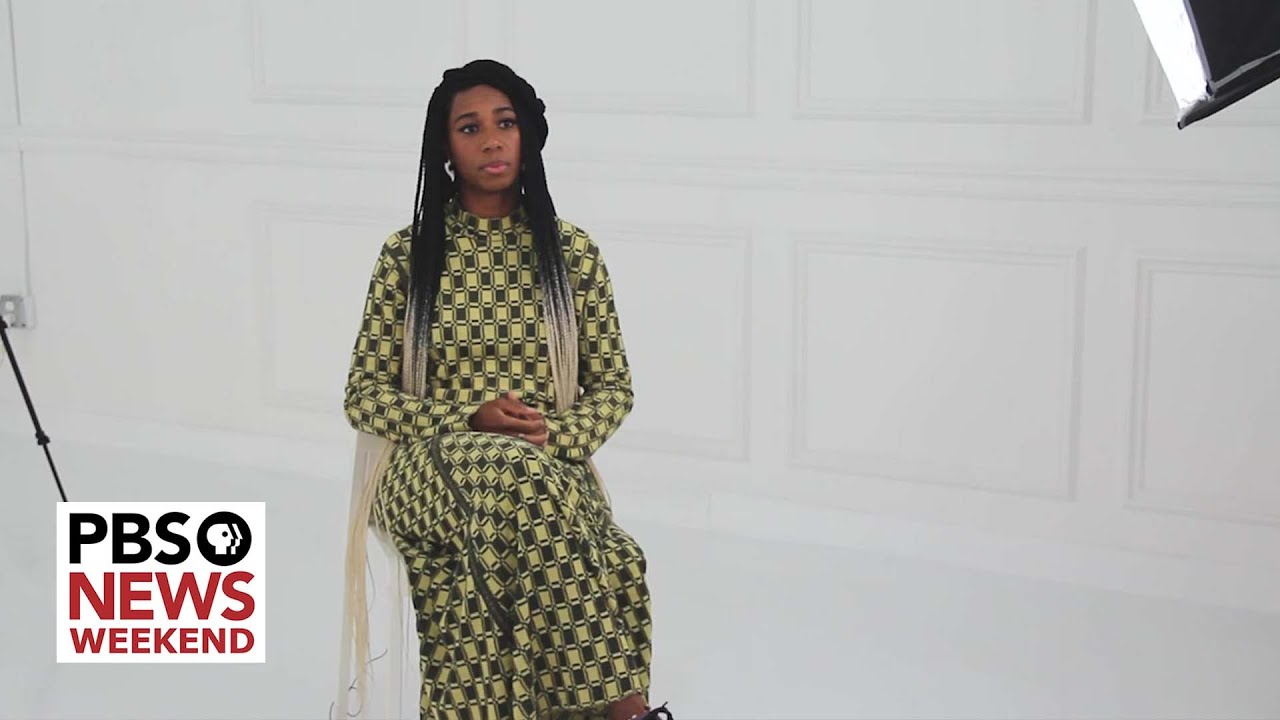
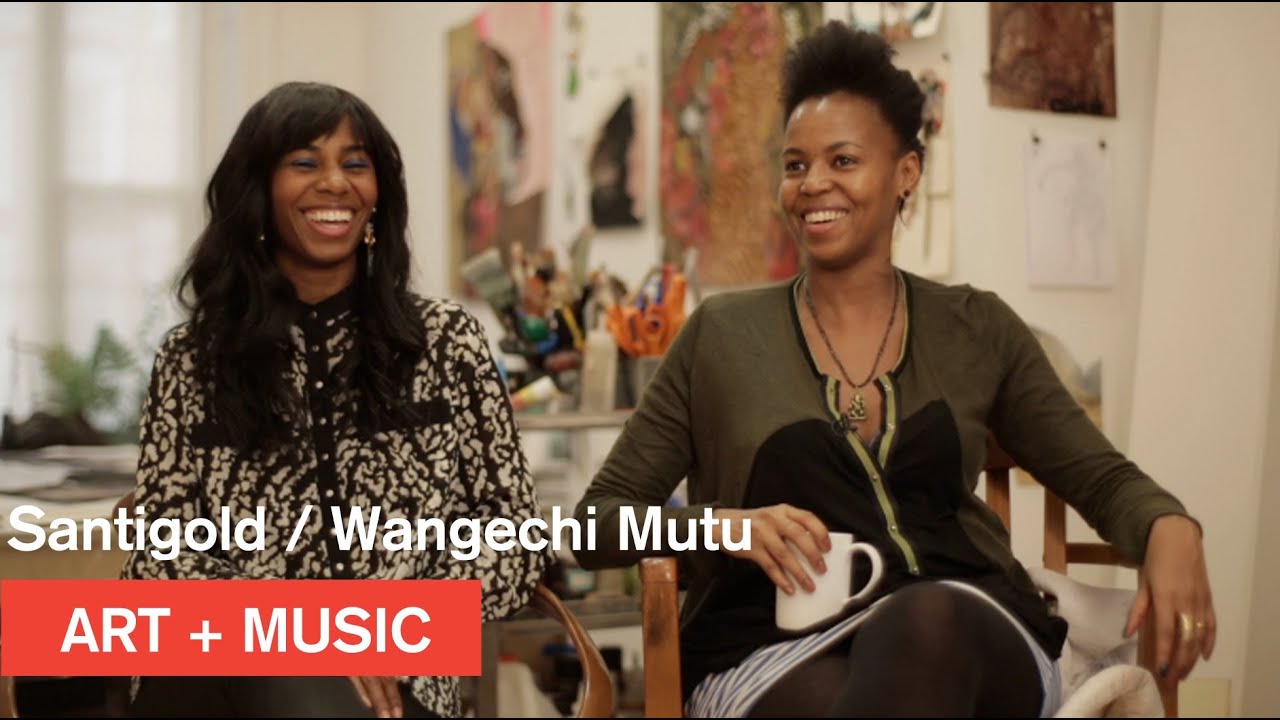
In a PBS News Weekend interview, special correspondent Christopher Booker talks with singer‑songwriter Santigold (Santi White) about the making of her new album Spirituals. The conversation covers how the COVID‑19 pandemic forced Santigold into a period of domestic caregiving and isolation, which eventually sparked a burst of songwriting in her backyard studio. She reflects on the challenges of being a genre‑defying artist—how A&R executives labeled her as “rapper” or “R‑B singer” and tried to fit her into narrow boxes—yet she sees her eclectic sound as a bridge that expands possibilities for artists of color. Santigold explains that Spirituals draws on a legacy of topical music from her father’s collection (Fela Kuti, Burning Spear, Marvin Gaye, Nina Simone) and uses civil‑rights imagery, especially in the video for “Shake,” to address racial equity and resilience. She frames music as a mirror to culture and a tool for transcendence, aiming to move listeners forward while honoring the historical role of Negro spirituals. The interview underscores her belief that art can both reflect and shape societal change.
Chapters
The pandemic forced a lot of musicians to hit pause on their careers, but some artists took that time away from touring to create at home. Special correspondent Christopher Booker sat down with the singer Santigold about defying genres and addressing racial equity on her latest album, which was released yesterday.
Sitting somewhere between punk, electronic, and pop, the music of Santi White, better known as Santigold, is difficult to define. While it might defy categories, in a streaming world where tens of thousands of new songs are uploaded every day, her voice and unique sound is a reminder that in our digital world, it is still possible to offer something fresh.
<LYRICS>Hey pretty.</LYRICS> I think that artists are kind of like mirrors to culture. And so we, what we write and what we create is a way that culture can see itself from different perspective and a way that we can help move things forward. Forward and sort of be bridges to what's next.
What I'm searching for.
White has been constructing these bridges since her 2008 breakout, Santigold, an album that from its first track to its last offered a steady assault on musical stereotypes and typecast. But the genre-bending album almost didn't happen.
I met with the A&R guy and he was like, "Yeah, this seems confused and it doesn't really make sense and you're all over the place." There was nothing you could have called that that would have fit, 'cause it was just so mixed up, but it was everything that I was. And I feel like I opened a lot of doors for all artists, and particularly artists of color who were trying to do something outside of the little tiny box that was allotted for them.
That you have to be a rapper, you have to be an R&B singer.
Rapper, R&B.
Yeah.
And even when I came out, they were like, in all the press, it was like, rapper Santigold, R&B singer Santigold. And I was like, really? Okay.
In the years since, she's only solidified her idiosyncratic stature. But in 2019, White says her creative fire hose started to run dry.
I had some songs that I had started, just like little bits of ideas, and I went in my studio and I was like, I'm gonna write some songs. Nothing, just nothing. I had no lyrics, no ideas even of what I was gonna write about. Then the world flipped upside down.
Like so many of us during that spring of 2020, White found herself forced to stay still, holed up at home with her husband and 3 children. She says the change wasn't easy.
I was the only one in the house that could cook, only one that deep cleaned, only one— I wasn't the only one wiping butts, but we were literally like, I mean, 2-year-olds, just turned 2-year-olds. I just felt like I was drowning in that, but then also outside of the house. Black people getting killed day after day. The riots were happening, the protests, wildfires in California. Like, it was just like— it was too much.
But slowly, White says she started to find time, returning for small sessions in her backyard studio.
Finally, I made it out to the back house. And I just, I never wrote lyrics faster. You know, it was just like I had, it was my opportunity to take a moment to feel, to process, to like be with myself, be with my thoughts, be with my feelings.
This flood of activity resulted in the album "Spirituals" out this week. It tackles today's major issues, especially racial equity. Do you feel that a certain pressure to respond to the world and what's happening in the world?
I grew up listening to music that was topical music, so to me, that's what music was as a child. My father was listening to Fela Kuti and Burning Spear and Marvin Gaye and Nina Simone. I come from that legacy of musicians where it's like, that's what we do.
I won't ever fall.
She's also tapping into this legacy in the visual work. For the video for her song "Shake," she recreates one of the most horrific yet iconic scenes in the civil rights movement of the 1960s.
Shake, shake, got to shake, shake. You got to shake.
I had been just collecting images for this project, and I was just so emotionally impacted by the images of the people, the civil rights protesters getting hosed and pinned against the wall. And so many of them were kids and teenagers and young people. I mean, the song was for me very much about human resilience and about just moving through the challenges, the trauma, the hardship. It was very fitting to just put myself in front of all those and to try to keep moving through it because that's what generations of women, generations of Black women, generations of Black people have had to do.
Got to shake, shake, shake. Got to shake.
The reason I call my record spirituals is because the Negro spirituals Spirituals were a way to transcend people's circumstances and experience joy and freedom when there was none visibly around them. Music has always been a place for transcendence and for fighting and moving forward. That's why I make music, you know, so that what the music does for me can do for other people.