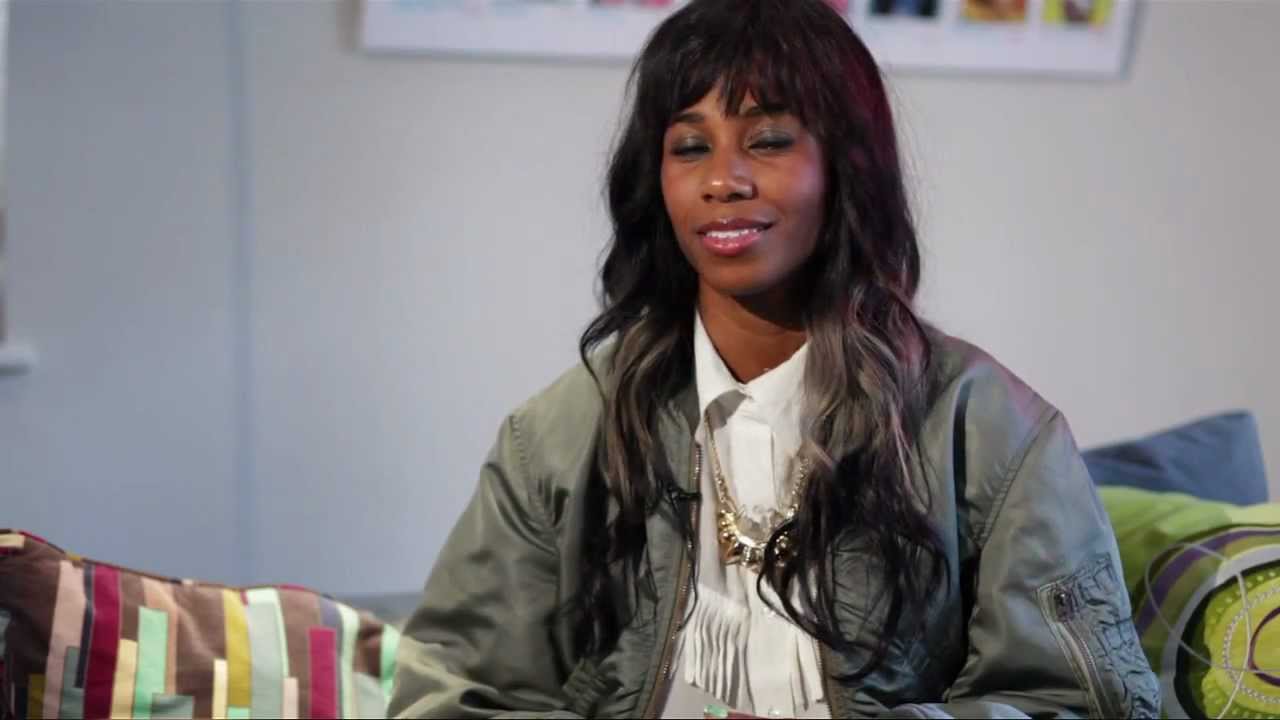
Santigold talks about making Master of My Make Believe by trusting her own vision, even when it seemed illogical. She describes songwriting as intimate and journal-like, and argues that imagination, which children use freely but adults suppress, is essential to creativity. A dream at 15 where she knew how to write music shaped her artistic path.
Chapters
Hi, I'm Santigold, and I have a new album called Master of My Make Believe. Master My Make Believe, it was about partly the process of making the record. I was kind of at the helm of the process by myself, and I really— it was a challenge, and I really had to dig down and find the confidence and the trust in my own creative vision and really sort of claim the role of the ruler of my creative reality, really. Like in a song like "Disparate Youth," it's about daring to see something different for yourself and for your world and then going about making that happen. You know, you really have to trust your own vision and try things that may not even make sense all the way, but if you feel it, you gotta trust it, and that's what "Master of My Make Believe" is about. Writing for me is a really personal thing. It's almost like It's almost like journal entries, lyrics, for me, you know? So all my records, all my songs are going to be personal. Sometimes they're more playful, sometimes they're like, you know, heavier meaning, but they're always personal. I think kids are just wide open. They have like these brilliant imaginations, and I think we all have potential to think like that because really your imagination is like the best thing that you have because honestly imagination is so tied into your intuition. Which is like one of the best tools that we have to guide us through life and to get us what we want in life. But we don't trust ours as adults as much as children do. So I think what happens is, you know, we start thinking that imagination is for children, you know, and like, "Oh, I don't have time for that. Serious things," you know. But we really do ourselves a disservice. My best art comes from when my imagination is really, really engaged, or even, you know, when you first wake up or when you go to sleep, when your mind is sort of like like in-between states, that's when your imagination is the strongest and that's where I get most of my ideas, like my lyric ideas, my video ideas, I get them as I'm going to sleep or as I'm waking up. There's so many gifts that we're given to help us connect with the world around us and most people, like I said, especially most grown-ups are just like totally tuned off to it and I believe in being tuned onto it and especially as an artist you have to be. And dreams are just like a completely, you know, they're so full of so much information for us. I remember I had this dream that I knew how to write music. And when I was 15, I had no aspirations to be a songwriter or anything like that. So I remember I woke up and I was like, "I know how to write music," you know? And look what happened later. And it wasn't even like, it wasn't like from then on. I just kind of disregarded the dream and then, you know, 10 years later, I started singing, you know. It was just, I don't know, it's just interesting. I think dreams are really important like that if you pay attention to them.