AI won’t do leadership for you | The Spiritual CEO Podcast EP02 with Milad Rouhana
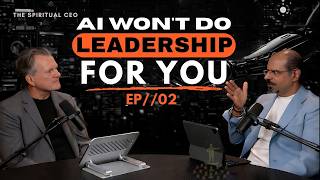
Milad Rouhana, CEO of Perfetti Van Melle Middle East & Pakistan, argues that AI handles tasks but not leadership itself. He uses AI agents to guide field technicians and stresses that visible personal leadership, active listening, and self-awareness matter more than automation when building culture and attracting talent.
Chapters
Now the whole world is transforming and the transformation is so fast. But for every transformation, what I learned in my career, there are 3 main pillars.
Who has more followers? Is it Bill Gates or is it Microsoft?
If your leader is invisible, the culture is invisible. People would know a brand, but you will not be able to attract the top talent if they don't know who you are as a leader.
What do you feel when you see the development of AI?
AI is changing the whole world. From the first day AI was launched, I fell in love. Earlier in the factory, you have to order the technicians. They come, they travel. The cost is massive. You have the clone, or which is agent AI, that they can come on the field just through the tablet and tell them step by step how to fix the machine. Imagine the cost. I don't care today you say I love this guy or not. What I care about, after a few years, you will say, my God, what this guy did for me. This is a leader that I learned from and he changed my career. This is what I care about.
One deep hour discussion and conversation with Milad Rohana. It was a very, very nice discussion where we went through from transformational leadership, AI, anger, personal branding, so many topics. And I'm sure that you will find out there a lot of inspiration for you to tomorrow apply and work with Milad and his company, Perfectly Van Meeler. If you want to know more about this, Stay tuned and watch the whole episode of The Spiritual CEO. So hello, welcome to The Spiritual CEO episode. I'm so happy to be here today and to be with Milad. Milad today will talk with us about transformational leadership, about AI, about personal branding, and many other things that we are going to to share with him. Milad Rohana, he's a CEO, Managing Director from Perfetti Van Melle here in Dubai. And he's, let's say, responsible for Middle East and Pakistan. And he has been working in sales and marketing, in commercial aspects for many, many years. So a lot of experience, more than 25 years of experience. A recognized leader in marketing and in digitalization, in innovation, by many renowned magazines and, let's say, institutions. So I'm super happy to receive you here, Milad.
Thank you, Sergio, for the invite. And I felt very excited when you told me about the purpose behind this discussion, that you had lots of experience in your life and you want to share it with the new generation.
Yeah.
And this is why I'm so excited to be here today, because also I'd like to share from the expertise I have with the new generation. This will be really good because maybe during our days we didn't have the chance to have people help us how to build our brand as people and how to grow. Thank you very much for the invite.
Super. And you know, we are both of us, we are of more or less of the same age. And what I'm saying is that we are exactly in the age that we should start to share. Because when we will be 80 years old, then the young people, they will say, oh no, I will not going to listen to them. And one very important thing that I observe, and that's why also I wrote my book, The Transformational Executive, it is that the way of leading in the companies is changing and it is evolving to a more humanized, to a more compassionate type of leadership. So we are going out of the of the just numbers and control to create from this type of thing. So how you are living, let's say, transformational leadership, you and in your work, I mean, with your people?
To start with, the topic is so exciting for me. When you talk about transformation, directly I smile because what I love to do is transformation. And earlier in my career it was transformation, but now it's not only me. Now the whole world is transforming and the transformation is so fast. But for every transformation, what I learned in my career, there are three main pillars or anchors. One is purpose. Awareness and humanity are very important and they go side by side, the three of them. So starting with the purpose, for any transformation. If you don't have a purpose, like when I told you, when you told me, come, the discussion is about sharing knowledge with the young generation and it's about transformation. So you have a clear purpose behind this podcast and this is why I came. So for any transformation, you need the purpose and the purpose starts with the vision. When there's a clear vision, the purpose and the vision working together They are the core to start for any transformation. And the purpose is not the slogan that we see lots of companies talking about slogan. Yeah. For Perfettino, the purpose is from within. And this is why in this company we're so similar that we believe in doing what is right rather than just doing or selling brands. So when it's a purpose, it's not selling a brand, it's about transforming, adding value to the people, adding value to the employees and to the community. And this is what we do at Perfetti. And I'm a big believer and ambassador for that purpose. The second point is awareness. For any transformation, the leader should be aware of any change he's doing. So you need to understand the impact. You need to understand the people in front of you. You need to be aware about the transformation, about what they're accepting, what they're not accepting. And transformation is not easy, although it became part of our DNA. And for you, you've been here for a very long time in this region. So, you know, this region is the region of transformation. Yes. So earlier they used to say, oh, the Middle East, Africa, these markets are difficult. But now the whole world became like us. Yes. And This is an agenda we have and we have a responsibility to share globally. How can we manage the VUCA area? Because now the world became VUCA. So the volatility and the uncertainty, it's everywhere. So understanding the change is important. So in terms of the awareness, awareness equals agility. And when you talk about agility, it's not easy. Human in our nature, When we do anything, we get used to it. And it's about the habit. Agility is totally the opposite of habit. So you cannot continue doing the habit. For example, I have few people that pass through my career. The— for them, putting a strategy for 3, 5 years, it's like a train that you sit on the train and you go. But transformation is totally against nowadays. Transformation, you put your strategy so you know your end goal, you know your vision. But agility is key. You have to adapt 100%. Adapting is very important. And as well as, as a leader, we need to understand our own strengths and the bias towards our triggers. So we need to understand them to be able to do the change management and transform. Yeah, yeah, yeah. This is it. And agility. And the last one is the people. People, when we do transformation, is knowing how to convince and to influence the people with you and the team and the partners you work with to accept this transformation. It's not easy. And this comes with the long years of experience that the team will build it. But the new generation, they have the podcast, they have AI now helping them to understand what does transformation mean and the steps to follow. So people play a big role in the transformation.
I personally believe that we have a lot of tools now, much more than before, but to exercise the transformational leadership through your own people, it is not an AI that can, let's say, replace that. It happened to me recently, visiting one of my customers where I'm working in a particular project, let's say, in a strategic project, helping them to develop that, that one of the managers, he opened up. And he started to tell me about his personal issues, his personal problems. He is from Sudan. So he was telling me about the war and very problems, sad problems. And he opened up and he started to cry. First of all, I appreciate actually that he was able to open up that much. And one of the things that he told me is here no one opens. He told me because I was opening to talk with him. So for me, the listening, it is a super fundamental thing on the transformational leadership. And there, how do you practice listening, active listening from the heart? How do you do that, Milad?
It's being genuine with everything we do. So listening, earlier in my career, I started to say, how can I listen more? How can I learn how to listen. But I found out that the best way to care about the people and to be genuine, to be genuine. Yes, this was the key for me to listen, because sometimes what they say is not what they want to say or what's inside of them. So the trigger they have is totally different than what they're saying. So it's important to analyze what you're hearing and then take action and then ask further questions to understand the real core issue. Like for you, Sudan, it's hard to live in Sudan. And for their leader, if they're not listening to the pain they have, how can they transform the business?
Yeah.
So the first thing they need to listen, understand. So the guy emptied his cup with you, and after emptying the cup, now you can fill it again.
Yeah. And I think that we are living in a place where transformational transformational leadership, we see it from the governing family. This is a place where transformational leadership is happening at very high level for the things that you mentioned. There is a vision, there is a lot of listening. The government listens to us a lot on every request that we are having. They are trying to accommodate, they are trying to evolve all the time. So we are in the right place, I would say, for that.
We're lucky to be in the UAE.
We are lucky, yes.
And under such highly visionary leadership. Yes. Because also we learn a lot from them. Look what happened to UAE from a desert to one of the best cities in the world, most safest, latest technologies. We're lucky to be here and we can learn a lot.
We can learn a lot. It is the place to practice. As I'm coming from a lot of years from another countries and I can tell you here you can feel transformational leadership happen in every corner. Milad, one other thing that I wanted to ask you, and it is related to corporate brand and personal brand. One of the things that I really, that I observe looking at you and your profile and what you're doing, etc., that you have a lot of followers actually in LinkedIn. So you are, let's say for me, you are working on developing your personal brand while you are in the corporate world. How this works today for you? How do you manage this?
The first thing, what I believe in, if your leader is invisible, the culture is invisible. So very important for me in today's world where everything is social media. People would know a brand, but they will not join. You will not be able to attract the top talent if they don't know who you are as a leader. Because you will not come only work for the brand. You need the culture in the company. And the culture is set by first, yes, the owners, the board, but the leader of the region sets the culture. And to attract best talent, you need to be very visible. And a very important point for me, it's not corporate or personal brand. I never advertise myself as a person. I talk about what our company is doing, what we are doing for the company, how the culture is in Perfettive Mele. And frankly, in the last 8 years I've been with Perfettive Mele, if I compare how we started, we like to work low profile. We're not a company that advertises the company name. We advertise our beautiful products, Mentos. We always want people to be fresh. And Chupa Chups.
You have Chupa Chups, that's a super famous brand.
So we talk about our brands. And as you see, I'm in a podcast, I talk about my brands as well. So it's not about me, it's about the company I represent and the beautiful brands we work with. It helped me a lot after I got exposed on the social media that we're getting employees from top companies in the region. And now when I do any opening— Because they're following you, right? Yes, and they hear, not because of me, because I understand the culture we have in Perfective and Melimia. And they believe that it's a nice culture when they read our communication, our presence, they got inspired that, no, I want to join this company.
And does the corporate support you, guides you in some way, or it is your own initiative?
How does it work? The beauty about Perfetti Van Melle is that we are an entrepreneurial company. So you have the space to do what you want to do. And I'm lucky I have the president here also that gives me a lot of support that let's do what is right for the business. So we do the branding for the company as entrepreneurs. So when I communicate, I communicate as an entrepreneur leading this business in Mia. Yes, we need to be very, very careful nowadays with what to communicate because you don't want to open to public things that you don't want to share.
And how are you in the case that one young professional or young talent is coming to apply for a job in your company and you realize that he has a very strong personal brand already developed? For example, he's an influencer. But is applying for a corporate job.
How you will evaluate that? It's a tricky question, and I will give examples of what happened with us lately. First, nothing to do with— we don't hire because the person is very well known socially.
No, no, I'm saying it happens. It happens that you find out, wow, this guy was really developing his personal brand already.
Yeah. So to start with, I asked my team, the current team, that they have to do their work. We have to perform, we have to deliver, but at the same time we have to communicate. So I'm the one who comes to my team and asks them, did you communicate? You did something good. I want to see it on social media. I want to see it internally on Yammer. I want people to know about what you're doing because we need to share best practices and experiences as well as learn. And every time I sit with my team, I'm known for it. I tell them, did you try? And if not, go try. And after you, if you tried, tell me, did it work or not? And get the learning. So starting from here, if someone comes with a solid background of communication, why not? But I don't like the people because I had in my career people that were very focused on communicating and sharing who they are and what they're doing versus what the work. Exactly. And this is, I don't like, I prefer we are here to work, to deliver, to perform. And to communicate what we're doing, but not the opposite. Sometimes, one time now it happened, a person that applied for a job was amazing, but he had a question that he passed all the process from HR to the line manager, the whole process passed. And then he said, look, but the problem, I need every week 2 days off because I'm an influencer. And I have to travel every week and somewhere. So when you think about it, it's a lot every week, 2 days off and deduct the amount. So we preferred not to accept such big difference in the team. And we said, no way, we cannot accept the person that needs 2 days off and work only 3 days a week. We had to decline.
But in Perfetti Van Mele, it is okay. I mean, in the sense If I am a young person and I have my profile, my social media, I'm, let's say, active in social media, etc., it will not harm us as a candidate, let's say.
Yeah, for sure. We're open. We want the best candidate. We would like to attract the best talent in the region. This is the most important for us. If they are socially known or not, we don't look at that. It's good for them to communicate and for us to attract further. But we don't— cherry-pick them.
Yeah, yeah. You know, there is very interesting things. I mean, who is more— who has more followers and has a more strong brand? Is it Bill Gates or it is Microsoft? And if you go to the statistics, Bill Gates has more followers. So the man, not the person connected to the brand, it really makes a difference. It really makes a difference.
So, sorry, but when you say Microsoft, you say Bill Gates. He is the owner or the founder. For us, we are employees. We promote the brand that we work for. We are leaders that we represent a brand. It's not only representing ourselves.
But there are these two sides, no? There are companies, for me, not yet on the transformational side, 'No, no, no, I don't want people that it is on the social media.' Or moreover, they have hundreds of people working and they are not taking advantage of them to be present, to promote them and their brand. And there are others, like I can understand from you, more on the transformational side, that yes, it is okay, welcome, while you are not affecting the job.
That is very good. Although Perfetti Vanelli, we are not between the top 5 global companies in the confectionery we are, but across. But I think we are very advanced in this area. We are a lean organization. We have empowerment versus control where if I go a decade, people were freak control freaks. If I want to send an email, we used to ask the corporate approval and any communication used to need to take a lot of approvals. Here we have guidelines and perfetti. The beautiful empowerment we have. You have the guidelines, respect, make sure you don't say anything wrong.
That you don't go out of that. Very good, very good. And Milad, related to now that we are entering into a little bit more modern things, right? I know that you are an AI savvy and you give speeches in conferences about AI development and how this is implemented in the food and and beverage, let's say, market industries, etc. What, besides of your knowledge, that I'm sure that you have a lot of knowledge about different AI tools and AI things to do, what do you feel when you see the development of AI?
The speed of change today is not just fast, it's exponential. Exponential. But I love what is happening and I'm a type of person that loves transformation, loves change. And AI is changing the whole world. From the first day AI was launched, I fell in love and I thought, this is a game changer. And I endorsed it from day one and I started to learn more and more. From here, the gut feel, I love it. But the problem, how will we be able to use it properly? How will we be able to make sure we don't go into the negative side of the AI? We want to use it to develop this world, to improve the human life. We don't want to use it to go really negative. I believe that soon we will be seeing more legal focus to drive some guidelines, regulations. Otherwise, it's very open. But if I think about the positive side, there's a lot of positive. But we need to be ready because we don't need— I will take the example that you just gave me. Sorry, I have to highlight it. We just met, that you told me about the beautiful company you're launching, Cervano, where I was impressed to hear what you're doing that you will be launching now in the coming days. I was impressed to hear that earlier in the factory, you have to order the technicians. They come, they travel, they need hotels. The cost is massive. Massive. Now you open this Hervana company where you have the clone, or which is agent AI, that they can come on the field just through the tablet and tell them step by step how to fix the machine. Imagine the cost. It will be nothing versus flying someone in. And if it's very serious that you're linking AI through the real life. So you said that if AI cannot solve it, then the technicians linked to your application can come in and serve. So this is the beauty of using AI and the power of AI positively. I look into Perfetiv and Melle today, we're trying to automate as much as possible using the agent because we don't want AI only And there are many people I talk to, they tell me AI is, will be the earlier days. Sorry, I'll cut here. So when I talk about AI, many people tell me AI is ChatGPT, but no, it's not ChatGPT. ChatGPT is the basic of the basic that answers some basic needs. But now we're talking about agent AI. Later on, we will have the robotic AI. So it's going into a different era and robotic physical because it's a robotic virtual, but we're coming into the physical and this is where the world is going. So how can we endorse it and be part of it? I'm so glad to see it and glad to be part of this era and in this region where they endorse AI so we can make a big change in the world.
I told you that I have done fantastic career, let's say, more on the hard mechanical engineering products, right? More than almost 30 years now. For me, I have the feeling now that I have to put all my knowledge, all my understanding into try to drive AI solutions that will benefit the people. So I really want to jump in So for that, I have to learn a lot. So every training, everything, I jump in and I try to— sometimes it's a little bit overwhelming, I have to tell you. But related to this, as I, for me, every day that it's happening, I learn more. Every day it's like a huge open book. You mentioned, I mean, it is, I would say that it's even more than exponential, you know, if someone can say. But now going back to the young talents, to the young people that will come into our companies, that will come to work into our organizations. What is the requirement for them? I mean, what we can tell to a young guy that wants to work in Perfettiva Mele? Go and study and educate yourself in AI tools, in AI applications, Or it is something that when they will come back to, they will come to the company, you will teach them how to do?
Still, AI is at the beginning. So we still don't have a prerequisite that you need to be AI-driven or AI expert. But personally, when the interviewer reach me, if during the discussion I see that the person has the curiosity to learn more about AI, But not by— there's a lot of theoretical. They give you a nice story. But when I zoom in and they ask questions and I feel that the person has the curiosity, it's an added value for me because I don't want people anymore that have the experience. I will give you the experience. I want people that have the curiosity to know how to use the tools. Because earlier, during our days in school, we used to study books, a zillion of books. Now we don't need them. No, you don't need a person that will build the rocket for you from scratch. AI will help you build whatever you want, but just have the curiosity and how to use it.
Yeah, I recently read one of your last posts. Actually, I think that you have been in Lebanon with your team visiting market, supermarket, right? And I want to ask you, related to AI and Lebanon, I mean, being Lebanon, We are very close because I'm from Argentina, you're from Lebanon, both countries collapsed. How do you see that development of curiosity and development of AI in Lebanon happening today?
As we're coming from the same VUCA countries, I think we are lucky. Currently, we are lucky as people to come from these countries because we lived it all. So we know that you can have a devaluation by 10,000%. You can have war, you can have boycotts, you can have everything, but you have to survive. So you have to come back. And this helped us be agile and resilient. So we never give up. So the world needs people like that now. And this is the change that is happening. It's not anymore like I always say, my colleagues in a few countries that are very stable, It's not fun when things are very stable. You're doing the same thing again and again. But in a volatile region like where we are, and now the whole world is volatile, I think we can add a lot of value. Going into the question of AI in Lebanon, there are in countries like Lebanon, Argentina, many other countries, there are a split of people. There is part that will fall off. And these people, they become very poor. They become obsessed with the negativity, political stuff, or they follow a political party and these guys, they become type of, I'm sorry to say it, losers. Yes. And there's the other part that thrive during these periods and they consider nothing can stop me. Let me learn more. Let me develop. I see it in Lebanon and you have both, like in every country. Yeah, people have the curiosity and are keen on learning and improving as much as possible. Unfortunately, the economic situation is not good. Like if I compare in UAE, you know, the UAE, we have the chance, our kids have the chance here to develop the AI much faster than anywhere in the world. So it's a luck where we are.
And Milad, you are a marketing expert, right? And the team that you lead here, you do a lot of marketing. So how do you see AI influencing you in helping or influencing positively or negatively from the marketing perspective?
In the marketing, there's a lot of AI to be done. We started very early, 2 years ago when ChatGPT was launched. So we did a campaign that was crazy. So we thought we want to lead the way with AI, and it was with our partner from Wavemaker. We were sitting in the airplane and then I told him, personally, I don't like, as I said, the status quo. I like change. So I told him we need to come with something crazy and this is how the marketing impact is going to be. It was in the airplane. And then he texted his team and told them, let's go crazy. They came with the idea of AI. Let's communicate the Chupa Chups and create the Chupa World of AI. Using AI. So we did it. It was crazy. But when we did it, we were proud that we like to try. And this is the beauty of Perfective and Melli. We are a creative company. We like to innovate, not only innovate product, innovate communication, innovate what the kids want. So it had big success. It was a successful story. And from there, now we're moving into more and more. So are we all in? No. I would love us to be understanding the flavor using AI, understanding what the consumer needs, grabbing the data globally and coming with insights using AI, then going into the communication. Now we're trying to automate using agent AI or the social media from creative to storyboard to the communication. Everything should happen through agent AI. So it's a journey. Where I will end up tomorrow, I don't know, but there's a lot to be done. And then marketing, it's the easiest because AI so far is not very, very safe. So they don't access our data. So we can agree what to share and how to use it.
Yes. Don't you think that with these AI agents coming more and more and this, let's say, possibility of combining AI agents with messages and ChatGPT and and let's say, and a good planning and programming, let's say, for social media, we will arrive to, I don't know, I have the feeling that we will, let's say, get, let's say, it will be too much social media to a certain point. Don't you think so? That it will be, I don't know how to say it in English, but it will be, let's say, excessive, you know, excessive. So if you observe already the very, very young people, I mean, you see them in Instagram, the pictures, they pass the pictures like, like it's a second, you know. So it is so much things coming in.
So true. And if we want to look at it, let's compare it with when we started having the phone. It used to be the big phone. Yeah, we take the Motorola, the big one that you hold, and then you do it. So the evolution was so slow until we reached the Motorola or the Nokia. And from then things moved fast, much faster. Could we imagine that at a point of time we have a phone where it can do everything? Our bank, we do video call, we do phone call, everything on it. I think the social media is going to pass through the same stage. Yeah, we were happy first. Wow, the idea came up with Facebook, and you see Facebook kept on evolving, then Instagram and you name it. I think we will come into an area where we're losing the authenticity. And when you lose it, something else will come. Yes. What will pop? We don't know because the, the generation nowadays are very creative. They will come with something that will attract us further. And here comes that, yes, you use AI, it will not kill the whole world. And as people say, you have layoffs. No, because we will come with new ideas that people want to see. Similar to when the phone came, when the car came. Life didn't stop, on the opposite, it evolved. Or the computer, from writing and doing accounting by hand, now today we are very advanced. We use the laptop, we use AI. Same for the social media. But when? We don't know. Hopefully not very late, because another point that we're seeing addiction on social media. And hopefully one day we'll have a bit more control and regulation towards the social media, especially when it comes to different age groups. They will use it to benefit rather than using it just to check stuff that are useless.
And it is interesting because I like very much what you have said, let's say, because all, let's say, skills of an entrepreneur, skills of transformational leader, when you're talking about curiosity, we are talking about try and okay, we may fail, so try and error, all very positive things for entrepreneurs. But either in entrepreneurship or either in the corporate world, we are also suffering sometimes. We also have moments of suffering. And one moment of suffering that I like to identify, and I told you, you know, in my role as an advisor for some CEOs, I help them to find out where are areas of suffering, like for example, where is anger happening. And anger, it is an element that can generate a lot of stress, different type of stress. But you know, when you are angry, you don't feel well, no? And that brings you stress. You know, those nights that you cannot sleep because something happened. You know, in the office, my boss told me something that I didn't like, or my colleague didn't deliver on what he has to deliver, or the customer. I don't know. There are hundreds of things that are happening, and this anger can influence not only me, but can influence others. Have you ever observed that, suffered that, let's say, in your career? I mean, you arrived to a very nice high-level position? It was all, let's say, a journey of roses, or?
It's never honeymoon. Yeah, never, never. It was severe hard work and challenging times that I passed through. I started at the lower of the ladder, and to your point, anger was there, and with time I learned how to manage my anger as well as to empathize with the people in front of me, because I still believe that we are not on a honeymoon at work. So I don't want people to be always happy, enjoying life. You know, he's a great leader. We love him, but we don't work. No, we are working for a company. We have to deliver. We have to perform. But how to get this balance, get the best of those people as well as without having them be full of anger. First, I spot the signals. I try to focus on the person, not what they're saying, because the inside. So the signals can be low energy, silence, changing in the way they manage. And this is where I interfere and I try to understand the core, core issue. Because sometimes the core issue can be related to me, and this is where I work closely to solve it. Sometimes it might be something in their families, and sometimes I tend not to look at it because I want them to learn how to manage the anger they have. Because the junior people, usually when they come, when they hear a word, they don't sleep for 2-3 days. Yes. And they need to learn it the hard way. I believe in this model. We kind of coach them, we guide them. But they need to feel it. They need to understand how to get out of the anger. And when we see it for a long time, we interfere. We try to bring them out because anger at work can stop the whole performance.
The whole performance. Yes. How you mentioned you try to bring them out from that status, from that status of anger moment or stressful moment. Is there anything in particular you are practicing or doing, let's say, for helping them?
Depends from case to case. Like, we have a role to play as leaders, as psychiatrists. And what I try to do is first to understand. I'll give examples without highlighting names. I have a person that has ups and downs. When he's up, he's a leader, that amazing leader. And when he has down, He can hurt the whole area around him. So what I try to do, I, I try to call him and the night after work hours and I ask him, let's go for a walk. We do 2, 3 hours sometimes discussion, just discussing as friends. And he brings things out. So I empty his cup. And during the time of emptying the cup, I find out that there are things I should manage in between. And sometimes only he wants to speak up. He wants to think out loud. It depends. So it depends on the person. But it's very important to understand the core core. And every person will be so we solve it in a different way than the other.
And for a group of 17,000 people, there is any practice that you are, let's say, corporate, let's say, developing to, to support, let's say, the stress reduction levels in the companies.
Sorry, but this is just this point because I don't have 17 with me. So this is for the group CEO. For the group, yeah.
For the group.
Yeah. For the group, our group is a wonderful group. So our group CEO and our president, they take very good care of the people. They push us towards the vacation. They make sure that we balance work-life balance as much as possible. And personally, I talk about the team I manage in Middle East, Africa, and Pakistan. Here I try to be very, very straight to the point and I say it in the face, if you want to call it the Dutch way, because I prefer when people have clarity, they know it's black or white. And this is a big part of releasing stress and reducing the anger because they know what they're seeing is what I have in my mind rather than And I try to, to really work on this type of communication, clear feedback. Now we're working as a team that all levels should have clear feedback with their subordinates or their superior. I think clarity in life helps a lot when you know that what you're seeing is what you're getting. So this reduces a bit the tension. That's all unclarity and uncertainty we have all around us. At least when we are in the office, they need to know that the person in front of me, I can trust that you say it in the face.
Armila, this is something that is ongoing more and more. But still, for me, to my eyes, there is a lot of room to improve still, that is the transparency and to be able to have the courage to say the things as they are and look into the eyes of the employee, of the person, of the young person and say, the things as they are. Sometimes they can appreciate it, sometimes they will not appreciate it in the moment. But if it comes from your heart and it is a transparent message, they will appreciate later on.
I love what you said because I always tell my team, I don't care if you today you say I love this guy or not. What I care about after a few years, you will say, my God, what this guy did for me. This is a leader that I learned from and he changed my career. This is what I care about. And this is how I build my, the image of the person that you can trust or not.
Yeah. I tell you a very short story. You know, one day I celebrate the 25th anniversary of 5 employees working for us in one of our companies in Italy. So they were very senior people, you know, and we were giving a kind of an award, etc. And I asked them, 'Which is the leader that you remember the most?' And from the 5 of them, 3 of them said, 'The first that I— the one that I remember most is the one that was teaching me.' And the other 2, they said, 'The leaders that I remember the most was, even if I didn't like what he was saying at that moment, but he was super transparent.' So transparency and coaching and educating is what the young people remember. So, Milad, what you would like to— I mean, if I want to work in your company, what you will tell, not me because I'm already retired, but for the young people, what you will tell them? I mean, how they can have a chance, what they have to do? Based on what we have been talking today?
We're always hungry for talents. Always. We love to have best talents. But the point, people should be differentiated and they need to add value to the company. So when someone is applying for a job, they need to know where are they applying, which job, what value can they add. And if they cannot add value, better not to apply. But they're always awaited. To add value if they do the due diligence properly. They will know areas because each one of us, we have our strengths and our challenges. If we look into, as the young generation, to know their strengths and see how can they use their strengths to further develop themselves as well as to add value to the companies they will be joining. Because being authentic, knowing yourself well, being self-aware, while applying is the most important. What I hate, and when I see people coming to an interview just studying and opening a laptop, and because it's sometimes Teams call, you see that they want to give you a message that they're reading. I hear, for me directly, they drop, they drop in my mind. And these guys, be authentic, be the person you are. Each one of us at least we have a few characteristics, even when we are kid We have a lot of characteristics that we can add in any company. And I learn from everyone. Every time I go to a market, even the smallest, youngest merchandiser salesman, there are things I can learn from. So we need these people that can be authentic, hardworking, and they work in the companies as if it's their own business.
Be the person you want to be.
Yeah.
Very good. Milad, thank you very much. I think that we had a fantastic, at least I have a fantastic moment with you. I think that we went through different elements, important elements for me to understand how you are, how is your company, but I think that very valuable for the young people. We talk about what a transformational leader is, I mean, what is about AI, how to develop your personal brand when you are inside of a corporate. And we talk about, as we mentioned, evolution, and in this book that brings us potential situations of anger and a lot of stress, right? So I hope that you will get a lot of new talents, let's say, coming after this chat. But if someone wants to connect with you and/or with the company, how do they do?
Sure. First, I would like to thank you, Sergio. It was a great discussion with you. And I appreciate the point that you're doing this podcast just to help people develop themselves and share some of the experience that you have and the people you're getting in that can share with young generation. So thank you very much. It was wonderful discussion. Thank you. Getting in touch with me, it's easy now with the social media. On my LinkedIn is the easiest part. Very active on LinkedIn. It's simple. My name, Milad.Rouhana. It's a LinkedIn. I'm easy. When you go Milad Rouhana, you find me on LinkedIn. So happy to support anyone.
I can. Yeah, you are mainly focusing on LinkedIn, right?
Yeah, I believe in professional social media. I think the rest, it's nice to see them 10 minutes before I sleep, not more than that.
Yeah, very good. Thank you very much. Thank you. Thank you very much.
Thank you.
Thanks.
Thank you.
More from Sergio



The Biggest Leadership Mistake? Thinking You Know Enough | Nenad Pacek | Spiritual CEO Podcast EP05


Trauma Can Either Break You — Or Transform You | The Spiritual CEO Podcast EP04 with Sheena Pirbhai