Trauma Can Either Break You — Or Transform You | The Spiritual CEO Podcast EP04 with Sheena Pirbhai
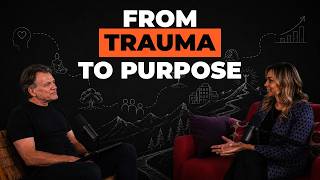
Sheena Pirbhai, a former investment banker, survived a near-fatal car accident that led to PTSD and a breakdown in corporate finance. She launched Fix Switch from a hospital bed, sold it in 2016, then co-founded Stress Point Health to make emotional-regulation therapy accessible through the Sphere app, which uses sound-frequency therapy and AI to help people manage stress and anxiety.
Chapters
Just after I graduated, I had a road accident. I was run over on my bicycle by a lorry, and my employer said, you can take a holiday and come back, or don't come back. So my first company, I actually started from my hospital bed. Then of course the financial crisis hit.
There is something that is called the founder's delusion. You realize everything is against you, right?
I look at the people around me and I say, wouldn't corporate life with a regular salary just be so much easier than what I'm doing? I realized that I had I had to be a master of my own destiny. I had to command my own hours. I didn't know what PTSD was. I didn't know what trauma was. When we experience trauma, we become very dysregulated. Mental health is not a life sentence. It can improve. You don't have to be trapped by it. People respond to my story and the fact that I took something so negative that happened to me and turned it into something positive.
Hello, good morning and welcome to the Spiritual CEO Podcast. One more episode that I really was waiting for. I was really waiting for the guest that we are going to have today. It happened like a month or two months ago that we meet because of these things of the universe put us together and we make a click and I said, Sheena has to come to our podcast and to tell us a little bit about her fantastic career her life experience, about her new startup, and all the things that a woman in Dubai is living about starting up a new business. So I would really like to welcome Sheena Pirbhai here to the Spiritual CEO Podcast. Sheena, welcome.
Thank you so much for having me.
Yes, good morning, and today in a very special place because I explained to you that this is a talk, you know, I mean, we have so many podcasts all going around. Actually, this one, it is called also the Spiritual CEO Podcast, but I wanted to have you with me in a more, let's say, intimate space, because I think that we will have a very nice conversation. So welcome.
Thank you, I'm excited. Yeah, it's going to be great, and I love the concept of your The Spiritual CEO. I think it's so important to discuss topics like this in the context of CEOs and performance, but also just, you know, for everyone else as well.
And you particularly had a super interesting experience that it caught my attention, no, because I'm also in some, in some way, let's say, navigating in the same, that it was your corporate life and your entrepreneur life. So can you tell us a little bit about that? Can you tell me a bit about that?
Yeah, so my story starts when, after, just after I graduated, I did a degree in law and economics at Cambridge. And Cambridge is a cycling city, as some people will know from the UK. And I had a road accident. I was run over on my bicycle by a lorry I spent a significant amount of time in hospital. Nobody really discussed mental health with me at that time. I didn't know what PTSD was. I didn't know what trauma was. So after I recovered from my physical injuries, which took about a year, I started a job in investment banking. Well, anyone who has experienced investment banking as a graduate knows how intense it is, how difficult it is. And that experience of corporate life in banking, plus PTSD, which had been undiagnosed, really created an incredible struggle for me. And after about 2 and a half years, I had a total breakdown, both mentally and a little bit physically. And my employer said, well, you know, you can take a holiday and come back. 'Or don't come back.' And I decided that for the sake of my health and mental health particularly, I wasn't going to go back. And that was the catalyst for everything that happened after that. And that was really one of the things that I really struggled with during that time was, why did this happen to me? And I think for the first time in my life, a few years ago, I might have got the answer to the why of going through something so deeply traumatic.
But this experience that you had, which is impressive after, you know, you told me, no, when we were talking that you had something like you had to pass over 30 surgeries.
Yes.
Which is super impressive, you know. When was the moment that, if you remember the moment that you when it made that click that that corporate life that you were having, let's say, was not really something that was mobilizing your purpose for the future? When was that?
I think there was a part of it that came gradually and a part of it where there was that click moment. And after I left banking, I spent a year focusing solely on my mental health. And during that time, I learned a lot about how the brain and the body work. I learned a lot about how now my brain and body were to function and what would be best for me. And I'd always had entrepreneurial influences in my life. My dad was a business owner. He was an entrepreneur. He was very, very much a risk taker and someone who always encouraged us to do interesting things. My sister was the opposite. She was a lawyer. She was very corporate, very institutionalized. So I had sort of opposing forces to look at. And when I, when I looked at who I wanted to be and who my body and brain was going to allow me to be, because there's a part of that too, I was still recovering from what had happened. I realized that I had to be a master of my own destiny. I had to be able to command my own hours because I used to justify mornings by saying, oh, I'm not a morning person. But actually mornings were very difficult for me. It took my body some time to wake up, for the pain to subside in the mornings, for me to really kind of get going. And so how— that's not compatible with corporate life. Your boss is not going to care that, you know, you can't be in the office at 8 o'clock in the morning because you have physical pain. He's going to say, be there or don't come, or your— and your career will suffer. So at that moment, I realized that if I really wanted to be successful and pursue what was going to feed me, that corporate life was not going to be it. And I've never looked back. And honestly, I cannot imagine going back to corporate life now. I think it would in some part destroy my soul, probably.
And it is very interesting what you are saying, because What you are saying also, it takes me a lot to the concept of the compassion at work. But from what you are saying, it was not there, right? I mean, you were suffering from physical and mental, let's say, issues that you had, of course. But the compassion in the corporate was not there. It was, okay, we have to keep on going, right? Did you feel that?
Yeah, and it really makes me saddened that now being in mental health, not that much has changed. You have some big brands, some large corporates recognizing that in order to really nurture talent and to retain the best talent, they need to be doing more, and there are global initiatives, but they're still not doing enough.
Yes.
And that is really concerning to me because if we haven't progressed significantly in 20 years, we're going to start losing people, burning people out, and maybe even more severe consequences. And employers and corporate has a responsibility to change this, particularly in certain industries.
And you know, Gina, I think that it is happening also that It is getting a little bit worse as the time goes because the pressure and the velocity that is happening in business and in the corporates is growing exponentially. So the managers, the leaders, not all of them, they have time and dedication to think, to have a comprehension of what is the effects of all this in themselves and on the people.
Absolutely. I think that's so well put. And there's also generational shifts that have not quite taken place. You've still got senior management and executive leaders who are, if I can say it, the old guard, who don't really think about their mental health. They've pushed and pushed, they've got on with it, you know, put up and shut up kind of attitude. That's how they had to do it. And they haven't taken into account that The younger generation coming up don't want to live like that. They want more from their job and they're willing to take a pay cut. They're willing to go to a tech company where there's a juice machine in the office, you know, fresh juice, there's coffee, there's matcha, there's a pool table, and they want that to fulfill them. They're not ready. You know, a lot of them are not going to do the corporate grind anymore. And I think if companies don't take notice of this shift, they're going to lose really good talent and ultimately feel that trickle-down effect on how the, the company performs, the KPIs that they have to deliver. And I think this region in the UAE is going to face that sooner or later, that right now people are attracted to the region for the lifestyle, for the tax free, for the sunshine.
But then when they go to work—
but they need to work to sustain that lifestyle. And in the corporate world here, they're not taking care of their employees well enough, and that needs to really shift in order to really be the best that this region can be.
It's all about this consciousness at work, no?
Yeah.
That it is, in, in a way, there is an enormous potential for improving, let's say, the leaders, they become more present and more conscious about it. And Gina, you pass from corporate, okay, you have this transition, this transformation, you have the genes of entrepreneur based on what you experience at home with your family, and then you had more than one experience on startups.
Yeah, so my first company actually started from my hospital bed. I was receiving surgery on my knee and a friend of mine called me up.
You started your company while you were having surgery?
While I was recovering from my knee surgery. And she called me up and she was a film producer and director and she said, I'm making this movie, I've got this investor and I have no idea to do or what to do about the finance. You're the only person I know who has finance background, can you help me? So I said, yeah, sure, why not? I didn't have anything better to do at the time except recover. And so I structured the finance for her movie. The investor was really happy. It was 2008, just before the financial crisis. And he said, will you continue— the investor said, will you continue to work with me? I said, yeah, sure. So that's how my first company, Fix Switch was born. And then of course the financial crisis hit. So a lot of small financiers for movies in the UK, particularly in Europe, stopped investing, you know, in films. So I— but I got the bug for it. I really liked what I was doing. So I thought, where in the world is still making movies? Where is still a little bit shielded from the Western financial crisis, and that was India and Bollywood. And so I didn't know anyone there. I knew friend of a friend of a friend, but I landed there, met with this friend of a friend of a friend. She was very lovely. She took me under her wing, and within 3 weeks I had my first project through the network that I had there. And that was initially just supposed to be 3 months. 3 months became 5 years, and over the course of that time and the following subsequent 10 years, I built that company to 4 offices around the world. We had 15 staff, and then we sold that company in 2016. So, and it took me all around the world, and it was incredible for me, not just building that company but also leaving behind everything to do with my accident, you know, coming out from a really dark period of recovery and pain and mental health struggles to now just really be free from that. And it was an incredibly healing— it was sort of a part of a healing journey, but also fed something in me that I knew that entrepreneurship and building companies and doing what I wanted to. And don't get me wrong, there were a lot of moments in those early days, as you know, I was in my late 20s by now, where I looked at my peers who were all incredibly successful. They were lawyers, bankers, you know, consultants, in reaching really grand heights in their corporate career. And there were moments where I said, I'm not as successful as them. Them. I'm not doing as well as them. I lost my 20s to all of the things that happened to me. And then I met a friend of mine from university in London, and I remember this conversation so distinctly, and I was like, you're doing so well, like, it's amazing. And I just, you know, I feel like I'm kind of not achieving. And she said, do you realize that people look at you and your life and what you've overcome and think 'Should we really be staying in the drudgery of corporate life? Look at how she's living her life.' And it was such an interesting moment for me to realize perspective. The perspective that I had on my life and their life was completely the opposite to what they had for me. And that's where I think it's really important when we're in— we're looking at mental health, we're looking at spirituality, we're looking within ourselves. That outward comparisons are really destructive, actually. But if you're measuring yourself against anything other than where you want to be and who you want to be, it's always going to make you feel negative feelings, I think. And we're so good at doing that. We're so good at comparing to this person or that person or social media or what we read online. And actually, that's a curated reality. It's, it's nothing that we can control.
And it is very interesting what you're saying, and there is something that is called the founder's delusion. I think that we all suffer that, no? When you realize or you think that everything is against you, right? Everything is against you, whatever could be, the weather, your health, the finance of your startup, etc. And you feel that, no, okay, I should stop this, I should go back to the to corporate, that it is more safe. And yeah, but then if we practice that, that we are just enough, right?
Yeah.
Then it helps you to, to keep on going.
Yeah, definitely.
Do you have that?
Yeah, there are so many moments where I look at the people around me and I say, wouldn't corporate life with a regular salary just be so much easier than what I'm doing? But then the flip side of the reward and doing something that I'm passionate about, and when I mentor younger entrepreneurs, particularly women, there's one thing that I always say, that in corporate life you put in, you get a fixed return.
Yeah.
So if you put in 10 hours, 12 hours, or 20 hours in a day, your salary is the same pretty much. You might get bonuses, but pretty much you're input that you're getting back is the same. So in entrepreneurship, the amount of hours you put in will directly relate to what you get back, because it's you, you're the driver, you're building something for yourself. And whether that's financial, or whether that's satisfaction, or whether that's fueling your passion, it might not be monetary-wise, but that is a very different perspective on a career. And that's what I feel so privileged to be able to have been able to do I want to do my, my entire life is actually use things that I'm passionate about and different kinds of fuel, um, to, to achieve what I want. So I think that's the balance as well.
More or less hours being the owner or being incorporated?
I don't think it's more or less. I think there's flexibility. So if I want to work from 6 PM to 2 AM, I can do that. And sleep in until 1 o'clock if I want to do that. I mean, less so now when you have different time zones and meetings across the world, but it's possible. Corporate is more rigid. So I think entrepreneurship gives you flexibility. I don't think the hours are any more or less necessarily. I think you can get to a point where the hours become less and manageable and you can pursue different things, but it really depends on what phase of your business you're at. But I really like what you said about founder delusion though, because one of the other things that I always think is entrepreneurship and founding a startup is a personality type.
Yes.
And there's nothing wrong with not having the personality to build a business. I think there's a little bit of sort of guilt that people feel that, oh, but I want to start my own business, but I don't think I'm able to, or I don't know how to. And I don't think that there's anything wrong with that. There is a spectrum of skills required. Some are in your personality and some you can learn. And I think it's really important to understand that about yourself.
And one very important element is the resilience, right?
Yeah.
And the resilience that, that you have as an entrepreneur, um, that it helps you to move Foguara, and resilience on not only learning from a failure or from a delusion or from a scary moment, etc., but to make it as your opportunity.
Yeah.
To convert that super negative moment in your mind to, okay, but this is really an opportunity. Yeah. And someone, maybe it happens to you, someone is telling you, 'Oh no, but this startup, maybe it will not work, people will not use it,' or this and that. And then you say, 'Oh, why? Why I'm doing this?' But if you are taking those comments as a treasure, if you are taking those comments as a present for you to convert them in an opportunity, that is fantastic. Then the things are moving and moving.
Yeah, resilience is so key, and what you say is so true, because you're always going to find people that don't believe in your vision. Or don't believe in your product, or don't believe in what you're doing, full stop. And those nos and rejections will be thick and fast when you're starting out, and even as you grow. And the key is that either to brush it off, move on, don't dwell on the nos. It's easy to do that, easy to dwell on the negative comment that someone made and the no that they gave you, the rejection. But actually brush it off and move on. Or learn from what they've said. Why? If it's a case of just a vision mismatch, you know, if you're pitching a VC that only invests in AI and you're a truck manufacturer, it's never going to work. But if there are other reasons, it is, as you say, really important to understand, learn from those, and then use that to propel things forward. Because the industry at this Right now, tech is moving at such an incredible pace. I think there was a statistic around AI and tech, whereas before the cycle was a year, like knowledge, knowledge gain was about a year, and now it's about a week. So the knowledge that we're gaining and learning and that the evolution of that is so quick that it's really difficult to keep up. And so We have to evolve with the times. And as a founder, if you have a product, you have to keep your product up to date and you have to ensure that it's relevant. But there's also an element of if you're passionate about something and you really believe in it, and this again comes down to founder delusion, that doesn't mean it's a good business.
Absolutely.
And there's a very, there's a very fine line between making something that— a product or a vision or a service that you're passionate about— into a scalable business. You can make it into a successful business, but then don't measure yourself by VC metrics or other kind of metrics that you read on LinkedIn. But if you want a scalable business, then that's different, and there are different ways of building it. So I think there's also— we have to look at what is it that you want to build and how you want to build it. That's a really important part of dealing with rejection and that kind of thing.
And do you think, Sheena, that it is necessary a different type of leadership if you are on the corporate side or if you are leading your own startup?
It's a really interesting question, and I think there's two parts to the answer. Yes and no, essentially. I think in corporate there's a lot more managing of people. If you're a leader in corporate, you're managing people and you're trying to get the best— if you're a good leader, you're trying to get the best out of your people to deliver what you need to deliver for the business. I think in startups there's a lot more inspiring. You want to inspire people around what you're building and your vision. And maybe a little bit more autonomy to help them achieve that because of the nature of entrepreneurial spirit. We're all sort of, you know, I think as an entrepreneur, you're, or I am, I should say, speaking for myself, I'm less, I don't, I'm not a micromanager. I don't manage very actively, but I like people to be, take ownership of their role, take ownership of what they do. And I hope that I inspire them to do that and that they believe in it and So it's less about management, and for me, as a style, whereas I think in corporate you've got larger teams, opposing, um, KPIs. You've got whether it's, you know, exec co or investors or shareholders or all these people trying to manage multiple different areas of the business, whereas in entrepreneurship it's a little bit more linear because in the beginning it's just building the company by hook or crook, do what you can, you know, get, get your early customers in, get 'People paying for that' and keep moving on. There's a lot less structure. So, but I think ultimately to be successful in both areas, you need to be— leaders, I think, do have overlapping skills. And I think those skills are being authentic, being mindful of your team and their personalities and the different ways that they work, and taking care of your team. And I think great leaders that I've seen— and I would count my husband as one of them, he's a fantastic leader, I've seen the way that he operates— he cares about his team, he cares about nurturing them, about their well-being, about getting the best out of them. And I think so many leaders don't look at how do I get the best out of my team instead of let's just get them to deliver on what they need to deliver.
And I would Absolutely. This is a beautiful definition of a transformational leader, right? And I would like to complement this, that also they have to take care a lot about them.
Yeah.
Because many times they are not the leaders in the corporate and are not the best example themselves to show the others how to do, you know. For example, in stress management, in healthy habits, in food taking, healthy food taking, etc. The corporate life could be very harmful if you don't know how to really manage it. So yeah, I fully agree with you. I think that this definition of the transformational leader is that one that it is be really present, first himself. And if he's present with himself and he understands his, his own signals and his own emotions, he's able to feel the emotions of the team and with that obtain the best of these teams.
Exactly. And I think that, that's spot on. And I think that's what I hope as I look to the future and in the industry, you know, and in the— and now with Stress Point, as we work corporates. That's what I really— that's the message that I really want to convey.
And now you make the perfect bridge, Stress Point. I wanted to ask you, tell us a little bit about Stress Point. Yeah, it's not a pitch, just tell it from the heart what it is.
So Stress Point really, and this is what I referenced earlier in the conversation about the why, um, after I built and sold Flick the Switch, I had a second company that was more for investing in tech startups in the region. Stress Point Health was really born out of this desire to bring the treatment and the accessibility to treatment that I had to a wider audience. But when I looked at what was around in the market, I noticed that everybody was building things in the cognitive space, so digital talk therapy or AI chatbots or telemental health, so just, you know, video calls with your therapist. And nobody was talking about emotional regulation and the emotional side of our mental health. And when I received treatment for that year that I was in recovery, I had emotional regulation therapy alongside traditional psychiatric and talk therapy. And it was the combination of the two that really locked things for me. So I said to myself, we're really only looking at one half of the brain and one half of the issue here. So I called up a man named Dr. Michael Bott. He was a psychiatrist that— he was my psychiatrist during my recovery. And I said, Mike, I want to do something in mental health. Can I come and talk to you about what, what is needed? I want your expert opinion. And he said, yeah, of course. And Mike is incredible. He's now in his 90s, but 30 years ago he wrote a paper, a research paper on how computers will make better psychiatrists. And he always had this interest in how computers and AI and technology could enhance mental health treatment. So he and I sat down and that's where Stress Point Health was born from. We wanted to create an emotional regulation-focused therapy. We wanted to make it accessible and scalable so that anywhere could— anybody could use it anywhere. We wanted to make it cheap. We didn't want cost to be a barrier. And that's where we started. And so what we developed is, um, the ability for sound frequencies, specifically designed sound frequencies, to regulate your emotional responses to triggers, to stress, anxiety, to help regulate the nervous system if you're experiencing burnout or to prevent burnout. And that's how we started. And now a few years later, we are trying to help people understand how Sphere can benefit— Sphere is the name of our app— how it can benefit them. And it's been an incredibly exciting journey.
When did you start it?
We started the company in 2019. Yeah, but we spent a really long time in the UK. Yeah, just before the pandemic. Yeah. We spent a lot of time researching.
You had two situations, 2008.
Yeah, well, anyone who's a millennial or older has really experienced a lot, you know.
I've launched two companies now exactly in this moment.
You know what, it's true actually. Yeah, absolutely. Um, and yeah, but we spent a really long time.
So you're saying that if I use your, your your app, no? I will become a more happy person after following certain, listening to certain frequencies that are adapted to my trauma or my emotion that it is going against me, in a way?
Yeah, in a way. So not happy, more regulated. So when we experience trauma, we become very dysregulated. And the way that our brain processes information is first fight or flight. So is this— is the situation I'm in safe? 9 times out of 10 in your daily life it will be. But when you experience trauma, you've obviously been in a place that is not safe. And then the second place, the second way we process information is emotionally. So then it goes to the emotional regulation center of our brain. And it's about how do we feel. What do we feel in this moment? And again, in regular life, you probably self-regulate your emotions quite effectively. But if you've experienced trauma, that emotional response becomes highly dysregulated. And so you might cry or you might get angry or you might snap or you might feel incredibly fearful and you're unable to self-regulate that response. It starts to become a destructive force in your life. And then the third way we process information is cognitively, so thinking, logic, and behavior. So if you are— if your nervous system is dysregulated or in a constant state of fight or flight, and if your emotions are dysregulated, it's very hard to think logically or make good decisions or balance the cognitive function of your brain. And all of these responses are automatic, so there's very little you can do to control them. If you've experienced trauma and if they've become dysregulated. And so our sound frequencies are, as you say, hyper-personalized to the user. So you choose the frequencies that resonate with your brain function. And over— and the more you use it, the more your brain will— your brain and body will start to remember a regulated response. So what we're aiming for is self-regulation. It's not about being happy or sad. We're aiming for normalized response that are not heightened in either way.
And you are using AI, right, in the— let's say, in which way you're utilizing AI?
So we use AI to process the data from the app, and so we can give AI-driven data insights to companies, clinicians, anybody that is, you know, you can see those. Obviously for corporates it's aggregated and anonymized, so they don't see viewing data, but for clinicians they can see their patient data, individual patient data. And so it gives them really interesting measurability. So one of the things that I think is also really missing when we talk to corporates around what mental health solutions they're offering is how do they measure the ROI. And really they haven't been, so it sometimes means they give up because they're like, well, okay, this is a nice to have, give people yoga, we'll give people this and that, but anything more than that, we don't know how well it's working, so why would we implement it? We're able to offer them that insight, that measurability, KPIs, ROI. We can really show them all of this, and that's really where AI has given us that power to do.
And Sheena, where do you think AI will take well-being? I mean, because why I'm making this question is because of this, let's say, kind of a controversial situation. What is the controversial situation? AI is in a way accelerating everything, right?
Yeah.
And it is also rewarding but frustrating at the same time. Rewarding because you can do much more things, you can create, you can do, but frustrating because I believe that there is a lot of a lot of people there that they already give up. So now this is too much for me. Okay. And at the same time, it can be relaxing because it can reduce your time to do something, but it can be overwhelming at the same time. What, where do you think that AI will take us, let's say, in, in your domain, in the stress management, in the well-being?
It's a big question. And AI, as you say, has a lot of power, but it also has— it's also unregulated in our industry, which I think is part of the problem. We're seeing increasing numbers of young people using ChatGPT as a therapist. We've seen very tragic stories of that going horribly wrong for them. And this is really concerning, I think, for me, that there are amazing AI companies in our industry that are clinically validated, that are regulated, that are doing really exciting things. But the default is still the big names. And I think those big names have a responsibility towards ensuring safety. But, you know, that is yet to come. I think there's an ethical question of that. So I think AI is amazing at assimilating and processing information, but I think when it comes to health and mental health in particular, we need a human overlay. We need to be having human— this is what makes us who we are as humans, it's the emotional connection. And I think that it can make efficiencies, but we still need as humans who are trained and understanding human nature to use what AI— to use AI to make it efficient and to give us— to be able to assimilate a lot of information and to be able to offer us certain facts. But we need to be interpreting that, and we need to be having that personal connection. And I think the most powerful AI in my industry, I think, are the ones that are going to do that. They're going to use AI for processing and they're going to use humans for interpretation and execution. And that will be really where we see a real change in outcomes and the change in accessibility for people.
Another element of the AI also, it is how it is helping people to get more known as well, no? And I was, I told you, no, I was, I'm really impressed about your about, let's say, exposure about your personal brand. I mean, it is congratulations, by the way, because it tells today in social media and internet, you can follow a little bit the life of someone, and it is very interesting. And you have a tremendous, very good personal brand. Thank you. And how does helps or or not to develop your startup? I mean, do you believe that your personal brands leverage the, the development of, of your company?
Yeah, I do. I think in the early days, investors or customers are looking at the founder, and when you don't have revenue, your pre-revenue, and you're in the early days they're looking at this, they're looking at you as a founder and deciding, can this person take this company to the next level? And so, yes, so much of it is about the founder and it is about a personal brand. I think that credibility though is very important with that. It's not just all marketing because, you know, there's a lot of— you could market yourself really well, but if you don't have credibility and the substance to back that up, it won't achieve what you need it to achieve. So I think there's definitely a balance, but I think it is important in this, in the, in the current market with social media being such a heavy influence, it is important to have a personal brand in, in certain industries. But I think that more than that, what I found people respond to is my story and the fact that I took something so negative that happened to me and turns it into something positive. And I think that's what's really fueled my personal brand, just sharing what I've been through and I— and being honest about it. And I think that, that— and that's very important to me as well because I hope that that inspires and helps other people just by seeing that it is possible to recover and to actually You know, I think I know a lot about myself and how— and I understand so much about myself that I think that is a really unique insight that I love, and I don't think I would have had had it not been for work.
And it is about that, no, where we are saying about personal brand. Yeah. Also, I think that it is— and you are doing that very, very well because you are connecting, no, your experience in your working life and your entrepreneurship in one line, actually, you know. And I think that it's a very good message, this one, that if you want to run a startup, if you want to do something, your personal brand is important, and it starts by telling the truth of you to the people without being ashamed of or without being, you know, changing the story or without not telling the real story. I mean, I think that people really appreciate from this part of transparency that you are telling them the real things that happen because you didn't come as a CEO of your own startup from one day. It was a long journey. Yeah. You didn't come a top leader of a multinational company in one day. They started to see you at that moment, so it seems that, okay, how lucky this guy, these women, no? But it is not like that.
Yes.
And people appreciate a lot when you are telling about your own stories. Yeah, absolutely. Yeah, absolutely.
And when I talk about, um, I'm part of, well, we as a company, we're part of something called Mind Forward Alliance, and it's about leaders sharing their mental mental health struggles. Because one of the most surprising things, I think, for people who don't know my story when they meet me is that I've been through all of this. And they're like, wow, you know, it gives people a different sense. And I think this is a really powerful message for leaders that talking about whether— and it might not be something hugely traumatic, it might just be the daily stress that you feel, or different things that are challenging you. But by sharing, I think you not only inspire, but you— people look up to you and say, okay, it humanizes you a bit more, it makes you relatable, and it makes you— it makes those people think, okay, that's normal. That doesn't mean I can't— I don't have to be hard on myself about it.
I can share it as well. Yeah, it opens Yes. If you are sharing your story, it opens others to share their story as well.
Exactly. And it breaks stigmas, which is still there. Mental health stigmas and, you know, these kind of struggles are still stigmatized, especially in corporates. And I think that leaders have that responsibility to break that so that you can create a healthier environment.
Now that you are so immersed in, in, in, in, in corporate corporate well-being, mental health, etc. Which are the, the main blockages that you observe that is happening in corporations?
I mean, in this domain, I think the key challenge is the disconnect between middle management and senior leadership and HR. I think that What we've discovered talking to corporates, a lot of the time middle management is struggling to recruit the best team, recruit the best people to their teams. They're struggling to retain graduates, and senior leadership doesn't recognize that a lot of that is to do with mental health and well-being. It's what I referenced earlier about the new generation coming up wanting more. So first of all, I think there's a connect. Second, I think proving the ROIs to the business leaders is lacking. So even though there are many reports by management consultants saying if you invest £1, you get £4 in return for investing in mental health and well-being, the language that CEOs understand and what HR crush it into is the bottom line. How is this— if this is— how is this affecting my bottom line? Am I losing money? Is this manageable? What's my percentage that I'm putting towards this? And I don't think those ROIs have filtered through yet. And unless you're a very forward-thinking leader who is doing it just because you want to nurture your talent, there's this disconnect still. And that's still a challenge certain industries. I think that we are not yet at a place where stigmas have been broken. I think there's still a distrust from employees about receiving mental— what they would term mental health help from their employer. They still think there's going to be consequences. And so what ends up happening with that is either an employer will bat off to a completely independent independent mental health provider, but then have no idea if their people are getting better or what the returns are on their investment, which is back to the original problem. Or employees won't take up any solutions that they feel their employer has provided and they might have oversight on. So these are the key challenges still within corporate, and I think we need to work on connecting all these dots, giving employees' comfort and breaking stigma.
Do you see that the people, when you are coming with Stress Point, you are explaining to it, do you think that the people open up? So when they see something that can help them, or still, especially in this culture, this region, people prefer not to expose themselves?
Here in this region, we're still very much at that 'they don't want to expose themselves' point. The stigmas are still very powerful. There are forward-thinking leaders here, there are people who want to drive change, and we are working with them to try to change attitudes and break those stigmas, but I think there's still a lot of work to do. I think in other countries or in other regions, and maybe like the UK or the US, there is a lot of conversation around it, but I just don't know how much action there is around it. And I think the blockers to that action are different. I think in the US it's primarily around cost and accessibility. In the UK, I think it's a little bit still of denial that mental health is an issue, and I think there's some transition happening within corporate. Um, and I want to see this move beyond talking about it to real action?
Yeah, you know, in my personal experience as an advisor to CEOs, let's say, in different companies, when I first arrive to the companies and I observe the blockages that are happening, one of the most evident ones is the one that you mentioned, that it is the disconnection And in the majority of the companies, when you are asking about how you are treating people, how you are taking care of the people, they go immediately to the HR processes. And even though the HR processes are known, mentioned, but not really implemented to the point that they are involving people.
Yeah, exactly.
So there is a little bit of a controversy. Adversity there, you know. So, and I think that your job that you are doing, it will help a lot the companies to realize that, that the, the mental health of the overall company, it starts with individuals.
Exactly.
And they have to take care of the individuals. Yeah. The other thing that I can tell you is good well-being brings a lot profit.
Yes.
And maybe even if we don't like that, but we have to tell the CEOs, the leaders, if you are investing in the mental health of your people, your company will have much more profits. And there is a lot of proven examples for that.
Oh, there's so much data out there, so much. And it is proven time and time again that you can increase profitability Reduce your cost burden. All of these things are proven, and I— what you've said is so important, and businesses need to understand this is no longer a nice-to-have. It's a business imperative. It is essential to long-term sustainable profitability, and it's essential for talent. Investing in your talent, you're not— you know, you're— you've looked long and hard for the right people for your business. They're not disposable and don't treat them as such. Make sure that— and they're going to give you back tenfold in productivity, in presenteeism, you know, being present in your business. All of these things are going to be so powerful for you and the investment doesn't have to be actually even that large. I mean, you can— I think companies would be surprised how efficient it can be.
You know, in the Spiritual CEO podcast, one of the things that I'm trying to talk with persons like you that are coming to join me, it's about the three pillars of human suffering given by the Buddhism, actually. It is anger, it is attachment, and it is ignorance. These three things are everywhere in a corporate corporate, everywhere, for all of us. I'm suffering, you're suffering, everyone is suffering about these three pillars, let's say, no? So the attachment, the anger, and the ignorance, right? Where do you see this, let's say, of these three things happening the most, let's say, in corporates, in the corporates, but also in your startup? I mean, I think that You can play a little bit or make a parallelism there.
I think all three are so interconnected. One stems from the other. I think attachment comes from fear. I think ignorance also comes from fear. And this leads me right back to what I truly believe in, that emotions and the way that you respond, because fear is an emotion, is really the driver of so much. It's the driver of bad decision-making, of not performing at your best. So if you ask me, fear really is the thing that drives a lot of those behaviors, because attachment and ignorance of behaviors. And I think that fear can come from a number of different places. It could be from a traumatic experience, it could be from anxiety, it could be just from insecurity. But it's really the emotion in amongst the three that is the most powerful and also the most destructive. And I think if you don't deal with that, and if you don't try to understand it and understand how it makes you think and behave it can be an incredibly negative influence in your work life and home life and personal life.
We have one style of leader, no? The one that leads by fear, which is super destructive, no, in the conversation. Then the people don't talk anymore, don't give an opinion, they just sit back and say, "Okay, you know what to do, probably, no? You decide." And then the decision-making is terrible. There it is where the performance of the companies are blocked.
Yeah, exactly. And there are really high-profile examples of companies that have those kinds of leaders.
Is it with Stress Point we can treat fear?
We can regulate the response, yes. Yes, we can. So if fear is a driving force, or any emotion, we can regulate that response and then we can It's very powerful. Yes. Yeah. To be able to regulate those emotions. So then you become better leaders, better managers, and also better employees across the board. Because there's two parts to developing or feeling a certain way in a company, for example, as an employee, it's very environment driven. So if your environment is constantly making you feel stressed, or it's constantly making you feel fearful because you've got, you know, a very demanding boss who doesn't really look after you, receiving help for that is only going to be one half of the, of the issue. So you may be able to self-regulate, but every time you're back in that scenario, it's going to trigger you again, and you're going to be in this constant cycle. Whereas if you you also work within the environment, you improve the environment, then you've got two halves of a solution that will work together to create a really, a really great outcome.
Do you have a personal experience to share on this, of fear, or in any of one of these pillars, let's say, anger or attachment, that really you saw something impressive for you, let's say, that touched you, or something that you observed on others?
Yeah, when I was in banking, I had a mentor who was actually a very destructive force in my career at the time. I didn't know it at the time, but it was very destructive.
It was your mentor?
She was my mentor.
She was—
we were the only two women in the corporate finance team, and so they thought, let's pair the women together as mentor-mentee. And she was very senior. I was a graduate, she was very senior. But she had both an ignorant viewpoint on women in corporate finance. There was an element of, I suffered so you should suffer. And she was very hard on me, but also was was working behind the scenes to discredit me, and she made me very fearful of the environment that I was in because people were seeing— like, they thought she was my mentor, so they thought she is— what she must be saying is true. And then I brought it up with my direct line manager, and I said, I, I don't think this is a fit. I'm not getting what I want out of this. So they assigned me a different mentor. The change and shift was incredible, both in my personal enjoyment of the mentor-mentee relationship, but also the way that my team and everyone around me perceived me, because suddenly there was none of this negative backbiting going on and that fear that I felt and that she was trying to rule me with in essence. Had disappeared. And it was a very clear example to me of the difference in style can completely transform both my productivity, my ability to do, be at work and, and be happier. I wasn't happy, but I was happier at work. And that's just a very small but clear example of the difference managers and mentors can make on someone in the workplace.
And that's— it is also a kind of a taboo. Yes, the taboo of if the people is happy at work, they are not working.
Yeah, yeah, it's so counterintuitive.
It is totally the other way. People must be very happy at work to be really productive and enjoy and have fun and, you know, and to share and to be kind and to be compassionate with the other one.
Yeah, no, exactly. And you look at different personalities at different companies, and I have examples of friends and family who've worked in particular companies, and you can see how those companies think they can drive productivity or outcomes with their employees. And they choose personality types, they employ personality types that fit with their view on how to achieve what they need to achieve. And I've seen how destructive that can be to both the individual and the business to a certain degree. And so for me, that's really a negative approach to building sustainable, high-performing teams.
And here in this region, uh, China, I think that one thing that has to improve quite a lot is the transition or the transformation between HR managers and HR business partners.
Yes.
Because HR managers are more on the administrative side, but HR business partners are the ones that are trying to break that negative circle that happens in the leaders choosing the organization that fits for them instead that fits for the business, right? Yeah, very, very, very big important. And, Gina, one more thing. In during your period that you have been all your, your physical stress, etc., your mental stress, and, and now that you are a successful, let's say, CEO of your company, stress might hit your doors So I was wondering, what do you do? What do you practice in order to overcome, let's say, stressful situations, overwhelming periods, founder's delusion? I mean, what do you do?
So I do a few things. Exercise, well documented, it's the number one stress buster. And exercise was difficult difficult for me for a long time because of my physical injuries. Um, but now I'm in a place where I'm much stronger physically, so exercise is a really important part of my life. And so I really do, I do use exercise, and not just the gym. I find the gym, yeah, the gym is great for certain days when you really just want to lift weights and get rid of some of that anger that's built up. But if I— the tennis, I love playing tennis. I've gotten into padel since moving Dubai. So sport, those kinds of sports, and going for a walk on the beach, these kinds of things are really important. I think spending time with— spending time switching off. I am very clear on my boundaries. I will not answer emails late at night if I'm out with my friends or if I'm going to sleep. I'm very clear on meeting boundaries as well. I keep days where I don't have any meetings. Generally Mondays, I will try not to schedule any meeting if it's, um, at all avoidable. And I also try to schedule Zoom calls in one or two days in the week because I think it's really— put them all in one day because I think it's important to have a break from your screen because Zoom calls are exhausting, being in front of that, you know, the camera. So I like to really manage my time to optimize my well-being. And I think that's something I've learned the hard way. And sometimes I think as a founder, you feel guilty, you feel guilty about pushing back or determining your own schedule, and you constantly feel like you have to be responsive. Someone asks for a meeting, you say yes. They say Wednesday, 3 o'clock, you say yes. You don't look at how— whether that's good for you. And I've learned that it's important to manage that very well. And I once was part of an entrepreneurs program for female founders, and then, and one of the mentors on the program told me something really, really cool, and I tried to implement it. She color codes her diary according to meetings that she thinks will give her energy, take energy, or be neutral.
Okay.
And then she tries to make sure that she has each type of meeting in one day, so she doesn't have a day full of really draining meetings, and she doesn't have a day full of really uplifting meetings that she could use to balance out other days. And, and this is what I tried to implement. I think it's such a great way of managing your time and energy and well-being. So those are things I try to do, and obviously I use SPEAR as well if I'm having Do you use? I use my app Sphere. If I'm having a particularly stressful day or emotional time, I will use it to, to help regulate as well.
Quite a lot, quite a lot of things.
Yeah, yeah.
But small things that make a little bit of a difference.
Exactly. And I think that's it. It's small micro daily practices that are the most important because I think people think that I'm really feeling really stressed, what do I do? And then they think, oh, I need to get into meditation. But meditation is a gradual process of 2 minutes a day, 3 minutes a day, 5 minutes a day. It's very powerful for some people, but you need to build up to it. It's not going to be overnight. And then people feel bad about that they can't do that and that it's not working for them and they want a quick fix. And so it really is about daily micro things that are manageable and that resonate with you, and it's different for everyone.
Like this thing of the first hour of the day, phone off, no?
I mean, don't have your phone with you. The first hour when you wake up, so that you are still in a kind of a frequency, no? That meditators, we call it in alpha state, no? I mean, don't turn on your telephone, let's say. This is a superpower for people that don't understand, but many people just wake up, phone, and they start to see the phone immediately, you know, and they start with the—
but the flip side to that is that for me, that when I wake up, I'm excited about what my day is going to hold, so I want to check what's going on and see what I might have missed and see what I need to do for my— then I do put it down, I go make my coffee, but for me that sets my day up well. So it's deeply It's different for different people. And I think that's the key, that nobody should feel bad or guilty about something. It's very much what works for you, keep doing that. And don't, again, what we talked about at the beginning, don't compare yourself to other people.
But I tend to think that what is really, really important, that you are consciously taking this micro-moment. Because of your well-being.
Exactly.
We were saying, when I was in corporate as well, we were saying that in this employee yearly surveys, engagement surveys, etc., the well-being was coming kind of low many times, you know. But well-being, the corporate can do things as you are helping them, but it will not cover all your well-being. You have to take, let's say, a lot of ownership of your own well-being. It is by meditating, it is by taking a morning off, it is by color-coding your calendar, but it is the act of being conscious that you have to do something to increase your well-being.
No, that's absolutely true. And even when companies offer Sphear to their employees, the employees still have to use it. So the company might offer it, there starts to be a certain ownership that you have to use that. And that's very, very true.
And which is your, your, your escape?
How do you escape from the tough moments?
The beach. The beach is my happy place. I love going to the beach, listening to the sound of the waves, just feeling the sun on my skin. That really— and it's, it's honestly one of the primary reasons why I love Dubai so much, because on the weekend I can go recharge, really feel rejuvenated. And that's, yeah, that's really, really important to me. And that's the key for me. If I'm ever really feeling like I need to get away from it all, the beach is my happy place. Definitely.
And Gina, what is success for you now?
I started, you know, I started Stress Away with the goal of helping one person. But if I could help one person to feel better and to improve their mental health, then that would be success. We've surpassed that. And we've, you know, helping thousands of people. But success for me will really be when we're helping millions of people. And whether that is through— we do work with charities, and we give away our tech for free. Or whether it's through corporate or healthcare. I want to help as many people as possible understand that mental health is not a life sentence. It can improve. You don't have to be trapped by it, but it requires active participation from you as a person and ownership, as you said. But the tools are there. My door is always open to anyone that wants to get help. And that's what I really want to see. I want to see I want to see us move beyond just talking about mental health. I want to break down statements and I want people to really get the help they need in an accessible way.
Super, super nice.
Yeah, super nice. Building a bigger success because you are already having success, right?
So very, very, very good.
So any particular message that you would like to leave to people that is starting up their dream, okay? We call it business, but it's a dream, right? When you start, you know, I mean, what would be the message that you would like to leave to them, let's say, with the experience that you have made?
It is going to be very tough, and I'm not going to make any bones about how difficult it is, but always remember why you're doing it. And that will drive you through the difficult moments, the rejections. Your why and your passion will also be the thing that people respond to and resonate with, whether that's when you're building your team or talking to investors or talking to potential customers. Passion— don't lose that passion. Passion is so important, and people respond to that energy. And I think that's really be the thing that I would like people to remember, because it is going to be thankless at times. You'll want to give up at times. You want to feel like, is it all worth it at times? But when you see people respond to your passion and people buy what you're building, it's so rewarding. And I think it's really exciting.
And a legacy that you would like to leave?
Um, a legacy that I would like to leave— that I transformed the lives of people with their mental health. I think that's my legacy, that I inspired people, that I helped them, that I was able to give them a better quality of life. If that's what I'm known for in my legacy, then that So that'll be something I'll be very happy about.
And with this, you are giving me a great bridge because— I put here— because I wanted to give you my book. Okay, we are talking about transformation.
Yeah.
So I sign it here for you.
Thank you so much.
Take my book. It talks a lot about transformation. It talks a lot about resilience, about One person the other day— and here it is why I have done it, and I have done it exactly for what is happening today— one person told me the other day, "You know, I read the book and it's all about rebirth, rebirth, rebirth." So, and I think that you will find some connection, extra connection between you and me, you will see.
Amazing, thank you so much.
Thank you.
Thank you for having me.
Thank you, Gina, and we wish you a lot, a lot of success.
Thank you so much.
And hopefully to achieve millions of people will get much better with Stress Point.
Thank you so much. It's great to be here.
Thank you. Thank you very much.
More from Sergio



The Biggest Leadership Mistake? Thinking You Know Enough | Nenad Pacek | Spiritual CEO Podcast EP05
Ego Is Controlling Your Leadership | The Spiritual CEO Podcast EP03 with Geshe Tashi