The Biggest Leadership Mistake? Thinking You Know Enough | Nenad Pacek | Spiritual CEO Podcast EP05

Nenad Pacek, who built a consultancy from his basement into a firm serving 550 multinational clients, argues the biggest leadership mistake is thinking you know enough. He contrasts transformational leaders who keep learning with transactional CEOs focused only on short-term gains, and warns that AI's rapid rise could trigger mass unemployment without universal basic income.
Chapters
And then during the 2009 global financial crisis—
We're in an urgent situation.
People are getting hit hard. Businesses and individuals are all struggling. We're now skydiving without a parachute. And you realize that you're just a number on somebody's spreadsheet. The most important thing in this whole journey is that as an entrepreneur, you realize it's much better to be an entrepreneur than being in the corporate world. But at the same time, the downside is you don't really—
What is your opinion? I mean, how this AI will impact, let's say, moving forward?
I have to say I'm more worried than relaxed about it. This is just completely insane.
If you would like to give one message to the leaders, what would it be?
Keep learning.
Keep learning.
Never stop learning.
Nenad, what is the definition of success for you?
Oh, the definition of success is to have a life.
Wow. Nenad Pacek, thank you very much for coming here to the Spiritual CEO Podcast. I'm really delighted to have you here, so welcome very much.
Thank you, Sergio. Thanks for inviting me. We've known each other for quite some time.
For quite some time, yes.
Thank you.
Actually, today we are going to talk a little bit about the group that you are leading, but I have to say that you helped me a lot when I was, let's say, president of one important corporation. And I would like to ask you ask you, I mean, how this came that you create this group, let's say?
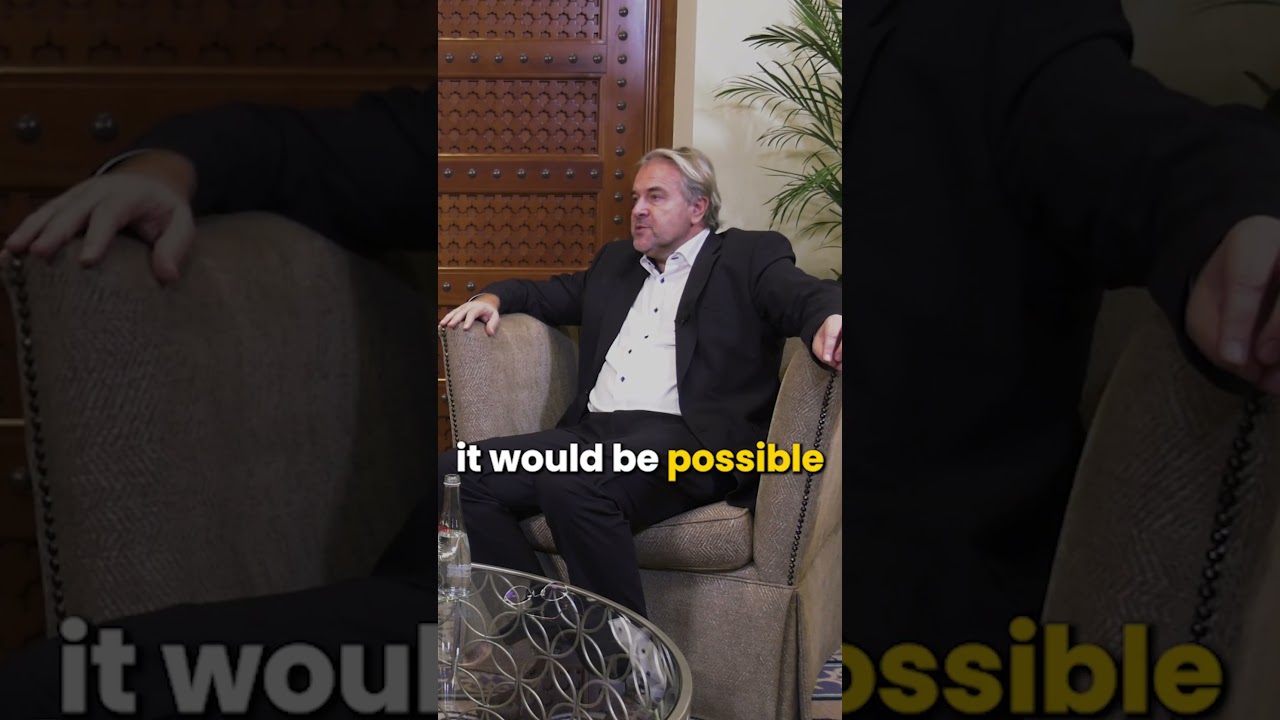
Oh, well, I had a long corporate career with The Economist and The Economist Intelligence Unit that was running from 1990 all the way to 2009. And I was running Europe, Middle East, Africa. We had corporate advisory division that was reporting to the center of excellence in Vienna. That was looking at LATAM and Asia and Middle East, Africa, Eastern Europe, and so on. So I always had in those corporate days managerial role, had a bit of a reputation in the company of turning around businesses that were not functioning well, but I always had like a second hat going out and consulting with clients, helping them understand external environment. So I had the managerial and if you want an advisory role as well. And so always did two jobs for one salary, all of these. Years in the corporate world. And then during the 2009 global financial crisis, there was a massive global restructuring of the company. And the office where I was in Vienna, like many other offices that were doing this consulting work with companies, were actually shut down at the time. And so the whole team suddenly was gone from that office. And I said to myself, I am never going to work for anyone else in my life. And I thought that I had enough knowledge, contacts, some reputation in the marketplace, knowing so many senior executives, that I thought it would be possible to set up a private business. And as usual, you start from some small room in your house, as I did from my basement in a small office. And as anybody who has started any business at any point in time, and I was at the time 41, 16 years ago, so not a youngster, but not old enough to retire or anything like this. So I started to put together the concept of serving heads of Central Eastern Europe, Middle East, Africa for big companies, which included having enough reports that were forward-looking that companies can use for budgeting, planning, setting up first meetings with companies like private club meetings. Our first meeting in Dubai was 12 people in 2009. Wow. And similar things happened in Europe, you start small from a small base. But then I always consoled myself and I said, hey, the first concert Rolling Stones played in London was 3 people in a bar. So if I have 12 at my first meeting in Dubai, that's pretty good. And I have to say, the first 2 years I wasn't sure that the business would work.
3 years?
Yeah, 2 years at least. But in year 3, it became visible that it will be a profitable venture because as people came to these meetings, they realized there is value. When they saw the reports, they saw this is different than anything else in the marketplace. It's really useful. It's user-friendly. It's business-oriented. It's forward-looking and so on. So there's been a steady buildup of that corporate following for the last 16 years. And it went beyond my expectations because now we're working with more than 550 big multinationals across EMEA. And so EMEA Business Group has now become kind of a premium provider of that forward-looking understanding of the external environment, global economy, global geopolitics, outlooks, country-by-country outlooks, and so on. So we cover everything in Europe in terms of content and everything in Middle East, everything in Africa, and now we extended our content coverage into India recently as well. Our next stage is developing a global product, which we already signing up global companies at the CEO, global CEO level, global executive leadership team level. Where we are now extending our content coverage into Asia and Latin America as well.
Aha, so you are going to expand geographically.
So, the idea is to work with global executive leadership teams in terms of one-on-one briefings, talking to executives at that highest level, but also providing insights into the market out there for almost every country out there. So, we expanded team, I just hired some more people into our executive leadership team.
What about your team? I mean, how many people your team has?
Well, we are currently full-time 18 staff plus We have correspondents in different markets as well. And I think that team will expand as well further because I have some other things that I have on mind in terms of expanding the business. So it's gone from a small start to something that's become a sizable thing. And now, you know, initially 12 meetings, 12 people in a meeting in Dubai became 8 meetings a year with 200 people every time.
200, yes. And I experienced all of them. And since I'm here in Dubai, and I have to say that if I would say a word, it's that value. Every time that I came to one of the meetings here, I bring up a lot of value back to the company. I mean, impressive value.
We are very holistic in our approach in terms of trying to connect all the global dots. And we're very careful when before we issue any forecasts on anything, that we take into account everything that could impact Saudi or Turkey or South Africa before we actually make a call on that. And it's a complex thing. And a lot of my colleagues whom you know, from Chris and Christian and Sergio, they're all former colleagues from The Economist as well. So as the business was starting to pick up, I took some of my best guys from The Economist to work with me as well.
And that experience and knowledge is visible, obviously, in the final outcome of the work we And based on all the things that we are talking, let's say, and that you are, let's say, saying in your speech, there are challenges in the globe, in the economy, in the geopolitical, maybe we go to that. But what happens to you back in 2009, from the big economies to the basement of your house? What happened here?
I was fairly highly ranked in that company, and then when it came to restructuring, you realize that you're just a number on somebody's spreadsheet. And I, you know, after you spend 19 years in a company, you don't quite think about it that way because you have a progression of your career going well and so on. And I would have probably stayed until my pension if that hasn't, and I would have been a corporate man until today. When that happened and when you realize you're a number on somebody's spreadsheet, some big decision above that you don't really, cannot influence in any way, then you try to make a transition into something else. You say, I'm not going to be dependent on anybody else. And I'm usually, I am a very dominant personality. I don't maybe look like that, but I don't like somebody telling me what to do usually. And, uh, there was a conscious decision to go into a private business and with all the risks that I was aware of. I was so focused on it to making it work that at one point in time, after 2 or 3 years of me being stuck in my basement, including weekends and long nights and everything else, my wife would come down and our middle daughter was very young at the time. And she said, you know, she doesn't really know who you are. And she was small and she said, who is this guy? Because you were working, working, working. Yeah, yeah, exactly. Because you don't really make a pause while you're building because you have to take care of everything. You're selling, you're writing, you're speaking, you're traveling and so on. There is no time for for anything else. So that was not easy at the beginning, but as long as you're focused enough and you don't neglect sales in the early days of startup business, you have to focus on selling because otherwise you have no income. And so you have to do everything and that's not easy.
Yeah. And this is, let's say, the challenge for many entrepreneurs, no? When they are starting with something and— okay, I have similar experience in a way, not because of a crisis, but I also have done 30 years in a big corporation and now I retire and I'm doing my own venture. So yes, I'm taking also photocopies and making any type of calls, etc., until the team starts to build up.
You cannot be shy about doing anything. I mean, it's in the end, as long as it benefits the final goal, it's fine. And in the end, I'm so happy that I did it because you realize—
Once you overpass, no?
Yeah, because it's a completely different world.
First of all, —Did you leave the basement?
You left the basement? —Yeah, yeah, yeah, the basement's gone, yeah. But the most important thing in this whole journey is that as an entrepreneur, you realize it's much better to be an entrepreneur than being in the corporate world, at least for me. I find it a much more rewarding experience. I'm not reporting to anybody. I don't have a supervisory board. I make all the decisions myself. It is incredibly simple in a sense that we don't have a corporate budget. There is no budgeting and planning or anything like this. As long as we get more Klump companies than we lose every year, because our business is largely around annual subscriptions, I'm a happy man. As long as, even if we would be stagnant at this level, it's also good as well. So you don't really have, you know, those pressures like I had in the corporate days when somebody would call you and say, hey, you have to give me another 25% this year and you have to find it somewhere. So there is not that kind of pressure. So that's a plus. And then of course income is much better than working for a corporation. But at the same time, the downside is you don't really switch off. You don't switch off. Because it's your business.
Yeah, but this was my question. I mean, I ask, you know, did you leave the basement, but was a kind of a philosophical question in the sense you were working a lot there, right? Yeah, yeah. Do you, after how many years now it is? 16 years of private business. 16 years. As an entrepreneur, are you still working with the same intensity as before?
No, no, I'm not working with the same intensity because that intensity was insane. It's beyond anything that anybody should do. But as a startup phase, you had to do it. That was no choice. It's the only way to make it work. But now it's just kind of normal, let's say, working hours. And the team is excellent supporting and so on. So once you set up the structure and you have enough income to support the team and everything else, then it becomes much more normal. Of running a business that way.
And did you suffer any particular high level of stress during the period of the transition or probably the first years when you—
Yeah, you can argue there was a stress, although, you know, as somebody who spent years in a corporation with pressures coming from above, you have to deliver the numbers, budgets, and so on, you're used to that kind of stuff, you're used to stress. So, It probably was there because you're not sure whether your venture will work and you maybe have to go back to some corporation at some point in time, which I'd wanted to avoid. So surely there was stress, but as many people as you are, I'm sure, and many people who are running, they're used to running big businesses and so on, you become stress resistant over time. You don't, you know, maybe it fills you somewhere or—
In my case, I finished in the hospital, I tell you. You did? Okay. Yes. No, not because of a Big, big, big, big.
Well, one of the things, by the way, we are launching in our business now is a human performance advisory as well. And we selected 3 things and one of those— With your wife? With my wife, Antonia, yeah. We've been together for 35 years. She's a professor of psychology, Cambridge graduate and so on. And she is now working on 3 things with our clients. One of those is how do you turn stress into your advantage? Yes. And that's very important. Any coaching sessions can be done around this. And then also we launched this flagship program, which that she designed and created called Imagina, which is an assessment tool, a diagnostics tool that actually measures strengths and gaps in individual creativity and corporate innovation. So there are two sets of algorithms calculating scores, and then any gaps are closed via coaching and workshops as well. Workshops, mentoring. So we're working with quite a few of our members now, getting them to that level of kind of golden standard of innovation. But, you know, since you mentioned stress, I'm learning as well now what are the tools that you can actually use stress to your advantage and see it more as a change in mindset and a challenge rather than something that should be destructive. And how do you make it work for you?
And for you, Nenad, today, what is an escape valve, a relief valve? I mean, what do you do?
Like you, I'm sure, balance is important. And I never want to go back to those days when I was stuck in the basement for a long time, endless hours every day, because that was not healthy for sure. So balance is important to do. Balance, it's time with family. My two daughters are now, younger ones, teenagers. The older one is already, you know, with the master's degree in her pocket and kind of out of house. But dedicating time to wife and children is important. Dedicating time to friends, close friends. But also I love sports, which is good. So I've been playing tennis for 45 years and I still play whenever I have a bit of time.
Tennis, padel, a little bit?
No, only tennis. I used to play table tennis professionally when I was a teenager, professionally in a league. But I very rarely play now. But I love tennis more, in fact. I used to play basketball for my university, so I still play with a group of friends. Basketball. It's a great sport, I love it. And there is still a love for swimming. So I live about 1 minute away from an indoor swimming pool in our clubhouse where we live near Vienna. And so I do, whenever I'm not traveling, it's a rule, I swim for 30, 40 minutes nonstop without stopping, freestyle. And it's a good way to switch off and it's great for cardio exercise and so on. And then we also have a little place deep in the Austrian mountains. So we love skiing as a family, and it's good to also spend time away, and we are very close to a nature-protected zone that nobody's ever going to build anything there. It's just green and excellent air quality. Austria, beautiful. It's a beautiful place. Austria is a stunning place, great place to live, safe, everything works, and we enjoy our time in Austria.
Nenad, what the CEOs that in general, but I mean, I think that you are knowing the CEOs of your group, right? What are they, what are the biggest challenges that they have moving forward?
At the moment, at the moment it's the impact of geopolitics, the impact of uncertain trade policies, US trade policies in this particular case. And of course, the fact that, you know, the last 40 years we have had more economic crisis on this planet than in the 400 years before that. There is more volatility, more difficulty to plan and budget. Emerging markets go up and down. There's speculative money sitting in commodity markets, so it goes in and out. Commodity markets, when they fall, it impacts most emerging countries as well. Then business becomes more difficult. So it is about how do you manage that type of environment, and you can control your controllables as much as you can. There is always something in the external environment that can ruin your plans, your budgets, and so on. And what we are seeing, I think many of our clients do at the moment, is to increase, I think, that level of flexibility, agility, speed, contingency planning. So in case something happens, you have a ready plan to protect your business. And people are really on their toes at the moment, trying to manage their businesses in these very, very complex circumstances.
Because like many other things in the last period, last couple of years, the velocity of these changes increased, as you mentioned, 40 crises in the last 40 years compared to previous years. But do you think that CEOs in general, I mean, if you take an average, let's say, are they coping with this changing and adapting to this velocity of change that the world is placing us?
Well, usually CEOs of any company don't last more than 6 or 7 years in their positions. And the pressures from the street, from board members, from increasing number of activist investors makes life difficult for anybody who comes at that level and tries to run a business. It's really not easy. But, There is also, I think, a distinction between— I think there are two types of CEOs out there typically, just generalizing. There are many subtypes as well. But what I observe in my 35-year career is there are CEOs who have abandoned this whole idea of quarterly being the most important number. And these guys usually think, where is this company going 5, 10, 20 years from now? And what do I need to do now to make sure that this company— will still be good and healthy 20 years from today. And so often what these guys are then inevitably doing is they're sacrificing some short-term profit to make sure they place investments in the right positions geographically or in sectors and so on that would give the company steady returns over a longer period of time. And I like that. In essence, I like to see at least medium-term thinking, but ideally long-term as well, because what I've noticed, and I've written, as you know, Sergio, a few books on emerging markets over the years. And it was visible when I was redoing research for those books over the years as well and talking to executives. Companies that are incredibly focused on their quarterly numbers, and you can understand why, because the pressure from investors is very big. But if they cannot escape that quarterly curse,, then you end up inevitably making decisions that are good for the quarter or the next quarter, but you're not necessarily building the preconditions for your company to outperform competition, to grow sustainably in international markets, and so on. So, I mean, after all these years, I can say this, but I do get irritated as well when I go to big corporate meetings and you see this tremendous focus on monthly, quarterly, and some of our clients even have these weekly calls on sales. It's Well, I mean, it's fine to keep pressure on people and so on, but that cannot be the guiding light. I think companies that take a longer-term view usually tend to be more successful down the road.
I think that we can connect that also a little bit with the impact on the people, right? Because I mean, these long-term viewers, let's say, long-term visionaries are actually more likely by the people that they have, and while the others, they are led a little bit by fear. I mean, how the results will be in the quarter, maybe they were going to do redundancies, etc. Do you see that?
I definitely see this, and I think once companies have a longer-term vision and then you bring people on board that vision, they're likely to stay with you as long as you are fair, pay fairly, and so on and so forth, because people like to see where this whole thing is going. And that's important. And if you short-term mismanaging your bottom line for 3 months or 6 months, it does have a detrimental impact, I think, on the retention as well at the end of the day, or even finding staff.
It's more difficult, right? It happens very much when the pandemic came, no, in 2020, and it was impressive how many companies took quick decisions to make layoffs. And they pay the consequences afterwards, because the people that remain remain with fear, remain with untrust to the leadership, etc. And other companies, they took the contrary decision. Let's hold together, let's see how we can improve, but we are not going to lay off anyone. And that creates a lot of proudness of your leadership. So you follow when the leader really thinks and feels and listens to the people, right? Yeah, correct. There is something in your speech today. I was about to make a question today, but I already made one. I didn't want to, let's say, excess. So I said I will keep this question for now. During your speech of today and what you see, the geopolitical and economical consequences or things that are coming, this volatility, this VUCA world, Well, something you didn't mention too much today was about artificial intelligence. I'm particularly, as I told you, I'm launching my startup in artificial intelligence now in next quarter, right? So I'm really, after I left the corporate, got deep in, etc., there. But what is your impression? I mean, there are so many voices, big voices saying it will be a total disaster. Some others will say, they say it will be an economical positive boom, etc., etc. What is your opinion, I mean, how this AI will impact, let's say, moving forward?
Honestly, Sergio, I probably don't know enough to be able to make a decision in my mind where all of this is going. And I think it's partly also based, and I'm reading a lot of stuff as usual, including on AI, and there are disagreements even in that tech AI community. Some of the founders of AI, say this is all going to lead to a disaster. The others say, "Don't worry, it'll be fine." I am leaning towards being more worried about the impact on societies in particular because the speed of change is bigger than the typical, your industrial revolution or something like this. The speed is unprecedented. And usually previous big changes from agro to industrial and so on, I think this time AI is not necessarily replacing blue-collar people, but it's beginning to replace white-collar people, including people who developed software to develop AI. Now AI is writing its own software. So you're cutting a branch in which you're sitting. And so the speed of this could easily lead to difficulties for every country to bring down unemployment levels. And unemployment levels could rise drastically in the coming 5, 10, 15 years. Years because of AI. Then the question is, what are these people going to do? Will then there be more politicians showing up and selling far left, far right populist ideas as a solution, which could lead to social unrest, political unrest, authoritarianism, et cetera?
That's a worry. Do you believe in the concept of a universal—
Income? Income. Well, that could be the only solution at the end of the day. But how, where do you find that universal income? Because the big tech boys that are getting rich on AI, they would have to pay 90% tax on their earnings for countries to be able to pay universal income. And if countries have to raise their money constantly by borrowing from private banks to pay for universal income, then you have the endless debt spiral that never ends. But it's still not here. But it is concerning. It's worrying because of that speed. And it was Ray Kurzweil in a recent interview who is, you know, chief scientist of Google and the guy who wrote Singularity is Near. By 2029, he says that AI will exceed any human capability. And the guy usually is right in his predictions. So, you know, if that comes, what does that mean for every company, for every individual? I think about my I made 3 girls. What are they going to do in the future if AI replaces any profession that they choose? What will happen to them? How do I help them down the road as well? It's all the key questions. And then Kurzweil also says that I think by 2040 or 2045, the ability of AI will exceed any human being by about a million times, or it will rise by about a million times from where it is today. This is just completely insane where all of this is going. And I have to say, I'm more worried than relaxed about it. Let me put it this way. But, again, I'm not an expert on it. It's hard to imagine how the world might look like a few years from now.
From your perspective, any winners, any losers, let's say, that you can with your understanding of today that these are areas that really will suffer or these are areas that really will benefit because coin always have two sides, right?
Yeah, I think it's, I don't know, Sergio, it's too early to say because even when we have AI sessions in our meetings in Dubai or in Europe and we invite tech companies to speak about all of this, there is no yet, I think, immediate clarity because of the speed of change of the technology itself, to what extent and how it will impact the different sectors, different functions in a company and so on. Time will tell.
And what are you telling to your daughters? I mean, when you are speaking with them and saying, okay, or how do they think, how they think they will cope with the situation?
I haven't spoken with them about this at all. My oldest is 24, you know, she has a business degree, a master's degree and so on, and partly working in the family business now with me, but also launching her own business on the side. So she seems okay for now. The other two are still in high school and still haven't made their choices where they want to go. Find out, I don't know. It is concerning. Concerning, huh? Yeah, I would say it is.
My daughter has 20 and it is a curiosity because what I observe is that she's not in, actually, I think that probably she's living in Argentina, but in this region, at least I think that the hype of artificial intelligence and how every day something is coming up and I was in Jitex, 2,000 startups related to AI solutions, you know, maybe many of them they will not work, right? But there is a lot of young people out there, let's say. My daughter, for example, she has not been, let's say, caught by the AI. I asked her, she's studying international relationships, are you using artificial intelligence in any way? No, not really much. I mean, and we try not to use, for example, the language models, not available language models, because in our thinking is we have to continue more in the traditional way. So very strange. Yeah, yeah.
I have to say I have never used any AI tools in my life. Really? I've not ever opened ChatGPT, for example. I don't even know how it looks like. And I'm doing it deliberately because I want to challenge myself intellectually continually, putting myself, as somebody said this morning on the panel, out of your comfort zone all the time. So you keep learning, adding to your knowledge as well, and making sure that my thinking is right with all the holistic things that we are looking at.
But you use internet, right?
I encourage it in my team as well. Internet, of course, of course you use.
For investigation or for training?
Yeah, but not necessarily kind of telling, asking, you know, some of these AI tools to do something for us. So I'm so far, you know, deliberately staying away from it just to make sure that we don't get, if you want, dumber, that we actually are doing our own thinking in terms of where we think the world is going, where the countries are going, and so on, and that we make sure that we take everything into account. So our holistic approach, I think, makes sense, and that's why we have such a big corporate following as well.
Yeah, yeah. And with the experience that you have of your own members, let's say, what are the characteristics that these leaders, CEOs, managing directors— you had a meeting today with the CFOs, all big leaders, right? What do you think that are characteristics, skills, or things they have to develop to cope with what it comes?
I think they need to stay constantly open to new learning. And many of them are like that, very much so. And I think once you come to that level that you run a big territory that is, I don't know how many, you know, 60, 70 countries like many of our guys are running or even more, 100 countries plus, you come to a position where that's lonely, where you have pressures coming from above, you have your local teams arguing something different, you are being asked to deliver more growth, but maybe there is resistance from your country. Teams and so on. So being open to learning, being open to understanding what's happening in the external environment, hearing stories from other companies as well, because you don't have— nobody has any monopoly on wisdom and new ideas. And you saw that in our meetings, Sergio, over the years as well. You walk away from the meeting and say, oh, that was an interesting comment by Coca-Cola, or this was interesting comment from Microsoft. And so on. Oh, we didn't think of this in our company. That sounds really good. And so I always refer to all of our meetings as kind of learning clubs. And at the end of the day, as long as executives are open to that learning journey, learning from us, but learning from others and simply being open to the rest of the world makes life much easier when you're managing the business. But it's also a little bit, as you know, it's a little bit of when you have 150 or 200 people in the room in Dubai and you come into the meeting room and say, "Oh, I have this problem in Egypt or in Nigeria," and you feel like you're a bad manager because you have that issue. And then you come to a meeting as you realize the other 200 people have the same problem in those markets. It's not about you or your team. It's almost like a psychotherapy session as well.
Yeah. And this actually takes me to to this element, to the element of how ego is present in the corporate life, isn't it? I mean, because you're saying one of the skills that it is necessary for these leaders, let's say the leaders to move forward is openness, open to learn, open to disclose the challenges, et cetera. But what do you think, I mean, in this, let's say corporates, let's say, how is ego, let's say, playing that role against that part.
Ego, I've seen quite a few of these executives who have sizable egos, but in the end, the bottom line is very few people end up very high in corporations unless they are emotionally intelligent. There are a lot of highly intelligent people with kind of regular, you know, your IQ, but if EQ is missing, you don't move much higher. Usually people who come to the very top, they have developed human capability, human skills in dealing with people and empathy and everything else. And they've been able, although some of these guys might have inflated egos, they learned how to actually use EQ as well to move ahead in corporations and so on. And it's a very important skill. And you were asking about what do you need to prosper in anything, and EQ plays a huge, huge role here. Huge role. We even developed, by the way, in our company, a diagnostics tool that actually identifies any gaps that managers, leaders have on EQ. Okay. And it can be closed with coaching sessions as well. There is an assessment diagnostics tool on that. And any findings that you can share? And it's interesting to see that people who are middle-level managers have more gaps than people who are higher up. Because usually people who are higher up, they tend to have EQ and IQ as well in nice combination. But if you are middle and you're kind of stuck somewhere, then usually you have some maybe problem with ego or something else down the road. But it can be learned, it can be coached as well.
In my personal experience, I mean, one of the things I observe a lot of ego. As you, let's say, in different situations, let's say, in our company, but also in customers, in suppliers, etc. But there are for me some elements that are making the company processes or the individuals' careers development to get stuck and to have a kind of a barrier for them to grow, the process or the individuals? Ego is one, and the other one that actually I'm writing my second book about that, I will show it to you next year. It is about anger. Anger is a big barrier for the people to grow or it is a big barrier for the process to flourish in the companies? Have you ever faced, let's say, any experience, let's say, or experiences different of companies that you observed that it was driven by— there was a lot of anger inside and this company was not growing or was not developing?
I wouldn't have the insight within our client companies because I'm not, you know, day in, day out. You don't know how people work day in, day out. You see them in meetings, but it's very hard to have that type of insight. But when I was in a corporation, some of my leaders, when I was younger, had that issue, anger and ego problems and everything else. And whenever you had leaders like this with an inflated ego or with the anger or even passive-aggressive, which I had also experienced, one of my managers was a passive-aggressive bastard. And in the end— Aggressiveness, yeah. And it actually damages business at the end of the day.
Yes, yes. It is, I mean, for us, anger, it is one of the kind of the source of suffering of the human being. I mean, when we are driven by anger, we suffer ourselves a lot and we disrupt the environment that we have. And there are a lot of leaders that are aggressive, they are screaming in front of people, they are cutting you when you are, let's say, and this is a type of leadership that it has to be transformed into something different, let's say, for sure.
Exactly. I never liked leaders like that. No.
I think in the end they are counterproductive. Yeah. And there are also leaders, not only in the companies, but in the— you're talking a lot about geopolitically, country responsibles, where we can see ego and anger, let's say, very developed, right?
That's a whole topic in itself.
I touch a particular point.
Yeah, yeah.
Do you see any particular, let's say, behavior of leaders that are in this situation, in this global moving change of the world, let's say, this uncertainty, that behaviors that are arising because of the people working under pressure?
Yes. I mean, you can argue there is a case for this if you look you look at even management of countries, when you look at governments, how they're managing this environment, it's not easy these days at all. And inevitably you get pressures building up somewhere in the system. And since macroeconomics or economics in general is very primitive, like medicine about 100 years ago, we still don't have the right tools to bring countries back into balance. So you don't go too far right or too far left, which is both counterproductive. At the end of the day. So finding that balance on that country-by-country level is also becoming much more difficult. But you see this in corporations as well. Challenges are so big in the external environment that managing this also sometimes creates unnecessary decisions or decisions that you would normally not want to do. But external environment puts pressure on you to make decisions that you normally wouldn't do. And then the outcome is quite uncertain at the end of the day.
Do you see this, that there is something to do with internal clarity of the individuals, let's say, that are not able to have their own internal clarity for something and they are not, let's say, able to take the right decisions?
Yeah, you can argue there is element of this, surely. This is why companies are now, all of the companies that we are dealing with, What I understand is there is constant development of new capabilities, new competencies, new training programs, high-end leadership skill training programs, it's everything else to try and avoid exactly those issues. Yeah. But it has to be constant learning, learning, learning. They're never-ending. Whatever the gaps might be, you have to close them as quickly as possible because it's impossible to manage businesses these days unless people are exceptionally well-educated. Equipped with all kinds of training programs. Yeah, with these skills, no? The skills and competencies and capabilities.
Yeah, how I tend to call them the transformational leaders, right, that are a little bit different from the transactional ones that we have seen in our story, let's say, of more than 30 years working with corporate, let's say. There is a shift, there is a change, let's say, from the typical transational leader to one that is more conscious, that is more human, that is more— it is able to listen more, etc. How would you define if you realize that these transformational leaderships are there and they are of a different kind?
Oh yeah, absolutely. I see in our business, and I interact with quite a few CEOs those, many of them are transformational leaders. They are, first of all, incredibly smart. All of them that come to the top, they are also highly emotionally intelligent as well, and they're able— and they keep learning as well. They don't stop learning. You never stop learning. That's the key. I never do. So you just keep reading and learning new stuff all the time. It's a journey that never ends. And people like this who consistently open to new learning all the time, they tend to be more transformational leaders at the end of the day. And then they come up with these visions where they want company to go over a longer period of time, and then you align your resources and people and capabilities and build them in that direction. So it does end up being something completely different than just simple short-term transactions.
Actions. Yeah. What about presence of them? Their presence with, let's say, with their own people, with the environment. I mean, have you, do you notice something in particular that presence, it is a capability, it is a skill that a transformational leader has to develop?
Well, many of these guys that I know are naturally charismatic. Yeah, okay. There is obviously people who are charismatic, competitive, dominant personalities, but they don't necessarily show as such usually because they still want to be good with their people, gentle with the people, listening, understanding, and so on, getting the others to share their views and points of view and so on. So we have to learn from your organization as well. You cannot be an isolated leader at the It's another way of learning, right?
Of course it is. It's listening the people, right?
Because you can learn a lot just from listening to your sales guys who are running around trying to sell something somewhere in Africa or in Latin America.
Without, of course, nominating anyone, no companies, that's not the intention, but have you observed that these type of leaders that you are, let's say, now giving this definition of transformational leader, they have more success than the other ones?
Yeah, absolutely. They do? Absolutely. —because in the end it's visible. Yeah, because in the end you set up a company in a way that the company will function well for years to come. Yeah, transactional, I always see more short-termist.
Yeah, what you were saying at the beginning.
Yeah, exactly. I think transformational leaders by definition tend to be more long-termist. Yeah, more visionary as well. Yeah, transactional tends to be more short-term execution now, this month, this quarter, and so on. And it tends to damage businesses. I mean, we've seen this time and time again, and I've written about it in a couple of my books as well. When we have an environment, for example, short-term thinking, when you go international, for example, it's a good example here. But they say, oh, we want to develop business in the Middle East. Decision is made somewhere. They appoint somebody, they set up an office in Dubai or whatever and say, here is the Middle East, Africa for you to manage. And so on. And then you start making your first shipments and so on, business starts, etc., from nothing, and you think, oh, this is good stuff, you know. And then global guys say, oh good, we see some business coming in, can you deliver more next year? And you say, yeah, I think we can, but, you know, I need some more resources for this. And then the global guys say, well, you know, we still need more evidence that there is more business in this part of the world before we give you more resources. That's when you get stuck. Yeah, because these guys are not thinking. The global guy who is short-termist and transactional, he's thinking, how can I extract more profit from Middle East, Africa? And he doesn't want to invest in offices, in people, whatever you need to build that business. And then you get stuck. So we have so many examples, so many examples over the years. When you have, I don't know, a pharma, consumer goods company, or consumer durable company, that's, let's say, number 1 or number 2 in America or in Europe and they end up being number 5 or number 11 in Latin America or in Asia or Middle East, Africa because they never put enough resources on the ground. Yeah. And they just want to extract cash from that area without putting some upfront money, upfront investment in those markets. And you know well from your experience, you can't really develop business unless you're given these key resources. Usually when the resources are not given, you know, prove to me there is more business, then I'll give you more resources. The worst thing that can happen to any company, and that's an example of transactional leadership. It's really detrimental.
I would like to complement that because I think probably it is worth it for someone that will listen to the podcast that at least my personal experience when I came here to this region in 2021 without knowing the Arab world, etc. More is that it is not only about resources, it is also about time because here for doing business, to be a good business, let's say, partner to the companies that are here, they need time to grow the relationship. Exactly. So it is here relationship, it is super important. So you cannot measure the success here on a quarterly basis because what you are doing today, it will bring results later on if you behave really as a good business partner, right?
I always say to any corporation that is thinking about should we put more money into, I don't know, Middle East, Africa, LATAM, Asia, Eastern Europe, and so on. And my answer is, well, if you want to develop business, you have to put people on the ground because in many of these markets, unlike in Western Europe and Africa. Friendship precedes business. Yes. And to build a friendship and somebody to trust you, to transact with you in this part of the world, you need to be present and need to spend time, as you say, with that person or whoever is your potential customer, client. Once they trust you, once they see you as at least some form of friend, then business can start. And for that you need investment. Investment. You need people, you need focus, you need attention. If you're just running a business from some kind of distance, you don't never build those relationships. And then others who have the relationships will pick up the business. And often global guys don't get it.
Without naming the country so we don't enter into, let's say, risking anything, but there are some countries here in the region that they are, let's say, asking the corporations, come here, do the business here, be close to us, etc. Through the different, let's say, interactions that I had with different, let's say, other leaders, other CEOs, what I observe is that in the majority still a kind of a reluctance to try to come, to try to really engage on those type of invitation, let's say, from the country. What is your opinion? I mean, overall, what do you think? I think, is people willing to come more to this region and to do business, let's say, establish themselves, right?
Yeah, companies are doing much more than ever before in the Middle East, Africa, setting up more offices, setting up more presence in many markets because you cannot really compete from a distance. Many companies realize you cannot just run your business via local partners and distributors. You have to be present, at least with the minimum, some sort of presence. I always say it's better to have a one-man and log office in some country than just the distributor. It already makes a big difference. So, from that standpoint, it is important to, I think, look at the whole area as being a kind of systematic target for business rather than something opportunistic. And yes, of course, countries are willing to put pressure on companies, come and manufacture in my country, otherwise you will not have access to government tenders. That's normal because if you look at the last, let's say, 40, 50 years of economic development on this planet, the world global rules-based order has been set up to benefit wealthy countries. It was not set up to benefit poor countries. Poor countries have never been allowed to protect their infant industries. Poor countries have not been allowed to emulate technology from somebody else. You have to open up your capital account so people can buy your government bonds in treasury bills, but then they can leave tomorrow as well, and then your currency goes to hell overnight. So that type of pressure from outside has made sure that over the last 40, 50 years, you have too many countries on this planet. When you come from Latin America, you know what I'm talking about. LATAM exports are mostly commodities. Africa, commodities. CIS, commodities. Middle East, commodities. Even parts of Asia, you look at Indonesian profile of exports, it's mostly commodities as well. So the rules have been made to keep countries poor in many ways. So it's not surprising that they now come to big corporations and say, "Hey, we've never been industrialized. We want to have industry as well. Come and manufacture here." And of course, the bigger countries can put more pressure on executives and on companies. And so, you know, a lot of companies are now localizing. Some manufacturing, some R&D to please certain governments to be able to do business in those markets. But you, we have to also understand where these guys are coming from. It's normal that they do this and protectionism rising anyway since, has been rising since 2009 on this planet. So we are moving from globalization to more deglobalization. And more and more governments are becoming more protectionist because they want to develop. So we have to understand them as well.
As well. Any country that you will say it will be a surprise, a positive surprise in the next coming 10 years that it is not there in the spotlight today?
Well, I think India will do well. I mean, it's not maybe a surprising one, but considering that it has— many of our clients have had over the years komsi kom sai experience doing business in India. It's never been kind of a great place for business. But I think it will surprise on the positive side. You have a lot of momentum built up on the loosening of monetary policy. Fiscal policy is now getting looser as well. There's more investment coming in. They're beginning to industrialize in such a big place as well. So that could be a very interesting one for business in the coming years. So I think that will be a positive thing. I think we will also see a lot of positive developments in parts of the GCC and Gulf as countries like UAE, Saudi, Oman, Qatar, maybe even Kuwait soon will start with or continue or accelerate their transformations away from hydrocarbons. So inevitably, that could end up being a nice surprise down the road as they fully transform. And UAE surely will be in that positive surprise category as it'll retransform itself one more time. And then I think there will be a few countries in Asia that will do exceptionally well, like Vietnam, for example, and so on. They will be high-growth markets for companies and could be interesting surprises on the positive side. And on the negative side? I think on the negative side, you have a lot of countries out there— Who will suffer. —that develop, that they actually are totally dependent on one commodity. And if that commodity price goes down, they have nothing else to sell to the rest of the world, which means they don't have enough forex, then they cannot trade, they cannot transact. The currency is people get impoverished. So I'm worried about places like Nigeria or Algeria or Pakistan where they have never properly developed any other serious export sector that can actually maintain some sort of predictability for where the countries are going. And of course, geopolitics globally with tensions between US and Europe, between US and China, sorry. Those two will try to influence elections in many countries push countries in one direction or the other direction. And as that happens, it can be disruptive for many markets. And I think LATAM will be a big playground for geopolitics in the coming years, which I think is worrying for the Latin American outlook in the coming years. I think there could be some negative surprises in Latin America.
We have a potential conflict at the door, right? Yeah, with Venezuela potentially.
Who knows how that will play out.
Hopefully nothing happens because many people will suffer. Nenad, one question. Now you have done corporate, you have done your entrepreneur, let's say, stage to this point now. What is the definition of success for you?
Well, the definition of success is to have a balanced life where you have a loving, kind family, a group of loving friends and close friends, and balancing work with activities that are dear to your heart. And ideally, doing stuff and business should be something that you actually like doing. And I like what— doing what I'm doing. I find it highly intellectually stimulating. I was always interested in the world affairs and like you in a highly volatile country. I was born in what was then Yugoslavia, today it's Croatia. And some of my first memories were from the— I was 12 in 1980. And so when you actually started to see then during the '80s how money became completely worthless, how my parents were running as they were receiving their salary, they would run run to the street to exchange the salary into Deutschmark within an hour because maybe by the evening that salary would not be worth anything. And so as I was growing up throughout the 1980s, you realize, you start to question, so why is one country rich and stable while the other is so unstable and the currency is not worth anything? And that creates an interest in economics. So that's how I ended up in it. But it also, those growing up in peculiar circumstances when money becomes worthless overnight and inflation is hyperinflation and things lose value overnight, it also teaches you ingenuity and creativity as well. So you always try to, how do you survive in that type of environment? And I always often refer to my Argentinian friends like you or people who grew up in Lebanon and so on. That have seen, or in Russia, they've seen savings gone from time to time and so on. Closing the banks and doors. Closing banks and suddenly you lose everything overnight. It's people from those locations that usually have more ideas than those that grew up in very stable environments. So the ingenuity and creativity can be used. And so what I find always funny is a growing number of Argentinian executives running Middle East, Africa for big companies. Companies because, and they come here and they say, you call this a crisis? Well, I'm from Argentina, I know how to manage this. This is not so complicated. While if you ship somebody from, I don't know, Denmark into this and say, well, what is this? You know, this is not like Western Europe or home. But if you come from a highly volatile environment, it's much easier to manage because it's familiar.
When you're coming from 3,000% per year of inflation rate, then the 7% is nothing for you. Yeah, yeah.
I remember how people were kind of coping with that hyperinflation. And just one example of human ingenuity when you're facing adverse circumstances. I remember my father sitting in the car driving to another city, let's say 150 or 200 kilometers away, and doing shopping there. Yeah. And you pay by check. And because it's '80s and there's no computers, by the time your check is cleared with your home bank in your city.
It was value— Nothing. Nothing.
You bought everything for free. So we would even go to another city, and I remember buying a set of skis for the entire family, the ski clothing. We even bought a small boat with an engine, and you got everything for free because by the time the check were cleared, 3 or 4 weeks later, money was worthless by then. So you have to find a way to survive, and that's what many people people did. Yeah. Yeah, it teaches you a lot of things.
Yeah. I like what you said. I mean, part of your success, let's say, definition also is this, is to have that passion, no? And the passion for doing what you really like, right? Yeah. And which is not discounted. Not everyone has passion for something. Many people arrive to our age and say, "Okay, what I have to do? What I want to do?" life. So yeah, I also join you on the passion. I think that the passion keeps you.
Yeah, you have to like what you do, otherwise it's very difficult to be successful in this. And there are many things I have a lot of interest, so I could have ended up doing something else in my life, but I still enjoy doing—
When is your date of birth?
28th of July. Of July. Okay. That's the only day in the year together with the New Year's when I don't check my emails.
Nenad, what gives you hope for the future?
I hope that humanity will prevail and stupidity will be taken away miraculously. But who knows how that will play out in the future because sadly We see too many peculiar characters coming to the top on the political scene, and that doesn't necessarily look hopeful, but you always hope that some humanity will prevail.
Is it so that now in the last years, probably the last 5 to 10 years, the importance of the company leaders in the geopolitical game is taking more importance. I mean, they're taking more relevance. Oh yeah. Are companies more important than countries now or not yet? Some. Some.
Some might be. But also I think global guys are now spending more time on geopolitics than almost anything else. And many are also, I think, misguided or misled by media. And so they have very firm views sometimes on certain conflicts out there. You know, US-China, Russia-Ukraine, how the US plays a role here, China-Taiwan, Israel-Iran, and so on, US-Venezuela, US-Latin America. China expansion of the Belt Road, China expansion of BRICS, all of these things, I find that even some of the most senior corporate leaders are not fully equipped to and fully understand what's going on. What's going on. Yeah. So we find that we need to do a lot of in-depth background explanations for them to truly understand what's behind this because the headlines, what we are looking in, on, you know, on the media, CNN, whatever people are watching, are highly misleading in terms of what actually is happening behind the scenes. The truth is not necessarily visible, and that makes it very difficult for many of the senior leaders to come up with the right decisions on, do I de-risk from China? Do I change my supply chain? How do I manage my business in these geopolitical circumstances? But once we go in depth into helping our clients understand the root causes of certain conflicts and what's actually being really, what's really happening behind the scenes, then it's much easier to make some calls in terms of how you want to run the business.
And to conclude, Nenad, what if you would like to give one message to the leaders moving forward? What would be?
Message to the leaders? Keep learning. Keep learning. Never stop learning. Never stop learning. Yeah. And to stay healthy, try and find the balance. Balance. Yeah. Because we all need to stay healthy as long as we possibly can.
Nenad, thank you very much for your time, your dedication. You have a super busy agenda when you are coming here to Dubai. Thank you, Sergio. For me, it's an honor that you are, let's say—
Thank you for inviting me to your podcast.
That we spend some time together in this the talk. I hope that it went well for you.
No, it was fun and entertaining, and you're obviously developing a new career as a television host down the road.
No, that's not the intention, but okay. It is more about— I know. The Spiritual CEO Podcast is more about sharing. I think that, I personally think that we have a debt with the society, and it is just to share what learn, let's say that maybe someone will take advantage of that. And you are doing that with your speeches and you are doing that with your advisory. And I'm doing the same.
As we said, keep learning and your podcast is about that as well.
Yes, it's about that. Yeah. And I learned how to make a podcast recently.
I didn't know. And I cannot wait to listen to the podcast that you did with the Buddhist monk.
Yes. Because come. We are launching now. We can learn. Yeah, we are launching now the 16th of December. So the episode with the monk will come in January, February. Cool. Good luck with all of this, Sergio. Thank you very much. Thank you. Thank you.
More from Sergio



Trauma Can Either Break You — Or Transform You | The Spiritual CEO Podcast EP04 with Sheena Pirbhai
Ego Is Controlling Your Leadership | The Spiritual CEO Podcast EP03 with Geshe Tashi