From Engineer to Intel MD: The Mindset Behind Real Growth | The Spiritual CEO Podcast EP01
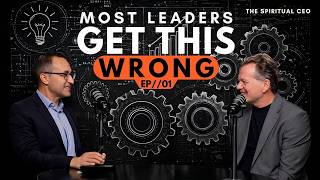
In this episode of the Spiritual CEO Podcast, host Sergio Hicke interviews Taha Khalifa, Managing Director for Intel’s Middle East and Africa region. Taha recounts his personal journey from a math‑focused student in Egypt to a software engineer at Intel in 1995, through an MBA and strategic‑planning roles, to his current senior leadership position. He contrasts transactional engineering mindsets with transformational leadership, emphasizing the importance of aggressive (deep) listening, clear communication, role‑modeling, and a growth mindset. The conversation explores practical tools for focus and stress management—meditation, Zero‑Based Budgeting (ZBB), and prioritizing what can be changed—alongside cultural practices for building trust across Intel’s diverse, matrixed organization. Taha outlines the skill set Intel looks for in new hires (technical depth, problem‑solving, collaboration, alignment with Intel’s vision and values) and describes the hybrid interview process that blends algorithmic screening with human assessment of leadership DNA. He discusses the impact of Moore’s Law, AI, quantum computing, and robotics on the region’s Vision 2030, noting the UAE’s AI strategy and the projected 14 % AI contribution to its GDP by 2030. The episode concludes with Taha’s legacy goal: positioning the Middle East as a leading AI and semiconductor hub, and his invitation for listeners to connect via LinkedIn.
Chapters
We are now in the age of distraction. It is quite overwhelming, and I've seen this even in my kids, and I've seen it in some coworkers. You also need to build your brain to focus on the areas that you can change.
We started to give meditation practices to practice focus.
I think we should be trying to get the team to get that. Yes, absolutely.
Taha Khalifa, Managing Director of Middle East and Africa for Intel. Welcome, welcome to the Spiritual CEO Podcast.
When I was young, I dreamt of being an engineer. You need to have a goal that drives you. When you come from engineering, you're very transactional. I had to let go of that. Your team is very smart. They will know if you're just listening or you really listen. Absolutely.
The practice of listening.
We call it aggressive listening.
Let's imagine that I am a young engineer. What I will have to develop? Who I have to be?
So for a successful leader at Intel, You need to have it.
I call it the silent revolution, the Moore's Law.
Where are we going? So if your job is very repetitive, an AI bot will replace this job. And of course, people are going to resent these decisions. By 2030, we expect AI to contribute around 14% to the GDP of UAE. UAE leadership was really one of the most visionary when it came to AI. There is an amazing transformation that is happening now in the Middle East.
What would you like to to leave as a legacy.
Whether it's Vision 2030, whether it's the AI strategy, to make sure that we are part and Intel is advocate. Focus on what you can influence and what you can change.
Welcome, welcome to the Spiritual CEO Podcast. I'm really, really honored to have you here. I really feel happy that you have the opportunity and the time to come and to talk about leadership and about transformation and about technology. So yes, thank you very much, Taha, for being here.
Thank you, Sergio, for having me. This is a great opportunity to talk about really very important topics. And I believe, like, leadership is one of the key topics and looking forward to our discussion, our podcast today.
And you saw, Taha, and I had just handed over my book to you, The Transformational Executive, and I was Saying to you that we have quite a lot of things in common. That was, I was really impressed. Same age, same number of years working in, in for a big corporation. And in my book, I'm, I'm telling a little bit my journey, you know, how come I became a president of a company starting by selling magazines in the streets. So what is, what was your journey? I mean, how, how happened that you came, let's say, into the role, super important role as Managing Director of Middle East and Africa for Intel?
So it's a very similar and very long journey, and it had like many milestones and many stops along the way. I started with Intel in 1995 as a software engineer. So I came into the company very focused on engineering and developing technologies, which was my passion. And as you develop and as you grow into the company, you realize that there are many opportunities. And this is when I started looking into other areas of the company and started doing an MBA because I thought to get into management and to get into leadership, it's good to build an MBA. And one of the really good perks that we get at Intel is that they support your MBA. So I was doing this while I was working in the company, and that led me to work in an area which is the strategic planning. And it's a very interesting move to move from, you know, engineering to strategic planning and looking into the future of the products and the roadmaps. And it was really great opportunity to see how products that we use now are being planned maybe 3 to 4, sometimes 5 years before So whatever you have in your hand now, rest assured that there were engineers working on it many years and many years before, which was really fascinating.
So, and it was something that triggered you, I mean, to start even your engineering career. I mean, when you were younger, let's say, you know, we have kids, we have children, daughters, sons, etc. And they are always, or they are in the age of deciding where to go, what to do, you know. I mean, what triggered you to, did you dream to become a president or a managing director of such a big group?
I, when I was young, I dreamt of being an engineer. Even my parents wanted me to be a doctor and they did everything possible to push me in this direction. But I was very mathematically minded. I could not study biology for the life of me, but in math I was very good. So I joined and I think around the last year of high school, I was also determined to use, to go to computers because that was starting at the time to build momentum as the new technology thing. I'll tell you a very interesting story. It's a very old one, but in Egypt at the time, there was only one place where you can study computers and it was in the Alexandria University and they would select 30 students out of 1,000. To go into the computer science department. So I really had to study hard to get to the computer department at that time and to study computers.
So you were really, really determination, right? The determination and your vision, let's say, of becoming an engineer makes you, let's say, one of the steps to be where you are.
Yeah. And I think it's having a goal in life. And this goes everywhere. You need to have a goal. That drives you, and this is how you really get the best of your time, the best of your focus to get to this goal.
And do you remember what you imagined when, when you were a kid and you were imagining becoming an engineer? What was that you were, let's say, reflecting on?
I was, I was just thinking about like computer designs and software at the time, so that, that was like the ultimate dream. And this is why when Intel called me, I basically, after finishing school, I did a master's degree in the UK. And then after the master's degree, I was given a sponsorship for a PhD in the US. While I was doing the PhD, I decided I've studied too much. It's now time to work. And I applied to some companies. And when Intel called, I You know, that is, to me, that was a dream at the time to join a company that is world-leading in technology and innovation. And, you know, it's the dream of any computer engineer at the time.
And many things have happened to you for sure in these 29 years and a lot of things on transformation and transformational leadership, right? How would you define, let's say, the difference between a transformational leader and a transactional leader, let's say, today? How is your definition, your interpretation of that?
Yeah, I think this goes, at least in my journey, it was a learning experience because when you come from engineering, you're very transactional. You're just working with the team to deliver certain pieces at the time, code or deliver now certain sales by certain times. And, you know, you treat people-based, and you treat your team based on the performance as they deliver to these transactional ones. And as I grew into the leadership and through readings, classes, experience, and talking to people like you and getting to know, you know, basically experts in this field, you start to learn and you start to build your style of leadership. And this is when the transformation part comes. This is also when you start looking at your team differently. Especially coming from an engineering background, you like to know all the details. And at the beginning, most of engineers, when they become managers, they become very micromanagers. And to let go and to build this trust, it takes time. And this is, this is when the start of this transformational leadership builds up. And I'll give you kind of an example of that is that as, as I was transforming into— from manager, I would say, to a leader, we had one of the motivational speakers come to us and just talk about what is called the Five Dysfunctional Models. So that's Patrick Lencioni, and started taking us through what a team is and, you know, what are the elements that kind of create dysfunctions in the team, which means that if you build the opposite, you're able to build like a really very functional team. So areas like building trust in the team—
trust, yes—
how you foster and manage conflicts and resolve conflicts on the team, how to build accountability and commitment, and how to look at the results and what does that mean. So all of All of these areas, as you go and as you manage different teams, build your experience and build you into the transformational leader. And one last thing is also because at Intel, it's a very global and very diverse organization. So managing people from different cultures is one of the most fascinating and interesting parts of the leadership. Intel, and you have to go through understanding the different styles of communications of the different cultures and how to manage that. Some cultures are very expressive. They like to talk much and express, and some other cultures are very reserved and they like to hear other folks. So you have to bring all of these and get the best out of your team.
The practice of listening.
Exactly.
And not listening only with our ears, but also listening with our heart, not the different, different people. That's a very nice, let's say, transformational leadership practice.
Actually, we call it aggressive listening.
Aggressive listening. Yes.
Okay. Absolutely. And actually, in, in one of the leadership kind of classes and discussions we've had, Sometimes people, if you have an idea and you're talking to multiple people, just talking to them and listening to them, even if you select other people's idea, just the fact that they expressed and you listened to their idea and went through them, they make them part of the overall decision. But if you ignore and you do not listen and listen aggressively from the heart, and by the way, Your team is very smart. They will know if you're just listening or you're really listening. And if you're really listening, this is when they really support and they become motivated and excited and being part of that.
You know, it happens to me, you know, that I also pass through this transformation from transactional manager, I would call, to what I call a transformational leader. And it happens to me that the people who are coming to me and say, Sergio, 'You are the first one that is listening to me.' And there I thought, 'Wow, this is something, something else.' It's very simple, yet sometimes, and some leaders in the, um, all of the works and everything and activities that are happening, they forget to make sure that their teams are listened to.
And they, they know that.
And transformational leadership applied to moments of pressure? I think that we always pass through, you know, moments of, of, let's say, happiness in the company and success, etc. But also there are moments where there is a lot of pressure for, for you as a number one in the company. How do you deal with that, let's say, with these moments of pressure as a transformational leader?
I think all, all of the leaders in, in any organization, they pass through these, whether it's a difficult quarter, different budget, different changes in the organization. And as a leader, number one, you have to focus the team on what we can do versus all of the external noise. And I keep the team always saying, focus on what you can influence and what you can change versus all the pressure that is outside, because this is your way for you, number one, to help in this situation, and number two, to keep you away. That's, that's number one. I think number two, the team sees you very well, so you need to make sure that you role model and lead by example. So if you show panic or if you show anger, if you show disconnect, the whole team will realize that this is the situation. So leading by example and role modeling that It's, it's pretty important. And I think also being close to your team at this time of pressure is something that you really need to work very closely with. The team needs to see you more, hear from you more during this time. And this leads to another transformational leadership trait, which is very consistent and very clear communication. You have to have this constant communication with your team to keep them motivated and on target. So as a leader in a— or a transformational leader in an organization, your vision and your way of dealing with these types of pressures is really going to reflect on the team. And you need to be able to use these, I would say, simple engagement with your team to keep the motivation.
Super, super, super, very nice comments. And, and now let's imagine I'm— I am not the case, but let's imagine that I am a young engineer as Taha was, let's say, 29 years ago, and I would aim to work in Intel. What, what I will have to develop? What I have to— who I have to be, let's say? And, and how the company will look into my leadership profile, skills, and behaviors today as a young person for me to enter into work into this giant company?
Yeah, I think, I thought, I think the whole workplace is going through significant transformation and it kicked off from COVID days when we started doing the remote working to now hybrid working. And as you can see also, a lot of the companies are starting to ask employees to come back to the office more often so that because this collective intelligence that we used to have in the past, even though it's very efficient and good with Teams and with all of the tools that we have, that does not completely cancel out the importance of the personal relationship. So going back to the question on, you know, if I'm talking to a younger engineer I think there are many skills now because the workplace is so complicated now. So of course there is the strong technical background that you would need to have in your field. That's taken for granted, but you also have— you need to have these soft skills, your ability for problem solving, your ability to analytical thinking, collaboration. So my advice is they need to look into whenever you move to a company like Intel, what is the vision of this company? You need to relate to this vision. So Intel, for example, has a vision to create technologies that improves the lives of everyone on Earth. This to me kind of motivates me personally and my team to do something important and to do something every day that is we believe enriches people's lives in terms of technology. On top of that, there is, or underneath that, there is, there, there are the values of the company. And at Intel, we do have certain values. You need to feel, are these the values that you believe in? And how your behavior and how your attitude as you go through interviewing process and you present them yourself due to that. So areas like like, you know, results orientation, customer focus, inclusion, and enabling diverse opinions and diversities, the ability to collaborate. All of these areas, as we go through the interview process, we identify if the candidate really kind of meets these types of values for the company because As we were discussing before, culture of the company is very important, and you need to make sure that this culture is maintained as you hire new employees.
In today, 2025, in a technology company, you're still doing human interviews, or is technology making the interviews for the newcomers?
It's a combination. So the initial selection, I, I, there is a talent acquisition teams that kind of give you the top 10 candidates, so, or top X candidates depending on that. So most of the time this is done through algorithmic kind of ways of doing that. There's also some referral process as well. But then once you get into the interview process, then it's, it's all human at this stage. We work on this in a human way and in a very structured way. Always having a team, the team can make very specific questions again related to some of these values and of course depending on the position. So some positions are just purely engineering, so more focus is going to be the technical and less on some of these values. But when you get to a leader, a leader in the organization, then this is going to be more of What is the leadership style? You know, how they fit into the profile of these transformational leaders that we expect in the company.
If you can summarize the top 3 elements of the leadership ADN or DNA, let's say, of a successful leader in Intel, how would you say these 3 DNA elements are?
So for a successful leader at Intel, it would be— and I think this goes also for most of the organization— you need to have very strong communication skills and then having— being able to communicate very clearly and crisply through the different organization. You need to be able to lead by example and role model the Intel values. We expect our leaders to role model this. If I'm telling folks that, you know, you need to come to the office 2 days a week, for example, then as a leader you need to lead by example and show that you have this leadership style to drive that. Also, we have a concept at Intel called One Intel, intel. We are a very huge organization, multiple organizations, multiple groups. So you need to be able to collaborate and work through the different organizations. It's a highly matrixed organization. And in such situation, you need to make sure that you are aligned with your peers and with your partners to make sure that you present just a one intel voice and one intel message. To both the customers and the employees. And I think this is one of the key kind of requirements as you go up the chain and as you become a leader in the company.
Very interesting, super interesting. It makes me remember quite a lot of my things as well. Taham, I call it the silent revolution. I remember, by the way, one time I had the opportunity to visit Intel in Israel, when I was responsible of Israel as a market. Impressive, impressive factory, I remember like it was yesterday. But there is another element that it is the Moore's Law that I learned about that long time ago, and it was saying, yeah, because the creation of chips that are microchips that are stronger and and more capable and more faster and smaller. It is, let's say, it will make the data and the communications grow exponentially. And I remember when I started to work 29 years ago, we have only fax. We didn't have telephones, we didn't have computers. And where we are now, where are we going?
Yeah, this is the $1 million question. But going back, I wanted to kind of build on Moore's Law. So Moore's Law, so Moore, Gordon Moore is one of the co-founders at Intel. And this law was actually an observation that was like many years ago. I think it's almost more than 30 years ago. It's actually could probably be around 40 years ago when he He said the number of transistors on the chip is going to double every year and a half, more or less every year and a half to 2 years. So that was the observation that he made in one of his kind of meetings and staff meetings. And this became the guiding principle for all of the technology and the semiconductors industry over the last 50 years almost. So doubling the capacity which means that you are able to increase the performance, you're able to increase the ability, the processing powers, all of that just in a matter of a year and a half. So this is very consistent. And this is what has paved the way for a lot of the innovations that we see right now. So as of now, you see, of course, AI and how AI is becoming a transformative force and technology. Around the world, I think impacting everything that we do in our daily life, in our normal transactions. And we expect this to continue now with the introduction— before it was the large language models and now agentic AIs. So we expect AI to continue its momentum and the buildout. And it's very important to realize as we talk about leadership, how the UAE leadership was really one of the most visionary when it came to AI, basically assigning the first minister of AI in 2017 before people even started this seriousness about AI and creating this leadership in AI. And this is very important because by 2030, we expect AI to contribute around 14% to the GDP of UAE. So that, that talks about the importance of AI. So it's as a technology, building on AI, there needs to be regulatory framework to cover areas regarding privacy, security, all of that. And again, there was a lot of framework, regulatory framework in the UAE and in Saudi, building that up as well to build in this momentum of AI. Quantum computing is also building up and we believe over the next few years this can enable and unlock certain potentials in terms of the computer industry and the whole compute industry. And it will also enable certain usage models, and especially in the areas of pharmaceutical and drug discovery, etc. That is pretty important. Robotics is another area, and you can see that in NEOM in Saudi, there is a big focus on robotics and how it can be part of this new kind of visionary city. So these three technologies seem to be kind of driving force going forward and then we see this building on that. But again, I think it's the ability of the compute demands to meet the performance requirements that are needed by these applications is what is driving this.
Data velocity capacity also is, is a, in a certain way, in relationship with the stress level. I mean, are we with all these new technologies reducing the stress of the population, or we are overwhelming the, the— I mean, before it was the fax, one paper. Now I have I don't know how many hundreds of messages per day coming in different sources and in different ways. Plus I have to learn in the new AI to don't lose the train. So where do you see that this is taking us and how will be the impact on stress and how you and your team being the technology leaders on that are coping with that, are managing this? I mean, what, what you can say about that?
This is, this is a great question because we are now in the age of distractions. I think all of us, between the messaging that we get on all over the social media platforms that we are signed up to, is quite overwhelming and can lead to a lot of stress and a lot of anxiety as well. And I've seen this even in my kids, and I've seen it in some coworkers, they are very anxious to look and, you know, to understand and to read the messages and all of that. And I think there are a couple of things here. Number one, and this is regarding Intel in particular, we do have a process at Intel called ZBB, which is, you know, here are your top priorities and things below that you don't need to to spend a lot of time on these and you don't need to focus on those. So you really need to focus on what is your key areas that I'm interested in doing. The other area is you also need to build your brain to focus on the areas that you can change and you can manage and under your control. Of course, you need to know about what's happening in the world and everything, but there are areas that are more focused because these are the areas that you control. It's, it's your team, it's your work, it's your ability to drive the vision. So this focus on what you can actually change versus all this noise that is coming your way is going to be very important going forward.
And there is a kind of a particular practice or particular let's say, learning or teaching you're making to the people, giving to the people in order to focus more?
I just make sure that I'm very clear, and this comes related to work. I'm very clear about our priorities and objectives, and there are always these short-term objectives that I build with the team. But we also have these long-term growth innovation activities that we built. So we have this vision of where we want to go, but to go there, we need to deliver on these basically what we call KPIs or key performance indicators that shows us that we are on the right way to this path. So keeping focus on these existing KPIs that you have now, but do not lose sight of the vision of where we want to go. And we want the Middle East and Africa to be the highest growth region for Intel. So that's the vision that I'm giving to the team. And to do that, we have all of these milestones that we need to deliver to.
In one of my experiences, focus was the key. No, yes, so some years ago, and, and there it is where we started to give meditation practices to the people, and we give meditation practice to hundreds of people, and they started to practice. Because when you meditate, the first thing that you do is you practice focus, and then you can take it to the daily life. No, it was very powerful, very, very powerful tool, as I say, to give meditation practices to the people. For the Western, let's say Western, no, no, not connected to the religion, etc., but it was very, very powerful and very appreciated and increased the well-being of the people in the company.
And that's a great feedback. I think we should be trying to get the team to get that. Yes, absolutely. Because it's not only focus, it's also— I see a couple of things out of this. It's also stress management. It can help in stress management, and it also gets the team closer together. When we're doing some of these sessions, it can help us grow together.
At the beginning, there is resistance, no, because it's something, wow, what is this, you know? But then when the people start to make it, small groups, and they like it very much. On another aspect, let's say, I would like to talk a little bit with you about 3 aspects, let's say, that I observe these aspects as blockages in the company processes or actually in the people development. So I saw this, let's say, I call it pillars, are 3 of them. It's attachment, it is anger, and it is ignorance. And if we start with attachment, let's say attachment, this element that you You know, this is my role. Don't touch me. I mean, I don't want to change because I am okay where I am. I don't need to change, etc. What you— what did you have to let go that you recognize that I let it go in order to grow in your career as you are today?
Yeah. And I think it's really a big blocker when you get into this comfort zone and you really do not want to to let go. And as I mentioned earlier, when I came into engineering, I really wanted to know the deep technology and the deep basis of a lot of the projects that we were doing. And then I realized that this is micromanagement and it's not going to lead. I had to let go of that. There is like at Intel, we share some of this. There is like what we call the growth growth mindset versus the fixed mindset. And we work closely with the team to make sure that they have this growth mindset, that they need to grow, they need to find other means of doing the same thing that is more efficient. Because with technology, if you stay fixed in one area, more likely than not that you will be out of date. And now it's probably in less than a year, how to get the employees trained, how to get them ready for what's coming. We do have many ways to do that. We do have rotations to give them the opportunity to get out of their comfort zone and do something different. So we do have what we call Job Plus, where we give them something additional to do so that they can experience something else and they find— so making this change is very important. And I would like to say when that was in 2015, when I was managing the Middle East and North Africa at the time, I had more than 65% of my team less than 1 year in the role that they were in. So made significant transformational. I had a plan, workforce planning and transformation to the team to make sure that they get into new areas of the business that is relevant to them and eventually helping them become more motivated and excited. Attachment is something that, on a personal basis and on a company basis, this is the source of a lot of value destruction to the company and to the employee.
And in this moments where it is happening frustration, or it is happening, you know, discomfort, or I'm not happy with something, I'm not happy with— eventually with my leader, what he told me or she told me, etc. Then I experience a little bit of anger inside, right? Have you seen this affecting really careers in in other people, in other leaders, let's say, that anger has been, let's say, a real such a blockage that they have not been able to grow in the company?
I haven't seen much of anger as anger, but maybe not very happy with some of their decisions, people not being happy on the decisions that are made. And I think this goes to to the 5 dysfunctions models that we discussed. So if there is a trust in the team that you are making decisions that are reflecting the real values and the real vision of the organization, and you are being fair in making these decisions, and you're communicating it very clearly and having some basis to it. So this whole process, when you build the team, help you when you make tough decisions. And in some cases, these decisions can be extremely tough. And of course, people are going to resent these decisions. But it's— I think it's very important for people to understand the basis of making these decisions and why they were made and the process and showing the fairness of the process.
Thank you, Taha. This is a very, very Very interesting. And how do you do, let's say, in such a competitive market where you are? I mean, you are, let's say, competing with other big giants as well. How do you make yourself updated with all the information? I know that you are an AI advocate, so you are, let's say, a lot into AI. What practice are you doing and what would you recommend to the young people? Say, on how to, let's say, work against the ignorance. That is the third pillar.
I think, you know, with all the technology changes that are happening now, many technologies, many information that young people need to go through, but they are much more lucky than we were in the past. I used to go to the library to, to get a book and to get some information and It was, and even Google in its beginning was not providing the same level of depth of data and available tools. I think right now there are many tools available for young people to learn about new technologies and to take classes online. And some of these classes are offered for free from some of the top universities. So seeking knowledge is very important, and I think the ability ability of these young people to learn and to be able to seek these newer ways of acquiring the knowledge and the information is going to be critical to their career. We said that AI is not going to— it is going to cause some job eliminations, of course, but it's going to cause more jobs to be created. And these new jobs that are created are for those who are able to harness the power of AI and to use it to become more efficient and to uplevel their contribution to the companies and to the jobs. So if your job is very repetitive with no innovation, most likely that there is going to be an AI bot that will replace this job. But if you use AI to become more creative and more efficient in what you're doing, this means that you will more likely to get a better job and a better opportunity.
Super, super. Um, if, um, now you are a senior leader with a long, extensive, successful career, um, when you will, let's say, let go also your position and your role, what would you like to leave as a legacy, let's say, for Intel and for the world? I mean, what is your—
I believe my key vision now and what I'm working towards now is making the region one of the top regions for Intel's technology, not only consumption, but also production through working very closely on a lot of the artificial intelligence and semiconductor initiatives in the region that are part of a lot of the visions in here, whether it's Vision 2030, whether it's the AI strategy, to make sure that we are part and Intel is advocate and a thought leader in the growth that is happening and the transformation that is happening. There is an amazing transformation transformation that is happening now in the Middle East, driven by these 2030 visions and the need to do economic diversification, turning the region into AI and semiconductor hubs. And being part of this and making Intel being one of the leaders in driving this is going to be, and I want this to be my my legacy as I spend all this time working on these here.
So you're recommending all the young people to invest in Middle East, is the area to be?
It is now. And it's very clear because in the past when we used to open RECs in the Middle East, we would only get candidates within the Middle East. Now when we open job opportunities, we get candidates candidates from around the world with, I would say, tens, if not hundreds of candidates from around the globe. So I believe what happened in the region and transformation over the last few years was really a beacon of innovation that started to attract talent from around the world. And this will have significant change as we go. And not only the global talent, but we see local talent build up.. And this is really, I hope I am, my legacy is going to be part of this transformation in the region.
So Taha Khalifa, thank you very much for being part of this podcast, my podcast. You are a truly spiritual CEO, and I think that we have a lot of takeaways from this conversation. I think probably people would like to connect with you and how they Are you an open leader and they can connect with you directly?
Yes, sure. I am on LinkedIn. I'm very active on LinkedIn, so they can reach out to me through LinkedIn.
Okay, so thank you very much. Thank you for the lessons and for the comments and the inspiration. I'm coming out very inspired from this talk.
Thank you. Appreciate it. Thank you.
More from Sergio



The Biggest Leadership Mistake? Thinking You Know Enough | Nenad Pacek | Spiritual CEO Podcast EP05


Trauma Can Either Break You — Or Transform You | The Spiritual CEO Podcast EP04 with Sheena Pirbhai