Less control, more connection — Full speech at Order2Cash Conference, Dubai 2025
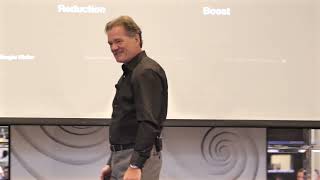
Sergio Hicke argues that leaders must shift from KPI-driven control to human connection to handle volatility and AI change. He uses Buddhist philosophy and collection case studies to show how relationship-based approaches reduce overdues and improve recovery rates.
Questions this video answers
55%
25%
60%
8%
€5 million overdue for five months
Chapters
Introduce myself a little bit. I'm Sergio, Sergio Hicke. Thank you for your introduction, Charles. I consider myself your profit partner with a spiritual vision. A little bit about me is I have been, as you Charles mentioned, I have been working a lot of years, 30 years in a multinational company, Swedish multinational company. I have 25 years of managing director and the last 10 years as president of the group. First in South Europe and secondly here for India, Middle east and Africa. I have been an entrepreneur since 8 years old. That's the first time or the time that I remember that I started an entrepreneurship, let's say, journey that I continue during my stay in Alfa Nahual and I continue today in my actually new company that I just founded.
But during my career I experienced something and I started to go a little bit into a spiritual side. I started to learn and get instructed about ancient philosophies like the Buddhism. And there I found three pillars of human suffering. And these three pillars of human suffering. I started to try to identify what was happening inside of company processes and on people, okay, in humans. And these three pillars that I use to identify these problems are attachment, it is anger and it is ignorance. Okay? But this is not enough. And what I discovered during my specifically in the last 10 years where we have super good, let's say, successful experiences running companies, is that by observing, we were needing a new way of leadership, a new kind of leadership that is able to run, let's say, these changes when we find the entrance inside of the companies and in the groups and in the teams. I will not go through all these lists because there are 10 key areas where a transformational leader has to work. And it is a moving from a transactional leadership to a transformational leadership style that it is absolutely necessary. During today.
We will talk a little bit about this. We will talk a little bit about mindset, we will talk a little bit about technology. I will show you one example. We will talk about listening, about relationship and collaboration, and a lot about creativity. So let's go into it and I think that we can say why this is super important in today's world. It was important before, of course, but I think that I'm not telling you anything new. If I'm telling you that this world, it is more and more volatile. You are with handling money. So you know how the markets are going, ups and downs more often, every. Every shorter times where the, the markets become super volatile. If you follow let's say the, the VIX, for example, index, you see that if you see it in one year, in in, in 10, 15 years. You see how is a volatile index. You see how much times it is coming as a disruption in the market. Faster and faster and faster. It is a more uncertainty. We have wars everywhere popping up like mushrooms. And not only the traditional wars, now we have commercial wars. That it is a new scenario for us, a new scenario for all of you. Because this will have a tremendous impact in collection, in credits, et cetera. When we are talking about complexity, we are talking about AI, we are talking about robotics, robot process automation. Is it hard to absorb all this digitalization movement in your jobs, in your way of working? I believe it is. I mean, we don't finish to learn something that we have to learn something else, something new. Right. So. And ambiguity. We want to become a more climate concern. Climate change, protect the environment. But on the other side, we have the cost issues for the companies. Okay. So this complexity that we are having in the world today, it is backing up. And that's why you need to require to develop much more as you can, the transformational leadership skills. Okay, so let's go now for the. What is happening here? Okay. For the first, let's say of the pillars and it was related to what the exercise we have done. It is attachment. What is attachment? Attachment. It is the way for me to restrain, to be open. It is attached to control. It is attached to KPIs, it is attached to the numbers, the fixtures that I have. And you.
Show a very beautiful presentation with a lot of numbers. Right? A lot of numbers. How many KPIs you are managing? But the question mark it is then how much time are you dedicating to increase the relationship with your customers? I would like to tell you a little bit of a story after this, because 55atradios. No, the guys of Atradios here. Atradios, exactly. So this information is coming from you. 55% of the B2B invoices in the US are overdue.
Sounds to you this number is correct. I took it from you.
25% of the bankruptcies in Europe are considered that the reason because of that is because of invoice not paid here in this country, in UAE, 60% of the invoices are overdue. And you are all saying yes, it is true, you are facing that, right? It is true. So any one of you, you have problems on overdues, raise your hand.
Once only. I think you are not telling me the truth. Right? Okay. I have never met a company that doesn't have any overdue problems in this country. But okay, and moreover, 8% of these 60% of overdues are considered that will be non collectible. Okay, so what a problem that we have. So how to solve that problem? And the framework, the control framework that you presented before, it is perfect framework. I don't have anything against that and it is necessary and it is needed. But I would like to give you a little bit of another example where I personally experience the fact that relationship and true relationship is a very big positive thing to do. The story is one day I became managing director in one country of Latin America. I arrived there and I can tell you the CFO's credit managers were my best partner. Why? Because I wanted to deliver profit in this company. So what best partner I can have is the cfo. This company arrived and there was a big problem on overdues, big problem. But one case, 5 million euros of this one single customer was not paying since five months. I said what is happening here? So we make a study, an analysis on the case. And we realized that the only type of communication that we had with that customer was only digital was emails, Messages, Teens Messages, WhatsApp, etc. Etc. Letters, claim letters and say. But who talked to the customer? We realized that our way of approaching the customer was out totally completely from a truly relationship, relationship type of.
Connection with them. So this CFO did a training on talking on truly connectivity with the people. He went to see the customer in 10 days, he got paid.
So he ran this program on helping their team to increase their connections to have truly conversations with customers. They started to visit the customers even when they didn't have overdues. And the total overdue over 12 months reduced by 50%. But this is not. This is just one case that it tells you that if you get getting closer, eyes to eyes, looking to the customer and understanding their hindrance, you will be able to get much more payments than what you get today or only with the utilization of digital means. There is another example. It is not me, it is Marriott. Marriott also they have trained their collectors, okay? They have trained their collectors, their credit people. In order to improve their relationship with the customers. They increase 15% their credit, let's say index. And also they reduce 20% on their collection days. It is about people. We will have a lot of technologies and more are coming. The human relationship and the interconnection between me and my customer, it is becoming more and more important.
Another case. Do you know the company train? Who knows the company train? You know, in uk very famous, they do H Vac equipments very Multinational company they run and they prepare something that was the purple teams. They teach their teams into how to increase their dialogue, how to talk better, how to make good questions to customers. They went out and meet the customers and they had super good result that it is reported by them by overdue reduction and velocity on the collection. Of course, the morale of the teams also was fundamental there. Sounds this to you. Sounds this to you? Yes, yes.
How many customers you have now in the next 48 hours in your calendar that you are going to talk to them?
Show me how many.
So many. I've got some right here. Sergio. So I'm good? You're good? Yeah. So you know what I want.
To try to influence you is that this will not happen unless you practice your transformational leadership. How you're going to practice your transformational leadership if you go out from this meeting from today and you start to point out the customers names that you want to call tomorrow and to say, hey, how are you doing? And to make your truly, truly relationship, your truly human connection. Don't forget about that. It is paying off. Big companies are saying that it is paying off and it goes counter mention of all the AI things. And I'm going to talk about AI, but I want to stress you in this element here. Is it okay? Are we okay with this? Do you believe or no? Yes. Okay. Very good, Very good.
Yeah. So.
Oh, oh, I like this one very much.
Any one of you ever have been under stress, please raise a hand.
Twice. Twice. Hands. Very good. This is a very relaxed company here. Never stress. Never stress. Okay, Very good. Have you guys big time, huh? Big time. Okay.
Yeah, but. But you manage it. Beautiful, beautiful. A star actually going there, etc. But guys, I will ask you again, have you ever suffered of stress? Please raise a hand. Okay. Now we are creating a truly relationship between you and me now. I like it. But listen, one thing. Have you. And now I will see few hands, hopefully. Have you ever been hospitalized because of stress? 1 usually it happens like this because when that happens, it happens to me as well. We usually, we don't want to say it is like a taboo thing, but I promise you that like you, like me, there are much more people, anyone more hospitalized. So yeah. So that means that credit manager and CFOs here in this region are very relaxed. Okay. And I'm happy with that. So there is no problems out there. Those 60% of invoices that are not paid is not you guys. But let me tell you something and we will go into anger, okay? That is the second one. Anger is a great source of stress, okay? Anger that I do not accept what it is happening. I do not want to go into that direction. My customers are not paying, my colleagues are not doing the job that I want to do. I have all these lists that Chris show of problems in my invoices and I don't get paid. Anger, anger, anger. I'm collecting this anger inside. I tell you there is one example of Deloitte that it is saying today that 77% of you guys, CFOs financial managers are very worried with the situation that it is today. I have talked with many CFOs that they are saying I don't know what will happen in six months time. The uncertainty that we have, it is so, so big. And the Deloitte let's say survey continue and arrive to the conclusion that there is also 36% of them that they are showing signs of burnout. Do you know what burnout is? Burnout. It is when we finalize in the hospital. Okay? Yes.
More from Sergio



The Biggest Leadership Mistake? Thinking You Know Enough | Nenad Pacek | Spiritual CEO Podcast EP05


Trauma Can Either Break You — Or Transform You | The Spiritual CEO Podcast EP04 with Sheena Pirbhai