Building a 7-Figure Medicare Agency Through Social Media with Christian Brindle
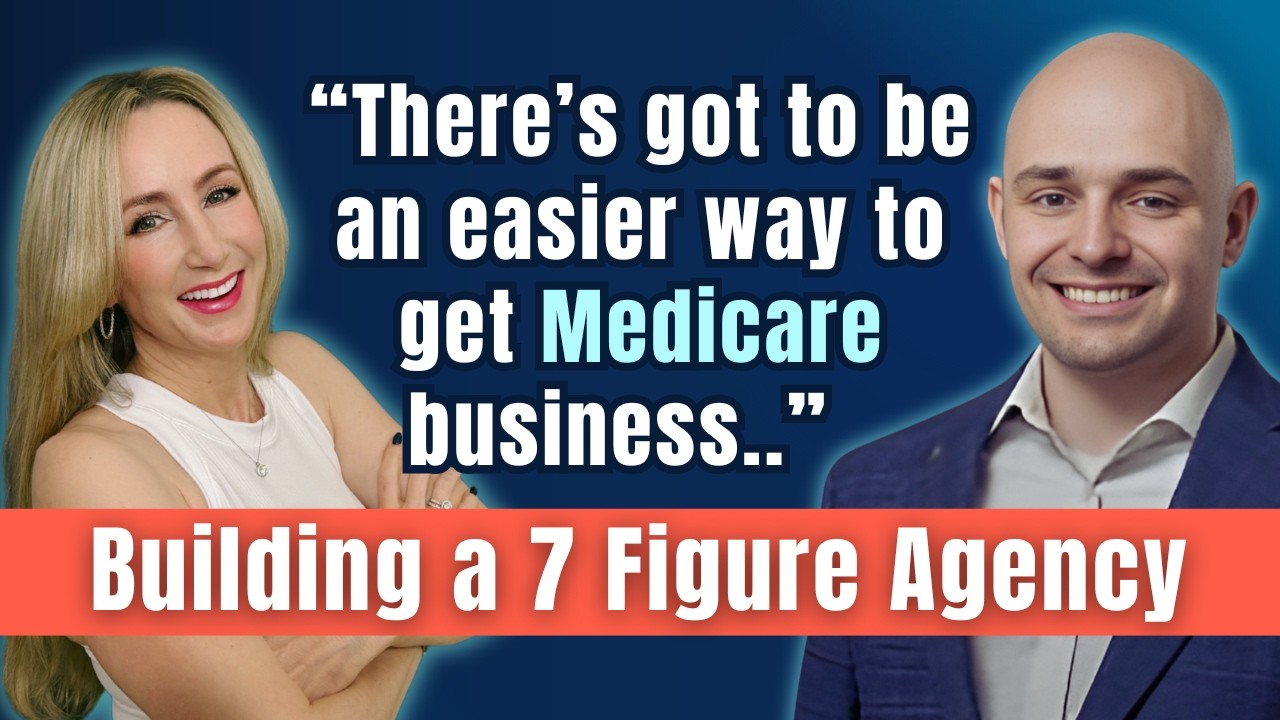
In this interview, host Shauna Thoresen talks with Christian Brindle, a second‑generation Medicare insurance agent who grew his agency to a multi‑seven‑figure business by leveraging podcasts, YouTube, Facebook groups and other social media platforms. Christian recounts his humble beginnings—recording a podcast on a phone app with speaker‑phone interviews— and how a "mustard‑seed" level of faith and relentless consistency (2‑3 episodes per week) eventually built the number‑one Medicare podcast in the U.S. He discusses the psychological hurdles of putting oneself out there, including criticism, a chip‑on‑the‑shoulder mentality, imposter syndrome, and the importance of viewing negative feedback as fuel. A large portion of the conversation is devoted to Medicare compliance, where Christian distinguishes between CMS‑defined "communication" (educational content without carrier logos or plan‑specific details) and "marketing" (which requires carrier or CMS approval). He shares a cautionary story about a video that was taken down for using a carrier logo without permission, illustrating the need to stay within the communication realm. Christian then offers practical content tactics: start with low‑hanging‑fruit topics like top Medicare supplement plans or common coverage questions, use keyword‑rich titles, and accept that the first 100 videos will be rough. He emphasizes attraction marketing—providing genuine help to become an undeniable expert rather than a salesy pitch—and the long‑term snowball effect of consistently publishing content. The interview wraps up with advice for agents scared to start (record a simple Zoom video and post it) and promotion of his community assets: a 7,000‑plus‑member Facebook group, a YouTube channel, and the upcoming 7‑Figure Medicare Agent Summit.
Chapters
What did your dad think whenever you're like, hey, I'm gonna start a podcast for seniors?
He said it was a waste of time. It was basically dumb is what he said in different words. I didn't know how to make my podcast a video podcast. I literally started with an app on my phone that I would talk into. I interviewed people early on and I'd put them on like speakerphone on another phone and like record. It was so horrifically bad. I just had faith. You know, like in the Bible, they say you need to have the faith of a mustard seed. Just need a little faith. And I had just a little faith, enough to keep me pumping out episodes each week.
I am so excited about the conversation that we are about to have because today I have Christian Brendel, who is going to be talking to us some about how he has utilized social media to not only have just a little bit of impact, but he has really exploded in the insurance space of how he is helping agents not only grow, but also be successful. So before we even jump in, Christian, I want to share with agents that are going to be watching this kind of what my goal is for them to walk away from our conversation with. I want agents to understand how to start putting themselves out there on social media. I want them to understand how to navigate Medicare compliance and regulations when posting. I want them to walk away building some confidence to actually start putting themselves out there and getting on camera. And then to just overall learn from someone who has built such a massive following and such a massive impact in this space. So Christian, welcome. I'm so excited that you're here.
I'm so excited to be here, Shauna. I always love our conversations. Of course, you know, I am such a big fan of yours and I appreciate you having me. I'm excited for an awesome chat here today.
Well, me too. So in case anyone doesn't know who you are, so let's just give a little history of who Christian Brindle is. So you first founded your agency in 2014, and it's my understanding that it was in your early 20s.
Mm-hmm.
You are a second-generation insurance agent. Your dad was an agent before you. You started partnering with Integrity in '23. You rebranded and merged with Lead Heroes in '24, and you are now Everything Senior Insurance. And then on top of that, you host the annual 7 Figure Medicare Agent Conference, which I can't say anything but positive things about. You are the author of How to Become a 6 Figure Medicare Agent. You have your own CRM, the 7 Figure CRM. You have built a Facebook You have a Facebook group that is over 7,000 agents that are in it. And I must say, I'm in multiple Facebook groups, and yours is by far the best.
Over 11,000 now.
Over 11,000 now?
Yes.
I'm wrong. That thing just keeps growing. I know every week you're like, welcome to new members. It is a, it is a monster. You have a YouTube channel, over 8,000 real subscribers. I know as your friend that you are not purchasing any type of subscribers. Over 1,700 videos. You and Glenn host the 7 Figure or Bust Medicare podcast, which has over 280 episodes. Is that accurate? How many do you have?
Not quite there yet. We're really close to 200 episodes. I think we did 100 and episode 195 this morning.
So you have been here for a while, and you have made such an impact putting yourself out there on social media. You've built one of the biggest followings in the Medicare space. So what made you very first start decide that you were going to start putting yourself out there on social media? When was that?
Yeah. You know, when I look back on what really kind of was the light bulb moment for me, because when I came into the space in '14, I was 21 and I was being taught how to build my business from my dad, as you mentioned. And my dad was a great teacher early on for me. I came in as an independent agent underneath him. And most parents that bring their kids into the business, they bring them in as LOAs. So I didn't know this at the time, but that was very unorthodox, you know. So I came in as an independent agent. I was building my own agency. But what my dad was teaching me to do from basically 14 to 18 was to make cold calls for Medicare supplement business, knock on doors, direct mail, all the old school stuff that has become a bit of a cliché at this point.
Right.
And I did well. I was making 6 figures as an agent, but it was a lot of scraping and clawing and, you know, really kind of just reaching upwards at every little deal I could possibly get. And nothing was easy. You know, everything was hard earned. And I remember in '18, I was, let's see, 25. And I remember asking myself, I'm like, there's got to be an easier way to get business. Like, this is crazy. And I started to get— I'd always been extremely interested in business content and, you know, everything like that. And I've always been like a big personal development guy, but I started really getting into if I put content out there for seniors, can I attract business to me? So in 2018, I had the idea of putting out a podcast for Medicare that we still do today. So we've done it, been doing it for 7 years. It's still the number one Medicare podcast in America. It's called the Everything Medicare Podcast. That one has, I think, over 300 episodes. I lose track, something like that. And so at the time, there was like almost no podcasts for Medicare. I think that— I think that the thought process at the time was seniors didn't listen to podcasts, but they did. And they do now more than ever. The only other podcasts that I ever saw out there for Medicare were very inconsistent. They were kind of boring. They were short. They were like infomercials for people's agencies. And I'm like, what if somebody did like a talk show about Medicare? You know, like you can plug the business here and there, but like it's educational through and through and it's trying to make a very boring subject entertaining. That was my goal. And I knew nothing about anything back then. I didn't know how to make my podcast a video podcast. I literally started with an app on my phone that I would talk into because I didn't know any other way to do it. I interviewed people early on and I'd put them on like speakerphone on another phone and like record. I'd be like, so, Shauna, Tell us about, you know, and it was so horrifically bad in terms of a production value. But after doing it for like 6 months, it started getting traction and I'd see the downloads. I'd be like, people are listening to this thing. I'm like, I can't believe this. But to answer your question, that was where I started in terms of making content. It was direct to consumer. It was an audio-only podcast. I was doing a YouTube channel that we still have, but Very inconsistently, didn't really understand it very well at the time. We had our first big wins was that podcast.
Well, so 2 things. One, what did your dad think whenever you're like, hey, I'm going to start a podcast for seniors? Like, what did he say?
He said it was a waste of time and it was a distraction from the things I was doing that was bringing business in, cold calling and etc. So he said it was basically dumb is what he said in different words. But I was a big believer in the concept. I thought to myself, I'm like, there's people doing this right now. It looks like they're getting a lot of views on their podcast, but I don't think their show is very good. And I think this is kind of a blue ocean. I think I can do it better. I just had faith, you know, like in the Bible they say you need to have the faith of a mustard seed.
Mm-hmm.
You don't need a lot of faith, just need a little faith. And I had just a little faith, enough to keep me pumping out episodes each week. In those days, I was doing 2 to 3 episodes a week. Every week consistently, all year round. On my birthday, I would do episodes. On like Christmas, I would do it. It was like, it was like sick in the head a little bit. But I was a believer that if I can keep doing this, I'll ride the wave.
Yeah.
Of seniors coming in and listening to podcasts and everything like that. And I think being consistent, which I know we're going to talk about, you know, has a lot of compounding effects when it comes to making content. And I was a believer in it. And I figured I'm just gonna keep getting better at this. I don't really know what I'm doing, but I'll figure it out on the way. And that's always been my style is like, I don't need to have all the answers right now, but I'm okay jumping outta the airplane and figuring it out on the way down. Like, I'm, I don't need to have it all figured out before I jump outta the airplane.
And I think that that's for someone like, I mean, I've been open with you about, I overthink it. I'm like, how am I gonna be perceived? I don't care if someone doesn't like me, but they better not like me for the right reason. And that's why I overthink it is I'm like, no, I don't wanna come process that way if that's not how I am. So I think, did you struggle with any of that, or have you just always had the, I need to push through, I don't really care, like, focus on what it is?
Yeah, great question. I mean, to an extent, I think I always have had that mentality of just push on. But at the same time, nobody really prepares you for being viewed by a lot of people and putting yourself out there in a massive way. Because one thing that I learned as I went on, and Shauna, I know you've learned it as well, is there's always going to be people that have something negative to say about you or a critique about you. And that was something I wasn't prepared for. Now, you know, it took me time to kind of figure out the way that I wanted to handle that and go about that and what deserved my attention, what does, what didn't deserve my attention. Um, but there was no negative responses that could stop me. In those early years, I was very much, you know, tunnel-visioned and believed in what I was doing. And, you know, I kind of took the mentality that anytime somebody attacked my show or attacked me for what things I would say, I took the stance that it was kind of fuel. I'm like, okay, I'm like, if you have a problem with that, watch what I'm going to do next. You know, that was kind of my mentality.
Mm-hmm.
Me against the world a little bit. I've always had a little bit of a chip on my shoulder. And sometimes that has helped me in many ways. And I think in that aspect it has, other times it's hurt me. Um, but I've always had a bit of a chip on my shoulder. Um, so I've always been like, you know, if I, if I believe this is good for my business, hell or high water, I'm pushing through.
Yeah. And I think having that, something that's, that's helped me is I have to think, do I truly believe in what I'm saying and what I'm talking about? And can I sleep at night knowing that I feel I'm standing on The good side, the right side. And if that's the case, then it's about like letting go of what anyone from your past or anyone that can't understand what you're trying to build in order to keep pushing forward and putting yourself out there.
Yeah, I think, I think that's exactly right. Right. Like, I think if you're speaking your truth in your message and you're saying what you believe is the right information for people to get out there, it doesn't matter what people have to say about it. It doesn't matter if somebody is critiquing it or negative about it. Because you're on the right side. You're, you're, you're speaking your truth. And I think that's where the authenticity part of it comes into play. And it's just kind of a natural thing. I think any time you put yourself out there, it's inevitable that people are going to have negative things to say about you. It doesn't matter what your message is, you know, how soft or not unsoft it is. It doesn't matter. There will be a segment of people out there That they have something negative to say about you. What I've learned over the years is if someone's talking about me, it's all good.
Yeah.
You know, once in a blue moon, I have some friends online that will like send me links of like Reddit and like various forums and websites of people talking about me. And I always get such a kick out of it because I'm like, who am I?
Yeah.
I'm an insurance agent from Salt Lake City. You know, like, why are you talking about me? There's so many important things going on in the world right now, but there'll be like pages of discussion talking about me. And 5 years ago, that would've really bothered me. I'd have been like, I would've taken every little criticism to heart. But nowadays I think, you know, I've learned that I don't care. Um, and some, some things people say are very vicious. But I don't care. It's more amusing to me than anything that like you're spending your time talking about me. There's so many other things you could be talking about that are more important. But people are talking about you. It's a good thing.
Moving forward with that of worrying about what people are saying, that's one of the things that I probably hear the most from agents is I want to post content. But I'm scared of not only just what people from their world is going to think, but also what other agents are going to think. They're like, I'm scared I'm gonna look stupid. I'm scared I'm going to be judged or that I'm sharing information that all of these other agents already know and they're going to critique how I'm delivering it. Did you have that? Was that one of the main things that you were trying to push through? Or like, what type of, like, type of comments were you trying to shake off and move forward from?
Yeah, I think it was definitely something that I was trying to push through. And even to a small extent today, I'm trying to push through it. You know, like, I don't think you ever get used to reading a comment of someone shitting on you. You know, I don't know if anyone ever gets used to that. I think I'm more used to it than I used to be. But I don't think I'm— you ever 100% get accustomed to that. And so when I really think about that, I think the main thing that people need to understand is that we're all human. There's always a fear and an anxiety of saying something wrong or putting something out there that might not be 100% true. You know, you think it's true, maybe you word it in a way or something like that. People will really With me, put me under a microscope to where I mean something a certain way. And it's been like, you know, they take it a certain way because maybe I didn't word it as eloquently as I could have. It's just kind of a part of the game. And I think people have short memories. So I think if you are consistently putting yourself out there and you're putting your message out and you're trying to put out helpful information, I think if you do something wrong or maybe you say something that doesn't come across the way you wanted it to, or maybe somebody criticizes you, whatever the case might be, people will forget about it if you just keep trudging forward.
Mm-hmm.
And that's one thing that's been comforting for me over the years. It doesn't really matter, like, you know, if I find myself in a situation where I'm getting a lot of criticism, because people will have forgotten about it in a week. You know, that's kind of the news cycle. That's our attention spans as a society today. So that's the first thing. I think the second thing is, I heard this saying years ago, and I think it was Grant Cardone I heard it from, and it was really impactful for me at the time. If people aren't talking about you, that's when you should be Afraid, right? Because it means your business is not, is not as relevant as you might want it to be.
Yeah.
You know, and, you know, you want people talking about your business. You want people, you know, ideally talking positively about your business. But if people are talking about your business in general, it means that you're being seen, you're being noticed, you're, you're making an impact. And that was something that I had to understand as time went on, for sure. But I think the day that nobody's talking about your business or thinking about your business, that's probably the most dangerous place to be of all. And that's obscurity. And I think that's the question people need to ask themselves. Would I rather face a little bit of criticism from people that aren't willing to put themselves out there? Oftentimes it's usually the way it goes.
Yeah.
You know, like I have agents all the time that critique me or have something to say about what I say, or maybe they don't like the way I say something, whatever it might be. Right. And they have— most of the ones that are my biggest critics, I know for a fact they have significantly smaller businesses than me. Am I going to let them stand in the way of me building my business and putting the message out that I feel like is important? And the short answer to that is no.
Yeah.
You know, to me, like, those are a couple of things that I've had to learn as time went on. But like, it's a natural progression that when you put yourself out there, you're going to get people that criticize you. You want to get as much positive recognition as possible, but at the same time, if you're not getting any criticism, you're probably not being seen enough. It's kind of the, the, the test I think that you need to look at that with.
Yeah, no, I, I completely agree. I like that line of that you want people to be talking about you. I always think of— I'm not even sure where I heard it, but it's the only opinions that matter are those that have already done what you're trying to do. And if it's someone that hasn't accomplished that, then it doesn't mean anything. So the opinions piece is one, or getting negative feedback. What about, did you ever struggle with any type of imposter syndrome or any type of, I need to figure this out and get it perfect and then I'll do it public? So that way you're not failing publicly, or, or like, I feel like I get, get it all together first.
Sure. Yeah. And I, I think imposter syndrome is a real thing for a lot of people. I think, Depending on what type of content you're putting out, you know, let's say you're a Medicare agent that's watching this or a health insurance agent or a life insurance agent, whoever it might be, you might think to yourself, well, why is my opinion— let's say you're doing direct-to-consumer content— why is my opinion valid when there's all these people that are incredibly well-respected and decorated in our industry sharing thoughts on this? Who am I? I don't have any right to talk about this. And I think that's a trap for a lot of people that they fall into. Because you have your own experiences from helping clients and working with clients that makes your opinion valid. You're a licensed representative. You're a licensed, certified, trained expert at what you do. And a lot of the people that started putting out content that now have big platforms, a lot of times they started from zero, just like you in terms of their content, right?
Mm-hmm.
Their business might have not been nearly as big. As it is today when they first started putting out content. Their business might have gotten to where it is partially because— not maybe entirely, but partially because of their willingness to put themselves out there. That's kind of the end result of content in a nutshell anyway. And so I think all of us kind of feel it to some degree. When I think about myself, you know, we started doing agent content in 2018. As I mentioned, we did that exclusively for about 2 years. Sorry, consumer content. We started doing that for about 2 years in 2018. We still do it, but we started doing the agent content in 2020, early 2020. And that was where, you know, when I first started putting out agent content, my business was doing, you know, multiple 6 figures. We were doing really well. And the message at the time was I can put out information that can help you get to 6 figures. But certainly there are people in the business that have $100 million businesses, right? So like, I think that old saying, comparison is the thief of joy, is a real thing. Because if you're going to compare yourself to other people, there's always a bigger fish. There's always somebody doing it bigger than you are. And I think if you feel like you have something genuine to bring to the table, there's a place for you. Even if it's repeat information, it's going to be said in your voice, which will make it unique, and it will resonate with somebody out there that it didn't maybe resonate with somebody else. Fast forward, you know, as time went on, our business grew. We hit the 7-figure mark, then we hit the multiple 7-figure mark. So I feel like, you know, the topics that I was talking about evolved as the business evolved.
Yeah.
I tried to never talk about things that I didn't know about. That's an important thing as well. You know, like if you feel like it's something that you're knowledgeable about, that you're well-versed about, you're perfectly within your right to talk about it.
Mm-hmm.
And I think, you know, it's, it's, I think it's a natural human insecurity to think I'm not good enough.
Yeah.
And I think that, that, that comes down to where you're probably a lot more capable than you're giving yourself credit for. That's a conversation I think all of us need to have with ourselves when we start putting ourselves out there. I think the difference between the people that do and the people that don't is the people that do, they get past that and they understand I am valuable. I do have an important opinion to share. And the people that don't, they, they have a hard time getting over that hump and they just can't shake that feeling.
I see so many agents that are in the midst of struggling with the imposter syndrome and the like, why am I going to talk about this Medicare question when there's already, you know, hundreds of agents that have talked about it online? And I also think I want to acknowledge, I think that agents that are creating this as a second career or like for me, me owning my own business, I now have for over 10 years, but it was a second career. for me. And sometimes taking on a new identity when you have to shed an old identity makes it even harder, because you're not like— you haven't rehearsed being in this role.
Sure.
So that was one of the things that when I started teaching Meta ads or talking about Meta ads and moving away from just my private clients, I felt like, why? Why? Like, who am I? Why should I be talking about this? This has already been talked about by other people. And it's easy to forget, if you're a Medicare agent, your audience is not that FMO owner over there. That's not who you're creating the content for. You're creating it for the senior or the 64-year-old that's trying to figure out, like, I don't understand what's this IEP thing, what's going on here? That's who you're talking to. And my audience isn't talking to people that have also managed multiple millions of dollars in ad spend. Like, I have my little circle, we talk to each other, but I'm not creating content for them.
Sure.
It's for the agent. So it's like really trying to establish who you're speaking to and how you can be helpful to them because you do have something, you have some knowledge that individual doesn't necessarily have yet.
Yeah, I think, I think it's a great point. And like, you know, to your point, if let's say there's a person that has a massive online following, right, and you're targeting the same people, let's say Medicare consumers, even the biggest audiences there are is a drop in the bucket in the scheme of things of how many beneficiaries there are. One person or a couple people cannot help them all. And there might be somebody that sees your content that will never see the content of these other people.
Right.
And if you never put yourself out there and you never made your video or made your podcast or made your post or whatever kind of content it is that you're putting out there, they might have never gotten the help that they needed. And they might have made— and they might end up making a mistake that costs them. And that's kind of the way that I look at it. Like, you know, the internet— this another thing that I heard from Cardone over the years is like the internet is like the Grand Canyon and every single piece of content is like a brick. You're throwing it into the Great Grand Canyon and you're trying to fill it up. You know, there's so much.
Yeah.
It doesn't matter how much is in there. There's always room to throw more bricks into the Grand Canyon kind of thing. And that was always something that really resonated with me too, is like, it doesn't matter what's out there, you know, there's plenty of room for more.
Well, and one of the things, not to sidetrack, but that I do appreciate that you put out there, there's a lot of people, especially in your industry, that all of their content circles around if it can make them more money. Everything is a little bit of a sales pitch. Everything is a little bit of a fluffing them up. Every bit is like, And that reads through, at least maybe if you're a new agent, it's like stars in your eyes when you first hear these people speak. But I appreciate that your motivation, as far as I've always seen, is, is, is this is helpful, I'm going to put it out there. If it's helpful for the agent, I'm going to put it out there regardless of if it's going to impact my bottom line. Because at the end of the day, whenever you have that type of reputation, whenever you do keep putting those bricks in the Grand Canyon for people that need it, it adds up and it shows who your true character is.
Well, thank you. I appreciate you saying that. And I feel the same way about you, you know.
Thank you.
I think we're two peas in a pod in that regard because, you know, we both have that same type of mentality. And I, I really genuinely believe if you go into making content, for anybody that might be listening to this and you're on the fence, if you go into it with a mentality of, I want to put something out that will help somebody, like what's— if you have 100 clients, what is the most common question you get from your clients? There's got to be some. that you would think of when I say that, make a video about it. Even if you use that video to send to clients when they ask that question, you know, like there's, there's somebody out there that needs help with it. And I think when that is your overall goal, that good things will come to you as a result. You know, like it doesn't have to be super salesy. It doesn't have to be super pitchy. I think people are attracted to people that they learn from. And people want to do business with people that they learn from. I think that's always been a really good way to do content. It's, it's what I call attraction marketing. You're attracting people to you because you've helped them and maybe you didn't even know it.
Yep.
And that's one of the coolest feelings to have when you're putting out content. Shauna, I know that you get that all the time. You know, people are like, you helped me so much, Shauna, with this, with that, with that, this ad or that ad, you know, or this, this tweak or that post you made. And you're probably like, I never would have even guessed. You know?
Yeah. Yeah. And one thing that I, I tell agents too, I, I love the attraction marketing thing, is also your goal isn't to become viral, it's to become undeniably an expert in your field. So it's become undeniable where if someone lands on your page, they know this person has the competence, they know what they're talking about, they have compassion for who they're serving, and they have a character that is someone that I would want to work with. And when you have had that type of interaction that you don't even know about, those are the easiest ones to convert and they're going to be the loudest referral system for you as well. So, it's that impact that makes a difference. Now, you said, it took 6 months before I saw an impact. You're like, at about the 6-month point, I was like, this made an impact. And I tell agents all the time, your first videos are probably going to suck. We all have 100 sucky videos in us. So in the beginning, you have to count videos and uploads instead of actually counting the number of views or the number of likes or whatever it is that you got. Did you think about quitting in those 6 months? And then what was the point that you were like, oh, this is working. I'm now I'm going to post on Facebook. I'm going to post on Instagram. I'm going to go full out into this social media world.
For me, in the first 6 months, I'm sure there were moments where I felt like, I felt like quitting, but I never felt it that hard because I went into it with that expectation. To your point, I think if agents go into it with the expectation that— I love what you just said, you know, my first 100 videos are not going to be good, they're probably going to be bad, and no matter how much preparation or studying I do ahead of time, they're still going to be bad.
Mm-hmm.
And the faster you get those 100 videos out, and about and into the ecosystem, into the Grand Canyon, right? The sooner you're going to get better. And for me, it was just a gradual— I think it's like anything, you know, there's a, there's a book I reference all the time called Outliers by Malcolm Gladwell. It's a study of exceptional people. It's what birthed the 10,000-hour rule. You know, you have to spend 10,000 hours doing something to be an expert. The more you're on camera and the more you speak into a microphone, the better you get at it, just like anything. Just like selling, just like presenting to clients, just like all of it, right? And so you're not going to be good at it right away. You know, I think if you go into it with that expectation of this is going to take time and I'm probably not going to get— this is a long-term thing. That's what I always tell agents. Look at it like this is a long-term snowball effect. For me, I gradually got a little better and a little better and a little better, and I learned a little more, a little more, a little more. Before I knew it, I wasn't making my podcast talking into an app on my phone, you know, and having people on speakerphone. I remember telling people years later that that's what I was doing, the people that I interviewed. And they'd be like, what? Like you were doing what? And I'm like, I'm like, yeah, like you can hear it. And if you go back and listen to those, they're still up. You can still go find them. Um, they're hilarious, but you know, it's a gradual progression. You know, oh, you realize the— my lighting needs to be like this. You know, my cam— this camera works better than that camera. I use— I bought 15 cameras over the years until I found a few that I liked, you know? Um, and most of them were like little webcams. I bought some bigger cameras, like just testing things. I tried all kinds of different microphones and equipment, but if you go watch my first videos, none of that was really a factor. I was just filming with what I had. And working through it. And so I think, I think if you go into it with that proper expectation and not think I'm going to put 1 or 2 videos out and my whole life is going to change, then I think it's much easier to get into it. Like you're expecting the proper turnaround time, you know?
Yeah.
And then the real— the reality is 6 months, 10 months, 12 months, 18 months, like Not to say you won't have any progress for that long, but it's just going to, it's going to snowball. It's going to bubble and bubble and bubble and bubble, and then it'll just keep growing.
It's like every business that's really successful. It almost seems like there's a moment that all of a sudden, oh, they must have gotten lucky, but they don't see all of the little pennies that are going in the bucket that are building up the little bricks into the Grand Canyon that are adding up, that are actually creating that foundation. And that's the same thing with when we're talking about Meta ads, lead generation, anything. Building your personal brand, even if you're like, I don't think I'll ever run my own ads, having that personal brand foundation is, I think, one of the most impactful things that an agent can do, especially as we move into this world of AI and who can I trust and who's authentic. It's one of the most impactful things they can do.
Yeah.
So, let me ask you this. So, moving into what concerns a lot of, especially Medicare agents, is compliancy. So what they're so terrified, if I post this, it's not compliant. How do you navigate knowing if it's okay for you to talk about or if it's not okay for you to talk about in building your brand online?
Yeah, I mean, this is something I had to learn, right? I had situations, I'll share a story real quick if I may. I, in my early years of making Medicare consumer YouTube videos, I think this was 2019, 2019, 2020, in that, in that range. I was doing product and carrier reviews on the channel where I was, you know, using the carrier logo and talking about their specific plans. I was doing it for Medicare supplements. I thought that would get me clear because Medicare supplements aren't federally regulated, right? They're regulated on a state basis. So I'm like, okay, I should be good. And some of these videos did terrific. There was one in particular with a massive carrier. I won't say their name because I don't want a repeat of what happened, but I put their logo on the thumbnail. Was crazy clickbaity. In the first couple of months, it got like 6,000-7,000 views. I wrote over 50 people on their MedSupps products that would come and calling me from all over the country. And the people like were just calling up like, hey, I want this, this, this product. And I was like, okay, uh, now? Yeah, now. I'm like, okay, let's sign you up. It was like, it was beautiful. Well, after a couple months I get an email from the carrier that I used their logo without their their permission, and I had to remove the video. I go back, and and I had I think three days to do it or my contract was terminated. And I'm like, you know, um, and and at this point in time, if I lost that carrier, like I might lose my house kind of thing. It was that big of a deal. And so I was like, you know, um. So I go back to the carrier, and I'm like. I only have three days to do this, mind you. So I call the the the person that emailed me because I'm like, I can't wait for a response in an email. And I'm like, can I can I just change the thumbnail? Like, can I keep the video up? Because I'm like, it's cranking. And the person's like, no. It's like a compliance person at the carrier. You know, it's like, no, you cannot. It must be removed entirely, scrubbed from the internet. Na na na na na na. And so. I did it. I complied. And I was really quick to send the evidence over. Like, here, here's proof. It's gone.
Yeah.
Like, look for yourself. It's never— nowhere to be found. One thing I learned over time for Medicare agents is there's, there's such a thing as communication from CMS, and there's such a thing as marketing. And understanding the definition of these things will change your life with this. Agents commonly overregulate themselves. I've said this for years. They misinterpret the rules, or somebody told them there was a rule that there wasn't, and they don't really understand the rules. I find that this is extremely rampant with agents. Like, they— there might be 10 rules they need to follow, they're following 100. 90 of them don't even exist.
Mm-hmm.
Um, so the first thing is communication. CMS defines communication As anything that is educational Medicare content. This means no carrier logos, carrier names, plan-specific names, or, or specific benefits. Okay.
Okay.
So you're talking about a Medicare Advantage plan and you're just talking about their common characteristics, but you're not mentioning anything too specific. It's educational. Same goes for anything else, right? Medicare Supplement, usually there's a little bit more leniency, but not always. Depends on the carrier. And when you do that, you are typically free to talk about this stuff openly. You do not need any compliance checks. You don't need approval codes. It doesn't need to run through CMS. There was actually a pending compliance change that CMS was thinking about passing a couple of years ago where they were going to take communication and marketing and make it one, which meant any piece of Medicare content that was educational would have to be approved by CMS before you posted it.
That's insane.
For those of you that don't know, that's usually a, a 60 to 90 day process. Mm-hmm. To get it approved. Now you can run it through a carrier, maybe it runs a little faster, but tedious, right? It would've, it was radical, but CMS was considering that. Thankfully they did not pass that. Marketing, on the other hand, is the antithesis of everything I just explained with communication. So you're mentioning carriers by name, you're showing logos, you're talking about specific plans, specific benefits. You need CMS or carrier approval. It needs to be incredibly well-written and it needs to be by the book in every single way possible. Everything I do lives in the communication world, and that has kept me clear for 8 years. And so I think if you just make content for the purpose of educating and you never mention a carrier, you never, you never get too specific, you'll be fine unless CMS changes that rule.
Yeah.
But as of today, that's the way it's been. Agents commonly overregulate themselves. I saw an agent the other day that was like, I can't put Medicare in my YouTube channel's name. I was like, why? It's like, because my local state insurance department forbids Medicare in my business name. I'm like, is your YouTube channel name your business name?
Well, no.
I'm like, your LLC is not— does not have Medicare in your name, right? And he's like, right. I'm like, so who cares? Medicare is in my channel's name. Nobody's come knocking on my door. You know? Yeah. And so I think understanding the rules and not overregulating yourself, there's, there's a lot of people that make careers in our space by convincing agents that if you take one step in the wrong direction, you'll be struck by lightning.
I was gonna ask you that if you thought there's some common myths that are like fed also by some people that benefit from agents being afraid to put themselves out there. Yes, that's what I've noticed. There's so many, there's so many things that seem to be set up by design to trap agents, and it's from not letting them fully understand what's going on, building trust, and then the agents just blindly trust them.
Yeah, yeah, I think that's exactly right. And to me, it's damaging, you know, and I've spoken out about this before. I really feel like it is a problem. I'm a big believer in compliance. I'm a big believer in following rules, right? And not trying to toe the line if, if it's a rule that you don't need to toe the line on, right? Like, you want to do your best to follow the rules. But that being said, don't follow rules that aren't there, you know?
Yeah.
Um, and, and it— there's a real genuine benefit to understand the rules, not just because somebody on Facebook yelled at you real loud about a rule. And yeah, you know, so like that, to me, the compliance challenges go away completely if you live in the communication realm and you educate and you don't get too specific. Um, and you know, if you're not sure and if you don't believe me, like go on YouTube, type in Medicare. Every video for the first 3, 4, 5, 6 pages is exactly what I just described.
Mm-hmm.
Communication-based content.
And is there a specific topic within that communication world that you feel gets a little bit more engagement, or that's like an easy place for agents to start? Like, is it answering a question? Is it just going through the process a little step at a time? Where would you say just start here so you can kind of get your feelers out there?
I think some low-hanging fruit— the 2 things I think are low-hanging fruit is number one, top plans. So like Medicare supplements, as I mentioned, you know, they don't have as much federal regulation involved. So maybe I was going to do top 5 Medicare supplement plans in 2026. You know, that's a low-hanging fruit type of content or a commonly asked question. You know, does Medicare cover blah? Does Medicare cover acupuncture? You know, and then you spend 5 to 10 minutes answering the question genuinely. Does Medicare cover hospice care? Does Medicare cover home health care? The truth about Medicare prior authorizations, like those types of things, I think are what people genuinely want to know about. They're going to be buzzwords, right? Like with you, if you're making a YouTube video, for example, YouTube's a big search engine. So what are— how can you lace your titles with the right keywords that people are going to be searching for? And that's the game to me. There's other things that make a YouTube video successful or not successful, but I do think it kind of starts with putting things that people are going to be searching for in the keywords. And I think by answering commonly answered questions and Ask ChatGPT to help you with the keyword titles. Yeah, it'll do a great job. It knows what it's doing with that. But I think it's really as simple as that. And I think that's a great place to get started.
Yeah, I agree. I think that the answering the questions and then especially putting their spin on it, like in my experience, what I've seen after this many years, what I tell people, now you're safe because you're containing it within just like it's your opinion. And also it makes it more interesting because it's not something that This person can just go Google. Now they wanna hear what this specific person's biggest mistakes or like advice is that they wouldn't be able to find otherwise. Sets them up as an advisor instead of a commodity. So, um, Yes. And I, I love the keywords for YouTube, but even if you're just starting out and you're brand new, it's okay if people are having to purposefully look you up. Like, I, I was considering getting a new hairstylist and it bothered me that when I was looking them up, I couldn't see what they looked like, how they talked, if I thought I would vibe with them. Like, I wanted to get a feel for them. And people do the same thing with their Medicare agents, with their financial advisor, all of these different things. So even having that foundation that can grow into people searching for you is— I think it's necessary in today's world if you're going to have longevity in this field.
Yeah, I, I, I totally agree. I think people buy you, they don't buy the product. I did a pod recently with Dalton Miller with Retire Flow, Love Hidalgo.
Yeah.
He said something that I think was incredibly articulate and eloquent. And what he said was, we're all selling the same thing. We're all selling the same thing. People aren't buying the plans. They are, but, but they're, they're buying you because they can get it on any corner.
Yes.
You know, and so the more people feel like they can relate to you, they like you. And there, no matter how, you know, I hear this from agents too, you know, I'm, I'm very quirky in my personality. I'm fairly quirky in my personality. You know what I mean? Like, there's a market for you. There is a market for your personality. I don't care how quirky or weird you might think you are. We're all quirky and weird. If you think about it, like, we all probably look at ourselves as quirky and weird.
Yes.
If you don't, you're probably a narcissist, you know, like most people do. And deep down, if you gave them truth serum, they would admit, I'm probably kind of weird in this way. I'm probably kind of quirky in this way. There's a person out there that will resonate with you and your message and the way you explain things.
Well, Christian, I want to be respectful of your time. So I want to end with, what would you say to an agent that is like, I want to put myself out there, but I'm scared. I don't even know how to make content. What do I need? What do I need to do? And then I want to hear all the things that you have coming up afterwards.
So here would be my mission for you. If you're scared, you want to make content, but you're nervous, make one video, just one, and don't do anything fancy. Just turn on your computer, record it on Zoom or something like that, stare at the black dot and talk. And I don't care how good or bad it is. And then post it. Like, just just cut through the anxiety of that first video going up, and then from there it's it's it's only going to get better little by little. But I think making your first video, just make yourself do it. Anytime I've ever done anything that has caused real growth in my life, I'd like to say that I you know did some meditation and I drank some you know I drank a nice chai and. You know, I went and got a massage and then I talked to a therapist and they said, it's okay, Christian, you're such a great guy. And then I felt just at peace. And then I did it and I had no anxiety. That's bullshit. You know, I had to make myself do it and I had to be willing to be uncomfortable.
Yeah.
And it— and I could say that for sales, going on appointments, Giving, doing, hosting seminars, teaching people, training people, making videos, speaking on stages. It's all scary. And no matter what you do, it's scary until you do it. And it's almost like you just got to make yourself do it. If you're scared of roller coasters, which I kind of am, breaking news on this, on Shauna's podcast, the times where I forced myself to get on a roller coaster was when it got less scary for me. It's like anything, anything you're scared of, you just kind of got to make yourself do it.
Yeah.
Um, and that is really the most honest way that I can tell you to get over it is just doing it. It's not going to feel fun and you're going to have butterflies and you just, that, that's where growth happens though, is put yourself in that situation where you're uncomfortable and you do it anyway.
Yep. I so agree with you. I love you. Just. Putting that out there and telling agents the importance of just taking that step. There's not a magical weight loss pill like we were all told in 1997. And that's, there's so many things in this industry, like, what about if I create an avatar? What if I have a computer do it for me? What if I, you just have to do the thing and be committed through the process. Like you waited 6 months, get your 100 crappy videos out of the way and start seeing the foundation that you're building for your business.
Yes.
So what do you have? I know we have like a little thing that's gonna come up together that I'll be excited that we'll be talking about more. But we've got your group that they can join. We've got what, your big summit that's coming up? So share what's going on in your world.
Yes. Um, and thank you for having me, Shauna. It was always, it's always a pleasure. And I know we're gonna be having you on the show, our show pretty soon as well. So looking forward to that. Yeah. So, you know, if you wanted to connect with me, there's a couple different ways you can do it. Our Facebook group is great because I am really engaged and it is really me. There's some platforms of ours where the VA's doing it. I'm not doing it. I'm not gonna tell you which. Because then you won't follow me. But, you know, the Facebook group, it is genuinely me. I'm active, I engage, I'm silly. I love it. I genuinely do love it. I watched the movie, um, the other day that freaked everybody out. The Social— what is it? The Social Experiment? I can't— you know what I'm talking about? It's like this documentary about how evil social media companies are, and they're like gathering your information and stuff. I can't remember what it's called. It's like on Netflix or something.
Okay.
But it came out years ago. I'm behind. I watched it and my wife was so like, this is so terrible. They're listening to us. They're spying on us. I'm like, I don't care. I love it. Like, I don't give a shit. You can know anything you want about me. What do you want to know? What do you want to know? My blood type? I'm cool with it. Like, I love it. I don't care. So yeah, the Facebook group is, is, um, my, my first love in many ways. Follow it. You can follow our YouTube channel as well. We put out weekly videos, training videos that I think are really high-level, actionable, relevant. Um, And of course, any other social media— Instagram, LinkedIn, TikTok— we're all over the place. And so that's a great place to follow us. And then we do have the 7 Figure Medicare Agent Summit coming up, the 5th 7 Figure Medicare Agent Summit back in Salt Lake City. We had 400+ agents buy tickets and travel out from all over the country last year. We're expecting at least that this year. So we're really excited for it. Shauna spoke at it several times. And done an amazing job. And so, yeah, we always have really, really amazing people from all walks of life in the industry come and share really valuable information. There's no pitching, genuine information. We do not make money on it ever. And that's because we're committed to the authenticity of the no pitching and making it really content-based. So yeah, that's a great event to come out to.
No, I always tell agents too, when they, when they ask me, I've, I kind of have the privilege of not being an agent, but getting to kind of see inside of the world as kind of a little bit of an outsider. And each conference has their own Very different feeling. Um, and I will say yours is a more— it's just, it's uplifting but with substance. Like, it's not uplifting with a just look in the mirror and tell yourself I believe in myself. You have substance and not pitching. So I tell agents, if you're gonna go to something, you wanna make sure that it has both of those categories and it's not just a pitch fest. It's not just a you can do it and believe in yourself type conference. Um, so I can't recommend it enough. Christian, thank you so much for being on my channel finally. I really value our friendship, and I value just the impact that you're making on the agents and your community. So I hope that everyone will go follow you, join the group, and that I'll also see them in there.
Thank you, Shauna. I value our friendship as well. I appreciate you, love everything that you're doing. And if you're not subscribing to Shauna's channel, what you doing? What you doing? I mean, come on, what are we doing Uh, you made it all the way to the end. You're not subscribed. Come on. Um, thank you for having me. Um, we'll have to do it again soon. Thanks.
More from Shauna

Medicare Ads: How Do I Target Seniors If We Can Not Target Age in Meta Special Ad?→ AEP Question 7



How do I increase the quality of my Insurance or Medicare lead?→ AEP Question 5




Insurance Ads: Can I upload a purchased email list so I can target age, income, zip code, etc?



How This Medicare Agent Went From Zero to Generating His Own Exclusive Leads for $6.26