(Insurance & Finance) Can You Avoid The Meta Special Ad Category? The TRUTH (Blog Post Reaction)
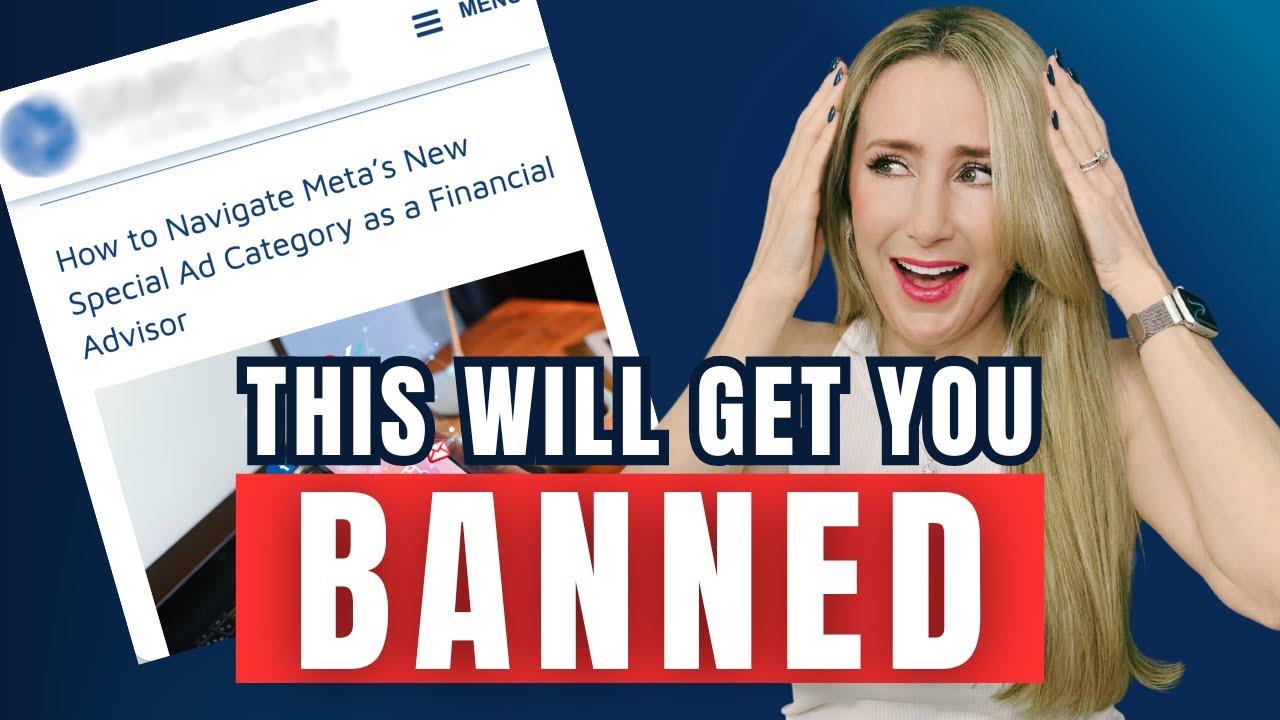
Shauna Thoresen breaks down Meta's Special Ad Category rules for insurance and finance ads, which block age and zip-code targeting. She warns that workarounds like hiding age collection in forms risk account bans, and explains compliant alternatives: strong ad copy, first-party data, Meta Pixel retargeting, and conditional forms that frame questions around regulatory needs instead of protected attributes.
Chapters
Can you avoid selecting the Meta Special Ad category if you're an insurance agent or a financial advisor and you know certain little workarounds? That's exactly what we're going to be talking about today because this is a question that I get from independent agents all the way up to agencies. And to make matters even more confusing, there is all sorts of different mixed information out there. In fact, what I'm going to be sharing with you today is a blog post from a very established marketing company that specializes in this space that shares how you as an agent or a financial advisor can actually avoid having to select the Meta Special Ad category. But here's what they're not telling you. If you follow the advice that is in this blog post, it not only risks your campaigns, but it risks your entire ad account. In fact, it risks you as an advertiser ever being able to utilize Meta platforms again. That's right. I'm seeing Meta not just ban individual ad accounts anymore, but they are banning people at a personal IP address, driver's license verified level so that That way, if you continue to violate their policies, they just say you're no longer allowed to advertise here again. In this video, we are going to be moving through this article step by step. You're going to walk away understanding what you can actually do in the Meta Special Ad Category, what you cannot do in the Meta Special Ad Category, and more importantly, what strategies are actually working to generate high-quality leads at the lowest possible cost. In case we haven't met yet, my name is Shauna. I'm the founder of Social Waves Media. Now, I first started running Facebook ads in 2015, and then I launched my agency and started running ads for clients full-time in 2016. So needless to say, I have been in this industry for over a decade, and I have seen Facebook ads drastically change from the 2015, '16, '17, '18 to what Facebook ads or Meta ads now actually are. And there's one thing that's for certain: there's always going to be changes in the digital marketing space. There just is. And the businesses that continue to thrive and attract high-quality leads are those that learn how to actually adapt with the changes. Now, we're going to be talking about today one of the largest changes that has happened that specifically affects those that are in the financial space or in the insurance space. We're gonna be talking about the Meta Special Ad Category. Before we dive into the contents of this very inaccurate blog post together, let's talk about what even is the Meta Special Ad Category. So the Special Ad Category was first released by Facebook in 2019, and the entire purpose behind it was to protect certain demographics from being discriminated against. And whenever advertisers were talking about very specific topics, So we're talking about things like housing opportunities or career or even financial opportunities down to if we're talking about politics. So they wanted to create it so that advertisers couldn't purposefully include and then purposefully exclude certain populations whenever it came to those very specific topics. Now what this did was it made it where whenever an advertiser selected a special ad category, it changed some of the things that you had access to inside of building your entire campaign. Now in case you're new here or you're new to ads, The way that I like to teach ads is like we're building a beautiful tree, right? So the tree, the tree trunk of it is the campaign, and that is the roots of the operation. So let's dive into this article and move through it together. Now, I was first sent this article from an insurance agent that is enrolled in my course Insurance Click to Close, and she was just about to dive in and she sent this to me and said, Shauna, Look, this was recommended to me. So does this mean that we can avoid running ads in the Meta Special Ad category? So let's take a look at what they have to say and we'll work through it together. Now, first of all, this comes from Simplicity Loan Beacon. They're a first full-service marketing company for the financial industry. I do not know anyone at this company. I've never spoken to anyone at this company. I had never even heard of them before. So I just want to make sure that that's very clear. I'm only going off of what they publicly have on their website. So you can poke around on here, you can see what they actually offer. It looks like their services that they specialize in helping people primarily with digital marketing, like they do social media, they do some content, they do digital media buying, which in other words, that is running paid ads on different platforms such as Meta, which we're going to dive into. If we take a look at their story, you can see that they're rather large. They're nationwide. So let's dive into this article, How to Navigate Meta's New Special Ad Category as a Financial Advisor. So they talk about how digital lead generation has been largely misunderstood by much of the financial community, and it's costed us. Do agree with that. They talk about that they've been innovators. They have been able to keep up with all of the changes and continue to get wonderful results. Then they go in to talk about, to that end, you should be aware of a new rule by Meta that has changed the way you can market your firm. The rule requires all advertisers who run ad campaigns about financial products or services to distinguish yourself within this special category, which can significantly change the effectiveness of your campaign. Now, it is true that they did release a rule and that everyone that runs any type of ads, whether it's financial products or any type of insurance product, you do have to declare this at the campaign level. They're very clear about this. Now, whether it actually affects the campaign, I'm happy to tell you that on my end with my agents that are running ads, we're not seeing a decrease in results. In fact, I have a Medicare agent that started running ads this AEP. She's generating leads for $3.56. So it's absolutely still something that you can do very high quality leads and you can get them at a very decent cost per lead. So let's dive into what comes with this new special ad category. When an advertiser selects this special ad category, it comes with quite a few targeting restrictions. These include the inability to target by age and zip codes, the loss of lookalike audiences, and limited amount of detailed interest. So this is true. You cannot target zip codes, but you can still target cities. You are not able to target by age. This is true. And you do lose the ability to use what's called a lookalike audience. Now, a lookalike audience is where you would create an audience within Facebook, whether it is a prospect list of people that you know have been interested in your products before, people that have engaged with your page, people that have visited your website, and those are what we would call warm audiences, right? Because they've already interacted with you, they're aware of your services, they're not someone that's never heard of you. Then we can say to Facebook, I wanna create a lookalike audience that looks just like these people and I wanna target them. And this is what we would call a new cold audience. A cold audience is someone that's never heard of you, never interacted with you before, and we wanna target them. Now, back in 2017 through, I would say, 2022 even, lookalike audiences were critical to the success. Once I got an ad account that we had a large enough audience that I was able to make super powerful lookalike audiences, we were able to target cold leads and it worked extremely effectively. And then in around 2022 is whenever they really started making it more about the content finds the user. This actually came with the rise of TikTok and an algorithm that was completely different than Facebook or Instagram or LinkedIn or any of these other platforms that ever used before. TikTok was all about if you like this topic and it's showing, we don't care if you follow them, we're gonna serve it to you. And Meta kind of was like, oh, TikTok's doing really well, and they started swinging that way as well. This made it where almost when you were running ads, even when we could create certain specific hyper-targeting, it became less and less relevant. In fact, Meta would oftentimes say that our old school way of targeting, which would be creating very specific audiences or the tree branches to keep that audience under a million, now they're saying you want it to be multiple millions. You want it to be like 3 to 5 million plus for it to be effective. So the targeting started to open up greatly in 2022 and things like lookalike audiences became less and less relevant because the algorithm already had so much information on data on people. It essentially would create its own lookalike audience and target without us as advertisers having to do it. But you will still hear people talk about this because it sounds like super fancy and techie, right? All right, this sounds scary and like a huge change to the way that you expect your marketing to function, but don't fear. Simply Lone Beacon is here to shed some light on how you can handle and to ensure that your campaigns are still generating the results you want. So let's see what they have to say. Step 1, It's likely that your ads are offering free downloadable content or an educational event. So technically, you're not advertising a product or service, and you don't need to use the special ad category. In addition, be sure to write your ads using language that stress the educational aspect of your offer. We find doing this in our own ads helps us successfully target within the guidelines. Okay. Okay. So what they're talking about, if you're offering a free download or something like a lead magnet that's a free guide or a checklist, or maybe you're actually offering like a webinar or a live seminar, these types of things, they're trying to say that you're not actually advertising a product or service. Mm-mm. This is a no-go. Meta is specifically clear that if anything in your ad, no matter what we are pushing, talks about one of these products, you absolutely have to declare it as a Meta Special Ad Category. You are at risk if your ad account gets too many rejections that they will not only shut down your ad account, but they will ban you as a user. Now, I'm not going to go into this too much, but I've actually worked with a final expense agency where 6 of their core people of their team are completely banned from advertising for life. And it's not because they did anything wrong, it's because they worked with the wrong marketer. They were working with a marketer that was doing very shady things, and all of their names were tied to the account. And long story short, They got every single person banned, and this was back in like early 20. I'm not sure. I started working with them in 24, so this happened way before I started working with them, and it has been a nightmare to get their assets back on track. So you've got to be very careful with these things. Then they talk about be sure to write your ads using language that stresses the educational aspect of your offer. I mean, okay, I guess you could do that. It sounds like they're telling you to be very generalized and don't actually be specific, which is actually the quickest way to. Increase your cost per lead. All right, step 2: if you've tried to write your ads with educational language but you're still getting hit with rejections and seeing your results take a hit, you have no choice but to select the special ad category. So they're basically like, try to get away with it at first, and whenever you think you can't, like, be like, okay, I'll select it now. But as people who work with a retirement demographic, the inability to target by age with this new rule is a hurdle we must overcome. Our solution, use conditional formatting in Facebook Forms. All right, so let's talk about this. This is actually one of my favorite features whenever used correctly. A conditional logic form, whenever a user comes in and they click on your ad and they go to that welcome page, you can actually have your ad set up where they have to answer a question, and if they answer it one way, they become a lead. If they answer another way, they do not become a lead, and it actually is very effective, especially when we're running, um, regulated things such as Medicare and other products that have very specific requirements. But look at how they're telling you to use it. It says this feature allows you to create a form that changes based on how the lead answers the questions. You can either filter out people who deem non-leads. So that is true for us. As you can see the example below, we're starting with an age question. They literally show that they ask for the person's age in the conditional logic form. I'm here to tell you that is absolutely against Meta's policies. This goes completely against what the entire purpose of the special ad category is. You are not to, when you're collecting their form, ask for their birth date, ask for their age. You can't ask for their gender, if they are married, any of this type of information. So doing this on your conditional logic form can be very dangerous. Now, I'll tell you, one of the wordings that we are using with Medicare ads specifically is it's not us asking for their age. We're actually putting the requirements on CMS because they're the ones that set the requirements, right? So we will have on a welcome page something that says, based on CMS regulations, Medicare insurance is only available to those that are 65+ or with preexisting qualifying conditions. Then our conditional logic question can say, based on CMS regulations, do you believe that you'll qualify? Yes or no? So there are ways for you to ask it that are still following the actual policy, but you cannot— this is very dangerous— you cannot ask for the age right there on the conditional logic form. As you can see, if a lead answers yes to the question, then they will be allowed to fill out the rest of the form. If they answer no, then that would mean that they aren't eligible for this offer. So this is very true, and I will tell you, when we use conditional logic forms and some of the other strategies that I teach in Insurance Click to Close, you are very quickly able to actually swing your ads to be served to the right demographic, especially if we're talking about the senior population or we're talking about retirement planning, we're talking about annuities, IULs. We're able to get those ads in front of the right people whenever we have the right ad language that people self-include or self-exclude, because the moment that the algorithm catches on to what type of people and what demographic is responding well to your ads, they're going to start serving it to that population. Okay, what else can I do to make sure my campaigns still perform well? Since this new rule makes lookalike audiences non-existent and limits the number of interest filters you can use, building your first-party idea data is going to be crucial. This includes making sure your prospect database is up to date and constantly growing so you always have a solid list to retarget. This also means making sure you have a Meta Pixel on your website so you can retarget users who visit it. So what she's talking about here is there's 2 different things. One, when we talk about the Meta Pixel, it's actually now called the, the Meta Database. They've changed the name of it for whatever reason. It's essentially a tiny piece of code that you put on the header or first part of your entire website. And when a user clicks on your website, Meta now knows, oh, that's like Shauna went to this website. So Shauna went to this website, she must be interested in their tags. In their, in their topics. Then if that specific website has a custom audience inside of Facebook for anyone that's visited their website, they are able to set up ads and retarget them. Now here's the caveat: you need to have such a large amount of traffic to your website. Like, if you're only getting even like 1,000, I'd say around 1,000, maybe we could start building an audience. You need to be getting a larger number of people. You can't just be getting a few hundred to create a custom audience to retarget. So that is something that is still effective. Another type of retargeting audience that works really well is anyone that has engaged or interacted with your Facebook page or your Instagram page. Now she talks about how it's important to have a robust prospect list, probably because they generate lists, right? And they probably sell lists of people to agents where you upload that list and then you target the people on that list. That can be effective, but the way that I see it is once we've plucked the person off the platform, once I have gotten Mary's email address and her phone number, I don't want to spend any more of my hard-earned money trying to get Mary to book a phone call with me. She's already completed the form. She's already become a prospect. Now instead, in order to save cost and for more effective marketing, I'm going to be sending her emails. I'm going to be communicating with her that way, and I'm going to be trying to warm her up. actually be able to speak to me. So I see what they're saying here, but at the end of the day, that's not a reliable strategy. It sounds like what they're focusing on so much is that targeting is everything, and if we don't have targeting, we have nothing. And what they're not hitting on is the single most effective element that is making conversions happen with higher quality leads for very low cost per lead, and that is the ad's messaging. So very quickly, let's talk about kind of the things that are the most dangerous elements whenever it comes to this article. So the thing that makes me the most nervous about this is they talk about how you don't need to select the Meta Special Ad Category. Not true, you do. They talk about using a conditional logic form as a workaround. Don't do that. I don't want you to get your account banned. They talk about the overall tone is how to avoid. So the goal number one is to avoid, and if you can't, then we will use it just with some workarounds. And 4, there's just too much focus on targeting in general. Now, this is where we are at a very pivotal moment in the way that financial and insurance ads are going to perform in the future. Those that relied on very specific targeting with very general not very, not very great ads, very general generic ads. When they relied on that, it's going to eventually— the bottom's going to fall out. The cost per lead is going to continue to go up. It's going to become less profitable and so on. Instead, your entire focus needs to be on your messaging and how you are communicating with people that are very early in the customer journey. They they don't even know what an annuity is. They haven't even considered if they have enough for retirement. They're not aware that they don't automatically get enrolled in the right Medicare plan. They don't know that working with an agent doesn't cost them anything. They haven't thought about if they need a will or a trust. So communicating to those people at the stage that they're at, warming them up to you, and then hitting them with the right lead generation ad to get them to convert— you're not only going to get higher quality, you're going to get better targeting, and you're just going to get a better cost per lead. Look, I get it. Navigating the Meta Special Ad category can be very frustrating, but the solution is not to find loopholes. It's not to avoid running things the correct way. Instead, it's learning how to still generate great results within the system that we have to work with. The reality is, if you are marketing your business, it is something that is always going to be changing. So it's something that we always have to be able to rise up to and adapt. Now, if you are interested in learning how to generate your own leads the right way, the ethical way, the way that you lead with honesty and integrity whenever it comes down to the way that you're running your ad campaigns and the actual ad messaging, then check out the description below. Not only do I have the link to my full course Insurance Click to Close, but I do have a free lead training that really breaks down the basics of running Meta ads specifically in this space. If you enjoyed this video, please go ahead and hit that subscribe button for me. It costs you nothing and means the world to me. Thank you so much for watching this video. If you have any questions, any comments, or any ideas, just drop them below because I read every single one. All right, I'll see you in the next one.
More from Shauna

Medicare Ads: How Do I Target Seniors If We Can Not Target Age in Meta Special Ad?→ AEP Question 7



How do I increase the quality of my Insurance or Medicare lead?→ AEP Question 5




Insurance Ads: Can I upload a purchased email list so I can target age, income, zip code, etc?



How This Medicare Agent Went From Zero to Generating His Own Exclusive Leads for $6.26