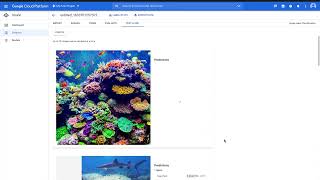
Shloak Rathod built a machine-learning model to detect bleached coral reefs using Google Cloud AutoML. Trained on 350 images, it achieved 100% accuracy on test data and correctly identified bleaching in ten unseen internet photos, even with turtles and sharks in the frame. Reefs support 25% of marine life and are worth $2.7 trillion annually, but up to 50% are already destroyed.
Chapters
Hello, uh, today we will be exploring the use of machine learning to monitor bleaching in coral reefs. Why are coral reefs important? Coral reefs are home to about 25% of all marine life. Additionally, the Global Coral Reef Monitoring Network estimates that the value of goods and services provided by coral reefs is about $2.7 trillion per year. What is the current situation? The United Nations Environment Programme estimates that up to 50% of the world's coral reefs have been destroyed and another 60% are under threat. Moreover, a report by the Australian government downgraded the outlook of reefs from poor to very poor. What is being done today? The United States has— sorry, France has set up a US Coral Reef Task Force. The International Coral Reef Initiative was formed. Today it boasts of 93 members. Similarly, the Global Coral Reef Monitoring Network was formed with the aim to monitor coral reefs. Reefs. How are coral reefs monitored today? Today, scientists at the Great Barrier Reef rely on a sensor that records temperature, salinity, and pressure to monitor coral bleaching. What's our solution? Machine learning. That's the references. And now I'm gonna go to our tab. Yep, so, uh, this is the training dataset we used, wherein we used 185 bleached, uh, uh, bleached images and 163 unbleached images. Uh, we trained the AutoML model by Google Cloud, uh, and we can see that our recall and our precision was 1, and we had a total of, of, of about 350 images. So, uh, we go on to the evaluation, uh, wherein we can see that the recall and precision is 100%, which, uh, simply means that we predicted all, uh, that we found all the bleached and all the unbleached, and of which all the— all of them were correct, which is what the 100% precision and the 100% recall essentially mean. We tested our model on 34 test images, of which our confusion matrix shows that we've got them all correct, wherein we've— wherein the model has correctly detected the 16 unbleached and the 18 bleached. So So that means our true positive rate and false positive rate was also 100%. Moving on to testing 10 images right now. So we simply upload our 10 images. Here we have 10 pre-downloaded images from the internet. We haven't taken these images from our training dataset. So here we can see there are about 1, 2, 3, 4, 5 which are bleached and 5 which are unbleached. And let's upload them. Uh, let's start from the bottom here. Uh, here we can see this one is bleached, and, and therefore we've got a confidence score of 1, and it also says it's bleached. Uh, the same with this one. Or here, maybe there was a challenge because there was a tortoise inside the, the image as well, but it still came out pretty well with a 0.95 confidence in bleached. Or the same here as well, because we can see there is a human being in the image as well, uh, and this was very simple to detect and it did get a 1 confidence. Or this is unbleached, and rightly so. Moreover, this had fishes in it as well, so that was maybe a hindrance for the model, but it worked around it. Or the same for this one, this was pretty normal. So I'm— so it has a 1 confidence. And the same for this one and this one. Uh, this one too had a 0.97 confidence, uh, in bleached. And moreover, this had a fish, or that looks like a shark, so that had a shark in it. Um, so again, that may have been an hindrance, but our model has overcome that. Uh, and the last one is also unbleached, and that's also 1. So overall, our model performed well with 100% recall and 100% precision at a confidence threshold of 0.5. However, in a hypothetical deployment situation, this would probably change, and so our recall rate would change because our precision remains 100% at all confidence levels. Thank you.