A Well Of Hope With Niemah Scherlacher
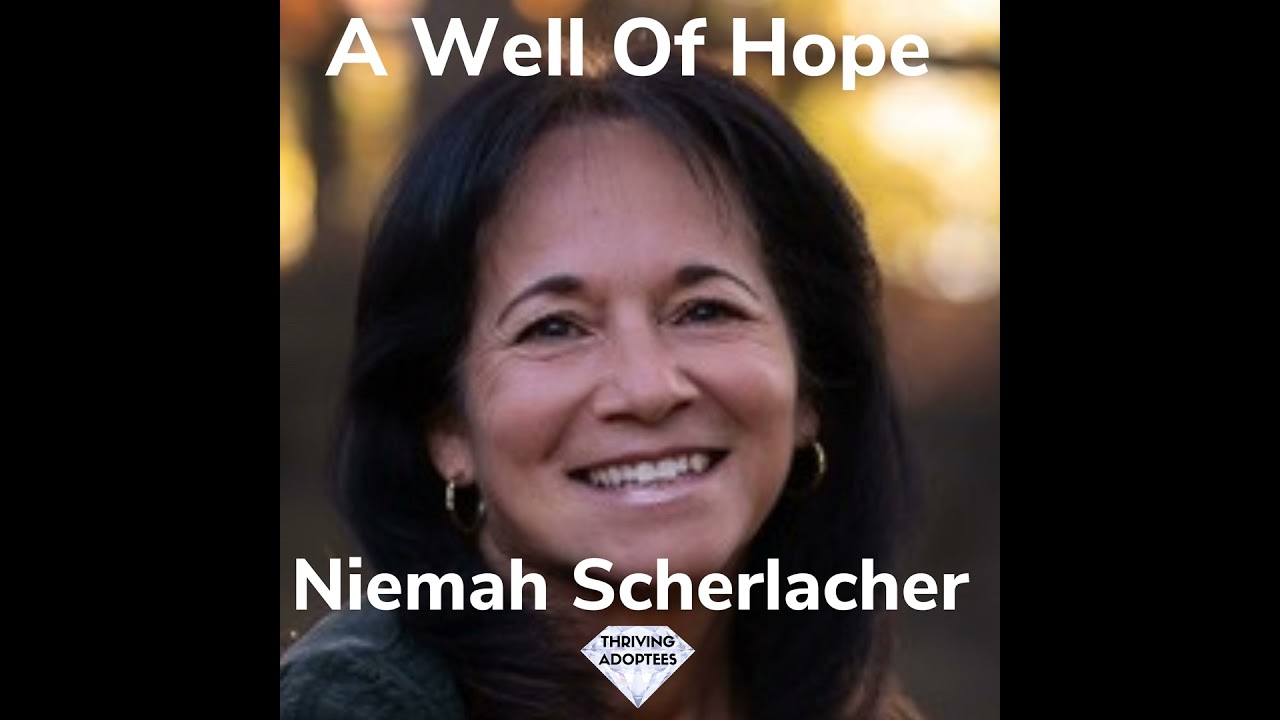
In this episode of the Thriving Adoptees Podcast, host Simon Benn interviews Naima (Niemah) Scherlacher, a South‑Carolina‑based adoptee who was born in Jerusalem to a 15‑year‑old Palestinian mother, placed in a Jewish baby home, and later adopted by American Christian parents. Naima recounts her early life, the cultural and religious intersections of her birth, and the long‑term impact of early institutional care. She defines "thriving" through a 400‑meter race metaphor, describing a life‑long pacing that was shattered three years ago when she located her birth mother, learned she was the product of rape, and experienced rejection. This triggered a profound emotional and spiritual "wall" that she spent two and a half years confronting, ultimately choosing to transform the pain into a "well of hope" for others. The conversation explores her wrestling with God, the distinction between intellectual belief and felt experience, and the practice of choosing joy and trusting in a larger divine purpose. Naima discusses therapeutic work on touch issues stemming from early orphanage care, the role of her husband as an informal therapist, and the importance of community (e.g., her Arab friend Lila). She reflects on how feelings become beliefs, using snowball metaphors to illustrate how rejection narratives can solidify. Throughout, she emphasizes identity in Christ over self‑esteem, the concept of being adopted into God’s family, and the ongoing process of healing and understanding cultural contexts of her birth mother’s decisions.
Chapters
Hello everybody, welcome to another episode of the Thriving Adoptees Podcast. Today I'm delighted to be joined by Naima. I got that right, right? Naima?
Yes.
Yeah, Naima Sherlacher from South Carolina, just over the border from North Carolina. So I was talking to Naima about the fact I did a week, spent a week out in Greenwood, South Carolina a couple of years ago working in a children's home with a guy that a fellow adoptee had met through the podcast. And what wonderful, like, just amazing people that I met. Everybody from the people in the cafes to the restaurants to the hotel and people within the home itself. So South Carolina's got a special place in my heart. But Naima's story is now in South Carolina, but it started a long, long way away. So probably 4,000 miles or so away from South Carolina, I would guess. So Naima was born to a 15-year-old Palestinian girl in Jerusalem, placed in a Jewish baby home, and then later adopted by American Christians. So it's remarkable that you talked about the mix and the cooperation between Arabs, Jews, and Christians. And clearly that's particularly salient with everything that's going on in that part of the world too, right, Naema?
Yes, yes.
Yeah. So thriving, what does thriving mean to you, Naema?
Yes, I thought a lot about this. Thriving, There's a general answer I think we could give for anybody and for adoptees especially, but just that idea of taking your life and rising it to the next level, living large, um, not just existing day to day, not just the mundane, but actually living in such a way that is, is meaningful and purposeful. Emotionally, physically, spiritually, just really taking it all in and making the best of what you can. For me personally, with the thriving, I felt like I believed I was thriving for most of my life with my adoption story because it was one that was kind of treated like it was celebrated. Um, just, I was this miracle baby that shouldn't have survived, and here I was. And so, and my life was typical, so I thought I was thriving until just 3 years ago. And that's when it was all truly tested. And I believe as an adoptee, the idea of thriving was, was tested in a way I never experienced because, and I'd like to relate it to elements of the 400-meter race. What is thriving for me? I don't know how familiar you are with the 400-meter running race, but—
Well, I'm a swimmer. Um, I'm a swimmer, so I could do 400-meter swim. Yeah. Okay. 400-meter run. I, I remember, you know, like the first day we did athletics at school and I thought they said, well, what do you wanna do? You know, like, and And I thought, well, 100 meters, that's not far enough. I'll do 200 meters. And I was absolutely exhausted. I was gonna say knackered, but I'm not sure whether you knew what knackered means. But knackered is a slang word for exhausted, right?
Okay.
So, 200 meters, I found that really tired. That was a lot longer than I thought it was. But if you put me in a pool and say 200 meters, I'm gone. I'll have it done in nothing. Anyway. Sorry.
So I don't know if swimmers have this same thing, and I don't know if you've heard of this, but in the 400-meter race, everyone talks about the wall. And what happens is the first 300 meters you are going, you are managing your pacing because it's considered a long, a long sprint, but a short endurance race. It's kind of in the middle there. But what happens is you come around that turn, the second turn, and You literally hit what feels like a massive wall, and you thought you were doing so well. You thought you were plugging along, and everything just wants to— your legs want to fall off. They feel like Jell-O. And you're at this point in the race of, I can push through this or I'm done. And you just have to reach in and grab every element of physical, mental fortitude to Get through that wall, and then you come around that turn and you see the straightaway, and it's like you have this renewed strength and you're able to finish that race. And and I as I've thought about this question because I know you ask it to each of those that you interview, that just kept coming to my mind—that 400-meter race. Because one of my favorite verses in the Bible in Hebrews is it's a very simple verse, but it's just. Run with endurance the race set before you, and I thought I always liked it just because I was a runner in high school. But now it has taken on a whole new meaning because I think for 58 years as an adoptee, I was just I was managing, and I thought I was thriving. I think there was an element that I was. I was living a good life. I grew up, got married, had kids, had a good job that I loved. I was productive in society. But to this idea of thriving after 3 years ago when I found my birth mother, basically just to be rejected by her, even though I understood why in her culture, the Palestinian culture, she was still very fearful. I also found out 3 years ago when I found her many details about my life and hers. Well, my beginnings. that I was the product of rape. So my world was turned completely upside down, and I was in that 300-meter— that was the wall. It was literally the mother of all walls that I had ever hit in my life. And so for me, thriving was a 2-and-a-half-year process of getting— working through that wall. It was truly the darkest, most painful season of my life. And pushing through that, grasping for every ounce of spiritual strength that I had always thought that I had. It's the first time it was really tested because everything I thought about me was—it was—it was delayed truth for me, a truth I wasn't even seeking. And so, for me, thrive thrive as a thriving adoptee. It is. Taking what I've learned, as difficult as it was, and making the decision to use it for good. I'm a firm believer that good can always rise above evil. The whole idea of ashes to beauty, taking the ashes, what appeared to me as ashes of just ruin and And making something beautiful out of it. If that beauty is to be able to encourage, you know, this was a wound very deep in my heart, and, and to be able to turn that wound into almost what I would call a well of hope for other people. Maybe they're not going to go through the exact— It's hard to find someone that's gone through the exact story as mine. But everyone's got their hurts and pains, um, and to be able to use it to give people hope, um, that's what I see for personally as thriving right now.
Yeah, I guess if you, if you break down using the analogy, you, you hit, you hit the wall, um, And it's a— it's— it felt like a— an emotional and spiritual wall, was it, for you?
It was very emotional, and even spiritually. My faith in God has always been very strong. Of course, it's been tested at different times in my life, but this was the first time I— I like to call it getting in the arena. And wrestling with God. And I never questioned his goodness. But I have to be honest, I really wrestled with— it felt like a tease, even though I know that's not God's character. He doesn't tease us. But it felt like, why would you bring her into my life when I was not looking, only to never let me meet her? I'll be honest, Simon, I'm still wrestling with that. I feel like I've come a long way. But there are still moments when it, it's hard to process that. I'm still working on that in my mind. My, my mind can understand it. My heart doesn't. But yet I trust in the, the nature of God, who I believe God is. I believe he's good and just and merciful. But I don't always feel it.
No. Yeah, it kind of mirrors— you asked me to share a little bit of my story, and I asked him if it was on the podcast somewhere. So, but I saw something really, really big over the last couple of weeks. So I'm gonna, I'm gonna relate it to another analogy, but this is a skiing, skiing analogy, right? And then I'm gonna bring it round back to the, um, to my experience with my birth mum. Because what you make, the distinction that you make there between Um, an intellectual understanding and a felt understanding, uh, is huge. It's huge. So I'm, I'm gonna draw a, a, I'm underlining that, uh, because I think that you're spot on on that. So as I said before, um, before we hit record, I've been skiing recently and the week before last And I hadn't been skiing for, for 10 years, but I have been skiing for 45 years.
Okay.
Right?
Yeah.
So, and I weren't very good at the start. Um, people will say I'm not very good now, or some people might say you're a good skier, you know, like, but there's always somebody faster than you and there's always somebody slower than you, you know, like swimming pool and skiing, it's the same thing. So, but people ask me, you know, am I going to be okay with it, you know, because I haven't been skiing for 10 years. And I thought, yeah, yeah, I am. Yeah.
Yeah.
Um, but doubts, kind of the odd doubts kind of popped in there, and I, I realized, uh, probably on the first day skiing what the difference is. The difference that makes the difference is it's my brain that tells me that I can't do it.
Yeah.
But skiing isn't a logical thing, it's a feeling thing. You get a feel for skiing like you get a feel for riding your bike. You don't— riding your bike isn't a logic thing, it's a feeling thing. You get a feeling for it. So 2 different, you know, you're looking— we're looking in the wrong— we're looking in the wrong department. Our brain is the one that— our brain is where the doubts are.
Yeah.
Our heart is— there's, there's no doubt in, in our hearts. And I thought about that and my birth mother, so These words came out of my mouth at the age of 40. She didn't love me enough to keep me, right? My birth mother. Okay. I'd never said those words before because I'd never thought those thoughts before. And the woman that I was talking with, she said, I'm a, I'm a non-Simon, and I don't think it would have been quite like that. And with that, I, I got on a logical level I saw her point.
Yeah.
And I, and I got, I, I got that.
Yes.
At a logical level.
Yes.
10 years later, I got my adoption file, and there's a letter in there, um, about the teddy bear from my birth mother that I had derided as a consolation prize. Briefly, and I reading the letter, I've I felt my birth mother's love for me, and and I and I realized, and I actually merged with her. I became one with her, and I realized that the ten seconds of doubt, yeah, and and and another. 20 seconds of, of fear I'd had about, about her rejecting me, funnily enough, I, I saw that they were— I couldn't have been wronger. I couldn't have been more wrong.
Yeah, yeah.
So, so intellectually I got it, and then the feeling— I got, I got it, I got it, an embodied understanding. Of her, an unbounded feeling of her love for me and, and merging with her 10 years later. And then it took me, but then it's taken me another 8 years to be able to explain that. Yeah. As clearly as I just did. And yes.
Yeah. To you. Wow. Wow. That's a gift that you received.
It's 3 gifts. Yeah, yeah. The, the, the, the logic. Yeah. The feeling and the understanding.
Yes, yes, yes. And that comes in a— and that's a process. And I'm, I'm aware that I, I'm, I'm in a place of a long process. I'm in a much better place than I was You know, like I said, it's been 3 years now since this all began, 2 and a half years of real darkness. Like, I'm, I'm by nature a very outgoing— I'm like the big jokester in the room, all of that. And for the first time in my life, I just felt like I was living under a cloud of darkness. Like, I didn't even like who I was. I didn't recognize who I was because that wasn't me. Um, but I had to go through that pain, um, to get to where I am now. And like I said, it's still hard now. You know, I may get choked up talking with you now, you know, but it, it— I'm definitely in a much better place than I was.
Yeah.
When this, you know—
It, it is a process.
Yeah.
And there are landmarks.
Yes.
Along that, along that process.
And landmines.
And landmines. Yes.
Yes. Yeah. And you never know when those landmines might hit. It can be the most unusual— it could be a song you hear that just rocks you or sends you. It's very interesting what can trigger you to fall into those, whether they're faulty thoughts, whether they're— and I think, I don't know, maybe I will. I'm not quite— I think with my birth mother, I can understand absolutely why she gave me up when she was 15 years old and Running away from an honor killing. I get that. I think I'm struggling with, as you know, when she found out I was alive and the private investigators went to her home, they wanted to show her a picture of me, and she didn't even want to see that. I have to admit that's hard because I would think that maternal. But I also know I had a very good friend, Lila, who was my only Arab friend. I grew up so Americanized. I grew up in a very white Anglo-Saxon culture, a neighborhood like— so I felt very different growing up because kind of my skin was a little darker, my hair was curlier, my name always set me apart. But my only Arab friend was Lila. I met her in college and She was able to connect to me, to understand my culture in a way no one else could. And she— when I knew my birth mother was dying, I, I just wanted to get on a plane and go there. And it was Lila that was willing to say the hard truth to me that it, it may not be the best thing, you know. And so I had to get to the place of saying The woman who protected me when I was a baby literally protected my life. Now, she was protecting her life too, but it was now my turn to protect her and honor her. And she was saying she did not want to meet me even in her dying days. And so I didn't get on a plane and go. I don't know if— sometimes I question if that was the right decision. But I feel like I was honoring her, if nothing else. So, you know, but that is hard. That's what I'm still working through—being rejected. I didn't feel rejected as a baby, but I definitely felt rejected as an adult, and that's—that's tough, you know. But thriving there again. Let's go back to thriving. So, as a thriving adoptee personally. I believe in life, we literally have to choose joy. And that doesn't mean feeling joy. But it does mean making a choice to try to see the good in every day, to see the good in people, to see the beauty in life amidst all the ugliness. And, and so even in my pain with questioning her not wanting to meet me, even see a picture of me, I— part of my thriving is, is literally every day waking up and saying, I choose joy. I choose to see the good over the bad. I choose to believe that there's so much I cannot understand, and that one day I'll see the whole picture and it will make sense. But right now it doesn't make sense, but I'm going to trust in God that he sees the whole picture. Um, so that's, that's part of thriving too, I believe, is, is holding on to trust in what we don't know.
Yeah. If there's one thing that I've learned over these 620-odd episodes I've done, Is it's the power of spirituality rather than psychology.
Amen to that. Yes, yes. And there's a place for psychology. My husband's a counselor, so there's an absolute place for it. And it's interesting because I've heard a lot of your interviews, they, they felt very strongly that it's important to get into therapy. Um, I did not go to therapy, um, but I felt like I had a built-in therapist as a husband. I mean, he truly could walk me through some of my darkest days and speak the logic when, when I wasn't feeling truth. He was able to speak truth to me. And so while I didn't go to therapy— actually, the one time I did go to therapy, it didn't have to do with this, you know, delayed truth, but— As a baby in an orphanage for two and a half years, I I did not like being touched. I did not even clothes certain clothes materials bothered me. I was not an affectionate child, and when I got married and started having when I got pregnant, I was so fearful that I would not be affectionate with my own babies. So I did go to therapy. To address that piece of adoption issue for me, to literally learn how to be touched and feel like touch was a positive thing. I can't say that I ever learned it wholly. I know I haven't, but I think there are natural consequences to life circumstances, and when you're in an orphanage for two and a half, those two and a half years are so important. to building those connections in the brain. And so I've accepted, like, I'm truly okay with that because I don't know what I'm missing. You know, if someone didn't hug me for the rest of my life, I would truly be okay with that. But I don't see that as a negative thing. But I wanted to make sure that I could let my husband hug me if he wanted to, that I could let my— that I would hug and nurture my daughters and And looking back, I, I regret— I wish I was more affectionate with them. I don't think I was enough. But it's really hard to undo what was never created, if that makes sense.
Yeah. I wasn't— well, I wasn't in an office for 2 and a half years. I was My birth mother had me, then I was in short-term with a short-term foster care mum for I don't know how long, either, either 4 or 5 weeks, something like, something like that. And then I, then I was collected by my parents, um, at just over, just over 4 or 5 weeks old.
Yeah. Oh, okay. Yes.
So, but I, I was, I found touch tricky too.
Isn't that interesting? Wow. Yeah. Yeah.
So. You talk about healing in the information that you sent through To me, what does, what does healing mean to you?
I think healing for me again is I didn't feel a sense of need to heal most of my life. So I, I don't believe I was in denial. I think I, you know, there are areas where I could heal, like the touch thing, which I, I did my best to try to address that. I remember in one of my college courses having to go on a retreat. I had to go at this thing where it was all about getting in touch with your feelings. I don't know why we had to do that. And I we were supposed to go around, and I I grew up very, and I think many adoptees may feel this, but like this sense of I don't need anybody. I'm independent. I can do it on my own. I will never depend on somebody else for. Me. And I remember when they were going around saying, name a song that, or lyrics to a song that describe you. And we're supposed to be acting like we're all needy. And I sat there and shared, I am a rock, I am an island. I don't think I— I don't think the professor was very happy. Because it was a total opposite of what they were trying to do there. But that was kind of who I was. Like I was determined, and I think that was—I think I had to go through healing of that feeling like I did not need anybody. And and so that was one area, and again, that was where my husband really helped me through a lot of that because that wasn't—I knew I was putting on a show and a facade. And it wasn't who I truly wanted to be. But I think that was one of the— I don't want to say negative impacts, but just, I do think that was a result of a protection from my adoption story, um, that, that I reacted that way.
Yeah.
For me, healing as an adult from what happened 3 years ago, finding her, You asked what that looks like, right? Um, for me, it is definitely dealing with— I had to— the bit— the first biggest issue that came with finding her and finding out that I was the product of rape, I, I don't know if this will make sense, but I didn't— I didn't want to look in a mirror. I, I wanted— sorry, it was like I wanted to get rid of half of me, um, the half that was the man. I, I won't call him my father, um, because of what he did, um, and I felt so dirty. And I hated half of myself when I found that out. So I know it's hard to talk about now, but I do feel like I've worked through a lot of that. I had to really work through— my identity is not in how I came to be. My identity is what I have made of myself, what God has made me, and my identity is in Christ. And he created me on purpose, with a purpose, for a purpose. My I volunteer at youth group, and the youth pastor always says that to the kids, and I like that saying that I am here for a purpose. I will never know why God allowed me to be conceived the way that I was. Um, there's a lot of evil in this world that I will not understand. I can never wrap my head around it. But that's again where I have to just trust that God sees this bigger picture I can't see, and I won't see till the other side of heaven. But I had to really work through healing to separate my identity and where I came from As opposed to where I am and where I'm going.
Yeah. It's the distinction between who we are and how we feel.
Yes. Yes. Yeah.
Who we are, as in, um, so in religious words, you know, in religious words, um, uh, a God. People, people said to me, um, We're all adopted into God's family.
Yeah. Yes.
That's what some— another Christian said to me a couple of weeks ago. So it's identity at that level.
Yes.
At that depth.
Yes.
That profundity.
Yes.
So it's not even name of the mum. It's more profound than that. Yeah. Yeah. And I'm not saying being a mum isn't profound, right?
Yes. Yeah. Yes. It's, um, and, and also, yes, you're right. The whole— I, I love the, the way God does say we are adopted into his family and also to recognize that we are all created in the image of God. So my image is not of—
Yeah.
The man who raped my birth mother. It's— and thank goodness I do look more like my— I actually have been given a picture of him. And I do. Everyone says I look like my birth mother. And that brings me comfort. I don't know what I'd do if I looked like him. But I do look like her, and I take comfort in that. But ultimately, I'm made in the image of God, and, and that's even a greater comfort.
So, you know, when, when I think about— so I, I was— was I brought up a Christian? To an extent, yeah. You know, we went to Sunday school for a bit. Uh, I went to a school where we sung a hymn every morning, we listened to a a reading every morning, but it didn't really mean anything. Didn't really mean anything to me and for a lot of others, I think. But when I hear— because I interview quite a lot of people who are Christians on the show— when I hear them talking about being adopted into God's family, and specifically when I hear them Saying, you know, made, made in the image of Christ, or words along phrases along those lines, I always think, well, there's your self-esteem right there.
Yes, absolutely.
But, but, but it's, it's way bigger than self-esteem.
Yeah.
Do you know, like, identity, really? Yeah. Um, it's bigger. It's even bigger than that. Um, I heard, uh, I, I heard a, an interview with, um, a lady that I've interviewed, uh, and she, she blows— she blew me away. This, this woman that I interviewed, she's a, um, neuroanatomist.
Hmm.
And she had a stroke. And her book is called A Stroke of Insight. So, so it's, it's on— she became in awe of life.
Yeah. And, you know, we Ameri—
we don't really use the word awesome. It's deemed too American for English people to, to use, right? Um, but she, she viewed the word with but with her life with awe.
Mm.
And this— I, I heard her being interviewed by a, a big-name Brit podcaster, is like the number one podcast in the UK. And after she'd been talking about awe, he, he described it as gratitude. And I just thought, you're not in the same— being American for a minute— you're not in the same ballpark. You're not. Awe is way, way, way bigger.
Yes.
Than gratitude.
Yes.
You know, like, it's chalk and cheese, right? To use a British metaphor. And When I think about self-esteem versus identity in Christ, I think of that sort of level of difference.
Yes.
Yeah, like self-esteem is, it is a, uh, is a bungalow, and, uh, identity in Christ is a skyscraper.
Yes, yes. Yeah, no, you're right.
Yeah. So I just started launching into my opinion on this, um, but can you, can you bring a bit more of your take on that?
Um, on identity in Christ?
Yeah, identity in Christ versus self-esteem, and what the difference between— how you see the difference between those two. And I do— or anything you want to talk about on identity in Christ. Yes, you are right.
The self-esteem is— it can't even compete with the true— when you recognize. So I don't know if this fits in, but I feel it does. For some reason, since not this past Christmas but the Christmas prior, so a little over a year ago, I've worked with youth group girls and we were talking about the different names of God. And I was saying to them, my favorite name has become Emmanuel, because it means God with us. And I think— and that was at the time I was really going— it— I was really in my dark season, starting to really just— even though I was questioning God, I was clinging to God. And I think he allowed me to really have a sense of see me as Emmanuel, God with you, and to start to really wrap my head around that the God creator of this world wants to have relationship with us, wants to be with us. That was very, very powerful to me. Of course, I always grew up knowing that, but it went to a whole new level when I was seeking to find my identity in him and not in the man who raped my birth mother, to see that this isn't— I think too often we, many people see God that he created the world and now he sits off in the distance on his throne just kind of watching what's going on in life. And it became so much more to me that this is the God I am created in his image, but he just didn't create me in his image. He desires relationship with me on a daily basis. And that was just very— that's a big part of what is getting me through the healing process, is literally just clinging to him with both hands, even though, again, and I think both can be true at the same time, that I'm questioning him and wrestling with him while I'm clinging to him, if that makes sense.
Well, you are. Yeah. You can't wrestle without holding him.
Yeah, yeah, yeah, yes, yeah.
Sorry, does that sound like a bit of a smart aleck?
No, no, no, you're right. Yeah, no, no, no, not at all. But it's—
Yeah, um, so I, I have this, I have this thing about, um, sometimes blowing, blowing clichés out of the, out of the, out of the water, right? So some clichés are clichés because they're true, and some clichés just aren't true, you know. So we, we say a lot in, in society these days, I'm getting in my own way, right? Well, you can't do that. We can't do that. Like, try walking down— we call it a pavement, you call it a sidewalk— try and get in your— try, try and walk down the pavement, sidewalk, and get in your own way. You can't do it.
Yeah.
So what, you know, like Why, why do we say all these things? Um, because what's getting in our way is a belief, or, uh, yeah, that it's a belief that's getting in our way. And once you understand it's a belief, or once you, once we understand it's a belief that's getting in our way, we can do something about it. But if we think it's ourselves getting in our way, then we're, um, yeah, I used the word earlier on, knackered. Like, it's hopeless. I've got to get out of my own way. Well, you can't get into it. You can't, you can't get out of your own way because you couldn't get in your own way.
You can't be in your own way. That's funny. Yeah.
It's true though, isn't it? Like, you're right. These things, we use these things and I just think, well, no. How's that gonna, how's that gonna help me? I want to take you back about 10, 15 minutes. You were talking about Not feeling rejected as a kid.
Yes.
Um, and, and then feeling rejected after this, this, um, action, should we say, of your birth mother. One of the things that fascinates me Is maybe can ask you. I love your opinion on this, but maybe it's another one for your for your husband, right? One of the things that fascinates me is how a feeling becomes a belief.
So.
I think of anguish at the loss of our birth mothers.
Hmm.
And that seems to me to be a sensation, an emotion. It seems to be an emotion. And whenever I get near this part of, of understanding adoption, I, I think of dogs that we've had that have cried for their mums.
Hmm.
And what fascinates me is how that visceral— how that crying becomes a feeling of being rejected, because there's a lot more thought involved in feeling rejected than there is in crying. You see what I mean? Yes. Um, have you got a take on that?
For, for me personally?
Of course, yeah.
The rejection? I think the only reason I never felt rejected as a baby is my parents were just very— I felt like I knew my story from the very beginning. I knew how young she was and that she had no choice. So I just understood, instead of feeling rejected by her, I actually found myself feeling Sorry for her and how hard it must have been. Like, I always would wonder, what was it like? Did she ever even look at me? Did she have to hand me over right away? Did she get to nurse me at all? Like, I always did wonder about that, but I never felt rejected because I felt like she was so young and it literally was her life at stake.
Yeah, I, I didn't ask the question quite clearly enough, I don't think.
Oh, I'm sorry.
Um, no, no, I, I'm, I'm apologizing because I didn't ask it clearly. Um, so how, how does— and it may be because you've not considered it, right? So, um, how does, how does crying For the loss of our birth mothers. How does that become a— how do our minds make that into a rejection? It's, it's 2 different things to me. It seems like 2 different things. It might seem similar to you. That's kind of what I'm debating, really. It's on my mind, so I'm asking you.
Yes. So how does crying, that emotion of crying, become Our truth, in a sense, that we were rejected.
Yeah, there's, there's a, there's a level of thinking there.
Yes.
So how does a feeling become a thought?
I think naturally, especially that maternal part, like for me, it should be that maternal part that if the emotion of crying over being, quote, rejected by a birth mother, I think it can become a truth because we convince ourselves. The emotions can become so strong that it's almost like, how can any mother let go of their child? Because keeping a child is so natural. And then it becomes— and then the world standards too. I think we just get so many false messages from the world. That no mother should ever give up their child. So I think that's where it can become a truth that just isn't real. But it's— we've— we're just getting too many messages that it has to be real. I don't know if that makes sense.
Yeah, yeah, it does. To me, the, the metaphor that came to mind was, um, Well, the first metaphor, uh, isn't quite as good. Uh, the second metaphor that came to mind is a snowball, and that's not really going to work in Jerusalem because snowballs aren't going to last very long, right? But, um, you know, like, so the metaphor that came to mind, and I used to use this years ago, um, so It's a thought comes along and, and it's, it's a snowflake, and, and then more snowflakes land, and then we, we scoop up the snowflakes and we make it into a snowball, and then we roll it along the ground, and before we know it, we've got like a 3-foot-wide snowball that's going to be the—
Snowball.
the basis for a snow person, right? Snowman. Snow— I'm sounding a bit woke there, I realize. Just a snowman. All right.
That's fine.
Real Simon would just say snowman, right? Okay. But, but there's a— switching metaphors— there's, there's a, there's a seed, a seed there that Grows, and, and we can't remember the first time we had that idea, and the idea, the idea snowballs, right? So somehow a feeling becomes a thought, and then the thought becomes encrusted. It becomes—
Yes.
Harder and stronger and bigger.
Yes. And it's interesting you bring this analogy up because while that doesn't fit so much for my story from when I was a baby, it definitely fits. That's the danger. And I have to, I have to literally self-talk almost daily to fight exactly what you're describing because It is so easy for my tears to become truth in that it's actually too easy because she did reject me as an adult when she had an opportunity. So in a strange way, that is truth, but I have to really work daily on Recognizing culturally, even at 60 years old, what she was up against. And I think for my own emotional sanity, I need to do that because rejection is very painful at any level. And it's not that I want to whitewash it and pretend like it wasn't rejection because no matter what, It was, but I think I'm just trying to bring— her brain is completely culturally different than my brain. I cannot understand so much of the Muslim culture. I can't. And so to try to understand the fear she had That she was so fearful I was going to show up, and that's what she kept saying to the private investigators. Is she going to come here? And they had to assure her that I lived in the United States. But in the end, it was still rejection. So I need for myself and for healing is to try to understand, bring understanding to the rejection so that I do not make it a part. of me, if that makes sense. It was her reasons for rejecting, not because of any— not because of who I am, but because of the fears that she had. But that's work. I have to admit, that's a lot of work. And I may be working on that until I take my last breath. I'm not sure. But it, it's a hard thing, definitely.
That feels like the right place to bring it in, Naima. Yeah, yeah.
Thank you. Thank you for having me. Thank you, listeners.
We'll speak to you again very soon. Take care. Bye-bye.
More from Simon







Weathering Storms With Joanne Morales, Jennifer Hartwig and Rebecca Dominguez


