Being Enough With Janelle Basham
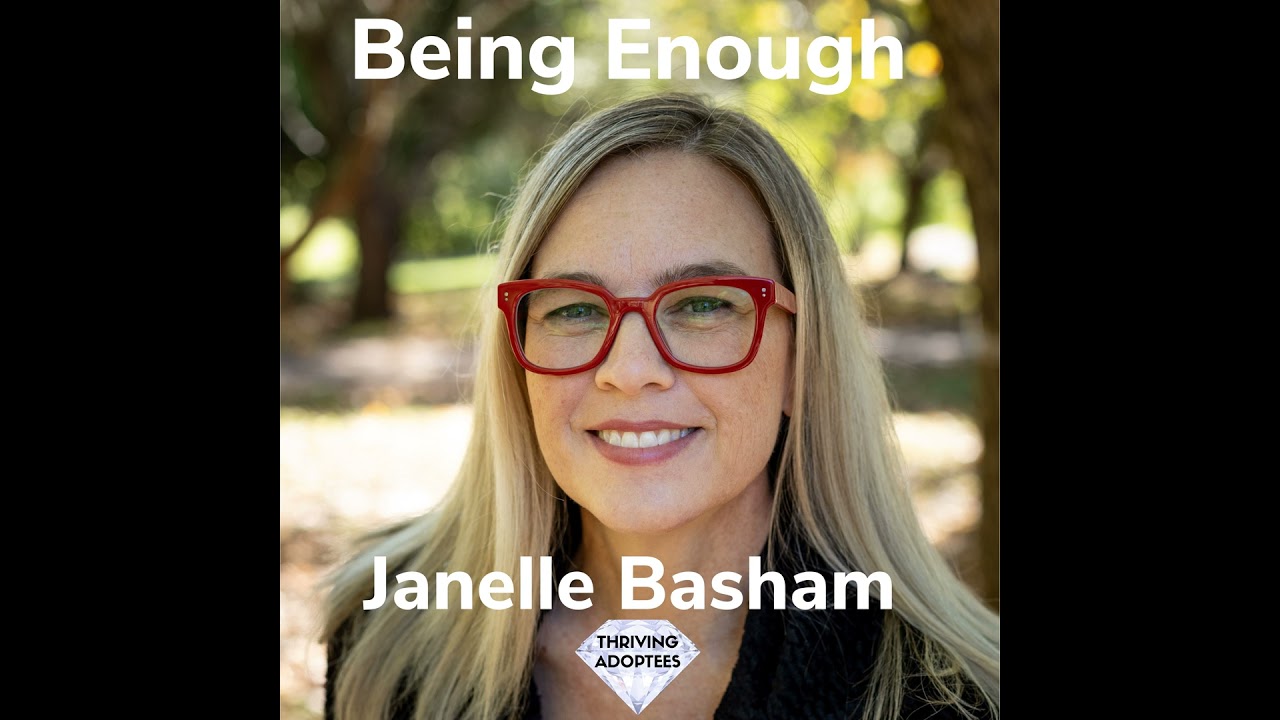
Janelle Basham, a birth mother and executive director of Brave Love, talks about thriving after adoption and the feeling of not being enough. She shares her journey from teenage pregnancy through a 1990s maternity home to building an organization that amplifies birth-mother voices and challenges how adoption is discussed.
Chapters
Hello everybody, welcome to another episode of the Thriving Adoptees Podcast. Today I'm delighted to be joined by Janelle, Janelle Basham. Looking forward to our conversation, Janelle.
Yeah, looking forward to diving in with you.
Diving in. So, uh, Janelle is a birth mother, and I guess if it's time to have a New Year's resolution on the 29th of January, one of the resolutions should be to have more birth mothers. and birth parent, should I say, on the show. So delighted to, delighted to connect. So, so thriving, what does thriving mean to you, Jenna?
Oh, thriving. You know, it's, it's a really powerful word when you are asked a question like that. Thriving to me is looking over my life and my journey. Thriving is learning how to be successful or come to an understanding and living in your new normal. So, um, for me as a birth parent, as different things have come up in life that I've had to accept, thriving is, okay, this is my new normal and I just have to keep moving forward. Um, I'm not going to be stagnant. So I think thriving is all about moving myself forward.
Yeah, we were talking about that just, um, before we hit record, listeners. Um, I, I think persistence and just keeping on going is massively, massively underrated. And we make all— everybody's trying to sell us an idea, right? Because they know that we sometimes get stuck. You use that word stagnant. So sometimes we stagnate.
Mm-hmm.
Uh, sometimes we stagnate or we get stuck. And that, you know, Nike had it with the just do it.
Just do it. Yeah.
Just do it. Um, but we don't— we make it really complicated as a species. Oh, we do.
We overthink things, we overanalyze, we're sucked into social media and totally, um, judging ourselves against others. And so it's It's just thriving in the goals that you've set for yourself and just being determined to keep going.
Yeah, it's got to be about learning. I mean, you talked about how to be successful. Everybody's looking for the how strategy, aren't they? We're all looking for the strategy. Don't ask me to think.
Sure.
Don't ask me to think. Just give me the strategy. And I— why do we do that?
You know, why do we overanalyze everything? And everybody now has a, you know, a quick guide to do this, or this is how they did it, and they can share it on social media, and they make it look all so normal and easy. And then we sit here in our own journeys, and it's like, why isn't it As easy as it is for this person or for that person. Um, yeah, but it, it's definitely a, a journey and pushing ourselves for sure.
I, I came up with my own theory on why we think like that. We, why we think there is the steps.
Yeah.
Um, so I don't know how much, did you do a lot of science when you're at school? Do you like chemistry and physics and stuff like that and biology or what do you, do you call it just science in, in the US?
What?
Do you do much of that?
Um, so my background is in counseling because science and math, um, were a struggle. Were a struggle for sure. But yeah, I took all those classes.
Yeah. So what I mean, I, I took sciences till I was 16.
Okay.
And yeah, chemistry and chemistry and physics. I did a couple of years of biology. I didn't particularly like that. I gave that up. But, um, When they— I remember doing the first chemistry lesson, so I'd be about 10, maybe 11, and they give you a list of your equipment.
Sure.
And they give you a list of the process, and they say, right, mix that chemical with that chemical, heat it up to this side, right? And so everything's very prescriptive. Um, and so it is— that would seem to me to be one, one way that we, you know, we get it. We get this idea that, um, everything's sort of—
Yep.
Continuous. It's in this step and what— and then I didn't take— I didn't take any sciences, uh, for, for the last 2 years of school.
Okay.
But one of my friends did, and he said, you know that stuff that they taught us in chemistry last year? Yeah. He said, it's not like that. So they, they teach one worldview of chemistry, okay, to, to, to kids between the ages— and this is in the UK, right— between the ages of 11 and 16. And then those that take, you know, chemistry for 16 to 18, they get taught the difference.
So It's just interesting.
And, and science, it like— but we say it's a scientific fact, don't we? But yeah, but you know, they used— the scientists used to think that the world was flat, didn't they?
Right, right, exactly. So we're all learning and evolving and coming to an understanding, and how we get there is all different ways.
Yeah. Yeah, but we're sold on one way.
Mm-hmm. Yep.
Yeah, well, I guess it's kind of good that there are a multiplicity of ways, or else there wouldn't be space in the world for 500 episodes of the Thriving Adoptees podcast.
And there's always room for one more.
One more, one more. Yeah, always room for one more, one different version.
Yeah, another perspective to bring to the table.
Another perspective.
Yeah.
500+ perspectives. We're still going, right? Um, what does perspective mean to you?
Oh, wow, man, you are hitting me with some great questions. Perspective. And I, I just left a meeting and, um, it was with a, a group of counselors and was talking about the adoption triad and, um, what their perspective was and how they can support the adoptive parents. And I said, well, I come in with a whole different perspective. because I come in through the eyes of a birth mom. And so how I see situations and struggles is going to be totally different how you would as an adoptee or adoptive parents, you know, as we're trying to navigate this adoption journey. So where my eyes are focused on, these are my priorities and me, my thoughts and my hurts, other people might not understand it. And one of my goals through the years is Hearing other people's perspectives, because I think when we stop hearing other people's perspectives and thoughts, like, we stop learning and we stop experiencing, um, and embracing other people's perspectives.
Yeah. Was learning fun for you at school?
Yes and no. Um, it, it was more Science, math, those were challenges. I thrive with like human behavior and why people do what they do. Like, that is— it just intrigues me, um, how history repeats itself. Um, so I definitely had struggles in school. I can remember one time getting my report card and my mom saying like, oh, by the grace of God, you passed geometry. And I was like, Amen. You are right. I do not want to have to take that class again. But as I got older, I realized that I'm really good in certain classes and the other classes, I just had to be good enough to pass them and to get through to ultimately, you know, launch into the career that I wanted to.
Yeah. Because I think, well, the funny— a little song came to me as I was listening to you there. Um, so, so from reading a, a kid's book, uh, kind of young boy, young adult fiction— not young adult, I know I was 12 or 13 maybe. Um, and, uh, it, it was a, a little poem that a kid in the '50s wrote in England, right?
Okay.
And it was, um, uh, Latin is a language as dead as dead could be. It killed the bloody Romans and now it's killing me. So, like, we don't get— we don't— so many of us don't fall in love with learning at school.
Right.
And I'm thinking about how that turns us off, you know. So the idea of lifelong learning, oh no, I don't want to do that because I'm I'm done, I'm done with learning. I didn't enjoy it at school. I didn't see it as any relevant, you know, like, like the Latin, the kid reading, reading the Latin.
Yeah.
So how has your take on learning changed?
What I think for me, um, I come from a very intellectual family, if that makes sense. My mother is very, very smart. I come from a really a family of individuals in the medical field. And so I think for me, when I was in grade school and middle school and into high school, I really struggled with, well, why don't I think the same way as my family? Why, why is math such a struggle? You know, that would have been in the '80s and '90s. Now I'm sure they would have diagnose me with ADHD or something like that. So I really learned through my own personal experiences, like, there are things that I'm interested in, and jump into those and figure out, like, how I can thrive in those areas. School overall, for me, my school years in some ways ended early because I found out that I was pregnant at the end of my junior year. And so where most young adults are thinking, Like, oh, they have their last year of high school and all this fun stuff is going to happen. That wasn't the case for me. And so really my school years was a quick launch into adulthood because I was, I was pregnant.
Yeah. So that was 17, was it?
It was.
We don't use these terms junior, but last year of high school. Okay.
Yeah. So 17 years old. So 16 when I got pregnant and then 17, um, when I had her. Yeah.
Um, I was, um, I was thinking of the next question for you. Uh, what, what, what gets in our way of our thriving?
Oh, wow. Sometimes ourselves and the limits that we put on ourselves.
Um, I've got a thought on that if I'm—
Oh, I, I am ready to hear your thoughts. I, I, yeah, the outside stuff. And, and, but man, ourselves, put ourselves in that box.
Can you, um, have you got any, before I give you my thought on this, because I'm supposed to be interviewing you, right?
Right, right, exactly.
Have you got any, uh, any kind of Uh, you talked about counseling. Have you got any shrink stroke counseling stroke trauma perspective on, on what we mean by ourselves? Because there's only one others, right?
Sure, sure. Well, I think, you know, growing up for me, um, my parents put expectations on me, whether it was, you know, a curfew, or we expect that you get these grades in school, or whatever. And so that's what became my normal and how I perceived the world and what I thought people, all people expected of me. As I got older and I went through my own journey, endured trauma along the way, had to make some tough decisions, it really opened my eyes of, oh, how my parents established things isn't how everybody is and isn't the expectation that everyone has on me. And so it really took me Goodness. Probably, I would say, into my upper 20s of realizing there's some stuff, some expectations of myself that I need to let go and really see parts of myself that are beautiful. How my brain is wired is different than how other people might be wired. Why I make decisions that I do might be different. And to celebrate things that maybe other people don't see as Things to celebrate. But I've, I've found that like my parents, they did the best they could. Like this is their first time, you know, on earth as well. But they put me in this box that they, they thought I should be in and that I should thrive in. And for me, being outside of the box is where I thrive.
Okay. Yeah. A mentor of mine says thinking is the box. Okay. Because the answers, the answers don't come out of thought. Most of our answers, the, the profound stuff, doesn't come out— come when we're thinking about them.
Sure. Yeah.
Uh, they come when we're not thinking about them. They come when we're in the shower, or they come when we wake up in the morning, or in the middle of the night. They don't come when we're you know, overthinking rarely leads to a solution. Um, yeah, you said the parts, and that's what I was thinking about, you know, like, um, we're talking about getting in our— it's ourselves that get in the way. I was thinking, well, it's different parts of us, you know, to think we often— I have to find myself mentioning the guy, the Richard Schwartz guy, the, um, IFS, Internal Family Systems guy. He's got this theory of parts.
Yep.
Like, so there's the— basically there's a faction, so there's an argument going on between the parts, and kind of one part— I'd say it's one way of looking at it, right? So one part might be the freewheeling Janelle, and then there's the other part of Janelle that's listening to her mum and dad, and it's got these expectations and stuff like that. So that's one way that maybe ourself gets in the way. It's, it's a, uh, it's an argument between two, two, two parts of our whole. But, uh, but on another respect, it's like it's not ourself. For me, the, the, it's not ourself that gets in the way. It's our, it's a belief rather than a self. So it's—
Yes.
It's a, it's a belief that we can't.
Mhm.
And we, we may, may not be able to, right?
Sure.
We can't do everything that we think. I'm not, you know, like, belief cannot, uh, belief cannot make me, um, a, I don't know, point guard in the NBA. I don't even know what the I don't know what, you know, like, I don't, I don't even know what side. I'm not tall enough, right? So it, it's not, you know, it's not always just about belief. Sometimes the physical limitation.
Absolutely.
But it, it's the belief that we can't, okay, in the way that I— rather than ourself.
Yeah.
Um, because, and for me, that sounds Like, it makes it easier in some respects. It's not about trying to referee between 2 different characters in our heads, right? It's seeing through, um, it's seeing through a belief.
And I think for me, it was also as I aged and matured and had gone through different experiences, Um, the internal dialogue in my head of what am I doing, where am I going, why do I believe what I believe, and where, where was that foundation, how was it set up, and really figuring out who I was, who, you know, God created me to be, who I am supposed to be. Um, it's an internal conversation that I find myself just kind of analyzing and be like, what's truth and what's not truth? And what can I let go of? And what— where do I want to go? Um, so yeah, I think as you're analyzing this, you just— it, it's a— it's something that we'll never figure out. Um, and if you do, please call me and let me know because I would love to, to have that all, you know, mastered. But yeah, life is definitely a journey. figuring things, things out along the way.
Yeah, I don't know when, how long it is since I sang a crappy song on the podcast, but, um, there's a, there's a band from the '80s, a British band, and the, the song is I'm, I'm the King of Wishful— one of the lines in the song is I'm the king of wishful thinking. Uh, and I said, well, you know, I used to be the king of overthinking.
Yes. Well, I'm the queen, so that's great.
We can be crowned.
Yes. Yeah.
To what extent does trauma get in the way of thriving?
Oh, I think it just limits us. It changes the way we see things. You know, in my own life, it just made my world so small because all of a sudden now I had to deal with things that I wasn't equipped to deal with. And there's been things in my life where people that know me, they assume like, oh, the trauma is around the adoption part of your life. But as my life has gone on, my parents separated and divorced. My dad has dementia now, and I'm the primary caregiver. And so there's been things along the way where I'm like, wow, I thought this is how my life would be, and now I need to readjust, and I need to Thrive in this, in this new trauma that I've been, I've been dealt with and figuring out again, just keep moving forward in the midst of, of stuff.
Have you come across Michael Singer? Have you heard of him?
No, I haven't.
He's a kind of a hippie guy, kind of hippie, but he had a, he had a big IT business. And then it's a guy that is about saying yes to everything, you know, like a year of saying yes.
Yes.
Yeah, Nicky Singer, I think, is sometimes referred to. I listened to a few of his books. Um, yep, but yeah, um, resisting, resisting, resisting what is. So when you say that trauma Limits us. Uh, what do you mean?
For me, and, and I can only speak obviously from my, my own experience, I think with my education, um, and just with my life experience, I, I can recognize like, hey, what I'm going through right now is going to change my perspective. This is going to Have a different outcome than I thought life was going to be like. And so, you know, I am 48 years old, and if you would have said 10 years ago, "Hey, your parents are going to be divorced, and you're going to be taking care of a man that doesn't remember you half the time," I would have been like, "Yeah, you're you're wrong." You're wrong, and so my world looks very different than I thought it would have when I was planning out my life ten years ago and setting goals. And it just makes me appreciate things different. It makes me look at things differently. It makes me protect myself in different ways. I used to be a yes girl all the time. I am described often by. Other professionals as a doer. And just coming to the point of learning to be comfortable to say no, and that's a protection for me. And learning how, as we go through life and process trauma, learning that it's okay to let go of some toxic people in your life and realize that You know, as the world gets a little smaller for you, sometimes that's okay. And sometimes that's where you thrive as you're, as you're processing life.
Yeah. Does, does overthinking lead to overdoing?
Absolutely. Because it's like, how do you calm your brain? How do you stop this? And sometimes you just need to be present.
If I do enough, I'll stop. Yeah.
Yeah, yep, absolutely. The world will be a better place if I can just fix this or do this. And then I'm like, oh, do I have OCD? Like, what's going on here? And it's just stop and be present and deal with whatever you're dealing with or enjoy the moment that's going on. Yeah.
Yeah. They— I heard something before Christmas, and it was a neurodiverse speaker, a guy who runs an advocacy organization for neurodiverse people. And he was saying something like, it wasn't OCD, but it was ADHD or autism.
Okay.
And I think he said 50% of engineers Right. I've got it. Or, you know, I've got it. Or sorry, whatever the PC term is, right? For saying, or engineers or accountants or something like that. So, and I think you said over 50%, so that they are in the majority, but everybody would like to— I mean, I thought, well, that sort of stuff has got to be a minority.
Yeah. I don't, Not any. It's, I think as a culture, we're kind of changing the way we see some, some different mental health, um, diagnosis. And, and it's funny that you say that my son's an engineer and he is 100% OCD. And one of the things that, um, as he was growing up, I really had to tap into figuring out how is his brain wired so he can thrive. I had a teacher of his once tell me when he was in elementary school, probably first or second grade, say basically like, your son will never go to college. And I was like, well, okay, that's fine. Like, and she's putting him in that box, right? The box that we talked about. And I just wanted to say, challenge accepted. And now, 20 years later, he's an engineer and he's thriving and he's doing well, and his hair always looks perfect and great, and like everything is in its place and order. But I think people, you know, as we're talking about trauma and thriving, sometimes when stress gets put on our shoulders, people respond really, really well. And when stress is put on their shoulders, sometimes that pushes them to do better in life. Um, so yeah, I don't think OCD is really a horrible thing sometimes. I think, you know, we learn how our brains are wired and how can we thrive with how we are created.
Yeah. Well, what I, I was thinking that Uh, devil's— I was thinking of devil's advocate, right?
Okay.
Um, like, if I'm a listener, right, and I'm mainly— I'm probably— I'm an adoptee, right? I'm probably an adoptee listening.
Yeah.
So why do I want to listen to a birth mother? Well, is to hear her perspective. Um, and I was also thinking about, like, well, if trauma is an ice cream, right?
Yeah.
Uh, it comes in different flavors.
Sure.
There's a, uh, there's a, there's a birth mother flavor, and there's no one birth mother flavor. Every flavor is gonna be slightly different, right?
Yeah. Absolutely.
But what, what have you, what have you learned about the, the, the, the, the, the similarities and the, the difference of, of, um, of trauma across birth mothers? across the triad. You, you mentioned the triad, um, earlier on, and I was— that was a— I was going to mention it about, you know, things changing, like my friend's chemistry, right? So, because at one point it was the adoption triad, right? So that was the term, and now it's the constellation.
Yes, yes.
Yeah, so even, even in our little world, it, it's, it's changed. People are using So, um, what, what have you learned about the differences between and the similarities between trauma?
Wow. Um, you know, adoption, it's, it also, it's a loss for every single person involved. Um, as a birth mother, to sit there and make a decision. Now, I was you know, making this decision back in the '90s. And so, um, one of the things that I came to terms with, and I don't think I believed this as I've evolved and changing my perspective, one of the things that I often thought about was, I'm not the best option for her. Um, and as I've learned more and looked back over my journey, I'm like, wow, that's very sad that that's how I felt about myself. So adoption is built on loss. And for the adoptee, the loss of, you know, the genetic connections, the knowing your family, knowing where you come from, who are these people that I'm related to. And for a birth mom, my daughter is now 30. What trauma did I cause in her life by making an adoption plan? Where I thought when I was making this adoption plan, I was going to be saving her from so much. And maybe it was my young age, maybe it was, um, you know, just listening to the people around me thinking, if I choose adoption for her future, is this going to save her from so much hurt? But now As an adult woman and a mom myself, I'm like, what trauma did I cause along the way for her? So I think I want to be very sensitive to the fact of, for adoptees, there's loss, there's so many unknown questions, so many things that— questions that probably can't ever be answered, um, and decisions were made that they had no control of.
But I'm— so I'm guessing this was '94, right? Working—
It was, yep.
Um, uh, Nancy Verrier's book Primal Wound came out in 1993, but I'm guessing that it hadn't really registered much on people's radars. I don't know. I bet you hadn't heard about it.
Nope.
So there is, uh, that there is some reason, uh, some logic for what I was talking about earlier on here then. Because I, I don't know if I said this to you when we spoke last, last week. I, I think a lot of us, uh, as, you know, adoptees, I put it, we, we, we tend—
Interesting.
Like, we shift in perspective, right? For me.
Yeah.
We, we tend— I, I, I came up with this a couple of months ago. I, I think it's unfair for adoptees to, including me, to judge, um, 20th century adoptive parenting Yeah. On the basis of 21st century trauma knowledge.
Yep.
Because the book, Primary Wounding, came out in '93, and, and, and now everybody's in the somatic stuff. So like, I'm doing the— I'm doing— I go see, uh, Blanche, the, the somatic experiential lady, each, uh, once a month. Um, somatic body work, right? Well, Body Keeps the Score sold 5 million copies. That didn't come out until 2000. And 13, 14, something like that. It's barely, barely 10 years old. So it's really— but it's really unfair to judge people.
Yeah.
On, on past— on, on new knowledge.
Yeah, there needs to be grace and understanding, um, for everyone You know, in this journey, I— so I, I lived in a maternity home. I would have been there for 6 or 7 months, um, 17 years old, and lived there with probably 15 to 20 other young ladies. Um, I can tell you some crazy stories about that. But go on. What I— after I, you know, went through my adoption experience, went through school, And then I went on to work in the adoption field as a caseworker and came across this book, The Girls That Went Away. And it was stories of women who went to maternity homes or their, you know, the era before me.
Yeah.
And I connected with so many of those stories. And even though my maternity home experience was very different than what those women experienced, I'm so thankful that they were brave enough to share their stories and to revisit that trauma and to put it into words so we could learn from it, so history wouldn't repeat itself. But it's interesting because over the summer, my daughter, who's 21, just in talking with her, she's— I had mentioned the book. She's like, oh, I I've never read that book. And I was like, well, it's in the living room. You should read it. And she read most of it and she was just like, Mom, this is horrible. I had no idea. And so I'm so thankful that, you know, I'm 48, my daughter's 21, that to her, the thoughts of what these women went through, she can't even imagine it, the hurt and the pain. And I'm like, Things are changing and they need to change and they need to continue to change. People need to have a voice and their stories need to be heard so we can move towards a healthier way of doing things. So yes, looking back at decisions that were made back in the '70s, '80s, like there has to be grace for we thought we were doing the best that we were back then. And now with looking at things with hindsight, it's like, oh wow, there's so much more that we've learned along the way.
Yeah, my, my birth mother was sent away, um, to stay with friends, I think. Yeah, but I don't know how, how long she was away.
Okay.
Um, I'm gobsmacked when you say 6 months, actually. 6, 7 months you were in there in this place. I got a sense that although things had changed in that generation, some of the feelings hadn't.
No. And there was a lot of shame, and some of that was put on my shoulders by my parents, not even, you know, the people that worked at the maternity home. But there was— this would have been '94— there was a time where I talked to my parents like, I want to— I want a ring to put on my finger because people look at me and I'm walking around with a group of other pregnant teenagers. Like, we look weird. Like, what can I do to fit in? And the reality was there was nothing I could do to fit in. Um, So it, it was a really tough time, but looking back now with hindsight, it created a foundation of, um, who I am today. And so I can look back and be thankful for the good parts of it, um, and then also recognize like things had to change and things are changing, things have changed.
Yeah. So you, you, a couple of minutes ago, or maybe longer, 5 minutes ago perhaps, you, you talked about, um, feeling that, you know, that I'm not the— what you said was, I'm not the best option.
I'm not the best option. I'm not the best option. Yep.
And the, the most common theme amongst adult adoptees of kind of my generation or my age range, you know, 40 to 60, um, who are by far the largest numbers of the listeners to the podcast, right? And so I think it's 80% between 40 and 60, and I think 80% are women, which is an interesting, an interesting one.
Yeah.
The, the most consistent theme I, I, I, or one of the most consistent themes I see is this feeling of not being enough.
Mm-hmm.
So I'm, I'm, I'm wondering how, how do you see that? Let's call it self-esteem.
Yeah.
How, how do, how do you see the, the, the self-esteem thing across the, across the constellation, or at least between birth mothers and adoptive parents and people that you, You've come across— you talked about being in a meeting with some adoptive parents earlier.
Yeah, it's just being comfortable in your skin and realizing, like, I am enough. You know, I don't think that back when I was experiencing my pregnancy as a teenager, I didn't know how to ask for help. I didn't know how to find resources. The only resources that I could find was a maternity home. In order for me to continue my high school education, that's where I had to go. I was encouraged not to return to my, my school because of the, the drama that was attached to me. And so with that shame, it was, okay, I thought this is who I was, and now I see myself totally different. I'm this pregnant teenager who isn't even welcome at my school. I don't fit in anywhere. Um, and so am I enough? Yeah, now I know I am enough. I've come to, to terms with that. Um, remind me again what your, your question was, because there was something really good that I was gonna say.
Yeah, um, I was talking about self-esteem across, yeah, across the constellation and, and how that looks to you.
You know, for For birth mothers, um, I feel like when they're given a voice and they're heard and they're, they're valued, I think things change. It changes the conversation. It changes how she views herself. She feels important. Whether that is something the adoptive parents can do, like, there, there was something so beautiful when The adoptive mom would reach out and say, "Hey, was this a struggle for you when you were growing up? Was math and science a struggle for you growing up?" Because you know my daughter's having this struggle. I'm like, "Yes, sorry, that's a genetic thing." And so it brought value to my life and the role that I played in this relationship. It's for an adoptee. The same exact thing. Like, you have a voice, you have a story to tell, and your feelings are valid. For people to say like, oh well, you were saved by this adoptive family that took you in, and so you are— they put this label on you that you're like, that label doesn't— that doesn't define who I am. Um, so getting rid of people's labels and being able to share your stories and to share Your perspective on things in a, in a safe way where people are learning from your story and your feelings. I think it's so important when we're looking at who we are and how we see ourselves as a person.
The, the word or the words that were coming to me were less than. Mm-hmm. And I was thinking less than, because that, that could be, yeah, anybody within the constellation.
Absolutely.
And it could be anybody, you know, any human.
Yeah.
You know, and one of the, the, the one, uh, one of the things that's running for me at the moment is to what extent do we blame, uh, adoption on feeling what is human, you know? Right. Right. Do we?
Do we?
We're, we're, our brains are meaning-making machines.
Yeah.
So we've, we've got this less-than thing going on for us.
Right.
As, as human beings. And we attribute it to adoption. So, um, it's easy being adopted, you know. I'm not the best option. Yeah. It is easy to do that. You know, the brain's looking for the quickest route, isn't it, from A to B? I'm not the best option, uh, you know, like, um, my mum didn't love me enough to keep me, you know, was the thing that came, came, um, as a rush out of words out of my mouth at 40. And, and I'm also thinking about adopted parents and less than, right? So they're less than because they, they couldn't— if they've come to adoption through infertility, they've come to it, you know, that they are less than, that Yeah, I just wrote that down.
I was like, the adoptive parents, these women that like, they just want to be able to grow their family. And it's like, am I good enough for my husband, for my partner, for, you know, because I can't biologically have a child? Am I, am I good enough? For an adoptee, you know, was I not— did you not love me enough to keep me? Um, so yeah, there is that, that place where it's like the walls just need to come down and, you know, all of the individuals just need to say, hey, here's a pers— here's my perspective, just listen. And as a birth mom, I need to be confident enough in myself where if my daughter needs to have those hard conversations and say Why didn't you? I need to be confident in myself to say like, okay, let's have these hard conversations to bring understanding and awareness. And for her to be confident enough to, to be able to come to the table and say, this is how I'm feeling. And I can't take— as a birth mom, I can't take it personal. Like, she has those feelings, those emotions, and I have to be okay with that. Because it's something that she's working through, and it's my goal of like, hey, let's work through this together. Let's get to a place of understanding. And I can't fix it, but I can tell you my perspective, and I can tell you why, and hopefully bring some understanding. Yeah.
Do you see your daughter a lot?
I don't think a lot. She lives about 2 hours away from me. Um, she is a professional woman who is rocking life out. And so I feel very blessed that she includes me in different things. We text, we, you know, obviously social media, we're connected that way. And now I have children with my husband who also connect with her. The consolation, it's not just me anymore that's connected with her. Um, but yeah, we do. And man, genetically she is wired so much like me where if she wants to have a tough conversation, she will bring it right to the table. Like, she is confident in who she is. And, um, I so appreciate— I love just watching her continue to grow as a mom, as a woman. And like, man, there's just so much that she has going on in her life where I just sit back and I'm like, Keep rocking it out. Just keep, keep doing what you're doing.
Does she look like you?
Does she look like me?
Yeah.
I think so. Yeah. So, um, she is— she's biracial, so she's got big curly hair that I'm so jealous of. Um, but we have— I think we have the same smiles and It's crazy because obviously she wasn't raised in my household. Um, we've done like little mini vacations and stuff together, and obviously we've interacted face to face quite often, but our mannerisms are so much alike. I'm like, okay, is that a genetic thing? Is that— you know, she rolls her eyes just like I do, and she smiles, and she's, you know, I don't— there's, there's just so much that And again, I love human behavior. So I look at her and I'm like, wow, what is nature? What is nurture? What comes from me? What comes from her birth father? Yeah, so it's so interesting just sitting across from her sometimes and watching her talk. I'm like, wow, this is just such an incredible moment of— where I'm just filled with peace and appreciation and thankfulness. For her letting me come into her life. Um, she has that right to be like, no, I don't want to answer your text messages, or no, I don't want you to, you know, I don't have time to, to do dinner the next time you're in town. So I'm very thankful and grateful that she includes me in different things of her life.
I mean, you, you came on to the call 51 minutes ago, like, beaming. Uh, I, I, you know, let's say it's a million lumens or whatever the light thing is, 1,000 watts or whatever it is. Um, but when you started talking about her just then, um, the, the, the, the, the light went up another, another few notches.
She is my greatest accomplishment, and I have nothing to do with her Parenting her, reaching her goals. I just get to quietly sit back and be her cheerleader and just adore who she is. And it's a very weird role that I play, and I don't even think she can grasp that. I hope she listens to this, and she probably will, and she'll roll her eyes and, you know, have a good laugh. I think for me, I don't think I understood my role in her life until she was pregnant. And she was coming towards, you know, the time for delivery. I knew she was going to the hospital. Her mom was keeping me in the loop of what was going on. And she lived 2 hours away. It was like, okay, do I go? Do I not? I don't know what those boundaries are. And I've always been very sensitive and aware to what is my role. I don't want to overstep. And there was the most— one of the most beautiful moments in my life was when her mom called me and said, I don't know what to do. I don't know how to help her, kind of thing. They're saying that they might need to do a C-section. And it hit me that her mom has never gone through labor and delivery. So here's this woman who is sitting beside our daughter, like my daughter, her daughter. And I say that because her adoptive mom gave me the permission to use that title many years ago. So here's this mom sitting beside her daughter and she doesn't know what to say. She doesn't know the advice to give because that's a journey she's never been on. And doggone if I did not like throw everything in the car. And I sat right beside her adoptive mom as our daughter was in labor. And the doctors are coming in and saying like, what should you do? And she's looking at me and, and I'm like, I'm bringing information to this relationship that they didn't have, experiences that they haven't had. Um, and to be there while she gave birth and when they brought, you know, my grandson in, it was like, wow, this is full circle of— I made an adoption plan in 1994 when the expectations and the laws were maybe she will be able to find you when she's 21. So when I left that hospital, I had no idea if I would ever see her again. And to be able to sit in a hospital and watch her welcome You know, a part of her family into the world was just okay. It was just an understanding all of a sudden that was like, I, I get this. This, this is, this is why I did what I did.
Yeah, that feels like a really good place to bring it in.
It's a great place.
I've just got one question for you.
Okay.
Um, that— so clearly that was a very meaningful, um, moment. Um, I wanted to just take you back a bit and, and ask if there were any other meaning— meaningful moments around, um, coming to the realization, I am enough.
Yeah, I think probably my understanding of I am enough happened in that hospital room. Oh. I think it was, it was a journey through my life of meeting my husband and him confirming, you are exactly who I need you to be just the way you are. And feeling damaged. And, you know, I'm, I'm coming to this relationship with a lot of baggage. Will you still love me? Will you still love me when I have our child and I'm in the hospital, you know, giving birth and going— reliving trauma that you will never understand? Um, just along the way, there have been little nuggets, and I think it me grasping I am enough probably was when her adoptive mom invited me into that situation and me realizing I have a role, I have a purpose. Like, this is, this is what I bring to the table, and I am enough. Beautiful.
And do you just want to give a Couple of sentences on, on your professional role because you're helping a lot of people. Yes, absolutely.
Thank you so much for saying that. So I am the executive director of Brave Love, and Brave Love is an organization that is determined to change the negative stigmas that come along with adoption and specifically birth moms. So we want to give them a voice, we want them to be heard, and for them to realize they're valued. So you can learn more about Brave Love at bravlove.org. Um, and we just want to connect and continue to be a resource for people on their adoption journeys.
Yeah. So I know that there are some fellow podcasters out there that sometimes listen to the show. So if you want Janelle on, I'm sure you'd be happier, more than happy to.
I would love to. Yeah, I would love to continue the conversation wherever it goes with whoever.
Okay. And there's links in the show notes as always, listeners, so don't worry about trying to find the Uh, winding back the recording to try and find the, the website address because it's in the show notes. Thanks, Janelle.
Thank you so much for this opportunity.
Thanks, listeners. We'll speak to you again very soon. Take care. Goodbye.
More from Simon







Weathering Storms With Joanne Morales, Jennifer Hartwig and Rebecca Dominguez


