Confidently Back to School with Hayley Wheeler
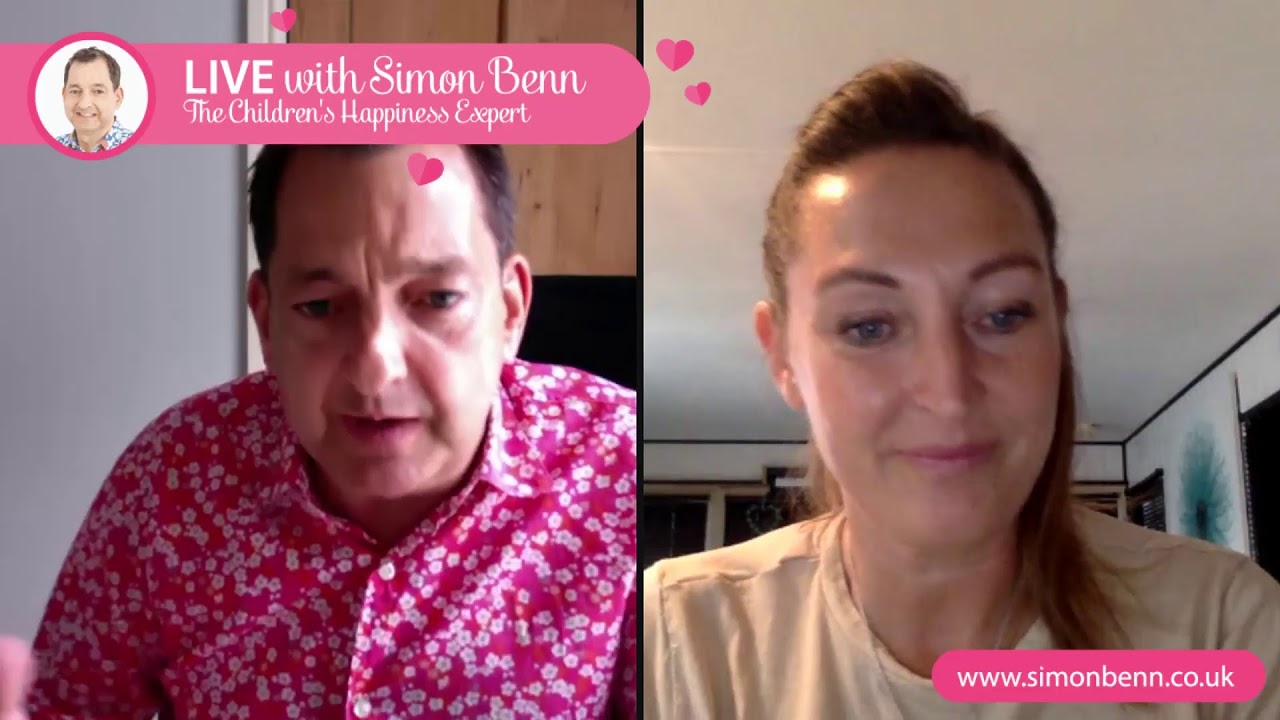
Emotional empowerment coach Hayley Wheeler shares how parents can support anxious kids through back-to-school season. She emphasizes self-compassion for parents first, then shifting from asking "why" to asking about feelings. Wheeler, who navigated her own depression while supporting an anxious son, frames the transition as an experiment to draw out insights rather than impose solutions.
Chapters
Because I can't read the screen without them. I, yeah, I was just, uh, I was, I was just confessing to Hayley that I, uh, I can't read the screen without my glasses on. And we, we come— but that's not my look, is it, with the glasses? Take the glasses off. Um, so good afternoon everybody. Uh, I am joined today by a lady with a big heart. I can tell that just by looking at. Um, uh, and I need to look at it. I learned this yesterday. I need to look at you on my screen, not try and look at you at my camera. This is a big thing. This is a big breakthrough I had yesterday because I've been looking at cameras and it doesn't work. It didn't work. So, um, uh, Hayley, please introduce yourself and, uh, then we'll get into some insights and anything that you think that you found that really helps parents concerned about their kids' confidence going back to school.
Great, thanks Simon. It's great to be here. I had a bit of trouble with StreamYard, I don't know why, I've used it before. But as Simon said, I'm Hayley, my official title is Emotional Empowerment Coach, but the job that I do is— I'm very lucky, I get to support adults and children with their mental health, particularly depression and anxiety. The reason I do what I do is because I had depression myself, and I was a mum struggling with my own depression trying to help a son with anxiety.
Wow.
And it was a dual battle, and we won. Yeah, we both won. It wasn't an easy battle. When I say battle, it really was. Um, it was fantastic to do because for me it's about self-empowerment and self-development. And ultimately, my motto is self-knowledge is a superpower. So as I work with children and adults, it's about helping them understand themselves. It's about getting even a child— you know, the youngest child I've worked with is 6— even getting them to understand the behaviours and what they can do about it, because often they get stuck, particularly with anxiety. They get stuck with these behaviours and they think this is it for life, this is what they are and this is who they are, and that so is not the truth.
Yeah.
And then as you start to break that down, it becomes— well, I, I say, I said today, I get to witness miracles, and that for me is amazing. So I'm kind of here to share really a bit about my story and the experience I had as a mum with a child with anxiety, but also as that coach who helps children With your anxiety as well and depression.
Yeah, wow, that's powerful, that's powerful. Um, so what would you, what would you like to share since you've been in the trenches yourself as a, as a child and, and then as a mum? What would you like to, what would you like to share to, uh, to help, to help, help families today?
I want to start with the parents because I think it's the hardest job in the world. I think we We put a lot of expectations on ourselves without even realizing it, and then you add something like anxiety or depression to the mix, or even worries for a child or stress for a child, and that just makes the job 10 times harder. And then we end up playing the whole mum guilt, dad guilt. We end up thinking that we're not doing the right thing. So I want to start with parents, and I want to start with self-compassion. Because we are often learning as parents. We're learning as parents of a child with a mental health challenge. We're learning. So as we're learning, we are going to make mistakes. And when we make those mistakes, it often feels such a terrible thing to do. But how else do you learn? So if I can get any parents— if they take anything away from today— kind to yourself.
Yeah.
And accept that when you make mistakes, if you learn from them, that mistake wasn't a waste of time and it wasn't a tragedy. It was a good thing. And I think with anxiety, if you're living with a child with any mental health challenges, whether it is worry, stress, anxiety, or depression, don't expect them to tell you what is going on for them and why they are doing what they're doing. So do expect to see all those behaviors. Um, I had temper tantrums, or so I thought. Uh, they eventually— I figured out that they were panic attacks. So you might see those escalated behaviors, you might see anger management issues, you might see various behaviors, withdrawing. So even not even the violent or aggressive behaviors, it could be just withdrawing and quiet. But don't expect them to give you the answers. because very, very often they have no idea what's going on for them at all. So as you're, as you're trying to press yourself to find out a solution and you, and you kind of want those answers from them so that you can find the solution, that process is, is a little bit unhealthy. Because when you say to an adult, let alone a child, why are you doing that? What is going on?
Yeah.
When you don't know, it's such a pressure for a child to— they know they don't know, and so for a child to be put under pressure to answer that question is really hard, and it can escalate things, and it can sometimes alienate them. But if you ask the right questions, you get different answers. So why questions are quite tough. So we are talking about a mum or a dad now who is being kinder to themselves, using nicer words to themselves, and now— need the answers from the child, and I think that's important. Don't look at the why answers— why are you, what are you— what is going on, what is happening for you. Those are different questions. They may sound the same, but they do allow a child to think in a different way. Even when they have anxiety, if you ask the question, what is going on, or what is happening for you, then they start to go, okay, what what am I experiencing? What am I seeing? What am I feeling? And they will bring different answers to you. You'll get answers quicker with those questions. But also being kind to them, because please don't think that— I think any of you are mean parents, but I know when I was struggling, I was not a good parent. My children will tell you different, but I wasn't the parent that I wanted to be. I was harsh with myself, and I look back now and I know how, had I been kinder to myself, I wouldn't have been as harsh with children. So you kind of— it's a bit of a— it's one of those Rubik's Cubes. Anybody who's good at Rubik's Cubes— I'm not, they absolutely baffle me completely— and this is a bit of a puzzle where you have to work the little pieces into formation to get the answers. to get where your hair did. So I don't know, go on.
Yeah, I guess it takes a little bit of— because when parents come to me, they'll often talk about the child, and I know from my own opinion, from my own experience, it's also about me. But, you know, we can't see our own strengths, and sometimes we struggle with our own weaknesses as well. And then if we kind of realize we're weak in an area, then we start beating ourselves up about the weakness. So, you know, the first bit is kind of like a self-awareness stuff. We don't know what we don't know, and then we know, oh well, I should be doing something better. Um, and then I'm, I'm, you know, I'm— and then the parent guilt starts in, and we're going in like a vortex of, um, uh, uh, uh, of rubbish. So I think the kind of the self Kindness stuff is incredibly important for all of us all the time, not just from a parenting perspective, but we're very good at beating ourselves up. We're not very good at complimenting ourselves. Or, you know, I heard something the other week which was, if you're going to talk to yourself, you may as well say nice things.
Yeah.
You may as well be kind. Um, and I thought, yeah, I'll do that. But I must admit, I'm not doing that yet, you know. Um, perhaps the negative stuff— I'm taking the negative— I'm taking the negative stuff less seriously. But as for, as for kind of like embracing the positive stuff, I think that's— maybe I'm still— maybe that's part of my path to learn that stuff there. What's What's your take on that?
Yeah, I, I, you know, I think it's a, it's a, as a society we do not encourage positivity, particularly self-positivity. So in the schoolyard you'll find a child who says, I'm good at football, or I'm good at netball, I'm good at rugby, children don't really respond to that. But a child who says, I'm not very good at football, I'm not very good at rugby, they will garner support but they do not support the child who is saying, I'm good at... And that takes us through our life. We, we're just not encouraged to admit when we're good at things. We're not encouraged to recognize it, and that's such a shame because that— there's— there is such a power in that self-positivity. Do you know what, I'm good at football, I'm not very good at rugby, or I'm good at art but I'm not very good at swimming. We're okay to say I'm not good at swimming because people will respond to it, they'll react to it, but when you start saying you're good at something, people are like, hmm. So we stop doing that, so it becomes a pattern that we, we do in our heads then. We are quite happy to list, draw up a list of things that we're not good at or that we've done badly in, you know, we assume we've done badly in it, but Ask somebody to write just 3 things they do well and it's often a struggle.
Yeah, yeah, yeah. So the thing that popped onto my head was that, you know, when you see this on social media, you've got— there seems to be only 2, well, 3 things that make up the most of what social media— so there's a lot of anger, And there's anger at Boris, there's anger at teachers, there's anger at scientists, there's anger at, you know, the Chinese for COVID. There's a lot of anger around. And then there's a lot of people— but if you say, I'm struggling, everybody kind of like joins you, kind of wants to join you up. We kind of get reinforcement from that. I just, you know, from a weakness. And then, and then the other bit is that kind of plastic life that people put up, and everything's in the garden's rosy, um, and, and we compare ourselves to that and think, well, we're comparing our insides with their outsides, but their outsides are just for show too.
Mm-hmm.
But there doesn't seem to be the kind of genuine The genuine stuff that you're talking about, I don't see that a lot in— as a culture, really. So I guess we have to create it ourselves, do we?
I think so. I think we've got to learn the skills. If we've not used the skills, we've got to relearn them, and that takes investment, doesn't it? You know, being a parent takes investment, commitment, dedication, because it gets hard. The lack of sleep, the, the worry when they get older, the different worries as they turn into teenage years and all the different things. But we have to learn those skills. But what we don't realize is, and this is why self-knowledge is a superpower is my motto, we send children to school, we send children to university, we send them to college, and they go into a job, and then they learn in their jobs as well.
Yeah.
But we do not have a genuine school of life. We do not have people teaching children the skills that they need to understand themselves, to make better decisions as they get older. And what you'll find with a lot with children with anxiety in particular is often because they feel they don't have the skills to cope with the situations that they're dealing with.
So, so how could we make How could we make this going back to school like an experiment in this sort of stuff? How could we take that? I don't know if I'm expecting a question, an answer on this one. I think maybe it starts with the question. If we ask that, if that question, we ask that question, I wonder, and we'll find, we might find our own, we might find that opening up. So rather than thinking this is something that's going to shut us down and cause us more grief, how could we, how could we make this a little experiment to try a new approach on something? What could we do differently?
I think, I think it's about education. The thing is, people don't need any education on buying the latest phone, the latest, I don't know, a tablet or TV, because the advertising is constant. So we kind of get to know the real, well, the uses of different technologies. So we don't have to get educated in that. we do need education and investment in ourselves because we quite happily invest in a phone, in a laptop, in a car, and they are all useful. They are wonderful gadgets for our lives. We, you know, we need a car to get from A to B. But if you talk to somebody about investment in themselves, you will get often a dead end because they— there's no education. We're not sold the idea that you can and you should invest in yourselves, you know, that you are the most important person in your life and your family's lives. And yet we don't invest in that. We don't invest in that one person. So I think it's the education of investment in self.
Yeah, I totally agree with you. I totally agree with you, and I'm on— I do a lot of this, you know, and have done for a long time, you know. But yeah, amongst my mates, I'm a bit of a nutter really for doing it. I can imagine. And there can be some There's quite a lot of criticism as well. So it's not just nutter, it's like, especially some family members, it's, why are you doing this?
Yeah.
Why are you doing this? And well, because I want to.
Do you?
Why are you doing it again? Well, because I want to, because I like it. You know, um, but, um, I was trying to shift it. I was trying to shift it to, to what if we could— it doesn't— a new idea doesn't cost anything. So what if we could look at this as a, as an experiment, as trying to— as something that we could do something, something that we could do something different on? This time, um, and find our own way to do that. Because, you know, you talk about, you know, you mentioned this word education. The origins of the word education, uh, are from Latin, and it's to— it's called— it's from Latin called educare, which is to draw out. And we draw stuff out of people, whereas most people think that education is trying to shove information into kids. Into, into our heads, and we don't really like it when people try to shove us information into our heads, i.e., tell us what to do, tell us how to think, tell us how to behave, tell us what we should learn. We don't like it. But because, you know, and it's like selling— people trying to sell us an idea, well, something that we don't want. But educare is actually drawing the information out, and that starts with a question. So So I guess my question would be, for the viewers, would be, what could you do differently this time for the kids going back to school that might give you a better result than you thought? And how could you think of this differently? And how will that make you feel if you think differently, if you are you choose. Most of the time we're not choosing how we behave, we're just kind of all going along as sheep, just doing our thing, you know. So when— and I fall for this as well, you know. So if somebody's in there, I'm— somebody's— I'm dawdling, you know, somebody's dawdling along down a country road and I can't get past, you know, I, I lose it just as much as the next person. I get impatient. I don't choose how I behave. But most of the time we're not choosing what we how we see this stuff like going back to school. So are there any other questions that you could kind of like— is that making any sense?
Yeah, I think asking different questions is really important because we get stuck in asking the same questions. Like you said, we get stuck in a rut, we ask the same questions. So we tend to ask, why do you feel like this? What's wrong? What have you done today?
Yeah.
But when we start reframing questions and we start getting the children to think for themselves, because when you say why, that's automatic pressure, because particularly if you don't know why. So if we change that to, so how did that make you feel? How did you see what we were doing this morning? How did it feel? Now feelings are quite tough because people don't really know how to handle them, so they don't often ask a direct question, even with their children, believe it or not. But if we can start to bring those questions— one of the questions I did ask, particularly early on in lockdown with children, is, what did you lose? What did it take away from you? Because that's not a question we've assumed. You didn't finish your school year, you didn't see your friends, so we didn't ask the question. But when they— when parents started asking the question, children started telling them it wasn't necessarily about not finishing school or even not seeing their friends, just not knowing how long they were going to be in that position for. So instead of making those assumptions, we asked them.
Yeah, I was going to say it's about assumptions, isn't it?
Yeah.
So we're running out of time, but I've really loved this conversation. Where can people, if people want to find out more about what you do? Should they go to your website or, you know, what's— where's the best place to connect with you, Hayley?
You can get a lot of information on Facebook. So everything, all my social media is Hayley T Wheeler, and that's all— website, YouTube, um, Pinterest, Facebook, Twitter, it's all LinkedIn.
You're everywhere.
Brilliant. Yeah, so I'm quite— it's, it's, you know, the, the name is quite simple. Um, but if you've got any questions, please do get in touch. I, I sat on a lot of questions. I did my fight, my battle on my own. So I don't like to leave people on their own, so if you have any questions from today, just please do get in touch.
Yeah, okay, so I'll pop them on there in the comments there, so that's great. And yeah, I've just loved this chat, I really have. Everybody's bringing a different flavour to this whole back-to-school confidently thing, and I've I've loved connecting with the big-hearted people that are doing this. We're all doing this, we're all doing the same stuff, we're all doing— well, I'm trying to make families happier. We're all just doing it in a slightly different way. So it's been great connecting with you.
Yeah, and you too. Thanks, Simon.
Take care. Bye. Enjoy the rest of your evening.
Cheers.
Bye-bye. Bye.
More from Simon







Weathering Storms With Joanne Morales, Jennifer Hartwig and Rebecca Dominguez


