Delighting In Our Kids Barb Dewey
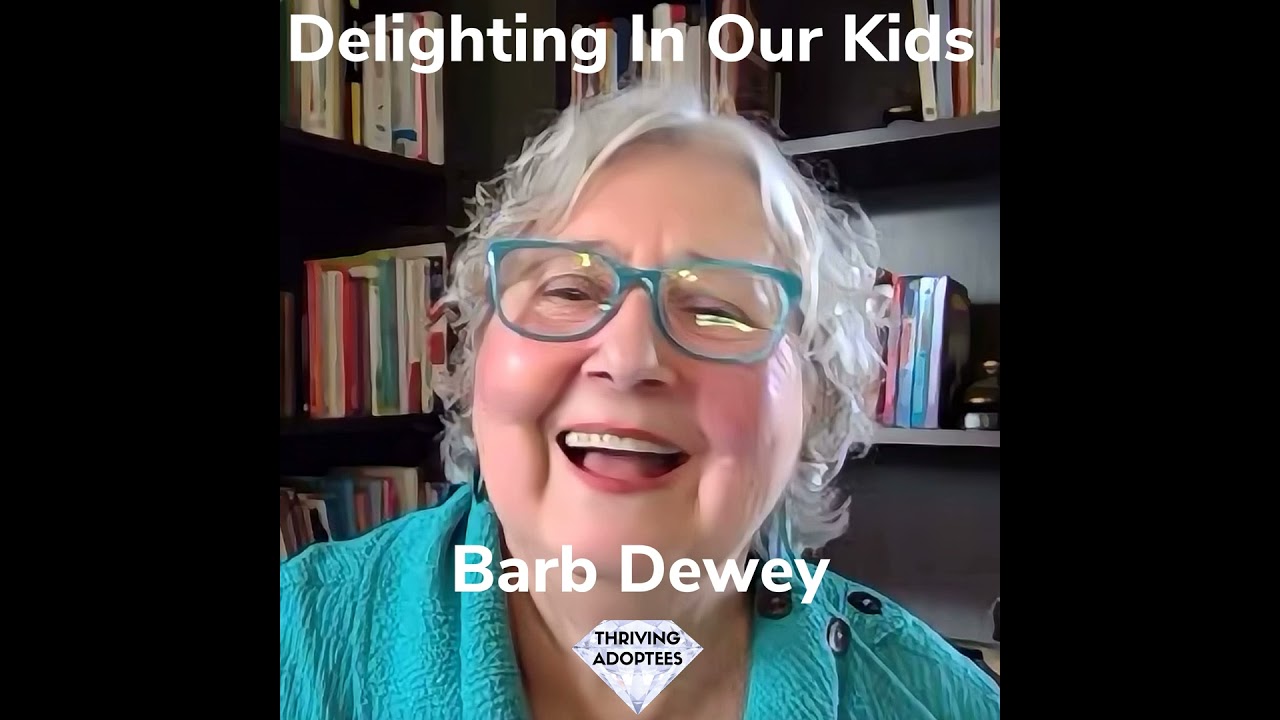
Barb Dewey, a retired clinical social worker and adoptive mother of three, talks about what helps adoptees thrive: self-knowledge, daily joy, and access to birth-family information. She describes the "dual-track" model where adoptees navigate both their adoptive family and imagined birth-family worlds, and shares parenting strategies like offering choices, teaching emotional vocabulary, and delighting in each child's unique spark.
Chapters
Okay.
Hello everybody, welcome to another episode of the Thriving Adoptees Podcast. Today I'm delighted to be joined by Barb, Barb Dewey. Looking forward to our conversation today, Barb. You've been a pleasure to get to, to meet over the last couple of months.
Me too, thank you.
So, uh, I asked Barb before we, um, before we hit record, are you a therapist or a counselor? She said, I'm retired. But she, she was a— but not quite there yet— a clinical, a clinical social worker and a, and a mum to 3 kids through adoption. That's the, that's the, the richness of the lived experience. And she's joining us from Nebraska. We don't have many people on from Nebraska. There's not a lot of people in Nebraska, as I understand.
Hey, we have over 2 million people, so So there, so there, that's like half Scotland. See, see, one state, half a country.
One state, 2 million people.
Yeah.
Um, so, uh, thriving— what does, what does thriving mean to you, Barb?
So there's different levels that I've I define that word. Um, thriving as an individual is somebody who really knows themselves and has set a path that, um, feeds their soul and helps them, uh, relate to others. And, and that's, I think, what we all grow into through our lives. Um, and, and when we are there, then we're able to experience joy each day, and we don't get so bogged down by the obstacles. And the pain that comes our way. Yeah.
So I like, I love the breadth and the richness of that description. Gives me plenty to dive into. Um, you started off with the inter— the internal stuff and the self-awareness, knowing ourselves. Now, identity can be a very complex or a, or a very straightforward, or, you know, like, or, or all layers in, in between.
I, I—
but we all, we all mean different things by the word identity.
Yeah.
We need— and we mean different things by saying that we know ourselves. So What, what do you mean by knowing ourselves?
Well, I think it's really important to, um, know all the parts of us, and particularly with adoptive families and adopted kids and adults, to know the, the origin And hopefully know, get to know birth family and other relatives, um, as well as growing up in an adoptive family and being able to blend the influences of both. Now, if you're not— I mean, this is an adoption-oriented Podcast, so I think I'll just kind of stay on that. I mean, we have because I use the analogy that that adoptive people grow up on two tracks. There's the family that you're growing up in, your adoptive family, and then there's the what if family, the what if track. What if I were still with my birth family? I wouldn't have to do X, Y, and Z, or they are this and we wouldn't, you know, I mean, so you have the fantasy trap in that part of getting to know yourself is being able to weave those together in a coherent way that helps you understand some of the things Some of your talents, um, the things that you're drawn to, um, the things that give you joy, as well as the things that are dissonant, that are, that are conflictual. Because we all have that throughout our whole, every path. But we want to weave a coherent path, and hopefully they will emerge and come together, um, at some point.
Yeah. What do you think helps that coming together, that coherence?
Well, for one thing, when people get to know their birth story and, if possible, some of their birth family. Even if it's information, or if it's a toy or a letter, things that ground you into a life you did not experience. And maybe you'll have the opportunity to experience it as an adult. I really strongly feel that adoptive families cannot deny the influence of genetics, the influence of the what-if, the influence, of course, of culture. And to be able as adoptive parents to honor that to support their child's, uh, desire or not desire. Yeah. Um, and because it's so individual.
So are you talking about the kind of like the ending of the fantasy with the truth?
And as much truth as can be discovered. Yeah, I mean, even the ugly parts, it's important to know them because you have fantasies of really wonderful things. My birth family, they're movie stars. Or you have, um, well, they went to prison and they were drug addicts, and they— and my— I know my birth mom had me when I was 13, so I'm gonna have a baby when I'm 13. And so you have this whole range of Interpretations based upon the pieces of information that you might have gleaned along the way.
Yeah.
Or might have been shared with you.
Yeah. So are you getting at like an end to the kind of pontification and overthinking and over-questioning with a realization of the truth, a reconciliation? Uh, an end to overthinking?
Well, that would be good. An end to overthinking. I mean, I think there comes a peace that eventually what happens is someone accepts this is who— these are the parts of me. And, and, and the, the peace comes by being able to weave it together. Now, if the connection with the birth family is full of rejection, there's really not any peace, but there might be acceptance. That's who it is, and that's why I grew up elsewhere. And so, so there's some— there's an acceptance. I, I wouldn't necessarily call it peace because you spend How many decades with a, a yearning, uh, for a connection in a way that you're not feeling many times with the adoptive family.
But it's the end to the not knowing though.
Yeah, I mean, that's the trouble with the truth. Everybody has almost a different view of it, and they could all be right. And I'm, I'm sounding really vague, but you can— you have the experience if you're lucky, and you get to know the experience of the decision that was made by the birth mother. The— you get an understanding of the birth father and his involvement and his decision. I mean, a child can grow up thinking they were rejected or they were, they were not adequate or, or there was something wrong with them. And, and I think as especially as an adult, I mean, if you haven't had the information throughout childhood, which you should have, but if you haven't had that information, then it kind of gets ingrained. And when you grow up, when someone grows up feeling not enough, that impacts, that impacts a lot of life choices. And, um, And being able to kind of connect the dots.
Yeah.
I, I know this story now. I, I was rejected, or I wasn't rejected, and, and I'm gonna choose because now I'm an adult. I am gonna choose how I'm gonna do my life. And when this feeling of rejection rears its ugly head, or this feeling of not being enough, then I'm gonna say, oh, I know where you come from. And then you make a choice. So it's a very kind of internalized conversation, but it's part of weaving your story together. Because we're all given a whole lifelong learning experience just by being born. Whether somebody is born to their birth family and stay there, or they're not able to stay with them. So that just makes it more complicated when you have 2 families. Yeah.
My, my first dive, deep dive into exploring the feeling of, of not being enough Was with a load of— not a load of, but there was only 8 of us on the, on, on the retreat for the week. But I was the only adoptee there. I was the only adoptee there. And nobody, nobody on— none of the other 7 had felt that they were enough either.
Mhm, right.
So it, it's, it's a human thing.
Yes.
It's, it's a human thing. Now, for me, there's, there's a kind of relief in the fact that it's a human thing, not solely an adoptee thing. And I really don't know why that is a relief. Do you see me? I, I, I, I, I feel that it's a relief, but I, I can't explain the logic to, to that being a, a relief. Um, can you?
Well, well, to me it makes so much sense because, because we all kind of are in our own little silos, and when we find common ground with somebody else, that normalizes it. It's like, oh, I have been feeling not enough my whole life because I was relinquished and not wanted, and so therefore I wasn't good enough. And then you have all these other people, and they're walking around with their own load of not feeling good enough, and so it normalizes the human condition. Yeah, yeah, yeah. So you feel like you've got Yeah, you belong with humans. You're not from Mars. Yeah.
That's pretty powerful, right?
Yeah. Yeah.
I think it's also powerful because it means that we can Learn from the, from the best teachers, from the best authors, from the best thinkers, from the best therapists, from, from the best— we're no longer, um, we're no longer restricted. To lessons from, from, from only from other adopted people. It opens, it opens up our solution. It opened, it opened, it opens up our options in terms of where we're going to find a, a solution, a solution or, or a A way to counter this inner critic.
True. But I think that some people, or many people who were adopted, who have felt othered, as you know, through their childhood, and young adulthood or whatever. I think that a lot of times the coming together with other adopted people really helps feel that there is a, there is a community, that people get it. You don't have to explain it. You don't— I mean, it's just an instant connection. And that can bring people in. They feel they belong. That they're not completely outside the norm, that there is a norm to this life experience. And and then that acceptance can lead to being open to seeing that yeah, lots of people don't feel that they're good enough. It can't all be placed on. The experience of being adopted, that, as you said, it's a human condition. Yeah.
Yeah. When, when I said the end of overthinking a few minutes ago, you laughed. You're still laughing at it now.
Yeah.
Yeah. Yeah. What's behind the laughter, Barb?
Oh, I think We all get into overthinking at different times, and that, that if we can say to ourselves, we use it as a cue. I am caught in overthinking right now. What is going on with me? If we can get ourselves to shift into that and be more reflective, then we can say, okay, I validate that I need to overthink right now, or You know, I'm worried about this, that, or whatever. Let me deal with that first and let me attend to that. So it's just a cue to our state of mind. And I think everybody falls into underthinking or overthinking.
Yeah.
And it— that's really what it is. It's just kind of like you're getting a little off track here. Time to check in with yourself. Yeah.
One of the, one of the things that fascinates me is how the, the feeling of loss becomes a belief that we're not good enough. There's, there's a, there's a trajectory, like That, that, that we, we go down between those 2 things. There's a— the, the, the, the loss, the confusion.
Yeah.
Um, becomes a, becomes a belief. And, uh, we're just into— I think this is— this will be interview 651, right, of the podcast. I've asked it before. I continue to be fascinated by it. And I ask it really for myself and also for the listeners so that they're, as I'm discussing it with you, they, they may be thinking about the origins of some of their beliefs too. Um, how do you, how do you see the, the genesis of this belief that we're not good enough from what was initially, uh, a confusion? I'm talking about a me adopted it, you know, 5 weeks old. Um, something that is, is kind of raw emotion and that later becomes something that is— that's got, that's got a belief component to it as well as the raw emotion. How, how does that happen?
Well, I'm certainly not an expert, but my practical observations are babies grow in their birth mother's womb, and they know sounds, and they know voices, and they know smells, and they have— they are united. with their birth mom. And when you emerge, then you don't have all of the comfort that you came to know. And so when— and babies are just raw emotion. So when babies are placed With a— sorry, with a new family. Um, there's all this stuff to learn. The, the smells are different, the milk tastes different, the sounds are all different, the rhythm is different. And what do babies know? They know, well, I don't recognize this, something's missing. And so that initial loss is just So profound. And, and then it depends upon the family. I mean, as you said, 7 out of 8 of you at this retreat felt not good enough. So obviously parents tend to try to guide or correct or, um, I mean, that's part of a parent's job is to give support and guidance and help this child find their way. Well, that isn't always done in a way that is constructive. And so kids who may have been abused or told, no, you're going to grow up and you're going to be a doctor, and they don't want to be a doctor, they want to— Be a musician. Be a musician, you know. I mean, and so, so you're all— there's all those different expectations and, and messages that whether somebody has the best of intentions or not, the message is often, I'm not good enough. Yeah.
I want to go back to the, uh, the, um, part of the definition of thriving. You're talking about how we relate to others.
Mm-hmm.
Um, thriving is about good relationships, I guess. Is that kind of what you're pointing to?
Thriving is a— yeah, it's about relationships. Um, we grow also from not healthy relationships. We grow also from not healthy choices. Um, and thriving is how we move through that, what we learn about ourselves when we've been jailed, or when we've become addicted to something, or we get a divorce, or we change our sexual identity. So, so all of those are things that aren't on the, quote, trajectory of classic wonderful life. Okay, they're all things where we struggle. But it's about what we learn, what we learn about ourselves, what we learn in relation to others. Because, because it's in the and, it's in the you and me, and that's where the attachment is. And that's how we learn more, is we— it's not that we are reflected by others, but we We are reflected by others, and we also reflect internally. And so that provides us, um, a way to see things, uh, with clearer perspective.
Yeah. So you're talking about learning from the tough stuff as well as—
yeah.
And, and I remember that in— I remember that in business, thinking that, oh, I'm gonna learn, learn from this. And then the tough stuff— then the view of the tough stuff becomes improved, right? We We we see the tough stuff as a blessing in disguise, right? Something that we something that we've learned learned from. And yet I feel I'm you talked about addicted. I I felt like I got kind of addicted to that.
Mm.
Addicted to learning the tough stuff. So I'm like, okay, what's the— you know, bring it on. We talk about, you know, bring it on. And, and I think I probably went a bit over the top on that.
Well, now you see it. Now you see it. Now you can make a different choice. You don't always have to step into it, right?
Yeah, yeah, the now you see it thing is big. Insights, epiphanies, realizations, aha moments. That's what changes our world, I think. Well, in my opinion.
Yeah, me too. Me too. The trouble is they don't like come on a platter. They don't like all come at one time and you get to like pull an insight out and say, oh yeah, now I understand. Oh, it comes by By digging in. It comes by being in your life and, and being so present that, and responsive to your inner voice and your soul that you say, oh, you know what? I really don't have to do this. I can, I can choose how I want to react. I can choose how I want to set my path. And, and so despite the fact that we have— everyone has genetic constraints, okay, whether they be physical illnesses or IQs or, you know, how you look or how tall you are, whatever. And so we all have That we have our natural proclivities, but we also have choice. And, and when we get to a point where we can say, oh yeah, I really don't have to keep knocking my head against the wall. This is the 6th time I've been in an abusive relationship. I don't need to keep doing this. I want to learn how to prevent that. I want to learn how to find healthier relationships. And so, so there is a whole— be, be feeling that you actually have the power to make those choices. That's a big step, and that doesn't come when you're 10. It doesn't come when you're 20, usually. It just comes through life.
What have been the biggest insights that, that you've had raising your kids?
Um, that they really are in charge of their cho— of their lives. Um, I can set up opportunities I can give them a safe place, but that doesn't mean that they're not going to make choices that I wish they hadn't made, or that they find out later they wish they hadn't made.
Um, I—
and so I think Many, many parents, not just adoptive parents, but many parents want to mold the clay of their children. Well, they're fully formed. They are fully formed. Our job is to provide opportunities and see what do they pick up on. Where are their talents? How can I support that growth? And then when they come with something that they're ashamed of, that they feel that they can share that with you. And, and I mean, with my kids, they had been so abused and neglected that I felt like We were starting below zero. They didn't know how to use silverware. They didn't— yeah, everything, everything was a fight because they had grown up with everything being a fight. And so when I put a table manners poster up in the dining room, They were like, well, that's nuts. Nobody does that. And I was like, yeah. And, and when we could get through a meal and nobody has any food on their clothes, we'll go out to eat.
Okay.
And, and, and so my oldest daughter had the hardest time. And so I took a dish towel and I tied it around her. So, so then she got food on the dish towel, and at the end of the meal, I took off the dish towel. I said, look, no food on your clothes. Let's go out to eat. I mean, it was so hard for her. And, and so, so we just need to continue to provide opportunities and have some fun along the way.
But baby steps. Yeah.
Baby steps. Baby steps. Yeah. I felt like, like we were so far below zero that my, my goal was we had 5 things. No babies. Graduate from high school without any babies. Without any addictions, without jail time, and alive. Okay, and all 5 of those were tested. Okay, but then the rest is really up to them, uh, to be able to say, to have a vision for themselves and, and how they want to do life. And I haven't always— there's been windy roads. And now that they're all grown, I am their biggest cheerleader.
Mm-hmm.
And when things are hard, unless they ask me, I'm not giving advice because I know that they're going to figure it out. I know there's good stuff in all of them, and they'll put the pieces together. It may not be as fast as I would like. It's hard to see your children suffer, and it may not be the same way that I would put it together, but it's what's right for them at that time. So I support it.
Did you— do you remember the moment when you saw that micromanagement didn't work? Because that's what it seems to me. If I'm somebody who took micromanagement, you—
I think there are a lot of parents that micromanage. I don't feel that I did that very much. Okay. Um, we just tried— I just tried to do things like Here's karate. Who likes that? Here's musical instruments. Who likes art? I mean, to try to put in ways to grow and express themselves. But I do think that some parents fall into the trap of trying to, uh, set up guardrails, and there's no wiggle room for kids, and that can lead to a lot of not good enough because they may not be on— they may not like be on that path. I think you have to just be kind of open and take the cues from, from the kids.
Yeah.
On the other hand, you can't tolerate bad behavior, so they have to learn how to act in kind and respectful ways.
But use carrot with that. Use the carrot like, when you— when, when there's no food on the clothes, then we can go out to eat.
Well, that was, uh, yeah, that was to do for fun. Yeah, yeah.
So some of the stuff Some of the, the things that you put in place were quite rigid on, but beyond the ba— the— some very basic things, there was far more freedom after that.
Yeah, I mean, I tolerated a lot of, um, I accepted a lot of acting out behaviors because I knew that the kids were struggling and they had no way to figure out what was happening. And so I still carry scars and, um, and stories of all the lying and the stealing, all of the things. But that's all to see it in the context of a soul who is growing into life.
Yeah.
And knowing that lying and stealing were part of survival in their birth home environment, and that they don't have to continue to do that.
Yeah.
I mean, it doesn't happen by me coming down and, and giving the hammer. It comes by comforting and being understanding and seeing this kid is lying because they don't feel comfortable with sharing the truth, or they'd want to be seen as better than they are in my eyes. And so you have to really See what's under those behaviors and still connect and comfort that child.
Yeah, it's a couple of years ago now, but I, I had this massive learning.
I was—
you used the behavior word— and I was sitting in an adoption conference and I realized that, you know, this, this is the biggest issue that many adoptive parents face is, is understanding their behavior. And it's the biggest issue that adoptees face as well, understanding their behavior, because, yeah, everybody's confused about that. Yeah, everybody's confused about that.
Yeah.
I'm wondering, did you kind of dive in, into much of addressing that raising your kids? Did you, did you try and help them understand why they were doing what they were doing?
Well, you know, it's all developmental. And, and so when they're little, you don't punish them, but you say, that's not okay. We don't hurt each other. Okay, we don't hit. You don't take the knife to the dog. Okay. I mean, so you have safety issues and And when kids can start to understand and put a word to their emotions, then you can start to have conversations. So I'm mad, I'm sad, I'm glad, I'm excited, I'm ashamed. All of those basic emotional vocabulary words, um, that helps. Especially if they feel safe enough to come to you. And so as a parent, you want to be able to let the kid go out, explore their world. Something happens, they come back and they tell you, so-and-so bullied me at school today. So-and-so, you know, called me on the phone and said this. You want to be able to be there. And have them feel safe enough to come to you.
Yeah. So I, before I did this work into the adoption space, coming in 5 years ago, whatever, um, I did a lot of work in elementary schools and a lot of that work was helping kids see why they did what they did, right? So linking their behaviors to their emotions.
Hmm.
And the, the, uh, and I did this with, you know, thousands of, thousands of kids.
It—
and these were 8 to 11-year-old kids mainly. Um, I, I got the impression that most of them hadn't explored that before, hadn't linked behaviours to feelings.
Mm-hmm.
And I'm wondering what advice you can— do we need to do more of it? I feel that we need to do more of it. Obviously, you've got to be age-appropriate and Yeah. What's your take on this, this area about helping our kids understand their behavior?
Yeah, I mean, I think that when parents read books and when parents talk about, wow, you look really upset, and then the parent stops talking and lets the kid say, I really hate it when... And then the parent brings them in and holds them and doesn't talk. Because the child is starting to become— to make a connection between being upset, being able to feel safe with their parent by sharing that information. And then after the kid calms down, the parents can say, so tell me what happened. And what might you do differently next time? Or the parent sees that they have to do the intervention. Okay, and so, so it is really important that kids connect their feelings to their behaviors. But the next piece is they have a choice. They don't have to react with anger. They can say, I'm feeling angry. I really don't like this. And they can take a step back and maybe go talk to somebody or say, I don't want to play with that kid anymore. So, so there's choice even at a young age. There's, how do I want to address this?
What have you learned What have you learned about yourself? Because it's 20 years now since you've— since you took the kids on, since you adopted the kids, is it?
Something like that. Or, I mean, if we start, the first 4 years were— they were fostered.
Yeah.
And so 34 years. Sorry, 34 years.
34 years ago they first came to live with you.
Yeah. Yeah. Wow.
So that's a big question then, right? How much have you learned most about yourself over 34 years?
Yeah, I, um, have learned that maybe I'm too tolerant. Um, I don't think I was when they were younger. Um, I tolerated a lot of bad behavior when they were young. And that, that probably for myself, I think they needed that. But I also need to be able to say, yeah. Not, not doing that. Um, and, and it's really okay to say, no, I don't need to tolerate bad behavior. Um, and I had— yeah, that's, that's one. And that I can say it and not blame them. Okay, but just to be clear, and I, I hate the word boundary because it's not really that. It's, it's saying, in my life, I don't need you to bring your addictions here. I don't need you to— I don't want to tolerate your lying and your betrayals. I want to be able to count on you.
Okay.
And, and so for myself, being able to just say this, just to be clear, this is what, this is what I need. This is how I want to do my life now. I mean, they're not children. They're adults and they're picking their way and they're finding their path. And sometimes by me trying, feeling that I'm supporting them as a parent should, that can enable somebody to continue to lie, do nothing, you know, be an addict, whatever. And, and so, so that's an interesting, uh, piece Of you know, as a parent and as a and growing up with adult children, you do as a parent. There comes a time where hmm, is this good for them? Is this good for me? And it needs to be good for both. I guess that's probably the. Biggest, uh, growth for me is, is being able to make that distinction and feel okay with it. Um, that, that's been a long journey.
Yeah, tricky for you.
It's been— well, yeah, because you constantly are saying, well, she needs a place to stay, so I have, I have the space, she could just move back. Well, I understand that she's sick. Well, I understand this. And, and then, um, and so you're constantly supporting and that person doesn't. Do for themselves. And that's not healthy. Um, that creates not an— it creates this. It creates too much of a dependent, codependent, uh, interaction. And being able to just say clearly, This is who I am, and this is how I want to do life now. And you are welcome to be here, but, um, but don't bring your addictions here, you know. And if you find yourself lying, please take a look at that, you know, because in the meantime I can't believe what you say until you show me. So, so that's a— there's, there's pain in that too. There's sorrow in that.
Yeah, but I, I'm aching as you say that.
You're aching? Yeah, yeah.
I'm feeling your pain.
Yeah, yeah. And so, but, but It's part of my growth and my progress. It's part of my child's growth and progress. And, and you know, when you add the layer of adoption and feeling that they are being abandoned or completely rejected when. That is not the case, but that's a growing spot. That's a growing spot for both. And so, yeah, so yeah, so that's a, that's a big lesson.
Yeah, it sounds like an ongoing lesson, right?
Absolutely. Very recent ongoing lesson.
Well, a lesson over 30 years.
Yeah. And I think also that just being able to cherish and really value the sparks that the kids have, the energy and the interests. And even if I don't share them, I don't You know, I share the enthusiasm. I, I love to see that. I love to see the, the shiny eyes and the talking so fast I can hardly hear what they're saying because they're so excited. And, and seeing that everybody's really a kind person and that they're really good, good solid people. And so Sure, are they going to make a choice that I may not agree with? Yeah, but you know what, they're solid. And, and they'll be solid through whatever this course is that they're choosing. And they'll be— or they'll find that they're— they've been knocked off course and they want to self-correct. But they're going to do their life. And my biggest role at this point with kids that are in their 30s and 40s is to be there for them and love them. It's more than love, it's love them up, but it's acceptance and it's, it's delighting in them.
That feels a great place to bring it in, Barb.
Oh, does it? That's our end.
Okay. Delighting in them.
Yeah, yeah, yeah.
Fantastic. Thank you, Barb. Thank you, listeners.
Okay, and thank you very much, Simon. You're welcome.
More from Simon







Weathering Storms With Joanne Morales, Jennifer Hartwig and Rebecca Dominguez


