Doing Things Differently With Gladys Blackwell
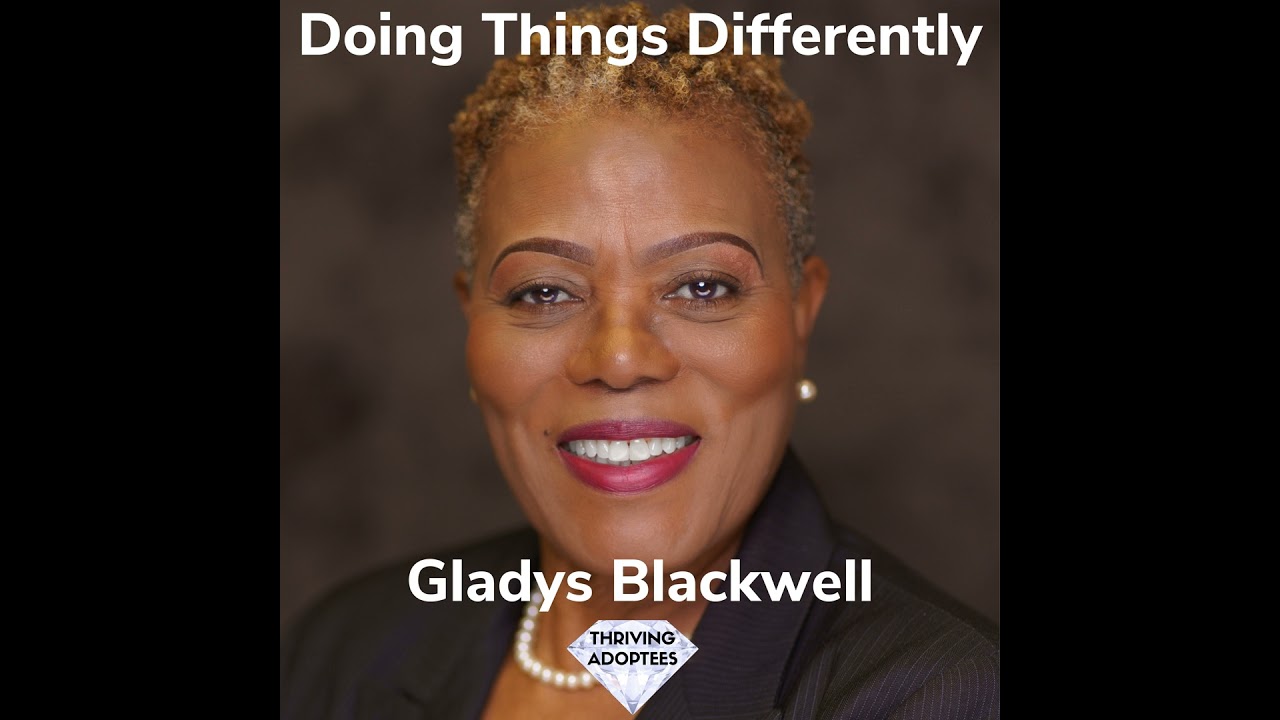
Gladys Blackwell, who directs foster care and adoption at the Children's Center in San Antonio, defines thriving as meeting basic needs, navigating transitions, and building community. She shares stories of her grandson's path to Morehouse University and other adoptees, arguing that thriving looks different for each child and requires asking for help, therapy, and viewing trauma as episodic rather than constant.
Chapters
Hello everybody, welcome to another episode of the Thriving Adoptees Podcast. Today I'm delighted to be joined by Gladys, Gladys Blackwell. Looking forward to our conversation today, Gladys.
Good morning.
Yeah, good morning.
Looking forward to it too.
Great. So, uh, so listeners, uh, Gladys is a, uh, a mum through a kinship, uh, adoption. She has also Yeah, she's also fostered and she is a professional. She works as she leads on foster and adoption at the Children's Center in San Antonio, Texas. We've had a lot of people on from Texas recently, Gladys. I don't know, it's a, it's a hotbed of talent and adoption.
Yeah, we have a high rate of adoptions here, especially in San Antonio, also in the state of Texas.
Yeah. Yeah, and it's a huge state, as I've—
Huge, yes, yes, yes, yes.
So, Gladys, what— if we could start off with the first kind of the big question, really, in terms of what thriving means to you personally. What comes to mind when you hear this word thriving? Because it's one we throw around, right?
We do, we do. We throw it around. And from my experience as a foster parent, And I really liked working with teenage boys, but teenagers, but especially the teenage boys. And then also, and I adopted a kinship placement of my grandson and currently working at the Children's Shelter as Director of Foster Care and Adoption here in San Antonio, Texas. And I guess when I think of thriving, And I remember us talking about that word before, and I really thought about what is thriving. And I guess for me personally, what it means to me is to thrive, and in this space and in the community, you know, what it looks like in terms of thriving, it's meeting your basic needs. Oh, I thought about the— the kids that I've worked with and, um, those that I wanted to adopt that I didn't adopt because the rights weren't terminated. But also when I think about my, uh, my adopted son, grandson, and I got him at the age of 6 and he's 21 now. So when I think about thriving personally, to me, it's thriving is Knowing— one is knowing how to ask for help. You know, I know we think about thriving as thriving within your purpose, but for him, thriving is, you know, through the counseling and everything. And when I think about it, is asking for help. And also learning how to be in certain spaces. And what I mean by that is being in a space here at home with his family. And then at school, because he went away to school.
Yeah. So he went to like a boarding school?
He went to— yes, he went to an all-boys school. And you're talking about thriving, you know, because it changes. It's like thriving for me is transitional, you know. So it changes how he was thriving. And I watched him from Elementary school to now he's at an all-boy school, Morehouse University in Atlanta, Georgia. And that space has been really tough for him in terms of thriving, but he's learned how to thrive, how to thrive in terms of with his peers, with his instructors, within Finding out who he is and what he want to do in life. And so that has really made a difference just by watching him transition from one stage to the other.
Yeah. Yeah. So it's all about that change and progression. And the other keyword that kind of leapt out there, Gladys, was learning, right?
Learning. Yeah, yeah. Was— is the learning and those spaces, you know. And when you learn, is that for him, is what have you learned? What have you taken away from it that would allow you to thrive in other areas of your life, you know? And that means also the spiritual aspect of his life. Yeah. So, yes.
By spiritual, do you mean religious?
I mean religious. And then I mean in the spiritual, I mean having those morals Standards. You know, one of the words that we, we use in terms of, uh, thriving and, and working with him is integrity, is doing the right thing when no one's looking.
Yeah.
Yeah. Yeah. Yeah.
So important, eh?
Um, it is.
Because he's away at school. He's away.
He's away at school.
You're not there. And that's that, that's that thriving through the, through the transition and the the learning curve, you know, having the tough, the tough stuff. Um, what about, what about yourself? I mean, it's a big question to ask, I, I appreciate. What, what about your most significant learnings yourself, Gladys? Because you've got this wealth of experience, both professional and, um, personal, within, with your grandson and also the kids that you've fostered? What have been your biggest learnings?
Well, you know, I think one of my biggest learnings were my expectations, you know, and all of this and in my career and working with the kids is my expectations is My expectations don't always pan out the way I think it should be. And so I think for me in all of this and working with kids, even kids that have been adopted, and I've learned how to— well, and that's a good question. I've learned how to, you know, and, and my spirituality comes into play. So I've learned how to— for me, for the main thing is that I do, I pray a lot. I pray for my kids. I pray for my family. So I think for me, for one, would definitely be prayer.
Yes. So are you talking about your expectations being exceeded, not met? Are you talking about flexibility with your expectations, holding your expectations lightly, frustration when expectations are not met? What—
Yeah, that's what I mean by expectations is that, you know, we— and I've seen kids adopted And there's a— and it's almost like there's an expectation, but there's a part of me, and I'm going to use this as an example of me holding my breath because I want it to work out for this child so that if I run across this child in a grocery store or somewhere that I know they say thank you, you know. So even in that, I've learned that I may not never get a thank you, and I just have to be okay with what I've done and know that I've done my best. So I think that's probably one of the things is that And doing matching adoptions with families and kids is that I have to know that I've done my best.
Yeah.
And to let go.
Yeah. Yeah. So a sense of grace, really?
Yes. Yes. A sense of grace.
Sense of grace that would go back to the, uh, spirituality, the integrity and, uh, religion and also being kind of calm and centered and being happy with what we've done rather than regretting stuff. The thing that's coming up for me is my own regret. I can look back on stuff that I've done, and if there is— if there's a sense of regret, then that can kind of gnaw away.
Not me. And it can. But, you know, I can't allow one— one, say if I had one failed adoption, and, uh, to, you know, where I have that sense of regret for all of them, you know. Uh, it's really— on yesterday, I got a, a text of a little boy that was adopted. Uh, I guess he was about 2 years old now, so he's about 7 or 8 years old. Well, during that time, he had cancer. And so foster mom— not, well, adopted mom, not foster mom, adopted mom— she sent a picture of him, and her comment was that, um, his time is short on this earth. The cancer has came back. And so I think they've given him like a short period of time to live. But even in that moment, in that time, they have been so nurturing and great, you know, to he and his sister. That, that was, that was beautiful to see that, you know, even looking at him, he looks good, you know. And, and I thought in that moment, wow, you know, I'm just so glad that he was with this family. Yeah.
So it's about the, the, the moment in the life— it's about the moments in the life we have rather than—
Yes. Yeah.
Yes.
In this moment, in this time, and in this space, right? Yeah.
That's where all the power is, right?
That's where all the power is. Yeah. Yes. And just looking at him, and, you know, there's a sadness because, you know, and even when you use the word thriving, you know, you want to know, you know, he was adopted. And, you know, did he thrive? And he did, even though it's such a short length of time, 7, 8 years old, you know, such a short time where we have others that are much older. But this little one, you know, the nurturing, the love, you know, that they cared for him. So yeah.
Yeah. So it's a— I guess, is it a choice about where we, where we, where we focus? Where we focus our attention.
Yes. And, you know, I get pictures, I get pictures of adoptions where the kids have grown up. I've been invited to like quinceañeras, which is like when a child turns 15. So I get a chance to see them, you know, from when they were maybe toddlers or infants up until that stage. And to just— and, you know, and so when you're talking about thriving adoptees, That's thriving. You know, when you can see the— because when a child comes into care, I don't know if you ever noticed the eyes of a child that comes into care, the body, and how thriving begin to— when they begin to thrive, you see the sparkle in their eyes. You see the body begin to sit upright. They begin— it just change. It's like a change all over when they begin to thrive within that environment, within that home and community. Yeah.
So it's like the word that's coming to mind or the phrase that's coming to mind, it's like it's a whole body experience.
It is. It's a whole body experience. It's an entire body experience. And I saw at the Kinsiata, I saw the little one, she just danced and she danced. And she had, you know, 2 sets of grandparents, 2 sets of, you know, with her uncles and just everything. It was such— wow, it was such a beautiful sight to see her and watch her.
Yeah. So she was living in the moment.
She was living in the moment. She was living in the moment.
Yeah.
Yes, she was living in the moment. Yes.
Yeah. I think we, uh, we're not great at doing that, uh, ourselves as adults sometimes, right?
No. Yeah, yeah, yeah, yeah. We, we're not. And, you know, and, and the thing is, is that they had— that particular household had gone through so much, and they fought so hard for her. They fought so hard for her, and they won. And in the end, I thought to myself, because she was supposed to go to her grandfather and, you know, they're really big on kinship. And even though the grandfather knew he couldn't do it, he wanted to hold on to her. And I thought to myself, and you know how you begin to pray the spiritual part for him to realize the best thing is for him to let go, you know? And I think it would have been great if he could have seen her like now. Compare and where she is, you know, now, how well she's thriving and the love and just, and how she's surrounded. It was like probably over 100 people there at her little quinceañera.
Yeah. So what's the magic? There's a certain magic when you— I kind of knew you were going to talk about that. You talked about the eyes. kind of knew you were going to say something about sparkle.
Yes.
I had an intuition that you're going to say something about that. And, and I— you've used the word transition as well, and I think, well, there's a certain magic on that transition from dull, uh, yeah, dull and dead eyes to sparkling To sparkling. And what's the— it's magic, so it's kind of tricky to break it down.
It is. It is. Because, you know, and even though in the midst of the thriving and what I see in her eyes, I know there's probably still questions, as well as my grandson, because I watched him, you know, and he's had a lot of trauma in his life. But Even in those different times and how there's still questions, you know, there's questions in his little mind.
But—
and I remember once when he had came home from school and I saw him and I looked in his eyes and I said, you know, like, what's going on? What's going on? But he was in a time of his life where in that transition, And so now it's just like he had to work his way. But in the process of it with adoptees, I think in the midst of thriving is realizing what it is they need and asking for help. And what I meant by that earlier was like they still may need to go through therapy, you know, they still need a community. He had, uh, churches, and we told him to connect with a church so he can connect with other like-minded teens his age, but, um, just, you know, just, um, just in, in that transition, what it is that he need.
Yeah. And there's a humility to asking.
Yes.
For, for help rather than a pride in thinking that we know it all. Um, yeah, yeah, yeah. And I was going back to thinking about the The, the girl dancing with the sparkling eyes. And, um, something that's going on for me at, at the moment is something that I feel is quite big at the moment, is this, this idea that trauma seems to be all, all pervasive. Yeah, but, but it's not. It, it cannot. It comes and goes.
It comes and goes.
It comes and goes.
It does. It comes and goes.
So why do we, why do we treat it— and I really have no idea, no answer to, to this, uh, question myself— but why do we treat it as if it's something that is always there when really it's something that comes and goes? Because We, we know that.
Yeah.
Um, I, I'm, I'm thinking about, uh, I'm thinking about when I did some work in elementary schools a long time ago. This is 2013, I think, and I was doing a a workshop with 10-year-old kids in an elementary school, and it was— this was nothing to do with adoption, right? But this was to do with kids' emotions, let's call it that. And this little girl told me how— I'd shared something about me being bullied on scout camp, and she shared something about the fact that she'd been bullied at dance class. And so she stopped going.
Wow.
And something that, something that she'd heard in, in the workshop that I gave helped her see that feelings are an inside job. And that seeing that those feelings are an inside job made her realize that she could go back to dance class.
Wow.
So I— and so the trauma of the bullying that she'd had for— she'd been called names and said that she was a teacher's pet and she was a show-off, and she'd been good. She'd been bullied for being too good at dancing.
For being too good at it, right, right. Jealous, right, right, right.
Which was kind of ironic because I was, I, I was bullied at scout camp for not being good enough at Scouts. Yeah, right, right. So she'd been bullied, but, um, that, that, um, that question that I mentioned a couple of A couple of minutes ago. Um, why do you think we teach— when trauma is the thing that comes and goes like our feelings, why do we treat it— why do we talk about it like it's an all-pervasive thing, that it's always there?
Well, could I say because we haven't quite healed from it? Are we not in a place to To, like, the young lady, you know, to give herself some grace, you know. And it's just— and, you know, and I think in that— when I was listening to you, I think in that moment with that young lady, the effect of a 10-year-old in terms of if you had not had that conversation to let her know that it's okay to get back in the ring, you know. The impact it would have had on her entire life. You know, it could have changed her life in other areas, all areas. Yeah. But in that moment, she chose to go back.
And, and that impact, that outcome was down to her seeing her own sovereignty of her own feelings.
Yes.
That feelings are an inside job.
It is that, yes.
And it goes back to what you said about knowing that you've done— you knowing that you've done your best rather than needing.
Yes, because if I don't— and I learned that early on from, um, from when I was gonna— when I was a foster parent, and I knew the reason I got into this because It was something that I always wanted to do as a little girl, not always knowing what it looked like, but I knew I wanted to help. I wanted to do these things. And then, you know, one of the things they teach you is that not if you have an investigation, but when you have an investigation. And so, in that moment, when the first investigation and when I was accused of something that I didn't do— Cried, and I cried out to God, and I said, God, why? Because you know my heart. I only want to help. I only want to do this. Why? And so in that moment, it, it's like it was— it came to me is that you have to do your best. You do your best, and then you just let the rest go. You know what if you've done and what you haven't done. And so I didn't I didn't just— I didn't stop. Because in that moment, I could have stopped. And I have seen people stopped, just stop.
Yeah.
Even kids that are being adopted. You know, I tell my adopted families and they, you know, I said— and it's, you know, it's like, okay, I'm ready. I'm ready to adopt now. So since I'm ready, where's the child? And I said, it's just like— yeah, he's like, I'm ready. And I said, it's just like being— pregnant, you know what I mean? It's a process, you know. Just because you've read it, this child is being prepared for you over here. Now, I'm not saying it's going to be all this great, this child is going to be that, but the one just for you is being prepared, you know. And so it's a process.
Yeah.
So that's how it is for us, even with, with adoptees and thriving through all of it. It's a process.
Yeah, I was thinking about— I'm not going to name the person, let's just say it's a celebrity, right? Um, and a celebrity who has adopted, and they're used to getting everything. They're a celebrity, they're very— um, people say yes to them.
Right.
They have lots of money. and therefore they expect instant gratification. And then they— so that— so they adopt in a certain way, right? Some of them may adopt in a certain way, and then it, it, it's not— I guess from religious, religious sense, it's not, it's not God's It's, it's their plan.
Their plan.
And then, and sometimes those plans go wrong.
And sometimes those plans go wrong. Yeah. And so do you think that in the midst of like, uh, for an— you know, we're talking about thriving adoptee and, and thriving— do you think, and listening to what you just said in terms of that child's journey and we talk about the, the body, the changes and the, and the love, that it makes a difference with the family and their intent. And when that child comes into this world, you know, I mean, comes into their home, you think it makes a—
Yeah, yeah. I mean, um, I think religion does, you know, churches do a lot of lot of good in the adoption space, but like any, any other human institution, right, right, they don't always, they don't always turn out good, you know.
Yeah.
Um, and, and I'm, I'm thinking about, uh, an adoptee that I interviewed ages ago, and, you know, somebody that, the, the same age as me, right, late, late 50s, and she had been— she talked about her her— she's American, um, she talks about her mum adopting her to look good at church.
Yeah, yeah, yeah, yeah.
And so it's coming from, it's coming from pride. It's not a— I think the word narcissism is kind of overused at the moment.
If you—
if you— I look, I spend a bit of time on Facebook looking at stuff, right? And if you were to believe Facebook, every single man in the world is a narcissist, right? We, we all are, right?
Yes.
But, you know, but somebody that, somebody that adopts to look good in the eyes of others, yeah, or, or even in the eyes of God, is, is a, is some sort of narcissist at some, at some level, I think. Um, I, I do, you know, like the, the, the other thing to answer your question is We, we don't know what we don't know. So until I started speaking to lots of fellow adoptees 5 years ago, I didn't realize how lucky I'd got.
Because— Yeah.
Yeah, because my parents weren't coming— they had their shortcomings, right?
Yeah.
Uh, but they, they weren't coming from a place of what, what I was gonna bring to them. It was about what they were going to bring to me.
Exactly.
Exactly.
And I think that within— I think with the little girl and the one that I said was dancing and how— and even to watch her dad, her adopted dad, as he danced, you know how they dance, to dance with their daughter, and the tears, you know, and how, you know— and that wasn't the first time I had seen him cry for her. I saw him cry for her when he was fighting for her, you know, and, uh, he was willing to give up everything and anything, you know, to make sure he and his wife could adopt her. And so, uh, just, uh, just watching, just watching that, you know, just, just looking at her and how happy she was because they truly Wanted her. They wanted her.
So there's 2, there's 2 sets of— there's, there's 2, 2 sets of tears there, 2 occasions.
Yes, yes.
But, but very different reasons, causes.
Yeah, yes.
The second one were tears of joy.
Second was tears of joy.
And what else? I mean, I've got a take on that, but what— you were there, there were tears of joy, and what was— what do you think was behind those tears?
You know, I think I think it was it was tears of joy, but that was that was you know it's almost like that's his baby and now she's fifteen and it's just just to see her look like a princess because you know I I do have a picture over here but but to see her look like a little princess his little princess and and the way she just looked and she was looking at him and she was smiling and then when she saw that he was crying how she that connection. And when you start talking about thriving, you know, thriving looks so different in so many spaces, like I said, you know. But to see that connection between the two of them, and the word adoption— there was no adoption. That was, that was his daughter.
Yeah.
Does that make sense?
Yeah, I, I think it might. I think it's, it's that and it's even more, right? So Yeah. Um, this sounds a— this might sound a little bit weird, Gladys, but I'm just gonna go with it, right? I, I can cry listening, listening to the— watching television, watching the Super Bowl or something, and, and they're singing this, the Star-Spangled Banner. I can, I can cry for that, right? So it, it, it, it— but clearly I'm not an American, you know.
Yeah.
But I'm, I'm crying. I, I think it— I, I think it's because I have cried watching television. I have cried in rugby stadiums when they're singing the Scottish national anthem and the French national anthem. It's not just the American national anthem that has this effect on me, right? But I, I, for me, it's a, it's a felt sense of oneness.
Yes, yes, yes, yes.
What some people might call unity consciousness.
Yes, yes, yes.
Which is, I, I think, what some people get at, at church, right?
Yes. Yes. And, and a big word for me is joy. A sense of joy. So we can say that at some point thriving could be, uh, could be joy. It could be joyful. We could say that.
Yeah.
Right.
Yeah. Because there is the joy in that oneness.
Yeah.
It is shared experience, the shared essence.
Yes. And it was— and it's, you know, um, they, they just did. They just did, you know. And then I had other adoptive families that were there also, uh, at the event because, you know, they, they kind of connect with each other. And it's— do you know what it's like to be in a room of seeing children that were adopted and how well they're doing and What it's like to have a conversation with the families, and I know the kids are adopted, but to hear the conversation, you never know they adopted. Does that you know?
Yeah, I mean, I've had a yeah, and they go, "Oh, you adopted?" Yeah, yeah, yeah. So what about the flip side? What What gets in the way of our thriving, Gladys?
Wow. Hmm. What gets in the way? I think there's a lot of things that gets in the way. One that gets in the way is that when you have a parent that you talked about earlier that adopt for the selfish reason, because it's all about me. I think another thing that gets in the way is that And and it's definitely selfishness because I've seen adopted parents. I've seen adopted parents say the child may come with a blanket, and and they say first of all they want to wash it right away, but they come with a blanket or some type of toy, and they want to get rid of it right away. Like we don't know. I'm just gonna I'm just gonna throw this away. And I said you know. No, why don't you keep it? It's a connection. So I think it's selfishness, and when we want to erase that child's life prior to you— because when they say to me, I want— and I did birth mothers adoptions, I did a lot of birth mothers adoption. As a matter of fact, I even did Russian, uh, adoptions. But one of the things is that I want an infant. They said, why do you want an infant? Because an infant, you know, I can make it like my own and they won't know, you know. Then I say, well, have you thought about the fact that that infant is inside of this mom? There's a connection in that womb. Whatever trauma she has felt, this infant can feel it, no matter how you try to erase this child's life, because you got it. And I have given babies out straight from the hospital. They're still going to want to know about that other side. But when you try to erase it, I think that's a part of where the problem comes in at.
Yeah.
Yeah. When you want to erase—
Do you see less of that than there used to be, or more of that, or the same?
You know, I see, I see less of it, but I see, I see less of it. Because now I have families, you know, that want to adopt kids that are a little bit older. But I see less of it. But I can also, you know, when I see it, I have to have that conversation. And also in talking to the adopted parents, I say, If you have that conversation, whatever you know about the birth mother, whatever you know about the birth father, if you began to share it in a way in which it's more like you're grateful and thankful as opposed to it was a bad thing, you know, it would make a difference in this child's life.
Yeah, I, I've heard people Talking about this with a from a you know with a really sorry with religious sorry religious language right have I I've started so I finish like if if you if you criticize the birth parent you're criticizing the child and the metaphor is Fruit from the poison tree or something. You know, like, um, with the connection that you're talking about, if the child still feels that some sort of connection to her—
Yeah, right.
His or her birth mom, and you criticize the birth parent, then—
Yes.
The child's gonna take May take that on board and see that as a criticism of them.
Yes. And so, you know, and I believe that even in the womb, when the birth mother has gone through trauma and dealt with a lot, is that that also impacts her infant. Yeah. You know, so you remember when we talked about, uh, in that moment, so you may not see it as a toddler, but you may see it when the child turns 6. Or you may see it, you know, at some stage it may show up, you know.
Yeah.
And so I think, you know, and I really— and what I try to do in terms of dealing with especially adopted parents is teaching them the developmental stages, you know, because, you know, sometimes when a child is adopted, they think they're acting this way because they are adopted. When developmentally, that's just what they supposed to do.
Yeah.
That's what they do.
Yeah. There's, it's an area that we get off to, onto often on this show. Is this different? The, it, the questioning, is this an adoption issue or is this a human issue? Oh, right. Yeah.
Yeah. Is it adoption issue now? Is it a human issue?
Huh.
And it, and it could very well be. Yeah.
Yeah.
A human issue.
I want to go back to the gratitude thing because you talked about your own expectations. Um, I think you said, like, if you see, if you saw an adopted kid in there, In this, in a grocery store, not expecting a thank, not not expecting a thank you. One of the things that adoptees get very cheesed off about, to put it politely, is this expect is is an expectation of gratitude. Yeah, or, or that they should, that they're expected to be grateful. You know, there's, there's books, right? There's, uh, there's a book— I'm on a panel in a couple of weeks, and they— the book is, uh, the book's title is around this gratitude thing. Um, what have you, what have you seen or learned about that stuff.
Gratitude. And I, you know, I can use the same young lady. One of the things is, is that because when I came into her life in that, in that season, she was about— and she was about 2. As a matter of fact, uh, it's Valentine's, uh, February this month, this month when everything was going on. And, uh, They made her middle name is Valentine. It's her middle name. But when I went to her quinceañera, went to the party, she didn't recognize me. She didn't remember me. She didn't remember. And, you know, she was very nice and polite and, you know, thankful that I came and all of that and took pictures and made sure I had a picture when I left. But she didn't remember. But one of the things is, is that because I remember, and I began to tell her some of the things and what she would do and how she would come to where I work and would try to take over. And anytime I had an event, she was like my right-hand person, you know. And so she was really excited to hear about that part and to know that I was there doing that journey of her life.
Wow.
But she didn't, she didn't. And I was, I was, it was okay. It was okay. You know, I was grateful. And, and I didn't expect her to say thank you or anything. I was just grateful to her that I was a part of it, to see her then and now.
Yeah. As you were sharing that, Gladys, I was thinking, I was going back to the celebrity who has adopted, right? And I was thinking about celebrities and, and, um, the, you know, celebrities trying to get a, um, you know, celebrities trying to get, get stuff, and, or minor celebrities trying to get stuff, and them saying, don't, like, at a hotel or a restaurant and say, don't you know who I am?
Mm-hmm.
And, and that pride there.
Yeah. Mm-hmm.
And the opposite of being selfless, right? My, my, my mum and dad never expected gratitude from me.
Yes. Yes, exactly. Exactly.
It's the other way around. They're the ones that are grateful.
It's the other way around. They're the one grateful. And the other end, it was that I, I was grateful because I felt like, you know, I felt like God trusted me and allowed me to be a part of that. And, you know, and I've had a lot of adoptions, you know, a lot of— I mean, a lot of adoptions. But I thank God You know, I've had adoptions where I felt like I was in the middle. I had the birth mother on this side, and then I had the adopted family on this side, and here I am in the middle, you know. And I— my heart breaking for both of them because the birth mother is crying, but she knows she can't do it. She already has 2 kids. Very smart lady. All, all the above. And this family, no children. And that was a pretty tough place to be because I can only imagine her ride home.
Yeah. Yeah. You talked about something that your son had gone through a lot of trauma.
Yes.
Um, we, we talked about this idea that trauma kind of comes and goes, and I'm, I'm so— but both of those definitions of trauma involve a start and a stop, don't they?
Yes.
Rather than something that is constant.
Yes.
And I'm, I'm going round back on this. I'm going back on this round on this question because I still haven't got an answer. What— why do we, why do we treat it as if it's constant? Because it's not. It's, it's, it's a felt thing, isn't it? It's largely a, it's largely a felt thing. Trauma is about our feelings. It's not, it's not, it's not about our thoughts. You know, you talked about having, having questions. You know, you talked— I think you mentioned about your son having questions, and, and a lot of adoptees, myself as well, right, have— we have questions.
Yeah.
Uh, but those, those questions can be You know, those questions can be very emotionally, emotionally charged or not, right? They don't have— not all questions come with an emotional, emotional charge. But so try— so when they're emotionally charged, they're coming from the, they're coming from the trauma. They're coming from the feelings. It's about the feeling.
Yeah, it's about—
yeah, it's about the feeling. But feelings come and go, don't they?
They come and go. Yeah, they come and go. And, and, you know, with him, with him, I've taught him to And I'll give you an example. Um, and we talked about learning when you're thriving, and then thriving, you're learning. And thriving can look so different. What may look— what may not look— well, what may look traumatic or bad for me in your space, but you're thriving in, and it's how you're thriving in it. And I give you an example. One of the things that my grandson is, uh, and I've watched him and he's like, um, you know, and I talk about him with people. It's like he always— there's people, he gotta have people, and he's in there and he's that. And I said, you know, I think sometimes maybe you just should sit down and maybe journal on your thoughts and things like that. And And so we even started, you know, I started him to journaling, but then COVID hit. And so guess what happened with COVID All the people were removed now. So all the people are now gone and he just have his papa and myself. And in the midst of all of that with him, the, uh, the trauma emerged because now he's still. So he began to remember the trauma when he was a little boy and other things that had happened to him. He began to remember. And so, uh, and I start watching him and I can see that he was sad. And I was like, what's going on? And he began to talk about it. And so even in that moment, I immediately— okay, we need to get a therapist. So we did start therapy doing all of that. But it helped him in what he learned and the coping skills in order to start the next phase. So when school started up, he was in a much better place. And then he began to realize that he didn't depend so much and need all these people, that to sit in his thoughts and whatever is going on in his world is okay. It's how you deal with it. But it was tough.
It was tough. And lonely.
And lonely. For him, it was very lonely. Even though my husband and I were in the home, his papa, it was lonely for him.
Yeah. I did some work in South Carolina. a couple of years ago, a few, 3 years ago. And it was, it wasn't adoption-related work. It was the kids kind of, um, uh-huh, kids' happiness stuff, like the anti-bullying stuff I mentioned earlier on. And they said that the, the teachers of the, of this particular grade, I can't remember which grade it, it was now, but the kids were, I think the kids were 9 or 10. Um, They, they were the ones that had missed out on, on grade 1 because of COVID And so they said that, that, that had, uh, those, the lack of those firm foundations of that first year of—
Yes.
Of, uh, of elementary school had— you talked about developmental developmental stages.
Yes.
It had, it had, it had, um, held back their, their, their development because they hadn't had that socialization.
Yes.
Um, because they've been like your son who was so many years older than them.
Yeah.
Was it, it was still the absence of others. That, that was the, that was the challenge. Yeah.
Yeah. And for him, it was— and I'm really grateful for that time because it allowed him the opportunity to be by himself and know he can be OK in that space. And so being in school, he learned how— he'll say, oh, I just need some time. I just need to be by myself. And he would go on walks, and he would go To some part, the mountains or some, and he would take his his Bible and he would pray and he would journal. So that was the good thing about you know him just being away from people.
But yeah, he could learn for himself.
Yeah, can learn for himself. Yeah.
So we're kind of coming up.
Driving is learning.
Driving is learning. Yeah.
Yeah.
Okay, so that's what I'll call this, um, this episode. Yeah, that's great. Um, we're coming up on time here, Gladys. Is there anything else that you'd like to share that I've not asked you about?
Uh, you know, I, uh, yeah, I— and I guess, uh, you know, and I guess for me I guess that you brought a little sadness up on my heart when you talked about the selfish reasons and when a person wants to adopt because they want to look good at church. And I sometimes, like I say, I get that. I get that. And but one of the things you said that your mom and dad Was grateful for you, grateful for you. And I think that's the one thing is that when we were about to get my grandson and we were about to adopt, and I was 55 at the time and emptiness, and I'm about to get a six years old. He had just turned six. So. You can imagine how my world was. Yeah. And, and I think with you and others, your mom and dad, they chose you. They, they, they chose to do that. I didn't choose to do this. You know, they chose to do that. But one of the things is that even though I guess I was kind of sort of chosen in a way, but, but one of the things that for me in all of this is that I'm so grateful because there were so many things in the midst of him, having him, that it showed me. It showed me, one, it'll keep me younger because I had to stay on my P's and Q's.
Yeah.
But it gave me a second chance to love different, to do things different, and to just enjoy and the laughter with him. So it was just— I thank God and I'm grateful for a second chance. Even though my husband has 3 kids, we're a blended family and I had the 2, I thank God for him, you know? Yeah, I thank God we got a chance, a second chance. Yeah, and that was grace.
Yeah, beautiful. Great place to bring it in.
Yes, thank you.
Thank you, Gladys. Thank you, listeners. We'll speak to you again very soon.
Take care.
Bye-bye.
More from Simon







Weathering Storms With Joanne Morales, Jennifer Hartwig and Rebecca Dominguez


