Grounded With Jami Kaeb
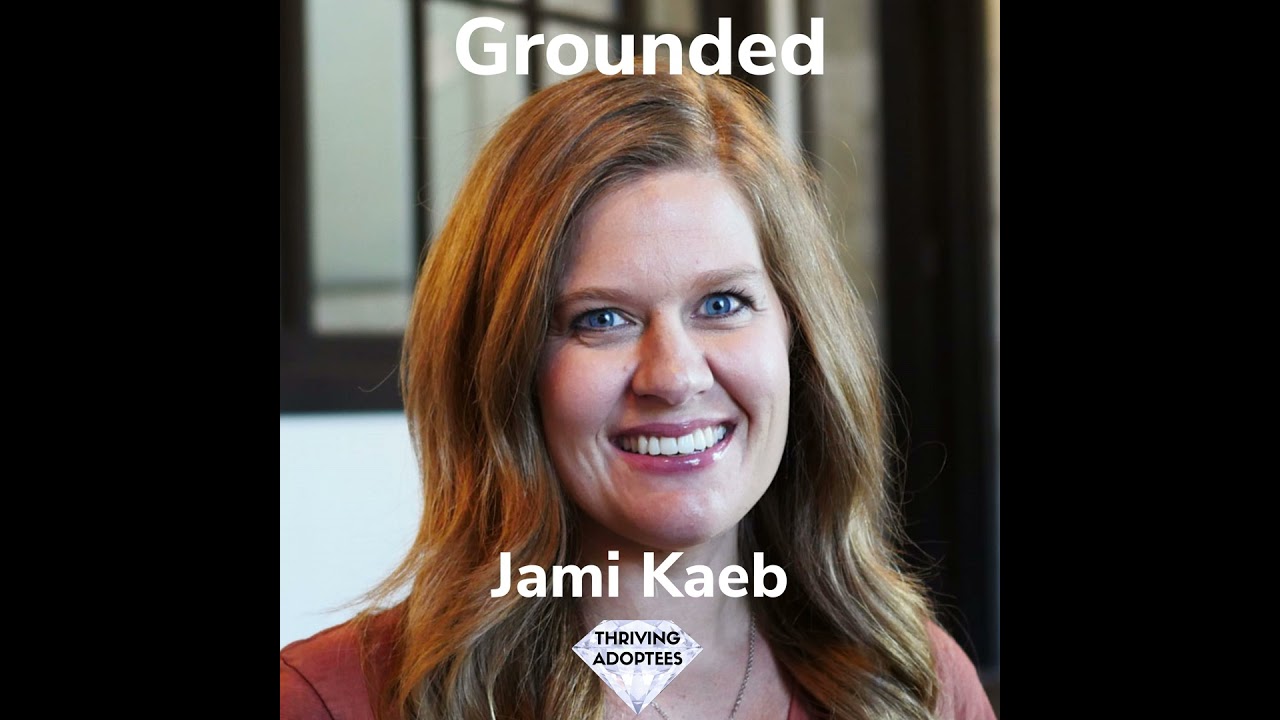
Jami Kaeb, mother of eight including five adopted children, talks about what it means to thrive in a large transracial family. She describes thriving not as the absence of anxiety but as groundedness rooted in trust in God, and shares how letting go of control over her children deepened their connection to her and to faith.
Chapters
Hello everybody, welcome to another episode of the Thriving Adoptees Podcast. Uh, today I'm delighted to be joined by Jamie, Jamie Cabe. Looking forward to our conversation today, Jamie.
I'm so happy to be here with you, Simon.
So Jamie is— I don't know how you find time to do this, Jamie. She's got 8, she's got 8 kids and she runs a ministry as well called the Forgotten Industry. Um, so thank you for making time, but that, that is a, that is a lot on your hands, right? That is a lot.
Yeah, that is true. That is true.
So there's 8 kids, and if I remember rightly, are 5 of them adopted? Is that right?
That's right. Yep. We have 3 biological. Um, kind of the age range is a little bit unusual for us. Uh, 23 is our oldest. She is biological. And then we have a 21 Um, your old biological daughter. And then they kind of stair-step from there. We've adopted internationally and, um, through the foster care system after we were foster parents for a season. Um, they go 19, 19, 18, 16, 14. And then my husband and I had the biggest surprise of our life last year and had another biological child. Who is now one.
Yeah, that's quite a spread there. Quite a spread. Yeah, fantastic. So, um, thriving— what, what does thriving mean to you, Jamie?
It's a great question. I think that thriving, I, when I think of it, is when I feel like kind of when I feel grounded and when I feel, um, When I just know that I am— I guess it is not always about feelings, but when I know that I am doing what I need to be doing, what I am called to be doing, and when I am feeling very connected. For me, I am a believer, a Christian. And so when I am really connected to the Lord and when I am spending time in His Word and when I just am walking in faithfulness, I feel like there is this— I know that I'm where I'm supposed to be. So it's not always like everything is great around me, but I'm— I have a sense of groundedness in I'm able to control the things I can control, and I'm able to release the things that I need to release.
Yeah. So, like, deeper than feelings then? Like, more foundational?
Yeah. Like, kind of when I mean grounded, it's not so much like that, oh, I don't feel anxious. anxious, or I don't feel this, but it's more like I'm settled in. I'm— I, again, as a person of faith, I can trust the one who controls it all and who has created me and has created this world. And so I can trust that he knows best. And so when the circumstances are hard, because, you know, when you have a lot of kids, life in general, there are things aren't always just going smoothly, right? And you have different concerns on your heart, and yet there are There are times when I can get really focused in on all the things that are going wrong, and I get more anxious, and I get more uptight, and I get more— I try to control. But when I kind of can just settle and say, okay, I'm going to do the things I can do, I'm going to pray, and I'm going to trust, to me, that's when I'm thriving, whether or not the circumstances are nuts.
Right. So it's, it's more internally. Yeah. Internally. Well, you said grounded, centered, um, at peace in, at peace with it, with the chaos.
Yeah, absolutely. Yeah. And I think for me, a big thing is like not trying to control. Like, I, whenever I try to control as a parent, you know, 5 of my children are 18 and above. And so they're adults, and I don't have— I don't get to tell them what to do anymore, right? I can be a coach, and fortunately they have invited me and my husband in to be a coach for them, but they get to control. And I think as they're teenagers and adults, you recognize so much more how little control you actually have. When they're little, like my baby, I actually have to control everything for him. But as our kids get older, we start to think, I still need to control everything. And what I have found is when I try to control my kids, it removes connection. You know, we get more disconnected and it just, it's not a good thing. It's not my job to control them. It's my job to love them and guide them and teach them, but it's not my job to control them.
Yeah. Is that a hard one lesson? Has that been tough learning that?
Oh yeah.
Oh yeah.
And it's a lesson I still have to learn. You know, it's one of those where I, but I can literally feel it in my body when I am trying to, when I'm just trying to essentially play God, when I'm trying to put all the pieces in place and like, oh, they got to be here and they got to do this and they— it's like I am not grounded in— I, I get more anxious, I get more— yeah, I mean, it's just I feel it in my body. I'm a— so it's hard, it's a hard-fought lesson, but it's a When I do it right and when I like settle, it's just much better. It's— there's freedom and I can enjoy my kids and I can enjoy my life and I can just rest. It's just this rest that I can experience.
Yeah. Is it, is it, is it like a tension that you feel in your body when you're trying to control it?
For sure.
Is that the kind of Yeah. Is that your kind of— is that like your early warning system that something's—
Totally, yeah. Because it's— and what happens is it's a fear-based thing. Usually when I'm trying to control is because I'm like, if, if they do this, it's gonna go bad. Or if, you know, or it sometimes could just be a like, I, I have hopes and dreams for them, right, that are often good. But if they're not— every— they have to learn on their own too. You know, and I just— but yeah, I can— it is an early warning sign when I start getting more like uptight and tense. Um, and I can just see it in a relationship. I see it. I see the difference in our relationship when I'm trying to like tell them, when I'm speaking out of a place of fear versus out of place of, can I encourage you in something? Let's talk about this. Let's have a conversation.
Yeah. So when did you start to get Wise to this?
It's a great question. I mean, I think there's a key point that I actually go back to that I remember a moment with one of my kids, um, who was struggling a lot with panic attacks. And I remember one specific time she was having a bad panic attack that was going on and on and on. And in that moment, I was so desperately trying to fix the situation because I was It's horrible. It's horrible to watch someone go through a panic attack. And I would try. I was trying like distract her, do this, do that, like just make it stop. And it wasn't working. Nothing was working. And at this point, it was like late in the night. And she is a teenager at this point. And it's late in the night and I'm exhausted. She's exhausted. But nothing I'm doing is helping. And I've just— I'm completely depleted myself, my resources, myself. So I go into my bedroom to wake up my husband and say, hey, can you take over? Because she needs us, I think. And but I, I have nothing more to give. And my husband, it didn't feel wise at the time, but it was very wise. But he said, no, I think she needs to be right now. I think that you need to go to bed and, and let it be. And I think that we just need to let her be right now. And it was incredibly scary for me because I thought, what if, what if that's the total wrong decision? What if she hurts herself? Or what if something horrible happens? Or, but she needs me, you know, all these things of like— and but I did because I, I listened to him because one, he's wise, and also two, I was exhausted. I remember falling into bed and just praying like, Lord, will you please protect her? Will you please help her? And my daughter is also a Christian, and so in what I learned through this is I asked the Lord, will you please wake me up if she needs me? And around maybe 1, 2, 3 in the morning, I can't remember, but later in the morning, she came into my room. She was calm. She woke me up and said, Mom, can I talk to you? And I was like, absolutely, you know. I walked back with her into her room, and she shows me her journal. And she has been journaling and praying to the Lord to help her. And in that time, when I was off in my own room, she was alone with the Lord. He calmed her, He helped her, He gave her perspective that she needed. And what I learned through that experience is that I was actually the barrier between her and her Father, her Heavenly Father, who actually created her and knows how to help her. Better than I do, but because I was there and trying to fix it all and distract her and do all this thing, she didn't have. She needed that time to feel the need and to go to go to God.
Well, she was trying trying to control her panic, and you were trying to control your panic, and neither of you was right.
We were not being successful. Not being successful, and I had to release her, and she had to release herself too. And God met her there. And it just taught me something really profound, that sometimes as parents, in our effort to help, we actually hinder because we're trying so hard to, like, fix everything for them that we're not giving them a chance to learn in the way that they need to learn.
Yeah. So if, if we, rather than asking about you and your definition of thriving, If we extend it to thriving adoptees, what does thriving adoptees mean to you, Jamie?
Well, I'm not an adoptee, so I'm just gonna put that out there. But I do have children I have adopted. My hope for all my kids who are adopted is that they will feel such a sense of belonging and safety that they know that they belong in my family And this would extend to any adoptee in their family, but we have 3 biological kids, right? So I want my kids to know that they are entirely as much a part of our family as the children that we birthed, that I birthed. There is— that God has ordained our family to look the way it does. And so, um, I want them just to feel confident that nothing they do Or don't do is going to change their— how much I love them, that they're mine, that they're my kid, that they're a cave. You know, that to me is against— I guess it goes back to that same kind of groundedness in like, they are safe and secure. That's what I would say.
Yeah. So, I mean, the metaphor that pops into my head was, um, rooted, right? A tree with strong—
Yeah, yeah.
Strong roots.
Yeah, like when the stress comes, when the winds blow, it's not, it's not uprooting them at their core. It's like, oh yeah, we're in a hard season, and we've, we have hard seasons with every one of our kids, right? I mean, it's just like we're human, all of us. Family is messy. And so, um, it— but that doesn't change that we are family. When my kids were little, I would always have these little sayings, and one of them was we would hold hands and we'd walk around. I remember being in a pool one time, we'd walk around, we'd say, we don't let go no matter what, we don't let go no matter what, we are family. And I just carry all my little kids, you know, we'd all be hand in hand in hand, and I'd just be like charging, doing the march, you know, we don't let go no matter what, and they'd repeat it, you know, and But I just wanted to— my whole, my heart for my kids always has been I don't ever want any one of them, especially with having a lot, to feel just like a number or just like, like invisible. I want every one of them to feel seen and known and cared for, and to the best of my ability, we do that. I know that I'm not enough to be, to be their everything, um, which is something I've had to learn as well, but I do pray that they feel seen and cared for and known and rooted in our family.
Yeah, we hear this phrase quite a lot, um, kids do what we do, not what we say. So this is, um, I'm, I'm guessing that, you know, the, the, the grounded metaphor, the grounded word, is the same for you And, and your kids because of that, because it's about modeling? I mean, is that—
Yeah, I mean, I, I hope so. And what I do feel thankful for is our— we do have— we're connected to our kids. Like, they, they talk to us, they want to be with us, you know, like I've— it's so interesting how as they've gotten older and like have gone off to college, or one has gotten married, like they really have valued our opinions and wanted to hear from us. And everyone's a little bit different in, in how much they want and all that, but I have just been so grateful that our— we really do just enjoy being together as a family in general.
Yeah. So connected, belonging, grounded.
Grounded. Mm-hmm.
All trying to sound like words of strength. That's it. Is that what it's about?
Yeah. I mean, I just think it's, yeah, it's, I think it's this confidence in knowing who you are and whose you are. where you belong, like why you, why you matter, that kind of thing. And those are core human needs. And we all struggle with that in different ways, right? Like, we all have our insecurities and we all— but, but I think the more that— and that's why for me, like, I feel so very deeply and believe so at the core that That I am— my worth is in Christ. And because He created me and He says who I am, that, that means I have worth and value. And I believe that about every human. Every human is made in the image of God. And I— so when I feel insecure, or when I start to try to put my identity in, am I a good leader at The Forgotten Initiative? Or am I a good mom? Or my good wife or my good friend, and I start to see, wow, you know, I'm not as good as I want to be, you know, like I want to do better here, I wish I could do this. But when I start focusing on me so much, that again is when I start to get the anxiousness, and or I start to maybe prove myself, try to prove myself, or I, you know, get real insecure and don't do the things I need to do, you know, like Whenever I get off on who I am and whose I am, things don't go as well.
Yeah. So how, how's it been sharing this with your, with your kids?
I mean, I think it's just, uh, over the course of all of our years, you know, it's— I don't know that it's like one One conversation or just sitting down. But I think for me, it's one way I try to make them feel seen is every day when they come up. And now many of my kids don't even live in my house anymore, but one of the things I tried to do was a very simple— when I'd see them, I'd say, good morning, Bobby, use their name, or look in their eyes. Hey Friday, how you doing? Um, how did you sleep, Layla? You know, just acknowledging them. It's a very simple thing, but just letting them know I see you. I often will tell my kids, I just really like you. I really am so glad you're mine. Do you know I'm so glad? Like when they were little especially, but I do it still to this day. But man, I'm so glad God allowed you and me to be in the same family. I'm so glad God brought us together. I think it's also just having real conversations. Like when I mess up, when I realize I've been controlling and I Spoke to you in a way that was disrespectful or unkind, or when I assumed things about you that maybe were untrue. Apologizing, you know, say I messed up. I tell my kids all the time: We don't ever expect you to be perfect, but we do really expect honesty, and we need you to be honest and open with us. So I'm just trying to—I'm trying to model an openness of vulnerability and honesty. And then when they are open and vulnerable and honest, I'm affirming that, like, thank you so much. I know that was hard to share. And then when they don't, it's a reminder. Again, we're not looking for perfection. We're looking for honesty. Just come to us. Let's talk through this. So I think it's, it's the affirmation of who they are and that I'm so glad we're together. We're part of the same family. It's a modeling, and it's just a I think just trying to live life together out loud, right? I'm my kids have seen all the sides of me. They've watched me be pregnant at 43 years old, which was a huge shock, and like that wasn't easy, you know. So they're seeing the emotions, and they're seeing the physical toll it took on my body, and they're seeing the reality of having a newborn. And I mean. My kids have been an encouragement to me when I'm in tears. You know, like in a obviously there's always this healthy versus unhealthy. Like they're not my parent, but they have they have a lot to share and a lot to offer, and I need their encouragement too at times. And I just want them to know like we need each other. Like we need each other to get the house in order. We need each other to to. To just to be like, right where God has given us to each other.
Yeah. The, the word that's coming to my mind is kind of osmosis.
Hmm.
It's, uh, I don't even know how to express that, but it's like pickling, being pickled. being pickled in, in love, or being pickled in God's love. I don't know. Um, when we spoke last time, at the, the end of the, the conversation, you talked about epiphany moments.
Mm-hmm.
And clearly the, the moment when your daughter was having the panic attack, and your husband just said, let it, let it be. That was, uh, that was one of those epiphany moments. Do other epiphany moments come to mind that you would like to share with the listeners?
I mean, sure. I think one that's just coming to mind right now, another time of recognizing that I was trying to take on too much, because again, you started the program out like, I do have a full life, right? And yet There are ways to live this life where I am like trying to be all and like kind of be the savior for everybody that I get completely unhealthy. And then there's times when I can live this life and again, control what I can control, put good things in place. But there was a time I ended up— I was having consistent pain on my chest that I went to the ER because I thought I might be having a heart attack. And when I got there and when they did the test, it was— it wasn't. It was anxiety. And what I realized is, again, like, there's a physical toll that takes on you when you try to be everything. We had a teenager at that stage living in our home who was not our child but was, uh, just a dear friend and who was struggling deeply. To the point that she had even tried to commit suicide at one point.
Wow.
And the pressure of trying to love her and care for her and, again, kind of control the situation that she would be safe was too much on me because I took it so— I took— I went all in. I tried to be her everything. And in that, I physically couldn't keep up. I mean, it physically took me to the hospital, but also I missed out on some of the cues from my other kids and needs they needed because I was so all in trying to fix and help this one. And so, and that's happened to me in other seasons of life where I've— the birth mom of 3 of my kids was struggling. We were foster parents to them at the time, and we had gotten to know her well. And really cared for her. And she was in a season of struggle years later after we had adopted the 3. And I again tried to jump in and be kind of her savior and like fix it all and help her find a job and help her just— I just have had times where I go all in. I'm laser focused on one thing and I, I put more emphasis on They need me versus what's a healthy way I can be helpful but not at the expense of everything else in my life. And I just think the Lord has been gracious to for me to go through those experiences where every time it ends, it's I recognize boy, I really overdid it there or boy, that was I was I had the wrong perspective or maybe even the wrong motive of like I want to be. I want to be the big helper. I want to be the savior. And so I think that, that there has— the Lord has just taught me through struggle, again, a hard-fought lesson, and hard-fought lessons that continue to rise up in new ways that I have to like recognize and go, okay, you're, you're leaning too far in this way. You're trying to be everybody's all-in-all, you know.
Yeah. Do you get, do you get that feeling with that when, when you're trying to do that? We talked about tension earlier on. You talked about anxiety at the— does, does the body—
Oh yeah, the body shares. Yeah, 100%. Yeah, you're, you're more anxious, you're more tired. I mean, it's, it's like compassion fatigue, essentially. It's, you get, you want to sleep more. Little things irritate you quicker. You, I mean, I remember like just like, oh, I'm I can't I can't handle anything else. So like normal things that would be maybe a frustration now felt like I was angry, or normal things that would maybe make me sad. I just felt like I was weeping. You know, it's like that. It's depression. I mean, I've experienced depression, and it's but it's when you're going too strong. We are just mere humans. Like, I think I— that's just something the Lord keeps teaching me. You're a limited human. You can't do all and be all. And stop trying. Like, stop trying to be everything to everyone because you're no good at it. And I have called you to be you to these people. There are some specific people— my family, my church, people in my church, and also at work that He has specifically called me to be more invested in, right? And if I'm trying to be everybody's all-in-all, I am not going to be able to invest in the places He's actually called me to invest and be the person He's actually called me to be. I think we talked last time too, even in leadership Something that I have really learned and have been thinking so much about is a gift of need. I, I am so needy, and that is actually not a bad thing. I've learned and am learning that I've noticed this more in my leadership, that when I feel inadequate in leadership, when I feel insecure in leadership, when I'm struggling because I'm like, I don't know what to do, I can kind of respond in a couple ways. And there's one good way and a few ways that aren't so healthy. One way is when I start to go, okay, I don't know what I'm doing, but I got to prove that I know what I'm doing. I've got to figure it out. And I kind of puff myself up and I get just a sense of like, we just got to— I just got to do it. And that isn't healthy because generally that's when I can bulldoze people or hurt people unintentionally or— It's again just this focus on, I've got to prove myself. The other option is when I get so insecure in leadership, I don't know what I'm doing. And so now instead of doing anything, I just kind of like assume everybody knows better. And so I abdicate leadership and I go, you know better and you know better and I don't know anything. And so then I just step back and don't do anything. Those are the two extremes, and I've fallen into both. The healthy thing that I continue to try to learn and remember is to say, yes, I am limited. Yes, I do have needs. God, I need your help to lead. And God, I need my team. I need other people. I need to learn from others. Like, I need God and I need others. And we— there's this gift. And that's, again, goes back to when I feel the most grounded in life and leadership. Is when I'm very honest about who I am and my limitations, and also the worth that God's given me. Uh, and when I'm just— then I'm walking in that place instead of trying to prove myself, or like, oh, I'm so— I can't do anything. Because the reality is both a prove-itself mindset and I can't do anything mindset are focused on self, and it just doesn't go well.
When you say self, what do you mean?
Yeah, like, I mean, when my, when my biggest concern is me, when my biggest concern is how do I look to somebody, as opposed to are they getting the support they need from me as a leader, for example, when I'm thinking about, oh man, I hope they think I'm a good leader, instead of thinking, do they have what they need? To succeed? Or how can I encourage them to grow? That's what I mean is when I'm inward focused, like the self, like I wanna make myself look good. That's not good leadership. That's just selfishness.
Yeah. Yeah. What, what, what challenges your grounding?
Definitely, like the normal things of life, busyness. When you get when you when you just are go go go go go and you don't have margin because I don't have the time to process, to reflect, to think, to stop. Right? I think I don't have time to do that. Certainly just challenges my groundness when things are just hard. You know, when you are going through a season of either you're feeling heartbroken over something or you're just wrestling through an issue that you just don't know what to do and you are. Just weaker, even you're struggling, that challenges it. Um, and when I just forget to go back to the Lord— like, for me, I have rhythms in my life where every morning— I should say most every morning— but my rhythm is get up at 5:30 in the morning and get my coffee and go spend time journaling, reading my Bible, praying, remembering What's true and getting grounded right there and then going about my day. When I have been staying up super late or when I am, you know, when I don't have that rhythm, that challenges my grounding for sure because I'm just so quick to forget what really matters. I'm so quick to forget the priorities that I need to place, you know. I just think— We're always going to drift to what's easy. Like, that's just a natural. And so we have to be intentional. I have to be intentional about what actually matters. And for me, starting my day with Jesus and grounding my life around Jesus is what matters. And so I need to set up my life in a way that I'm, I'm doing that. And when I have Him first, the rest flows. I'm a better mom, I'm a better wife, I'm a better leader because I'm not needing affirmation from everybody else to tell me that I'm doing okay. I'm trusting the Lord, I'm being real about my limitations, and I'm just doing my best. And I'm being— and when I mess up, I'm acknowledging it. That's so— all those other things, when we get out of whack When life goes too fast, when we just get focused so much on ourselves that we forget kind of the big picture, that challenges my grounding.
One of the things you kind of touched on about the grounding earlier on, um, seemed to be being about flexing, about flexibility and adaptability. I wonder if you can share a little bit more on that.
Maybe give me a little bit more what you mean by that.
Yeah. Um, well, I, I, you know, when we think about grounding and I was thinking about trees, you know, the trees kind of bend, they bend with the wind or they, or they get, you know, or the branches get snapped off. Right. That was the metaphor that was kind of coming to, to my head. So I was wondering if you could talk into flexibility.
Yeah. It's so interesting because, and I, I don't know if I'll get this whole study right, but there was a study done. a while back, and it was done in the biosphere where they were building trees without any wind. Have you heard of this before? No, I've not. They were building trees or growing trees, and they were trying to make the perfect, perfect system, ecosystem for these trees so that they would grow strong. And so they didn't have any wind and they didn't have any rain. It was just like in this place. And what they found is that the trees grew, but their roots were not— it wasn't— they weren't actually as strong because the very thing that this whole research project was trying to avoid was all of the external stress on the trees, the wind, the rain. But that's actually the very thing that actually builds what is called stress bark. I think it's called stress bark that is stronger, that makes a stronger trunk. And actually, so basically, I'm not doing this well, but the trees need the stress of the wind and the rain to actually build up and get stronger. And we are the same, I believe. We actually need to— it's the things that come at us are not just— it's not just all against us. We can use that to say, okay, it helps us identify our real priorities. It helps us identify where we need to change some things. It helps us identify, you know, where we might be putting our hope. And so I think we, we don't have to fear the external and all the things that are going around because they can actually grow us stronger. Now we have to participate in that, right? We have to participate and be willing to learn through it. But if we can have attitudes, what I have found in my life is if I have the attitude of what can I learn through this? What is my takeaway? How could I have done that differently? Or what do I know now that I didn't know? That is what actually builds strength and resilience.
It makes sense. And I interviewed a lady a couple of A couple of weeks ago, and it was, it was all about learning most in the most challenging times.
Yeah.
That, that's when— and that, that kind of occurred to me in, in my old business, that I didn't learn. I only learned in the tough times. I didn't learn much in the easy, easy part.
Yeah.
So, um, how do you see— so I was thinking, um, the, uh, something I heard about challenging— challenges happening for us, not to us.
Hmm.
So it, it's in our— in service of our learning. Challenges are in service of our learning.
Yeah. Yeah, I agree with that.
Definitely. So how do you see the kind of the relationship between trauma and groundedness and thriving? How do you see that, the interplay between those?
Yeah, I mean, I have talked to a lot of people. I also have a podcast like you, so I've gotten the opportunity to talk to a lot of people who have either experienced significant trauma, who've been in foster care, care, who've walked with this community. And one, I remember someone saying, the only way to heal is to go through it. Like, you have to kind of go back and understand what you— you have to walk through the pain sometimes to heal. Not saying we have to have trauma happen to us to heal. What I mean is, like, when we've experienced trauma, And we want healing from that. We have to kind of walk back through and learn through that. Yeah. Kind of go back to that place.
I think he was it. This wasn't Jackson.
No, I think go ahead.
Yeah, he I interviewed a guy called Jackson Tocust. I can't I can't remember exactly how to pronounce his surname. But he said The Only Way Forward Is Back was the name of his book.
There you go. Yeah. Okay. Yeah.
So you've got to, you've got to go back and kind of re—
Right. Kind of figure out, yeah, how that has impacted you and what it like, I mean, we've, we do, I've interviewed folks on attachment and, you know, like we all have an attachment style from how we were raised and, um, We just you just kind of it's like that self-awareness is so key in order to figure out like why do I respond this way? Why does that trigger me more? Why why do I act this way when this happens specifically, but I don't when this other thing happens? Or why is this kind of personality type really bother me more than others? You know, I just think there's. Some things is just because we're human and we're different, right? But there are some things it's like because maybe something that we went through in the past built up this kind of a block in us, or like built an assumption or a belief that we are now having to recognize that has still— is still impacting me today. And so I think it just goes back to, again, we have to learn like why are we— why are we the way that we are? And then, and what is good about that and what is challenging and what are areas that we need to accept and be like, this is, this is actually a good thing about me. I just— and, or what are areas that are like, oh, this is an area that I'm getting stuck in. I think self-awareness is just so critical.
Yeah. So obviously we're talking about this stuff at a, at an adult level here. Um, what have you learned about the, the same topic but looking at it from a, a child or a teen perspective?
Yeah, I mean, I think with my kids, something that I was always a big believer in is just really open conversation. I remember going to a conference when my, uh, my son, who's now 19, was 10, and I adopted— we, my husband and I, adopted him from Guatemala, uh, when he was only 10 months old. And I remember going to this conference and hearing a lady speak on how kids are curious about their past and their story. And he knew he was adopted. I mean, we have— we'd been open about all of that. But one of the things she said is at this age, like 8 to 10-ish, you need to be asking more questions of them, um, so that they know it's safe to like talk to you and process whatever they feel. Especially around their birth parents because they might have this sense of like, I can't talk about that because I might hurt my mom or I might, you know, make her feel a certain kind of way. And so I remember going back home, he was laying on the couch and I just remember going up to him and say, hey bud, I was just curious, do you ever think about your birth mom? And he immediately started tearing up and said, all the time. And we just had a conversation where I could just kind of cry with him and be like, I'm so sorry. Like, I know, like, I know how hard that's got to be to not know what's going on and to wonder and to not, you know, all these things. So for me, with my kids, it's just a matter of like continuing to keep that open dialogue and let them know whatever you feel is okay. And you get to feel what you feel and you can wish things were different. And you're not gonna hurt my feelings. Like, I get it. I wish you didn't have to experience loss also. I'm so glad you're in my family, and I wish you didn't have to experience loss, right? Like, there's this both/and, and I think the more that we can just have open dialogue, open conversation, and our job as parents is to reinforce that and make it a very safe place and not me be like, well, why do you think about her? Because I'm here. You know, like that would have shut it down immediately. Um, so I think that those are, those are areas that I really worked on, especially when they were little. It's just creating that open dialogue. And even now, you know, with my older kids being like, what are your thoughts on this? You know, just showing them it's okay. Or some kids have felt this way. Do you ever feel that way? I just want my kids to feel safe to know that whatever they feel, they can share.
Yeah. What have the— you talked about the podcast, and, uh, I was going to mention that. What have been— how, how was doing those interviews? How, how has that helped you on your own journey?
Oh, it's been incredibly helpful. Um, I haven't done as many interviews as you, Simon, because I know you've done like 500 or something, but I'm at— we're at 300, a little over 300 on the one podcast, the podcast. And I, I mean, I feel like I raised my kids on that podcast, you know. I got this incredible seat as host to ask questions and to learn. And so often I would, you know, something I was maybe navigating at home, I wouldn't necessarily say, so my kid's dealing with this, but I'd say, so let's say a parent is experiencing this with their kid, you know, what would you say? So it was like almost my own counseling session in some ways. Because I was also a foster parent and, and who is our main audience on that particular podcast. And so I have learned so many things from— my perspective has been opened, my compassion for people has been deepened, my— I just see things differently. And you hear stories over and over and over, you just, you, you, you just begin to see how hard people have The hard things people have navigated, but also there was— there's always hope. And to also experience how people have walked through the pain and have found healing and are now helping other people. I mean, it was— this podcast is such a gift to me to be able to be on. It is incredibly emotional because you are— you have the seat to be able to— someone is opening up to you their story. And they're sharing about often some of the hardest things they've walked through. And there's many times I'll leave the podcast studio and I'll just, I just have to take a minute, or that I've come out and I've just started crying because I'm like, this is, it's hard. You know, people are going through really hard things and yet there's hope. And that's, that's what I've learned over and over and over. And we, it's been 10 years of this podcast now, and we're just charging forward. And I'm— it's just such an opportunity to, to grow.
Yeah. I, um, I've been— I heard something a few months ago that I can't stop sharing. Um, and it's, uh, from a foster mom talking about how she talks about trauma to, um, older teens that she often, uh, she often fosters older teens. And she says, look, I'm gonna— she just lays it on the line. She says, and because of her own trauma at the hands of her husband, who nearly killed her, she has a certain amount of street cred, right, and credibility in this area.
Mm-hmm, mm-hmm.
And so she says, look, I'm not gonna deny your trauma. I'm gonna set it out for you, right? You, you've got a choice. The choice is whether you rise above it or whether you succumb to it. And I just think that's so empowering, that choice.
Yeah.
And the, the clarity of setting the choice out.
Yeah.
And I think about how, how much relationship she must have built with the kids that she's fostering to be able to say that.
Right.
Because like, if, if I went into a— if I went into a Facebook group, right, for adult adoptees where there's a lot going on, right, there's a lot of trauma, trauma bonding, there's a lot of trauma sharing, right? And I said— and if I said something like that in, in the wrong place They would, they would come for me. They would, they would come for me. And it, and it's only, right, only in inverted commas because they haven't set, they haven't seen that choice. Nobody's set the choice out. Wow. To them, you know.
Right, right. So there's, there's a difference, right, between Many who have experienced this kind of trauma have been victims, absolute victims of trauma. But there's a difference between being a victim and then having a victim mindset where, like, I can't, you know, where you don't have a choice to overcome, right? And so that's what I hear from that is she's saying you've been a victim. I acknowledge that. And it is so hard. And you don't have to continue to be a victim to what happened to you in your past.
And that's the hope. The hope is right there, laid bare.
Yeah.
Is there anything else? That feels like an appropriate place to bring it in. Um, unless— is there anything that you want to share that I've not asked you?
No, I think that's great, Simon.
Okay. And as always, listeners, I haven't mentioned this recently, but, you know, check out the show notes and there'll be links to Jamie's Forgotten Initiative and her socials so you can check that out. And thank you so much. Thank you, Jamie.
Yeah, thank you. I enjoy talking with you and I appreciate the way you think, Simon, and the questions you ask. It was a good conversation.
Yeah, thank you. And thank you, listeners. We'll speak to you again very soon. Take care. Bye-bye.
More from Simon







Weathering Storms With Joanne Morales, Jennifer Hartwig and Rebecca Dominguez


