Holding Onto Hope With Morganne Crouser
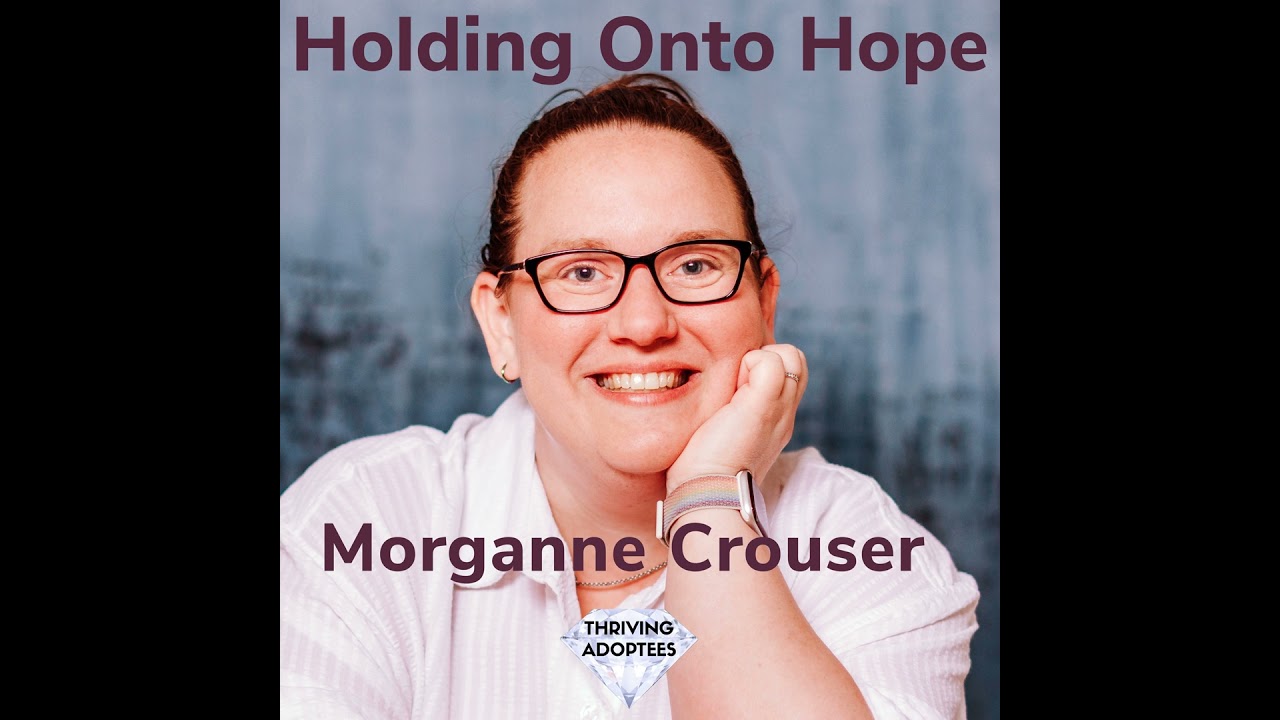
Trauma therapist Morganne Crouser argues the adoption system is broken, not the children in it. She pushes back on the idea that love alone heals trauma, and describes thriving as moving beyond survival to explore and learn. Crouser emphasizes that adoptive parents must hold two truths at once: deep love and ongoing harm.
Chapters
Hello everybody, welcome to another episode of the Thriving Adoptees Podcast. Today I'm delighted to be joined by Morgan, Morgan Krauser. Looking forward to our conversation today, Morgan.
Absolutely, absolutely, absolutely.
So, uh, thriving— what, what comes to mind when you hear this, this word thriving?
Well, so when I think about thriving, it is above and beyond surviving, um, and so that sort of inherently means means that, you know, kind of basic needs are met, but also that there is space to learn and grow and develop and, and, you know, sort of get, get deeper into things.
Yeah, get deeper. Like, get deeper into things.
How?
Can you give me an example?
Yeah, well, so, you know, when we think about kids, right, that like thriving is being able to join us sport or a scout troop or, or, you know, other, other things in their community and having the space, ability, and bandwidth to, to get into it, right? And to make friends and to, you know, think about, am I going to do this next year? And, you know, am I going to do this when I get to high school and those sorts of things? And I think the same thing is true for adults, right? That like we can find hobbies or, or Engage more deeply with our communities.
Yeah. So it's about getting out there rather than being kind of insular and stuck. Stuck in, you know, I think of a kid stuck in their room, right? You know.
Yeah, yeah. As out there as makes sense for that person, right? Like everybody's happy, thriving level of out there may be different.
Yeah. Yeah, yeah. Yeah. And people might maybe be more introvert or extrovert, right? So, you know, like, um, I'm thinking of a friend of mine who kind of— he enjoys his own company, right?
Absolutely.
And, and goes to the golf club all the time, right? You know, and, and, uh, is a caddie, right? So in his retirement, he caddies and he meets new people all the time, but he's quite happy doing it on his own. Yeah, I, I guess it's, it's being kind of content on our own rather than locking ourselves, locking ourselves away because we don't— we just, we can't face it. We can't face the world. I'm thinking, yeah.
Yeah, yeah. And, and, and feeling— I mean, I like the word, you know, the, the language of sort of content in yourself, but like feeling capable, right? I think that's one of the things that really makes the difference for folks of like whether or not they're still in a space where they have been told they can't, right? Either because they're not allowed, or other people don't believe in their abilities, or, you know, those sorts of things, to shifting into like, this is a choice I'm making for me. I can do this if that's what I want to do.
Yeah.
Right. And so, you know, that introverted person who may, you know, community engagement may not be their jam, right? Like, but maybe they're at home and, and they're thriving gives them the capacity to you know, learn how to program video games or something, right? And they're super into that, and they feel capable and confident and competent, right? And all of those things in that skill. Cool. Doesn't necessarily have to be out.
No. And, and so if we put, if we put the extra word on, right, thriving adoptees, what, what, what does that mean to you?
Yeah, so I think, you know, I I think our systems are so broken, right? And I, and I think that, that the experience of growing up in a foster and adoption system can, can be really scary, right? And I, and I think thriving is sort of being able to move from that space of fear, having, you know, feeling really confident that your, your basic needs are going to be met. And, you know, and, and not only that, you know, you've got clothes, a roof, and food, but like that you have adults that you can connect with. Um, and, and so thriving is sort of getting past that, that survival piece into feeling safe to explore, right?
Yeah.
For some folks, that can happen during childhood. For some folks, it doesn't happen until they're out on their own and can, you know, forge their own chosen family. Um, but really sort of Getting to the, the, the place where you feel safe and secure and sturdy enough to opt into exploring things rather than being dropped into the deep end and everybody hoping for the best.
Yeah, sturdy is a good word. Yeah, that is a good word. You know, we often use the word resilience, but I think sturdy is a little bit more evocative somehow.
Yeah, well, and I guess I think of resilient in the person. Like, you can have a resilient person on really, like, in a really unsteady environment. And so what we need is both, right? We need there to be stable ground, but we also, you know, want to support everybody's individual resilience as well.
Yeah.
Both of those things happen. I think thriving is a lot more doable.
So, I mean, you use the word broken in relation to the system. I have heard people refer to adopted kids and teens as broken, and that really—
No, no, no, no. Yeah, there is a very large difference between any person being broken and the system being broken. The system is busted, the kids are not.
Yeah. Um, but like, why would— this was said in front of the kids.
Oh gosh.
Um, and I'm thinking, I, I, I— well, I'm thinking it might have come— it was within a religious setting, right? So I'm thinking it, it might be everybody's broken according to this religion, right? He didn't— he wasn't, he wasn't referring to anybody like we're, we're, we're all broken or we're all sinners or something on that line, which— but I, my reaction, my inner, you know, my internal reaction was as, as shocked as, uh, As, as yours was, because those— we, we take stuff in, don't we, from people in authority? And if they tell us that we're broken, we might believe them.
Right, right. And, and the way the system is set up and kids get moved around, right? Like, as a kid, it's really hard to interpret that as anything other than these people don't want me. And that may be the case, but most of the time, at least on the, you know, adult side of things that I've been on, that it's not that simple, right? It's, it's much more complex than that.
Yeah. Yeah.
But the, the messages like that, that go around, like that, that surround kiddos in foster care who have been adopted that like, it just— we, we have such a narrative around like this savior complex, right, of this foster or adoptive parent that like swoops in and, and saves this child. And I, I feel like that does so many disservices because one, you've got parents who absolutely 110% believe that they can love their kids' trauma away. And as a trauma therapist, I can tell you that is not how that goes, right? Like, love is important, but it it is one piece of many that, that needs to get lined up. And so, you know, I think we're setting parents up to fail in that way. I think we're, we're setting kids up to not believe in and, and, like, have value for their own resilience because they need to get, quote unquote, saved and rescued, right? And like, and it— It allows for, you know, bad behavior on everybody's part in that, like, well, I'm, I'm doing this thing that should be so good that, you know, this other little thing that I did wrong shouldn't matter. And it just, it sets up an icky power dynamic.
Yeah. You know, well, I mean, it fits with the, the savior fits with the brokenness, doesn't it? Yeah.
Yeah.
And And if, if a kid believes that they're broken, then surely that's gonna be a huge barrier to them thriving.
Absolutely, right? Because like, broken is a— it's a finite state, right? We, we don't have a lot of narratives around something going from broken to not broken, right? Like, I know that there are art forms that, that emphasize that, but at least in the US where I live, it's, it's not a, it's not a thing really. And so it sort of gives the, gives kiddos this idea that like you are permanently broken, right? That like, that this is now an essential piece of you. And I mean, it's a terrible thing to say to anybody because I don't think humans can in fact be broken.
Yeah.
But especially to say to a kid.
Yeah. Is the art form you're talking about those, uh, Japanese ceramics?
Yeah, yeah, where they put it back together with the gold.
Yep. Well, that, that is— yeah, I, I've, I've heard different metaphors, right, for, for this. Uh, I think the, the 3 ones I heard was it's 3 different things lined up on a mantelpiece, right? So it's, uh, you know, it's a china doll, right? So if the china doll falls off, right, falls on my— that's, that's it, it's, it's broken, right? Until you can glue— you can glue it back together again. Or, um, it's an orange, so the, the orange falls off, um, and it looks okay on the inside, but it's bruised on the in— sorry, it looks nice on the outside, but it's bruised, it's bruised on the inside. And the other— but the other metaphor is the one— is that, uh, humans as rubber balls.
Mm-hmm.
We, we, we bounce, we bounce back. And that's how— that is, uh, 3 metaphors on how you could see yourself, I guess. 4th one. The fourth one is the Japanese thing, but it's it's a bit like the China doll, isn't it? But with the but then that's been glued back together again, or this ceramic thing has got the the the gold bit is is the bits in. But to me, it's got to be the it's got to be the the the rubber ball, right?
Yeah, I mean. So yes, and right, like, I absolutely believe that, that humans are those rubber balls, and we can bounce back. And, you know, I think that there is a danger to leaning so far into that story that the bruise on the inside of the orange gets ignored. Even, even if we are our most resilient selves, We can absolutely still be hurt and harmed, and it can take time to, to come back from that, right? Depending on how big the hurt or harm was. I guess it's, it's just the, the— I like the, the bouncing back piece of the, the rubber ball metaphor because we can. And there is something to, you know, validating and sitting with that hurt or harm has happened or is still happening. And what that means for somebody. Yeah.
Whenever I get near this, I, I think of the, the post-traumatic growth, right? We live in a world where PTSD is talked about quite a lot, and CPTSD is talked about a lot. I mean, as a trauma therapist, you know, this is stuff— this is bread and butter for you, right? Yeah. What, what What does post-traumatic growth mean to you?
So to me, I think it's about being able to sort of find a new identity or a new piece of self that maybe you didn't have access to before. So in grad school, my thesis was on this sort of looking at Um, specifically looking at, uh, activism as a trauma treatment. And I don't necessarily think that that's the path that everybody has to go, right? But so we, you know, sort of the first identity stage is this like victim, right? Like, I, I have been hurt by whatever it is. And then eventually sort of shift into survivor, the like, I have survived, I've come out on the other side, right? And, and the third piece that I that I hope for all of us, right? Like, I think that third piece that is thriving is moving past survivor into something that is not necessarily contingent, I guess, on the experience of the trauma, though informed by, right? Because even survivor, like, the trauma is still part of that identity, right? Because survivor of what? But then if you move from survivor into activist, or move from survivor into dancer or artist or something else, right? Like, even, even if the experiences of, of that trauma are informing that growth and informing that development, we eventually get to something that is, is not inherently defined by the trauma. Does that make sense?
Yeah, it does. I mean, you use the word activist, you see the, you know, um, would that be similar to advocate or like—
It could be, yeah.
Yeah, kind of thing. Yeah, um, because that's, that's one that's used quite a lot in the kind of the adoption space to talk about the, you know, advocate, you know, advocating for ourselves as adoptees, advocating for adopted kids, advocating for our adopted kids, right? But one of the things that I, that landed for me, I'm, I think, I'm not sure I have talked about this particularly recently, but I, I, it was about 6 months, a year ago or so. I was, it was a Monday, right? We're recording this on a Monday, listeners, right? But it was a Monday afternoon, it was around about this time, and I, I went on Facebook to see what was happening or whatever, just to have a look at my notifications. Something to do with probably the podcast, and and I just I just felt the advocate's pain. It kind of landed on me. It it it landed on me, and I thought I haven't been aware that this is landing on me.
Mm-hmm.
And, and I just thought how the advocates focus on, on the brokenness of the system or the, uh, the trauma.
Mhm.
Or the, the whole, the whole shooting match, the whole shebang, right? I just thought that must be a really tough place to be.
Yeah.
Right.
Vicarious trauma is real.
And, and I, and then I heard, have you heard about Bessel van der Kolk talking about this realization?
Oh yeah.
So he did the, he went on doing some of the hallucinogenics. and realized that he had this vicarious trauma. It had landed, it landed on him. And like, he should know that, right? That wasn't that really— I was like, this, this guy has been in it 50 years.
Yeah. And I, and I think sometimes that being in it so long is what makes it challenging to notice, right? Because it seeps in little by little. And it's not, at least for providers, and I think it's true for foster and adoptive parents as well, right? Like your kiddo comes in with, with the trauma they carry, and it's a little bit here, it's a little bit there, and, and you don't really sort of notice what's going on until you have that opportunity to sort of step outside, or, or somebody gives you some feedback or whatnot where you can sort of look at the big picture and go, oh, that's what that is. I mean, I had a very similar experience myself, you know, earlier in this work of, you know, I just, I felt so out of sorts all the time, and I couldn't figure out what's going on. And eventually, in talking through it with my therapist, I realized that one of the kiddos on my caseload, like, just something about their story was, was, was getting to me in a way that I wasn't used to, right? But because it didn't, like, hit me like a Mack truck during session, it just sort of snuck in over the, you know, months and months and months that I was working with her. I didn't realize what it was.
Yeah. One of the reasons that I'm doing the podcast is because a mentor of mine, like maybe 12 years ago, said it's hard to see the picture when we're in the frame. Yep. Absolutely. So I don't know, how do we, you know, what, what, what, what, um, self-awareness stuff is there? How, how do we, how, how do we see, see ourselves when we're in the picture? What, what, what is it that, yeah, helps us I think that varies for every person.
I think having a good community of, you know, folks who know what's going on with you and who know what your picture looks like, may be able to, to help, you know, not to toot the paid professionals' horns, but therapists and coaches and whatnot are sometimes helpful for that. And I think, you know, I think having Having some time to like slow down and check in with yourself periodically, right? Like you were talking about sort of that advocate strain, right? Where we're often just go, go, go, go, go, right? Like pushing to support the folks we're working with, to support the causes we're working for, right? And, and so when, when we're constantly applying that forward-moving pressure, we're not necessarily noticing the pressure in other places. And so having some opportunities to be still and quiet, or whatever still and quiet looks like for an individual, which may not actually be that still and quiet, but to like, check in and see like, how do I feel in my body? How do I feel in my relationships? How do I feel where I fit in with the world? And do those things feel right?
Yeah.
Yeah.
And, and sometimes it's just enough to hear somebody else.
Yeah, yeah.
Like, I, I, I kind of— I— it landed for me. I, I, I felt— I, I felt the Advocate's pain, right? And then I felt it again when I heard Bessel van der Kolk talking about it. That was kind of a, a reminder. And then there was some, there was some grace there, right? Uh, and I'm thinking, I— did I give him a lot? Did I— I didn't give him a lot of grace, did I, when I said— I said he should have known this. But it's, it's an interesting one because, I mean, you mentioned, you mentioned a therapist.
I'm—
and I'm wondering Does, uh, does Basil van der Kolk have a therapist? Well, I guess he did in that moment, right?
He, he, he must have. Somebody was prescribing it.
Somebody was taking some— yeah, he was taking some, um, hallucinogenics or whatever it was. Yeah, what do they—
what—
whatever it was called. Yeah. Um, so I— you've mentioned that you're a trauma therapist, and I haven't given you opportunity to share a little bit about— you know, you talked about the, the causes that, you know, that we're, that we're working for? And maybe that would be rather— I should have asked you that earlier. Sorry. Can you tell the listeners a little bit about that?
Yeah, yeah. So, so the ways that I sort of plug into the adoption community, um, are in a couple of places. Um, so first and foremost, uh, my family is a foster family. We have a kiddo, um, who is not formally adopted but is permanently part of the family and, and have fostered many other kiddos. So that's sort of the personal connection. Then the work connection is I run an in-home therapy program. A lot of the work we do is with foster and adoptive families. A lot of the, the work we do is trauma-informed and, and helping families to get through rough times. And then on, on sort of a community service, I guess, end of things. I am on the board for All Our Kids, which is a local foster and adoptive family support program. We do lots of programming for the kiddos and for families to make sure that they feel like they have a community, right? That they have those other people who can see their picture and, you know, kind of help give support and feedback where necessary. So, and then on top of all of that, uh, you've got another one, a 4th one. I do, I do. I'm just so busy. Um, I do a lot of, uh, consulting and supervision for, uh, clinicians specifically who work with foster and adoptive families, um, and kiddos.
Brilliant. So that begs another question then. We often talk about the fact that if we want adoptees to thrive, that their parents need to be thriving. And if we want adopted parents to be thriving, then the people that support them, right, like you with all these different hats that you have, then we need to be thriving. We need to be thriving too. So it's like a golden, kind of a golden thread that runs through all that. So what helps you thrive, Morgan? What is it that— what have you learned about your own stuff?
Yeah, so I have found that as much as it pains me to do things outside of work, I do need to do things outside of work more regularly. I'm currently into pottery and roller derby, which is perhaps an odd combination, but here we are.
Oh, so the pottery, that's why you knew about the golden thing that we're talking about.
Yeah.
But what's roller derby?
Roller derby. So to be clear, I am a non-skating participant. I tried my skates and I am not coordinated enough for that. But roller derby is a whole bunch of people on roller skates trying to pass the other team with a fair amount of fantastic glitter and body checking being involved. I do non-skating official, so keeping track of penalties and whatnot, and then I also bench coach for my team, so making sure players have what they need. Basically social work for roller derby, that's what I do.
Right, okay. Yeah, I see the golden thread going there. Yeah, so it's, uh, what is it? Is it a release valve, or is it a change of, change of environment? Is it letting off some steam? What, what is it?
All of those. So I have really, really enjoyed the community aspect of roller derby and the Um, the value that's placed on the individual and the individual sort of knowing themselves and, and working as a team. And I mean, I, I remember the very first roller derby bout I went to, somebody got injured. And, you know, of course everybody's, oh no, what's going on? And all of the players from both teams made a circle around, you know, that player and the medic facing out so that they had privacy, right? Because they're in the middle of an arena with all sorts of spectators. And so like, Just that, like, caring for each other in that way. And like, that, that is, that is a normal cultural part of that sport. I also love the sort of campy homemade aspect. Most bouts have prizes of sorts at the end. So either recognizing different efforts or most valuable players or whatnot, they're all homemade and glitter and fun and hot glue and— Yeah.
Brilliant, brilliant. Um, what, what about, uh, what about your, your learnings? Uh, what, what are you learning? I guess you have to, you, you have to have a, a, you, you took the mention of therapist, you have to have a supervisor, do you? I think, is that right? Is that the word that people use?
Yeah, yeah.
You have a supervisor. So what, uh, if it's not too, right, if it, if it's not too prying, what, what are you, what are you learning at the moment through, through that? What's, what's new for you in, in your own learnings?
Yeah, so, so these days I'm, I'm doing much more supervision than direct clinical work. Um, so I am more often the supervisor than the supervisee. Um, and, and I'm really enjoying getting to see all of the different ways that this same work can happen, right? So I supervise I don't know, 12 or so staff, um, who, who all prevent— who all provide the same service, but the way we do it is all different, right? And, and the way that it works with the families on their caseload is all different. And so figuring out and, and acknowledging and, and getting able to— being able to celebrate that there are so many different ways of doing this work and so many different ways of doing this work well. And I think that that's— I really enjoy that.
So it's a personalization thing. It's a tailoring. Yeah.
Yeah. And, you know, each relationship is unique, right? The relationship that a family would have with staff A is totally different than the relationship that a family would have with staff B. It's not necessarily that one is good and one is bad, or one's going to be productive and the other isn't. They're just different. And so how are we going to do that work? when the relationship looks like this versus when the relationship looks like that, or this other thing over there, and really sort of diving into that.
Yeah. I want to go back to the hard to see the picture when we're in the frame thing. What, in your experience or your opinion, are the blind spots? Are, um, adoptive parents, foster and adoptive parents' blind spots? What do they— wait, what do they not see when they're in the frame, in that's in their frames?
Yeah, I, I think, I think one that comes up a lot is that like, well, but I'm your parent now and I love you so, so much, right? And this hope that like that will somehow undo the previous trauma and, and the, the previous attachment disruptions. And I think that's sometimes really hard because they, they see how much they love their kid. They see how much they, you know, hope for their kid's future and, and want this for them. And it's sometimes hard for them to also hold that, like, that harm still happened and that harm's still coming with your kid. Yeah.
Yeah. Have you? Have you heard of a? A now where's she from? She's no she's German yeah. German or maybe Czech. Have you heard of a lady called Edith Egger? Edith Egger, have you come across her? She's like she she's in her nineties. She's a force of nature. Tap dances on stage or wears these brilliant killer heels or something. You know that ninety-year-old women shouldn't do right. She's a Holocaust. She's a Holocaust survivor who. came to the States and became a therapist in the States, basically. She got— I don't know, have you— does that ring any bells?
Uh, it is ringing like a small bell far away.
Yeah, okay.
What—
so I read the book, Edith Eger, um, it's E-G-E-R. I can't remember the name of the book at the moment. That'll come to me. But yeah, she's a Holocaust survivor. And, but the book tells the story of the whole of her life, right? And, and what struck me was the aftermath was more painful than, than the— in, in the death camp experience.
Yeah.
And, and it was— it, it, it seemed to have festered. I don't know. It's it's tricky. It's like what the the positive experience doesn't out you know doesn't do away with the negative one. Mm-hmm. And she got out, right? She she she she was a Holocaust survivor. Um, I, I really don't know where I'm going with this one in terms of a question. What helps adoptive parents see their blind spots?
I think it, at least in my work, It has been a lot of trying to help adoptive parents hold multiple stories at one time, right? Because, you know, when it's either your kid is hurting from these early attachment disruptions, or, you know, your kid is loved to the moon and back and has all their needs met, right? Like, neither of those stories give us the whole of what's going on. And so helping parents to hold that, like, yep, your kiddo still has those hurts, but that It doesn't mean you, you love them any less. It doesn't mean you care for them any less. It just means that both of these things are true, right? And you were talking about sort of the, the, the trauma afterwards being, being the, the most tough, right? Like, I— the, the image that, that came to mind is, you know, when the, the, uh, first responders show up after there has been some sort of, you know, medical trauma. Right. Well, if, if you, you know, broke your leg and they show up and are splinting your neck and, and your arms and everything, right, like, it doesn't match the trauma you went through, right? It doesn't match the need. And, and I think that that is often a place where, you know, the, the trauma can, like, compounds on itself, is, is, yeah, she got out, but if she, if she didn't have the support of, of other folks who had been through similar things, if she wasn't validated in that, like, yep, that sucked, right? If, if all she got was like, oh, aren't you so glad you're out, right? Like, well, yeah, part of me is glad, but there's this other huge part of me that was like really, really hurt and harmed by this experience, and I'm being asked to only show this, this front, right? And, and in some ways that, that also Sort of connects to, to something that I often see that, that foster and adoptive parents struggle with is, you know, there's, there's a particular narrative that, that we are often pressured to put forward, right? That like, that it's so wonderful and we find it so fulfilling and we're so glad to be able to help this kid. And, and that's all true, but Also, like, parenting is really hard, especially foster parenting or adoptive parenting, right? Because like, you have a kid that you don't necessarily know what they went through and what's going on, right? And so it's super, super hard. And when we don't have opportunities to talk about it being hard and to be validated in it being hard, it becomes unsustainable. And so I think that's one of the things that I try to offer the most in my work with foster and adoptive families is having been there, I know that there are pieces of it that suck, right? And, and that's not the same thing as saying that your kid is the problem, or, you know, like, the, the system, the context sucks. It makes it really hard.
Yeah.
And so, you know, how, how can we sort of name and acknowledge that so that we can move forward with a more realistic understanding of, of what are the resources and supports that this family needs to, to thrive together and individually?
So what, what are the, um, what are the things that have— have there been big differences with this permanent? You said that you're raising this, this as if they were adoptive.
Yep.
But without the thing, right? So, um, has there been a difference between more this permanent part of your life, permanent member of your family, uh, whereas compared to the, the temporary nature of the kids that you have fostered before.
Yeah, yeah, absolutely. And, and so, you know, to clarify, our son was, was with us, uh, during middle school, um, and then he was moved. So, you know, yet another example of like, yep, you were moved, but it's not because we didn't want you, it's because the department decided I don't know what they decided. It was a mess. But then when he became an adult, he got back in touch. And so he's now, you know, an adult member of our family. And, and I guess the, the difference in the permanency piece is it's nice to know that there's not some sort of state agency that's going to make decisions that affect our family without our Input and participation. And it's, it's so great to see him with his little sisters and to see those relationships grow and thrive. And, and, you know, the trauma of the system is real, right? His sisters want to know where he came from, why he was out of, out of our lives for a little while. And so we have to explain the system and how the system works. And then we get like, well, but am I going to be taken away? And like, no, no, no, I hope not. But, you know, it's traumatic for everybody that touches it.
Yeah.
And I think seeing their— my daughter's reactions has sort of really brought that home of like, they weren't even born when we were fostering. And, and yet, because they have seen how that system affected our family, like, it creates anxiety that wouldn't be there otherwise. Thanks, DCF.
Yeah. So what gets in the way of us thriving?
Oh, inadequate resources. Some material resources, right? Like, you know, in inadequate financial resources, educational, what have you, but also like not, not having the, the relationships that we need to, to support us, to support our growth. Um, you know, we, we need folks who understand all of us, right? And, and maybe you get that all in one person. Maybe you get a couple of folks who understand different different parts of you. But I think, like, as humans, you know, even, even the most introverted of us, like, we're, we're still inherently a social species. And so we want, we want to be seen and known by the people around us, whether or not we actually hang out with them in person.
What about the internal stuff?
Yeah, I think the The internal stuff is, is sort of a belief that you can thrive and, and that, that you are worth thriving, right? And I think those are messages that have the opportunity to get really wonky. You know, especially for, for kids in the system and, and Having— I mean, it's, it's about sort of the development of self and, and development of identity and, and feeling like that is possible, um, specifically that it's possible for you, right? And that's, that's, you know, sort of where we come back to sort of the, this, the sturdy background or context or whatnot, because it, it's impossible to get to that place about yourself if you don't at least have pockets of security where you can feel really stable.
Yeah, I'm putting the 2 things together, right? So if I— if we look at the advocates or the activists and, and this belief that we can— the belief we can thrive, one of my, uh, concerns— should we put it like that— one of my concerns is is that there's so much advocacy and activism is about trauma being validated.
Mm-hmm.
That, that actually creates a space where we, we, we focus on the trauma rather than thriving, and other people pick up on that. And think, think, think it's a lost cause somehow.
I'm not entirely sure I follow.
So this is— I go back to the, um, I, I go back to the, uh, the my own stuff, right? So 6 months ago, 12 months ago, it was a Monday afternoon, and, and the weight of the adopt— the weight of the world's, uh, well, world's adoptees and their trauma landed on my shoulder, right? So in that, in that moment, luckily I was— I, I caught that. I, I caught that in that moment. But what if, what if we don't?
Yeah.
What if we don't? And I've been talking about this for quite a while that we should be trauma-informed and thriving-obsessed in a world that seems to be trauma-obsessed.
Yeah.
There's a lot of trauma obsession out there. And yeah, you know, part of the reasons it's called The Thriving Adoptees, right, is because that, that's what we, what we focus on gets bigger. Um, and it, and what What a lot of us are focusing on is the trauma rather than the thriving.
Yeah, yeah. And I, I think that goes back to a couple of things that we were talking about, right? One, that, that broken narrative, and, and broken being a finite, forever sort of determination, right? And so it is easy to get stuck in the trauma if you sort of buy into that broken narrative that it's not going to get better. Right? Like, then it does become overwhelming, and how can you possibly get out? Whereas if we can hold on to that hope, if we can hold on to the faith in folks' resilience, then, then, like, trauma stops being a, like, forever down that person's timeline thing and starts being like, yep, it's a, it's a stop on the, on the train. Tracks. And, and so, you know, and thinking about those resources, right, I think, I think you have identified an area in which resources are lacking, right? We are paying a lot of attention to the trauma, there is a lot more validation of that and discussion of that. And then what, right? And the, and then what is the, is the resources that are missing is how do we create spaces for folks to move through the trauma into something else, into that thriving.
Have you heard of Peter Levine? You've heard of him? Yeah. Um, I saw a quote from him a while ago, which really, I really liked. He said something like, uh, trauma is a fact of life, but it's not a life sentence.
Yeah. Yeah.
So Following his metaphor, I love to follow a metaphor, right? I love a metaphor and I love to follow a metaphor. What would you say are the, the keys that unlock the, the unlock the, the, the keys that unlock the, the door, meaning that it's not a life sentence?
Yeah, so I, I think, I think first is the acknowledgement and the validation and letting those feelings be, whatever they're going to be. So, you know, pulling from Peter Levine's work, I forget which book it was in. But there was a book that he was explaining how, like, when they're trying to tag polar bears in the Arctic or whatnot, and so they shoot the polar bear with the dart from the helicopter and whatnot, that, you know, okay, the dart knocks the polar bear out, falls right over. Well, as the tranquilizer starts to wear off, even though the bear is still laying on his side, like not going anywhere, his body goes back to the running, right? Because we have to complete that process. We have to let it run its course. And so I think, you know, the, the first step is sort of giving space for folks to just be in what they experienced and, and what they need in that, right? And, and, and offering that validation. And then, you know, on, on their own timeline, because I think that that's one thing that, that often makes trauma treatment difficult is everybody's timeline is very, very different. Um, you know, giving, giving opportunities to then, like, to, to move from that victim into survivor, right? Like, who am I now? And then to move from survivor into something else. Um, and, you know, and what that something else varies person to person, but, but really sort of like, and, and having that support go the whole way. Right. I think as, as a society, we're getting better at offering the supports for the, like, just being there and what that person experienced. But we don't have great follow-along supports for the pieces after that.
Yeah.
And so that's where I think folks can sometimes get stuck in, like, well, I want the social supports and other things that are available when I'm in that victim space. And so there's now a benefit to staying in that victim space longer than I strictly need to. Because as I move out, I'm not going to have access to other things. And it, and it makes it hard to see what the other possibilities are, right? Like, if all of the services are just focused on the, like, immediate needs, how do I know what comes next? How do I know that anybody expects something to come next?
Can't the validation keep us stuck Sometimes.
I think it can sometimes, which is not to— like, I, I think it can get people stuck. And I think the only person on the planet who could determine whether or not they're stuck because they're looking for that validation or they're just not ready to move is that, that individual, right?
Like, nobody from the outside can determine No, I say there's no such thing as a secondhand insight, right? We have to, we have to see this, we have to see this stuff for, uh, for ourselves. So it's, uh, it's an exploration, excavation.
Yeah, yeah. And, and I think co-creation of community, right? I mean, I like— if, if we, if we take sort of the, the train track metaphor, right, if the last station On your, um, you know, subway map is, is that, okay, you get support as soon as you're out of the trauma. It's hard to see that there's anything afterwards. And so building supports and communities and whatever it is we need, right? We're gonna build it because we need it to, to offer those train stations further along the, the path that that help folks know that there is more after that.
Yeah. Well, hopefully we're trying to shine a light on that in this conversation, right? Absolutely.
That's the hope.
So, um, is there anything else you'd like to share that I've not asked you about, Morgan?
The only thing I can think of is, is just, you know, continuing to, to reiterate how, uh, individualized thriving and, and the processes that that requires is to each person.
Yeah.
Alas, there is no magical, uh, recipe that if you do this, do that, tap your head and turn around 3 times, you're gonna magically be okay.
Thanks, listeners. Thanks, Morgan. Brilliant.
Absolutely.
We'll speak to you soon, listeners. Thank you. Goodbye.
More from Simon







Weathering Storms With Joanne Morales, Jennifer Hartwig and Rebecca Dominguez


