Leaving Trauma Behind
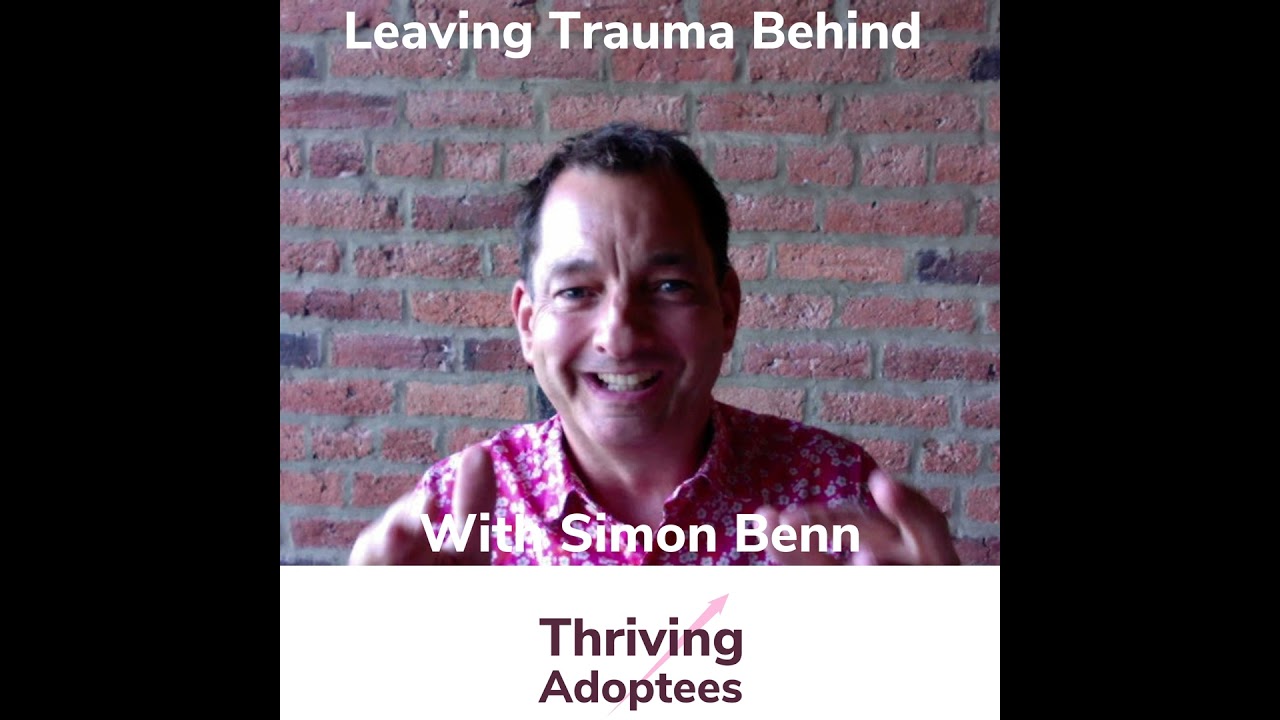
Simon Benn argues that focusing on trauma keeps you spiraling deeper into darkness, while turning toward hope and light allows growth. He notes that 80-90% of people exposed to trauma don't develop PTSD, yet media rarely tells that story of resilience.
Chapters
Hello everybody, welcome to another episode of the Thriving Adoptees Podcast. So today I'm going to do something slightly different, um, I'm going to do some— decided to do some short episodes, some, um, some stories and some thoughts and metaphors and learnings, some insights that I've had, uh, over the, over the years. So shorter to make them more accessible, because sometimes we don't have an hour or so to listen to an episode, and hopefully a little bit more precise and singly focused on a topic so that we're really laser-focused on something. So today I'm going to be talking about trauma. And I'm going to be talking about trauma using a metaphor that I don't know where it came from. Um, but why, why metaphors? Well, metaphors really because what we're talking about, thoughts and feelings, they're not really concrete things in our, our heads, our minds. can't get around— can't get themselves around them because they're not things. Our brains are used to dealing with objects. So when we, when we talk about a metaphor, um, the metaphor takes what is formless and gives it form. Or in perhaps more simple language, it's a bit like the Invisible Man, right? So the, uh, the Invisible Man, when naked, you can't see him, but when he puts his jacket on, you can see his body. Uh, you can't see his head. Can't see his head until Put— he puts the bandages on, right? So he bandages his head and then he puts a hat on so that you can see him. And that's what, that's what metaphors do. They take something that is formless and they give it form. So the metaphor that I use a lot for the— for trauma is it's like a, it's like a rabbit hole. So in my experience, my, um, my, my anger, my fear, my trauma is like a, a metaphor. It's like going down a rabbit hole. And the darker that we go down, the darker that I've gone down that rabbit hole, the less clearly I can see what's actually really going on in any, um, in any conversation that I'm having with a friend or a member of family. Or, um, yeah, the, the, the, the darker— the, the, the, the darker— the further down the hole we go, the darker it gets. The darker it gets, the less clearly we can see stuff. see the truth about any situation, and we are, you know, especially when we're triggered, and the more we bump into stuff. So if I have to get up in the middle of the night, I wake— I often wake up early, um, in the, in, in the morning, like 4 o'clock in the morning, something like that, and I start— my brain starts going. Sometimes I, I want to get out of bed just to, um, and go and have a pee, literally just to to break the thoughts, to break the thoughts that are going around in my head. And but it's dark, it's pitch black, and I'm gonna bump into stuff if, um, if I'm not careful. I'm gonna bump into the, the, the, the bed head, or I'm gonna bump into the tail of the bed, and my wife's gonna wake with a start, you know, because when we're woken from sleep with that kind of shock, it's alarming, isn't it? So what I do is I run my hand along the side of the bed and my shin across the side of the bed. That means that I don't bump into it, and that keeps my wife asleep, right? So this is to help me avoid bumping into stuff. The other thing about the dark is that it's scary, right? So when we were kids, we used to play this game called Murder in the Dark. And you go into a room, switch the lights off, draw the curtains. It's usually played, you know, like, play it in the pitch black. And the murderer's job is to tap somebody on the— shoulder, and then you've got to guess who the murderer is. So as soon as you tap somebody on the shoulder and somebody said, I've been murdered, or something like that, or murder in the dark, and then the person has to run away, get to the point, put the light— they put the light on and you have to guess who the murderer in the dark is. And when we played it, sometimes it got a bit rough, especially playing with all lads, so you don't actually just tap somebody, you maybe punch them on the arm or something like that. And I— in, in the dark, it's a scary place because you don't know when you're going to get murdered. So you're— you, you've got this— there's this anticipation and this tension. When's the next thing going to happen? When's this murderer going to get me? Um, and And that's the, the same thing like is in trauma. So when am I next going to be triggered by something that somebody says that brings back these horrible feelings of insecurity, anger, and fear, right? So that's— the further we go down the rabbit hole, the darker it gets, and it's just, it's a scary place in the dark, as in talking about. It's murder in the dark. And the other thing is about— as it gets— as about the darkness is that people talk a lot about being trauma-informed, right? So trauma-informed for me is— the first part of trauma-informed is studying the darkness. But here's the thing, studying the darkness is in itself taking us further and further down the rabbit hole. It's getting darker and darker and darker. Now, as I was going down this rabbit hole of trauma, what occurred to— what occurred to me was to, to turn around. I had an insight. I had an aha moment. I think this was probably prompted by a coach or a mentor of mine. I turned around, so instead of facing down the rabbit hole, going further and further into the darkness, I turned around and I could still see light at the end of the tunnel. And the light at the end of the tunnel is, is the hope, and we move towards that. we move towards that hope, takes us away from the trauma, takes away from the trauma. So that's why I talk about being trauma-informed, aware of what's going on, the fact that we're going further and further down this, um, this, this rabbit hole, but hope-obsessed. Hope-obsessed means we realize that the light is at the other end of the tunnel. It If only we turn around and we look there, because what we focus on gets— well, what we focus on gets bigger. What we move towards gets bigger. So the further we've turned around, we've seen the light at the end of the tunnel, and we're obsessed with that hope. We're focused on that hope. We're moving towards that hope, and that light Does get bigger as we move towards it. The aperture, the, the size of the hole, then the light at the end of the tunnel enlarges as we move towards it. Because here's the, here's the thing, when we— light always trumps darkness. So when we open a cupboard that's dark inside— now some cupboards, you know, have those built-in lights, you know, you open the door and there's a magnetic catch and the magnetic catch switches the light on— but most cupboards aren't like that. They are dark inside. When we open the cupboard, the darkness doesn't rush out and pitch the room into darkness, does it? The light of the room pitches the cupboard into lightness, and we can find what we're looking for. And as soon as I'm thinking about that, I'm thinking about what my wife talks about, about man-searching. Now, she'll tell me that something's in the cupboard, I'll and I should go and get it, and, and I, I can't see it despite the fact that it's light. And then she'll say, oh, and she'll throw her hands up in despair. And, uh, Jiscum has said, look, that's, that's where the— that's where the soul is. Can't you see that it's right? You know, it was right in front of you. Um, so I, I guess that's where sometimes the metaphors run, run short. So, um, what— no metaphor is, is totally true. What we emerge from the darkness with is post-traumatic growth. So a lot of people talk about PTSD. I'm going to do another podcast about that. Um, because the funny thing about PTSD is only 20— depends on whose figures you, you look at— only 10 to 20% of people that go through traumatic stress events get PTSD. So that means 80 to 90% don't. Um, and we don't hear about that, do we? We don't hear about the good news because the media is obsessed with telling us bad news. The good news, 80 to 90%. So post— but post-traumatic growth, the positive stuff, we never hear about that. Post-traumatic growth, or post-traumatic wisdom, is a phrase I heard this week, and I thought, that's great. Post-traumatic wisdom. We come back from the trauma, um, uh, I guess older and wiser, or maybe just wiser. And that's what the, that's what the podcast is all about. That's what Thriving Adoptees is all about, hopefully, is, is being a catalyst to, to wisdom. We're sharing what we've learned. I'm interviewing guests largely about what they've learned, and, and I'm, I'm hoping that, that, that wisdom, that their learnings catalyze wisdom within you, dear listeners. So, um, that's all I've got for you today, short and sweet. Uh, do get in touch with any topics that you want me to address, uh, simon@thrivingadoptees.com, or message me on the social channels. Thanks a lot. Thriving— yeah, Thriving— check out Thriving Adoptees on there. social channels to get in touch with Facebook or Twitter. And thank you very much for listening. We will speak to you again very soon. Thank you. Bye-bye. Bye-bye.
More from Simon







Weathering Storms With Joanne Morales, Jennifer Hartwig and Rebecca Dominguez


